(Slavery) Peters, RichardBiblio.com
1 561 résultats
1842313227Philadelphia: stereotyped by L. Johnson 1842. First edition. 140 pp. 1 vols. 8vo. Original brown ribbed cloth rebacked with original spine laid down titled in gilt. Marginal dampstaining throughout scattered foxing some wear to boards good. First edition. 140 pp. 1 vols. 8vo. First edition of this report of this monumental Supreme Court decision regarding escaped slaves preceding by 15 years and rivaling in importance the Dred Scott case of 1857. "In Prigg the Court identified slavery as a core constitutional commitment with which states could not interfere. In this case the Court struck down northern states' 'personal liberty laws' established to protect alleged fugitive slaves from recapture without due process of law. When the professional 'slave catcher' Edward Prigg tried to remove Margaret Moran an alleged runaway he was unable to meet the burden of proof set out by Pennsylvania's 1826 Personal Liberty Law and failed to obtain the legal certificate permitting him to remove her. When Prigg proceeded to ignore this and removed Moran illegally to Maryland Pennsylvania convicted him of kidnapping. The US Supreme Court however overwhelmingly overturned Prigg's conviction 8-1 and pronounced state laws interfering with the return of alleged runaways a violation of the Fugitive Slave Clause." Beaumont The Civic Constitution 2014 p. 128. Blockson 9905; Dummond p. 140; Sabin 61207 stereotyped by L. Johnson unknown
0656291591.Ghardcover. Good. Access codes and supplements are not guaranteed with used items. May be an ex-library book. hardcover
0332941361.Ghardcover. Good. Access codes and supplements are not guaranteed with used items. May be an ex-library book. hardcover
Publisud, 1997. In-8 broché, 404 pp. Quelques passages sont soulignés au crayon à papier.
1997MARTINIQUE89898613Publisud, "La France au fil des siècles", 1997, 14 x 23, 404 pages sous couverture illustrée.
First edition, [2], 78, [2]pp., slight foxing of first few leaves, folding table, disbound. In reply to "An Address to the Members of the New Parliament, on the proceedings of the Colonial Department.....", which held that if slaves were freed they would not work, and as a consequence the colonialist's properties would fall into decay through lack of labourers. This pamphlet denies that the proceedings of the Colonial Department on the matter of Caribbean slavery had been injudicious and unauthorised. Ragatz, p.451; Sabin, 69410.
33966London: John Murray Albemarle Street 1826. First edition 2 78 2pp. slight foxing of first few leaves folding table disbound. In reply to "An Address to the Members of the New Parliament on the proceedings of the Colonial Department." which held that if slaves were freed they would not work and as a consequence the colonialist's properties would fall into decay through lack of labourers. This pamphlet denies that the proceedings of the Colonial Department on the matter of Caribbean slavery had been injudicious and unauthorised. Ragatz p.451; Sabin 69410. London: John Murray, Albemarle Street, 1826 unknown
185718536Chicago: Printed at the Daily Times Book and Job Office 1857. First Chicago edition. Light damp-stain to the upper third of the sheet small stain to the lower outer corner; a very good copy. Original self-wrappers 10.25 x 6 inches 15 pages untrimmed. Unopened. Per Byrd "This speech was the first public expression of his views on the Dred Scott decision. In it he accepted the decision and insisted that 'the whole principle of Popular Sovereignty and self-government is sustained and firmly established by the authority of this decision.' " Byrd also notes this pamphlet was intended to lay the groundwork for his 1858 re-election. An edition printed in Springfield and an 8-page edition without an imprint also appeared the same year as well as an edition in German. Flake Mormon Bibliography 2985; Ante-Fire Imprints 250; Byrd 2635. Printed at the Daily Times Book and Job Office, unknown books
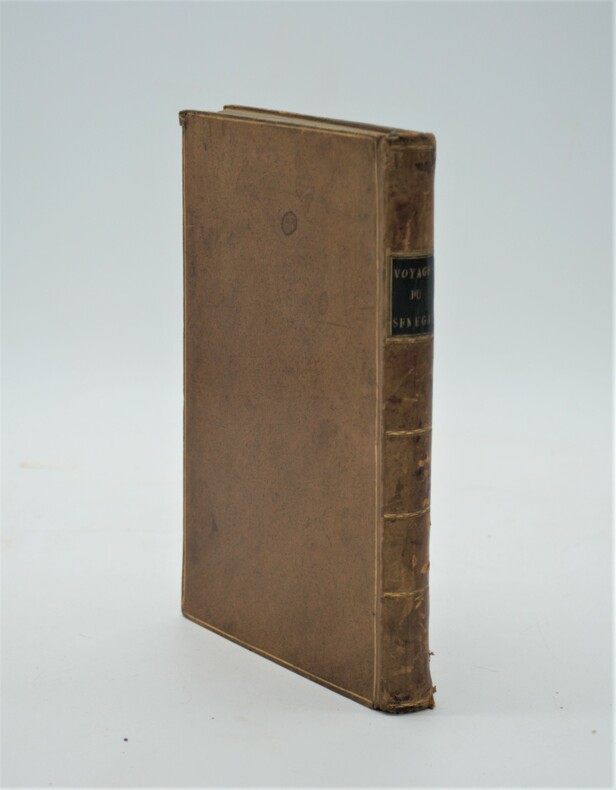
1791PHO-884Paris, Gueffier jeune, 1791. In-8, viii-341p. Plein veau blond époque , dos lisse avec titre , filet sur les plats, tache sur le plat, petites griffures
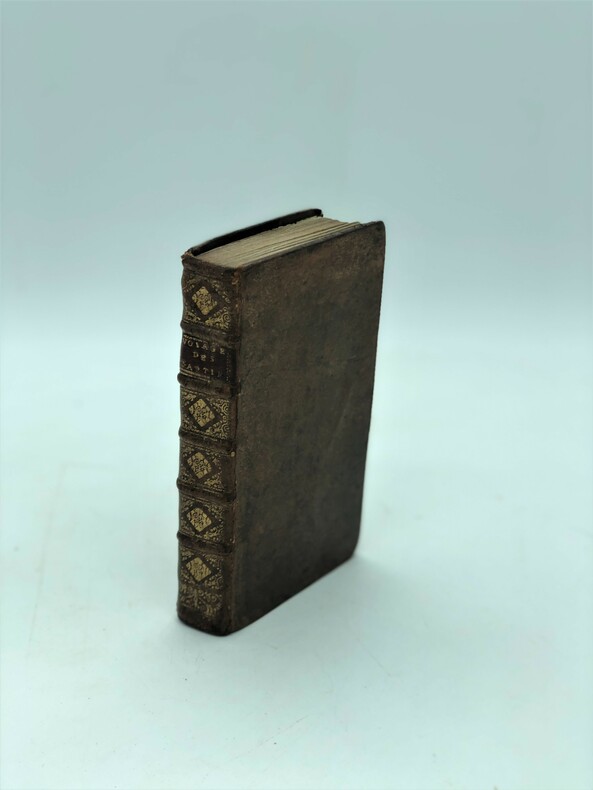
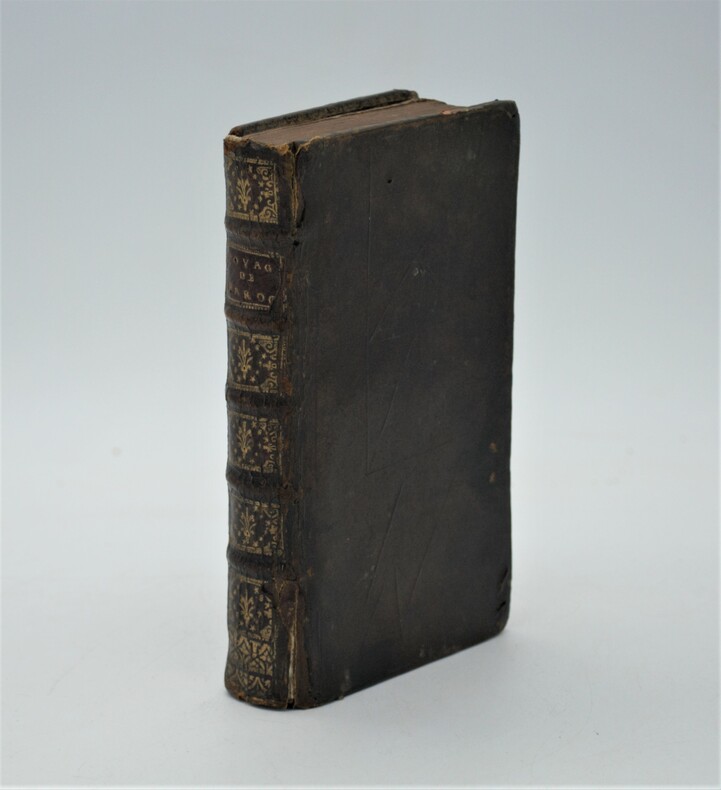
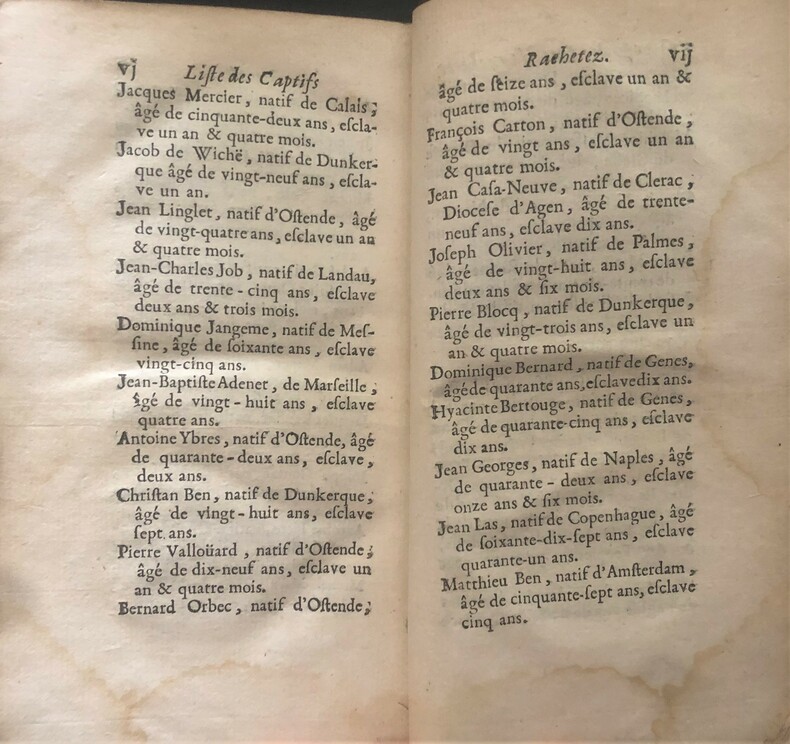
1726PHO-646Paris, Louis Sevestre, Pierre-François Giffart. 1726. In-12, X-364pp-XII pp(liste des esclaves)- 2ffnch , relié plein veau brun, dos orné, pièce de titre (Reliure de l'époque), défaut d’usage , travail de vers en début d’ouvrage . Chadenat, n°680. - Gay, n°465.
1726PHO-941Paris, Louis Sevestre, Pierre-François Giffart. 1726. In-12, X-364pp-XII pp(liste des esclaves)- 2ffnch , relié plein veau brun, dos orné, pièce de titre (Reliure de l'époque), reliure avec défauts , écritures sur les feuillets blancs.Chadenat, n°680. - Gay, n°465.
1726PHO-648Paris, Louis Sevestre, Pierre-François Giffart. 1726. In-12, X-364pp-XII pp(liste des esclaves)- 2ffnch , relié plein veau brun, dos orné, pièce de titre (Reliure de l'époque), défaut d’usage , une charnière fendue , mouillures en fin d’ouvrage .Chadenat, n°680. - Gay, n°465.
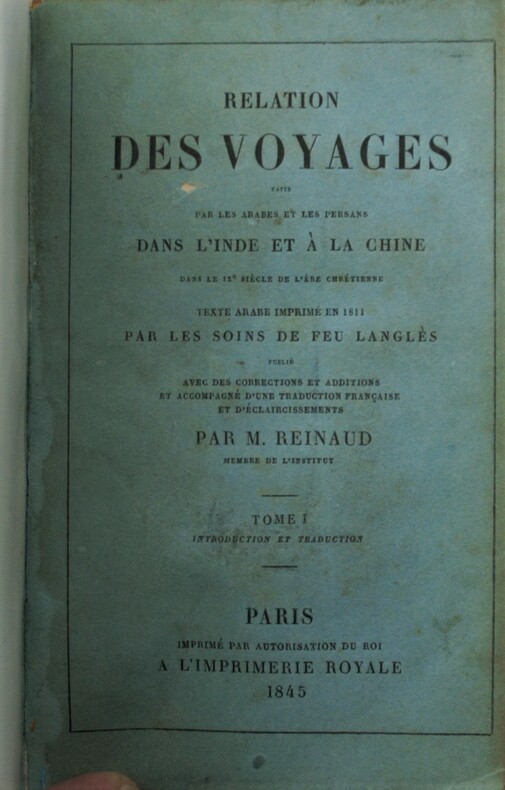
1811PHO-1001Imprimerie royale, 1811. 1 tome (sur 2) ,petit in-12, CLXXX-154 pp. ; relié plein cuir dos à nerfs avec auteur , titre , tomaison et date , couverture conservée ,Tome 1 : Introduction et traduction.
1845PHO-2067Paris, Imprimerie Royale, 1845, 2 volumes in-12 (15x9,5cm), CLXX, 154 pp. 105, (1), 202 pp., demi toile et coins moderne, pièce de titre et tomaison, couverture conservée, coupé en tête, mouillure, cachet répétés.
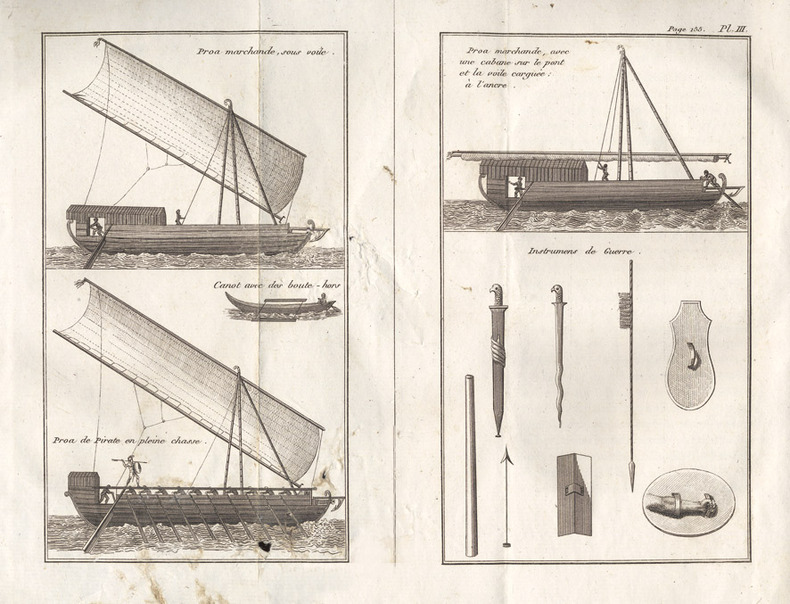
180517636Paris, Buisson (imprimerie Jeunehomme), an XIV-1805 ; in-8, broché ; (4), 322 pp. , portrait en frontispice, planche dépliante représentant 3 proas, bateau indigène et des armes et 2 cartes dépliantes, couverture souple bleu uni.
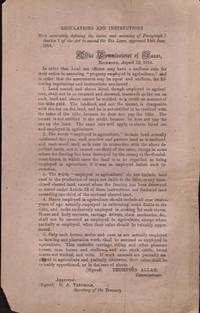
186435137Richmond: Treasury Department 1864. First Edition. Broadside. Fair. Approx. 8.5" X 5.25" broadside. Signed printed text Thompson Allan Commissioner; Approved G. A. Trenholm Secretary of the Treasury. 5 thin closed tears to the fragile paper no loss of content. A few small light spots. Fair only. <br /> <br /> Part 4 of the Regulations and instructions states; "Slaves employed in agriculture should include all over twelve years of age actually employed in cultivating crops liable to the tithe and cooks exclusively employed in cooking for such slaves. House and body servants carriage drivers slave mechanics &c. shall not be assessed as employed in agriculture except where partially employed when their value should be rateably apportioned." <br /> <br /> Parrish & Willingham 2175. Treasury Department unknown
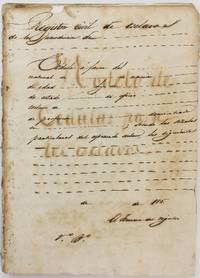
18503976Havana 1850. Good. 138pp. Folio. Stitched with remnants of leather binding along spine. A few blank leaves scattered throughout. Dampstaining and moisture damage at upper fore-edge of scattered leaves slightly affecting text. Moderate offsetting occasional ink burn. Light edge wear and tanning scattered foxing. An extensive list of slave owners in Cuba in the mid-19th century who were issued cedulas for their human property. Cedulas were integral documents for the identification and transportation of enslaved people in the bureaucracy of colonial Cuba and were usually required by the government. In the present manuscript the race and sex of the slaves being issued documents are usually identified -- Negra Negro mulata mulato Chino China e.g. -- though some are just entered as esclavos and there are several entries noted as dotaciones that is complements usually large of slaves on a plantation. The names of the owners are grouped alphabetically according to their first names generally though not in any strict order and the leaves of the manuscript are sometimes bound out of order. Often there are multiple listings of an owner most likely one for each slave in need of a cedula and in all there are approximately 2500 or more separate listings. The first leaf appears to be a model for the cedulas that were being issued to the listed slaveholders with dashes where the information on the slaves and slave owners is to be filled in. The entire document has the appearance of an index with numbers at the right side of each page indicating perhaps the page numbers in the master ledger where the original entry was made. Overall a fascinating and significant document. unknown
180320501Nantes Paris Malassis,Onfroy, Bossange, Masson et Besson 1803 -in-4 plein-veau un volume, reliure de l'époque plein veau brun raciné (binding full calfskin) in-quarto (27,5 x 21,3 cm), reliure d'époque, dos long (spine without raised bands) décoré or (gilt decoration) filets et roulette grecque or, titre frappé or (gilt title), pièce de titre sur fond rouge avec roulette or (pièce de titre en trés grande partie manquante), roulette grecque or en place des nerfs et en tête et en pied, coiffes manquantes et dos épidermé, plats trés légèrement frottés (cover lightly rubbed ), coins écornés, toutes trancheslisses, texte + Calendrier d'Observations Météorologiques mois par mois (12 pages) + 69 tables statistiques in-fine, (XVI + 511 + (1) page + 1 grand tableau dépliant + (12) pages de calendrier + 69 tableaux en 88 pages) Pages, [le grand tableau dépliant : "Tableau Analytique des prairies du département" Manque), AN XI (1803) Nantes : M. Malassis, Paris : Onfroy, Bossange, Masson et Besson Editeurs,
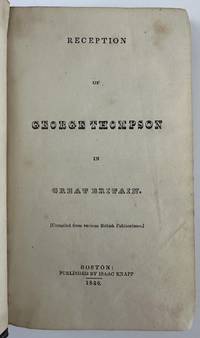
18361691Boston: Isaac Knapp 1836. About very good. xvi13-238pp. 12mo. Original publisher's blue boards with black sheep spine gilt. Boards rubbed corners and spine moderately worn. Text lightly foxed. Scarce work addressing the anti-slavery work of George Thompson following his visit to America. Thompson 1804-1878 was British lecturer and reformer who worked as a commercial clerk.<br/><br/>"Thompson first came to prominence in 1831 when he was recruited by the London Anti-Slavery Society's Agency Committee as an itinerant lecturer. In the run up to the Emancipation Act of 1833 he became the most effective British anti-slavery lecturer since Thomas Clarkson. With the struggle against British slavery apparently won Thompson was instrumental in reorienting anti-slavery effort towards the Americas and particularly the United States. . In 1834 he encountered the charismatic American abolitionist William Lloyd Garrison. Recognizing Thompson's talent Garrison invited him to travel to the United States with his growing family to labour there on behalf of the enslaved people of America" - DNB. Thompson employed sarcasm and vitriol in his orations attacking anti-abolitionist sentiment across the northern states. In the process he failed to make very many friends or converts and alienated those with more moderate views.<br/><br/>"Opponents attacked him as a foreign interloper and an anti-American agitator. They also discovered a scandal in Thompson's past alleging that in 1829 he had absconded with £80 embezzled from his employer. His supporters angrily rejected this charge though Thompson later privately admitted it was true he eventually repaid the sum in full. Hostility increasingly turned violent and in fear of his life he was smuggled out of the country in October 1835 returning to a hero's welcome in Britain" - DNB.<br/><br/>This work is a rebuttal made by Thompson's American supporters aggregating information from British sources to defend his good name and abolitionist efforts after fleeing America for his homeland. It includes some of Thompson's speeches on slavery in America given before audiences in Scotland and England and discusses his work with the American Anti-Slavery Society. Though there are a handful of institutional copies the work is scarce on the market and does not appear in auction records over the pasty forty years.<br/> Sabin 9324. American Imprints 36449. Isaac Knapp unknown books
18361691Boston: Isaac Knapp 1836. About very good. xvi13-238pp. 12mo. Original publisher's blue boards with black sheep spine gilt. Boards rubbed corners and spine moderately worn. Text lightly foxed. Scarce work addressing the anti-slavery work of George Thompson following his visit to America. Thompson 1804-1878 was British lecturer and reformer who worked as a commercial clerk. "Thompson first came to prominence in 1831 when he was recruited by the London Anti-Slavery Society's Agency Committee as an itinerant lecturer. In the run up to the Emancipation Act of 1833 he became the most effective British anti-slavery lecturer since Thomas Clarkson. With the struggle against British slavery apparently won Thompson was instrumental in reorienting anti-slavery effort towards the Americas and particularly the United States. . In 1834 he encountered the charismatic American abolitionist William Lloyd Garrison. Recognizing Thompson's talent Garrison invited him to travel to the United States with his growing family to labour there on behalf of the enslaved people of America" - DNB. <br /> <br /> Thompson employed sarcasm and vitriol in his orations attacking anti-abolitionist sentiment across the northern states. In the process he failed to make very many friends or converts and alienated those with more moderate views. "Opponents attacked him as a foreign interloper and an anti-American agitator. They also discovered a scandal in Thompson's past alleging that in 1829 he had absconded with £80 embezzled from his employer. His supporters angrily rejected this charge though Thompson later privately admitted it was true he eventually repaid the sum in full. Hostility increasingly turned violent and in fear of his life he was smuggled out of the country in October 1835 returning to a hero's welcome in Britain" - DNB.<br /> <br /> This work is a rebuttal made by Thompson's American supporters aggregating information from British sources to defend his good name and abolitionist efforts after fleeing America for his homeland. It includes some of Thompson's speeches on slavery in America given before audiences in Scotland and England and discusses his work with the American Anti-Slavery Society. Though there are a handful of institutional copies the work is scarce on the market and does not appear in auction records over the pasty forty years.<br /> <br /> Sabin 9324. American Imprints 36449. Isaac Knapp unknown
0243873069.Gpaperback. Good. Access codes and supplements are not guaranteed with used items. May be an ex-library book. paperback
185723389.07<p><strong>Rare New York Senate Print of Proposed State Law to Combat the <em>Dred Scott</em> Decision</strong></p><p>"<em>Every slave … who shall come or be brought or be involuntarily in this state shall be free.</em>"</p><p>SLAVERY AND ABOLITION—NEW YORK STATE.</p><p>New York Senate. "An Act To secure Freedom to all persons within this State" Edward M. Madden April 9 1857 Passed the Assembly on April 17; failed in the Senate. Printed with numbered lines for the use of the Senate. 1 p. 6.5 x 11.5 in. </p><p><strong>Excerpts</strong></p><p>"<em>Neither descent near or remote from an African…nor color of skin shall disqualify any person for being or prevent any person from becoming a citizen of this state; nor deprive such person of the rights and privileges of a citizen thereof.</em>"</p><p>"<em>Every person who shall hold or attempt to hold in this state in slavery…under any pretence or for any time however short shall be deemed guilty of felony and on conviction thereof shall be confined in the state prison at hard labor for a term not less than two nor more than ten years.</em>"</p><p><strong>Historical Background</strong></p><p>In 1799 the New York legislature passed "An Act for the gradual abolition of slavery" that indentured and would eventually free slave children born after July 4 1799. In 1817 it passed a law freeing those slaves in 1827. But non-residents and part-time residents could still bring their slaves into the state temporarily.</p><p>On March 14 1857 New York Assemblyman Samuel A. Foot introduced resolutions declaring that the U.S. Supreme Court through its decision in <em>Dred Scott v. Sanford</em> "has in effect declared slavery to be national" and calling for the creation of a joint committee of three senators and five assemblymen to "consider and report what measures if any the Legislature of this State ought to adopt to protect the constitutional rights of her citizens." The resolution passed by a vote of 49-24 and the Senate concurred on April 2.</p><p>On April 9 Edward M. Madden introduced this bill in the Senate. Simultaneously Foot introduced this bill #24129 and three resolutions #23389.08 in the Assembly. Eight days later the Assembly with 81 Republicans 38 Democrats and 8 American Party members passed the bill 72 to 38. In the Senate with 17 Republicans 9 American Party members Know Nothings and 4 Democrats attempts to move the bill to the Committee of the Whole were evenly divided. Lacking the two-thirds majority required for this procedure the bill died.</p><p>Very similar language appeared in an 1859 bill which also failed; New York passed no new Personal Liberty Law during the decade before the Civil War.</p><p>The New York Senate had thirty-two members in 1857 so it is likely no more than fifty copies of this bill were printed for Senate consideration. We can find no evidence that any other copies have survived.</p><p><strong>Edward M. Madden</strong> 1818-1885 was born in Orange County New York and began work at a cotton factory at age nine. He worked as a merchant and then opened a saw factory in Middletown. He entered politics as a Democrat and was a delegate to the 1852 Democratic state convention. He joined the new Republican Party and served as a member of the New York Senate in 1856-1857 1872-1873 1875 and 1880-1881. He also served as a delegate to the 1864 and 1876 Republican National Conventions.</p>
239948Lisbonne, Imprimerie nationale, 1914 in-8, 116 pp., broché. Dos défraîchi.
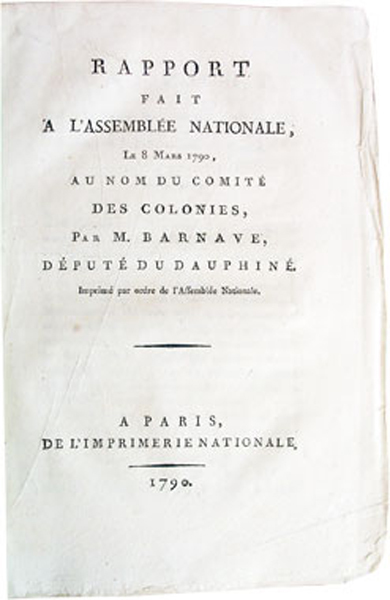
13233In-8, broché, couverture papier moderne, 24 p. Paris, Imprimerie Nationale, 1790.
In-8, broché, couverture papier moderne, tranches rouges, 24 p. Edition originale de ce rapport historique dans lequel Barnave résume les fondements de la politique coloniale de la Constituante: accorder une large marge d'initiative aux Assemblées coloniales, en particulier sur la question du maintien ou de l'abolition de l'esclavage, tout en affirmant que les colonies sont partie intégrante de "l'Empire français". Contient, en fin, le projet de décret de Barnave qui fut adopté sans changement. (Cf. analyse in Pluchon, 'Histoire de la colonisation française', p. 816 sq.). (Martin & Walter, 1750). Très bon exemplaire, très frais, entièrement non coupé.