1 561 résultats
179010775A Paris, chez Demonville, 1790. 2 parties en 1 vol. In-8 de (4)-166 pp. 1 f. blanc 141 pp., demi-toile bleue, couverture imprimée conservée, non rogné (reliure du XIXe siècle).
42793Paris Chez Pillet Ainé, Imprimeur Libraire 1819 in 8 (21x13,5) 1 volume broché, couverture imprimée, XII et 135 pages [1], renfort ancien sur le dos de la couverture, rousseurs éparses, non rogné. Rare. Bon exemplaire
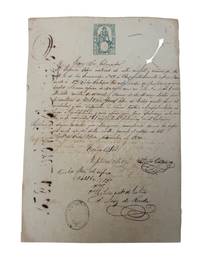
1870231221870. Slavery Cuba Spanish colonial slave sale manuscript recording the transfer of four enslaved individuals in Cuba in 1870. Produced within the official bureaucratic framework of Spanish colonial governance the document reflects the legal normalization of slavery in Cuba even as abolitionist pressures mounted across the Atlantic world. The document records the sale of four enslaved people described as "criollos" and African-born individuals situating the transaction within a labor system that combined locally born and imported enslaved populations. Created at a time when Spain had formally restricted the transatlantic slave trade but continued to permit slavery itself the manuscript demonstrates the persistence of legalized human commodification and the integration of enslaved labor into the island's economic structure sixteen years prior to abolition in 1886.<br /> <br /> Official Cuban slave contract documenting the sale of four enslaved individuals to Don Pedro Catasús by Don Enfemia Ochoa for the sum of 1100 pesos on November 29 1870. Single manuscript leaf written in Spanish cursive in black ink measuring 8.25" x 12". A green "50 cs de escudo" revenue stamp is affixed at the top center with a blind embossed Spanish crest at the upper left and a circular black ink government seal impressed at the lower left. Large vertical docketing appears on the verso. A stylized watermark is visible within the paper. The text organizes the enslaved individuals within a standardized transactional structure while the signatures of Enfemia Ochoa Pedro Catasús and A. Díaz de Rada authenticate the exchange and identify participants within the slaveholding economy.<br /> <br /> By 1870 Cuba remained a central node in the late Atlantic slave system with plantation agriculture especially sugar dependent on enslaved labor despite mounting abolitionist pressure. Although Spain had curtailed official slave imports earlier in the century illegal trafficking persisted into the 1860s and other coerced labor systems including the importation of Chinese indentured workers overlapped with slavery into the 1870s. The presence of both Creole and African individuals in this document reflects the layered composition of the enslaved population during this period. Light toning scattered foxing and edge wear visible. A closed wormhole extends from the upper right margin approximately five inches into the sheet resulting in partial loss of text. Evidence of prior tape reinforcement visible on the verso along with offsetting from previously adjacent material. Overall in very good condition. This document provides named transactional evidence of late-period slavery in Cuba offering concrete material for examining race labor and legal practice within Spanish colonial society. unknown
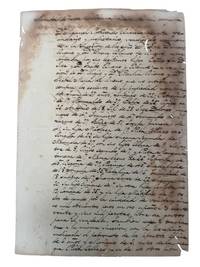
1875231241875. Slavery Cuba Spanish colonial slave sale manuscript recording the transfer of thirty-eight enslaved individuals in Cuba in 1875 materializing the sheer scale and organization of enslaved labor within the island's plantation economy during the final decade before abolition. The document enumerates a large group of enslaved people including multiple family units with young children demonstrating how slavery functioned as both an economic system and a hereditary condition sustained through the sale and reproduction of enslaved populations. Created eleven years prior to the abolition of slavery in Cuba in 1886 the manuscript documents the continued legality and normalization of large-scale slave transactions despite decades of international pressure and earlier prohibitions on the transatlantic trade offering concrete evidence of how internal markets sustained the institution in its final phase.<br /> <br /> Official Cuban slave contract documenting the sale of thirty-eight enslaved individuals for the sum of 126000 pesetas formalized before a public notary or legal authority. Single manuscript leaf written in Spanish cursive in black ink on both recto and verso densely filled with names ages and relational identifiers. Measures 8.5" x 12.25". The text lists individuals sequentially including men women and children with repeated references to kinship structures such as mothers with multiple children indicating the sale of family groupings rather than isolated individuals. The script reflects extended passages detailing ownership exclusions and conditions of transfer. A partial watermark of the official coat of arms of Cuba is visible. <br /> By 1875 Cuba remained one of the last major slave societies in the Atlantic world with sugar production driving demand for large controlled labor forces. Even after Spain curtailed the official slave trade earlier in the century illegal importation persisted into the 1860s and alternative systems of coerced labor including Chinese indenture supplemented plantation workforces. The scale of this transaction demonstrates the consolidation and redistribution of enslaved labor within domestic markets while the inclusion of children underscores the long-term economic logic of slavery as a self-reproducing system. Moderate toning and foxing concentrated along the edges with numerous small closed wormholes a few affecting portions of the text. Light edge wear present. Overall in good condition. This document provides unusually extensive nominal data on a large enslaved population encompassing the roles of kinship valuation and labor organization in late Spanish colonial Cuba. unknown
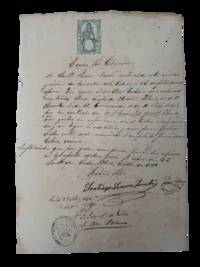
1870231191870. Slavery Cuba Spanish colonial manuscript documenting the late persistence of slavery in Cuba recording the sale of five enslaved Creole individuals including women and children 1870. Produced within the official bureaucratic framework of Spanish colonial governance the document reflects the legal normalization of slavery in Cuba even as abolitionist pressures mounted across the Atlantic world. The presence of multiple children within the transaction underscores the hereditary nature of enslavement and the commodification of family units offering direct material evidence of how slavery functioned socially and economically in its final decades on the island. Although Spain had formally ended the transatlantic slave trade earlier in the century illegal trafficking and internal slave markets persisted and slavery itself would not be abolished in Cuba until 1886 placing this document within a crucial transitional period marked by reform debates gradual emancipation laws and continued exploitation.<br /> <br /> Official Cuban slave contract recording the sale of five enslaved individuals identified as "criollos" including one adult woman and four children from Santiago Simón Fambi to Don Pedro Catasús for the sum of 1200 pesos on November 21 1870. Single page manuscript leaf measuring 8.25" x 12". The manuscript is written in Spanish cursive hand in black ink. The upper left bears a blind embossed crest of Spain while a circular black ink government seal is impressed at the lower left partially overlapping the text. The text enumerates the enslaved individuals with ages and names embedding human lives within the formulaic language of sale and valuation while the bold signatures of both seller Santiago Simón Fambi and buyer Pedro Catasús anchor the transaction in identifiable actors within the colonial economy.<br /> <br /> By 1870 slavery in Spanish Cuba remained central to the island's plantation economy particularly in sugar production which had expanded rapidly in the mid-19th century with industrialized mills and global demand. Enslaved people were primarily forced into agricultural labor under highly regimented and brutal conditions though others were used in urban domestic service skilled trades or as hired laborers generating income for their owners. This document exhibits light toning edge wear and scattered foxing throughout. A closed wormhole extends approximately two inches from the upper right margin inward not affecting legibility of the text. Minor losses and small tears along the edges. Overall in very good condition. Given that this document records a woman and four children the family was likely intended for a combination of field labor and domestic or auxiliary work with the children gradually incorporated into plantation labor as they aged reflecting the system's reliance on both immediate exploitation and the reproduction of enslaved labor over time. unknown
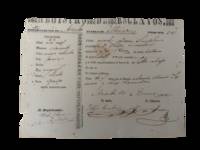
1871231181871. Slavery Black Labor Puerto Rico This official Puerto Rican slave registry document issued in Arecibo in 1871 under Spanish colonial administration represents the bureaucratic infrastructure of slavery in the Caribbean at the precise moment preceding abolition. Titled within the printed form as part of the "Registro de Esclavos - Isla de Puerto Rico" the document records the forced legal identity of an identified enslaved man. <br /> <br /> Single sheet slave registry document "Empadronamiento General de esclavos" from Arecibo Puerto Rico dated 20 de Enero de 1871. Measuring 6.25" x 8.5". This document was registered by a person registering their slave. Document bears official signatures from the local authorities. The enslaved person is listed by their age stature "color" hair color beard eyes nose and mouth. The person is listed as 22 years old and the "color" of this individual is listed as "negro". The physical list of classifications functioned as mechanisms of surveillance control and verification within the colonial slave system. Inclusion of official signatures from both the "dueño" and "comisario" along with a stamped fiscal seal en verso.<br /> <br /> Produced just two years prior to the 1873 abolition of slavery in Puerto Rico the document reflects the transitional legal environment in which enslaved individuals were increasingly catalogued in anticipation of emancipation policies that would in practice impose systems of forced apprenticeship and indemnification to former enslavers.<br /> Some minor wormholes and occasional spotting. Overall good condition. The document stands as evidence of how emancipation in Spanish territories was mediated through administrative control prolonging coercive labor conditions even as slavery was formally dismantled. unknown
13727Poèmes sélectionnés et édités par Roberts Aris WILLMOTT, illustré avec 100 dessins de BIRKET FOSTER, J WOLF, JOHN GILBERT etc. gravés par les frères DALZIEL. LONDON ROUTLEDGE WARNE, & ROUTLEDGE FARRINGDON, 56 Walker Street NEW YORK. 1860. In 8 reliure plein chagrin vert à nerfs, titre, filets et caissons dorés plaque dorée, filets, roulette, palmette écoinçons dorés en encadrement, roulette dorée sur coupe, roulette dorée intérieure. Reliure de STKETON et MACKENSIE. Portrait de l’auteur en frontispice, gravé par Joseph BROWN, sous serpente. Table des poèmes, table des illustrations, préface, 380 pages, tranches dorées.175x230mm. Rousseurs éparses, plus ou moins concentrées par endroits. Exlibris GILBERT (MONTGOMERY James Poems selected and edited by Roberts Aris WILLMOTT, illustrated with 100 drawings by BIRKET FOSTER, J WOLF, JOHN GILBERT etc. engraved by the DALZIEL brothers. LONDON ROUTLEDGE WARNE, & ROUTLEDGE FARRINGDON, 56 Walker Street NEW YORK. 1860. In 8 full green shagreen binding with raised bands, title, gilded fillets and boxes, gilded plate, fillets, roulette, palmette, gilded spandrels in frame, gilt roulette on cut, interior gilded roulette. Binding by STETON and MACKENSIE. Portrait of the author on the frontispiece, engraved by Joseph BROWN, under serpentine. Table of poems, table of illustrations, preface, 380 pages, gilded edges.175x230mm. Scattered foxing, more or less concentrated in places. Ex-librisILBERT, frères DALZIEL.) illustrations, préface, 380 pages, tranches dorées.175x230mm. Rousseurs éparses, plus ou moins concentrées par endroits. Exlibris
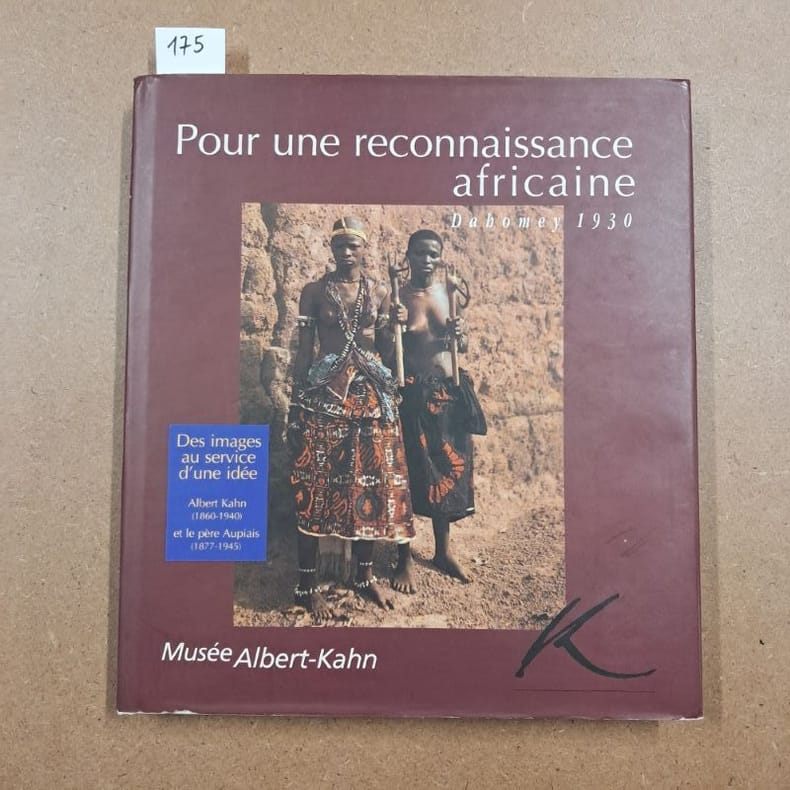
19961751996 - cartonné - Musée Albert-Kahn - 1996 - In-4 (28,5 x 25,5 cm) cartonné sous jaquette illustrée - 259 pages - Très nombreuses photographies en couleurs et en N&B - ISBN : 9782906599192 - Exposition réalisée et présentée au musée Albert-Kahn, du 19 novembre 1996 au 14 septembre 1997, itinérante au Bénin à partir de 1997. Jeanne BEAUSOLEIL (Commissaire de l'exposition)
1850143199New York: M.B. Brady,, 1850. Format (Bildoval): 29 x 24,5 cm. Blattgröße: 37,5 x 27,5 cm.
ORD-9786Légende: Grand ami du noir, Schoelcher ne se montrerait jamais en public avec un habit bleu ou marron. Du reste n'ayant pas les moindres préjugés touchant la couleur de la peau: aussi Schoelcher traite-t-il les blancs absolument comme s'ils étaient des nègres. Planche extraite du Charivari, vers 1850. 1 feuille in-f°(250 x 362mm) tirée du Charivari, lithographie originale de la série Les Représentants Représentés. Trace du pliage en 4 de l'époque, sinon bon état général.
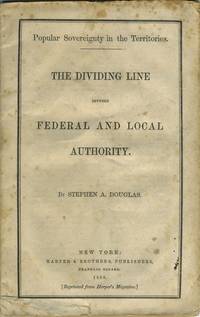
185927949New York: Harper & Brothers 1859. Paperback. Good overall. The United States will forever be in this struggle between the rights of the States vs. the rights of the Federal Government. In this case the question is slavery. One of Douglas' papers promoting 'Popular Sovereignty" or the right of the people of a state or territory to decide the slavery question for themselves-as a Union-saving formula. 8vo 40pp publisher's paper wraps slt foxed still very readable. Harper & Brothers paperback
18091187761809. First Edition. SLAVERYABOLITION MONTGOMERY James GRAHAME James and BENGER Elizabeth. Poems on the Abolition of the Slave Trade. London: Printed for R. Bowyer 1809 i.e. 1810. Tall quarto contemporary brown calf gilt rebacked with original spine laid down raised bands marbled endpapers and edges. $2000.First edition of famed publisher and artist Bowyers richly illustrated volume featuring eloquent anti-slavery poems by Montgomery Grahame and Benger a major antislavery work issued shortly after Britains abolition of the slave trade with engraved portraits of abolitionists Sharpe Clarkson and Wilberforce engraved allegorical title page and nine full-page engravings after paintings by artist Sir Robert Smirke a handsome wide-margined copy in contemporary boards.This handsomely illustrated volume features three epic poemsMontgomery's The West Indies Grahame's Africa Delivered and Elizabeth Benger's A Poem Occasioned by the Abolition of the Slave Trade in 1806. All were ""commissioned by the London publisher Robert Bowyer for inclusion in a lavish volume of antislavery poetry timed to celebrate the abolition of the slave trade"" Basker Amazing Grace 612. With biographies and engraved full-page medallion portraits of leading British abolitionists Sharpe Clarkson and Wilberforce Poems on the Abolition of the Slave Trade is especially noted for its nine full-page engravings and the allegorical title page vignette engraved by Scriven and Worthington after paintings by renowned artist Sir Robert Smirke whose works were considered ""gems in the art of history painting"" American Daily Advertiser. On presenting a copy to George III Bowyer described this as a ""most beautifully embellished volume of Poems which have been written expressly for the occasion on the Abolition of the Slave Trade"" Baptist Quarterly 35. Poems won early critical praise as an ""elegant publication on the Abolition of this traffic and we congratulate the poets the artist and the editor"" Monthly Review. First edition: plates dated ""Dec. 1 1809""; portraits dated ""Jan 1 1810."" With engraved and letterpress title pages. With directions to the binder leaf bound in at rear. Lowndes 1591. Goldsmiths 19923. Kress B5549. Sabin 50145. Benezit IX:656. Occasional faint foxing chiefly marginal. A near-fine copy scarce and desirable in contemporary binding. hardcover
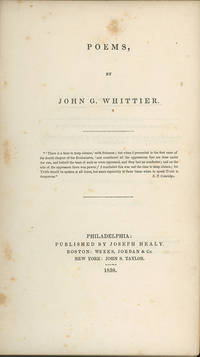
183828115Philadelphia: Joseph Healy; Boston: Weeks Jordan; New York: John S. Taylor 1838 1838. First edition. BAL 21710 binding A; American Imprints 53638. Edges a little rubbed; light foxing; very good copy. 12mo original floral patterned blue-green cloth gilt lettering on the upper board. ¶ An early and substantial collection of over 50 poems by John Greenleaf Whittier 1807-1891. The first part contains 24 of his memorable abolitionist poems collected for the first time with his approval. In 1837 Isaac Knapp of Boston published Whittier's Poems Written During the Progress of Abolition Question but it was issued without Whittier's permission and according to the poet was riddled with errors. Lending library label of the Suffolk Lyceum Library with their rules on the front paste-down. On the front free endpaper is an intriguing faint pencil inscription to a "Mrs. Mary Lincoln / a present from / Mr. Lincoln / March 10th 1845." Extensive research on this has led . . . nowhere. <br/><br/> Philadelphia: Joseph Healy; Boston: Weeks, Jordan; New York: John S. Taylor, 1838 unknown books
188814044New York: Metropolitan Pub. Co 1888. First Edition. Octavo 19cm. Publisher's decorated deep mustard cloth stamped in gilt on spine; viii 431pp. First issue per Wright with no printer's statement on verso of title page. Bit of grubbiness to boards; donation bookplate and private ownership stamp to prelims; else a tight unmarked copy on the better side of VG. Thomas Manson Norwood 1830-1913 was a U.S. Senator and later a Democratic Member of the House from Georgia. In this his only novel he assails the trusts the stock market and the unequal distribution of wealth as the source of vice in America. The setting is New York City with much of the action set on Wall Street. WRIGHT III:3999. Metropolitan Pub. Co unknown books
2008203605Couverture souple. Broché. 287 pages. Marques de bibliothèque.
186223579<p><i>"It is a fact that the enslavement of human beings has so far infused its insidious poison into the very hearts of the Southern people that they have come to believe and declare the evil of slavery to be a good and to require the power of Government to be exerted to maintain extend and perpetuate an institution that enables thousands to sell their own children to be enslaved with all their posterity into hopeless bondage." </i></p><p>The founder of New York City's Cooper Union for the Advancement of Science and Art echoes the language and logic of the Emancipation Proclamation as well as citing some Southern pro-slavery arguments to demonstrate their ridiculousness in this open letter to President Lincoln. Cooper and the Cooper Union had long been advocates of abolition and both Lincoln and Frederick Douglass had famously lectured at the institution.</p> <b>PETER COOPER. SLAVERY.</b>Pamphlet. <i>Letter of Peter Cooper on Slave Emancipation</i> Loyal Publication Society New York 1862 8pp. disbound.<p><b><br /></b></p><p><b>Excerpts:</b></p><p><i>"It is a fact that the enslavement of human beings has so far infused its insidious poison into the very hearts of the Southern people that they have come to believe and declare the evil of slavery to be a good and to require the power of Government to be exerted to maintain extend and perpetuate an institution that enables thousands to sell their own children to be enslaved with all their posterity into hopeless bondage." </i></p><p><i>"In the original formation of that Constitution it became absolutely necessary to make a compromise with that great and all pervading interest which had then already entered into the very life-blood of the nation rendering the formation of an union of States hopeless without such a compromise."</i></p><p><i>"The constitutional requirement to return fugitive slaves on their being demanded by Southern men having been acknowledged and performed by the States has been reaffirmed by an almost unanimous vote in Congress.These honest efforts on the part of the North to maintain peace and friendship were met by a relentless war waged for the destruction of the Constitution and the dissolution of the Union.<i>"</i></i></p><p><i>"The time has now come when Southern men must know that the Union must be preserved and it is for them to determine whether they will persevere in their rebellion until the North shall be compelled in the most reluctant self defence to render contraband of war the slaves and property of all persons found in arms against the laws and Government of the country."</i></p><p><b>Condition</b></p><p>Fine. Disbound and lacking front wrap.</p> books
186223579<p><i>"It is a fact that the enslavement of human beings has so far infused its insidious poison into the very hearts of the Southern people that they have come to believe and declare the evil of slavery to be a good and to require the power of Government to be exerted to maintain extend and perpetuate an institution that enables thousands to sell their own children to be enslaved with all their posterity into hopeless bondage." </i></p><p>The founder of New York City's Cooper Union for the Advancement of Science and Art echoes the language and logic of the Emancipation Proclamation as well as citing some Southern pro-slavery arguments to demonstrate their ridiculousness in this open letter to President Lincoln. Cooper and the Cooper Union had long been advocates of abolition and both Lincoln and Frederick Douglass had famously lectured at the institution.</p> <b>PETER COOPER. SLAVERY.</b>Pamphlet. <i>Letter of Peter Cooper on Slave Emancipation</i> Loyal Publication Society New York 1862 8pp. disbound.<p><b><br /></b></p><p><b>Excerpts:</b></p><p><i>"It is a fact that the enslavement of human beings has so far infused its insidious poison into the very hearts of the Southern people that they have come to believe and declare the evil of slavery to be a good and to require the power of Government to be exerted to maintain extend and perpetuate an institution that enables thousands to sell their own children to be enslaved with all their posterity into hopeless bondage." </i></p><p><i>"In the original formation of that Constitution it became absolutely necessary to make a compromise with that great and all pervading interest which had then already entered into the very life-blood of the nation rendering the formation of an union of States hopeless without such a compromise."</i></p><p><i>"The constitutional requirement to return fugitive slaves on their being demanded by Southern men having been acknowledged and performed by the States has been reaffirmed by an almost unanimous vote in Congress.These honest efforts on the part of the North to maintain peace and friendship were met by a relentless war waged for the destruction of the Constitution and the dissolution of the Union.<i>"</i></i></p><p><i>"The time has now come when Southern men must know that the Union must be preserved and it is for them to determine whether they will persevere in their rebellion until the North shall be compelled in the most reluctant self defence to render contraband of war the slaves and property of all persons found in arms against the laws and Government of the country."</i></p><p><b>Condition</b></p><p>Fine. Disbound and lacking front wrap.</p>
560 p. Age stain. XLib bookplate of First M.E. Sabbath School of Port Carbon (PA). Penciled manuscript ownership of James Thomas June 16th, 1872 Wilkes Barre, PA on first fly leaf. 12mo. 185 mm. Original full embossed cloth binding. Loss at head and tail of spine. Extremities rubbed. Title continues: "With Notices Of The History And Institutions Of Methodism In America. Third edition. Dixon travelled from Halifax Nova Scotia to Boston, and then west to Pennsylvannia, Ohio and Illinois, then from Niagara through Toronto, Kingston, etc. to Quebec, returning through the Hudson River route to New York. Containsm uch on slavery in the United States. Sabin 20370. Hardbound. AI BX 2
185562372Boston: Bela Marsh 1855. Second printing. Frontispiece portrait. 122 pp. 1 vols. Small 8vo. Brown cloth stamped in blind and gilt. Upper half of spine shaky else a nice tight copy. Second printing. Frontispiece portrait. 122 pp. 1 vols. Small 8vo. The author was convicted of aiding slaves to escape from Washinton D.C.--Blockson. Sabin 20912 Blockson 9838 for first ed. Bela Marsh unknown books
185562372Boston: Bela Marsh 1855. Second printing. Frontispiece portrait. 122 pp. 1 vols. Small 8vo. Brown cloth stamped in blind and gilt. Upper half of spine shaky else a nice tight copy. Second printing. Frontispiece portrait. 122 pp. 1 vols. Small 8vo. The author was convicted of aiding slaves to escape from Washinton D.C.--Blockson. Sabin 20912 Blockson 9838 for first ed. Bela Marsh unknown
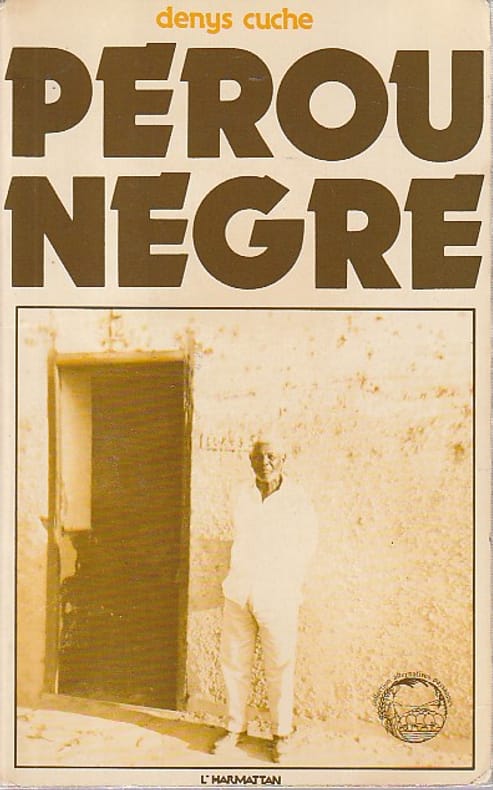
56765L'Harmattan, 1981, 192 pp., broché, couverture un peu défraîchie, état correct..
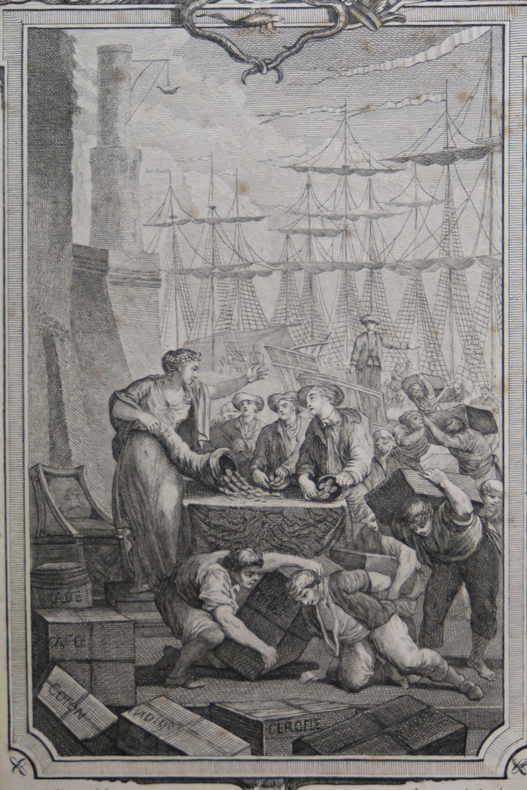
est30b1Dimension extérieur : 19,6 x 11 cm et image 14,6 x 9,8. Gravure en bon état malgré la présence de quelques rousseurs et épidermures. Elle fut réalisée par Charles Eisen (1720-1778), célèbre peintre et graveur français réputé pour avoir réalisé de nombreuses illustration pour les éditeurs de son temps.
14535Edition miniature. In 18 demi chagrin noir à nerfs et à coins, titre, filets dorés, caissons à froid, filets à froid sur les plats. 110x155mm. Faux-titre, frontispice gravé, titre, hommage de l’auteur un feuillet, une gravure, A la mémoire de Bernardin de Saint Pierre un feuillet 1 gravures. XXIII- 427 pages, 1 ais au relieur. Illustrations dans le texte avec frise décorative en encadrement. A Paris MASSON & Fils éditeurs 1839
6295suivi de la chaumière indienne,du café de Surate et du voyage de Codrus,in 12 pleine toile rouge à la bradel, reliure muette,étiquette de titre imprimée contrecollée sur le premier plat.Titre,356 pages,vignettes,lettrines de TRIMOLLET,C.JACQUES,LAVILLE,rousseurs habituelles Maresq éditeur 1845
186135992New York: D. Appleton and Company 1861. First Edition. Wraps. Good. Wraps. 34 pages. Original printed stitched wraps with title on the outer cover. Light edge chips and to the covers. Front cover lightly soiled. Interior contents are clean. Inscribed at the top of the front cover but it does not resemble the author's signature. Speech given during an Alumni Association meeting Dartmouth. <br /> <br /> From wikipedia:<br /> <br /> Caleb Sprague Henry was born in Rutland Massachusetts on August 2 1804.2 He graduated from Dartmouth College in 1825 and studied theology at Andover Theological Seminary and New Haven.3. In 1828 he became a Congregational minister at Greenfield Massachusetts and in 1833 removed to Hartford Connecticut. In 1834 he started the American Advocate of Peace the organ of the American Peace Society. In 1835 he entered the ministry of the Protestant Episcopal church.1 He also became professor of moral and intellectual philosophy in Bristol College Pennsylvania 1835–1838. In 1837 with the aid of Rev. Francis L. Hawks he established the New York Review. He was professor of history and philosophy in New York University from 1839 to 1852. Later he was rector of various churches but was chiefly engaged in literary work. He translated Guizot's History of Civilization and other works from the French and was the author of several works including Compendium of Christian Antiquities 1837 Social Welfare and Human Progress 1860 and Satan as a Moral Philosopher 1877.4 He died in Newburgh New York on March 9 1884.25<br /> <br /> <br /> Sabin 31387. D. Appleton and Company unknown