335 résultats
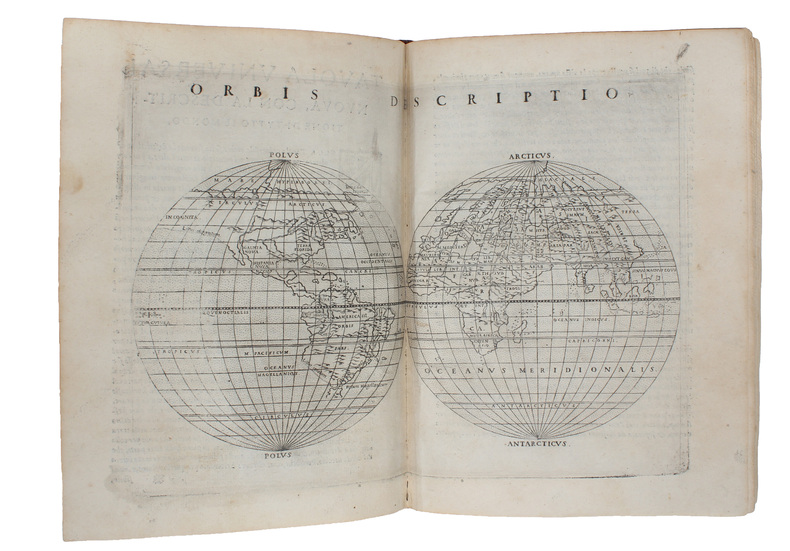
1564265015Venice: Giordano Ziletti 1564. hardcover. very good. 3 parts in 1. Each part has a separate title page with large printer's device. Part 2: Espositioni et Introduttioni Universali di Girolamo Ruscelli sopra tutta la Geografia di Tolomeo. Part 3: Discorso Universale di M. Gioseppe Moleto mathematico. Illustrated with 63 of 64 fine double-leaf copper engraved maps including the rare "World in Hemispheres". Additional large in-text engravings and decorative initials throughout. 8 358 110 204 48 index 47 pages. Short thick 4to bound in old calf with gilt devices on covers neatly re-cased binding well-rubbed but very sound; very clean copy virtually free of foxing; one map ink stained; lacks the final world map "Carta Marina" a.e.g. Venetia: Appresso Giordano Ziletti 1564. Text in Italian. Bookplate of Otto Orren Fisher pasted on inside cover. Manuscript note in ink on title page reads: Ex Libris Stephan Tiapas.<br/> <br/> Second edition of Ruscelli's Italian translation very similar to the edition of 1561 and containing the same series of maps. The double- page maps are partly based on those of Jacopo Gastaldi in the edition of 1548 but on a larger scale. According to Nordenskiold two important innovations were introduced by the 1561 edition into cartographical literature. One: the division of the Map of the World in two hemispheres. Two: The re-issue of the Zeno Map of the Arctic Regions which had appeared first 3 years before. "If the remarkable map in this little work had not received extensive circulation under the sanction of Ptolemy's name it would probably have been forgotten. During nearly a whole century it exercised an influence on the mapping of the northern countries to which there are few parallels in the history of cartography".<br> <br> Girolamo Ruscelli c. 1504-1566 was a Venetian editor whose maps are primarily based on those by Jacopo Gastaldi 1548 but with many of his own additions and reproduced on a larger scale. Ruscelli introduces several important innovations in this volume through his 37 "modern" maps which cover Europe Africa Asia and the New World. Ruscelli includes a double hemisphere world map which was the first of its kind to be used in an atlas and "Carta Marina Nuova Tavola" a rare sea chart of the world. He includes a revised version of the Zeno map of the Arctic first published in 1558. The Zeno map describes the purported journey of the author's ancestors in the 1390s to Greenland Iceland the mythical islands of Frisland and Icaria and what is now thought to be Newfoundland and Labrador. While Zeno shows Greenland connected to Norway Ruscelli has updated the map by eliminating this land bridge. Despite its inaccuracies and inclusion of mythical lands the Zeno map persisted as the prevailing map of the Arctic and Greenland for many years. Six other New World maps include the South American continent Brazil Central America and the Baja Peninsula the eastern coast of North America Cuba and Hispaniola. Claudius Ptolemy 90-168 CE was a Roman geographer and mathematician living in Egypt who compiled his knowledge and theories about the world's geography into one seminal work. Although his maps did not survive his mathematical projections and location coordinates did. During the Renaissance revival of Greek and Roman works "Geographia" was rediscovered by monks and based upon Ptolemy's detailed instructions the maps were recreated. The first printed edition of "Geographia" with maps was published in Bologna in 1477. A rare and exciting edition for any collector. Sabin 66504<br/> <br/> Giordano Ziletti unknown
1564265015Venice: Giordano Ziletti 1564. hardcover. very good. 3 parts in 1. Each part has a separate title page with large printer's device. Part 2: Espositioni et Introduttioni Universali di Girolamo Ruscelli sopra tutta la Geografia di Tolomeo. Part 3: Discorso Universale di M. Gioseppe Moleto mathematico. Illustrated with 63 of 64 fine double-leaf copper engraved maps including the rare "World in Hemispheres". Additional large in-text engravings and decorative initials throughout. 8 358 110 204 48 index 47 pages. Short thick 4to bound in old calf with gilt devices on covers neatly re-cased binding well-rubbed but very sound; very clean copy virtually free of foxing; one map ink stained; lacks the final world map "Carta Marina" a.e.g. Venetia: Appresso Giordano Ziletti 1564. Text in Italian. Bookplate of Otto Orren Fisher pasted on inside cover. Manuscript note in ink on title page reads: Ex Libris Stephan Tiapas.<br/><br/> Second edition of Ruscelli's Italian translation very similar to the edition of 1561 and containing the same series of maps. The double- page maps are partly based on those of Jacopo Gastaldi in the edition of 1548 but on a larger scale. According to Nordenskiold two important innovations were introduced by the 1561 edition into cartographical literature. One: the division of the Map of the World in two hemispheres. Two: The re-issue of the Zeno Map of the Arctic Regions which had appeared first 3 years before. "If the remarkable map in this little work had not received extensive circulation under the sanction of Ptolemy's name it would probably have been forgotten. During nearly a whole century it exercised an influence on the mapping of the northern countries to which there are few parallels in the history of cartography".<br><br>Girolamo Ruscelli c. 1504-1566 was a Venetian editor whose maps are primarily based on those by Jacopo Gastaldi 1548 but with many of his own additions and reproduced on a larger scale. Ruscelli introduces several important innovations in this volume through his 37 "modern" maps which cover Europe Africa Asia and the New World. Ruscelli includes a double hemisphere world map which was the first of its kind to be used in an atlas and "Carta Marina Nuova Tavola" a rare sea chart of the world. He includes a revised version of the Zeno map of the Arctic first published in 1558. The Zeno map describes the purported journey of the author's ancestors in the 1390s to Greenland Iceland the mythical islands of Frisland and Icaria and what is now thought to be Newfoundland and Labrador. While Zeno shows Greenland connected to Norway Ruscelli has updated the map by eliminating this land bridge. Despite its inaccuracies and inclusion of mythical lands the Zeno map persisted as the prevailing map of the Arctic and Greenland for many years. Six other New World maps include the South American continent Brazil Central America and the Baja Peninsula the eastern coast of North America Cuba and Hispaniola. Claudius Ptolemy 90-168 CE was a Roman geographer and mathematician living in Egypt who compiled his knowledge and theories about the world's geography into one seminal work. Although his maps did not survive his mathematical projections and location coordinates did. During the Renaissance revival of Greek and Roman works "Geographia" was rediscovered by monks and based upon Ptolemy's detailed instructions the maps were recreated. The first printed edition of "Geographia" with maps was published in Bologna in 1477. A rare and exciting edition for any collector. Sabin 66504<br/><br/> Giordano Ziletti unknown books
156118808Venedig, Valgrisi, 1561. 3 Teile in 1 Bd. 4 nn. Bll., 358 S., 1 Bl.; 28 Bll., 47 S., 24 Bll. mit einigen Textholzschnitten. 64 doppelblattgroßen Kupferkarten (mit Rückentext). Gr.-8°. Pgmt. der Zeit mit hs. Rückentitel (Gebrssprn.). [5 Warenabbildungen]
157418848Venetia (Venice), Giordano Ziletti, 1574-(73). 4to. Hcalf from ab 1820. Gilt back. Slight rubbing to spine. (78),350 pp. and 65 double-page engraved maps with text on verso of plates (130) pp,56,65 pp. 6 textlvs. at end with brownspots in right margin, sometimes a little browning to pages, few brownspots and a few textlvs. with minor wormtracts. Complete with all 65 maps called for, each measuring ab. 19 x 26 cm. A great part of the maps have some background shadowing from the printers ink, mainly due to the fact, that this is the third Ruscelli-edition, where the plates have been used before. 3 printer's wood-cut devices and 20 smaller and larger woodcuts in the text. 2 woodcuts with Ptolemy shown observing.
157418848Venetia Venice Giordano Ziletti 1574-73. 4to. Hcalf from ab 1820. Gilt back. Slight rubbing to spine. 78350 pp. and 65 double-page engraved maps with text on verso of plates 130 pp5665 pp. 6 textlvs. at end with brownspots in right margin sometimes a little browning to pages few brownspots and a few textlvs. with minor wormtracts. Complete with all 65 maps called for each measuring ab. 19 x 26 cm. A great part of the maps have some background shadowing from the printers ink mainly due to the fact that this is the third Ruscelli-edition where the plates have been used before. 3 printer's wood-cut devices and 20 smaller and larger woodcuts in the text. 2 woodcuts with Ptolemy shown observing. <br/><br/><em>Third edition of Ruscelli's translation from Venice 1561. The maps are printed from the same plates with the exception of Ptolemy's map of the world for which Malomba had returned to the original conical projection of Ptolemy. Moreover one map is added: the map of "Territorio di Roma". In general the maps are enlarged copies of Gastaldi's maps from the edition of 1548 which came out in 8vo. The Ruscelli translation contains an important innovation namely the division of the world map into two parts one for the Old World and one for the New as seen on the plate "Tavola Universal" depicting the 2 hemispheres. The atlas contains 27 ptolemaic maps and 38 new. 1 World 1 Hemisphere 10 Europe 4 Africa 12 Asia and 38 others. 10 of the maps relate to America.Philipps I:380. Sabin 66505. Nordenskiöld Nr. 34 p.27. </em> unknown
1561220449Venice: Vincenzo Valgrisi 1561. hardcover. very good. Venice: Vincenzo Valgrisi 1561. 3 parts in 1 volume: "La Geografia" by Ptolemy Ruscelli's "Espositioni et Introduttioni Universali" and "Discorso Universale di M. Gioseppe Moleto mathematico". Short thick 4to bound in full contemporary vellum with red speckled edges modern description pasted on spine. Features 64 double page maps: 27 Ptolemaic maps showing the ancient world as Ptolemy knew it including one world map 37 "modern" maps with two world maps and several woodcut diagrams illustrations and decorative initials. First Italian edition. Binding well-worn at edges. Small wormholes in a few pages of text. Library stamp manuscript notes and seal in red ink on title page. Marginal dampstains and occasional foxing with small pencil and contemporary ink notations in margins and on some maps. In general maps are clean and bright. Bookplate of Otto Orren Fisher and ink inscription dated 1724.<br/><br/> Girolamo Ruscelli c. 1504-1566 was a Venetian editor. He introduces several important innovations in this volume through his 37 "modern" maps which cover Europe Africa Asia and the New World. Ruscelli includes a double hemisphere world map which was the first of its kind to be used in an atlas and "Carta Marina Nuova Tavola" a rare sea chart of the world. He includes a revised version of the Zeno map of the Arctic first published in 1558. The Zeno map describes the purported journey of the author's ancestors in the 1390s to Greenland Iceland the mythical islands of Frisland and Icaria and what is now thought to be Newfoundland and Labrador. While Zeno shows Greenland connected to Norway Ruscelli has updated the map by eliminating this land bridge. Despite its inaccuracies and inclusion of mythical lands the Zeno map persisted as the prevailing map of the Arctic and Greenland for many years. Six other New World maps include the South American continent Brazil Central America and the Baja Peninsula the eastern coast of North America Cuba and Hispaniola. Claudius Ptolemy 90-168 CE was a Roman geographer and mathematician living in Egypt who compiled his knowledge and theories about the world's geography into one seminal work. Although his maps did not survive his mathematical projections and location coordinates did. During the Renaissance revival of Greek and Roman works "Geographia" was rediscovered by monks and based upon Ptolemy's detailed instructions the maps were recreated. The first printed edition of "Geographia" with maps was published in Bologna in 1477. A rare and exciting edition for any collector.<br/><br/> Vincenzo Valgrisi unknown books
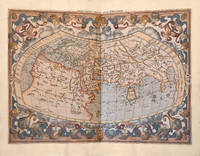
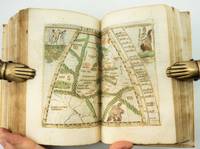
[Anno MCCCCLXXXII augusti vero kalendas XVII impressum Ulme per ingeniosum virum Leonardum Hol. (Ulm, Lienhart Holle, 16 luglio 1482)]. Foglio del "Tolomeo di Ulm" (prima edizione, del 16 luglio) recante la carta geografica della penisola indocinese impressa in xilografia a doppia pagina su una facciata e il relativo testo descrittivo, stampato su una pagina dell'altra facciata. Il foglio misura mm. 401x523; l'immagine, misura, al filetto esterno della xilografia, mm. 380x300 (nel punto più corto in larghezza) e mm. 380x372 (nel punto più lungo in larghezza). Coloritura a mano originale. Sulla xilografia sono visibili delle ossidazioni dovute alla presenza al verso del foglio d'una cornice e d'una iniziale a stampa miniate con un colore verde che col tempo ha ossidato la carta. Nel 1482 Lienhart Holle pubblicò ad Hulm una edizione della Geografia di Tolomeo basata sulle carte di Nicolaus Germanus (c. 1420 - c. 1490) che aveva prodotto a Firenze una serie di magnifici atlanti manoscritti su pergamena negli anni 60 e 70 del Quattrocento. Il modello sul quale furono esemplate le carte di Hulm fu l'atlante manoscritto che Nicolaus aveva offerto al papa Paolo II e che pare fosse stato inviato appositamente in Germania (senza essere mai più rispedito a Roma: è conservato allo Schloss Wolfegg). L'edizione di Ulm è il primo atlante pubblicato a Nord delle Alpi e il primo con le carte impresse in xilografia (i due incunaboli precedenti della Geografia di Tolomeo - Bologna 1477 e Roma 1478 - recavano carte incise in rame). L'incisore delle xilografie fu probabilmente Johann Schnitzer di Armsheim (il planisfero reca la sua firma). Una delle mappe più ricercate della penisola indocinese, la terza in assoluto, in ordine di tempo, che sia stata impressa in un atlante a stampa. Per quanto riguarda il Tolomeo stampato ad Ulm cfr. Gof P1084; HC *13539; BMC II 538; IC.9309; Schreiber 5031; Sabin 66472; Nordenskiold Collection II, 199.Sheet of "Ptolemy of Ulm" (first edition, July the 16th, 1482) bearing the geographical map of the Indochinese peninsula printed in double-page woodcut on one side and the relative descriptive text, printed on one page of the other side. The sheet measures mm. 401x523; the image measures, to the external fillet of the woodcut, mm. 380x300 (at the shortest point in width) and mm. 380x372 (at the longest point in width). Original hand coloring. On the woodcut you can see some oxidations due to the presence on the back of the sheet of a frame and of an initial illuminated with a green color that over time has oxidized the paper. In 1482 Lienhart Holle published in Hulm an edition of Ptolemy's Geography based on the maps of Nicolaus Germanus (c. 1420 - c. 1490) who had produced in Florence a series of magnificent handwritten atlases on parchment in the 1460s and 1470s. The model on which Hulm's maps were patterned was the manuscript atlas that Nicolaus had offered to Pope Paul II and which seems to have been specially sent to Germany (without ever being sent back to Rome: it is kept at Schloss Wolfegg). The Ulm edition is the first atlas published north of the Alps and the first with the maps printed in woodcut (the two previous incunabula of Ptolemy's Geography - Bologna 1477 and Rome 1478 - had copper engraved maps). The engraver of the woodcuts was probably Johann Schnitzer of Armsheim (the planisphere bears his signature). One of the most sought after maps of the Indochinese peninsula, the third ever, in order of time, which has been imprinted in a printed atlas.
154795367Venice: G. B. Pedrezano 1547. First complete edition in Italian of Ptolemy's "first atlas of the new world" Nordenskiold and the most detailed and comprehensive world atlas published prior to Ortelius's Theatrum in 1570. Small octavo bound in full vellum with gilt morocco spine label all edges speckled red woodcut border to the title page woodcut initials and illustrations throughout the text including a portrait of an astronomer and 60 double-page engraved maps designed by Giacomo Gastaldi. The majority of the 34 maps of the modern world are entirely new first appearances including 7 maps of the Americas. Among the maps of the Americas is the Nueva Hispania tabula nova which shows the Mississippi and Florida area and is the first separate printed map of the region. Also included is the landmark Tierra Nueva map of the North American coast from Florida to Labrador. In fine condition. Housed in a custom cloth clamshell box. An exceptional example of this landmark work. Ptolemy's Geographia or Geography first appeared in Greek in Alexandria circa 150 C.E. as a new revision of the now non-extant atlas of Marinus of Tyre using additional Roman and Persian geographical dictionaries and principles. The Geography's translation into Arabic in the 9th century and Latin in 1406 was highly influential on the geographical knowledge and cartographic traditions of the medieval Caliphate and Renaissance Europe. No Greek manuscript of the Geography survives from earlier than the 13th century and the first Latin translations were completed circa 1406 by by Jacobus Angelus in Florence Italy under the name Geographia Claudii Ptolemaei. Published in 1547 the present small-format edition became the most comprehensive world atlas ever published prior to the publication of Ortelius's Theatrum in 1570. G. B. Pedrezano hardcover books
ABAA-75TH-VBF-18<p>Leiden; Amsterdam: Isaac Elzevir; Jodocus Hondius 1618-1619.</p><p>2 folio volumes: I/ 7 ll. including 1 portrait of Petrus Bertius 253 pp. 1 l.; II/ 28 double-page maps 28 pp. 20 ll. 2 ll.; 46 pp. 8 map segments spread over 4 double-pages 20 pp. 1 full-page map between pp. 10 and 11 1 l. <em>"Abrahami Ortelii Geographise veteris Tabvlae aliquot</em>" in 35 ll. including a half-title and 14 double-page maps complete.</p><p>Full ivory vellum decorated and varnished spines covers of the first volume renewed<em>. Elegant contemporary binding.</em></p><p>408 x 275 mm.</p><p><strong>A complete copy containing 28 double-page maps originally published by Mercator in 1578</strong> 19 maps 15 double-page of Ortelius' <em>Parergon</em> a folding map and the 4 double-page maps that make up the famous <em>Tabula Peutingeriana</em>. The <em>Tabula</em> reproduces the renown manuscript map of the XII century now preserved at the Albertina in Vienna which incorporates an original Roman road map of the third century printed for the first time in 1591 by Welser in Venice.</p><p><strong>First edition of the famous and extremely rare "Theatrum Geographiae Veteris".</strong></p><p><strong>A copy in superb contemporary colors complete in particular with the often missing folding map of Egypt from this 1618-1619 Ptolemy extremely rare and considered by the great bibliographer Sabin as</strong> "<em>An important and valuable work</em>".</p><p>" An important and valuable work containing 47 maps in all. The 28 maps in the first part are on double pages with one exception and were evidently printed from the same plates as those in the editions of 1578 1584 and 1605. They comprise the "<em>Vniversalis Tabvla ivxta Ptolemaeum</em>" ten of Europe five of Africa one of which is on a single leaf entitled "Appendix. III. Tabvlae Afr :" verso blank and twelve of Asia. The Peutingerian tables in 4 double-page plates were engraved and published for the first time nearly twenty years before and contain the imprint <em>Antverpiae è Typographeio nostro</em>. <em>Kal. Decemb</em>. In some copies the map "Scheda Prior" is accompanied by another entitled "Scheda Posterior" probably taken from another work.</p><p>The 14 maps of Ortelius comprise : <em>Evropa</em> sig. QQ; <em>Britannica Insvlae</em> RR; <em>Hispania</em> SS ; <em>Gallia Strabonis</em> VV ; <em>Belgivm</em> YY ; <em>Germania</em> 2.7. ; <em>Italia</em> CCC ; <em>Sicilia</em> DDD; <em>Dacia et Moesia</em> EEE; <em>Pontvs Evxinvs</em> FFF; <em>Thracia</em> GGG; <em>Graecia</em> HHH; <em>Africa Propria</em> III; and <em>Palaestina</em> KKK.</p><p>The backs of these maps and the intervening leaves contain the descriptive text. Most of them had been engraved for earlier editions of Ortelius's Atlas and some are dated 1590 1595 1596 1603 etc. In some copies the maps "<em>Britannicae Insvlae</em>" "<em>Hispania</em>" "<em>Germania</em>" "<em>Sicilia</em>" and "<em>Palaestina</em>" are slightly different and have the descriptive text on the backs in double columns and in larger type - perhaps taken from the 1624 edition of the "<em>Theatri Orbis Terrarvm Parergon</em>" of Ortelius. The portrait of Mercator is the same as in the edition of 1605. Brunet describes a copy in which the verso of the dedication leaf contained a portrait of Petrus Bertius. " Sabin</p><p><strong>Our copy contains this rare portrait of Petrus Bertius on the verso of the dedication to Louis XIII at the beginning of the first volume.</strong></p><p>Collation : 2 preliminary leaves comprising the general title verso blank and the engraved title with a globe to the first volume verso blank no sig. ; the dedication to Louis XIII on one leaf with a portrait of Petrus Bertius on the back followed by the preface in 5 leaves sig. and in twos ; the Greek and Latin text in parallel columns pp. 1-253 verso blank followed by the title to the maps in Greek and Latin with verses on the back sig. A-X in sixes and Z in two ; 28 maps on 55 leaves mostly with descriptive text on the backs sig. A-Bb in twos and a single leaf between P and Q ; Mercator's annotations on the maps comprising the half title with portrait of Mercator on the verso and pp. 3-28 sig. Cc-Dd in sixes and Ee in two ; the " Index Locorum " etc. in 20 leaves sig. AA-CC in sixes and DD in two; the engraved title to the second volume verso blank; the "Itineraria dvo Antonini Pii" pp. 2 1-46 sig. DD3 in four EE-GG in sixes and HH in two; the "Tabulae Pevtingerianae" comprising 8 segments of a map in 4 double-page plates on 8 leaves with text on the backs sig. II-MM in twos ; the " Praefatio in fragmenta Tabulae itinerariae antiquae pp. 1-4 " Prioris Schedae Explicatio " pp. 5-16 and "Posterioris Schedae Explicatio" pp. 17-20 sig. NN in six and OO in four with a map entitled "Scheda Prior" on a separate leaf between pages 4 and 5 verso blank; sig. PP in one QQ-SS in twos TT in one VV in two XX in three YY-ZZ in twos AAA-BBB in ones and CCC-KKK in twos; and one leaf containing "Ad Lectorem" etc. on the recto and the colophon on the verso sig. LLL.</p><p><strong>Precious complete atlas in sumptuous contemporary colors and binding extremely rare. </strong></p><p>FR</p><p>Leiden; Amsterdam: Isaac Elzevir; Jodocus Hondius 1618-1619.</p><p>2 volumes in-folio : I/ 7 ff. dont 1 portrait de Petrus Bertius 253 pp. ; 1 f. ; II/ 28 cartes sur double-page 28 pp. 20 ff. 2 ff. ; 46 pp. 8 segments d'une carte répartis sur 4 double-pages 20 pp. 1 carte à pleine page entre les pp. 10 et 11 1 f. "<em>Abrahami Ortelii Geographise veteris Tabvlae aliquot</em>" en 35 ff. comprenant un faux-titre et</p><p>14 cartes sur double-page complet.</p><p>Plein vélin ivoire dos décorés et vernis plats du tome premier renouvelés. <em>Élégante Reliure de l'époque.</em></p><p>408 x 275 mm.</p><p><strong>A complete copy containing 28 double-page maps originally published by Mercator in 1578</strong> 19 maps 15 double-page of Ortelius' <em>Parergon</em> a folding map and the 4 double-page maps that make up the famous <em>Tabula Peutingeriana</em>. The <em>Tabula</em> reproduces the renown manuscript map of the XII century now preserved at the Albertina in Vienna which incorporates an original Roman road map of the third century printed for the first time in 1591 by Welser in Venice.</p><p><strong>Edition originale du " Theatrum Geographiae Veteris " fort célèbre et rarissime.</strong></p><p><strong>Exemplaire en superbe coloris de l'époque complet notamment de la carte dépliante de l'Égypte qui manque souvent de ce Ptolémée de 1618-1619 fort rare et considéré par le grand bibliographe Sabin comme</strong> " <em>An important and valuable work ".</em></p><p>" <strong>An important and valuable work containing 47 maps in all.</strong> The 28 maps in the first part are on double pages with one exception and were evidently printed from the same plates as those in the editions of 1578 1584 and 1605. They comprise the "<em>Vniversalis Tabvla ivxta Ptolemaeum</em>" ten of Europe five of Africa one of which is on a single leaf entitled "Appendix. III. Tabvlae Afr :" verso blank and twelve of Asia. The Peutingerian tables in 4 double-page plates were engraved and published for the first time nearly twenty years before and contain the imprint <em>Antverpiae è Typographeio nostro</em>. <em>Kal. Decemb</em>. In some copies the map "Scheda Prior" is accompanied by another entitled "Scheda Posterior" probably taken from another work.</p><p>The 14 maps of Ortelius comprise : <em>Evropa</em> sig. QQ; <em>Britannica Insvlae</em> RR; <em>Hispania</em> SS ; <em>Gallia Strabonis</em> VV ; <em>Belgivm</em> YY ; <em>Germania</em> 2.7. ; <em>Italia</em> CCC ; <em>Sicilia</em> DDD; <em>Dacia et Moesia</em> EEE; <em>Pontvs Evxinvs</em> FFF; <em>Thracia</em> GGG; <em>Graecia</em> HHH; <em>Africa Propria</em> III; and <em>Palaestina</em> KKK.</p><p>The backs of these maps and the intervening leaves contain the descriptive text. Most of them had been engraved for earlier editions of Ortelius's Atlas and some are dated 1590 1595 1596 1603 etc. In some copies the maps "<em>Britannicae Insvlae</em>" "<em>Hispania</em>" "<em>Germania</em>" "<em>Sicilia</em>" and "<em>Palaestina</em>" are slightly different and have the descriptive text on the backs in double columns and in larger type - perhaps taken from the 1624 edition of the "<em>Theatri Orbis Terrarvm Parergon</em>" of Ortelius. The portrait of Mercator is the same as in the edition of 1605. Brunet describes a copy in which the verso of the dedication leaf contained a portrait of Petrus Bertius. " Sabin</p><p><strong>Notre exemplaire comporte ce rare portrait de Petrus Bertius au verso de la dédicace à Louis XIII au début du premier volume.</strong></p><p>Collation : 2 preliminary leaves comprising the general title verso blank and the engraved title with a globe to the first volume verso blank no sig. ; the dedication to Louis XIII on one leaf with a portrait of Petrus Bertius on the back followed by the preface in 5 leaves sig. and in twos ; the Greek and Latin text in parallel columns pp. 1-253 verso blank followed by the title to the maps in Greek and Latin with verses on the back sig. A-X in sixes and Z in two ; 28 maps on 55 leaves mostly with descriptive text on the backs sig. A-Bb in twos and a single leaf between P and Q ; Mercator's annotations on the maps comprising the half title with portrait of Mercator on the verso and pp. 3-28 sig. Cc-Dd in sixes and Ee in two ; the " Index Locorum " etc. in 20 leaves sig. AA-CC in sixes and DD in two; the engraved title to the second volume verso blank; the "Itineraria dvo Antonini Pii" pp. 2 1-46 sig. DD3 in four EE-GG in sixes and HH in two; the "Tabulae Pevtingerianae" comprising 8 segments of a map in 4 double-page plates on 8 leaves with text on the backs sig. II-MM in twos ; the " Praefatio in fragmenta Tabulae itinerariae antiquae pp. 1-4 " Prioris Schedae Explicatio " pp. 5-16 and "Posterioris Schedae Explicatio" pp. 17-20 sig. NN in six and OO in four with a map entitled "Scheda Prior" on a separate leaf between pages 4 and 5 verso blank; sig. PP in one QQ-SS in twos TT in one VV in two XX in three YY-ZZ in twos AAA-BBB in ones and CCC-KKK in twos; and one leaf containing "Ad Lectorem" etc. on the recto and the colophon on the verso sig. LLL.</p><p><strong>Précieux atlas complet en somptueux coloris et reliure de l'époque d'une grande rareté.</strong></p> hardcover
1548ST20876Venice: Giovanni Baptista Pedrezano 1548. First Complete Edition in Italian. Translated by Pietro Andrea Mattioli. Binding size: 175 x 116 mm. 6 7/8 x 4 5/8". ENTIRELY COMPLETE: binder's blank 816 pp. collating as dagger8 A-DD8 DD8 being blank 240 pp. as maps a-h8. <br/> Modern 19th century vellum over flexible boards three raised double bands new pastedowns and free endpapers. Woodcut initials throughout occasional diagrams one full-page decorative woodcut side-borders to title-page fine woodcut portrait of Ptolemy observing the heavens and 60 DOUBLE-PAGE COPPER-ENGRAVED MAPS BY GIACOMO GASTALDI ALL COLORED BY A CONTEMPORARY HAND the land masses enhanced with small depictions of ships mermaids sea monsters strange human figures wild and domestic animals including fish an elephant leopard and chicken and other charming embellishments Pedrezano's large woodcut device on colophon leaf 2D7r and verso of final leaf the maps with landmarks and place names each map guarded by a thin vellum strip taken from a 14th century manuscript executed in a fine scribal hand. Front flyleaf with the early signature of Lelio Capilupi presumably belonging to the book's first or at least early owner and very possibly being that of the Mantuan poet humanist and courtier Lelio Capilupi 1497-1560 known for his "Centones ex Virgilio." Adams P-2234; Alden & Landis 548/31; Burden North America 16 & 17; EDIT16 CNCE 47524; Harrisse BAV 285; JCB3 I:153; Mortimer Italian 404; Nordenskiold 2:214; Phillips Atlases 369; Sabin 66502; Shirley Mapping of the World 87 & 88; Streeter sale 1. Spine and part of the covers with some darkening apparently as an antiquing effect but the binding completely solid and entirely harmless. Intermittent faint dampstain at various places on the page though the vast majority of leaves unaffected map of British Isles with very small repaired hole caused by acidic paint only visible if you look for it bottom margin of three maps and one left margin of another neatly reinforced a handful of margins a bit smudged other trivial imperfections but an extremely attractive copy internally the paper remarkably strong and fresh and with virtually none of the signs of use so often seen with early atlases.<br/> <br/> Because of its innovative size its extensive use of copper engravings instead of woodcuts its introduction of nearly three dozen modern maps and especially its new images of the Americas this is a landmark cartographical publication--and the copy we offer is an extremely rare example of the work enriched with full contemporary hand coloring. It is the first complete printing in Italian following Berlinghieri’s verse paraphrase of 1482 of Ptolemy's universally recognized atlas of the classical world and much more important it is the first version of the work small enough to be practicably carried by hand or in a purse or pocket. In addition although a very small number of earlier atlases exist with copper engravings no previous one is engraved to the extent seen here with five dozen double-page maps presenting dramatically finer detail for example in more refined coastlines and more cleanly realized decorative elements than was possible with images cut from wood. As Nordenskiold notes our 1548 edition was a kind of rediscovery of the virtues of the intaglio cartographic image with no engraved atlas having been printed in the 16th century before ours. In terms of content of central importance here are first engraved maps of parts of North and South America providing legitimacy to Nordenskiold's characterization of our work as "the very first atlas of the New World." There are seven major America-related cartographical achievements in our Pedrezano edition five of them being the modern World map map 59; the other world map "Carta marina" which is the first sea chart depicting the modern world map 60; "Tierra nova" the first separate map of the South American Continent map 54; "Nueva Hispania" the earliest separate map of the Gulf Coast Mexico and the present American Southwest map 55; and "Tierra nueva" the earliest individual map of the east coast of North America from north Florida to Labrador map 56 showing the discoveries of Giovanni da Verrazzano and Jacques Cartier. These last three plus a map of Cuba and one of Hispaniola represent the earliest printed American regional maps. Beyond the American images the 1548 "Geografia" also includes an atypically exo-European eclecticism highlighted by what is apparently the first separate map of the Indian peninsula along with the first separate map devoted to Arabia and the first reference to Singapore on a printed map. The maps were the work of Giacomo Gastaldi ca. 1500 - 1566 Cosmographer to the Venetian Republic and the most prominent Italian cartographer of the period known especially for keeping up to date with the latest geographical discoveries and incorporating them into his maps. While 26 of the 60 maps are based on Ptolemy distinctive here and in other editions within their trapezoidal frames the greater number 34 are the modern work of Gastaldi. The book is consequently one of the very best examples of the integration of the period's Age of Discovery with the groundwork laid by Classical writers. Gastaldi was also responsible for updating and adding modern place names an enormous undertaking as is reflected in the 127-page index here. The history of world exploration owes an immeasurable debt to Claudio Tolomeo ca. 90 - ca. 168 AD who included in his "Geografia" what was known about the geography of the world during the Roman Empire of his lifetime and except for some excavated carved maps Ptolemy's are essentially all we have as a source for the world trodden by the ancients. Manuscripts of his work are known to date as early as ca. 1300 and there were multiple 15th century printings. But all incunabular editions were very large books volumes to be beheld rather than be held and used in any portable context. Waldseemuller's 1513 Strassburg edition was just as weighty. By contrast our edition offered its owner a much more practical format and yet because of its broadening world of 60 maps it was nevertheless the most comprehensive atlas--and the most important one--published between Waldseemuller's and the monumental Ortelius "Theatrum" of 1570. Copies of the 1548 Ptolemy appear on the market from time to time though they typically are beset with condition problems. What seems never to appear--at least so far as we've been able to ascertain--are copies of the book with contemporary coloring. Surely even with a small format atlas issued for functional purposes there must have been copies that were colored on occasion. The Morgan Library does own a copy--apparently once possessed by Marie de Medici--that is colored and it is possible that such copies silently reside in other admittedly sometimes very brief records of institutional holdings but we were unable to find any evidence of such. Likewise and perhaps more telling we were unable to find any copies with period color in auction records which certainly would have prominently announced such an important feature. The Streeter copy and the Wardington copy for example were uncolored. In sum this is a cartographic work of signal importance in especially attractive condition with no small amount of charm in its maps' various real and imagined inhabitants and offered in a colored state that seems virtually never to appear for sale. Giovanni Baptista Pedrezano unknown