2 100 résultats
Very Good German Original color map on cloth. Folded. A good copy. Oblong folio. (45 x 51 cm). In German. [MAP of OTTOMAN BALKANS] L.13. Durazzo. Vilajet Scutari - Mittel Albanien. [Scutari Province - Middle Albania]. Turkish toponyms in German. A sheet of the collection of 'The general map of Central Europe'. appeared in the years between 1873-1876 with the work of Joseph Ritter von Scheda, (1815-1888) who was a general, geographer and cartographer.
Very Good German Original color map on cloth. Folded. Oblong folio. (45 x 51 cm). In German. [MAP of OTTOMAN BALKANS] M.13. Monastir (Köprülü). Macedonia. A sheet of the collection of 'The general map of Central Europe'. appeared in the years between 1873-1876 with the work of Joseph Ritter von Scheda, (1815-1888) who was a general, geographer and cartographer.
Very Good German Original color map on cloth. Folded. A good copy. Oblong folio. (45 x 51 cm). In German. [MAP of OTTOMAN BALKANS] N.13. Seres. [Serres]. Greece - Macedonia. A sheet of the collection of 'The general map of Central Europe'. appeared in the years between 1873-1876 with the work of Joseph Ritter von Scheda, (1815-1888) who was a general, geographer and cartographer.
Very Good German Original color map on cloth. Folded. A good copy. Oblong folio. (45 x 51 cm). In German. [MAP of OTTOMAN BALKANS] P.13. Dimotika. [Northern Greece - Western Thrace - Evros]. A sheet of the collection of 'The general map of Central Europe'. appeared in the years between 1873-1876 with the work of Joseph Ritter von Scheda, (1815-1888) who was a general, geographer and cartographer.
Very Good German Original color map on cloth. Folded. A good copy. Oblong folio. (45 x 51 cm). In German. [MAP of OTTOMAN BALKANS] P.9. Galatz - Donau River. A sheet of the collection of 'The general map of Central Europe'. appeared in the years between 1873-1876 with the work of Joseph Ritter von Scheda, (1815-1888) who was a general, geographer and cartographer.
Very Good German Original color map on cloth. Folded. A good copy. Oblong folio. (45 x 51 cm). In German. [MAP of ROMANIA] M.10. Orsova. Danube River. Orsova is a port city on the Danube river in southwestern Romania's Mehedin?i County. It is one of four localities in the county located in the Banat historical region. It is situated just above the Iron Gates, on the spot where the Cerna River meets the Danube. A sheet of the collection of 'The general map of Central Europe'. appeared in the years between 1873-1876 with the work of Joseph Ritter von Scheda, (1815-1888) who was a general, geographer and cartographer.
Very Good German Original color map on cloth. Folded. Oblong folio. (45 x 51 cm). In German. [MAP] Q.11. Cap Gülgrad. Kaliakra, Capo Calacria, Celigra Burun [and] Schwarzes Meer (Black Sea). Bulgarian Black Sea shores. A sheet of the collection of 'The general map of Central Europe'. appeared in the years between 1873-1876 with the work of Joseph Ritter von Scheda, (1815-1888) who was a general, geographer and cartographer.
Very Good Turkish Paperback. Small 4to. (26 x 19 cm). In Turkish. 47-128 pp., many color ills. Printed on special paper. Fatih ilçesinin Osmanli dönemi eserleri. [Separatum 'Fotograflarla Fatih Anitlari']. Ottoman architectural works in Fatih district of Istanbul. A very comprehensive inventory. Signed and inscribed by Tanman as 'Muhterem Orhan Tükel Beyefendiye...".
New New Turkish Original bdg. Dust wrapper. 4to. (30 x 24 cm). In Turkish 104 p., b/w and color ills. Hamîd-i Evvel Külliyesi ve çevresi.
Fine Fine English Original bdg. Dust wrapper. 4to. (31 x 22 cm). In French and abstract in Turkish. [xi], 117 p., color and b/w ills. L'Eglise Armenienne Catholique en Turquie. Contents: Sommaire / Bibliographie / Preface / L'Eglise Armenienne Catholique en Turquie / Premiere Partie: Situation juridique de l'Eglise Armenienne Catholique en Turquie.; 1- L'Eglise Armenienne - Apercu historique.; 2- L'etablissement du Patriarcat Armenienne Catholique de Cilicie / 3- La situation juridique des Armeniens Catholiques d'Istanbul.; 4- La reconnaissance officielle des Armeniens Catholiques d'Istanbul.; 5- L'election du premier chef religieux. L'erection du Siege Primatial d'Istanbul. Le Chef Civil (Patrik) ou Patriarche.; 6- Les archeveques-primats et les patriarches civils.; 7- La fusion of l'unification des deuxobediences religieuses d'Istanbul et de Cilicie sous la houlette d'un seul Pasteur.; 8- Situation de l'Eglise Armenienne Catholique au debut du 20eme siecle.; Deuxieme Partie: Nos eglises.; 1- Eglise Saint Saveur de Galata.; 2- Eglise Saint Gregoire l'Illumimateur d'Ortakoy.; 3- Eglise Saint Trinite de Beyoglu.; 4- Eglise Immaculee Conception de Samatya.; 5- Eglise de l'Asomption de Buyukada (Prinkipo).; 6- Eglise Saint Jean Chrysostome de Taksim.; 7- Eglise Saint Jean-Baptiste de Yeniköy.; 8- Eglise Cathedrale Saint Marie de Sakizagac.; 9- Eglise Immaculee Conception de Pangalti.; 10- Eglise Saint Antoine de Tarabya et son Bienfaiteur.; 11- Eglise Saint Paul de Buyukdere et ses Bienfaiteurss.;12- Eglise Saint Leon de Kadiköy, sa construction et description.; 12- Eglise Saint Joseph de Mardin.; Annexes. - Turkish summary.
Very Good English Paperback. Pbo. Roy. 8vo. (23 x 16 cm). In Turkish. Ills. Extremely rare cult cinema periodical in Turkey. Punching hole on volumes. 7 issues. Filim, 1970-71. Türk Sinematek'in Yayin Organi olarak ayda bir yayinlanir. 7 issues.
New New English Original bdg. Dust wrapper. 4to. (32 x 24 cm). In Turkish. [viii], 307, [3] p., color and b/w ills. First Edition. Bir zamanlar Istanbul.
Very Good French Original sepia-toned photograph printed in a period photograph paper. 19x25 cm. Descriptive text in French. Chipped and tear on margins. Iranian was born in 1890 in Constantinople, Istanbul. It is known that he established his studio in 1891 in Pera district of Constantinople - the center of Armenian cultural and political life. In 1895 he enters into partnership with another photographer by the name of Gugasyan. By 1900s the business seems to have wound down as the images marked with his studio signature don't exhibit any over elements of the new century. Of all the major Armenian studios from Istanbul, Iranian's photographs are the rarest, and less than 300 are known to have survived. Iranian's primary subject was the city of Constantinople, its picturesque landscape, architectural heritage, and the many types of artisans and workers that populated its streets. Using the latest photography techniques, which allowed for very rapid exposures, Iranian captured the bustle of the city streets with remarkable clarity. Teeming with life and movement these images have a remarkable immediacy and documentary veracity quite unlike similar views produced by other photographers of the period. The typical approach for many of Iranian's contemporaries such as Sebah & Joalier or Guillame Berggren was to achieve as clear a picture as possible with perfectly balanced compositions and highly visible details - the hallmark of a 'good' commercial photographer. In contrast, Iranian's street views are full of photographic 'ruptures' - blurred figures in movement, surprised glances of people caught unawares - which give his works the viscerality of snapshots. But above all, Iranian was a master at capturing the mood of a place. Catching the Ottoman capital on the brink of rapid transformation, the photographer aimed to record many of its ancient streets and quarters disappear or change the appearance. Thus, like the Parisian street photography of Atget, Iranian's images are 'nostalgic for the present' that is irrevocably slipping into the past. In his studio, the clientele had the choice of a large range of costumes and props through which the modern urbanite could slip into the role of some long-gone ethnic or street type and become a part of history. It is this sense of melancholy that gives Iranian's photographs their subtle emotional power. This is also perhaps the reason why he was ultimately not as successful as a commercial photographer. Modernity had captured the imagination of the people and the wistful romanticism of Iranian's markedly less spectacular images was fast going out of fashion. The small legacy he has left behind is nevertheless of significance in the history of Near-Easter photography. He was one of the rare Ottoman photographers with an individual and subjective approach, which deserves a proper evaluation.
New English Original bdg. HC. 4to. (30 x 24,5 cm). In Turkish. 2 volumes set: (228 p.; 224 p.), color and b/w ills. Eyüplü meshurlar. 2 volumes set. Edited by Seyfettin Ünlü. Famous people from Eyup district of Istanbul in the period of the Ottoman Empire. Musicians, sufis, calligraphers, artists and politicians etc.
New English Original cloth bdg. In special box. 4to. (28 x 21 cm). In Turkish. [xxxiii], 644 p., b/w plts. Sultanlar sehri Istanbul. Translated by Banu Büyükkal. Illustrated by W[illiam] H[enry] Bartlett. [In special box]. City of sultans: Istanbul.
Fine French Original bdg. HC. 4to. In French and Turkish. 168 p., ills. Pierre Loti et les silhouettes de Hassan: Portraits avant La II. Constitution.= Pierre Loti ve Hasan silüetleri: II. Mesrutiyet öncesi portreler. The novelist Julien Viaud, famous for his nickname Pierre Loti, is a traveling maritime officer. At the end of the 19th century and the beginning of the 20th century, he makes seven trips to Istanbul. In 1903, at the age of 53, Pierre Loti takes over Le Vautour, the first station ship to the French Embassy in Istanbul, during his fifth trip to Turkey. In the same period, Hasan signed cartoons start to circulate in Istanbul.The person who is hiding under Hasan is actually Robert de Guiroye, a naval officer. This person was then assigned to the auxiliary ship "La Mouette" (Seagull) under the command of Pierre Loti. It is thought that this officer made drawings on this ship in the evening after having spent a long time in important social clubs such as Cercle d'Orient, Pera Palas Ballroom, Tepebasi Theater. Who is actually Hasan / Who is the real Hasan? The answer to this problem is in the exhibition and detailed catalog. Let's see if they can help bring Hasan's identity to light. The "Pierre Loti and Hasan Silhouettes" exhibition is made up of documents obtained as a result of years of research by numerous collections and valuable collector Sayen Erol Makzume, who has vast knowledge of Hasan's lithographs in the early 20th century. The exhibition contains texts, cartoons and in-depth information, and sheds light on the transition period of Turkey after the Second Constitutional Monarchy.
New Turkish Original bdg. HC. Oblong 4to. (24 x 30 cm). In Turkish. 231, [19 p, color ills. Yavuz Sultan Selim Köprüsü: Istanbul'un yeni simgesi. Edited by Barbara La Rosa.
Fine English Paperback. Roy. 8vo. (24 x 17 cm). In Turkish. 3 volumes set: ([xvi], 297, [1] p.; [vi], 155 p.; 508 p.). 1000 copies were printed. Limited Edition. First Edtion. Istanbul Belediye Kütüphanesi alfabetik katalogu. 3 volumes set. Vol. 1: Osman Ergin kitaplari: Arapça ve Farsça basma eserler.Vol. 2: Belediye ve M[uallim] Cevdet kitaplari: Arapça ve Farsça basma eserler. Vol. 3: Osman Ergin kitaplari: Türkçe ve yabanci dil basma eserler. Istanbul Municipalitan Library alphabetical catalogue: Vol. 1: Osmnan Ergin donation: Printed book in Arabic and Persian. Vol. 2: Municipalitan and Muallim Cevdet donations: Printed books in Arabic and Persian. Vol. 3: Osman Ergin donation: Printed books in Ottoman Turkish and foreign languages. REFERENCE Books Collection Ottoman intelligentsia Intelligent Muallim Cevdet Osman Ergin Municipality Istanbul Constantinople Library ctalogue.
Very Good Turkish Modern cloth bdg. Roy. 8vo. (23 x 16 cm). In Turkish. 57, [iv], [2] p., 8 b/w plates. Kadiköyüne ünvani verilen Hizir Bey Çelebi. Hayati ve eserleri, 810-863 (1407-1459).
New Turkish Original bdg. HC. 4to. In Turkish with Ottoman documents. 1140 p., with CD. Osmanli yer adlari. [= Ottoman names of places]. A study on Ottoman onomastics.
New English Paperback. Pbo. In special box. Demy 8vo. (22 x 15 cm). In English. 4 volumes set: (231 p.; 120 p.; 207 p.; 167 p.), color and b/w ills., + 2 folding maps). Architectural guide to Istanbul. Vol. 1: Historic Peninsula. Vol. 2: Galata. Vol. 3: Bosphorus & The Asian Side. Vol. 4: Modern & Contemporary. [and] Map: Historical Peninsula & Bosphorus. (4 volumes set and map). The Architectural Guide to Istanbul, prepared as a set of five volume (5th is a big Map of Historic Peninsula & Bosphorus), was considered an effective method to learn Istanbul. All architectural entities, organizations, structures, big and small buildings embracing history and geography, hard realities as well as the most fantastic myths of Istanbul have been analyzed and explored to create a new type of guidebook, different from any already in print. The Architectural Guide to Istanbul, Volume 1, Historic Peninsula contains information about structures with historical and architectural features built before the 1930s and situated within the old city walls, in Eyup-Silahtaraga, Bakirkoy and Yesilkoy as well as informative texts written by specialists of the period and region. The Architectural Guide of Istanbul, Volume 2, Galata contains information about structures with historical and architectural features built before the 1930s and situated in Karakoy, Galata, Pera, Taksim, Tophane, Findikli, Dolapdere, Kasimpasa, Haskoy, Sutluce, Kurtulus, Sisli, Nisantasi, Tesvikiye, Macka, Besiktas-Yildiz, Mecidiyekoy and Ayazaga-Maslak as well as informative texts written by specialists of the period and region. The Architectural Guide of Istanbul, Volume 3, Bosphorus and The Asian Side contains information about structures on the east and west coast of the Bosphorus starting from Pasalimani and Ortakoy and going up to Anadolu and Rumeli Feneri, Uskudar, Kadikoy, the area from Fenerbahce to Bostanci, Buyukada, Heybeliada, Burgazada and Kinaliada as well as informative texts written by specialists of the period and region. The Architectural Guide of Istanbul, Volume 4, Modern and Contemporary contains information about structures with historical and architectural features built after 1930s and situated in the Historic Peninsula, Galata-Pera, Taksim, Sisli, Mecidiyekoy, Levent, Maslak, Bosphorus, Kadikoy, Princes' Islands, Bakirkoy-Yesilkoy, Merter, Ikitelli regions and peripheris like Kurtkoy as well as informative texts written by specialits of the period and region. The books also has 1:10000 city plans with the selected structures marked, black-and-white, documentary and up-to-date photographs, drawings and short explanatory texts of the relevant works of architecture.
19189Paris P.-V. Stock, Editeur 1901 in 12 (19x13) 1 volume reliure demi basane bleue de l'époque, dos à nerfs orné de fleurons dorés, VI [4] et 222 pages [1], avec 27 gravures hors-texte et le fac-similé d'un autographe du Sultan. Préface de Pierre Quillard. Ex-libris de la bibliothèque A. Lang (avec la devise: Sitôt lu, sitôt vendu, sitôt perdu). Bon exemplaire ( Photographies sur demande / We can send pictures of this book on simple request )
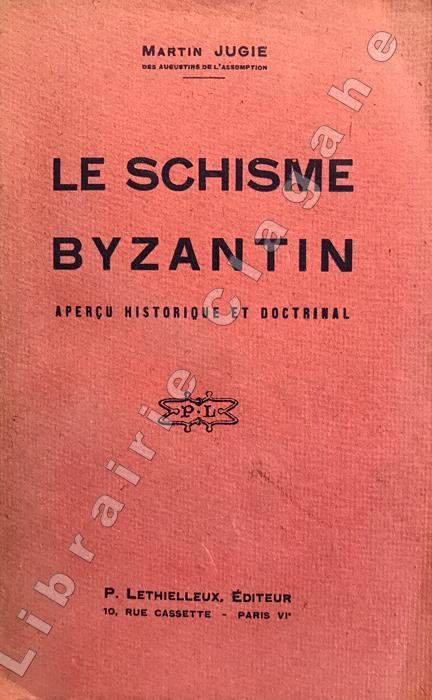
194121531Paris, Lethielleux, 1941 (Besançon, Imprimerie de l'Est) ; in-8, broché ; VII, [1], 487 pp., couverture rouge corail.
1910227991910 Paris 1910 Letouzet et Ané, éditeurs,grand in8 broché,Octavo. XXVIII + 404pp. rare,bon état