25 415 résultats
This is a very good hardcover copy that has been rebound by a private collector in maroon cloth covers with title in gilt on the spine, and clean white endpapers. Closed tear to one text page. Originally released as the 8th annual report of the Bureau of American Ethnology, the long piece by Victor Mindeleff on Pueblo Architecture was removed and rebound as a separate book. The contents are generally very clean, but a few tan spots, and some offsetting to title page, and last page of index. Illustrated in black & white with maps, line drawings, engravings, etc. Bibliography. Some pages uncut. A very nice usable copy with a firm binding. 12" high X 8" wide, 298 pages. Large heavy book, foreign shipping will be extra. This book will be securely wrapped and packed in a sturdy box and shipped with tracking.
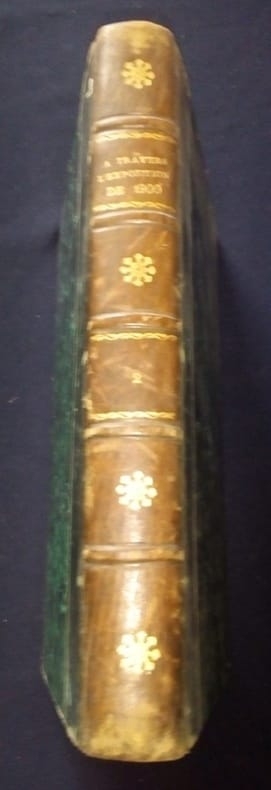
RES39L153Paris Fayard 0 Paris - Fayard - sans dates - In8 ( 22 x 15 cm ) - demi basane - dos à nerfs - tomé 2 au dos - couvertures non conservées - contient 4 livraisons dont la description est ci dessous - dos insolé - épidermures - rousseurs éparses - papier jauni - nombreuses figures et planches in texte - planches dépliantes hors texte . Livraison V : Le pont Alexandre III et le pavillon de la ville de Paris -94 pages + une grande planche dépliante du pont Alexandre III . Livraison VI : La tour Eiffel et les spectacles pittoresques - 94 pages - une grande planche dépliante de la tour Eiffel Livraison VII : Le palais de l'électricité et le château d'eau - 95 pages - une grande planche dépliante du Palais de l'Électricité ( déchirure et fortes rousseurs ) Livraison VIII : Les pavillons des puissances étrangères - 95 pages + 1 grande planche dépliante ( puissances étrangères avec une déchirure )
190196556London, Longmans, Green and Co. 1901. [2] Bl. vakat, Vortitel, Register, 161 BüttenS. 30 S. 29,5 cm. Schlichtes OHLn.
brossura Il volume "A tavola con D'Annunzio", è promosso dalla "Fondazione Vittoriale degli Italiani" e realizzato da Paola Sorge. Attraverso dichiarazioni di testimoni oculari, note personali inedite del Poeta, lettere e brani di romanzi, il libro svela un sorprendente D'Annunzio gourmet che, in ogni fase della sua esistenza, esalta il cibo da lui considerato, anzitutto, veicolo di memorie legate al suo Abruzzo.
brossura "A testa in giù. Per un'ontologia della vita in comune" ci offre un breve e serrato percorso filosofico. "La scienza - scrive René Schérer nella sua prefazione - vi costeggia il mito in una genesi del senso entro cui si profilano le primizie di un'Estetica generale". Al di là del sapere di una scena governata dal potere stabilizzante dei suoi punti di vista, Jean Soldini avvista il quantum di energia strutturante e destrutturante che è l'uomo potentia della persona. L'uomo con le sue risonanze entro complessi di sonorità generate da una moltitudine di enti, di corpi che non cessano di divenire ciò che sono in virtù di un conatus, di una forza orientante che è già interezza della forma e che, simultaneamente, è tendenza alla forma a partire da se stessa. Il saper essere uomo non deve comportare solo il saper fare una persona col suo pensiero determinante, individuante, ma anche il saper riattingere all'uomo anonimo come le nuvole, le montagne, i mari, gli animali, ripensando a una bella espressione di Jean Arp. Ragione a-personale e personale, indeterminatezza pensante e ragione determinante, individuante. Ci vogliono entrambe per deviare da una fisicità anestetizzata, interamente contratta nell'immediatezza mercantile tardocapitalista col suo edonismo indispensabile alla sopportazione di una vita comune.
In-8, mz. pergam. con ang., tit. oro su tassello al dorso, pp. 224,(2), con circa 300 disegni nel testo di Henry de Marandat e la riproduzione di 1 acquarello applicata su cartoncino f.t. Edizione originale. Firma di appartenenza al frontespizio, ma certamente esempl. ben conservato.
182716314London, John Murray, 1827. S. (III)-VIII, 334 S., 1 Bl. 8°. Kalbleder der Zeit mit Rückenschild und etwas Rückenvergoldung (full contemporary calf with spine label and some gilt ornaments on spine).
1863026070Philadelphia: J.B. Lippincott 1863. xvi 13-604 pages. While known as the first American physician to devote himself entirely to neurology and the author of the first treatise on the subject it was his role in the Civil War and this major work for which he is best remembered. When Secretary of War Edwin M. Stanton fired Clement Finley the Surgeon General Abraham Lincoln against Stanton's advice named the 34-year-old Hammond to succeed him with the rank of brigadier general. On April 1962 he became Surgeon General of the Army. He launched many reforms ranging from qualifications of medical personnel importance of ventilation record-keeping and the creation of the Satterlee Hospital. He promoted Jonathan Letterman which brought an efficient ambulance system to the service. He banned mercury from army supplies. Since hygienic standards were still very poor in the United States Army and soldiers often died because of inadequate medical care poor sanitary conditions and lack of attention to proper shelter and nutrition since there was no up-to-date work on the subject he wrote this book to be distributed to all officers and medical personnel. A thorough and detailed book it contains many of the ideas and principles that Hammond instituted in his reform of the army medical service. In writing on morbid habits he warns of the mischief caused by masturbation which causes he notes that "the masturbator shuns society.and evinces an apathy for all kinds of amusements." He discusses all aspects of diet providing charts and comparisons of the requirements in the British and Russian armies. How to keep the alimentary canal in good order is a major concern for the soldier. Bound in publisher's brown embossed cloth wear to spine ends light chipping to head with a bit of wear to upper joint near head not cracked and some cloth missing from footabout 2" x 1" x 1.5" dark brown coated endpapers inner hinges fine early owner's names one in brown ink one in pencil to upper right corner of title page internally free from foxing. A very good copy of this scarce work. J.B. Lippincott unknown books
1994100138945MIT PR 1994 488 pages in8. 1994. Cartonné jaquette. 488 pages.
In-4 p., brossura orig., pp. 49. Premesso "Un battibecco con Ippolita". "Prima edizione". Tiratura di 199 esempl. firmati dall'Autore. Ben conservato, intonso.
This is a fine softcover copy with no wear at all. Completely clean. This is a sale catalog for an auction held at Christie's London on November 10-11, 2005. Sale code: JADE-7178. The sale consisted of the contents of a private residence in London, on Eaton Square. This apartment had been decorated by the brilliant Stephane Boudin of Maison Jansen. Many color photographs of room interiors. 779 lots in the complete sale. 11" high X 8" wide, 333 pages. Large heavy book, foreign shipping will be extra. This book will be securely wrapped and packed in a sturdy box and shipped with tracking.
423Poster. Paris J.E. Goosens. Photo-offset in colors. Ad for the German apertif. 31 5/8 x 23 3/4. 3 Silhouettes with black red yellow each enjoying a different kind of beer. J.E. Goosens
423Poster. Paris J.E. Goosens. Photo-offset in colors. Ad for the German apertif. 31 5/8 x 23 3/4. 3 Silhouettes with black red yellow each enjoying a different kind of beer. J.E. Goosens books
1929215642South Australia. 1929. Typescript manuscript 11 pages foolscap 33.8 x 21 cms inked manuscript corrections and annotations in Jack's hand some age toning most noticeable on the first leaf and small chips from the inner margin no loss to the text old folds pin holes to the upper corner good condition. Unpublished typescript for an illustrated address given to the Royal South Australian Yacht Club in September 1929 by Robert Lockhart Jack 1878-1964 with annotations in his hand. <br> <br>In January 1900 at the age of 22 Jack travelled with his father Robert Logan Jack 1845-1921 pioneer geologist and the first Government Geologist for Queensland to select and acquire mines in the Western Chinese province of Szechuan on behalf of an Anglo-Belgian Company. Chengtu Chengdu the capital served as a starting point for research trips to record the deposits of mineral resources on the Chinese-Tibetan border on behalf of English companies. Jack's lively and detailed description of the methods and incidents of the 1400 mile 2250 km journey on the Yangtze offer fascinating insights into life and customs along the great river at that time as well as mindful of his audience very detailed descriptions of sailing vessels. With the start of the Boxer Rebellion the expedition was cancelled immediately and as a precaution their return journey was along the shortest route: still some 700 kms 450 miles of mountainous and uncharted terrain; south along the Chinese-Tibetan border where they reached British territory again on October 20th and the town of Bhamo in Upper Burma a day later. <br> <br>Robert Lockhart Jack began his career working in Europe South Africa and China becoming assistant government geologist of South Australia from 1912. He led an expedition to the Everhard and Musgrave Ranges in 1914. He joined BHP in 1931 and became chief geologist retiring in 1948. . unknown
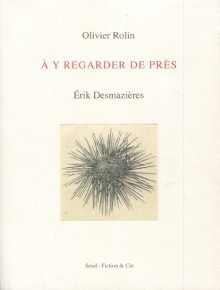
4140Editions du Seuil, Fiction & Cie, Paris, 2015. In-8, broché sous couverture rempliée et illustrée en noir et blanc, 127 pp. L'œuf du roitelet - L'artichaut - L'asperge - L'huître - L'os de seiche - L'oursin - La cétoine - La girolle - La mouche - La noix - La patate germée - La plume - La pomme de pin - ...
br. Domenica, 12 giugno 1842: una signora di mezz'età, la cameriera, il figlio e un compagno di studi s'imbarcano a Londra sul Wilberforce diretti ad Anversa. Partono per una vacanza che durerà tredici mesi e che li porterà in giro per l'Europa, ultima tappa Sorrento. La signora non è nuova a lunghi viaggi. La prima volta che lasciò l'Inghilterra aveva sedici anni, era incinta, ed era in fuga d'amore con un uomo sposato, Percy Bysshe Shelley. Due anni dopo, tra le foreste del Giura e sulle sponde del lago di Ginevra, darà alla luce quel Frankenstein che da due secoli sollecita la nostra immaginazione. Adesso è vedova; madre affettuosa, si preoccupa di far fare una sorta di Grand Tour al figlio. Parigi, agosto 1843: Ferdinando Gatteschi, mazziniano, è a caccia di una donna che, ammaliata dal suo bell'aspetto e dal suo eloquio, gli allunghi qualche franco. La vedova cade nella rete. Estate 1844: escono i "Rambles", ultima opera di Mary Shelley, in cui, per raccogliere fondi a favore di Gatteschi, ella racconta del viaggio con il figlio e del suo amore per l'Italia. "I Rambles in Germany and Italy" rientrano nella tradizione della letteratura di viaggio al femminile. I Rambles si muovono su tre livelli: il reale percorso geografico, la riflessione storico-politica, i ricordi personali. Per la Shelley, come per tutte le donne che visitarono l'Italia nell'Ottocento, il nostro Paese divenne terra d'elezione il cui bisogno di indipendenza esse si sentivano chiamate a sostenere.
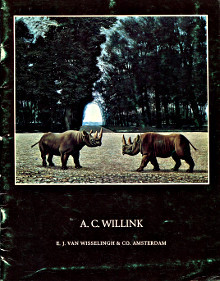
1035Uitgevers-Maatschappij Elsevier, "Nederlansche schilders van deze tijd - Serie A", Amsterdam, 1940. Petit in-4, broché sous couverture rempliée et illustrée en noir, 80 pp. Inleiding - Ontwillelingsgang. - Anecdote en "Litteraire Tendez". - Persoonlijkheid en dogma. - Willinck en de techniek
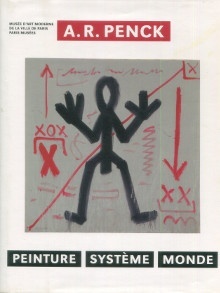
4930PARIS Musées, 2007 In-4, cartonnage éditeur, dos toile écrue, sous jaquette illustrée en couleurs, 231 pp. Manifeste, A.R. Penck - Avant-propos, par Fabrice Hergott - Un illustre inconnu. L'image d'A. R. Penck aujourd'hui, Ingrid Pfeiffer - A.R. Penck, l'homme qui venait de l'Est, Jürgen Schweinebraden - Quo Vadis Germania?, par Bernard Marcadé - A la ...
1036E. J. van Wisselingh & Co, Amsterdam, 1977. In-8, agrafé sous couverture illustrée en couleurs, s.p. [28 pp.]. Carel Willink's terugkeer naar Mariënbad, door H. Redeker - Catalogus [49 n°] - Planches.
192933761Oberplan, Verlag des Vereines Böhmerwaldmuseum, 1929. 20 S. Gr.-8° (23 x 15,5 cm). Original-Broschur.
19069375O.O., O.J. (Ca. 1906). OPp. 16 S. Quer-8°. Mit zahlr. Abb. Angestaubt. Exemplar.
2544René Debresse, éditeur, collection "Les Palettes Nouvelles", Paris, 1951. In-12, broché sous couverture illustrée en noir, 33 pp. - pl. Notice biographique - A.-G. Regner, par G. Turpin - Planches - Principales oeuvres exposées dans les Salons - Autres oeuvres importantes - Table des matières - Table des illustrations.
ill., ril. L'architetto finlandese Alvar Aalto (1898-1976) è stato fortemente influenzato dal panorama della sua terra natale, come dalla battaglia politica per rivendicare un posto per la Finlandia all'interno della cultura europea. Dopo i primi edifici neoclassici, Aalto si votò a idee basate sul funzionalismo, spostandosi in seguito verso strutture più organiche, con mattoni e legno al posto di intonaco e acciaio. Oltre a progettare edifici, arredi, lampade e oggetti in vetro con la moglie Aino, dipingeva ed era appassionato di viaggi. Fermamente convinto che gli edifici avessero un ruolo cruciale nel dare forma alla società, Aalto una volta disse: "Compito dell'architettura è valorizzare le qualità umane".