"ECK, CH.L.G.Livre Rare Book

72 692 résultats
184118371Paris, 1841. Folio. Bound in 2 modest cont. hcloth. Tear in lower part of back on volume II. Backs somewhat rubbed. (8),72,22-(6),116,8,32 pp. and 146 engraved plates (ca 40 x 22) cm). Stamp on titles. Vol. I occasionally slightly brownspotted.
179844105Berlin, Verdrucht auf Rosten des Forfatters, 1798. 4to. Bound in 2 contemporary half calf. Spine with gilt leather title-label. Wear to extrimities, especially to spine: Loss of top 2 cm of spine and upper half of back hinges loose on volume 2. With library stamps to title page. Internally with occasional brownspotting, all the plates are, however, very nice and clean. (6), 296 pp + 24 hand coloured engraved plates" (1), VIII, 325, (4) + 23 hand coloured engraved plates.
Frankfurt a. Main, Hummen, 1641. Folio. Contemp. full vellum. Handwritten title on spine. Spine a bit stained. A few small repairs on edges. Stamps on foot of engraved title-page. (A printed title-page not published). Erratic pagination. First textleaf is a dedication-leaf, signed A3 and numbered as p. 5 (but complete). (2),5-202,(10),(2-blank). 7 (of 8) engraved parttitles to part I. 180 (numb. I-CCC) + 55 (numb. I-CX) engraved plates with 410 engravings. Many double-page plates including 1 large engraved folded plan of Strasbourg (strenghtened on verso). Some misnumbering to both textleaves and plates. A few plates with marginal dampstains.
Paris, 1841. Folio. Bound in 2 modest cont. hcloth. Tear in lower part of back on volume II. Backs somewhat rubbed. (8),72,22-(6),116,8,32 pp. and 146 engraved plates (ca 40 x 22) cm). Stamp on titles. Vol. I occasionally slightly brownspotted.
Berlin, Verdrucht auf Rosten des Forfatters, 1798. 4to. Bound in 2 contemporary half calf. Spine with gilt leather title-label. Wear to extrimities, especially to spine: Loss of top 2 cm of spine and upper half of back hinges loose on volume 2. With library stamps to title page. Internally with occasional brownspotting, all the plates are, however, very nice and clean. (6), 296 pp + 24 hand coloured engraved plates " (1), VIII, 325, (4) + 23 hand coloured engraved plates.
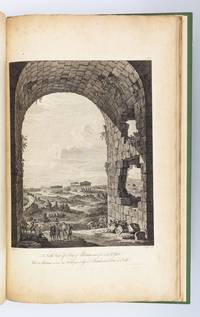
17624595London: Printed By John Haberkorn for the Authors 1762. First edition. Hardcover. Good. Folio unpaginated vintage marbled boards rebacked with corners of canvas new endpapers; Lacks plates 21 & 22 in chapter 4 showing Bacchan pirates turned into dolphins some mostly marginal bookworm tracks; Errata leaf bound in place long vertical tear in the last folding plate. Rare. <br/><br/>This is vol. 1 only: Subsequent volumes appeared into the early 1800s. Fowler 340 . "After their return to London in 1755 Stuart worked on the first volume of Antiquities of Athens which was published in 1762. He wrote and revised the text had the illustrations engraved and designed a binding as well as painting views of Greece and Pola in gouache for exhibition. The first volume contained details of just five buildings in the northern part of Athens but more were promised in further volumes. The first volume had more than 500 subscribers. Few were architects or builders which limited the impact of the work as a design sourcebook. It was however well received by scholars antiquaries and gentleman amateurs. The presentation binding that Stuart designed for Antiquities of Athens had a Neo-Classical design and inspired architect Robert Adam to design similar presentation bindings for his work on the antiquities of Spalatro. Antiquities of Athens helped shape the European understanding of ancient Greece. It brought an entirely new design vocabulary to 18th-century European architecture and design and later became an essential sourcebook for the 19th-century Greek Revival - V&A exhibit on Stuart in 2007." Most of these engravings were engraved by James Basire who ten years later taught engraving to William Blake. I count 78 engravings including head and tail-pieces and two folding plates. A few plates were executed by Edward Rooker who was celebrated for his architectural plates. Printed By John Haberkorn for the Authors hardcover
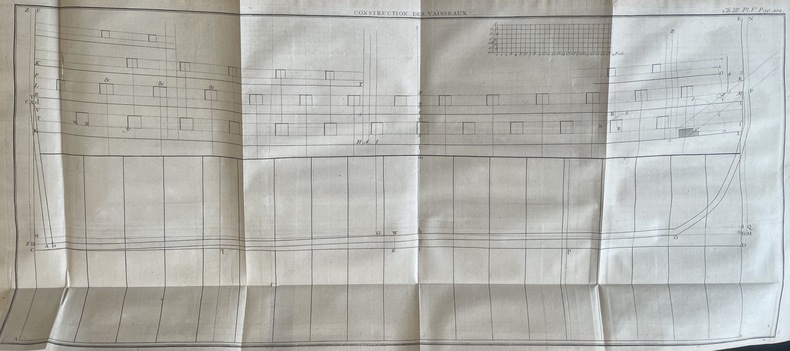
184188766Paris, Carilian-Goeury et Victor Dalmont, impr. Fain et Thunot, Paris 1841 2 volumes. In-folio. Reliures demi-percaline chagrinée verte légèrement postérieures, pièces de titre chagrin vert. Vol. I : 72 pp., 50 pl. - 21 pp., 15 pl. - Vol. II : 2 ff., 115 pp., 63 pl. - 8 pp., 4 pl. - 32 pp., 15 pl. Planches gravées sur acier par Hibon et Leblanc. Reliures frottées, coins usés, mors un peu fendus, étiquette collée sur le plat supérieur du vol. II. Rousseurs au premier volume, petite mouillure coin supérieur du volume II.
In-folio, antiporta calcografico con ritratto di Giovambattista Nelli, disegnato da Gian Domenico Ferretti e inciso da Vincenzo Franceschini, frontespizio in rosso e nero con vignetta calcografica con lo stemma mediceo disegnato dal Campiglia e inciso da Sgrilli; 18 tavole numerate I-XVII (la XIII è bis), veduta del Duomo e Battistero a cB2, varie testate, finalini e iniziali calcografici. Legatura in mezza pelle coeva con piccoli restauri agli angoli, titolo in oro su tassello al dorso, nervature. Girolamo Ticciati architetto e scultore si adopera per descrivere il Duomo di Firenze nei suoi particolari. Bell’esemplare in carta forte con sparse gore d’acqua Moreni, II, 338. Cicognara n.4096. Berlin Kat., n.2694 In-folio, copper engraved frontispiece with portrait of Giovambattista Nelli, drawn by Gian Domenico Ferretti and engraved by Vincenzo Franceschini, red and black title page with copper engraved vignette with the Medici coat of arms drawn by Campiglia and engraved by Sgrilli; 18 plates numbered I-XVII (the XIII is bis), view of the Cathedral and Baptistery on lB2, copper engraved initials and tails. Coeval half calf binding with small restorations on the corners, gilt title on the spine with label, bands. Architect and sculptor Girolamo Ticciati describes the Cathedral of Florence in its details. Beautiful copy on strong paper with scattered water stains. Moreni, II, 338. Cicognara n.4096. Berlin Kat., No. 2694
1778698901778 Brescia , Pietro Vescovi , 1778 , In folio , viii-163 pp- XVI tavole , bon état, seules les planches IV et V possèdent deux petits trous infimes de vers au centre des gravures, sinon état de conservation impeccable
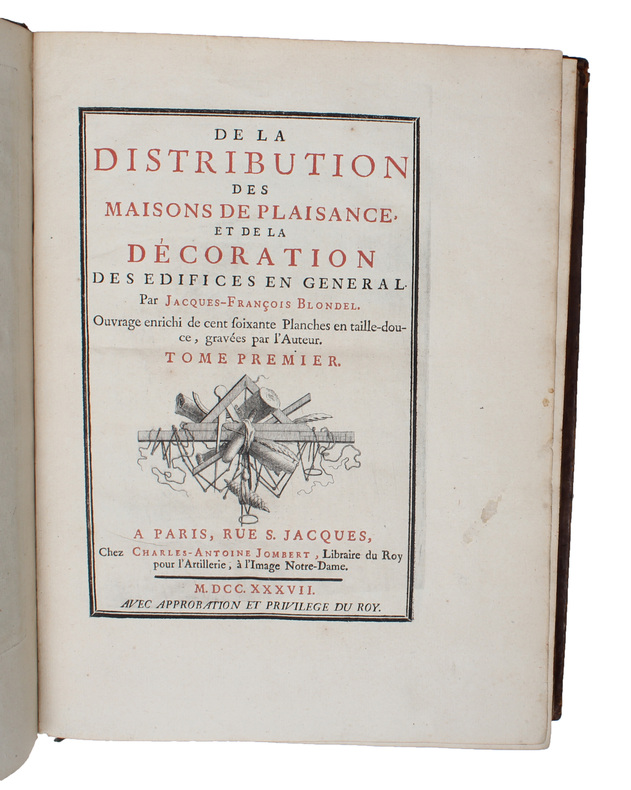
173726971Paris, Charles-Antoine Jambert, 1737-38. 4to. Bound in 2 cont. full calf. 5 raised bands, richly gilt compartments. Title-and tomelabels in leather on back. Bindings with light wear to hinges, so that the cords are occasionally showing, and some cracking of leather at upper and lower compartment, but binding tight. A little wear to spine ends, otherwise fine. Half-title, engraved frontispiece (by Cochin), title ind red/black, (6) pp. (= dedication a Monsieur Turgot),XVI,198,(1) (Errata leaf) " VIII,180 pp. Volume one having 44 fine engraved plates (42 double-or triple-page, 2 single-page) and 9 engraved head- and tail-pieces. Volume two having 112 fine engraved plates (numb. 1-99, no. 25 omitted and 13 with double- or triple numbering) and 3 head- and tail-pieces. Most of the plates drawn and engraved by Blondel. All text-pages printed within a borderline. On good thick paper, fresh and clean.
Paris, Charles-Antoine Jambert, 1737-38. 4to. Bound in 2 cont. full calf. 5 raised bands, richly gilt compartments. Title-and tomelabels in leather on back. Bindings with light wear to hinges, so that the cords are occasionally showing, and some cracking of leather at upper and lower compartment, but binding tight. A little wear to spine ends, otherwise fine. Half-title, engraved frontispiece (by Cochin), title ind red/black, (6) pp. (= dedication a Monsieur Turgot),XVI,198,(1) (Errata leaf) " VIII,180 pp. Volume one having 44 fine engraved plates (42 double-or triple-page, 2 single-page) and 9 engraved head- and tail-pieces. Volume two having 112 fine engraved plates (numb. 1-99, no. 25 omitted and 13 with double- or triple numbering) and 3 head- and tail-pieces. Most of the plates drawn and engraved by Blondel. All text-pages printed within a borderline. On good thick paper, fresh and clean.
024-Do.J. Feder in Braun, braun laviert, über leichter Bleistiftskizze, mit einzelner brauner Federlinie umrandet, auf Velin, rechts unten signiert ?J. Cats?, verso nochmals signiert ?J Cats f?. 18,7:25,8 cm. Vergleichsliteratur: K. Andrews, Catalogue of Netherlandish Drawings in the National Gallery of Scotland. Edinburgh, 1985, Bd. I, D 1389, D 985, Bd. II, Abb. 114 und 115; Ausst.Katalog: Alte Zeichnungen aus dem Kupferstichkabinett der Universität zu Leiden. Freiburg, Augustinermuseum 1986, Nr. 25 und 26 mit Abb.; Ausst. Katalog: Niederländische Zeichnungen und Druckgraphik der Sammlung Christoph Müller im Berliner Kupferstichkabinett. Berlin 2008, Nr. 25 mit Abb.
31792Gd.in-4, paru à Amsterdam en 1652. En 3 parties: La Perspective, contenant la Théorie pratique et Instruction fondamentale par Jean Vredeman Frison, augmentée par Samuel Marolois. 43 ff, 70 planches gravées. L'Architecture, contenant la Toscane, Dorique, Ionique, Corinthiaque et composée; fait par Henri Hondius, avec quelques belles ordonnances d'Architecture mises en perspective par Jean Vredeman Frison. 9 ff et 30 planches gravées. Fortification ou Architecture Militaire tant offensive que deffensive; supputée et dessinée par Samuel Marolois, revue et corrigée par Alfred Girard, Mathématicien. (en 2 parties, 42 ff + 46 ff) et 41 planches gravées. Pages de titre avec gravures. Restauration des pages de garde. Reliure 19ème, copie des reliures à la Dusseuil. Tranches marbrées. Bon état.
1180DGo.J. Farbige Hinterglaslithographie. 42 x 42 cm. 33 x 33 cm. + Wichtig: Für unsere Kunden in der EU erfolgt der Versand alle 14 Tage verzollt ab Deutschland / Postbank-Konto in Deutschland vorhanden +
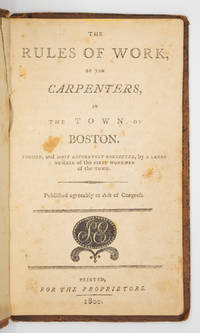
1800100845Boston: Printed for the proprietors by Samuel Etheridge 1800. 8vo. 34 pp. Contemporary sheep; upper board detached ffep removed in a custom chemise and slipcase. Scarce American price book for Boston carpenters in contemporary sheep. Signed as usual by Thomas Stutson secretary of the committee that drew up the rules which were devised to establish a fair system of charges for services rendered. Prices are an early example of the use of dollars and cents. Rink lists previous editions from 1774 1 copy 1794 no copy known & 1795 2 copies.PROVENANCE: William Reese book-label on chemiseREFERENCE: Evans 37003; Rink 1760 Printed for the proprietors [by Samuel Etheridge] unknown
197813369-1<p>New York: Oxford University Press 1978. <em><strong>Boldly Signed by Rem Koolhaas on a large sheet 6" x 8" of archival Arches paper laid into the book</strong></em> First edition / First printing. Pink paper-covered boards. Fine in very near fine dust jacket with light wear to the edges an outstanding copy of a scarce title. <em><strong>Rem Koolhaas is the Pritzker Prize Winner for 2000.</strong></em></p> Oxford University Press, hardcover
11071Brush & ink some in color or heightened in color. Late Edo.<br /> <BR> <BR> A fascinating collection of fine and detailed architectural drawings of the Kyoto Palace several Kyoto temples and mansions. This collection can be divided very roughly into three groups:<br /> <BR> <BR> 1. Palace: The Kyoto Palace burned down many times in its long history and the most recent reconstruction was completed in 1855. About 17 sheets of varying sizes some quite large depict ornamental details; floor plans; details of sliding doors; plans for guard offices at entrances buildings for ladies-in-waiting and entranceways to court offices; ornaments for bathrooms; floor plans of the inner palace including the emperor’s residence seiryÅden 清涼殿 the tutors’ living quarters and teaching rooms the layout of the roof beams for the seiryÅden beam measurements sumigi 隅木 roof styles metalwork designs for shitomi 蔀 traditional shutters or doors another complete floor plan of the seiryÅden with labels for placement for each decorative work of art and a diagram of the placement of the weight-bearing wooden pillars color-coded to support the floors; roof-beam styles; palace outer buildings’ floor plans; a very large hand-colored illustration of a decorative drum to perform gagaku 雅楽; pattern sheet of the drum; and a bundle of seven sheets of various palace buildings some in color.<br /> <BR> <BR> 2. Temples: a drawing of a model of elaborate woodwork; ornamental roof details in color; layout for roof beams; a rubbing of an architectural detail; floor plan of the building containing the Great Buddha of the HÅkÅji temple; detailed measurements of the roof beams of the Rokkaku-do temple; plan for a two-story pagoda sheet measuring 1210 x 760 mm.; the design of an ornamental bottle-shaped strut taiheizuka 大瓶æŸ; and a sheet with actual size drawings of other ornaments. Some have the name of the creator Tanaka Heibei ç”°ä¸å¹³å…µè¡› a Kyoto ornamental woodcarver.<br /> <BR> <BR> 3. Miscellaneous: drawings of ornamental aspects of unnamed buildings about 30 sheets of varying sizes.<br /> <BR> <BR> In very good condition. unknown
1768ST17496-011London: Chez l'auteur 1768. First Edition in French. 590 x 380 mm. 23 1/4 x 15". 52 2 pp. <br/> Modern brown quarter morocco over green linen boards brown morocco label with gilt lettering on smooth spine edges untrimmed. WITH 25 FULL-PAGE ENGRAVED PLATES OF GRECIAN RUINS and seven smaller engraved plates in text including one on dedication page. A Large Paper Copy. Fowler p. 157; Millard British 41; Blackmer 1065; Brunet III 1329. Head of spine partly torn but with no loss contents with not infrequent light marginal soiling though plates uniformly clean other minor imperfections but an excellent copy with greatly generous margins with deep impressions of the type and with strong impressions of the plates.<br/> <br/> This work is the first significant account of the ancient city of Paestum being in the words of Blackmer "larger and much more complete than any of the previous publications." Located in the Tyrrhenian Sea off the coast of southern Italy Paestum or Poseidonia in Greek was founded by Greek colonists in the sixth century B.C. and still contains beautifully preserved ruins from that period including temples an amphitheater and painted tombs. Abandoned in the Medieval period Paestum wasn't rediscovered by the West until the 18th century with the first modern publication of the site not appearing until 1764 when a suite of plans by G. P. M. Dumont appeared with no text based on the observations of Jacques-Germain Soufflot. As Millard indicates the genesis of the present publication has an extremely complex history we do not even know with certainty who wrote the text but we do know that engraver Thomas Major 1729-99 whom DNB calls "the first great English landscape engraver" was responsible for preparing the plates. Because he had no first-hand knowledge of the site Major relied on images by other artists including Antonio Joli Gaetano Magri Robert Mylne and Jacques-Germain Soufflot. The text was first published in English and then in French the same year. According to Fowler "this work . . . was an important eighteenth-century pioneer contribution to the knowledge of Greek architecture in England"; and Millard tells us that "the book was surprisingly well received by reviewers" in both England and France remaining "the standard reference to Paestum until 'Les Ruines de Paestum ou Posidonia' by C.-M. Delagardette was issued in 1798.". Chez l'auteur unknown
1180DGFarbige Hinterglaslithographie. 42 x 42 cm. 33 x 33 cm.
17584907A Paris, rue Dauphine, chez Charles-Antoine Jombert, Imprimeur-Libraire du Roi pour l'Artillerie & le Génie, à l'Image Notre-Dame, M. DCC. LVIII. 1758 1 vol. in-4° (262 x 200 mm.) de : XLIV (titre avec vignette gravée, dédicace, préface) ; 49 pp ; XXIX (table alphabétique, page du titre de la partie paginé 49, première page de la table paginée II) ; 484 pp. (reprise de la pagination à 51 et non 50 car page impaire, dont table des matière et explication); 1 frontispice gravé et 11 bandeaux gravés d'après N. Ozanne (10) et Chedel (1) ; 24 planches gravées dépliantes (planches 8 et 9 sur un seul feuillet dépliant). (Rares rousseurs mais corps d'ouvrage assez frais). Plein veau marbré d'époque, dos à nerfs orné, pièce de titre de maroquin brun, roulette dorée sur les coupes, tranches rouges. (Mors supérieur, coiffes et coins discrètement restaurés).
1706129303Paris, Frédéric Léonard 1706 In-folio, veau fauve, dos orné, tranches jaspées Reliure de l'époque, 12 ff., 592 pp., ccxxiij pp., 12 ff. de table. L'illustration comprend un frontispice gravé d'après Boulogne le jeune gravée en taille-douce par J.B. de Poilly, 12 planches hors texte à double page gravées d'après Leblond et Lebrun, un plan de la ville de Saint-Denis dressé par Dumesnil Voyer et gravé par Anselin et 13 vignettes d'après Rubens, Hallé, Boulogne le jeune et Oppenord, 12 lettrines et 5 culs-de-lampe gravés en taille-douce.
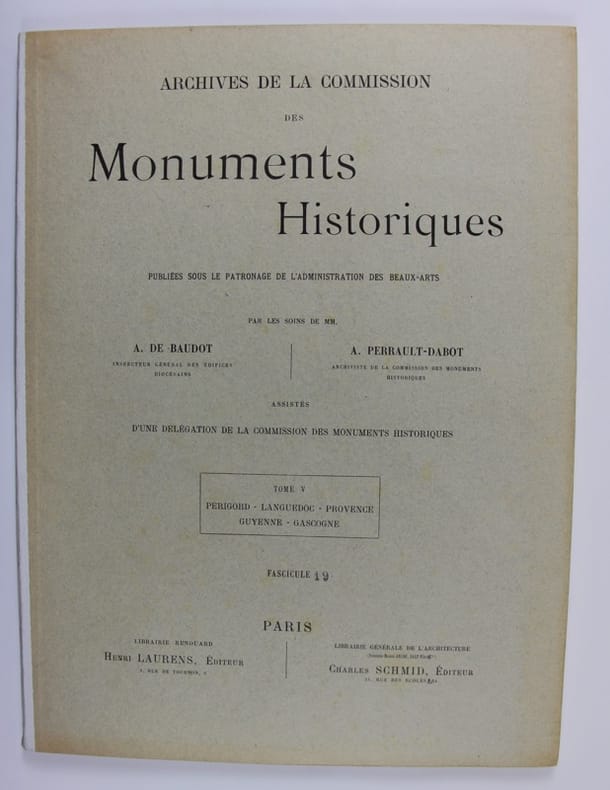
1900129302Paris, Henri Laurens, Charles Schmid, s.d. 1900 5 tomes en 20 fascicules en feuilles sous chemises imprimees, reunies dans deux imposants etuis en demi-toile de l'epoque.
19364825DBChicago, University of Chicago Press, 1936. Gross-Folio, 4° (Textband). XLVIII S., 209 S. (Kommentarband). Mit 100 farbige Illustrationen in Chromolithografie. Leinenbände mit Deckelillustrationen. Bildbände in Kartonschuber. + Wichtig: Für unsere Kunden in der EU erfolgt der Versand alle 14 Tage verzollt ab Deutschland / Postbank-Konto in Deutschland vorhanden +, 4825DB 3 Bände.
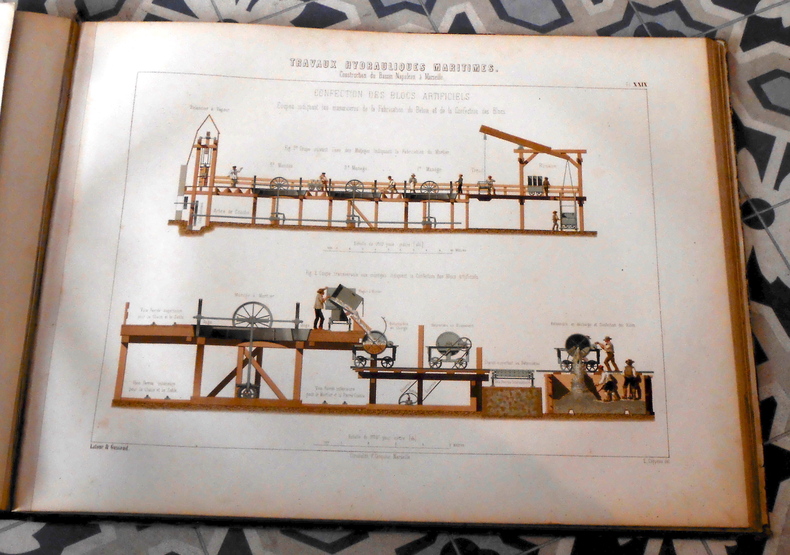
186122979Marseille, E. Cappeau del., 1861. Cartonné, 42 cm x 54,5 cm, LV planches en chromolithographies montées sur onglet par F. Canquoin. Ouvrage de Esprit Latour et Auguste Gassend. Couverture en état d’usage, planches en très bon état. Il manque les planches II et III et la page de garde, les planches XXVIII et XXXVI sont détachées. Rarissime
Ediz. orig. In-4°; pp. 7, (1), al frontespizio un legno raffigura la cupola di Santa Maria del Fiore a Firenze; un capolettera inciso su legno, alcune note manoscritte. Legatura in cartonato colorato. L’opera è dedicata a Filippo Valori, l'ambasciatore fiorentino del papa. Edizione originale, assai rara. L'opuscolo di Franscesco Bocchi prende spunto dall'episodio di un fulmine abbattutosi sulla cupola di Santa Maria del Fiore a Firenze, per indirizzare il suo racconto sul tema del restauro di quello che era considerato il manufatto simbolo della città. Sebbene pubblicato solo nel 1604 la lettera è datata in calce Firenze Febbraio 1600, subito dopo che la lanterna era stata danneggiata. Il restauro di quella fu affidato a Gherardo Mechini, che lo completò in un tempo assai breve; utilizzò un complesso sistema di ponteggi e dispositivi di sollevamento. In un contesto di generale esaltazione della storia dell’arte fiorentina, in queste pagine si leggono parole di estrema lode per la bellezza e lo splendore della cupola e della lanterna, un'opera di altissimo ingegno la cui maestà suscita in chi la guarda "primo laetitia, deinde, cum appropinquant, admiratio, postremo stupor". L'esaltazione si estende ovviamente all'artefice, Filippo Brunelleschi, che, si dice, esprime la razionalità nell'arte attraverso l'esempio degli antichi. A sostegno di una teoria che esalta le origini del rinascimento fiorentino, Bocchi sembra chiamare in causa anche Michelangelo Buonarroti "iure optimo" che, accingendosi alla costruzione della cupola del Sacrario Laurenziano, afferma, rispondendo a chi glielo chiedeva, che nessun architetto aveva fatto di meglio dopo l'artificio di Filippo. Francesco Bocchi (1548-1618) fu un erudito italiano che, soggiornando a Firenze, scrisse una guida delle bellezze della città di Firenze, e fu autore anche di un'opera sulla musica e di una sulla statua di San Giorgio di Donatello. (Vedi voce in DBI). Filippo Brunelleschi (1377-1446), architetto, ingegnere escultore fiorentino, attende ai lavori della cupola del Duomo di Firenze a partire dal 1418 e fino alla sua morte, al principio offrendo la sua consulenza per risolvere la soluzione della costruzione della cupola assieme al Ghiberti e a Battista d'Antonio, in qualità di "provveditore alla costruzione della cupola". La cupola presentava un tamburo ottagono che insisteva su una struttura gotica, il cui sistema di forze Brunelleschi volle coordinare e risolvere, attraverso la cupola, nella lanterna che la chiude.