15 958 résultats
1720NC0225E. Curll 1720. hardcover. Acceptable. 0x0x0. London 1720; rebound in brown leather covered boards; corner and spine edge wear; 12mo - over 6 3/4" to 7 3/4" tall; new end papers; Previous owner's name on front end papers; lightly foxed; coffee colored discoloration at hinges pages original front end paper fading through 225; From the library of ABAA bookseller Tom Nicely; 320 pages. E. Curll hardcover
18524789Mokilomni Hill Ca: April 3 1852. Very good. 2pp. plus integral address leaf. Quarto on a folded folio sheet. Old fold lines minor wear. In a highly legible script. An interesting letter from a disillusioned fortune-seeker in Calaveras County advising his father not to come west as all the easy pickings are gone. He writes "Times are pretty dull here now and as I have been doing nothing for the last two weeks I am getting rather sick of the place. I should leave today but there are some holes going down by some acquaintance of mine & I want to see if they get anything. If they do I shall sink one myself they go from 50 to 60 feet & as they are in a good looking place I have some curiosity to know whether they strike anything or not. If I leave this place I think I shall go south as I hear they have struck some deep diggings in the vicinity of Sonora & think I shall go down that way. I see by the papers that a great many are coming to the country from Boston. I do not know what they all will do here it is not the place here it was two years ago & those who start with the anticipation of finding money easily got here will be badly mistaken. April 3 unknown
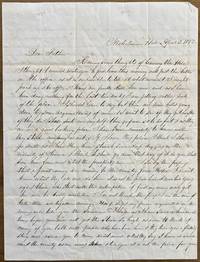
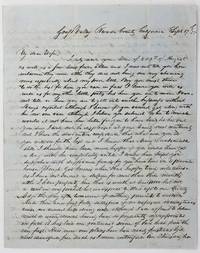
18554791Grass Valley Ca: September 17 1855. Very good. 4pp. on a folded folio sheet. Old fold lines minor wear. An intimate letter from a gold seeker in Nevada County California. Theodore Shaw writes to his wife about mixed luck in California a terrible fire his concern for their children and his great anxiety about the future. He writes in part: "I have property here that is worth at least $1000 but not a cent in my pocket but we expect to start up to our quartz ledge the day after tomorrow if nothing prevents to errect a mill up there. And now our plans have been nearly frustrated by a most dreadful fire such as I never witnessed. On Thursday last about 11 o'clock p.m. an alarm of fire was heard and by about half past 12 some 350 stores dwellings and buildings were consumed with a large portion of their contents our hotel included. . The entire business part of the town is in ruins.we have been sleeping under an old shed in the suburbs. This fire has injured us in this way several who had taken stock in our company have lost their means still we intend going on in a smaller way. We had formed a company with a Capital Stock of $50000 divided into 50 shares of $1000 each. Do you know Lydia I have more anxiety about your health than anything else as I know you work hard; only think what would happen to our dear children if anything serious should happen to your health and I away here in California. September 17 unknown
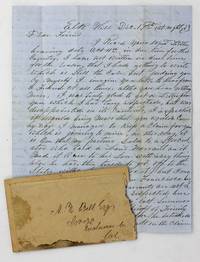
18534788Elk Hill Ca: December 17 1853. Very good. 3pp. on a folded folio sheet. Old folds light wear and soiling. With original mailing envelope. An informative letter sent from a miner in Gold Rush-era California to a friend in Tuolumne County primarily concerning a mining claim but also providing many interesting local details. The author writes "I managed to keep a claim for you which is joining to mine in this way it is one that my partner sold to a speculator who laid a land warrant on it." He discusses the process of the land warrants and how he made the man title the claim properly in San Francisco. "This claim was jumped last summer by W.H. Dixon first sheriff of Trinity City who died the day before he intended to occupy the house he built on the claim. He shot himself accidentally and never spoke." The author immediately stepped in and nabbed it for his friend but it was short-lived. "The claim is cheap at $2000 as soon as I made it known that I should not administer it was jumped by 3 in one day before 9 o'clock. So much for your not coming as I told you I could not keep them off any longer and you would not come if I had." He further mentions that he is digging potatoes which he deems the finest in the world discusses issues with the crop and further talks about new arrivals in the area. December 17 unknown
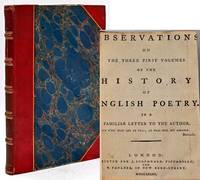
1782298728London: J. Stockdale; R. Faulder 1782. First Edition. Half Leather. Very Good binding. 8vo.; in an attractive later binding of red half-goat over marbled boards with raised bands with morocco label lettered vertically; with marbled endpapers; 2 49 1 pages.~~A note on this rather interesting binding: we assume that the binder was charged with binding a group of different books to a uniform size -- the title page is trimmed and mounted and all the other leaves are folded neatly to fit the bottom edge and then the leading edge over it. Rather astonishing actually.~~This is Ritson’s first book in which he attacks Thomas Warton’s History of English Poetry in such vitriolic tones -- Warton is a pretender a cheater and a liar -- as to cause quite a contretemps in late 18th century English literary circles. One assumes this actually pleased Ritson as he went on the next year to attack Samuel Johnson and George Steevens. Eventually Ritson went complete mad barricading himself in his rooms at Gray’s Inn and setting fire to a pile of manuscripts. Very Good binding. J. Stockdale; R. Faulder unknown
18717912San Francisco: A. L. Bancroft & Company 1871. First Edition. Hardcover. Good . 12mo. 256 pp. original green cloth lettered in gilt index to advertisers advertisements i-lvii. -- Moderate wear to the extremities some fraying to the spine tips & corner edges corners bumped. Blank paste-down and first free end-paper paper a little separated but hinges still strong. Rear hinges strong. Rear paste-down has an advertisement pasted on and a small stamp at bottom near the gutter of "H. K. Van Siclen Bibliophile 133 Nassau St. Ny". --. "This tourist guide for visitors of San Francisco and the Yosemite Valley offers a look at travel and accommodations in the late 19th century".-googlebks. A. L. Bancroft & Company hardcover
141916009JUnion Hill / Grass Valley California 1914-1915. Original hardcover ledger 11.5†x 8†bound in half leather with gilt stamping over light brown corduroy metal spine with locking mechanism no key marbled paper pastedowns and gilt embossed leather alphabet tabs on front page edges. 168 pages of handwritten text showing detailed internal records from the historic Union Hill Mining Company that had offices in both Grass Valley and San Francisco. Union Hill is adjacent to Grass Valley. Detailed information for 1914-1915 including operating expenses profit and loss income expenses production vendors payroll cash bullion production tungsten production names vouchers insurance and marketing. Entries include operating expenses for the South Idaho Mine and names of the local companies they did business with such as Grass Valley Hardware Empire Mining Company Nevada County Narrow Gauge R. R. Company and Thomas Diggs Company an entry for Augustus D. Cox who was the Mine supervisor to very specific mining operating expenses for example: “Shaft Above 600’ Level†“Shaft Below 600’ Level†“Storage Dam 600’ Level†with expenses for mining tools hoisting compressing fire protection etc. A rare and unique Gold Country artifact this original handwritten Ledger offers compelling insight into an historic Mother Lode gold mine. The corduroy covers have some staining the rear leather corner has a corner chip the rear spine fold has a two inch half oval chip revealing the board beneath the front hinge is split and the metal spine has some rust internally the ink stamp of the Union Hill Mining Company on the front endpaper. Gold was discovered at Union Hill in 1854 the first recorded claim was in 1866 as Union Hill Gold Quartz Mine and Mining Stock Certificates for Union Hill Mining Company exist from the 1860’s. Although very profitable it appears Union Hill Mine opened & closed changed ownership &/or operators several times from the 1870’s until purchased by Idaho-Maryland Mines Company around 1920. In 2016 this historic mine was purchased by a gold mining company with plans to restart operations in the unexplored areas below the Idaho-Maryland Mine Property. hardcover
141916009JUnion Hill / Grass Valley California 1914-1915. Original hardcover ledger 11.5†x 8†bound in half leather with gilt stamping over light brown corduroy metal spine with locking mechanism no key marbled paper pastedowns and gilt embossed leather alphabet tabs on front page edges. 168 pages of handwritten text showing detailed internal records from the historic Union Hill Mining Company that had offices in both Grass Valley and San Francisco. Union Hill is adjacent to Grass Valley. Detailed information for 1914-1915 including operating expenses profit and loss income expenses production vendors payroll cash bullion production tungsten production names vouchers insurance and marketing. Entries include operating expenses for the South Idaho Mine and names of the local companies they did business with such as Grass Valley Hardware Empire Mining Company Nevada County Narrow Gauge R. R. Company and Thomas Diggs Company an entry for Augustus D. Cox who was the Mine supervisor to very specific mining operating expenses for example: “Shaft Above 600’ Level†“Shaft Below 600’ Level†“Storage Dam 600’ Level†with expenses for mining tools hoisting compressing fire protection etc. A rare and unique Gold Country artifact this original handwritten Ledger offers compelling insight into an historic Mother Lode gold mine. The corduroy covers have some staining the rear leather corner has a corner chip the rear spine fold has a two inch half oval chip revealing the board beneath the front hinge is split and the metal spine has some rust internally the ink stamp of the Union Hill Mining Company on the front endpaper. Gold was discovered at Union Hill in 1854 the first recorded claim was in 1866 as Union Hill Gold Quartz Mine and Mining Stock Certificates for Union Hill Mining Company exist from the 1860’s. Although very profitable it appears Union Hill Mine opened & closed changed ownership &/or operators several times from the 1870’s until purchased by Idaho-Maryland Mines Company around 1920. In 2016 this historic mine was purchased by a gold mining company with plans to restart operations in the unexplored areas below the Idaho-Maryland Mine Property. hardcover books
183870800London: Saunders & Otley 1838. First volume 302 pages; second volume 325 pages with 2 pages of ads. Translated by Henry Reeve. Date 1838 on title pages. Third Edition Stated. Hardbacks. Good Used Condition. Saunders & Otley Paperback
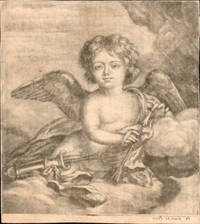
16-4872Circa late 17th- early 18th Century. Mezzotint. 20 x 17.6cm. Slightly trimmed. Signature in reverse "H. Gascarpinx." A reverse image of British MuseumRegistration number 18640813.16; and Chaloner Smith 1883 / British Mezzotinto portraits from the introduction of the art to the early part of the present century Part II. p. 524 no. 2 Circa late 17th- early 18th Century. unknown
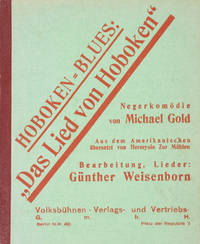
192919326Berlin: Volksbünen-Verlags- und Vertriebs-G.m.b.H. 1929. Softcover. vg. 8vo. 100pp. Maroon cloth spine over green wraps with red lettering. Sunning to top edge of front- and rear wraps. Translated from the English into German by Hermynia zur Mühlen. "Bearbeitung Lieder: Günther Weisenborn." The News Playwrights' Theatre production of "Hoboken Blues" in 1928 was a bold experiment that failed with audiences and critics because it appeared to be racist although the playwright wrote it to expose the injustice done to African-Americans. Michael Gold wanted African-Americans to play the parts but director E. Massey cast white actors wearing black make-up. Fascinating piece of American Theatre history. Mimeographed typescript. Wraps in very good interior in near fine condition. Rare German edition. Volksbünen-Verlags- und Vertriebs-G.m.b.H. unknown
1782263934London: J. Stockale; R. Faulder 1782. First Edition. Half Leather. Very Good binding. Ritson's first book in which he attacks Thomas Warton's History of English Poetry in such vitriolic tones -- Warton is a preternder a cheater and a liar -- as to cause quite a contretemps in late 18th century English literary circles. One assumes this actually pleased Ritson as he went on the next year to attack Samuel Johnson and George Steevens. Eventually Ritson went complete mad barricading himself in his rooms at Gray's Inn and setting fire to a pile of manuscripts. In an attractive later binding in red half-goat over marbled board with raised bands. We assume the binder was charged with binding a group of different books to a uniform size -- the title page is trimmed and mounted and all the other leaves are folded neatly to fit the bottom edge and then the leading edge over it. Rather astonishing actually. Very Good binding. J. Stockale; R. Faulder unknown books
168916034London: Printed by Edw. Jones for Abel Swall.and Henry Bonwicke. 1689 Second English edition of an important history of the Reformation. Contemporary reverse calf ruled in blind. Folio. Title-page printed in black and red. The Bohun work with separate title-page. With six engraved portrait plates. Joints starting to crack but sound. Armorial bookplate of Cobbold of Ipswich later ownership annotation dated 1980 on front pastedown. A good clean copy. Johannes Sleidanus 1506-66 was born in Schleidan Luxembourg and studied ancient languages and literatures at Liège and Cologne and law and jurisprudence at Paris and Orléans. At Lièges he encountered humanist scholars and developed an interest in Protestant ideas. He went to work for Cardinal du Bellay and was employed in the futile negotiations of the French court to make an alliance with the German Protestants against the Emperor Charles V. In 1542 he settled in Strassbourg. He was in the habit of copying all papers that had any bearing on the Reformation to which he had access and Martin Bucer who had seen his papers suggested that Philip of Hesse appoint him historian of the Reformation giving him a salary and access to all necessary documents. Thus began his great work the first volume of which appeared in 1545. That same year he traveled to England in a French embassy to Henry VIII and there he collected further materials for his work. He later went to Marburg to view the archives of Philip of Hesse. In 1551 he attended the Council of Trent. He finished his history in 1554 despite financial problems. He died in poverty the following year. Printed by Edw. Jones, for Abel Swall...and Henry Bonwicke.. unknown
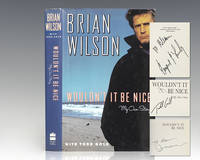
1991119333New York: HarperCollins Publishers 1991. First edition of Brian Wilson's candid autobiography. Octavo original half cloth. Presentation copy inscribed by Brian Wilson on the half-title page "To Glen Brian Wilson" signed by Todd Gold on the title page and inscribed by Dr. Eugene Landy on the dedication page "To Glenn Eugene E. Landy." The recipient Glenn Goldman founded Book Soup in 1975 an independently owned bookstore on Sunset Strip in West Hollywood specializing in art music film photography design and fiction. American psychotherapist Dr. Eugene E. Landy was best known for his unconventional psychological treatments especially for his treatment of Wilson in the 1970s and 80s in which he essentially took control of his life monitoring him 24 hours a day with a team of assistants to keep him sober. The treatment was later deemed unethical by Californian courts and was later dramatized in the 2014 biographical film Love & Mercy in which Landy is portrayed by Paul Giamatti. Wilson dedicated the present volume to Landy. Fine in a fine dust jacket. Jacket design by Suzanne Noli. Jacket photograph by Mark Hanauer. A unique example. Wilson's first memoir Wouldn't It Be Nice not only documents the Beach Boys' rise to fame but their founder's twenty year struggle with drug addiction alcoholism obesity and mental illness. Filled with shocking revelations the book reveals the inspiring story of one of the greatest musical geniuses of the 20th century. HarperCollins Publishers hardcover books
Manuscrito datable entre 1616 y 1618. Un volúmen en 4to., compuesto de 395 folios útiles, de apretada caligrafía y con numerosas notas marginales. Encuadernación en pergamino, de la época. Un excelente documento de la enseñanza de la Escolástica en el Siglo de Oro. Fray Juan de Biescas, nacido en Graus, fue durante muchos años Catedrático en la Universidad de Huesca. Según se desprende de Latassa, que es quien únicamente recoge datos sobre el mismo, publicó entre 1637 y 1641 en Huesca, en las prensas de Pedro Bluson, dos "Partes" de Comentarios a Santo Tomás, dejando inédita una 'Tercera Parte' cuyo original sería el manuscrito aquí ofrecido.
1966106901Roma, Lorenzo Del Turco - Ugo Bozzi - Fratelli Palombi 1966 - 1974. 1966. 4° (30 x 24 cm), zus. ca. 2400 S. mit vielen teils farbigen Abbildungen, Orig.-Leinen.
Lorenzo Lorenzi (1720 - 1780), nato a Volterra, attivo intorno al 1760, fu allievo di Cigna, incise parte della collezione del marchese Gerini e soggetti dal Carracci. Incisione al bulino impressa su carta vergellata. Da un soggetto di Ciro Ferri, pittore romano del sec. XVII (Roma 1634 - ivi 1689). Pubblicata a pag. 151 rif. 236 del catalogo "Per Bacco" di Alberto Alberghini.
Medina del Campo: Metymnae Campi, expensis Petri Landry & Ambrosii Duport, 1587. Folio; portada con el escudo real grabado, 1 hoja, 536 pp., 26 hojas. Ex libris manuscrito en portada del jurisconsulto de Albarracín Juan Sanchez de Ruesta. Encuadernación de época en pergamino. Presenta manchas en el plano posterior de origen dudoso. Luis de Molina, sobrino de Ambrosio de Morales, está considerado como uno de los más notables juristas del Siglo XVI. Defendió en su obra "Pro succesione regni Portugalliae Allegatio" los derechos de sucesión a la corona de Portugal de Felipe II, a quien dedicó ésta su obra más conocida, en la que se analiza detalladamente la regulación de la muy hispánica institución de los Mayorazgos y sus vinculaciones, de sustancial importancia en la vida social y económica española hasta mediado el Siglo XIX. -
Amberes: Antverpiae, excudebat Martinus Nutius, 1547. 12vo; portada, 192 hojas numeradas. Bella encuadernación de finales del siglo dieciocho, en piel valenciana, con lomera ornada y ruedas doradas en los planos.
Vollständiges Oeuvre sämtlicher Mitglieder der berühmten Goldschmiedefamilie. Zu den erhaltenen Goldschmiedearbeiten kommen verlorene Werke, die nur noch in Abbildungen erhalten sind, sowie bisher unbekannte Handzeichnungen. Der einleitende Text enthält einen Stammbaum u. sämtliche Jamnitzerstempel.
199861055Düsseldorf, Edition GS, 1989-1998. 4°. Mit ca. 6.000 Abbildungen. Zus. ca. 1.280 S., OLwd.-Bde. m. OUmschlägen.
"National bank notes retired - legal tenders the only paper money - prosperity for every industry." - subtitle. "This little work makes no pretensions to literary merit. It was written, by the author, at intervals snatched from his other occupations as a farmer... The leading facts stated, and the great and fundamental truths of the science of money enunciated, are in accordance with the true principles of Political Economy when applied to the present conditions of America, and are believed to be sound and incontrovertible." - from Preface. Contains the following five essays: As long as America is so heavily indebted to European Nations it will be impossible to have a good and uniform currency upon a gold basis; Specie-based currency with the shackles of gold redemption and the national bank system are anti-republican and dangerous to human liberty; A second system of paper money freed from the shackles of specie redemption and based upon the faith of the nation; How contraction and gold redemption will affect the debtors and tax-payers; Industry and productions stimulated by a greater volume of currency. Usual library markings. Spine Slant. Above-average wear. Binding intact. Gilt lettering mostly worn from backstrip but clearly legible upon blue front board. Upper portions of almost all pages lightly stained yellow - all text remains clearly legible. Book
231 pages. History certainly does repeat itself as the following statement appears upon the title page: "Equity and justice demand that the merchant, manufacturer, farmer, and wage-earner shall receive as much consideration at the hands of the law-makers as is accorded to those who deal in money." Clearly, the author would not be a fan of Goldman Sachs and their modern-day ilk. Chapter titles include the following: Thirty Years' Fall in Prices; Disastrous Effects of Falling Prices; Opinions Regarding the Cause of the Fall in Prices; Money, its use and abuse; Our Money a Banker's Money; A Monetary System Which Will Restore Prosperity; Bimetallism as a Cure; Immigration; Trusts and Department Stores as a Cause; Overproduction; Hard Times - The Effect of "Improved Machinery"; Confidence; Supply and Demand; Review and Summary of Overproduction; Review and Summary of Bimetallism; Conclusion. Tissue-protected black and white photographic frontisplate of author. Bright gilt lettering upon maroon backstrip and decorated front board. Prior owner's signature upon front free endpaper, otherwise unmarked. Moderate wear. Binding sound. An above-average copy of this important and timely work. Book
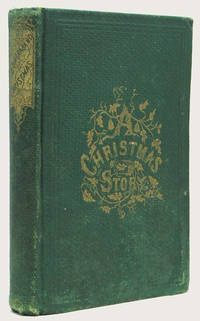
186434709Boston: E. P. Dutton and Company 1864. Very Scarce First Edition Worldcat lists only 22 copies of the first edition in institutional holdings and we are aware of no other copies currently on the market. With two engraved plates by Augustus Hoppin and with chapter headpieces and engraved initials Small 8vo in the publisher's original textured green cloth the upper cover framed in blind and lettered "A Christmas Story" in gilt with stylized decorative lettering the design repeated on the rear cover but in blind the spine blind lettered within a gilt decorative emblem yellow endpapers. 104 pp. A rare survival in original cloth and in unusually well preserved condition the text clean and with minimal mellowing the green cloth bright and unfaded the hinges firm and intact a little wear or rubbing to the corners and edges. This is one of the brightest and well preserved copies we have studied. RARE FIRST EDITION. A CIVIL WAR ERA RARITY. AN IMPORTANT WORK ABOUT FORMER SLAVES CELEBRATING THEIR FIRST CHRISTMAS AFTER EMANCIPATION the story reflects Northern sentiments and pro-emancipation ideals and recounts the first Christmas in the North celebrated by fugitive slaves and those liberated by the Emancipation Proclamation.<br> This scarce first edition is an important fugitive slave novel. The first edition was published toward the end of the Civil War then re-issued in 1865 at the war's conclusion. It is perhaps the first novel to discuss openly the "N" word and its possible derivation from the word "niger" and how the word was used to denigrate the individual and persist in pre-emancipation prejudice.<br> CONTRABAND CHRISTMAS tells the story of formerly enslaved people “contrabands†who have taken refuge with Union forces. As Christmas approaches they will be experiencing the holiday as free individuals for the first time. The story culminates in a Christmas gathering filled with hymns prayer and reflection. Themes include freedom slavery faith human dignity and the transformative impact of the Civil War. One point of note CONTRABAND CHRISTMAS contains one of the earliest explanations of the entirely derogatory character of the "N" word.<br> Worldcat credits the author as being Taylor Root but it is sometimes attributed to William Henry Hurlbert. Artist Augustus Hoppin was well known at this time for his Civil War imagery found in Harper's Weekly. E. P. Dutton and Company hardcover
133505aaf(1657): 39x50 cm (view) 41.5x52 cm (lichtmass) vue à vol d’oiseau, coloriée à la main d’époque, pli au milieu avec légères traces, / fine handcolored view, light wear on middle fold, sous passepartout dans un cadre or. 56x65 cm (cadre) / framed.