7 654 résultats
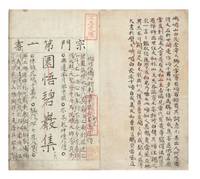
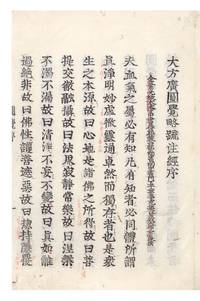
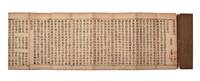
8663Trans. by Xuanzang 玄奘 in 650 CE. 70 pages six columns per page 30 columns per sheet 17 characters per column. 14 sheets average sheet length: 570 mm. five pages per sheet. Accordion format 305 x 7980 mm. print surface from top border to bottom border: 245–250 mm. Single woodcut borders at top & bottom of text. Orig. sutra binding of semi-stiff paper wrappers. Woodblocks carved by Ge Fang & Ma Qing & others in Sixi present day Huzhou printed between 1110s/40s–1276.<br /> <BR> <BR> This fascicle in its original sutra binding was printed in the 12th or 13th century in northern Zhejiang China as part of an extremely rare edition of the Buddhist canon variously known as the Yuanjue Canon Zifu Canon or Sixi Canon. Examples very rarely appear on the market. This edition of the Buddhist canon was for a long time largely unknown in China until the famous Chinese book collector and scholar Yang Shoujing 1839-1915 brought a set back from Japan in the late 19th century. Now in a Chinese library this is the only near-complete set as far as we know the rest being single sutras.<br /> <BR> <BR> Yuanjue Zifu or Sixi Canon: The three names refer to some or all of the imprints of the Chinese Tripitaka made from a set of blocks that were carved in a place called Sixi present-day Huzhou in what was then Songting township Guian county Hu prefecture part of the Circuit of the eastern and western Zhe of the Southern Song.<br /> <BR> <BR> Sixi one of the names retrospectively used for this edition was the location of Yuanjue Meditation Hall founded in 1119-25 where the printing blocks were housed and perhaps carved. Sometime after 1239 the hall’s name may have changed to Fabao Zifu lit. “Dharma jewel supplying happiness†Meditation Temple whence Zifu Canon.<br /> <BR> <BR> Bibliographic scholarship has dated certain imprints of this canon to either the period of Yuanjue Meditation Hall or that of Fabao Zifu Meditation Temple calling imprints dating from the earlier period Yuanjue Canon or “first Sixi canon†qian Sixi jing and imprints from the later period Zifu Canon or “second Sixi canon†hou Sixi jing. On the basis of a comparison of two catalogues of the canon — one claiming to be of the Yuanjue Canon and one of the Zifu Canon — it was believed that a substantial amount of re-carving had taken place between the Yuanjue and Zifu canons. However the catalogue purportedly of the Zifu Canon has been shown in fact to have been based not on an inventory of a set of the Zifu Canon but on another unrelated catalogue. Thus there is no reason to assume that a substantial amount of re-carving of the blocks took place after the temple changed its name and ipso facto there is no reason to posit the existence of two Sixi canons. Printings ascribed to the Yuanjue and Zifu canons belong to the same edition of the Chinese Tripitaka printed at various times during a period that stretched over a century. Blocks were repaired and replaced during this period but not to the extent that would justify calling them two editions.<br /> <BR> <BR> The Timing of Carving and Printing: The sources are ambiguous as to when carving of the blocks began. Li Fuhua and He Mei state that the carving began in 1126 whereas Wang Chonglong says it began before 1110 and thus not at the Yuanjue Hall which had not yet been founded and agrees with others that it likely had finished in 1132. It has also been proposed however that carving only began in 1132. Finally 1140 has been proposed as another completion date. Therefore we can say with confidence that the initial set of blocks was carved sometime between the 1110s and 1140s.<br /> <BR> <BR> Once the blocks were carved they were used for printing for a long time. Some printings can be dated because they contain colophons. <br /> <BR> <BR> Liu Yuantang has documented three instances of blocks being mended buban: in 1238 1248 and 1250. The blocks were burned by the invading Mongols in 1276 which is thus the terminus ante quem for prints from the Yuanjue Canon.<br /> <BR> <BR> Our Copy and the Yuanjue / Zifu Canon: Benshi jing is marked with the ordinal character shen 甚 in five editions of the Chinese Tripitaka. Of these five only the Yuanjue Canon also known as the Zifu or Sixi Canon is a possible candidate. More precisely our copy appears to be from a late printing of the Zifu Canon dating from sometime in the latter portion of the period 1110s/1140s-1276. The vast majority of extant sutras from this edition of the canon are late printings. They have the following characteristics:<br /> <BR> <BR> 1. Sheets folded into five pages with six columns per page 30 per sheet and 17 characters per column.<br /> <BR> <BR> 2. Glosses appended to the end of the volume.<br /> <BR> <BR> 3. Single woodcut borders at top and bottom of text. For earlier printings of this edition one source specifies that the borders go around on all four sides but for the later printings the same source simply says “single-lined margin frame†danxian biankuang 單線邊框. This would appear to suggest borders also at the beginning and the end of each sheet.<br /> <BR> <BR> 4. No empty column before the beginning of the text on the first page.<br /> <BR> <BR> 5. Small-script numerals marking the number of the sheet are printed at the beginning of every sheet as opposed to in the crease between pages for example except for the first sheet.<br /> <BR> <BR> 6. Printed area of roughly 570 mm. long and 250 mm. wide.<br /> <BR> <BR> The sutra has a total of seven fascicles juan of which we have fascicle six. The upper cover and the first line of the first page both have the character shen in manuscript on the cover which is here used as an ordinal drawn from Qianzi wen åƒå—æ–‡ The Thousand Character Essay to arrange the sutras of the Chinese Tripitaka.<br /> <BR> <BR> Layout and Appearance of Our Copy: Unsurprisingly for a very large printing project that took many years not all the sutras of the Yuanjue Canon have the same appearance. Yet the dimensions of our copy agree with other known copies: five pages per woodblock six columns per page 17 characters per column. Other non-official Song editions of the Buddhist canon Chongning and Pilu have six pages per block but the same number of columns per page and characters per column.<br /> <BR> <BR> The measurements of our copy accord with copies of other sutras from the same edition of the canon held by the Gansu Provincial Library in Lanzhou the National Palace Museum in Taipei and the Gotoh Museum outside of Tokyo. The layout of our copy accords with that of a different sutra from the same canon that has been reprinted in facsimile in unknown
7036Printed in Chinese with Japanese reading marks. 11 columns per page 21 characters per column. 79; 59; 51; 49; 67 folding leaves. Ten parts in five vols. 8vo 240 x 149 mm. orig. brown wrappers new stitching. Japan: mid-Muromachi ca. 1440-50.<br/> <br/> An extremely rare and important “mid-Muromachi†Gozan-ban edition of The Blue Cliff Record in Chinese: Pi yen lu a collection of Chan Buddhist koan. These were verbal tests used to practice or test a student’s progress in Zen compiled in the Song Dynasty and expanded by the great Northern Song Chan master Yuanwu Keqin 1063-1135 abbot of Tianning Wanshou Chan Monastery in Beijing. The text was first printed in China in 1125 or 1128 and has long been celebrated for both its startling beauty and profound complexity. Around 1140 one of Yuan Wu’s successors Ta Hui destroyed the printing blocks and copies of the Pi yen lu because the work’s rapid and widespread popularity made him fear that its beauty of expression would distract its readers from seeking enlightenment directly within themselves.<br/> <br/> The text was brought back from China by Dogen 1200-53 the Japanese Buddhist priest who was a founder of the Soto school of Zen in Japan. He had studied in China for four or five years and returned to stay at the Kenninji temple where he introduced many texts.<br/> <br/> This text was first printed in Japan about 1336-50 early-Nanbokucho by Gyokuho Shorin at the Kenninji; there is a copy at the National Diet Library. Our edition is a reprint of that first Japanese edition using the same woodblocks with minor changes. A later edition appeared in the Donald and Mary Hyde sale lot 65.<br/> <br/> “For some time Chan monks had been in the habit of extracting snippets from the ‘records’ yulu of past masters isolated them as ‘ancient precedents’ and commenting on them sometimes in verse sometimes in prose. By the mid-eleventh century the core situation was known as a ‘case to be investigated’ or a gong’an. The process was incremental and difficult to stop. Yuanwu’s Emerald Cliff Record for example took a previous eleventh-century collection entitled Master Xuetou’s verses on a hundred old cases and added an introduction and extensive commentary to each ‘case’ sometimes also dropping in comments on the appositeness or more usually inappositeness of the relevant verse so becoming in his turn ‘magistrate.’ A gong’an collection therefore reveals many layers all of them dedicated to undercutting the stability of language while at the same time playing a complex game of competing authorities. Herein lies their fascination.â€â€“Richard Bowring The Religious Traditions of Japan Cambridge U.P. p. 301.<br/> <br/> “Gozan-ban is a general term embracing all those books published by monks of the Zen sect chiefly at the five Zen monasteries at Kamakura and the five at Kyoto over a period of more than 200 years between mid-Kamakura and late Muromachi. The appearance of the printed page in most Gozan editions follows a distinctly Chinese style. The effect is somewhat dense and crowded caused by packing the Chinese characters tightly together with more regard for economy of space than for aesthetic effect. In this the Gozan editions differ markedly from all other early Japanese printed books which are more generously spaced. The reasons for this are twofold: the books tend to be chiefly reprints of Chinese song and Yuan editions and during the fourteenth century many Chinese blockcutters came over from the continent and practised their craft of a semi-commercial basis and on a fairly large scale.â€â€“K.B. Gardner “Centres of Printing in Medieval Japan: late Heian to early Edo period†in British Library Occasional Papers 11. Japanese Studies ed. by Yu-Ying Brown London: 1990 p. 164.<br/> <br/> PROVENANCE: This copy has the seals of Hirokata Yashiro 1758-1841 “Shinobazu Bunkoâ€; Awa no Kuni Bunko; and Goroza Uchino b. 1873 “Kyotei Bunkoâ€. It later belonged to the great collector and bibliographer of early Japanese books Kazuma Kawase 1906-99 and has his seal. The chitsu has Kawase’s manuscript title label stating in trans.: “Gozan-ban. Hekiganroku. Mid-Muromachi edition. Shinobazu Bunko provenance. Kazuma put the title on this label†also with his seal.<br/> <br/> There are four Prefaces: the first is undated the second dated 1300 the third dated 1305 and the fourth is dated 1304.<br/> <br/> Two leaves of manuscript probably written by Yashiro have been inserted at the beginning of Vol. I. They provide a commentary and a sort of title-page the work was issued without a title. Following Part I there are another two leaves of manuscript relating to this text. Following the tenth part are five Afterwards dated 1125 undated 1302 1317 and 1317.<br/> <br/> In fine condition all contained in a modern wooden box. The top of the box has been covered in a most attractive silk brocade. A few natural paper flaws and minor staining. Berkeley has an edition of this text but because of the very vague WorldCat cataloguing it is impossible to tell which exact edition it is.<br/> <br/> ⧠Kornicki Language Scripts and Chinese Texts in East Asia p. 245. unknown
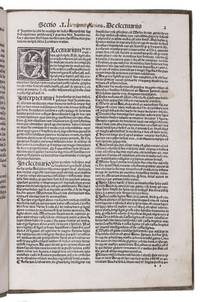
149455951494. 148 leaves including the final blank Roman letter except for the two-line title in gothic type 51 lines & headline capital spaces with guide letters. Folio 290 x 188 mm. late 17th-cent. panelled English speckled calf rebacked with the orig. spine laid-down minor staining to a few leaves in blank upper margins. Basel: J. Amerbach 1494.<br/> <br/> First edition of the “first bibliography to be compiled as a practical work of reference.â€â€“Grolier Club Bibliography 7. <br/> <br/> Tritheim 1462-1516 one of the leading polymaths of his age was appointed the 25th abbot of the monastery at Sponheim in 1483. “One of the first of his many self-imposed tasks was the reorganization and cataloguing of the monastic library if one can call reorganization the process of transforming forty-eight mongrel volumes into a splendid collection of 2000 printed books and manuscripts many of great importance and rarity…<br/> <br/> “It was during the progress of this work no doubt as his exceptional knowledge of books caused inquiries frequently to be addressed to him that he conceived the notion of compiling a new and ambitious bibliography of ecclesiastical writers. He began work in 1487 and by the spring of 1492 he was able to send the complete manuscript to the bishop of Worms. He then revised it and in 1494 the Liber de scriptoribus ecclesiasticis a folio of nearly 300 pages issued from the Basle press of Johann Amerbach…<br/> <br/> “From Alexander bishop of Cappadocia down to himself Tritheim sets out in chronological order nearly a thousand writers largely but not exclusively ecclesiastical giving a short account of each followed by a list of his or her writings. Nor are these lists merely perfunctory: it is obvious from such a heading as that for St. Augustine under which he enumerates 277 works that Tritheim must have lavished an immense amount of genuine research on his bibliography. In all about 7000 books are recorded. An alphabetical index of authors arranged of course by Christian names is added. The contrast between the feeble theological bibliographies of the manuscript age and this first attempt in the printing era is very striking.â€â€“Besterman The Beginnings of Systematic Bibliography pp. 7-8.<br/> <br/> The title of the book is somewhat misleading since the work is not restricted to ecclesiastical writers but also includes authors such as Dante Poggio and Sebastian Brant.<br/> <br/> A fine and crisp copy of a book which has become uncommon on the market preserved in a box. Bookplate of the Society of St. John the Evangelist Cowley Oxford. With a note on the rear paste-down referring to “Derby†the Earls of Derby and a shelf-mark.<br/> <br/> ⧠Goff T-452. unknown
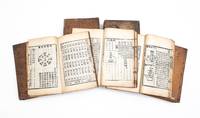
1634107041634. Several woodcut illus. in the text. 25 vols. Folio 346 x 230 mm. orig. wrappers rubbed & several with some wear three vols. with some staining occasional minor foxing orig. stitching. HansÅng: colophon in Vol. 2 dated 1634.<br /> <BR> <BR> Second edition 1st ed.: 1613 of a very great rarity “the greatest of all Korean medical treatises which devotes its last chapters to acupuncture and moxibustion.â€â€“Lu & Needham Celestial Lancets p. 263n. It is considered to have one of the finest classification systems in traditional East Asian medicine.<br /> <BR> <BR> HÅ Chun 1539/46-1615 was a court physician of the Yangcheon HÅ clan during the reign of King Seonjo 1568-1608 of the Joseon dynasty in Korea. During the Japanese invasion of Korea 1592-98 HÅ faithfully accompanied the king through numerous difficult campaigns. Following the conflict the king commissioned HÅ to write a medical book for his citizens who suffered from post-war famines and epidemics. In 1610 HÅ completed his masterwork which was first published in 1613 an even rarer book.<br /> <BR> <BR> The TongÅi pogam is divided into five broad sections: internal medicine four vols. external medicine four vols. miscellaneous diseases 11 vols. herbal remedies three vols. and acupuncture one vol. all preceded by a most useful two-volume Table of Contents. In the first section on internal medicine HÅ describes the interdependence of the liver lung kidney heart and spleen. The section on external medicine explains how the skin muscles blood vessels tendons and bones allow for movement and maintenance of posture. The part on miscellaneous diseases describes the symptoms diagnoses and treatment methods of various diseases. HÅ’s remedies rely on readily found medicinal herbs and plants and he provides impressively detailed instructions on how to extract maintain and consume the herbs. The last section explains acupuncture strategies.<br /> <BR> <BR> The work spread to other East Asian countries like China Japan and Vietnam and is still regarded as one of the classics of Asian medicine. “The Treasured mirror of eastern medicine was in fact one of the very few non-Buddhist works written outside China that achieved a wide circulation within China. It was written by HÅ Chun 1539-1615 as a summation of Korean medical knowledge and was printed in Korea in 1613. Copies were sent directly to China in 1721 and 1728 and a copy reached Japan in 1681. A revised edition was printed in Japan with glosses in 1724 and again in 1799; copies of the 1799 edition were sent to China via Nagasaki in 1811 and 1837. The Treasured mirror of eastern medicine was reprinted in China in the eighteenth and nineteenth centuries either from the Korean edition or from one of the Japanese editions with the glosses removed. This was a rare sign of high esteem for a book written outside China.â€â€“Peter Kornicki Languages Scripts and Chinese Texts in East Asia Oxford: 2018 p. 144.<br /> <BR> <BR> HÅ Chun remains famous in Korea today: there are several recently created television series and films about him and his achievements; a best-selling novel about him was published in 1990; and a museum in Seoul is devoted to his life and works.<br /> <BR> <BR> A very good “married†set with the first volume of miscellaneous diseases coming from another set. One volume has a hole to about ten leaves touching a few characters.<br /> <BR> <BR> ⧠For an extended and excellent discussion of the contents and importance of this work see Yeonseok Kang “History and Characteristics of Korean Medicine†in Routledge Handbook of Chinese Medicine 2022 pp. 507-08. unknown
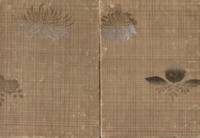
86003001Edo c.1700-50 n.p. Brown & silver covered boards very clean 7 double-page b.w. erotic woodblock illustrations mounted on mica flecked paper 18 x 25 cm. accordion folded illustration size: 31 x 12 cm. FIRST & ONLY UNRECORDED COPY! . . . . A VERY RARE UNRECORDED EARLY BOOK . . . A BIZARRE & UNIQUE EROTIC BOOK . . . UNSIGNED BUT CLEARLY THE WORK OF A MASTER ARTIST . BY SUKENOBU OR HIS :SCHOOL: . A unique and hitherto unfound odd and most unusual erotic book of the early-mid-18th century. One of the most bizarre erotic books ever done in Japan. . The graphically explicit work portrays men and women with genitals on their foreheads engaged in heterosexual and homosexual intercourse. There is no other book with such unusual and strange illustrations. . . THE TITLE: THE LEGEND OF AMANJAKU or AMAN NO JAKU: Chinese Title: TIAN XIE GUI YUN . THE MEANING OF AMANJAKU: Japanese Buddhist literature is abundant with variations on the theme of "Aman-No-Jaku" aka. "Amanjaku" "Manojaku" commonly understood to be a "Heavenly Evil Spirit." . This spirit or demon-like creature in Japanese folklore is usually depicted as being a male during the day and female at night. The demon is usually depicted as a kind of small Oni devil and is thought to be able to provoke a person's darkest desires and instigate him into perpetrating wicked deeds. . Amanjaku is also depicted in Chinese and Japanese mythology the AMANOJAKU is a changeling a water spirit that infiltrates the human world to play cruel tricks on people by reading their minds and twisting their requests or desires to be used against them. . The "AMANOJAKU" is also known the "Lord of the River" and in Japan serves Bishamonten one of the four Deva kings of Buddhism as a minor demon. See Wikipedia below. . In Japanese the term "Amanojaku" also refers to a person who is deliberately contradictory someone who argues for the sake of arguing or can be used in common Japanese conversation to refer to someone who is a "Perverted Demon." . THE ILLUSTRATIONS: THE BUDDHIST THEME:. This work is unusual in that the genitals of common people are located on their foreheads. A symbolist meaning can be in Buddhist concept that sex and sexual hedonism is openly on the minds of 'lay' people. The Buddha and his disciples on the other hand do not have sex organs on their foreheads meaning their organs are covered and in a different usual location. This can symbolize 'self control' over such biological energies. Devout Buddhist disregard sex as a pleasurable pastime and devote themselves to monastic focus. By contrast "lay" people are distracted with hedonistic pleasure a path away from rather than towards the Dharma or teachings of Buddhism. . In a sense this work illustrates the overwhelming force of evil or the "Amanojaku" and how it distracts people from the "Righteous Path" towards the Dharma and the ultimate goal of attaining Nirvana. It can be posited that this work is designed to give understanding to "lay" people by way of visual example of what forces direct their energies away from the Buddhist teachings in an effort to redirect them towards the "Righteous Path" and life style. . EXCEPTIONALLY RARE UNIQUE WORK: . The work is exceptionally RARE unusual and erotic there are no other example showing genitals on the foreheads of any other Japanese book cited anywhere in the bibliographic literature or record. . This work is certainly RARE in subject content and quantity. Though it was woodblock printed and unsigned which was usual for Japanese erotic works which were banned by the Shogun we have not found anything similar or recorded anywhere in the bibliography. Being woodblock printed one assumes there are other copies in existence. The average printing from woodblocks were somewhere between 100-200 copies. However in this instance no others exist. We have the strong feeling the book could have been the production of a famous Japanese illustrator and perhaps financed by a Buddhist temple again there are no known facts about this rarity. . THE EROTIC ILLUSTRATIONS: . Number 1: This work begins showing the Buddha flanked by two of his disciple monks. The title is written in four Japanese Kanji in Kambun & Chinese characters. The Buddha and his two disciples listen to two elderly Buddhist believers: one is a male he has and erect penis on his forehead. The other is a woman she has a vagina on her forehead. Neither the Buddha nor his two disciples monks show genitals on their foreheads. The couple have come to consult with the Buddha about their grievances. . Number 2: Shows a man and a woman in a Tatami matted room both wear lovely 18th century decorated Kimono. They embrace each other and are engaged in making love from their foreheads which show an erect penis and testicles inserted into the woman's forehead where her vagina is located. Adjacent to the young couple is an older woman who has become aroused by the adjacent couple's making love. The old woman uses a dildo tied to a post which she hugs while inserting the dildo into the vagina on her forehead. . Number 3: Shows a couple laying on a blanket their Kimono pulled down and opened and used as a top cover. They engage in love-making and kiss. The man has an erect penis on his forehead the woman a vagina on hers. There is some used Chirishi toilet paper just above her head on the floor used to wipe the love fluids. There is a folded package of yet unused Chirishi in readiness. Chishiri shown in Japanese Shunga erotic prints prints & paintings is an 'erotic symbol' indicative of sexual excitement with lots of love fluids flowing. Ergo the need for paper to clean up the results of erotic love-making. . Number 4 shows an adult man with an erect penis on his forehead penetrating the anus of a younger man who's smaller but erect penis is seen on his forehead as he faces his lover. The younger man has no pubic hair yet indicating his youth. . Adjacent to these two men is a woman in the next room. The door is open she is a secret voyeur of the two men. Her vagina is also on her forehead. A Shogi board and two bowls for stones is located in the front left of the illustration. Gay activities in Japanese society were accepted as a norm and were not especially unusual. However to find graphic examples in Japanese erotic books are exceptionally rare and seldom found. . Number 5: Depicts a fully clothed man on his knees he bends over a sleeping woman. He has a very large erect penis and begins to penetrate a woman with her vagina on her forehead. She is fully clothed and sleeping on a wooden "pillow" which supports her elaborate hair coiffeur. . Number 6: Depicts a lively scene of two men and a woman. One man with a very large and erect penis pulls the woman's arm toward him while she fends him off with a straight arm to his head. A second excited man also with a large and erect penis on his forehead masturbates and ejaculates in ecstasy. The woman has a vagina on her forehead. The scene is likely an intended rape of a young girl. She looks away in an effort not to allow him to pull her close enough to insert his penis into her exposed vagina. . Number 7: Illustrating a lonely old man in bed. He has an erect penis on his forehead and holds a kind of pot with a large opening. He faces down and inserts his penis into the pot for gratification. . THE TEXT: The text in Shunga erotic Japanese books & prints is often an erotic dialogue describing the erotic action. Often these words are onomatopoetic mimicking the sounds of people in orgasm or making comments about making love or the pleasure and good feelings. The size and hardness of the penis or the flavor and the juices of the vagina and its supple feelings of euphoria when engaged in love-making. All wear 18thcentury period Kimono. . MODE AND FASHION OF THE MID-18TH CENTURY: The room furnishing and Kimono of the participants in this work all wear 18th century period Kimono with period decorations. The style of Kimono and room screens reflect this period. . BINDING AND MOUNTING: Binding: The book has probably been rebound sometime after the 1750's with a more recent thin brown decorated paper with a silver chrysanthemum and a Mon family crest with gold and black on both front and rear covers. Each cover has a distinctly different kind of illustration but of the same theme. The corners and edges are a bit worn some loss to the paper as usual for a work from this period. . Mounting: At an earlier time each page was expertly mounted on a stiff Washi hand-made Japanese paper into an accordion folded book. Each illustration is bordered with a rare and stunning crushed oyster-shell powder mixed with rice-glue and overlaid on the border paper. The stunning effect is a rare shimmering pearl-like color and hue with a remarkable effect. This rare and largely unknown effect has been used for print backgrounds by some of the later masters. . This was no ordinary mounting and appropriate for an exceptionally and most unusual RARE book ! . Contents: By and large the contents are clean solid with a two old worm holes for the first 6 of 7 pages. These are small and towards the edge and does not detract from the overall quality of the illustration. On page 7 there are a few center margin old minor worm holes. All of these have been restored when the prints were laid down on the thick Washi paper creating book format. The work is otherwise solid and firm. There are a few 'rubs' on the old Washi paper which was made from very soft Kozo fibers common to any item of this period on this on handmade papers of the period. . CONDITION OF THE WOODBLOCK PRINTS: . These are very early black and white woodcut prints. Each print has an excellent and vivid impression key blocks are black and superbly printed with strong images. The paper is old and has the patina of paper from that age the usual minor mild surface rubbing or thumbing in the lower corners which is common. . We tend to be overly critical of any flaws found on our books and believe it is better to overly describe rather than avoid such discussion any imperfections. Suffice to say by and large this is an excellent item in very nice condition something that any collector or museum would be proud to own. Please review photos posted to our website. . R A R I T Y OF SUBJECT: The placement of the genitals on the forehead gives one a lot of room to theorize on the meaning of such artistic expression. In our 50 years of experience in dealing Japanese woodblock printed books and painted original art this is the first and only example with such imaginative and symbolist expression. With the beginning of the work showing the Buddha and his two disciples lacking any genitals on their foreheads one can simply assume that in a Buddhist way they have given up carnal desire as represented by common people who's foreheads display genitals perhaps meaning that sex is on their minds or they simply view others as sexual objects eager to make love and engage in carnal thoughts and activities. Obviously seeing an erect penis on some man whiles others see what he thinks and feels is an insight to his innermost thoughts and desires. In all cases in this book the men all show an erect penis. The women are a bit more difficult to fathom. Their vaginas are simply visible on their foreheads and no fluids are visible or other evidence of their carnal desire or sexually excited stated. All of the men have public hair adjacent to their sex organs while all women are lacking any pubic hair completely. This is an erotic symbolism giving full view to women's genitals. . "BANNED" or "PROHIBITED" BOOKS: Shun Pon Haru Bon: In the case of this item it is very likely that it was printed in a much smaller discreet quantity than the 200 copies possible off the blocks. Due to the "banned" nature of such books there is no date publisher nor place cited. One is simply left to determine the date and artist by stylistic analysis. It is well-known that during the Tokugawa period 1603-1868 erotic prints and books were "BANNED" or "PROHIBITED" by decree of the Shogun. One of the influencing factors was that during this period some Shoguns were changing their views and being influenced by Christians who entered Japan during this period. The Shogun did not want foreigners and Jesuit missionaries to think that Japan was a crass and base nation. Naturally foreigners soon learned that prostitution was rampant and so this strange logic from the Shogun never had much affect on the Christians and surely not on the Japanese. . The Shogun enforced severe punishments for persons involved in drawing printing carving blocks and publishing erotic books and prints. With out the "Kiwame" or censor's approval seal all such items were "Banned" outright by the Shogun decree. . While these "Prohibited" books and prints were widely circulated in an "underground" society there are ample examples of famous artists taking on commissions to produce erotic books and prints fun or profit. The record and bibliography is loaded with these examples. "Banning" such erotic works simply meant that the number printed were limited to smaller numbers and distribution was done under the table discretely circulating such books privately among collectors. During these times it was not necessary for artists to sign their such artistic creations by-and-large the population had a very good idea who the artist was by being familiar with their style and other works it was simply a "public secret" who the artist was. Often the artist poked fun at the Shogun with political jokes and assumed names to confound any chance of being discovered by the authorities. . Over the centuries this knowledge decreased and is now the domain of the art historian or scholar to identify and determine the actual artist. Stylistic analysis remains the standard method for unsigned works. . THE ARTIST/SCHOOLS: While there are no signatures or seals indicating the artist's name or even his alternate Go studio name we believe this work is part of the "Primitives and First Century of Ukiyo-e School 1660-1765" period. See Lane below. The women's coiffeur is very similar to those found in this period as well as the drawing style technique and genre. It is this cataloger's opinion that this work was likely the creation of one of the Moronobu School masters. Perhaps done by Sukenobu Yoshikiyo Morishige Sugimura Moronobu Kiyonobu Masanobu or others from this period. We believe this work was likely done from around 1710-1750. It was also likely that it was done by one of the artists listed below. . LIKELY ARTIST ATTRIBUTION: . MORONOBU SUKENOBU SCHOOL: Nishikawa Sukenobu 1671 -August 20 1750 often called simply "Sukenobu" was a Japanese printmaker from Kyoto. He was unusual for a Ukiyo-e in being based in the imperial capital of Kyoto. He did prints of actors but gained note for his works concerning women. His Hyakunin Joro Shinasadame: Appreciating 100 Women in two volumes published in 1723 depicted women of all classes from the empress to prostitutes and received favorable results His Hyakunin Joro Shinasadame: Appreciating 100 women in two volumes published in 1723 depicted women of all classes from the empress to prostitutes and received favorable results Leading members of this school were: Nishikawa Sukenobu the founder; Nishikawa Suketada; Kawashima Nobukiyo; Nishikawa Terunobu; and Takagi Sadatake. . NISHIKAWA MORONOBU SCHOOL: Nishikawa Moronobu 1618-July 25 1694 was a Japanese painter and printmaker known for his advancement of the Ukiyo-e woodcut style starting in the 1670s. Leading members of the MORONOBU school were: Nishikawa Moronobu the founder; Hishikawa Morofusa; Hishikawa Moroyoshi; Hishikawa Moronaga; Hishikawa Moroshige; Hishikawa Morohira; and Tamazaki Ryujo. . BIBLIOGRAPHY: . This title is NOT listed in any of the below resources: SHIBUI Kiyoshi. UKIYO-E NAISHI. BIBLIOGRAPHY OF JAPANESE EROTIC ILLUSTRATED WOODBLOCK PRINTED BOOKS. H. KERLEN. CATALOGUE OF PRE-MEIJI JAPANESE BOOKS & MAPS IN PUBLIC COLLECTIONS IN THE NETHERLANDS. Richard Lane: IMAGES FROM THE FLOATING WORLD THE JAPANESE PRINT; pages 28 40-60 show examples of the Ukiyo-e primitives 1660-1765 especially the Moronobu school pp.60-88 et al. . NOT LISTED IN: . KSM SHIBUI Kiyoshi: UKIYO-E NAISI. BIBLIOGRAPHY OF JAPANESE EROTIC ILLUSTRATED WOODBLOCK PRINTED BOOKS. Modern Reading: UKIYO-E NAISHI KERLEN H.: CATALOGUE OF PRE-MEIJI JAPANESE BOOKS & MAPS IN PUBLIC COLLECTIONS IN THE NETHERLANDS. Not in any other usual bibliographies on Japanese E-hon woodblock printed books. . See: WIKIPEDIA:. unknown
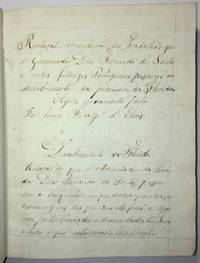
1714Portugal Second half of the eighteenth-century. Manuscript book. Written in brown ink by one or probably two neat hands. A French introduction by a different hand on the front flyleaf with bibliographical details and the addition of Fernando da Silveira’s Epigramma from the printed book and the summary of André de Burgos’ prologue. Pages ruled in pencil. In contemporary half morocco. Title lettered in gilt on spine. Corners bumped. Panels are rubbed at the extremities. Wormholes on the spine with no effect on the book. Light water stain to the upper corners of the last few leaves. Overall in fine condition. Manuscript book. Written in brown ink by one or probably two neat hands. A French introduction by a different hand on the front flyleaf with bibliographical details and the addition of Fernando da Silveira’s Epigramma from the printed book and the summary of André de Burgos’ prologue. Pages ruled in pencil. In contemporary half morocco. Title lettered in gilt on spine. ff. 189. <p>An eighteenth-century manuscript copy of the scarce Portuguese eye-witness' account on the discovery of Florida Relaçam verdadeira a narrative of Hernando de Soto’s expedition which was first published in Évora in 1557 by Andrés de Burgos.<br /> <p><p><br /> Relaçam verdadeira is the first account to be published about de Soto’s expedition and the discovery of Florida. The book was written by an anonymous gentleman from Elvas who was one of the Portuguese fidalgos accompanying the Spanish expedition crossing the southern territories of North America from Florida to the mouth of the Mississippi.<br /> <p><p><br /> De Soto the seasoned conquistador who had participated in the conquest of Peru and his men landed in Florida in May 1539 and wandered through what is now the southeastern United States Florida Georgia South and North Carolina Tennessee Alabama Mississippi Arkansas Oklahoma Texas and Louisiana. After nearly four years of unsuccessful search for gold and the death of de Soto in 1542 the three hundred survivors of the initial force of seven hundred reached the Mississippi River and returned to Mexico.<br /> <p><p><br /> Relaçam verdadeira is among the few key narratives of early Spanish efforts to explore North America and is considered as one of the major documents of sixteenth-century American history. It provides the earliest accounts of the Southern Indians and gives the first insight into their customs and religious practices.<br /> <p><p><br /> The printed book is extremely scarce IB just as USTC lists only 3 copies in New York NYPL London BL and Madrid BNE. Besides those we located two copies at Biblioteca Geral da Universidade de Coimbra and JCB. The French introduction of the present volume mentions a copy probably of which the manuscript was made after in Lisbon at Real Palacio das Necessidades however we could not verify the existence or the current location of it.<br /> <p><p><br /> References for the printed book Évora: Andrés de Burgos 1557: IB 18049 USTC 343292 Joaquim Anselmo Portugal no. 388.<br /> <p>. unknown
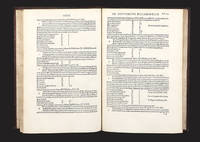
1762B6600Romae: Veneunt apud Auctorem in ædibus Comitis Thomati via Felice prope templum SS. Trinitatis in Monte Pincio; c.1762. Fine thick laid 18th century Italian paper with wide margined paper watermarked engravings; spine and corners worn – A handsome and attractive example plates are clean and crisp. Binding: Contemporary half calf; double gilt fillets bordering marbled boards; spine with five 5 matching gilt fillets on raised bands embossed gilt lettered title on two and four; pasted and free endpapers marbled; all edges marbled. Notes: Text in Latin and Italian.<br>This work was dedicated by Piranesi to one of his highly esteemed co-workers during the 1750’s Robert Adam. Concerning this Rome 1762 edition Luigi Ficacci states: “Edition Rome 1762. Engraved title on the title page: The Campus Martius of Ancient Rome the Work of G. B. Piranesi Fellow of the Royal Society of Antiquaries London. The Latin title page bears the title the date of the edition and the dedication to Robert Adam. The address is: “Veneunt apud Auctorem in aedibus Comitis Thomati via Felice prope Templum SS. Trinitatis in Monte Pincioâ€.<br>The volume is composed of 2 title pages Latin and Italian whose sequence varies according to the copy 2 ornamented letters 4 vignettes 42 plates by Piranesi 5 of these plates are composed of several copperplates and 1 engraved by Vesterhout 68 pages of text in Italian and Latin preceded by 6 pages of dedication to Robert Adam and followed by 29 pages of indices. …<br>The genesis of the work goes back to the second half of the 1750s: its publication is announced as imminent in the first volume of Antichita Romane 1756. The large Plan of Campo Marzio and 6 copperplates “Ichnographia†or plan of the Campus Martius ill. 493 executed in collaboration with Robert Adam and dedicated to him is dated 1757 on the plate. The approbatio is dated 1761. The plate by Vesterhout plate XXXI … reproduces the technical solution adopted by Carlo and Francesco Fontana for restoration of the Column of Antonius Pius in 1705.â€<br><br>Plate XXXI depicting the excavation of the Antonine column in 1705 was signed by both its engraver Arnold Van Westerhout or Vesterhout and by its designer and artist Franciscus Fontana. <br>The second illustrated title or title in Italian reads: 'Il Campo Marzio Dell'Antica Roma'.<br><br><br> Size: Folio 542 x 406mm. Illustration: Copper engravings with illustrated title in Latin illustrated title in Italian two half-page head-piece vignettes opening dedication at a1v-2r; two engraved decorative copper initials opening the text at A1v and A2r; two large end-piece vignettes at R2v and R3r; moreover Tab. I-XLVIII with fifty-two 52 copper engraved plates; these include: a double-page plate numbered XXXII two triple or oversized folding plates numbered II and XXXI; a larger oversized engraving 1500x1500mm encompassing plates V-X forming the plan of the Campus Martius; a single page numbered XLVIII depicting three copper plates entitled “Elevazione de’ Teatri…†“Elevazione del Pantheon…†and “Elevazione dell’ Anfiteatroâ€; single pages two half-page copper plates each - numbered XII entitled “Hypsographia…†and “Sectio…†and XLVI entitled “A Reliquiae…†and “Orthographia…†respectively; the remaining copper plates full or single page sized. Provenance: Upper marginal corner of upper pasted endpaper with sticker reading “C.E.Rappaport // Libri Rari // Romaâ€- References: Luigi Ficacci pp. 394-431; Focillon 1964: 428-479; Hind 1978: 85; Millard iv 2000: 91; RIBA Early Pr. iii 1999: 2551; Wilton-Ely 1994: 559-612. Pages: Ll: Bl. 2 Illustrated title in Latin illustrated title in Italian a1-b2 with dedication A1-Q2 R1-3 with approbation and explanatory texts; a1-c2 with Index ; 1-2 1-3 with catalogues; illustrations: Tab.I-XLVIII; bl. 2. Category: Book Art Architecture & Design; Book Europe Italy; Book Plate Books General; Book Antiquities; Veneunt apud Auctorem in ædibus Comitis Thomati via Felice prope templum SS. Trinitatis in Monte Pincio; hardcover
1770B6607Romae/Rome: Veneunt apud Auctorem in ædibus Comitis Thomati via Felice prope templum SS. Trinitatis in Monte Pincio; watermarks indicate: c.1770’s-1790’s. Plates and text crisp and clean near fine. Thick wide margined paper. Binding: Contemporary half calf with marbled boards; spine with five 5 blind raised bands flanked by gilt tooling; gilt lettered title on Morocco label on two; contemporary pasted and free endpapers; all edges speckled red. Notes: Text in Italian; captions in Latin.<br>This work was dedicated by Piranesi to one of his highly esteemed co-workers during the 1750’s Robert Adam. Concerning the Rome 1762 edition Luigi Ficacci states: “Edition Rome 1762. Engraved title on the title page: The Campus Martius of Ancient Rome the Work of G. B. Piranesi Fellow of the Royal Society of Antiquaries London. The Latin title page bears the title the date of the edition and the dedication to Robert Adam. The address is: “Veneunt apud Auctorem in aedibus Comitis Thomati via Felice prope Templum SS. Trinitatis in Monte Pincioâ€.<br>The genesis of the work goes back to the second half of the 1750s: its publication is announced as imminent in the first volume of Antichita Romane 1756. The large Plan of Campo Marzio and 6 copperplates “Ichnographia†or plan of the Campus Martius ill. 493 executed in collaboration with Robert Adam and dedicated to him is dated 1757 on the plate. The approbatio is dated 1761. The plate by Vesterhout plate XXXI … reproduces the technical solution adopted by Carlo and Francesco Fontana for restoration of the Column of Antonius Pius in 1705.â€<br> Size: Folio 542x406mm. Illustration: Etched copper engravings with illustrated title in Latin illustrated title in Italian ornamental head-piece and engraved decorative copper initial at A1r; the initial opens the text. Tab. I-XLVIII plus three full page engravings entitled “Sepulchrum Mariae Honorij Imp. Uxoris …†“Labrum aegyptiacum porphyreticum…†and Nonnulla monumenta sepulcralia quae recensentur…â€; these 51etchings include double-page plates numbered V-X forming the plan of the Campus Martius and one double page plate # XXXII; two triple or oversized folding plates numbered II and XXXI; a single page numbered XLVIII depicting three copper plates entitled “Elevazione de’ Teatri…†“Elevazione del Pantheon…†and “Elevazione dell’ Anfiteatroâ€; single pages two half-page copper plates each - numbered XII entitled “Hypsographia…†and “Sectio…†and XLVI entitled “A Reliquiae…†and “Orthographia…†respectively; the remaining copper plates are full page in size. Plate XXXI was engraved by Vesterhout after Fontana.<br>Thick wide margined paper; many watermarks pointing this Roman edition to the time frame of 1770’s -1790’s. Examples of watermarks: an unlisted on both free endpapers with an inner fleur de lis design within a circle; #19 1790’s at plate 43; #68 probably 1790’s at plate 35; #59 mid 1770’s -1790’s at plates 31 and 32; #64 1790’s also on plate 31; # 12 late 1780’s -1790’s at plate 30; #14 mid 1761 or #16 1790’s at plate 29; #59 mid 1770’s -1790’s and 64 1790’s at insert plate 21 entitled Scenographia Machinae qua Clemente XI. Pont. Max. An. D. MDCCV; #74 1790’s on unnumbered plate entitled “Sepulchrum Mariae Honorij Imp. Uxoris†generally featured as headpiece vignette of the Latin text.; #12 late 1780’s -1790’s on unnumbered plate entitled “Labrum aegyptiacum porphyreticum…†here as full plate otherwise a headpiece of the Latin text. <br>Plate XXXI depicting the excavation of the Antonine column in 1705 was signed by both its engraver Arnold Van Westerhout or Vesterhout and by its designer and artist Franciscus Fontana. The second illustrated title or title in Italian reads: 'Il Campo Marzio Dell'Antica Roma'.<br> References: Luigi Ficacci pp. 394-431; Focillon 1964: 428-479; Hind 1978: 85; Millard iv 2000: 91; RIBA Early Pr. iii 1999: 2551; Wilton-Ely 1994: plates 559-612. Pages: Ll: Bl. Illustrated title in Latin A1-H2 a1-c2 with catalogue and indices; illustrated title in Italian; Tab.I-XLVIII plus three full-leaf unnumbered plates bl. Category: Book Art Architecture & Design; Book Europe Italy; Book Antiquities; Book Plate Books General; Veneunt apud Auctorem in ædibus Comitis Thomati via Felice prope templum SS. Trinitatis in Monte Pincio; [ watermarks indicate: hardcover
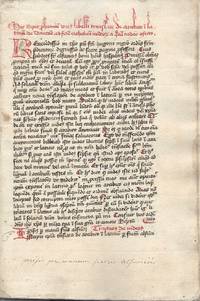
1098Around the first half of the fifteen century. Manuscript in Latin. Large margins. Paper with unidentified watermark. Text in black ink headings initials and rubrications in red. With a note by later hand on title page about Alfonsus: “Parisis per manum fratris Alfonciisâ€. In modern half vellum binding. Insignificant wormholes to margin with no effect to text. Overall in fine condition. Manuscript in Latin. Large margins. Paper with unidentified watermark. Text in black ink headings initials and rubrications in red. With a note by later hand on title page about Alfonsus: “Parisis per manum fratris Alfonciisâ€. In modern half vellum binding. 20 leaves. <p><br /> Manuscript copy in Latin of the Epistle of Rabbi Samuel one of the most influential anti-Jewish treatises of the middle ages. Allegedly translated from Arabic by the Spanish Dominican Hebraist and Arabist Alfonsus Bonihominis d. 1353.<br /> <p><p><br /> Alfonsus writes in his introduction to the manuscript that the Epistle was written after the year 1000 by Rabbi Samuel a Jew of Fez in Morocco to share the reasons with Rabbi Isaac chief of the synagogue at Sujulmeca Subiulmeta which led him to be baptized and convert to Christianity. <br /> <p><p><br /> According to Alfonsus it was originally written in Arabic because only a few Jews and even fewer Christians knew that language thus the text could remain concealed for hundreds of years and the Christians were not able to use it against Jews until he found and translated it while he was the Bishop of Marrakech in 1338 or 1339. <br /> <p><p><br /> The Epistle itself coming after this introduction. Most copies are divided into twenty-four sometimes twenty-five sections. Other version of the work like this copy contains additional chapters.<br /> <p><p><br /> Since the Arabic original of the text from which Alfonsus allegedly translated the Epistle has never been found it is more likely that he imitated other works in the genre and composed a new text himself which ended up being among the most widely copied and printed anti-Jewish tracts of the later middle ages. <br /> <p><p><br /> Bibl.: Limor O.: The Epistle of Rabbi Samuel of Morocco: A Best-Seller in the World of Polemics. In: Contra Iudaeos. Ancient and Medieval Polemics between Christians and Jews. Tübingen: J.C.B. Mohr 1996. pp. 177–194.<br /> <p>. unknown
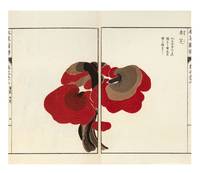
191699921916. Several thousand double-page & full-page color-printed woodcuts many with embossing. 95 vols. 8vo 256 x 174 mm. orig. tan patterned semi-stiff wrappers orig. title slips on upper covers orig. stitching occasional stitching a little loose. Tokyo: HonzÅ Zufu KankÅkai 本è‰åœ–èœåˆ‹è¡Œæœƒ 1916-22.<br /> <br> <br> <br /> <br /> The definitive and complete edition of the “the greatest illustrated botanical work of nineteenth century Japan…This monumental work the HonzÅ zufu briefly describes and splendidly illustrates in full color some 2000 plants. It is considered to be one of the two most important works on systematic botany in the Tokugawa period 1603-1867.â€â€“Richard C. Rudolph “Illustrations from Weinmann’s ‘Phytanthoza iconographia’ in Iwasaki’s ‘HonzÅ zufu’†in Huntiana Vol. 2 15 October 1965 p. 1.<br /> <br> <br> Iwasaki 1786-1842 was an important natural historian who studied with Ono Ranzan the “Linnaeus of Japan.†Iwasaki learned Western botanical theories from Yoan Udagawa one of the most celebrated rangakusha Dutch scholars of the period and from Philipp Franz von Siebold the German physician and scientist. Iwasaki also made many field trips throughout the main island of Japan collecting botanical specimens which he brought back to Edo and cultivated in a garden the government had given him.<br /> <br> <br> The publication history of the editions of HonzÅ zufu is long and complicated and there are several conflicting bibliographical accounts. We give Prof. Richard C. Rudolph’s account cited above based on Kotaro Shirai’s history of the work which appeared in Vol. 93 1921 of the modern edition of HonzÅ zufu 1916-22. We believe Prof. Rudolph’s account is the best and most accurate in English.<br /> <br> <br> “Early in 1828 Iwasaki founded a botanical society. The first meeting which was held at his own home was attended by the most prominent scholars in this field. In the autumn of the same year after a long period of collecting illustrating practical gardening and study of most of the available botanical works Iwasaki completed the compilation of a comprehensive illustrated flora…<br /> <br> <br> “Iwasaki planned to issue this large work in twenty-four series of four volumes each. It seems obvious from the preface that the illustrations were to be printed in black and white and then were to be colored by hand. Shirai in his history of this project says that in this first attempt to reproduce Iwasaki’s compilation only four volumes were printed in 1830…<br /> <br> <br> “This first attempt to print the HonzÅ zufu was a commercial failure…income was insufficient to finance the printing of so large a work…printing was abandoned but reproduction of his compilation was continued in manuscript with colors brushed in by hand. How many copies were made of each volume in this manner is not recorded but four volumes were produced yearly until his death in 1842. His family carried on with the work and completed the manuscript volumes of HonzÅ zufu in ninety-two volumes in the latter part of 1844 and they are incredibly rare…<br /> <br> <br> “It is obvious that a printed edition of such an important work would be produced sooner or later. Several attempts made in the late 19th century ended in failure. In the early years of the present century the HonzÅ Zufu Kanko Kai or Society for Publication of the HonzÅ zufu was organized and a successful printing of the work in color by woodblocks was completed after five years of labor in 1921. This edition is composed of ninety-three volumes…The first ninety-two volumes contain illustrations of about 2000 plants in color and a very brief text and the following volume is composed of an additional text by Iwasaki together with Shirai’s biography of him and history of the work. Another two volumes containing Japanese Chinese and Latin binomial indexes compiled by Shirai were published in the same format in 1922. Moreover each of the ninety-two volumes of plates has its own Chinese Japanese-binomial index…<br /> <br> <br> “In projects of this kind the publisher deserves a share of credit along with the author…it would take a man of considerable courage to undertake the printing of this great flora by woodblocks. Such a person was the Tokyo publisher Iwamoto YonetarÅ a man of little capital and poor health but rich in the courage required to produce a work of this kind…The rise in the cost of materials and labor due to World War I almost caused the project to end in failure as had others before it…To obtain the necessary funds he sold his personal library and cut down on the size of the staff…Iwamoto personally went over each printed page correcting faults in blockcutting and in coloring…<br /> <br> <br> “Either because Iwamoto published a small edition of the HonzÅ zufu or because it suffered destruction during World War II as did early Japanese books in general it is now almost impossible to locate a complete copy of this work.â€â€“Rudolph ibid. pp. 4-6.<br /> <br> <br> The plates are superbly color-printed and often exhibit subtle embossing.<br /> <br> <br> In very fine and fresh condition. Covers a bit discolored or spotted. unknown
1513L85CQLCOIXI5Colophon: Venice: Gregorio de Gregori 1513. Early 20th-century vellum possibly incorporating older materials sewn on 3 recessed supports red spine label. Folio 30.5 x 21 cm. With 13 woodcut decorated initials 6 series plus 8 repeats 4-line typographic Lombarbic initials. Set in rotunda gothic types in 2 columns with a preliminary note in roman type. With contemporary pen decorations in brown ink added to about half of the initials and occasional similar pen decorations in the margins an occasional manuscript paragraph mark some rubrications in brown ink and some initials coloured with a transparent ochre wash. Seventh known copy of an early edition of an important treatise on pharmacology and medical botany by Giovanni Giacomo Manlio di Bosco fl. 1490-post 1500. It is a commentary on ancient Arabic and Greek pharmacological works especially the Arabic treatises of Yuhanna Ibn Masawayh ca. 777-857 a Nestorian Christian physician from Assyria who taught at the academy in Gundeshapur Iran and was personal physician to four caliphs. It gives instructions for preparing numerous medicines indicating the quantities of the ingredients simples each derived from a single plant and describing each ingredient. The present edition includes Manlio's preliminary note addressed to Bernardinus Niger.The title-page indicates that the book also contains Lumen apothecariorum a work by Quirico de Augustis de Tortona of Milan fl. 1486-1497. But it is not present here or in any of the other seven copies we have traced. With contemporary and later marginal manuscript notes. With the text area of B2.7 somewhat browned an occasional small and unobtrusive stain and a few small worm holes in the last few leaves but generally in very good condition. Some of the manuscript notes have been shaved. The binding is slightly dirty and the boards slightly bowed but the binding is still good.l Durling 2938; ICCU 29621 same copy; KVK & WorldCat 5 copies; Emiliano Sordano Il Luminare maius di Manlio del Bosco thesis University of Torino 2010 p. 41; USTC 840112 2 copies; cf. Schelenz Geschichte der Pharmazie p. 414; Wellcome 4017. Gregorio de Gregori, hardcover
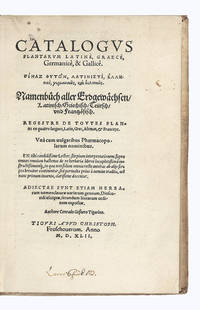
154255061542. 4 p.l. 162 leaves. Small 4to cont. blindstamped panelled pigskin remains of two deerskin ties. Zurich: C. Froschauer 1542.<br/> <br/> First edition of a very rare book on the market; this is a lovely fresh copy in contemporary blind-stamped pigskin. This Gesner’s second botanical work is “an alphabetically arranged catalog of plant names in four languages the first of its kind and an indication of the growing interest in botany beyond purely philological investigations into the writings of the classics. The Greek names are based on the works of Dioscorides. This early work is already characteristic of Gessner’s life-long endeavour to arrange scientific topics in alphabetical or systematic order; it also show his proficiency in languages and his interest in their comparative treatment.â€â€“Wellisch 8.1.<br/> <br/> A fine copy. Signature at foot of title of “Lucas Schröck M.D.†Schröck 1646-1730 was a professor of medicine at Jena and president of the Deutschen Akademie der Naturforscher see Hirsch V pp. 139-40. Early inscription on front free endpaper stating this is a duplicate from the Royal Library of Munich. Engraved armorial bookplate dated 1744 of Franziskus Topsl 1711-96 prior of the Polling Abbey in Upper Bavaria. Modern booklabel of D. Henry. Some minor worming to upper inner corner of first seven leaves touching a few letters of the first two leaves.<br/> <br/> ⧠Pritzel 3298. unknown
1945006923Saki Crimea U.S.S.R.: Privately compiled 1945. Album. This singular and compelling Second World War album was painstakingly compiled decorated and annotated by Royal Air Force Group Captain Walter J. Pickard. Full of mementos documents and photographs the album chronicles the staging preparation and flights which conveyed Winston Churchill as well as other British and American delegates to the Yalta Conference in 1945 earning Pickard the accolades of his commanders the appreciation of his Prime Minister and the Order of the British Empire O.B.E. <br /> <br />Not least among the albums contents is the dated inscription of Winston S. Churchill and signed correspondence from Churchills private secretary confirming that Churchill personally received examined and inscribed this album and conveying Churchills appreciation to Pickard. <br /> <br />The album is 100 numbered pages bound in leather-covered boards with a hand-labeled title Saki affixed diagonally on the front cover. Saki refers to the Crimean airbase built by the Soviets in the 1930s that served as the landing point for the aircraft bearing Churchill Roosevelt and the rest of the British and American delegations to the Conference. <br /> <br />The boards show wear to extremities and the leather-covered spine is gone. The boards and contents nonetheless remain tenuously connected the mull and overall binding structure quite fragile but still holding. The binding has done its job of preserving the treasure trove within; the contents are generally clean only lightly toned with scattered stains and occasional creasing and appear complete as originally compiled. <br /> <br />The contents of the album include the following: <br /> <br />- A September 9 1947 typed letter signed by Winston Churchills Private Secretary addressed to Pickard acknowledging that Pickard sent the album to Churchill expressing Churchills thanks and confirming that Churchill inscribed the album which was returned with the letter. <br /> <br />- Pickards title page in elaborate multi-hued calligraphy: The Story of 150 Staging Post and the Airlift to the Yalta Conference February 1945. <br /> <br />- Personnel list of those under the command of Group Captain W. J. Pickard. <br /> <br />- 10 typed pages marked SECRET comprising Pickards detailed REPORT ON OPERATION ARGONAUT dated 26th February 1945 and signed by Pickard. <br /> <br />- Five letters of appreciation from senior military commanders including letters signed by U.S. Brigadier General James S. Stowell and General Lord Hastings Lionel "Pug" Ismay. <br /> <br />- TOP SECRET CYPHER MESSAGE of 24th JANUARY from 150 STAGING POST to TRANSPORT COMMAND that according to Pickards elaborate calligraphy annotation nearly stopped the Conference. <br /> <br />- 50 photographs from the conference 13 featuring Churchill Roosevelt or both. <br /> <br />- Seven currency notes including Soviet American and Greek five signed by a bevy of people including pilots. <br /> <br />- A TOP SECRET MOST URGENT typed 1st February 1945 letter signed by Air Commodore Whitney Straight to Group Captain Pickard conveying the Flight Plan and Passenger Lists as well as the fighter escort and other details for transport of VIPs to the Yalta Conference. <br /> <br />- The Friday February 16th 1945 farewell dinner menu signed on the blank verso by the members of Pickards command. <br /> <br />- Pickards original Yalta Conference passes both British Delegation and Soviet. <br /> <br />- A contemporary Observer clipping that specifically refers to this Pickards remarkable autograph book <br /> <br />- A 24th January 1945 typed and hand-annotated TOP SECRET CYPHER MESSAGE from Pickard regarding critical communication and transport difficulties preceding the Conference. <br /> <br />This album with all of its annotations and embellishments has the look and feel of both military precision and treasured story book the adult manifestation of a seasoned commander and pilot recording his actual experience of every lads dream to fly to dare and to overcome. <br /> <br />Please note that additional images and a considerably more comprehensive description are available upon request. <br/><br/> Privately compiled unknown
147314731Rome: Joannes Philippus de Lignamine 1473. Limp sheepskin parchment ca. 1740/50 sewn on 3 supports cut flush with the bookblock and attached to the cover with separate alum-tawed thongs with a hollow back 2 alum-tawed loop and knot fastenings extensive title hand-lettered across the spine possibly later in the 18th century. Small folio 26.5 x 20 cm. With spaces left for 2 large 6-line and about 80 small 3-line initials to indicate the beginning of the books chapters and a couple other divisions never filled in each preceded by an indented chapter or other heading mostly of 4 or 5 lines. Text block 19.5 x 11.5 mm with 31 lines per page. Set in a single roman type throughout Lignamine 125R. Second Rome edition published in 1473 of a popular philosophical moral and practical work by Rodrigo Sánchez de Arévalo bishop of Zamora 1404-1470. Known in English as the Mirror of human life it is divided into two "books" the first 30 numbered chapters devoted to secular life and the second 43 numbered chapters to spiritual life each dealing with various stages in human development. It discusses the benefits responsibilities and dangers of various trades and professions and was intended to help people choose a vocation. This makes it a valuable source for information about numerous occupations in a wide range of social strata. Lignamine's roman type used for the entire book first appeared in a book with colophon dated 3 August 1470 ISTC iq00024000 making it one of the very earliest roman types and it deserves more attention than it has received. Olocco convincingly argues that the earliest truly roman types were based on a style of humanistic manuscript hand that evolved in Padua where Andrea Mantegna revived classical roman inscriptions in his frescos in the 1450s and where manuscripts took inspiration from classical Roman inscriptions for their capitals and adapted the serif structure of the lowercase to them. Lignamine's type is also set with considerable sophistication already in its earliest uses with special characters for abbreviations and with T and V kerned to avoid white gaps in combinations like "To" without overdoing it something Jenson appears to have tried only in 1471 and quickly abandoned. The fore-edge margins contain frequent contemporary manuscript notes in brown ink often serving as a guide to the content and occasionally simple contemporary penwork decorations probably by the same hand drawing attention to short passages in the text. There are also slightly later manuscript notes. Engraved armorial bookplate of Manuel Gonzalez Salmon 1778-1832 Prime Minister of Spain in 1819 and 1826-1832. With some small holes in the last text leaf a worm hole restored in the fore-edge margin of the first 30 leaves leaving a small stain some minor foxing mostly in the first leaf and last leaf of the text and a couple small ink smudges. Otherwise in very good condition. Lacking the initial blank leaf. The book still has generous margins but occasionally a manuscript note has been shaved. The parchment of the binding is wrinkled and part of one fastening is lost. One of the earliest incunabular editions of an important work.l Bod-Inc R086; BMC IV pp. 31-32; Goff R220; Hain-Copinger 13943; GW M38496; IGI 8397; ISTC ir00220000; Klebs 857.9; Oates 1380; Proctor 3391; USTC 991529; for the early history of roman printing types: H. Carter A view of early typography 1968 pp. 47-49; R. Olocco The Venetian origins of roman type 2017 online at: http://articles.c-a-s-t.com/the-venetian-origins-of-roman-type-a856eb3f0cb. Joannes Philippus de Lignamine, unknown
1742B6091Nuremberg/ Norimbergae:: Heirs of Homann c. 1742 . Near fine copy of the famous celestial atlas of copper engravings in contemporary hand-colour and attractive expertly restored contemporary binding; lacking the index sheet; two minor repaired tears at lower margins; fine plates depicting the solar system planetary motions constellations a moon map; small views featuring famous observatories in Berlin Kassel Nuremberg and Danzig. . Edition: First Edition of Doppelmayr’s important astronomic Binding: Contemporary full calf; panelled with outer double gilt filleted border and inner single fillet; expertly rebacked with five 5 raised bands gilt lettered title on brown morocco label on two and gilt ornamental design in remaining compartments; dated at bottom; red-black marbled endpapers. Notes: Text and captions in Latin. Johann Gabriel Doppelmayr 27 September 1677 – 1 December 1750 was a German mathematician astronomer and cartographer. His surname is also spelled Doppelmayer and Doppelmair. His studies included mathematics physics and jurisprudence. In 1698 he graduated with a dissertation on the Sun. After giving up his legal studies he then spent two years travelling and studying in Germany Holland and England spending time at Utrecht Leiden Oxford and London. He continued to study astronomy and learned to grind and figure his own telescope lenses. The DSB describes this work as a collection of diagrams with its explanations intended as introduction into the fundamentals of astronomy explaining the systems of Copernicus Tycho Brahe and Riccioli the elliptic theories of Kepler Boulliau Seth Ward and Mercator as well as the lunar theories of Tycho Brahe Horrocks and Newton and Halley's cometary theory. The atlas shows constellations cometary plates lunar maps lunar theories charts of satellite systems and the motion of planets with plates depicting celestial charts with diagrams tables and views of observatories. Size: Folio; 535x321mm. Illustration: Illustrated allegorical title by J. C. Reinsberger depicting Claud. Ptolemy Nic. Copernicus Ioh. Kepler and Tycho Brahe. preceding title in red and black with vignette of the heavens; extra illustrated with two additional double-page celestial maps entitled: 1. “SPHAERARUM ARTIFICIALIUM TYPICA REPRAESENTATIO†and 2.“PLANISPHAERIUM CAELESTEâ€; with the complete set of thirty 30 astronomical and cosmographical double-page plates in colour as listed under Rodney Shirley C.DOP-1c p.1336/7. Provenance: upper pasted endpaper bookplate of William Phelps. References: Shirley II C.DOP-1c 1136/7; DSB IV 166; Brown: 51; Warner Sky: 64a; Sotheran I: 1080; Poggendorff I: 593; LGK I: 177. Pages: Ff. 2f bl. Illustrated half-title leaf illustrated title leaf 32 double-page engraved plates 2f bl. Category: Book Astronomy; Book Europe Germany; Book Atlas & Cartography Heirs of Homann, hardcover
1630B6616Leiden/Leyden: bij de Elzeviers. Anno 1630. 1630. An important work in near fine condition; some maps watermarked. Brazil map with reinforcement; otherwise text and plates clean and crisp. Binding: Contemporary vellum; heavily tooled with a central medallion of a golden castle at the heart. Spine rebacked saving the original spine. Notes: Joannes or Johannes De Laet Latinized as Ioannes Latius 1581-1649 was a Dutch geographer and director of the Dutch West India Company in 1620 an office he retained for the rest of his life. The city of Leiden sent him as an elder-delegate to the great Synod of Dort 1618–1619. De Laet was the first to use expression derivatives developed later; i.e. ‘Manhattes’ ‘Manhatans’ and ‘Nieuvv-Amsterdam’ in-text; ‘Manbat tes’ and ‘N. Amsterdam’ on his NOVA ANGLIA map to describe the recently founded New York; and ‘Noordt Rivier’ and ‘Zuyd’ ‘Rivier’ for the Hudson and Delaware rivers. The first edition published in Dutch in 1625 as “Nieuwe Wereldt ofte Beschrijvinghe van West-Indien uit veelerhande Schriften ende Aen-teekeningen van verscheyden Natien†was followed by the second the present work in 1630 which was greatly improved due to its four additional maps and illustrations depicting animals and plants indigenous to America. <br>In terms of pagination and the maps in our work they are congruent with John Carter Brown Library’s copy. Concerning this work and the following maps in particular Burden states: <br>"Considerable effort went into the text and maps of this work which was the most accurate description of the Americas available at the time. It is arguably the finest published in the seventeenth century. The exhaustive research involved de Laet reading all of the published and manuscript material that he could find. For the cartographic work he had much to call on being a director of the recently formed Dutch West India Company in charge of all Dutch interests in America and Africa. He therefore had access to the latest geographic knowledge. He drew upon the fine talents of Hessel Gerritsz the official cartographer to the Company since 1617. Gerritsz attained this post before Willem Blaeu under whom he was apprenticed and who was his senior by ten years. <br>"The maps were some of the first to depart from the heavier style of the Mercator and Ortelius period. This more open style of engraving was one that both Blaeu and Janssonius would use in their atlases. The first edition of the book contained ten maps which with the exception of this one the NOVA HISPANIA. // NOVA GALICIA. // GVATIMALA. - Leiden 1625 concentrated on South America. There were none of North America until the second edition in 1630. Although many maps had been produced of New Spain few extended north into the area of present-day Texas. The Rio Grande is here still named the R. Palmas. The B. del Spiritu Santo possibly represents the Mississippi River. Some authorities have questioned this usual assumption. On the west coast of Florida we find the landing place of Juan Ponce de Leon. The delineation of the coastlines particularly of the Gulf of Mexico and the north-west coast of Mexico as the most accurate to date. The map appeared in the subsequent editions in Dutch 1630 Latin 1633 and French 1640. In all these there is no text on the reverse."<br>Burden: 215 p.267 <br>Re: De Laet's AMERICAE// sive// INDIAE OCCIDENTALIS// Tabula Generalis: <br>"The first of these maps was a general one of the continent. Its most interesting feature is that although we know de Laet had seen maps of California as an island he relies on the more trustworthy accounts such as Herrera in depicting a peninsular form. The map has the best west coast delineation to date. He also does not get drawn into the debate about the North West Passage preferring to cut his map short of these latitudes. It appeared in the subsequent editions in Latin 1633 and French 1640. In all these there is no text on the reverse." Burden: 229 p.284/5.<br>Reference: General: Alden & Landis 30/88; Borba de Moraes: 384; Sabin 38555; Shirley: 1554 G.LAET-1b. <br>Also for individual maps in this work: Burden The Mapping of North America 1996: 267 284-288; Cumming 1962: 35; Delanglez 1945; Keuning 1949: 61-2; O'Dea 1971: fig.18; Phillips 1909: 1147-1150; Stokes 1915 II: 86-88 141; Stokes 1915 VI: 261/2; Wagner1937: 309 p.94.<br><br> Size: Folio 281x183mm Illustration: Illustrated with engraved frontispiece title signed by Cornelius Claessen Dusent sculpsit with portraits by Pieter Heyn and Hendrick Lonck; fourteen 14 maps with accompanying text and in-text woodblocks depicting plants and animals; ornamental initials head- and tailpieces. <br>Tweede druck second edition with 14 maps and illustrations after the first of 1625 with 10 maps<br>Text in Dutch. Captions added in Latin.<br> Provenance: plate mark of a Czar with two accompany angles Fading manuscript ink note in contemporary hand on verso of final free endpaper. Pages: Bl.4 644 14 maps bl.4; signatures: bl. printed title illustrated title 3-4 1-6 1-4 2 maps. A1-C6 D1-4 map E1-G6 H1-4 map I1-O6 P1-4 2 maps Q1-S6 T1-8 U1-Z6 Aa1-Bb6 Cc1-4 map Dd1-Ee6 Ff1-4 Gg1-Hh6 map Ii1-Nn6 Oo1-4 map Pp1-Qq6 map Rr1-6 Ss1-8 map Tt1-Uu6 map Xx1-6 Yy1-4 2 Zz31-34 2 Aaa1-8 map Bbb1-Ddd6 Eee1-4 map Fff1-Hhh6 Iii1-4 bl. Category: Book Voyages General; Book Americas West Indies; Book Europe Benelux; bij de Elzeviers. A[nn]o 1630. hardcover
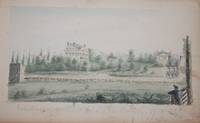
1828006534New York City 1828. Hardcover. Cloth spine. Marbled pastedown on boards. Leather centerpiece label on front board. Good. Original watercolors of rural Manhattan as it appeared in 1828. Among these and captioned are a farmhouse on Broadway and 8th Street; Kips Bay showing a boy sailing a small craft with a farmhouse in the background; a house in Bloomingdale the location of an early village now the Upper West Side along the river between 96th and 106th Streets; and a stately mansion surrounded by fields and less important buildings we would conjecture in or around Bloomingdale but captioned surely incorrectly the Battery. Most of the paintings are uncaptioned. Of these some are surely the Upper Hudson area or are scenes that we can't tell whether they are upstate or in the present day city. The artist also ventured away from the New York areas. Among the non-New York paintings are a depiction of the Cape Pogue Lighthouse on Martha's Vineyard which still stands; Fowey Harbour which is in Cornwall; and a few scenes which look very much like Scotland. <br /> <br /> <br /> Oblong 14 by 19.5 cm. 55 watercolors generally fully finished. <br /> <br /> Although the sketchbook has a label on its front board bearing the name of Walter Oddie who was a listed artist we believe a good amount of the artwork contained in this sketchbook is of his father-in-law Henry Meigs. Meigs had been a U.S. Congressman from New York and also held a number of other political positions in the city over the course of his career. More pertinently Meigs was known to be an amateur painter and as such an inspiration to Oddie. Given Oddie's youth at the time -- he was 20 or 21 years old - and from his diary for the years 1828 and 1829 now housed in the Winterthur Library we know he was just starting to paint we find it inconceivable that he would have had the skill yet to produce the sensitive and fine renderings of nature and buildings that typify this sketchbook. Further underlying our thinking about attribution is that some of captioning only makes sense if Meigs were the primary artist. We do consider it quite likely that Oddie may have done some of the sketchier work contained herein as well as contributing in bits and pieces to his father-in-law's work as well as perhaps copying some of it in this sketchbook. <br /> <br /> To us it isn't really so important who was responsible for particular paintings in the sketchbook. Rather the significance lies in the recording of New York City and its surroundings at the time - we suspect that there may be no recording anywhere of some of the buildings and locations at this time. And of course not to be minimized is the beauty of the better paintings contained in the sketchbook.<br /> <br /> Whatever the degree of Oddie's contribution the sketchbook does have something to say about his career and visa versa given that it contains the type of artwork for which he became known later. Oddie was born in Maryland Washington D.C. or possibly New Orleans but spent almost his entire life in New York and more specifically New York City Brooklyn or Long Island. In 1828 the year most of the watercolors in the catalogue were executed Oddie was spending much of his time in the city.<br /> <br /> Once Oddie's interest in painting was sparked he was believed to have been largely self-taught but he did come to study art with Hudson River School painter Robert Walter Weir and Anthony Lewis De Rose a portrait and historical painter. <br /> <br /> From the diary we know that Oddie did work with De Rose in 1829; we believe that his tutelage with Weir came later. From the diary we know that Oddie was regularly going to art exhibits and critiquing what he saw. The diary also discloses or corroborates our prior sense that Oddie sometimes would work off of engraved prints. To what degree he was merely copying the prints as opposed to using the prints as a spur to his own imagination we can not determine with certitude. We tend to think the views of Scottish and Welsh castles contained in the Sketchbook were done by Meigs not Oddie and so they might well have been done from life.<br /> <br /> From the diary we know that Oddie had some day job that occupied him during the week and so he did most of his painting at that time on the weekends when he would often go for long hikes along the Hudson. Oddie also refers in the diary to having been in Hudson then and now the county seat of Columbia County and so it is very plausible that some of the upstate scenery is from around there. Again we think some of these paintings may have been done by Meigs.<br /> <br /> Oddie would become an associate member of the National Academy of Design where he frequently exhibited his artwork.<br /> <br /> One further note - we spoke of questioning one caption referring to the Battery. In 1828 the urbanized part of the city didn't even reach 14th Street but the Battery as the oldest part of the city was thoroughly urbanized. Thus the painting could not be of the Battery. But the landscape is very consistent with the topography of Upper Manhattan. hardcover
1566B6630Bononiae /Bologna: Alexandri or Alexander or Alessandro Benatii or Benatius or Benacci publisher c. 1566. . Edition: First Commandino edition. Binding: 17th century mottled calf; spine raised with six 6 bands compartments gilt gilt lettered title on two; all edges speckled red. Notes: First edition by Commandino. David Clement judges this edition of the first four books bound with the two books of Sereni on cones and cylinders to be extremely rare. Also footnote 32 states: in Bibliotheca Uilenbroukiana P.I. p. 55. Catal. duarum Bibliothecaruin Dom. N. B. & D. L. Hagae - Com. ap. Beauregard 1747. in 8vo. p. 9 Vogt Libror. rarior. p. 40. describes this Commandin edition surpassing that of Jean-Baptiste Memmius which was printed in Venice in 1537. It quotes Fabricius’ statement in the Bibliotheca Graeca about Memmius or Memus not having understood the subject at hand translated from a basically wanting manuscript with manifold thereby rendering his version weak. It also mentions that this didn’t mean Commandin’s was fault-free remaring the Greek manuscript he had drawn on was filled with failts. <br>Concerning Apollonius’s work Koudela states†Interest in ancient Greek knowledge increased gradually in the fifteenth and sixteenth centuries especially in Italy the leading country of Europe's culture and science of the time. Latin translations of Greek works on conic sections and other curves - Apollonius and Pappus in particular - appeared in several editions. Although some original works were also published in the sixteenth century no significant progress in the study of conic sections had been made until the work of Kepler. His contribution influenced the further development of projective geometry and can be regarded as the transition from ancient to modern geometry. The spread of Greek knowledge in the Renaissance The invention of conic sections is attributed to Menaechmus 4th cent. BC a member of Plato's Academy at Athens. Various species of conic sections were obtained by truncating an acute-angled right-angled and obtuse-angled cone by a plane perpendicular to the generator of the cone. Conic sections were also investigated by Aristaeus the Elder 4th cent. BC and by Euclid c. 325 - c. 265 BC. Their works on this subject are now lost. The works of Archimedes 287 - 212 BC contain some important results concerning the properties of conic sections especially parabolas. The greatest ancient writer on conic sections was Apollonius of Perga c. 262 - c. 190 BC. His famous work Conics consisted of eight books and contained 487 propositions. Apollonius introduced the terms ellipse parabola and hyperbola and showed that various sections of the cone can be obtained by varying the inclination of the intersecting plane. Among other ancient authors dealing with conic sections we should mention Pappus of Alexandria c. 290 - c. 350 AD the last of great Greek geometers. His main work known as Collection is valuable - among other things - because it provides an account and comments on the results obtained by his predecessors. Pappus introduced the notion of the focus and the directrix of a hyperbola Kline 1990 p. 128 .<br> <br>Apollonius’ work influenced the greatest scholars of the modern era such as Descartes and Newton. The Latin translation of the first four books of Apollonius by Gianbattista Memo appeared in Venice in 1537. The present edition of Apollonius’ Conics of the sixteenth century is based on the translation and important new edits by Federico Commandino 1506-1575 who published “classical Greek mathematical texts under the auspices of the Duke of Urbino.†Horblit: “The most influential early edition of this highly important text entirely superceding Memmo’s version of 1537â€. <br>Other sources state that in total the Conics consist of 387 not 487 propositions published in seven books with the eighth book remaining unconfirmed. <br> <br>References: Adams A-1310; Brunet I 347; David Clement Bibliothèque curieuse historique et critique: A-Aqvino 1750 p.415/6; Dibner 101; Honeyman 118; Horblit 4; Koudela L.: Curves in the History of Mathematics: The Late Renaissance 2005; Norman 57; Riccardi I/1 361 51; Commandino; Sotheran I 124.<br>Work II: Conicorum lib. V VI VII with Archimedis Assumptorum liber.<br> Pergaeus Apollonius c. 262-c. 190 B.C. author; Archimedes c. 287-c. 212 B.C author; Abu'l Fath of Isphahan or Bundari al-Fath ibn Ali c. 1190 - c. 1245 author; Borelli Giovanni Alfonso c. 1608-1679 editor; Abraham Ecchellensis 1605-1664 translator: <br>APOLLONII PERGAEI// CONICORVM LIB. V.VI.VII. // PARAPHRASTE // ABALPHATO ASPHAHANENSI // Nunc primum editi. // ADDITVS IN CALCE. // ARCHIMEDIS ASSVMPTORVM LIBER // EX CODICIBVS ARABICIS M.SS. // SERENISIMI // MAGNI DVCIS ETRVRIAE //ABRAHAMVS ECCHELLENSIS MARONITA // In Alma Vrbe Linguar. Orient. Professor Latinos reddidit. // IO: ALFONSVS BORELLVS // In Pisana Academia Matheseos Professor curam in Geometricis versioni // contulit & notas vberiores in vniversum opus adiecit. // AD SERENISSIMVM // COSMVM III. // ETRVRIAE PRINCIPEM. // FLORENTIAE // Ex Typographia Iosephi Cocchini ad insigne Stellae MDCLXI. // SVPERIORVM PERMISSV. <br> <br>Two parts in one.Text in Latin.<br>First edition. / Editio princeps <br>Florentiae / Florence: ex Typographia Iosephi Cocchini publisher; c. 1661. Folio 294x199mm.<br> <br>Illustrated with a red and black ink title decorative head- tail pieces and woodcut initials of varying sizes at openings a large number of mathematical in-text woodcut illustrations mainly diagrams throughout again of varying sizes; wide margined paper.<br> <br>Pagination: 36 415 bl. Collation: Ll: bl. half title red and black ink title 3-6 1-4 with index A1-Z4 Aa1-Zz4 Aaa1-Fff4 with errata bl. <br> <br>Very beautiful and rare work edited by Alfonso Borelli is the first edition of books<br>V VI and VII of the Conicorum of Apollonius. Concerning Apollonius Koudela states†Interest in ancient Greek knowledge increased gradually in the fifteenth and sixteenth centuries especially in Italy the leading country of Europe's culture and science of the time. Latin translations of Greek works on conic sections and other curves - Apollonius and Pappus in particular - appeared in several editions. Although some original works were also published in the sixteenth century no significant progress in the study of conic sections had been made until the work of Kepler. His contribution influenced the further development of projective geometry and can be regarded as the transition from ancient to modern geometry. The spread of Greek knowledge in the Renaissance The invention of conic sections is attributed to Menaechmus 4th cent. BC a member of Plato's Academy at Athens. Various species of conic sections were obtained by truncating an acute-angled right-angled and obtuse-angled cone by a plane perpendicular to the generator of the cone. Conic sections were also investigated by Aristaeus the Elder 4th cent. BC and by Euclid c. 325 - c. 265 BC. Their works on this subject are now lost. The works of Archimedes 287 - 212 BC contain some important results concerning the properties of conic sections especially parabolas. The greatest ancient writer on conic sections was Apollonius of Perga c. 262 - c. 190 BC. His famous work Conics consisted of eight books and contained 487 propositions. Apollonius introduced the terms ellipse parabola and hyperbola and showed that various sections of the cone can be obtained by varying the inclination of the intersecting plane. Among other ancient authors dealing with conic sections we should mention Pappus of Alexandria c. 290 - c. 350 AD the last of great Greek geometers. His main work known as Collection is valuable - among other things - because it provides an account and comments on the results obtained by his predecessors. Pappus introduced the notion of the focus and the directrix of a hyperbola Kline 1990 p. 128.<br> <br>While Koudela mentions 487 propositions in total for eight books comprising the Conics other sources mention 387 published in seven books only with an eighth book announced but its publication unconfirmed/ elusive. Apollonius’ work influenced the work of great scholars such as Descartes and Newton. A Latin translation of Conicorum’s first four books appeared in Venice in 1537 and it was not until 1661 for the present work - Conicorum’s books V to VII - to be published; the present work constitutes the most innovative or original part of the work of Apollonius. Translated from the Arabic manuscript of Abu'l Fath of Isphahan c. 1190 - c. 1245 purchased by the Medici’s during the first half of the 17th century the text of had survived only in the Arabic language. Norman states: “This was a valuable addition to the mathematical knowledge of the time for whereas Books I-IV of the Conics dealt with information already known to Apollonius’s predecessors Books V-VII were largely original. Book V discusses normals to conics and contains Apollonius’s proof for the construction of the evolute curve; Book VI treats congruent and similar conics and segments of conics; Book VII is concerned with propositions about inequalities between various functions of conjugate diametersâ€. Cajori states: “The fifth book reveals better than any other the giant intellect of its author. Difficult questions of maxima and minima of which few examples are found in earlier works are here treated most exhaustively. The subject investigated is to find the longest and shortest lines that can be drawn from a given point to a conic. Here are also found the germs of the subject of evolutes and centres of osculation.†<br>Cajori A history of mathematics 40; Brunet I: 347; D.B.I. XII 546; De Vitry 29; DSB I 191re: Apollonius & II 308 re Borelli ; III 364. Honeyman 119; Koudela L.: Curves in the History of Mathematics: The Late Renaissance 2005; Norman 58; Riccardi I /1 158 Borelli.<br><br> Size: Folio 294x199mm. Illustration: Text in Latin.<br>Illustrated with numerous decorative historiated woodcut initials of varying sizes at openings; hundreds of in-text illustrations mainly diagrams of varying sizes. Volume: Two parts in one. Pages: Pagination: Bl. 4 114 2 36 bl. Collation: Ll:1-6 1 -4 with index A1-Z4 a1-f2; 2 a1-i4. Category: Book Europe Italy; Book Science & Technology; Alexandri or Alexander or Alessandro Benatii or Benatius or Benacci, publisher unknown
161567051615. 14; 13 folding leaves. Two parts in one vol. Large 8vo cont. or later dark wrappers dyed with persimmon juice shibubiki new stitching. Japan probably Kyoto: printed with moveable types ca. 1615-40.<br/> <br/> A very rare edition printed with moveable types apparently unrecorded in the standard bibliographies of the story — or legend — of the creation of the first statue of Siddhartha Gautama or Gautama Buddha the founder of Buddhism. The statue executed while Buddha was still alive was commissioned by King Udayana of Kaushambi a contemporary of Buddha. It was the very first image of Buddha and is especially important as it was carved from life. Copies of this statue made their way to China with the spread of Buddhism and later as we shall see to Japan.<br/> <br/> The text provides a history of the creation of the first statue of Buddha which is perhaps the most famous of all Buddha images. King Udayana commissioned the statue “so that he could gaze upon the sacred form of the Buddha while the latter was off preaching to his mother in the heaven of Indra. Buddha’s disciple Maudgalyayana transported thirty-two craftsmen up to the heavenly realm so that they could observe the special marks of the Buddha firsthand thereby insuring the representational accuracy of the image they created. When the Buddha eventually returned to the earth King Udayana’s statue rose into the air to greet him of its own accord and the Buddha proclaimed that it would one day help to transmit his teachings.â€â€“Brown ed. The Oxford Handbook of Religion and the Arts p. 371. We learn that the statue was carved out of sandalwood and that later copies were made of gold silver bronze lead tin or iron as well as of wood.<br/> <br/> This text was translated by the Khotanese monk Tiyunbanruo d. 691 or 692 whose original Sanskrit name was Devendraprajna. Khotan was an ancient Iranian Saka Buddhist kingdom on the branch of the Silk Road that ran along the southern edge of the Taklamakan Desert near modern-day Xinjiang. Tiyunbanruo came to Luoyang the “Eastern Capital†of the Tang dynasty of China in about 688 with a considerable reputation as a Buddhist missionary and set up a bureau to translate Buddhist texts into Chinese. An earlier edition of this text was published in Beijing in 1593 and only one copy is known at the BnF.<br/> <br/> This book was probably printed and issued as a way to reinforce the legitimacy of the famous Buddha statue of the temple of Seiryoji in the Saga fields of Kyoto. It is one of the chief objects of religious veneration in Kyoto. A copy of the original statue also commissioned by King Udayana was brought from the castle at Kaushambi in north-central India to China by Hsuan-tsang in 645. The statue moved many times and ultimately arrived at Kaifeng the Sung capital. The Japanese monk Chonen 938-1016 who spent the years 983-86 in China studying and collecting texts had worshiped the statue in Kaifeng and commissioned men in 984 to carve a copy to bring back to Japan. The copy was ultimately installed at Seiryoji and according to Japanese tradition the Chinese “original†and Chonen’s copy had miraculously changed places — the Seiryoji Buddha was actually the authentic example commissioned by Udayana.<br/> <br/> The Seiryoji Buddha is “probably the most important best-documented and best-preserved sculpture now existing which represents the school and tradition of Buddhist sculpture connected with the sacred Udayana image of the living Buddha of which Hsuan-tsang brought a copy to the court at Ch’ang-an.â€â€“Henderson & Hurvitz “The Buddha of Seiryoji: New Finds and New Theory†Artibus Asiae Vol. 19 No. 1 1956 p. 43–and see the whole fascinating article.<br/> <br/> As mentioned above this rare work is printed with moveable types. It was at one time owned by the great Japanese dealer Shigeo Sorimachi. The chitsu has the characteristic handwriting on the label of Sorimachi’s assistant Mr. Mori who has written: “Zozo kudoku kyo. Genna kan’ei chu kan. Kokatsu ban†“Creation of the Statue a Pious Act. From Genna to mid-Kan’ei edition ca. 1615-40. Moveable typeâ€. It is not cited by Kazuma Kawase Kokatsuji-ban no kenkyu Study of the Early Typographic Editions of Japan 1967 the definitive bibliography of Japanese moveable type books. There is no copy in WorldCat nor the Union Catalogue of Early Japanese Books.<br/> <br/> In very good condition. The first ten folding leaves which are a little stained have some repaired worming and strengthening. The following leaves have some worming some carefully repaired and others as the worming lessens not repaired. Several characters affected by the worming. As mentioned above the wrappers have been dyed with persimmon juice which serves a dual purpose: to strengthen the paper and act as an insect repellent.<br/> <br/> ⧠Wang Zhenping “Chonen’s Pilgrimage to China 983-986†Asia Major Third Series Vol. 7 No. 2 1994 pp. 63-97. Martha L. Carter The Mystery of the Udayana Buddha Naples: 1990. unknown
159866701598. 22 leaves including some blanks or pages ruled in ink for entries. Agenda format 315 x 100 mm. stitched as issued uncut. Nuremberg: 1598.<br/> <br/> A fascinating document of a type that rarely survives: the manuscript account book for the spring 1598 Leipzig fair of Hans Straub I or the Elder 1541-1610 the prominent Nuremberg gold- and silversmith alderman and son-in-law of Wenzel Jamnitzer the best-known German goldsmith of his time. The first leaf bears Straub’s hallmark interwined initials “HS†over an arrow pointing upward within a plain shield & also containing the inscription “No. 72â€. Our manuscript sheds important light on the business relations in the late 16th century between the Nuremberg goldsmiths and their trade at the Leipzig fairs.<br/> <br/> Our account book is a list of sales orders and expenditures of Nuremberg goldsmith Hans Straub the Elder during the Leipzig Easter fair held in May 1598. While Straub is not expressly named he can be identified by his hallmark on the first leaf. At the fair trade was done in goblets rings knife-sheaths cutlery jewelry gemstones etc. Several business partners are named including the Nuremberg goldsmiths Heinrich Hahn Haan David Lauer and Paulus Koch. As an example of a transaction we see that the council of Halle paid over 33 florins for a goblet.<br/> <br/> In 1596 Straub was elected Alderman of the Artisans the most elevated and honorable office to which a Nuremberg artisan could aspire. Straub retained this position until his death in 1610. In 1569 he married Anna daughter of the famous goldsmith Wenzel Jamnitzer. On his father-in-law’s death in 1585 Straub inherited his casting molds and used them extensively in his own creations. Despite his long period of activity relatively few pieces made by Hans Straub have survived see Nürnberger Goldschmiedekunst 1541-1868 2007 ed. by Karin Tebbe et al. Vol. I p. 409.<br/> <br/> In fine condition.<br/> <br/> ⧠The mark is similar to Marc Rosenberg Der Goldschmiede Merkzeichen Frankfurt 1925 Vol. III no. 3969. unknown
1669B6290London: Printed by John Macock for the Author Ogilby. c.1669. A fine attractive and handsome copy with text and plates clean and crisp. Edition: First or 1669 Edition in English. Binding: Contemporary mottled full calf rebacked expertly saving the original spine spine with seven raised gilt bands; compartments densely gilt ornamentated; with gilt lettered title on brown morocco label on two and three. Blind dentelle pattern tooled on edges of covers; pasted and free endpapers marbled. <br><br><br> Notes: John or Johann Nieuhof 1618 – 1672 is best known for the account of his journey from "Guangzhou"Canton to Peking in 1655-1657 which enabled him to become an authoritative Western writer on China. The book was first published in Dutch in 1665 by Johan's brother Hendrik and the Amsterdam based publisher and printer Jacob van Meurs. The publication was successful several edited editions followed geared towards commercial interests also translated into French German Latin and eventually into English. The English version was not published by Van Meurs but by John Ogilby instead. The book consists of the notes and illustrations that Nieuhof made in his position as a steward on Peter de Goyer and Jacob de Keizer's embassy to the emperor of China. The work itself is split into two parts. The first part contains the written account of the embassy led by Peter de Goyer and Jacob de Keizer to the emperor of China. It details the entire journey from "Guangzhou"Canton to Peking and back again. This part also contains descriptions and depictions of all that the embassy came to pass on its trip. The second part consists of an overview of China describing bridges mountains temples customs and costumes supported by illustrations. Prior to this period the image of the Chinese in Europe was dominated by fantasy illustrations. Many subsequent artists and architects based their work on Nieuhof's pictures. The present copy John Ogilby’s translation and the first Edition in English. Apart from 'An embassy from the East-India Company…’ Nieuhoff’s account of his journey it also includes ‘A Narrative of the Success of an Embassage sent by John Maatzuyker's de Badem General of Batavia…’ and Kircher’s ‘An Appendix or Special Remarks taken at large out of Athanasius Kircher/ His / Antiquities of China.’<br><br> Size: Folio 418 x 270mm. Illustration: engraved frontispiece portrait of John Ogilby by Lilly and engraved by Lombart; engraved illustrated title signed and dated by ‘W.enceslas Hollar 1668.’; printed title in red and black ink; map of China signed by Hollar double page dedication leaf to King Charles; with 17 full-page and 2 double-page plates. 121 in-text illustrations throughout as well as head-piece vignettes and rubricated historiated initials at openings of dedication and sections; one endpiece.<br>Wide margined large paper copy; main text jumps from 184 to 205 without loss of content. References: Cordier Sinica II 2347; Lust 536; Wing N1153 Transation: John Ogilby’s Englis Pages: PP. illustrated title blank printed title blank map; dedication leaf to King Charles; 327 bl.; 1-18; appendix 1-106 19 ill. Category: Book Voyages General; Book Asia Far East Printed by John Macock for the Author [Ogilby],. unknown
773260 double-page two have flaps & several single-page illus. using brush & washes of many colors. 30; 31.5; 31 folding leaves. Three vols. Large 8vo 308 x 210 mm. orig. decorated semi-stiff boards manuscript titles on upper covers new stitching. Japan: Author's Prefaces dated 1699 & 1709; Postfaces by Nobutomo Ban dated 1813 & 1841.<br/> <br/> A most interesting and attractively illustrated manuscript. In the late 17th century the brother of Kotaku Hosoi Chimei d. ca. 1697 a samurai in service to the Koriyama fiefdom visited the Nara area and was saddened by the disrepair of the many mausoleums tombs and tumuli of former emperors. Chimei began a survey of grave sites and his work came to the notice of the shogun Tsunayoshi Tokugawa 1646-1709 who in 1697 ordered a series of fences to be built around these sites in Yamato no kuni including Nara Kyoto Osaka Hyogo and other areas. These fences - pictured in many of our manuscript's illustrations - were designed to protect the sites from further ruin and robbings.<br/> <br/> Upon Chimei's death his brother Kotaku 1658-1735 calligrapher and Confucian scholar took over the survey which is contained in the first two volumes of our manuscript. At the beginning of the first volume is a list of all the mausoleums recorded by the Hosoi brothers with the names of the emperors and the locations arranged not chronologically but by region. Also included are descriptions of the grave sites and the existing structures. <br/> <br/> Each volume includes an attractive series of double-page brush and color-wash illustrations of the 35 actual sites. In the second volume two of the illustrations contain flaps under which are shown the interiors of the stone burial chambers. Measurements are given along with details of ownership. Most notable is a fine double-page illustration of the famous Takamatsuzuka circular tomb.<br/> <br/> The third volume is an addendum written by Nobutomo Ban 1773-1846 Confucian scholar of kokugaku the study of Japanese history and samurai retainer who was famous for the quality of his historical research especially in archeology and religious studies. In this volume there are 25 fine double-page illustrations in brush and color wash and some black & white diagrams of more mausoleums tombs and tumuli mostly outside of Yamato no kuni including the former provinces of Ise Sado Harima Satsuma Osumi Kawachi and others. Ban's explanatory text accompanies the illustrations.<br/> <br/> In the first two volumes Ban has added further notes in red ink regarding other archeologists' researches and reports from local governments.<br/> <br/> Fine copy preserved in a chitsu. Some worming occasionally touching a character or illustration.<br/> <br/> ⧠Edgren Catalogue of the Nordenskiöld Collection 1980 490. The Imperial Household Agency Library Shoryobu owns a rather similar manuscript. unknown
1575ABC_46067Antwerp: Hans van Luyck 1575. Modern red half cloth marbled sides. Oblong folio album 24.5 x 35.5 cm. Series of 24 engravings plate size ca. 20 x 14 cm with views of landscapes around Brussels by Hans I Collaert possibly after Hans Bol or Jacob Grimmer each with a caption in the plate plates 8 and 20 also with Van Luyck and Collaert's monograms "H.V.L.EXcudit" and "H.C.Fecit". Trimmed down to the plate edge and mounted on album leaves numbered in pencil on the album leaves next to the engravings. Album with the complete series of Collaert's views around Brussels here in its first unnumbered state published by Hans van Luyck in Antwerp. Hans I Collaert ca. 1525/30 - 1585 was a painter-draughtsman who founded the influential Collaert dynasty of engravers and print publishers. The views show villages castles and abbeys in the vicinity of Brussels engraved in a very naturalistic way. The series includes a view of the cloister of Zevenborren south of Sint-Genesius-Rode views of Schaarbeek Elsene Etterbeek Stal Eggevoort and Bosvoorde and views of the some castles including those of Brussels Coensborg south of Laken and Carloo. Some references attribute the drawing of the views to Hans Bol because of an inscription added to the first plate of the later Visscher edition but the "related drawings are not consistent with Bol's style" New Hollstein. Others name Jacob Grimmer as an alternative candidate for the artist who drew the views.With a 20th-century manuscript inscription on the first free endleaf mistakenly identifying the series as the second state published by Visscher which is however numbered in the plates in contrast to the present series in an unnumbered first state. Binding slightly worn around the edges some slight marginal foxing stains browning and soiling but overall a beautiful album complete and therefore rare with all the plates of Collaert's views around Brussels here in its first state.l Hollstein IV 149-172; New Hollstein The Collaert dynasty V 1229-1252; cf. New Hollstein The Collaert dynasty I pp. xlix-liii. Hans van Luyck, hardcover
6775Eight columns per page 17 characters per column. Three sizes of type. 42; 41; 38; 40 folding leaves. Four vols. Large 8vo 280 x 195 mm. orig. dark wrappers dyed with persimmon juice shibubiki new stitching. Enryakuji Temple Mount Hiei: mid-Kan’ei ca. 1626-30.<br/> <br/> An unrecorded moveable type edition of the commentary and subcommentary of Zongmi 780-841 on the Sutra of Perfect Enlightenment. This is a rare example of an Eizan-ban a book printed with moveable type at the temples on Mount Hiei outside of Kyoto where Enryakuji Temple one of the most important monasteries of Japan and the headquarters of the Tendai sect of Japanese Buddhism is located. Printing began there in the 13th century. “There were few of these printed books in the medieval period perhaps due to the dominance of Kyoto itself as a printing centre…Eizan printing came into its own on a large scale only from the end of the sixteenth century with the introduction of movable-type printing. Typographic printing flourished at various temples on Hieizan from the Keicho to Kan’ei periods 1596-1644 and with the publication of Chinese works as well as Tendai scriptures publication and distribution at Hieizan began to develop into the beginnings of a commercial enterprise.â€â€“K.B. Gardner “Centres of Printing in Medieval Japan: Late Heian to Early Edo Period†reprinted in Brokaw & Kornicki eds. The History of the Book in East Asia 2013 p. 450.<br/> <br/> The writings of Dushun 557-640 Zhiyan 602-68 Fazang 643-712 and Zongmi are considered by many as the “crowning glory of Chinese thought… marking the maturation of a process by which the Chinese made Buddhism their own.â€â€“Bowring The Religious Traditions of Japan 500-1600 p. 104.<br/> <br/> Zongmi was a Tang dynasty Buddhist scholar monk; he was the fifth patriarch of the Huayan school as well as a patriarch of the Heze lineage of Southern Chan. The Sutra of Perfect Enlightenment was the scripture that led Zongmi to enlightenment in 808; he resolved to prepare a commentary and subcommentary on the text which he accomplished fifteen years later.<br/> <br/> As stated above this moveable type edition is unrecorded. Kawase in his bibliography of Japanese moveable type editions records another printing of this text dated 1626 but with ten columns per page and 20 characters per column Vol. I p. 304. Sorimachi in his amazing 40th anniversary catalogue of moveable type books issued in 1972 describes what appears to be yet another moveable type printing of this text with the same number of columns and characters as the Kawase example but using three different sizes of type they might be the same printing. It is described as four parts in two volumes in their original bindings printed in mid-Kan’ei ca. 1630 and with a slightly different title. The NIJL records no moveable type editions and only the woodblock-printed Seihan edition of 1644.<br/> <br/> On the printed title-labels of the second and fourth volume covers the title is given as Engaku ryakusho chu. The labels on Vols. I and III are no longer present.<br/> <br/> As mentioned above the wrappers have been dyed with persimmon juice which serves a dual purpose: to strengthen the paper and act as an insect repellent. Nevertheless the wrappers are somewhat wormed.<br/> <br/> Each volume has some worming but this set is in rather fresh and appealing condition. unknown
157665511576. Numerous woodcut illus. in the text. Largely printed in black letter. 7 p.l. first leaf blank except for signature mark 63 1 pp. Small 4to early 20th cent. polished mottled calf by Riviere triple gilt fillet round sides spine richly gilt red morocco lettering pieces on spine dentelles gilt a.e.g. London: H. Denham 1576.<br/> <br/> Second edition “nowe newly corrected and augmented†of the first English book on hops. The first edition appeared two years earlier; both editions are very rare. This is “an eminently practical treatise illustrating the various methods of setting the roots making the hills and ramming the poles tying the bine and its pulling up and preservation with a number of curious cuts. It was the work of a practical man written for practical men and in this respect is far in advance of most of Scot’s contemporaries who were still much interested in the superstitions of the time and the traditional pseudo-science of the Middle Ages.â€â€“Fussell I p. 12.<br/> <br/> Clinch in his English Hops a History of Cultivation and Preparation for the Market from the Earliest Times 1919 states that in many respects “the information is as useful today as it was nearly three-and-a-half centuries ago when it was published.â€<br/> <br/> Scot d. 1599 is most famous for his The Discoverie of Witchcraft 1584 in which he attacked the general belief in witchcraft and other forms of credulity and superstition including astrology alchemy and Catholicism. For more on Scot and his fascinating life see ODNB.<br/> <br/> Fine copy. Signature of T. Barling on first leaf.<br/> <br/> ⧠Henrey I p. 64 & no. 338. McDonald Agricultural Writers from Sir Walter of Henley to Arthur Young 1200-1800 pp. 34-36. unknown