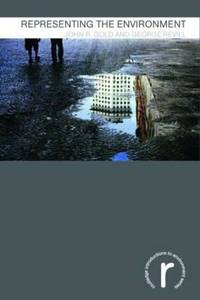
Gold, John R; Revill, GeorgeBiblio.com
7 654 résultats
2046822-nnew. unknown
1911MNLmmMON38Paris: Librairie Alphonse Picard Et Fils 1911-25. 1911. 3 Volumes. 8vo. pp. 2 p.l. xviii 1 423 1; 587 1; vii 585 1. with half-titles. 3 folding maps. contemporary quarter cloth. These admirable memoirs dubbed the "soldier's Bible" by Henry IV are among the most vivid and picturesque of the period. Montluc who fought against the Imperialists commanded by the Emperor Charles V and assisted at the sieges of La Rochelle and Calais was made a marshal of France by Henri III in 1573. Hardcover. Paris: Librairie Alphonse Picard Et Fils, 1911-25. Hardcover
1803TIRurMUI58London: Printed By A.Strahan For T.N. Longman And G. Rees 1803. 1803. 8vo. pp. xii 428. with half-title. contemporary marbled sheep front cover detached foxing & light dampmarks to a few outer leaves. First Edition. The author was librarian to the University of Glasgow. He here recounts his visits to Brussels Lausanne Lyons Avignon Bareges Toulouse Nismes Marseilles :Leghorn and Pisa. Pine-Coffin 7891. F. London: Printed By A.Strahan For T.N. Longman And G. Rees, 1803. unknown
30093953-nnew. unknown
9614039-nnew. unknown
30093953like new. unknown
2024x-1805395882Berghahn Books 2024. Hardcover. New. 416 pages. 9.00x6.00x9.00 inches. Berghahn Books hardcover
3329492-nnew. unknown
196230233<p>HBDJ1962 Early Issue ReprintVG/VG AS-IS WITH WOMAN ON FRONT OF DJ LARGER FORMAT Reprint as No 949 in the Dent Everyman series the larger format 12mo 242pp introduction D M Hoare VG Copy in sound lilac DJ LITELY frayed and nicked at head of spine and somewhat sun-faded COPPER TITLES ON spine COVER. Size: 12mo BACK OF DJ SAYS FEW 500 AUTHORS</p> EVERYMAN’S LIBRARY DENT LONDON hardcover
1986DADAX0306420546Springer 1986-01-31. 1986. hardcover. New. 6.48x0.88x9.46. Buy with confidence. Excellent Customer Service & Return policy. Springer hardcover
ria9780750701587_inpHardcover. New. New Book; Fast Shipping from UK; Not signed; Not First Edition; First published in 1993. The purpose of this book is to help those who help others. Research has consistently demonstrated that those in the professions particularly helping professions have significantly higher levels of stress and b hardcover
20211-1543813615Aspen Publishers 2021. Hardcover. New. 5th har/psc edition. 614 pages. 10.00x7.25x1.00 inches. Aspen Publishers hardcover
0190212489New. Brand new and still unused unknown
9614039like new. unknown
654404949Ashgate Publishing Company pp. 325 . Hardback. New. Ashgate Publishing Company hardcover
193384259Washington D.C.: Published by Elder Lightfoot Michaux 1933. Unbound. Very Good. Sheet music. One quarto leaf folded to make four pages. Measuring 6" x 9" closed. Printed in blue. Horizontal crease light old folds and modest additional wear and soil very good. The theme song of Michaux's Church of God dedicated here to Franklin D. Roosevelt who is pictured on the final page. Evangelist Michaux was known for his gospel singing prowess and was something of a television pioneer hosting a religious television show from the nation's capital in 1948-49. While Ezra Pound was incarcerated in St. Elizabeth's Hospital he included a reference to Lightfoot in his Canto 95. OCLC locates only two copies of a 1932 edition with no mention of the FDR content. Published by Elder Lightfoot Michaux unknown
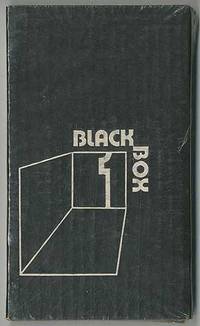
1972382751Washington DC: New Classroom 1972. Unbound. Fine. Black corrugated box with folding flap containing two 60-minute audio cassettes. Measuring 4.25" x 7.25". Fine in original shrinkwrap with green broadsheet stating contents. A Fluxus-style literary magazine consisting of audio recordings of poetry by James Tate Jerome Rothenberg Dennis Schmitz Andrea Wyatt Michael Rossman Edmund Skellings Edward Gold Etheridge Knight Todd Gitlin Sha'ir Rasul Marge Piercy and Pablo Neruda. New Classroom unknown
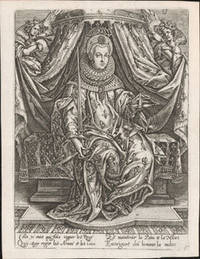
16-633116th or 17th Century. . Engraving. 19.5 x 15cm. Bedecked queen seated on a throne holding the scales of justice.Provenance:Né en 1906 à Lezay Deux-Sèvres Jacques Cathy a exercé d’abord la profession de caricaturiste à l’hebdomadaire « Le Rire ». Il a rejoint vers 1927 l’équipe du Cabaret « La Vache Enragée » conduite par Roger Toziny. Jacques Cathy poursuit sa carrière de chansonnier après le décès de Toziny en 1939 et après la guerre il conduit parallèlement une carrière d’acteur dans le cinéma. Jacques Cathy était le 3ème Maire de La Commune Libre de Montmartre à partir de l’élection en 1949.Final provenance: Les Collections Aristophil - 164 bis avenue Charles-de-Gaulle 92200 Neuilly-sur-Seine. 16th or 17th Century. unknown
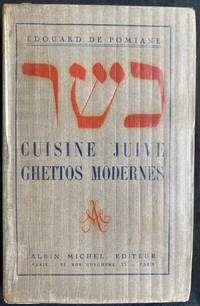
43450Paris: Albin Michel 1929. 1st edition. Original color-printed paper wrappers with later lamination 12mo 241 pages. 19cm. In French. Title translates as: "Kosher: Jewish Cuisine Modern Ghettos." Book was later re-issued under the less controversial title "The Jews of Poland; Recollections and Recipes."<br> <br> Rebecca Miller discussed the book at length in the Jewish Forward in 2013:<br> <br> "De Pomiane 1875-1964 a physician was also one of the most famous chefs and cookery writers of his day. Born Eduard Pozerski he was born into the Polish aristocracy brought up poor but refined. Both his parents were Polish patriots who fought against Russian domination of their homeland; his mother fled to France with the young Eduard when his father was deported to Siberia for insurrection against the Russians. Coming of age within the close-knit community of Polish exiles in Paris he was sympathetic to liberal causes and was a proponent of the Dreyfus cause.<br> His ethnographic book about Polish Jewish culture and cooking written in 1928 was originally entitled 'Cuisine Juive; Ghetto Modernes' 'Jewish Cooking; Modern Ghettos'. It is perhaps the weirdest book I have ever read. A tantalizingly vague recipe for Carpe a la Juive 'Take a large live carp. Kill it.' follows a horrifying description of a pogrom relayed to de Pomiane by a museum guide who had survived the massacre by hiding under a heap of hay in which his sister suffocated overnight: 'A corpse belly ripped open lay with its guts wrapped around its neck.A child wandered aimlessly haggard mute crazed its body beaten to a pulp.'<br> In de Pomiane's writing appreciative paragraphs about the accomplishment of certain refined Jews rub shoulders with unwittingly racist pseudo-science. 'I observed as a biologist.wrote as a scientist' claims de Pomiane as he cheerfully divides all male Jews into three types:<br> 'The dark-haired Jew with a long beard and a delicate aquiline nose. His lips are often thin his ears lie flat against his head. His eyes are deep almost mystical. He is less excitable than the others. It could be said that he belongs to an ethnic aristocracy. He has an Egyptian profile.'<br> 'This type is also dark-haired and much more common. His beard is black shorter his eyes are bulging and bloodshot his nose is squat his lips are thick and very red.This is the excitable Jewish type. When he laughs he sniggers. The face overall has a cruel and bestial appearance. Certainly this type of Jew would frighten a child in France even if that child were himself Jewish.'<br> 'A third and rarer type is completely red-headed. The beard is shorter and divided in two. He has the same negroid facial characteristics as the preceding type. The lips look even thicker and frame the teeth with two red borders of equal size. Although they are red the peyes look brown from being rolled twisted and curled between fingers that are constantly being licked.'<br> Having provided us with this helpful diagram of Jewish types he takes us on a tour of Jewish Poland beginning with Kazimierz the Jewish Ghetto in Crakow since the Middle Ages:<br> The whole place seems fairly and in some places extremely poverty-stricken. The more so since the population is dirty and strange. In Kazimierz everyone dresses in black everyone rushes about in a hurry they all bustle about irritably pushing shouting arguing. One would think the whole city was in the grip of some nervous disease.<br> De Pomiane believes that these poor nervous Jews give us a sense of what the tribes of Israel must have been like 'these people who when settled among us became the educated and refined individuals with whom we are familiar.' So De Pomiane argues the less 'Jew-y' the Jews are the more European the more refined they are-and hence it seems equal to non-Jews. <br> Unfortunately in only a few years there was no refinement that could save a Jew in Poland or indeed France: being Jewish was considered a racial fact not a cultural subtlety. But de Pomiane's distinctions are fascinating because they are being spouted by a man who was actually sympathetic to Jewish culture.<br> De Pomiane's observations are strikingly detailed. Describing the typical kaftan he states 'they wear a long black cloth gown which descends to their feet. It is not waisted like an overcoat but is slightly fuller. Two rows of buttons secure it over the chest. This kaftan is quite high-necked.'<br> And then he describes a head-covering that can be found in contemporary Williamsburg: 'Older Jews wear black hats of brushed felt. These head-coverings are worn very far forward a little over the eyes because on the crown of the head under the hat they wear a little black scull-cap.'<br> He speaks of prostitution: 'Just as in the Orient one sees in the streets of Cracow and Warsaw Jews attempting to draw in the passerby to admire a supposed daughter or niece.'<br> And the book is not short of anecdotes: a friend of de Pomiane's was tempted by an old man who spoke of a girl 'as beautiful and fresh as a mountain stream.' Tantalized he followed the old man into an ancient house and through a rather dark and very smelly courtyard. 'The Jew opened a door; my friend entered a room which was quite clean and saw a young girl in profile.' She was a perfect beauty. Then she turned to face him and he saw that one of her eyes had been gouged out. When he left in a panic the old man cried 'It wasn't for an eye that you followed me here!'<br> De Pomiane takes us to a stylish health resort called Zakopane. There de Pomiane finds a lot of rich Jews. 'What is so surprising' he asks. 'They alone.engage in trade. They alone are rich and they alone can afford to vacation in Zakopane.'<br> Spending time with these wealthy assimilated Jews Pomiane is amazed at their patriotism. A doctor he met 'defended both Zakopane and the whole of Poland.he was a proud Polish nationalist. There are men like these among Jewish intellectuals who have achieved a certain status in life. having left the kaftan and the ghetto behind.they have almost forgotten Yiddish replacing it with very good German. They call themselves Polish.'<br> De Pomiane the ethnographer paints a fascinating portrait of a class divide amongst the assimilated versus the unassimilated Jews:<br> Try and imagine a Jew in his worn shiny discolored kaftan with his beard and side-locks on his temples. Imagine him strolling down the Avenue Henri-Martin in Paris which is inhabited almost exclusively by wealthy French Jews. Would he be welcomed as a compatriot by those elegant ladies getting out of their automobiles whose children speak English to their nannies Definitely not. These 'Israelites' a term favored at the time by assimilated Jews as more politically correct than 'Jew' avoid the Polish Jew whom they have dubbed 'Polak'.<br> The book encapsulates contradictions and subtleties within the Polish Jewish population between the wars but also within the writer himself a Polish Francophile exile who loved food and had an abiding interest in Jewish cuisine. Beef Bouillon with Sauerkraut Chicken Soup with Almonds Goose Soup with Barley Carp a la Juive-these recipes and many more are all lovingly preserved for the curious gourmand in this most curious of books."<br> <br> OCLC: 1323307672. OCLC locates only 3 copies of the first edition in North America NYPL USC UUtah though some copies listed as "internet resource" may in fact be original hard copies. Lamination is transparent and has preserved the original paper binding quite well. Good Condition Thus. cook-4-4-'#ecc. Paris: Albin Michel unknown
16437081<p>Amsterdam: Jodocum Janssonium 1643 Contemporary stiff vellum with title in manuscript on spine. Twelvemo. Engraved title-page. A few pages a little browned. Generally a very good clean copy. Scarce: OCLC lists five copies two in North America.</p> Jodocum Janssonium, hardcover
195133462New York: World Editions Inc. 1951. First edition. Toning to text paper repaired closed tear to the upper right front cover light edge wear to spine tiny closed tear to lower right front panel a very good copy. 33462. Small octavo three issues covers by John Bunch Chesley Bonestell and Don Sibley pictorial wrappers. Digest sized magazine. First appearance of the novella The Fireman by Bradbury which would be expanded into the novel Fahrenheit 451. And the first publication of TYRANN THE STARS LIKE DUST by Asimov. Reference: Tymm and Ashley Science Fiction Fantasy and Weird Fiction Magazines pp. 290-309. World Editions, Inc. unknown
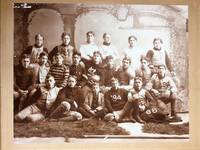
189433580np 1894. Framed photograph 10-1/2" x 13-1/2" matted behind glass within ornate gilt frame 21" x 23-1/2". Light wear to surface of photograph. Matting has some spotting. Some wear to frame and small chip to frame edge. Else Very Good. <br /> <br /> The squad is dressed in various football uniforms including laced smock vests over long sleeved shirts caped sweaters and knee length pants. Each of the two young men wearing military style uniforms has a small billed cap. unknown
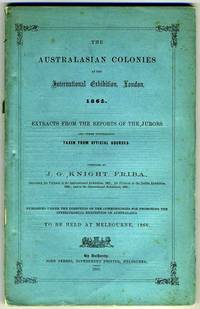
186618250Melbourne: Government Printer 1866. Second edition. Otherwise very good condition. International exposition in London held just ten years after the discovery and beginning of the Australian gold rush. The introduction nicely summarizes the increased presence of the Australian colonies: "In 1851 the Australasian colonies were but poorly represented although a few made some efforts to put in an appearance. . in 1862 the Australian colonies exhibit one of the most extensive and finest collections of the whole group. . New South Wales has a beautifully arranged collection of its gold products from all the principal fields in the several shapes of nuggets quartz grain gold washing stuff coin from the Sydney mint &c. . Victoria has gone to great expense . one of the most striking objects is a gilded obelisk representing the actual amount of gold found in the colony since 1851 about 800 tons or L103000000 sterling.:" Also information on wine with wine coming from South Australia; 4 exhibitors from Western Australia; Mr. Thomas Little of Dardanup won a medal for his light red Frontignac; Victoria 19 exhibitors with no wines older than 1858 shown putting them at a "taste disadvantage". Each district is represented with a short history of their products and resources. In Western Australia there are lead and copper mines iron ore mines Albany and Bunbury. <br /> <br /> Printed paper pamphlet. 8vo 101pp. Blue printed paper wrappers title in black at front cover no title at spine. Small unobtrusive Iibrary stamp at title page deaccession stamp at back cover. Lower corner back cover chipped. F11229. Otherwise very good condition. Government Printer unknown