542 résultats
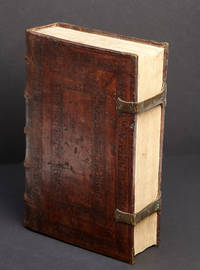
16176779Basel: Ludovici Regis 1617. Later printing. Full pigskin. Very Good. Thick 8vo. 9694272pp. Indices. Printer's woodcut device on title. Orig. roll-tooled pigskin somewhat rubbed. Fore-edge clasps. Small hole at outer blank edge of title & next two leaves. The author's d. 1524 often reprinted work on numerous topics of ancient history. This edition has additions by L. Geoffroi and L. G. Giraldi and is edited by Johann Jakob Grasser. Ludovici Regis unknown books
169619590Lugduni Batavorum: Hackium Boutesteyn Vivie Vander AA & Lucthmans 1696. Two volumes bound in one of this first collected edition of Giraldi's works; 20 772 26 928 30 pages Index Rerum et Verborum 1 page Catalogus Amicorum Lilii Quorum Meminit in epistola Direptionis Urbanae.; paginated in two columns except for the 'Varia' section; collated complete; text printed double-column; engraved illustrated frontispiece 7 full page and 2 double-page plates beautifully accomplished by Avele after Botard superb engravers' work with full and lively compositions realistically posed and drawn with action; title page with publishers' woodcut ornament and printed in red and black; the text with title and endpiece ornamentation and initial ornamentation as well nicely printed and with good wide margins; 11th ed. Britannica cites Giraldi Giglio Gregorio Lilius Gregorius Gyraldus 1470-1552 Italian scholar and poet born at Ferrara ".where he early distinguished himself by his talents and acquirements. he removed to Naples hwere he lived on familiar terms with Jovianus Pontanus and Sannazaro; and subsequently to Lombardy where he enjoyed the favour of the Mirandola family. At Miland in 1507 he studied Greek under Chalcondylas; and shortly afterwards at Modena he became tutor to Ercole afterwards Cardinal Rangone. About the year 1514 he removed to Rome where under Clement VII he held the office of apostolic protonotary; but having in the sack of that city 1527 which almost coincided with the death of his patron Cardinal Rangone lost all his property he returned in poverty once more to Mirandola whence again he was driven by the troubles consequent on the assassination of the reigning prince in 1533. The rest of his life was one long struggle with ill-health poverty and neglect; and he is alluded to with sorrowful regret by Montaigne in one of his Essais i. 34 as having like Sebastian Castalio ended his days in utter destitution. He died at Ferrara.a man of very extensive erudition; and numerous testimonies to his profundity and accuracy have been given both by contemporary and by later scholars. His Historia. marked a distinctly forward step in the systematic study of classical mythology; and by his treatises De Annis et Mensibus and on the Calendarium. he contributed to bring about the reform of the calendar which was ultimately effected by Pope Gregory XIII.Giraldi was also an elegant Latin poet."; approximately 15" tall by 10"; bound in full probably contemporary leather; seven raised spine bands gilt floral roll tool rectangles with fruit & leafy spray devices at corner of inner box surrounding a heavily-impressed and complex gilt central device with heroic figure surrounded by winged angel figures & cherubs figure holding a spear and a book shield below with cross device and the motto Sic Itur Ad Astra onward to the heavens; all edges tinted red; spine leather covering 1/3 gone very charred and worn; both boards still attached and the binding firm; first leaves a bit maladjusted at the inner margin from the heaviness of the binding pulling at them; text block with some spotting and darkening section at back with old bit of creasing at top corners; nevertheless mostly very fresh and clean free from markings or wear; in good condition and worthy of a rebacking or rebinding. First Edition. Leather Binding. Good. Hackium, Boutesteyn, Vivie, Vander AA, & Lucthmans books
6759Numerous fine woodcut initials diagrams tables & maps in the text. Woodcut printer's device at end. 14 p.l. 18 leaves 6 leaves 30 xxxi-cxxvi leaves 4 leaves. Folio cont. Flemish blindstamped calf binding over wooden boards rather well rebacked a few unimportant stains rolls of medallion heads & foliage forming a double panel orig. clasps and catches metal corner guards. Cologne: J. Prael for P. Quentel 1537. bound after: ANSELM ARCHBISHOP OF CANTERBURY. In Omnes Pauli Apostili Epistolas enarrationes. Title within fine woodcut border by Anton Woensam of Worms. Some fine large woodcut initials. 8 p.l. 531 pp. Folio. Cologne: E. Cervicornus for G. Hittorp 1533. A most attractive sammelband of two well-illustrated books in an attractive contemporary blind-stamped binding probably made at the Stavelot monastery in Belgium. I. First collected and illustrated edition of the scientific writings of the Venerable Bede including De Natura Rerum dealing with cosmology and natural history and De Temporum Ratione a work on chronology that still exercises a considerable influence over our daily life today. This edition was edited and commented upon by Joannes Noviomagus i.e. Jan van Bronchorst of Nijmegen 1494-1570 philosopher and mathematician then a professor of philosophy at the Collegium Montanum in Cologne. It would appear that he used the manuscript at the Dombibliothek no. 103 of Cologne to prepare this edition. The De Temporum Ratione is a significant book in several ways. Most notably "this book helped to establish the custom of counting years from the birth of Christ. When we say that Queen Elizabeth II was born in 1926 not 'in the 16th year of the reign of George V' or 'in the year 2678 after the foundation of Rome' or in the '2nd year of the 481st Olympiad' we are indebted to the Venerable Bede."-Printing & the Mind of Man 16n. "Bede's greatest practical effect was on the Western calendar. His decisions beginning the year calculation of Easter names of days and months calculations of eras and so forth in most instances finally determined usage that was only refined not changed by Gregorian reform."-D.S.B. I p. 565. "The De Ratione Temporum first published in 1505 is particularly important. It contains a remarkable theory of tides based upon Pliny but also upon personal observation; first mention of the establishment of a port i.e. the mean interval between the moon's meridian passage and high water following; this interval is different in different ports."-Sarton I p. 511. Pierre Duhem described Bede's establishment of a port as the only original formulation of nature to be made in the West for some eight centuries. Also contained here is the De Natura Rerum 1st printing: 1529 which contains such physical science as was then known. It collects the wisdom of the ancient world on these subjects and has the special merit of referring phenomena to natural causes. It contains a particularly important section - the "De Comptu vel Loquela digitorum" - which is "our main almost our only source for the study of mediaeval finger reckoning or symbolism."-Sarton I pp. 510-11. See also Smith History of Mathematics II p. 200. The rest of the book contains further treatises by Bede on arithmetic astronomy and the calendar and chronology. II. Very rare. PROVENANCE: Early inscription of "Antonius abbatis a Sancto Remaclo" on front flyleaf; Benedictine monastery of Stavelot Belgium inscription "Liber Monasterii Stabulensis" on title-page of Anselm; auction sale of the monastery library Catalogue d'une belle Collection de Livres et Manuscrits précieux sur vélin du VIIIe et du IXe siècle Ghent 26 April 1847 lot 42; Michel Chasles 1793-1880 the mathematician with bookplate his sale Paris 27 June-18 July 1881 lot 28; Robert B. Honeyman 1897-1987 his sale Sotheby's 30 October 1978 lot 265. BINDING: Stavelot had its own bindery at this time and it is quite likely that this binding was executed there see Goldschmidt Gothic & Renaissance Bookbindings no. 90. Fine large copies preserved in a box. ❧ I. Adams B448-calling for two additional preliminary leaves but no other collation calls for them. Smith Rara Arithmetica p. 159n. Zinner 1657. II. Adams A1174. hardcover books
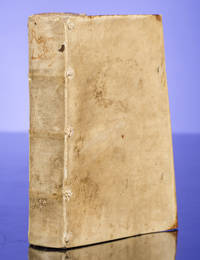
03734Paris: Aegidius Gorbinus 1578. A Remarkable Survival of Three Books by Ramón Lull - 'Doctor Illuminatus'<br/>One of Athanasius Kircher's Greatest Influences<br/><br/>LULL Ramón. Opusculum Raymundinum de auditu Kabbalistico sive ad omnes Scientias introductorium. Incipit libellus de Kabbalistico auditu in via Raymundi Lullii. Paris: Apud Aegidium Gorbinum. 1578. <br/><br/>Twelvemo 4 3/8 x 3 1/8 inches; 111 x 80 mm. 82 i.e. 80 leaves A8-K8. Woodcut printer's device on title Renouard no. 376. Folding table and two woodcuts in the text and five plates with woodcut diagrams including one with a volvelle with two moving parts. Title-page with the German Jesuit library stamps of "Domus Bonnensis" and "Bibl.script".<br/><br/>A fine copy of a rare and important work which includes among its five plates a volvelle mounted with its two movable parts still present.<br/><br/>Third Edition the previous two appeared in 1518 and 1538 in Venice all of which are very rare. "How successful was the thesis of 'De auditu kabbalistico' in the 16th and 17th centuries could be shown by the impressive reception of this treatise which ranges from about Giordano Bruno Claude Duret Johann Heinrich Alsted and Athanasius Kircher up to Leibniz" G. Kurz ed Meditation und Erinnerung in der Frühen Neuzeit p 115; trans. <br/><br/>This text has found an important place in the body of Kabbalistic texts with its attribution to Ramón Lull 1232-1316. However there is evidence that this is the work of a Renaissance physician and Kabbalist scholar when one goes back to the original 1518 edition. Pietro Mainardi born about 1456 obtained his doctorate at the University of Ferrara in 1490 and went on to teach medicine there until 1527. He was definitely a great scholar of Lull and while composing this work he drew heavily from Lull's Ars Brevis and inserted kabbalistic references and added very effectively some of his own. However he did not sign the work. He apparently wished to remain anonymous as the author so his name appears only in the colophon of the 1518 edition as the editor and publisher. Thus in later editions with different publishers and colophons the work became Opusculum Raymundinum. The work definitely has very scholarly content and a form so similar as to be considered a work of Lull and would from then on be ascribed to him. Its great success is attested by several documents and printed texts in which quotations from the present work De auditu would mingle with the Kabbalistic text collections of Lull.<br/><br/>In addition this is the first book that deepens and broadens the ars combinatorial method invented by Lull through which by using diagrams figures or words you can connect in a sort of mechanical logic information in each field to get closer to universal knowledge as well as to be able to memorize it. Many later scientists and philosophers Bruno Agrippa Kircher Alsted Leibniz and his followers or writers Roussel Raymond Queneau Perec Calvino Eco were interested in the theories expressed here.<br/><br/>Palau 143.864; Duveen 370; Caillet 6846; E. Rogent & E. Durà n Bibl. de les impressions lul-lianes Barcelona 1927 no 120; C. Ottaviano Lull's L'ars compendiosa 1930 p. 97 no. 17 under "E Écrits apocryphes.". <br/><br/>together with<br/><br/>LULL Ramón. Ars Brevis Illuminati Doctoris Magistri Raymundi Lull. Quae est ad omnes scientias pauco & brevi tempore assequendas introductorium & brevis via una cum figuris illi materiae deservientibus necnon & illius scientiae approbatione. In cuius castigatione attendat lector quam castigatissimè Magister Bernardus de lavinhera artis illius fidissimus interpres insudatit. Paris: Apud Aegydium Gorbinum. 1578. <br/><br/>Twelvemo 4 3/8 x 3 1/8 inches; 111 x 80 mm. 48 leaves A8-F8. Woodcut printer's device on title Renouard no. 376. woodcut diagrams on A5 recto B1 recto folding woodcut diagram between A6 and A7 B2 verso with a volvelle with two moving parts folding table between B7 and B8.<br/><br/>A fine copy of a rare and important work with the plate with the volvelle mounted with its two movable parts still present.<br/><br/>Rare compendium edition of the Ars Magna - and therefore defined Brevis - of the Catalan philosopher and theologian Ramón Lull who lived in the thirteenth century and was the author of numerous works of scientific argument mystical-philosophical and even literary. The work of Lull ranks for many critics of the foundations of modern science and was studied and deepened by thinkers such as Nicola Cusano Giovanni Pico della Mirandola Giordano Bruno Kircher Cartesio Descartes and Leibniz. <br/><br/>"This work written at Pisa in 1308 was the most widely read and widely distributed version of the Art. It corresponded to a desire peculiar to the second of the Art's phases to simplify the principles of the Art. The Ars Brevis starts by stating that it was written so as to facilitate access to the ‘Great Art' specifically the Ars generalis ultima 1305-1308".<br/><br/>"The Ars brevis operates in accordance with a remodelled version of logic that Llull dealt with in the Logica nova 1303: the ‘compartments' containing two or three concepts correspond therefore to propositions and syllogisms. The Art shows one how to ‘find' all possible propositions and syllogisms from the terms given in the Alphabet and how to verify their truth or falsity. The Tree of Science 1295-1296 on the other hand reveals how the structure of principles and relations in the Ars brevis is linked with the whole of the intelligible world.<br/><br/>The Ars brevis contains thirteen highly dense parts. The first part presents the Alphabet; the second the Figures; the third the definitions of the Principles; the fourth the Rules; the fifth the Table; the sixth the Evacuation of the Third Figure; the seventh the Multiplication of the Fourth Figure; the eighth the ‘mixing' ‘mixtio' or combining of the Principles and the Rules; the ninth the nine Subjects; the tenth the application of the Art; the eleventh the questions; the twelfth familiarisation with the Art; the thirteenth ‘the way to teach this Art'". See Anthony Bonner. Selected Works of Ramón Llull volume 1 pp. 569-646.<br/><br/>".The next twist in the path came from perhaps the strangest character in the history of Lullism the German Jesuit Athanasius Kircher 1602-1680 scientist mathematician cryptographer and student of Egyptian hieroglyphics. With the idea of perfecting Llull's Art he published in Amsterdam in 1669 his vast Ars magna sciendi. This work begins in reforming the alphabet of the Art inventing little symbols a heart for Concordantia a donkey for Animalia etc and continues with what Martin Gardner calls a fascinating mixture of Science and nonsense." Anthony Bonner. Doctor Illuminatus. A Ramon Llull Reader p. 68.<br/><br/>Palau 14370-14384; Duveen p. 370.<br/><br/>together with<br/><br/>LULL Ramón. Articuli Fidei Sacrosanctae ac Salutiferae legis Christianae cum corundem perpulchra introductione. Quos caeteras leges omnes improbando Illuminatus doctor Raymundus Lullius rationibus necessariis demonstrativè probat. Paris: Apud Aegydium Gorbinum. 1578. <br/><br/>Twelvemo 4 3/8 x 3 1/8 inches; 111 x 80 mm. 66 i.e. 64 leaves A8-H8 I2. Woodcut printer's device on title Renouard no. 376. <br/><br/>Articles of Christian faith Holy law and healing affairs with a fine introduction. <br/><br/>"Deus in Virtue tua sperantes & de tua gratia confidentes intendimus probare articules fidei per necessarias rationes." <br/><br/>The three books bound together as a sammelband.<br/><br/>Twelvemo. Contemporary full yapp-edged vellum manuscript title on spine unidentified armorial bookplate on front paste-down. A remarkable survival in almost pristine condition. Housed in a fleece-lined full brown scored calf clamshell case.<br/><br/>"The German Jesuit Athanasius Kircher 1601-1680 scientist mathematician cryptographer and student of Egyptian hieroglyphics was also a confirmed Lullist. He published in Amsterdam in 1669 a huge tome of nearly 500 pages titled Ars magna sciendi sive combinatoria. It abounds with Lullian figures and circles bearing ingenious pictographic symbols" Gardner Martin. Logic Machines and Diagrams.<br/><br/>Ramón Lull Poet Philosopher Alchemist Catalan Mystic - also known as Doctor Illuminatus. "The definitive Ars Magna Lull's greatest contribution to science - his attempt to unify all knowledge into a single system. Lull invented an ‘art of finding truth' which inspired Leibniz's dream of a universal algebra four centuries later. The most distinctive characteristic of his Art is clearly its combinatory nature which led to both the use of complex semimechanical techniques that sometimes required figures with separately revolving concentric wheels - ‘volvelles' in bibliographical parlance - and to the symbolic notation of its alphabet. These features justify its classification among the forerunners of both modern symbolic logic and computer science with its systematically exhaustive consideration of all possible combinations of the material under examination reduced to a symbolic coding. The Art's function as a means of unifying all knowledge into a single system remained viable throughout the Renaissance and well into the seventeenth century" DSB. Paris: Aegidius Gorbinus, 1578 unknown books
15737394Bologna: Ex Typographia Joannis Rosii 1573. First edition. Vellum. Very Good . 4to. 864pp. Woodcut device on title. Modern vellum lightly soiled hand lettered spine. A work on oratory inspired by orations of Demosthenes. All that is known of Carlo is that he was Professor of Greek at Bologna University between 1571 and 1582. Not in Adams or BL Italian STC. OCLC records 1 copy in the U. S. Ex Typographia Joannis Rosii hardcover books
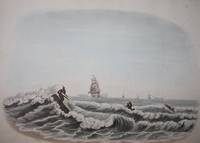
1806004050London: G. and W. Nicoll spelled on the plates with one "l". Printed by Bunney and Co. 1806. Half Leather Marbled Boards. Very Good Minus. Folio 34.5 by 27.5 cm. Only 25 of 49 hand-colored aquatint plates but including several of the most interesting of plates including the Cattamarans -- possibly the earliest depiction of surfing -- a Gentoo Zealot Snake-Men Plates are watermarked 1798 to 1801. A few bear no date. Abbey Travel 428. Rebacked with most of original spine preserved and laid on missing lower compartment. The surviving spine is rubbed cracked and dry but nonetheless a plus to have. Marbled boards are rubbed and worn. Corners are heavily rubbed and abraded. Hinges restored. Scattered light soiling and a few minor closed tears. <br/><br/> G. and W. Nicoll (spelled on the plates with one "l"). Printed by Bunney and Co. hardcover books
141916009JUnion Hill / Grass Valley California 1914-1915. Original hardcover ledger 11.5†x 8†bound in half leather with gilt stamping over light brown corduroy metal spine with locking mechanism no key marbled paper pastedowns and gilt embossed leather alphabet tabs on front page edges. 168 pages of handwritten text showing detailed internal records from the historic Union Hill Mining Company that had offices in both Grass Valley and San Francisco. Union Hill is adjacent to Grass Valley. Detailed information for 1914-1915 including operating expenses profit and loss income expenses production vendors payroll cash bullion production tungsten production names vouchers insurance and marketing. Entries include operating expenses for the South Idaho Mine and names of the local companies they did business with such as Grass Valley Hardware Empire Mining Company Nevada County Narrow Gauge R. R. Company and Thomas Diggs Company an entry for Augustus D. Cox who was the Mine supervisor to very specific mining operating expenses for example: “Shaft Above 600’ Level†“Shaft Below 600’ Level†“Storage Dam 600’ Level†with expenses for mining tools hoisting compressing fire protection etc. A rare and unique Gold Country artifact this original handwritten Ledger offers compelling insight into an historic Mother Lode gold mine. The corduroy covers have some staining the rear leather corner has a corner chip the rear spine fold has a two inch half oval chip revealing the board beneath the front hinge is split and the metal spine has some rust internally the ink stamp of the Union Hill Mining Company on the front endpaper. Gold was discovered at Union Hill in 1854 the first recorded claim was in 1866 as Union Hill Gold Quartz Mine and Mining Stock Certificates for Union Hill Mining Company exist from the 1860’s. Although very profitable it appears Union Hill Mine opened & closed changed ownership &/or operators several times from the 1870’s until purchased by Idaho-Maryland Mines Company around 1920. In 2016 this historic mine was purchased by a gold mining company with plans to restart operations in the unexplored areas below the Idaho-Maryland Mine Property. hardcover books
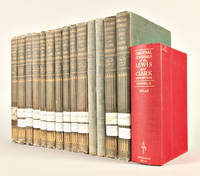
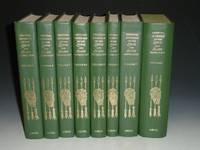
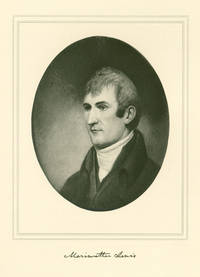
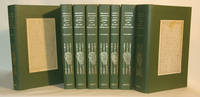
1905WRCAM52627New York: Dodd Mead & Company 1905. Seven volumes bound in fourteen parts plus atlas volume. Plates many in color facsimiles. Quarto. Original gilt green cloth. Octavo atlas maps laid in a red cloth drop-front box. Cloth somewhat worn particularly at spine ends. Library bookplates with withdrawal stamps on front pastedowns shelf labels on spines reference stamps across top edges. Some occasional offsetting from plates but generally clean internally. A solid set. Text volumes untrimmed. One of 200 large paper sets on Van Gelder paper with the atlas supplied from the reprint edition done by Argosy-Antiquarian Press. "The most elaborate work on this expedition" - Howes. A cornerstone of modern historical research printing for the first time many major primary documents which did not appear in the Biddle edition including the Floyd and Whitehouse journals and material from the Clark-Voorihis papers along with facsimile manuscripts maps portraits and other illustrative matter. Also valuable is Victor Paltsits' bibliography of the Lewis and Clark expedition in the first volume. "This edition is notable for its thorough Introduction covering the history of the expedition and earlier exploration and a detailed account of the original journals and their various editions.In its maps and numerous illustrations the Thwaites edition is an outstanding source of visual materials relating to the expedition" - LITERATURE OF THE LEWIS AND CLARK EXPEDITION. HOWES L320 "c." LITERATURE OF THE LEWIS AND CLARK EXPEDITION 5d.1. WAGNER-CAMP 13:7 note. TWENEY WASHINGTON 76. REESE BEST OF THE WEST 233 note. Dodd, Mead & Company hardcover books
1969021837New York: Arno Press 1969. Octavo. In eight volumes volume eight contains the maps. Edited by Reuben Gold Thwaites with an introduction by Bernard De Voto. In the introduction."Toward the end of 1802 President Thomas Jefferson asked the Spanish minister a carefully unofficial question. Would the Spanish court "take it badly" if the United States should send a small expedition to explore the course of the Missouri River" which lay wholly in the still Spanish territory of Louisiana This history had become a national and international favorite reprinted translated and pirated. This expedition became the most important event of the American West. A very handsome near fine set bound in green cloth facsimile manuscript letter paste-down spines lettered and decorated in gilt. Previous owner's embossed stamp to front free endpapers. Very nice set. Arno Press unknown books
1905247478New York: Dodd Mead and Co 1905. First edition one of 200 large paper sets on Van Gelder paper. Seven volumes bound in fourteen parts plus atlas volume atlas with 56 maps & plates on 62 sheets. 15 vols. Large 8vo. Original gilt green cloth. Bookplate on front pastedowns. Spines lightly worn several lightly faded. Internally fine much of the text unopened. A very good set. First edition one of 200 large paper sets on Van Gelder paper. Seven volumes bound in fourteen parts plus atlas volume atlas with 56 maps & plates on 62 sheets. 15 vols. Large 8vo. One of 200 Sets on Large Paper. "The most elaborate work on this expedition" - Howes. <br/><br/>A cornerstone of modern historical research printing for the first time many major primary documents which did not appear in the Biddle edition including the Floyd and Whitehouse journals and material from the Clark-Voorihis papers along with facsimile manuscripts maps portraits and other illustrative matter. Also valuable is Victor Paltsits' bibliography of the Lewis and Clark expedition in the first volume. "This edition is notable for its thorough Introduction covering the history of the expedition and earlier exploration and a detailed account of the original journals and their various editions.In its maps and numerous illustrations the Thwaites edition is an outstanding source of visual materials relating to the expedition" - LITERATURE OF THE LEWIS AND CLARK EXPEDITION. Graff 2485; Howes L320 "b"; Wagner-Camp 13:7 note to 1842 Harpers ed.; Tweney Washington 76; Literature of the Lewis and Clark Expedition 5d.1 Dodd, Mead and Co unknown books
1969TB23654New York: Arno Press 1969. Arno Press Edition of 1969. An eight volume set all of which are in fine condition with minor dust staining to the top edges of the text blocks. Seven volumes are in dark green cloth covered boards with gilt text and decorations on the spine and with an illustrated paper label on the front boards. The eighth volume is a green cloth and green paper covered clam shell box which contains facsimiles of the maps from the expedition. The box is finished with details comparable to the other volumes. Each are small 4tos measuring 9" by 6". Volume I contains 374 pages of text; Volume II contains 386 pages; volume III contains 363 pages; volume IV contains 372 pages; volume V contains 395 pages; volume VI contains 280 pages; volume VII contains 534 pages and volume VIII contains the 16 page introduction to the atlas and index to the maps and all 71 individual maps labeled 1 through 54 all of which are in fine condition Dust jackets were not issued with this set. This set represents a facsimile reprint of the original 1905 edition of The American Philosophical Society which based its publication on the original documents in their library. A beautiful set with no wear rubbing or soiling. The Literature of The Lewis and Clark Expedition 5d.1 Arno Press hardcover books
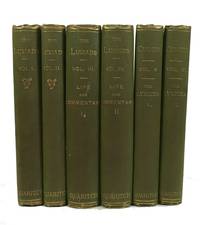
188484965London: Bernard Quaritch 1884. 1st ed. of these three two volume sets of Camoes-related Burton translations which were uniformly bound and also numbered I-VI on the backstrips. The "Os Lusiadas" volumes are the 2nd issue of the 1st ed. which is actually uniform in size and binding with the 1st eds. of the other 2 sets. Hardcover. Near Fine. 6 volumes xix 250 251-471 vii 366 369-738 265 269-540p. Original green cloth with lightly worn gilt corners on front cover and gilt lettering on front covers and backstrips. 18 cm. Minor soiling and wear. Leaves lightly browned. Each volume has the bookplate of Burke Casari a Burton collector and enthusiast. Camoes was a great 16th century Portuguese poet. Burton projected at least four more Camoes-related volumes but they were apparently never published. See Penzer's "Annotated Bibliography" at pages 103-106. Isabel Burton was identified as editor of these rather scarce volumes. <br/><br/> Bernard Quaritch hardcover books
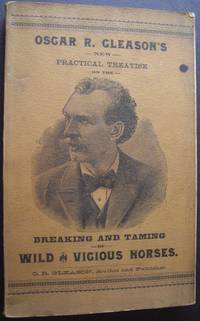
18898588Baltimore: Self-published 1889. 1st. Original Wraps. Collectible; Very Good. Wonderful --and uncommon-- 1889 treatise on the "breaking and taming of wild and vicious horses" with over 200 illustrations complementing the text. Written by Oscar Gleason the inventor of "The Gleason Bridle" and "The Gleason New Break Harness". Solid and well-preserved and VG in its brown pictorial wrappers with one small spot at the front panel. Octavo 300 pgs. <br/><br/> Self-published paperback books
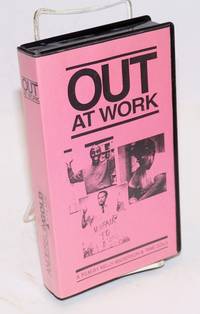
1997188620New York: AndersonGold Films 1997. VHS TAPE. VHS T-55 video-cassette in case with original labels on cover of case and top of cassette 54:35 minute running time. First-ever documentary about gay men and lesbians on the job. Played the 1997 Sundance Film Festival. AndersonGold Films unknown books
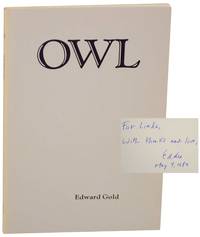
198317116College Park MD: SCOP Publications 1983. First Edition. First Edition a paperback original. Near Fine in moderately faded wrappers softcover INSCRIBED by the author on the half-title page. SCOP Publications unknown books
1983154398College Park MD: Scop Publications Inc 1983. First edition. Softcover. 31 pages. A collection of 19 poems. A near fine copy in wrappers with some very faint foxing to the page edges. Signed and inscribed by Gold on the front free endpaper to another poet. Uncommon. Scop Publications, Inc unknown books
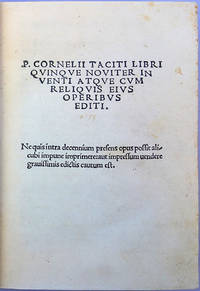
151742431Milan: Alessandro Minuziano 1517. <p>Tacitus Publius Cornelius ca. 56 - ca. 120 C.E. P. Cornelii Taciti libri quinque noviter in venti atque cum reliquis eius operibus editi. Small 4to. 20 233 3ff. Signatures H-K bound in reverse order in this copy. Milan: Ex officina Minutiana 1517. 192 x 127 mm. Full morocco tooled in gilt and blind in antique style. Occasional faint dampstaining but a fine copy. Engraved armorial bookplate of Count Dmitri Petrovich Boutourlin 1790-1849.</p> <p> First Minuziano Edition and the First Example of a Challenge to a Copyright. In 1508 Pope Leo X formerly Cardinal Giovanni de'Medici purchased the only surviving manuscript of the "lost" first six books of Tacitus's Annals which had earlier been stolen from the monastery of Corvey in Westphalia. Six year later Leo granted the Vatican librarian humanist Filippo Beroaldo the younger the exclusive right or privilegio to issue a printed edition the complete works of Tacitus including the previously unpublished "lost" books from the Corvey manuscript. Violators of the privilegio were threatened with excommunication. Beroaldo's Tacitus printed in Rome by Stephanus Guilleretus de Lotheringia was published in 1515.</p> <p> At the same time the Milanese printer Alessandro Minuziano undaunted by the fear of papal displeasure began preparing a word-for-word reprint of the Beroaldo Tacitus probably bribing one of Lotheringia's employees for sheets of the work as it was being printed. It is likely that Minuziano intended to issue his pirated edition around the same time as the legitimate one but the Pope got word of his scheme and the subsequent dispute over the privilegio forced Minuziano to suspend publication until the matter was resolved. The matter was serious especially as Leo X actively involved himself in issues of publication and censorship. The case was eventually resolved in Minuziano's favor and he added an appendix to the edition containing the key documents pertaining to the case. These included the papal privilege of November 14 1514 Minuziano's "supplication and prayers" to Leo X of March 30 1516 in which he defended himself remarkably by claiming ignorance of the Pope's privilegio and the papal letter of pardon dated September 7 1516 reiterating Minuziano's defense and granting Minuziano permission to publish his edition.</p> <p> This copy of the Minuziano Tacitus bears the bookplate of Dmitri Petrovich Boutourlin or Buturlin a Russian general statesman and military historian who became director of the Russian Imperial Public Library in 1843. A catalogue of Boutourlin's extensive private library was published in 1831.</p> . $12500 rebound by Sean Richards. Alessandro Minuziano unknown books
1897WRCAM43100Circle City Alaska and on a steamer between Juneau and Seattle 1897. 12pp. typed on folio sheets of onion-skin paper plus three hand-drawn maps. A total of some 6750 words. Stapled at upper edge. Three horizontal folds. Near fine. A very interesting pair of typed letters from a young man in Alaska during the Klondike Gold Rush. The anonymous author wrote these two letters to his parents describing his journey overland and by water to the Birch Creek mining district his experiences mining for gold and his decision to go into business as a merchant. The letters are written in a detailed style that indicates an educated author. They include three manuscript sketches showing the routes traversed in Alaska and provide a great deal of information about the writer's experiences in the Klondike. These letters are typed but they were likely originally handwritten by the author who later typed them and included his manuscripts maps and sketch in order to send them to his family when he arrived in Seattle or San Francisco. <br> <br> The letter dated Nov. 10 begins with a description of the writer's boat journey from Juneau to Dyea which was a popular disembarkation point for the Chilkoot Trail to Dawson City a center of the gold rush. He arrived at Dyea on April 23 and notes that "dinner at the Dyea post was the last square meal I have had up to the present date November 10." After dinner he loaded his equipment on horses for the journey inland: <br> <br> "My outfit consisted of about 1000 lbs. of provisions guns amunition sic tools for boat building a whip-saw jack-plane cross- cut saw hand saw rip saw hatchet hammer draw knife brace and bits square etc. and clothing blankets tent sheet-iron stone and in fact I think I had about every thing that ever went down the Yukon. Altogether my outfit weighed about 1302 pounds which is much more than is usually taken into the interior." <br> <br> The author spent the next several days transporting his provisions between Dyea and Lake Linderman and he includes in his letter a sketch of the route from Dyea through the valley to the lake noting several camps along the way as well as a sketch of his sled. <br> <br> The second letter dated Feb. 17 1897 was written on board the steamer Al Ki between Juneau and Seattle. He continues the narrative of his trip inland explaining that he arrived at Lake Linderman on May 14. A month later on June 14 the author and a partner their canoe loaded with provisions departed for Circle City which they reached on June 29. There they stored most of their provisions and headed for the mines in the Birch Creek region. Mining was at its height in the middle of the summer but rather than seek out a claim on their own the author and his companion Jim Wishard decided to work for other miners earning some $10 a day. He describes working at mining from 7 p.m. until 6 a.m. the long days making the task of working at night possible. In August the author bought a claim in the Harrison Creek region but decided to forego mining in favor of establishing himself as a merchant: <br> <br> "From what I could see the miners are poorly supplied with food by the two companies and there is always a great demand for luxuries; that is something out of the ordinary and even the necessaries of life. I made up my mind last summer that I could do as well bringing in some food - in other words being something of a merchant - as in any other way to start and having a good knowledge of the country and keeping my eyes open I would undoubtedly have many good chances for speculation. It is a conceded fact that one cannot lose money taking in such an outfit. Everything brings in an average profit of 400 per cent. over the original cost and whatever any one has to sell in the 'grub' line is in demand." <br> <br> The author then describes his construction of a small cabin in Circle City and his decision soon afterward to leave Alaska for the winter. He describes the trip to Dyea undertaken in January and the hardships of winter overland travel in Alaska. Included are some very practical tips: <br> <br> "In crossing water when it is thirty or forty degrees below zero one should dip his moccasins into the water very quickly taking them out before the moccasin is wet through. They will then freeze in a mass on your feet and will serve the same purpose as rubber boots. You can then walk right through water though I would not advise any one to tempt Providence too much." <br> <br> The letter concludes with a description of a recently discovered gold strike called "Bonanza" not far from the Forty Mile camp. The author describes the high hopes around the strike and includes a manuscript map of the region indicating the location of a claim in which he himself has invested. He hopes that his mine will bring him some wealth but reiterates his belief that the way to wealth in the Yukon Gold Rush is by supplying miners with goods and that he is on his way to Seattle and San Francisco to buy provisions to resell. hardcover books
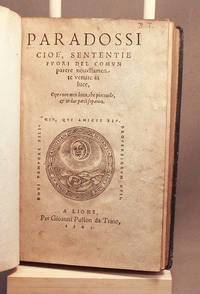
15436296Lyon: per Gioanni Pullon da Trino" i.e. Jean Pullon dit de Trin 1543. First edition. Very Good/Exquisitely rare first printing of Ortensio Lando's most famous book his first in a modern language that in later editions and in translations became a 16th-century best seller. Lando's name does not appear on the title page or anywhere in the book except in code. His real name shows up on no edition published in the 16th century. A dedicatory leaf after the colophon attributes the text to "M.O.L.M" interpreted generally as "Messer Ortensio Landi Milanese." More cryptically there is a phrase printed after the telos "SVISNETROH TABEDVL" mirror writing for "ludebat Hortensius" Ortensio has played. It is serious play. The Paradossi undertakes in the key of popular "world upside down" folklore to prove black what is commonly accepted as white. For instance it is better to be poor than rich better ugly than handsome better drunk than sober and so on. Biographical sketches of Lando are remarkable for how little information about him is available. Peer of Aretino and Doni friend to Etienne Dolet later incinerated for heresy he was a non-believer who nevertheless took Augustinian orders and later deserted them. Member of a prestigious literary club L'accademia degli elevati he was above all an outsider. All of his books landed on the Index of Prohibited Books and "I paradossi" in particular was widely banned and copies of it were confiscated. Probably the first book printed by the obscure Italian printer working in Lyon Giovanni Pullone da Trino later called "Jean Pullon de Trin". Following Pullon's modest press run the text was quickly taken up and reprinted badly by Bindoni and others in Venice twice in 1544 1545 1563 1594 etc. and translated into Latin into French by Charles Estienne 1553 and into English 1596. If you Google "Jean Pullon" you will get dozens of pages advertising pull-on jeans. . Octavo 17cm; 112 leaves signed A-O8. Printer's device on title page Ferraris 1 showing a human-faced moon in the sky reflected on the surface of the land. Bound in later 18th-century or 19th-century dark green leather in neoclassical style with gilt central losenge within gilt borders on both boards; gilt-tooled spine with leather title label. Joints reinforced but tender; light marginal stain along bottom edge; O7 torn and repaired remains of tape. Early marginalia trimmed close. Later c19 notes in French on endleaves. Pages not bright. All in all a very good copy of a very rare book. References: Ferraris "Giovanni Pullone e altri stampatori trinesi a Lione" in "Trino e l'arte tipografica nel XVI secolo." 2014 #1; USTC 116008 BM Italian 399; Grendler "Critics of the Italian World" #8; Gültlingen "Bibliographie des livres imprimés à Lyon." vol. X p. 7; Bongi "Catalogo delle opere di M. Ortensio Lando" p. xxxvi "eseguita in bel carattere rotonde cui la originalità e la bellezza danno il pregio sopre le ristampe"; not in Adams; not in Baudrier. per Gioanni Pullon da Trino" (i.e., Jean Pullon dit de Trin) hardcover books
185016916London: J. & D. A. Darling 1850. First edition. 8 handcolored plates by Alfred Ashley. 196 pp. 1 vols. 8vo. Original rose cloth covers framed in blind with gilt lozenge of officer on horseback on upper cover spine lettered and decorated in gilt. Some spotting and discoloration of cloth without the two inserted leaves of publisher's advertisements mentioned by Wolff else a very good copy with the bookplate of James George Robarts. First edition. 8 handcolored plates by Alfred Ashley. 196 pp. 1 vols. 8vo. Sadleir 1223; Wolff 3294 J. & D. A. Darling unknown books
1681001379Amsterdam: Apud Janssonio Waesbergios 1681. Full Calf. Very Good. 330 6 pp. 12mo with copper engraved title page by Giovanni Van Den Avele. Pharsalia is considered a masterpiece and possibly the masterpiece of the Silver Age of Ancient Roman poetry. The epic poem concerns the Roman Civil War at the time of Caesar and most particularly the extended struggle between Caesar and Pompey the Great. Lucanus writing a century later during the reign of Nero far from glamorizing the warfare took a jaundiced view of the fraticidal battle and his portrait of both Caesar and Pompey was far from flattering. His "epic poem" therefore is epic in terms of length scope and ambition not in its portrayal of the principals. Because of the subject matter the popularity of "Pharsalia" has crested at times when a society still steeped in the Classical canon of literature descended into civil strife when the themes and point-of-view of Lucanus really resonated. Never was this more the case than in the seventeenth century when this copy was printed. First there was the final emergence of the Netherlands from under the yoke of Habsburg rule and then there was the English Civil War just to mention two instances both highly germane to the edition at hand. Thus the notes by Grotius and Modern calf with a black spine label and marbled endpapers. The work is incomplete and breaks off during the tenth book which Lucanus was still working on when he was forced to commit suicide. The binding is tight. Some leaves with more toning than others but overall quite clean. There are leaves in which the margins are parlously tight or the header is even close to being partially cut-off -- this is the upshot of the compact size of the copy and was the way the copy was issued over three centuries ago. This particular edition is not mentioned in Brunet. <br/><br/> Apud Janssonio Waesbergios unknown books
198373072Princeton: Princeton University Press 1983. First Edition. Hardcover. Fine/Near fine. Hsi K'ang A.D. 223-262 was an important poet musician philosopher and debater in the age of ch'ing-t'an 'pure talk.' Here is a translation of his nine essays plus the four essays of his opponents in various debates. Only one of the thirteen works has been translated into English before." Octavo: 214 p. Original natural linen over green cloth spine with gilt titles. A crisp unread copy. Light fading along the extremities of the dust jacket; else near fine. Princeton University Press hardcover books
1973S9238Ottawa:: Royal Society of Canada 1973. 1973. Tall 8vo. xiii 403 pp. Figs. refs. index. Blue cloth gilt-stamped spine title; sine sun-faded corners bumped. Ink stamps of Stanley L. Miller on all three edges. Scarce. Very good. Royal Society of Canada, 1973. hardcover books
200682935Lima: Seminario de Historia Rural Andina; Universidad Nacional Mayor de San Marcos 2006. 30 x 21 cm. 87 p b/w plates tbls. bibl. ind. wrps. Bound photocopy as issued. OCLC: 76893147 The present study examines Lima's miniature painting during the first 50 years of the 19th century a golden period for this discipline. Although the presence of the daguerreotype since 1840 and photography since 1850 meant due to cost and effectiveness the beginning of the inevitable disappearance of this portrait style Seminario de Historia Rural Andina; Universidad Nacional Mayor de San Marcos unknown books
196939519Preston: Akros 1969. First edition. 12 pp. Fine in sewn wrappers. Parklands Poets No 1. Preston: Akros unknown books