7 654 résultats
1529189 Glou. Pl. 18th January 1872. 1-page 8vo on mourning paper conjugate blank removed. He writes "I return you my warmest thanks for your valuable communication.I have given as little trouble as possible to geological friends - I have however always met with the kindest response - as now". 89 Glou. Pl. 18th January 1872. unknown
194995605Los Angeles 1949. 1st ed. Paperback. Near Fine. Inked inscription on front side of stationery. 14 x 22 cm. Verso unused. Some fading of ink. The Biltmore Hotel was listed in a couple 1960s editions of "The Green Book but seems likely to have been welcoming to African Americans as well as non-heterosexuals before that date but don't know if thas true before 1949. We also do not know when or whether Brown was in Los Angeles when she inscribed this and don't know whether she was staying or able to stay in that hotel at that time. Baron Long identified as President on the stationery acquired the hotel in 1933 which was almost a decade after Brown had ended her four year term as President of the National Association of Colored Women 1920-1924. We also don't know anything about the inscribee. paperback
11722Hotel D<> Paris; 23 April 1832. 1p. 12mo. On aged and creased paper with the second leaf of the bifolium the lower part of which is torn away carrying the address 'A Monsr Monsieur. Mermet'. Reads: 'My Dear Mermet I trust this will find you sufficiently well to enable you to come over here immediately on receipt of this from your's sic signed Gorman Mahon Monday Morg 10 oClock A M. April 23 1832. Hotel D<>'. Mahon is described in his entry in the History of Parliament as 'a grotesque character even by the exotic standards of some of the Irish Members in this period' and 'a figure of pure self-invention'. Hotel D<?> [Paris?]; 23 April 1832. unknown
11236No place; 'Wednesday' no date. 3 pp 12mo. 41 lines. Text clear and complete. Fair on lightly-aged paper with a couple of closed tears. He is sending 'the trans. of the Baghobahan together with the Original' and trusts that Robinson will keep his promise 'and not detain it long'. Considers it fair that Robinson's friend 'should pay the carriage thereof from & to London'. 'The younger Stewart is to send me up a book of mine in about a week - the best way will be to send the Bagh along with it as it will be the same expence'. Suggest sending another book with 'the Bagh to Haileybury' rather than to Portman Square. 'I hope you have all got down safe - and that Abercrombie has not been beat again - I guess you have not yet seen Anderson at College - I saw Roberts yesterday afternoon who told me he had just been seeing Anderson at his lodgings where he left him comfortably in bed as usual Of course the man is mad . I believe he is quite well in body - tis the immortal part of him that needeth the physician'. No place; 'Wednesday' [no date]. unknown
604579"Ernest Gold" in black ink on small leaf. 5" x 3"; 1 page recto only. Very good. "I do no have a business card - sorry! Ernest Gold". Signed by Authors. No Binding. Very Good/No Jacket. unknown
11208Murray's letter to his wife's brother: 20 April 1864; Sydney New South Wales. Copy of letter by Murray: 21 December 1865; 20 Norton Street Surry Hills Sydney New South Wales. Transcript: undated on letterhead of Liverpool Polytechnic Society. From the papers of Alfred Clay Abraham 1853-1942 Liverpool pharmacist and his daughter Emma Clarke Abraham 1850-1934 of Swarthmoor Hall Ulverston. All items in fair condition on aged paper with texts clear and complete. ONE: Autograph Letter Signed from Henry Murray to his late wife Mary's brother. 8 pp 12mo. On two bifoliums. Begins: 'Although a Stranger to you I perhaps need not apologise for the obtrusion of this communication upon you when I inform you that I am the husband - or rather was the husband of your poor Sister Mary. for alas! she has been taken from me by the cold hand of death.' The couple had three children: 'Margaret Fell. who is now aged 22 resident in California and married to an American Gentleman named Tyson. Cornelia calld sic in honor of the Roman Matron of that name aged 19 and now resident with me in Sydney; and George Washington a very comely youth of 15 also now resident with me'. His wife 'possessed many sterling virtues as a wife a mother and a friend directed by a strength of understanding not commonly found among the females of this country; but she had a will of her own which nothing could change'. Her faults 'were those of a diseased mental organization which increased in strength as she increased in years'. He tried years before to communicate with his correspondent through 'Mr Henderson Linen Draper of Church Street' and now wishes to contact his wife's aunt Margaret. His last letter to his daughter 'has been long unanswered' and he fears 'she has removed with her husband to the Atlantic States'. Initialed postscript on reverse of last leaf apologising for 'the within written unmethodical clumsily expressed production'. TWO: Manuscript copy of letter from Murray to his wife's sister Margaret Abraham English b.1816. 20 pp 4to; on leaves torn from a ruled notebook. Headed in the hand of Emma Clarke Abraham 'Seemingly copy of letter from Murray to Margaret Abraham English'. The copy of the letter is dated '20 Norton Street. Sunnyhills sic Sidney. sic New S. Wales 21 Dec: 1865.' and 'Recd. 15 Feb. 1866'. Begins by describing his family: 'We do not occupy a high status here in point of wealth & position; but it has been my own aim through life to establish a character for probity & the unswerving exercise of those moral qualities .'. His daughter Margaret Fell married at the age of fifteen during his absence '& I am sorry to have to add without the sanction & contrary to the wishes & injunctions of her mother'. Describes over two pages his wife's 'chronic dyspepsia . which ultimately reduced her to a state bordering on atrophy' and her attempts to treat herself: 'Her Materia Medica consisted of Oxide & Sulphate of Iron & Carbonate of Soda of which she was in the habit of taking very large doses daily.' At the time of her death the family were living in San Francisco while Murray himself was in Sydney attempting to 'recover by the aid of the law a small freehold property which was in the occupancy of a refractory tenant'. The children went to stay with Murray's brother in Folsom City 'where they remained until I sent my son by my former marriage to bring them on to Sydney on board a vessel then preparing for the voyage for Sydney called the "Ellenita". of the foundering of which at sea you may have read in the papers in the latter part of 1859'. The last eight pages of the letter carry an account of the shipwreck and his children's 'terrific ordeal' . The account begins: 'She had been about a month out of San Francisco & was somewhere in the neighbourhood of the Samoan Islands a group you will find in recent maps of the Pacific. The passengers had just sat down to breakfast in the cabin one fine morning when the carpenter ran affrighted to the cabin with the alarming intelligence that a plank had started & there was then several feet of water in the hold.' Murray's two sons join twelve others on a raft and his two daughters are placed with the Captain on the ship's boat which 'had scarcely room for its living freight. The 2nd. officer & a seaman had forced themselves into this boat in defiance of the Captain such was their horror of the anticipated hardships of the raft . When all the unfortunate men took their places in the raft it sank to the depth of nine inches so that they were constantly to that depth in water. The only provisions and water available for this awful emergency was the small quantity which had been brought on deck for the days consumption . The denisons of the ill fated ship had but just transferred themselves to the ill fated boat and raft when after a few oscillations she settled forward & suddenly went down head foremost carrying with her all their earthly possessions a silver breakfast service belonging to one of the cabin passengers still standing on the breakfast table the good things set for breakfast being almost untouched'. They boat arrives at 'the Island of Saoii one of the Samoan group where the natives are still in a state of semi-savageness' and its occupants are aided by the 'son of Rev John Williams the great Polynesian missionary' and sent on to Sydney. The occupants of the raft were 'certain that their early doom was settled' but were rescued by the brig HMS Elk Commander Hubert Campion. THREE: Manuscript transcript of parts of letter from Murray in Sydney 20 December 1846 to 'Mr <> Bridge <> Port of Spain'. 4 pp 12mo; on bifolium with letterhead of the Liverpool Polytechnic Society. Giving family details. Murray's letter to his wife's brother: 20 April 1864; Sydney, New South Wales. Copy of letter by Murray: 21 December 1865; 20 No unknown
11550New York; 4 July 1835. 3pp. 4to. 74 lines of text. Originally a bifolium but with the two leaves now separate. Good on aged and lightly-worn paper. Addressed on reverse of second leaf to 'George P Morris Esq. Cold Spring.' The reference in the letter to Morris having 'cut down the wood' around his property is ironic given that he is most famous for the poem/song 'Woodman! Spare that Tree!' Hamilton begins by stating that he has seen 'Mr. Robinson' who will see Morris on the subject of buying Morris's house. Hamilton considers Morris's price of $8000 for his house 'very cheap'. 'Indeed if you had not cut down the wood I should be half inclined to buy it myself but that I consider a paramount objection to the property.' He thinks that 'most of the objections contained in the memorandum' Morris sent him on Undercliff 'of a nature that would occur in any New House The work will swell & requires easing repeatedly. As to the Locks I am sure who ever told you they were "common Locks" knows nothing about it as I paid Pye's Partner for them myself - all the fastenings are of the same quality as those of the house I occupy'. He has 'sent for a person competent to judge' who informs him that 'the house is as well built as Contract Houses are generally and that the work is as good if not better than that of the one I am in - The frame was up under my eye - The walls built under my personal inspection and all appeared to be solid and substantial'. He hopes Morris will see that 'Mr Peirson fulfils all his contract. He is necessitous and I wish to pay the small balance due him as soon as you are satisfied'. After a paragraph discussing the roof Hamilton declares: 'I think you have a very cheap property - a beautiful place and a good and commodious house'. He states what he considers the 'correct view' of 'one point': 'when I sold the House - you will admit I sold it as it stood with the benefit of the contracts I was careful to be explicit in telling you there would be some extras in addition to the contract work but expressly said I could not tell the amount - I have expended on it about $6400 Dollars altogether and with the Interest to the 1st of June last I shall be a loser of from 6 to 700 Dollars'. He considers that 'Forty Dollars judiciously applied under you eye will do every thing you want but if you trust to workmen to come and do as they please there is no limit to the cost'. He ends by discussing 'the Stucco of the Columns' and the outside of the house. New York; 4 July 1835. unknown
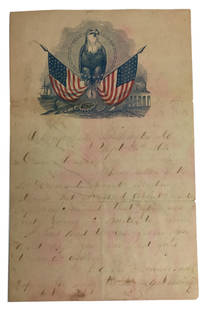
1862916131862. Poor. 20 cm x 25 cm single sheet folded to make 4 handwritten pages. Large patriotic color Illustration of a bald eagle with 2 U.S. flags occupies top third of first page of stationery. Two horizontal fold mark. Split halfway across on a fold on the last two pages. Pinkish color to much of the letter suggesting old damping. Ink quite faded and generally difficult to read. Many words are so indistinct that it was impossible for us to read them and some other words or phrases are just gone. Her letter is addressed to an otherwise unidentified cousin. Jones does not seem to show on standard lists of Civil War Nurses but the information in this letter suggests that she should. Here is our effort to transcribe this difficult-to-decipher letter: "Your letter of the 21st came to hand in due time but I had about made my mind that you was not going to write to me. I was glad to hear from you and hope that you will not fail to write again. I am well. Hoping you enjoy the same good blessing. We are situated on the same ground we occupied a part of last Fall and Winter. We have been here about four weeks. After spending the summer on the peninsula we are very glad to obtain old ground which seems almost like home. You want to know why I am in the hospital. It is not because I am sick but because others are sick and need care. I am what is termed nurse. My wages are $26.50 per month. The business is by no means delightful but I get along very well. We have got one fellow who is very sick I fear he will not recover. On the Peninsula my health became very poor but now I am well. I wish that I could hear that Grandmother is on the gain but fear I never shall. Tell hear I think of her nearly all of the time and and want to see but if I fail to see her I expect to see her in Heaven. I have wrote to your father. I presume he has received my last letter before now. I do not know that I can tell you anything about the war that would amount to anything more than you already know. As we are at present we are retired from the active field I am not as well posted as when we were aamid the turmoils of battle. I have not heard a battle sound since we came across the river. Apparently all seems quiet which seems good. top two lines at top of 4th page too indistinct to decipher My hospital service is every other day. Every other day and night. I have to work taking care of the sick of our regiment then I am idle twenty-four hours. . several lines gone or indistinct here and the I will have a chance to eat army rations wear army cloths and a few moremostly indistinct lines ." She ends the letter by requesting that her cousin write to her at Hospital 50th NY Engineer Regiment Washington D.C. Online information reports that the regiment composed mostly of men from New York and a small number from Pennsylvania lost by death 10 killed in action 7 from wounds received and 214 from disease and other causes. unknown
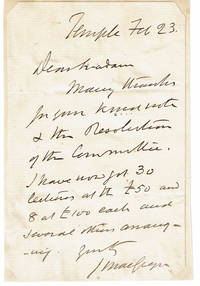
186096259Temple London February 23 circa 1860's 1860's. Very good. - Approximately 30 words penned on 6 inch high by 3-7/8 inch wide creamy white paper. MacGregor writes thanking the recipient for her "note & the Resolution of the Committee". He goes on to outline the numerous lectures he is scheduled to give at the price of 50 pounds and 100 pounds each. Signed "J. MacGregor". Once folded for mailing the corners are clipped and the note has been mounted with glue from the verso onto a slightly larger sheet of paper. Very good. <p>Nicknamed "Rob Roy" after his famous relative John MacGregor 1825-1892 was a Scottish sportsman explorer and travel writer. He is said to have practically invented the "sport" of kayaking then known as canoeing through his travels books and magazine articles. MacGregor worked as a barrister in London specializing in patent law and pursued his passion to travel throughout several parts of the world. Introduced to canoeing while visiting the U.S. and Canada MacGregor designed a double-ended canoe decked in cedar covered with rubberized canvas. Much as with modern kayaks MacGregor's canoe has an open cockpit in the center and was propelled by a double-bladed paddle. He named his canoe the "Rob Roy" after his famous or infamous relative. He undertook canoe trips through Scandinavia Jordan Egypt and the Baltic some of which he featured in his book "A Thousand Miles in the Rob Roy Canoe on Rivers and Lakes of Europe". A gifted artist he illustrated his own books. MacGregor founded the British Royal Canoe Club in 1866 and the American Canoe Association in 1880. Temple, (London), February 23, circa [1860's] unknown
18756056031875. "Faithfully yr friend Joaquin Miller Nov. 2 1875" in black ink on small leaf 4 7/8" x 2 1/2". Very good old tape in top margin from previous mounting. Together with a vintage sepia photograph. 3 3/4" x 5 1/4". Signed by Authors. No Binding. Very Good. unknown
1795Whittington Stoke Ferry 15 Nov. 1833. Four pages 4to fold marks discoloration some damage with minor loss of text. "My Dear Sir/ Pressed as you are by more important business it demands apology from me to intrude any foreign matter on your time and attention - Your wonted kindness is my least & only apology - The business of <malting> in which I am here engaged is very pleasant & I will add lucrative so far as it goes underlined from so; but as you are doubtless aware it does not go far enough underlined from it:- in other words it leaves too large a portion of the year unemployed - Now according to my notions the interval betwen May and Oct. is too great for Holiday purposes and yet I have no specific means of filling up this hiatus - To be sure I could as some have hinted fill up my time with the sale of coals & other articles which may be brought up to my very door by a navigable river; but then I should interfere with the young Salmons who have recently since the failure of their father set up in this business and to take the bread out of their mouth however indifferent they may be to me is what I own I could not do that I am now occupying the very station which but for misconduct not not their own perhaps they once occupied page 2 themselves - What I wish to consult you on is this. A good Farmer's paper is wnted - The Farmer's Journal never so good as it might have been made is now merged in Bell's Weekly Messenger; a huge mass of Tory materials badly arranged and evidently conducted without a particle of Agricultural Skill - It is like some other things of the kind you & I have known: a mere mercantile Speculation. Bad as it is it is the best I may say the only farming paper we have - Surely something of the kind might be advantageously started - I wish you would mention the subject to our friend Chadwick or Richd. Taylor who prints several of these Weekly Papers and let me know if I can be of any service still living in the Country of course in such an undertaking - Mr. C. and I had at one time much conference about <> Editn. of the Examre. - In broaching the matter to you I should wish for your co-operation & assistance - Don't you think such a thing would be more likely to take than the Magazine you spoke of & inserted I should fear the <E. of Arch.> would damp the public appetite for this description of knowledge - Do not think for one moment I am urged by necessity underlined from by to strike out another line of business - My Income is amply sufficient for me & mine: but thetruth is page 3 I see no reason why if I can earn in 6 months a maintenance for 12 that therefore underlined I shd by idle for the remaining 6 - All I wish is Employment with of course a moderate & but a moderate underlined from first moderate remuneration for such labour as I may be able to bring into the undertaking - My name is of no value but I own it would acquire excision honor by being associated with that of Loudon - either in this or in any other literary inserted speculation _ Do not think me presumptious in harbouring this Idea - I think we might be mutually serviceable to each other - Of this be assured - The hope & the wish to render you underlined service operate fully as much as the desire to serve myself in this matter -/ I thank youfor the trouble you have had about Howden's Gate <> - I recd one underlined set of the Irons last monday: but wanting another there being two underlined gates to fit up I wrote to Cottam & Hallem stating as much & also requesting them if possible to cast the part by which the rack is screwed on the back of the gate underlined from on an Inch narrower - My gates being barely 3 inches wide at this part & the irons being 4 inches wide - I will settle the cost when I next go to London page 4 There are no secrets in this Lre - Perhaps you will not object to letting Mr. Chadwick see it as the shortest mode of proceeding - From either him or you I shall be ahppy to hear an opinion on the subject -/ address panel/ Give my best regards to Mrs. L. & your Sisters: in which I am cordially joined by Mrs. T. . . ." Note: "The New Farmer's Journal" commenced in Feb. 1833. Noted: Cited by Loudon on trees in "The Villa Gardener" p.267 and in Loudon's "The Gardener's Magazine" "Preserving Dahlia Roots" p.224 as well as other periodicals Googlebooks. Whittington Stoke Ferry, 15 Nov. 1833. unknown
229201942. HBNODJ1942 1st editionBrown cloth lettered in Green 57 pgs Minor Rub & Wear VG/Good AS-IS NODJ COVER Light Rub wear Soil & STIFFNESS from water Exposure & turnup slightly on Ends. Signed by Author. First Edition. Hard Cover. hardcover
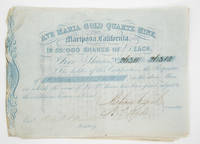
1851101023London: Ave Maria Gold Quartz Mining Association ca. 1851. Oblong 8vo 6-1/2 x 9 inches printed on light blue onionskin paper scalloped left edge with ms insertions and authorizing signatures of Secretary and two committee members description of the Ave Maria Gold Quartz Mining Association printed on verso; light creasing Evidence of London investment in the California Gold Rush 9 certificates 7 for 5 shares each and 2 for 10 shares each of the London-based Ave Maria Gold Quartz Mining Association. A total of 50000 shares were issued at £1 each. The company held half the rights to the Ave Maria Gold Quartz Mine in the Mariposa District California which was worked under a lease with the owner of the other half. Today the Ave Maria River is known as the Stockton Creek. Ave Maria Gold Quartz Mining Association unknown
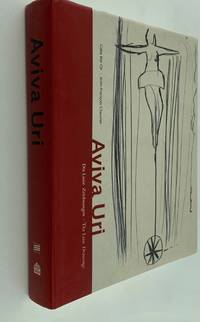
2005250815001Museum Bochum 2005. Hardcover. Very Good. 0x0x0. Book is LIKE NEW. Very Clean. No writing or tears. Dust Jacket has very minor shelf wear no tears. A Fine Book in a Near Fine Dust Jacket. Museum Bochum hardcover
1944296836Prompt 1944. Second Edition. Hardcover . Good . 188 pp In Yiddish wear to cover tears to crown and base of spine wonderful . Illustrations by Gropper @116 Prompt hardcover
194441711New York: Morgn-frayhayt 1944. Second edition. Hardcover. g- to vg. Octavo. 168pp. Brown illustrated faux-leather boards with red lettering on front cover and spine. Illustrated endpapers. The work contain amusing illustrations from acclaimed artist William Gropper throughout and focuses on the environment of working-class American Jews in the 1920s. Text in Yiddish. Binding with some rubbing to spine boards and corners. Book block tight. Binding in overall good- interior in very good condition. Benjamin Gold 1898–1985 was an American labor leader and active communist party member. <br /> <br /> William Victor "Bill" Gropper December 3 1897 – January 3 1977 was a U.S. cartoonist painter lithographer and muralist. A committed radical Gropper is best known for the political work which he contributed to such left wing publications as The Revolutionary Age The Liberator The New Masses The Worker and The Morning Freiheit. Morgn-frayhayt hardcover
20142091502135412654Coke Research Laboratory 2014. Soft Cover. Fine. Number of books: 1 Coke Research Laboratory paperback
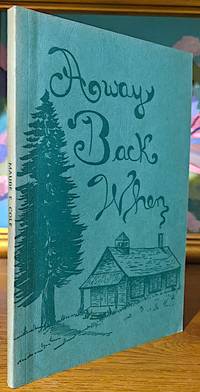
196110400Drain Oregon: The Drain Enterprise 1961. Original wraps. As new. 8vo 164 pages Green paper covers - softbound photo illustrations one 4 part fold out photograph of an annual picnic. -- Signed by the author. -- Condition. Dr Cole came to Oregon by wagon train from Missouri in 1851. Ezra Blake Baird came by rail from Pennsylvania in the year 1906. -- Partial contents: Life on a hop ranch. The Thrashers are coming. The quilting bee. The Bee Hunter. Turkey raising. Devastation of our forests. The fire devil strikes again. Tim-b-e-r. Hog killing time. -- Recipes: Maple sugar candy and syrup Beer Yeast for light bread and rusks Apple butter Sour dough biscuits homemade starch and paste Hominy Chicken noodles and dumplings White Oak Poultice for blood poisoning Pon-Haus liver wurst head cheese sour kraut mince meat pickled pig's feet crackling bread homemade soup venison or elk jerky Rose hip jam and jelly and punch. The Drain Enterprise unknown
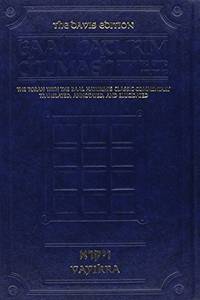
1578191319.Ghardcover. Good. Access codes and supplements are not guaranteed with used items. May be an ex-library book. hardcover
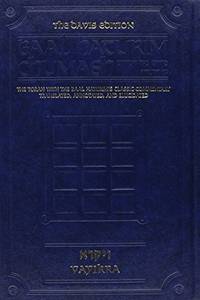
1578191289.Ghardcover. Good. Access codes and supplements are not guaranteed with used items. May be an ex-library book. hardcover
20031-1578191319ArtScroll / Mesorah 2003. Hardcover. New. 448 pages. 9.10x6.10x1.10 inches. ArtScroll / Mesorah hardcover
2003DADAX1578191319Mesorah Publications Ltd 2003-05-22. hardcover. New. 0.00x0.00x0.00. Buy with confidence. Excellent Customer Service & Return policy. Mesorah Publications Ltd hardcover
19991-1578191289Mesorah Pubns Ltd 1999. Hardcover. New. 9.13x6.57x1.11 inches. Mesorah Pubns Ltd hardcover
1999Q-1578191289Mesorah Publications Ltd 1999-08-25. Hardcover. New. In shrink wrap. Looks like an interesting title! Mesorah Publications Ltd hardcover
1578191297.Ghardcover. Good. Access codes and supplements are not guaranteed with used items. May be an ex-library book. hardcover