542 résultats
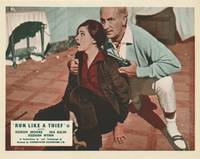
1969132475London: Warner-Pathe Distributors 1969. Collection of 8 vintage full-color British front-of-house cards from the UK release of the 1968 Spanish-American film. <br/><br/>Set in the Mexican jungle about a soldier who involuntarily steals a bevy of diamonds and the ensuing chase across the country with the syndicate police a gangster and a scheming girl complicating his escape to the border. <br/><br/>8 x 10 inches. Some stills with a few light creases else Near Fine. <br/><br/>Complete collation details available on request. Warner-Pathe Distributors unknown books
200126672NY: HarperCollins. Fine in Fine dust jacket. 2001. Hardcover. 0060287101 . Illustrated by Renee Graef. Second printing. Fine in a fine dust jacket. . HarperCollins hardcover books
199920398NY: HarperCollins Harper Trophy. Near Fine. 1999. Hardcover. 0064407675 . Illustrations by Brett Helquist. First printing. Very slight edge wear to the spine ends else fine in illustrated boards. No dust jacket as issued. . HarperCollins (Harper Trophy) hardcover books
186364926Austin TX 1863. 4to. One page approximately 125 words in part: "Gents I am as a military board constituted by the authority of the state submitted to me for sale . thirty four United States Bonds Texas Indemnity with coupons attached . and I sold the same about the 10th of January 1863 to James Thorpe of the state of Louisiana for 85 cents on the dollar in Confederate notes . handed over to you with this report." Murrah a native of Alabama eventually read law and settled in Texas in the late 1840s opening an office in Marshall for his practice. He served in the Texas house before the war then in administrative offices before succeeding Lubbock as Governor in November 1863. Fleeing Texas at the end of the war he died in Mexico in August 1865. Very good. Folded for mailing. 11144. <br/><br/> unknown books
19517255Accra 1951. Paperback. Good. 64p. Original wrapper. 33cm. Minor cover wear and browning. <br/><br/> paperback books
199127846Nashville: Battery Press 1991. Hardcover. Very good. vii 202pp index; maps. Very good hardback in a jacket that is just a bit sunned on the spine. Previous owner's blindstamp on front free endpaper else internally fine. <br/><br/> Battery Press hardcover books
19376594New York: International Publishers 1937. Hardcover. viii 252p. very good first edition in blue cloth boards and unclipped edgeworn and toned dj. Selections from Fox's historical critiques a memorial volume for the prominent British writer killed while serving with the International Brigades. International Publishers hardcover books
19751323225Brussel: Arcade 1975. Hardcover. Quarto; VG/VG; Hardcover with DJ; DJ spine white with black print; Slipcase in red cloth mild shelfwear but clean and strong; DJ has slight edgewear but is clean and bright; Boards in red cloth with gold print clean and strong; Text block clean and tight; Text in Dutch; 469 pages frontispiece illustrated color and b&w plates. Shelf: Renaissance & Italian Art<br /> <br /> <br /> Oversized books. Additional postage necessary for expedited/international orders. Economy International shipping unavailable due to size/weight restrictions. For international/expedited customers please inquire for rates. 1323225. FP New Rockville Stock. Arcade hardcover books
2008UGOLQUE00LAWQuercus 2008. Fine. Gold Claudia. Queen Empress Concubine: Fifty Women Rulers from the Queen of Sheba to Catherine the Great. London: Quercus 2008. 254pp. Indexed. Illustrated. 4to. Pictorial hardcover. Book condition: Near fine. Dust Jacket Condition: Very good with gently bumped edges and subtle rubbing. Quercus hardcover books
15526331Venice: Gabriel GIolito de' Ferrari 1552. First edition. Very Good/The title promises four sets of "questions and their solutions" and indeed that was the plan. Lando wrote Q&A on four topics: medical questions including dietary and aging functions ethical questions questions about religion and questions about love and sex. It was the love and sex part that raised the eyebrows of the censors and neither Lando or his publisher Giolito could get permissions to print it as the book was going to press. As Giolito himself declares in a postscript to the reader: "I promised you four books of doubts but since I haven't yet been granted a license for the doubts about love I'm forced to give you only three. Be well and enjoy as much of the book as I could give you." The license came later and the text appeared in later editions. This unfinished text with its publisher's apology represents a fascinating birthmark on the 16th-century book trade. The Q&A ranges over hundreds of topics calling upon the author's medical training much involved with the humors and temperaments associated with various organs objects and creatures his classical erudition and his training in the Augustinian order. The three sections together provide comprehensive insight into 16th century medicine and popular religious and moral thought. The odd matter of two versions of the dedication page leaf A ii is not easily explained. We suspect with some justification that Lando sought patronage for the same work in different locations knowing that Protestant Germany rarely spoke with Catholic Italy and vice versa. He might have found different backers in different markets. We know that to be the case with at least one other book of Lando's the "Sermoni Funebri" 1549 where some copies are dedicated to Fugger and others to Niccolo degli Alberti. That case is known and recorded. We find no recorded instance of the alternate dedication of "Quattro libri dei dubbi" to Fugger and no record of the author being identified by signing the dedication letter in any other copy. The "Quattro libri de dubbi" was quickly translated into French Lyon 1558 and by William Painter into English entitled "Delectable demaundes and pleasaunt questions with their severall aunswers." 1566 and again 1640. . Octavo 16 cm; 318 2 pages. Woodcut device on title page and on last page. Woodcut initials. Bound in recent vellum in period style yapp edges titled in ink on spine. Early 20th-century bibliographical note bound in. Marginal annotations in contemporary hand. Leaf a ii the dedicatory letter present in two states the cancel addressed to Johann Jakob Fugger closing with Lando's name and the original leaf addressed to Christoph Mielich and not signed as usual. Small perforation in the cancel affecting a word. Occasional light stains darker on last leaf. References: Bongi I 368; Melzi II 391; BM Italian 377 1556 ed.; Fontanini II 117. Gabriel GIolito de' Ferrari hardcover books
P5946Petrograd: Izdanie Petrogradskogo komiteta partii sotsialistov-revoliutsionerov 1917. Octavo 20 Ã 14 cm. Original staple-stitched printed self-wrappers; 32 pp. Wrapper lightly chipped else about very good. Political Literacy for Post-Revolutionary Russia. Scarce brochure that seeks to educate a literate but not highly educated audience about the program of the Socialist Revolutionary Party SR breaking down basic principles of capitalist and socialist systems and proposing a program of action. The party won the Constituent Assembly election of 1917 November 25 1917 generally considered to be the first free Russian election taking about 40% of the popular vote. SR was the primary competitor of Russian Social Democratic Labor Party RSDLP the party of Lenin until its name was changed to the All-Russian Communist Party following the October Revolution of 1917. While the Bolshevik RSDLP won the majority of the vote in urban centers and from soldiers on the western front they lost the overall election to the SRs whose candidate list had been printed prior to the split between the left and right wings of the SRs with the left wing forming a coalition with the Bolsheviks. The Bolsheviks had hoped that this election would provide them the popular mandate to govern. Lenin criticized the Constituent Assembly saying that it failed to represent the Russian people because the ballot had not indicated the split between the SRs right wing and the pro-Bolshevik left. SRs held power for two weeks before the Bolsheviks disbanded the Assembly and gained the upper hand. As ideologically hostile literature as well as documentation of an alternative path of development after the February Revolution the publications of the Socialist-Revolutionaries were subject to destruction in the years after the October coup. KVK and OCLC only show copies at LOC Stanford Staatsbibliothek zu Berlin and Bayerische Staatsbibliothek and State Library of NSW Sydney. unknown books
1636D6036Rome: Typis S. Cong de propag: Fide 1636. Hardcover. Very Good. 4to 230 x 170mm. xxiv 338pp. ii. Illustrated throughout with woodcut tables and charts of Egyptian characters and hieroglyphs. Contemporary vellum; intermittently browned occasional spots. <br/><br/>Father Athanasius Kircher was a 17th-century German Jesuit scholar and polymath who published around 40 works most notably in the fields of oriental studies geology and medicine. He was heralded as possessing the secret of deciphering hieroglyphics and was widely regarded as the physical embodiment of all the learning of his age. He had over 760 correspondents including scientists Jesuit missionaries and world potentates and wrote about an enormous range of interests ranging from optics to music from Egyptology to magnetism. Perhaps best known of his correspondents is Jan Marek Marci of Kronland 1595-1667 for sending Kircher a mysterious illustrated manuscript written in an unknown script famously known today as the Voynich Manuscript. In 1635 Kircher began to write his book Prodromus Coptus Introduction to Coptic Language and in the autumn of 1636 the book was printed. Kircher saw the ancient languages as an essential foundation for any pious philosophy. Kircher envisioned Rome as a unique center within to unlock the mysteries of Hermetic knowledge inscribed on the obelisks. The project of restoring Egyptian wisdom entailed nothing less than an effort to renovate the lost arts of communication that linked divine and human languages. Unfortunately while in other disciplines he made valuable discoveries his explanation of hieroglyphs was absolutely incorrect. We can probably explain it by his passion that might have sometimes blinded his reasoning. Yet Kirchers Prodomus remains an important study from a most respected scholar. Brunet III 668; Caillet II 5790. Typis S. Cong de propag: Fide hardcover books
634118 leaves. Small 4to attractive modern marbled boards red morocco lettering piece on spine. Wittenberg: C. Heyden 1619. First edition of this rare book which is considered by A.D.B. to be the author's most important scientific work; it is a careful record of the third of the three bright comets of 1618-19. Schmidt 1570-1637 was "one of the last of the scholars of Germany who taught the language and literature of Greece in the spirit of Melanchthon. Schmidt was professor first of Greek and next of Mathematics at Wittenberg. His principal work was an edition of Pindar with a Latin translation and a careful commentary 1616."-Sandys II p. 272. Fine copy. ❧ A.D.B. Vol. 32 pp. 27-28. Zinner 4785. hardcover books
605151"Aug Waterman". A Receipt for 205 ounces of gold deposited for refining July 13 1899. 12" x 5 1/2". Selby Smelting & Lead Co. 416 Montgomery Street San Francisco California. Very good. Provenance: from the estate of Senator J.P. Jones. No Binding. Very Good. unknown books
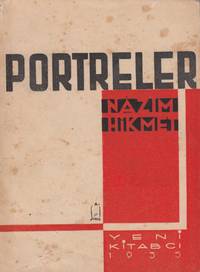
50665Istanbul: Yeni Kitapçi 1935. Octavo. Original pictorial wrappers by Ali Suavi; 62 2 pp. Very good; only very faint wear and discoloration to wrappers. First edition of this volume of poems by Hikmet with a restrained but clearly avant-garde-influenced wrapper sign by Ali Suavi. In this cycle of poems Hikmet portrayed individual persons from the public as well as his private life. Ali Suavi 1910 or 1913-1994 designed most of the covers of Hikmet's books. Little is known about Suavi who was a famous designer of books and later became known as a photographer. Nazim Hikmet 1902-1963 is considered the founder of modern Turkish poetry who transcended Ottoman versification and absorbed the influence of Russian futurist writers such as Sergei Esenin but above all Vladimir Mayakovsky. Aside from the "step-ladder" form of verse he shared with Mayakovsky his sociopolitical engagement as well as Esenin's love for the simple folk and his origins. Impressed by the 1917 October Revolution in Russia he resisted the occupying powers in Constantinple and fled to the countryside where he sought to connect with various socialist and libertarian organizations. In 1920s he traveled to Russia twice for extended periods of time where he studied in Moscow and was in close contact with Soviet Futurist poets. Upon his return in 1928 he was subject to imprisonment and harsh repressions including a ban on publishing but nevertheless garnered success with readers and created a prolific output while in prison. In 1938 he was sentenced to nearly three decades of jail but was released in 1950 and fled to Moscow exile in 1951 where he was a leading public intellectual and died in 1963. He was not published in Turkey until 1965 and remained nearly unknown in the West for much longer. See also: Saime Göksu and Edward Timms Romantic Communist: The Life and Work of Nazim Hikmet. <br/><br/>As of March 2020 KVK and OCLC show only two holdings of the first edition none in North America. unknown books
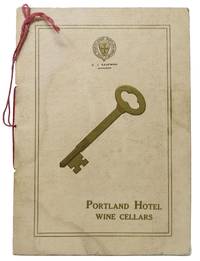
191047219Portland 1910. 1st Printing. White card stock wrappers embossed upper wrappers with gilt textured white leaves with categorical tabs printed in red and black held together by a red cord tie and stapled now housed in a mylar sleeve. A VG copy. Soiling wrappers upper wrapper with possible water damage tie a bit frayed and sunned some red and black ink markings - adjusting and adding menu items light soiling to some leaves as well as some faint age toning to edges. Overall a nice bright copy. 20 pp. unnumbered. 10-2/8" x 7" <br/><br/>"Railroad magnate Henry Villard financed the Portland Hotel and construction began in 1882 but his finances collapsed—in part because of the Panic of 1884—and the construction stopped for five years. With only the foundation completed the site became known as "Villard's Ruins" and the bodies of two murder victims were found there before construction resumed. George B. Markle Jr. began a campaign to raise local money to complete the hotel. He generated enough interest and subscribers to his plan among them Henry W. Corbett Henry Failing Simeon Reed and William S. Ladd to get construction started again. Later investors included labor leader Ed Boyce. The Queen Anne Châteauesque hotel finally opened in 1890 and had eight floors and 326 bedrooms.It had cost well over a million dollars and eight years to complete." wiki The hotel closed in 1951 and all the furniture was sold at auction. unknown books
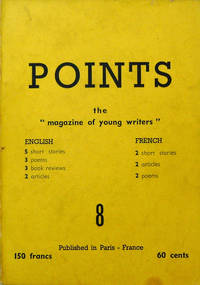
195019696Paris: Points 1950. First edition. Paperback. Good. The rare 8th issue of this literary magazine edited by Bisiaux and Vail. Notable for the inclusion of "Shades of Darkness Three Impressions" by a young Canadian writer named Mordecai Richler. His first published work. This magazine in good condition. Paper is toned with age. Covers are lightly worn and there are a few small chips and tears at the edges. A small stain affects the base of the first dozen pages or so. Still a reasonably sound copy and still well-bound. Points paperback books
196939519Preston: Akros 1969. First edition. 12 pp. Fine in sewn wrappers. Parklands Poets No 1. Preston: Akros unknown books
200682935Lima: Seminario de Historia Rural Andina; Universidad Nacional Mayor de San Marcos 2006. 30 x 21 cm. 87 p b/w plates tbls. bibl. ind. wrps. Bound photocopy as issued. OCLC: 76893147 The present study examines Lima's miniature painting during the first 50 years of the 19th century a golden period for this discipline. Although the presence of the daguerreotype since 1840 and photography since 1850 meant due to cost and effectiveness the beginning of the inevitable disappearance of this portrait style Seminario de Historia Rural Andina; Universidad Nacional Mayor de San Marcos unknown books
1973S9238Ottawa:: Royal Society of Canada 1973. 1973. Tall 8vo. xiii 403 pp. Figs. refs. index. Blue cloth gilt-stamped spine title; sine sun-faded corners bumped. Ink stamps of Stanley L. Miller on all three edges. Scarce. Very good. Royal Society of Canada, 1973. hardcover books
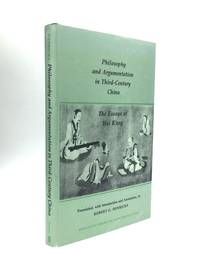
198373072Princeton: Princeton University Press 1983. First Edition. Hardcover. Fine/Near fine. Hsi K'ang A.D. 223-262 was an important poet musician philosopher and debater in the age of ch'ing-t'an 'pure talk.' Here is a translation of his nine essays plus the four essays of his opponents in various debates. Only one of the thirteen works has been translated into English before." Octavo: 214 p. Original natural linen over green cloth spine with gilt titles. A crisp unread copy. Light fading along the extremities of the dust jacket; else near fine. Princeton University Press hardcover books
1681001379Amsterdam: Apud Janssonio Waesbergios 1681. Full Calf. Very Good. 330 6 pp. 12mo with copper engraved title page by Giovanni Van Den Avele. Pharsalia is considered a masterpiece and possibly the masterpiece of the Silver Age of Ancient Roman poetry. The epic poem concerns the Roman Civil War at the time of Caesar and most particularly the extended struggle between Caesar and Pompey the Great. Lucanus writing a century later during the reign of Nero far from glamorizing the warfare took a jaundiced view of the fraticidal battle and his portrait of both Caesar and Pompey was far from flattering. His "epic poem" therefore is epic in terms of length scope and ambition not in its portrayal of the principals. Because of the subject matter the popularity of "Pharsalia" has crested at times when a society still steeped in the Classical canon of literature descended into civil strife when the themes and point-of-view of Lucanus really resonated. Never was this more the case than in the seventeenth century when this copy was printed. First there was the final emergence of the Netherlands from under the yoke of Habsburg rule and then there was the English Civil War just to mention two instances both highly germane to the edition at hand. Thus the notes by Grotius and Modern calf with a black spine label and marbled endpapers. The work is incomplete and breaks off during the tenth book which Lucanus was still working on when he was forced to commit suicide. The binding is tight. Some leaves with more toning than others but overall quite clean. There are leaves in which the margins are parlously tight or the header is even close to being partially cut-off -- this is the upshot of the compact size of the copy and was the way the copy was issued over three centuries ago. This particular edition is not mentioned in Brunet. <br/><br/> Apud Janssonio Waesbergios unknown books
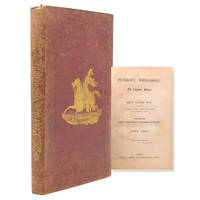
185016916London: J. & D. A. Darling 1850. First edition. 8 handcolored plates by Alfred Ashley. 196 pp. 1 vols. 8vo. Original rose cloth covers framed in blind with gilt lozenge of officer on horseback on upper cover spine lettered and decorated in gilt. Some spotting and discoloration of cloth without the two inserted leaves of publisher's advertisements mentioned by Wolff else a very good copy with the bookplate of James George Robarts. First edition. 8 handcolored plates by Alfred Ashley. 196 pp. 1 vols. 8vo. Sadleir 1223; Wolff 3294 J. & D. A. Darling unknown books
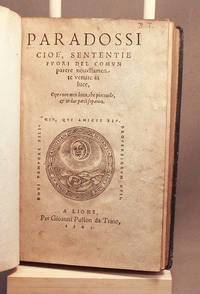
15436296Lyon: per Gioanni Pullon da Trino" i.e. Jean Pullon dit de Trin 1543. First edition. Very Good/Exquisitely rare first printing of Ortensio Lando's most famous book his first in a modern language that in later editions and in translations became a 16th-century best seller. Lando's name does not appear on the title page or anywhere in the book except in code. His real name shows up on no edition published in the 16th century. A dedicatory leaf after the colophon attributes the text to "M.O.L.M" interpreted generally as "Messer Ortensio Landi Milanese." More cryptically there is a phrase printed after the telos "SVISNETROH TABEDVL" mirror writing for "ludebat Hortensius" Ortensio has played. It is serious play. The Paradossi undertakes in the key of popular "world upside down" folklore to prove black what is commonly accepted as white. For instance it is better to be poor than rich better ugly than handsome better drunk than sober and so on. Biographical sketches of Lando are remarkable for how little information about him is available. Peer of Aretino and Doni friend to Etienne Dolet later incinerated for heresy he was a non-believer who nevertheless took Augustinian orders and later deserted them. Member of a prestigious literary club L'accademia degli elevati he was above all an outsider. All of his books landed on the Index of Prohibited Books and "I paradossi" in particular was widely banned and copies of it were confiscated. Probably the first book printed by the obscure Italian printer working in Lyon Giovanni Pullone da Trino later called "Jean Pullon de Trin". Following Pullon's modest press run the text was quickly taken up and reprinted badly by Bindoni and others in Venice twice in 1544 1545 1563 1594 etc. and translated into Latin into French by Charles Estienne 1553 and into English 1596. If you Google "Jean Pullon" you will get dozens of pages advertising pull-on jeans. . Octavo 17cm; 112 leaves signed A-O8. Printer's device on title page Ferraris 1 showing a human-faced moon in the sky reflected on the surface of the land. Bound in later 18th-century or 19th-century dark green leather in neoclassical style with gilt central losenge within gilt borders on both boards; gilt-tooled spine with leather title label. Joints reinforced but tender; light marginal stain along bottom edge; O7 torn and repaired remains of tape. Early marginalia trimmed close. Later c19 notes in French on endleaves. Pages not bright. All in all a very good copy of a very rare book. References: Ferraris "Giovanni Pullone e altri stampatori trinesi a Lione" in "Trino e l'arte tipografica nel XVI secolo." 2014 #1; USTC 116008 BM Italian 399; Grendler "Critics of the Italian World" #8; Gültlingen "Bibliographie des livres imprimés à Lyon." vol. X p. 7; Bongi "Catalogo delle opere di M. Ortensio Lando" p. xxxvi "eseguita in bel carattere rotonde cui la originalità e la bellezza danno il pregio sopre le ristampe"; not in Adams; not in Baudrier. per Gioanni Pullon da Trino" (i.e., Jean Pullon dit de Trin) hardcover books
1897WRCAM43100Circle City Alaska and on a steamer between Juneau and Seattle 1897. 12pp. typed on folio sheets of onion-skin paper plus three hand-drawn maps. A total of some 6750 words. Stapled at upper edge. Three horizontal folds. Near fine. A very interesting pair of typed letters from a young man in Alaska during the Klondike Gold Rush. The anonymous author wrote these two letters to his parents describing his journey overland and by water to the Birch Creek mining district his experiences mining for gold and his decision to go into business as a merchant. The letters are written in a detailed style that indicates an educated author. They include three manuscript sketches showing the routes traversed in Alaska and provide a great deal of information about the writer's experiences in the Klondike. These letters are typed but they were likely originally handwritten by the author who later typed them and included his manuscripts maps and sketch in order to send them to his family when he arrived in Seattle or San Francisco. <br> <br> The letter dated Nov. 10 begins with a description of the writer's boat journey from Juneau to Dyea which was a popular disembarkation point for the Chilkoot Trail to Dawson City a center of the gold rush. He arrived at Dyea on April 23 and notes that "dinner at the Dyea post was the last square meal I have had up to the present date November 10." After dinner he loaded his equipment on horses for the journey inland: <br> <br> "My outfit consisted of about 1000 lbs. of provisions guns amunition sic tools for boat building a whip-saw jack-plane cross- cut saw hand saw rip saw hatchet hammer draw knife brace and bits square etc. and clothing blankets tent sheet-iron stone and in fact I think I had about every thing that ever went down the Yukon. Altogether my outfit weighed about 1302 pounds which is much more than is usually taken into the interior." <br> <br> The author spent the next several days transporting his provisions between Dyea and Lake Linderman and he includes in his letter a sketch of the route from Dyea through the valley to the lake noting several camps along the way as well as a sketch of his sled. <br> <br> The second letter dated Feb. 17 1897 was written on board the steamer Al Ki between Juneau and Seattle. He continues the narrative of his trip inland explaining that he arrived at Lake Linderman on May 14. A month later on June 14 the author and a partner their canoe loaded with provisions departed for Circle City which they reached on June 29. There they stored most of their provisions and headed for the mines in the Birch Creek region. Mining was at its height in the middle of the summer but rather than seek out a claim on their own the author and his companion Jim Wishard decided to work for other miners earning some $10 a day. He describes working at mining from 7 p.m. until 6 a.m. the long days making the task of working at night possible. In August the author bought a claim in the Harrison Creek region but decided to forego mining in favor of establishing himself as a merchant: <br> <br> "From what I could see the miners are poorly supplied with food by the two companies and there is always a great demand for luxuries; that is something out of the ordinary and even the necessaries of life. I made up my mind last summer that I could do as well bringing in some food - in other words being something of a merchant - as in any other way to start and having a good knowledge of the country and keeping my eyes open I would undoubtedly have many good chances for speculation. It is a conceded fact that one cannot lose money taking in such an outfit. Everything brings in an average profit of 400 per cent. over the original cost and whatever any one has to sell in the 'grub' line is in demand." <br> <br> The author then describes his construction of a small cabin in Circle City and his decision soon afterward to leave Alaska for the winter. He describes the trip to Dyea undertaken in January and the hardships of winter overland travel in Alaska. Included are some very practical tips: <br> <br> "In crossing water when it is thirty or forty degrees below zero one should dip his moccasins into the water very quickly taking them out before the moccasin is wet through. They will then freeze in a mass on your feet and will serve the same purpose as rubber boots. You can then walk right through water though I would not advise any one to tempt Providence too much." <br> <br> The letter concludes with a description of a recently discovered gold strike called "Bonanza" not far from the Forty Mile camp. The author describes the high hopes around the strike and includes a manuscript map of the region indicating the location of a claim in which he himself has invested. He hopes that his mine will bring him some wealth but reiterates his belief that the way to wealth in the Yukon Gold Rush is by supplying miners with goods and that he is on his way to Seattle and San Francisco to buy provisions to resell. hardcover books