542 résultats
17116369London: A. Baldwin 1711. 8vo 20.8 cm 8.25". vi 42 pp. <br><br>Generally attributed to Francis Hare Bishop of Chichester but also attributed to Jonathan Swift this anonymously published political analysis expresses concern not only that putting the Duke of Anjou on the Spanish throne would tilt the balance of power in Europe too far towards France but also that such action would greatly damage the livelihoods of English textile workers among others dependent on international commerce; also questioned are Swift's views on the ramifications of trade with Portuguese America. This is the second expanded edition. <br>Â Â Â Â <br>Â Â Â Â ESTC T58140; Alden & Landis European Americana 711/126; Teerink-Scouten 1034. Blue-green paper wrappers old style. Title-page with small numeric stamp faint traces of other annotations. Small area of worming in inner margins touching a very few letters. A few scattered spots otherwise clean; edges untrimmed. A. Baldwin unknown books
196435190NY: Knopf 1964. First Edition. 8vo pp. 363. Includes bibliography. A VG tight copy in somewhat soiled and chipped dj. A dictionary of jazz terms. Knopf unknown books
1964WRCLIT18032New York: Knopf 1964. Narrow quarto. Spiral bound plain wrappers printed labels. Uncorrected original trimmed galley proofs of the first edition. Two old tape marks on wrappers else fine. HORN 905. Knopf unknown books
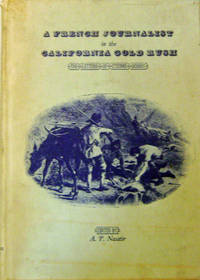
196415581Georgetown: The Talisman Press 1964. First edition. Cloth. Very Good/good. Quarto in dustwrapper. 258 pp. Illustrated. One of 750 copies. A very good copy in thick oatmeal cloth binding. Former ownership stamp to copyright page else a clean desirable copy. Original dustwrapper in good condition with toning and wear to edges. Some small chips to spine ends. <br/><br/> The Talisman Press hardcover books
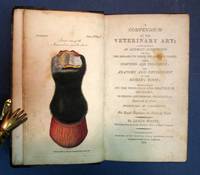
180229918Canterbury: Printed by W. Bristow for J. Badcock 1802. 1st edition Canterbury issue. Period brown half-sheep binding with marbled paper boards. Some rubs & general wear to binding. Period pos to ffep. A VG copy. vi 7 - 20 232 pp. Illustrated with 15 copperplate engravings 4 color and the 6th Fig 1 serving as frontis. 12mo signed in 6s. 6-3/4' x 3-7/8" <br/><br/> Printed by W. Bristow, for J. Badcock hardcover books
19047361New York: D. Appleton and Company 1904 First edition. ix 3 276pp. plus 14pp. of ads. Ten portraits and views folding map extensive notes and index. Newer binding of three-quarter brown leatherette over marbled boards. Portrait of Thwaites pasted to blank leaf. A fine copy. Covers the exploration of the Northwest Coast; French and English explorations from the East; the Missouri River; the Louisiana Purchase; organization of the Lewis & Clark exploration; the L&C expedition at Fort Mandan; from Fort Mandan to the sea and at Fort Clatsop; Thompson Fraser the Astorians and Pike; the South Pass; and the Conquest of California. Thwaites was a very able historian and was "one of the outstanding historical editors of his generation" Thrapp. Thrapp Encyclopedia of Frontier Biography" p.1428. D. Appleton and Company hardcover books
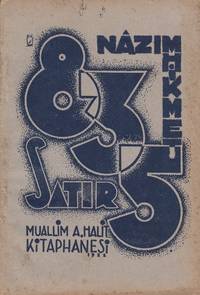
50663Istanbul: A. Halit Kitaphanesi 1932. Octavo. Original pictorial wrappers by Ali Suavi; 48 pp. Very good save for very light wear to edges. Second edition of Hikmet's first book of poetry originally published in 1929 but issued with a striking cover designed by Ali Suavi 1910 or 1913-1994 who Suavi designed most of the avant-garde-inflected covers of Hikmet's books. Little is known about Suavi who was a famous designer of books and later became known as a photographer. Nazim Hikmet 1902-1963 is considered the founder of modern Turkish poetry who transcended Ottoman versification and absorbed the influence of Russian futurist writers such as Sergei Esenin but above all Vladimir Mayakovsky. Aside from the "step-ladder" form of verse he shared with Mayakovsky his sociopolitical engagement as well as Esenin's love for the simple folk and his origins. Impressed by the 1917 October Revolution in Russia he resisted the occupying powers in Constantinple and fled to the countryside where he sought to connect with various socialist and libertarian organizations. In 1920s he traveled to Russia twice for extended periods of time where he studied in Moscow and was in close contact with Soviet Futurist poets. Upon his return in 1928 he was subject to imprisonment and harsh repressions including a ban on publishing but nevertheless garnered success with readers and created a prolific output while in prison. In 1938 he was sentenced to nearly three decades of jail but was released in 1950 and fled to Moscow exile in 1951 where he was a leading public intellectual and died in 1963. He was not published in Turkey until 1965 and remained nearly unknown in the West for much longer. See also: Saime Göksu and Edward Timms Romantic Communist: The Life and Work of Nazim Hikmet. <br/><br/>As of March 2020 no copies in North America according to KVK OCLC. unknown books
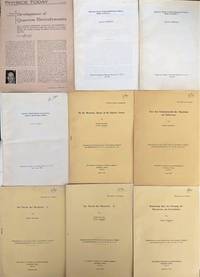
1940S13395Tokyo:: Scientific Papers of the Institute of Physical and Chemical Research 1940. 1940. 8 offprints 1 extract. Original wrappers. From the collection of Abraham Pais. Very good. INVENTORY: 1. TOMONAGA Sin-itiro. Uber den Zusammenstoß des Mesotrons mit Elektronen. Offprint from: Scientific Papers of the Institute of Physical and Chemical Research no. 976 vol. 37 pp. 399-413 June 1940. Original yellow printed wrappers. Signed by Pais. "In 1940 Dr. Tomonaga directed his attention to the meson theory and developed the intermediate coupling theory in order to clarify the structure of the meson cloud around the nucleon." :: Nobel Lectures 1972. 2. TOMONAGA Sin-itiro. Zur Theorie des Mesotrons. I. Offprint from: Scientific Papers of the Institute of Physical and Chemical Research no. 1071 vol. 39 pp. 247-266 Dezember 1941. Original yellow printed wrappers. Signed by Pais. 3. TOMONAGA Sin-itiro. Bemerkung uber die Streuung der Mesotronen am Kernteilchen. Offprint from: Scientific Papers of the Institute of Physical and Chemical Research no. 1105 vol. 40 pp. 73-86 September 1942. Original yellow printed wrappers. Signed by Pais. 4. TOMONAGA Sin-itiro; Miyazima Tatuoki. Zur Theorie des Mesotrons. II. Offprint from: Scientific Papers of the Institute of Physical and Chemical Research no. 1103 vol. 40 pp. 21-67 August 1942. Original yellow printed wrappers. Signed by Pais. 5. TOMONAGA Sin-itiro; Miyazima Tatuoki. On the Mesotron Theory of the Nuclear Forces. Offprint from: Scientific Papers of the Institute of Physical and Chemical Research no. 1124 vol. 40 pp. 274-310 March 1943. Original yellow printed wrappers. Signed by Pais. 6. TOMONAGA Sin-itiro. Remarks on Bloch's Method of Sound Waves applied to Many-Fermion Problems. Offprint from: Progress of Theoretical Physics vol. 5 no. 4 pp.544-569 July-August 1950. Signed by Pais. 7. TOMONAGA Shin-ichiro. Elementary Theory of Quantum-Mechanical Collective Motion of Particles I. Offprint from: Progress of Theoretical Physics vol. 13 no. 5 pp.467-481 May 1955. 8. TOMONAGA Shin-ichiro. Elementary Theory of Quantum-Mechanical Collective Motion of Particles II. Offprint from: Progress of Theoretical Physics vol. 13 no. 5 pp. 482-496 May 1955. 9. TOMONAGA Sin-itiro. Development of Quantum Electrodynamics. Extracted from: Physics Today vol. 19 no. 9 pp. 25-32 September 1966. Signed by Pais. . / BIOGRAPHY: Tomonaga was a prominent Japanese physicist influential in the development of quantum electrodynamics work for which he was jointly awarded the 1965 Nobel Prize in Physics :: along with Richard Feynman and Julian Schwinger :: for the study of QED specifically for the discovery of the renormalization method. Nobel biography: Tomonaga completed work for Rigakushi bachelor's degree in physics at Kyoto Imperial University in 1929 with one of his intimate friends. Dr. Hideki Yukawa Nobel laureate. He was engaged in graduate work for three years at the same university and was then appointed a research associate by Dr. Yoshio Nishina at the Institute of Physical and Chemical Research Tokyo where he started to work in a newly developed frontier of theoretical physics quantum electrodynamics - under the guidance of Dr. Nishina. His paper on the photoelectric pair creation is well-known. Tomonaga stayed in Leipzig Germany from 1937 to 1939 to study nuclear physics and the quantum field theory in collaboration with the theoretical group of Dr. W. Heisenberg where he published a paper "Innere Reibung und Warmeleitfahigkeit der Kernmaterie" which was chosen as the thesis for Rigakuhakushi Doctor of Science at Tokyo Imperial University in December1939. In 1940 Dr. Tomonaga directed his attention to the meson theory and developed the intermediate coupling theory in order to clarify the structure of the meson cloud around the nucleon. He joined the faculty of Tokyo Bunrika University which was absorbed into the Tokyo University of Education in 1949 as Professor of Physics in 1941. It was in 1942 when he first proposed the covariant formulation of the quantum field theory in which the concept of the quantum state was generalized so as to be relativistically covariant. During the Second World War Dr. Tomonaga was interested in developing a theory of microwave systems. He solved the motion of electrons in the magnetron and also developed a unified theory of the systems consisting of wave guides and cavity resonators. As soon as the War was over Tomonaga came back to academic research again with a programme in which he was first to summarize and extend the intermediate coupling theory and secondly to apply the covariant field theory to actual physical systems. His aim was to investigate the nature of field reaction in the meson theory as well as in quantum electrodynamics. He was confident prior to the Lamb-Retherford experiment by means of a model calculation that divergence difficulty in quantumelectrodynamics could be overcome simply by handling the infinite mass and charge due to field reactions in some way or another. It was only a step further for him to develop the renormalization theory with covariant formalism in his right hand and experimental support in his left. Dr. Tomonaga was invited to the Institute for Advanced Study Princeton in 1949 where he was engaged in the investigation of a one-dimensional fermion system. Thus he first succeeded in clarifying the nature of collective oscillations of a quantum-mechanical many-body system and opened a new frontier of theoretical physics modern many-body problem. In 1955 he published an elementary theory of quantum mechanical collective motions. Dr. Tomonaga took the leadership in establishing the Institute for Nuclear Study University of Tokyo in 1955. From 1956 to 1962 he was appointed President of the Tokyo University of Education and since 1963 he has been President of the Science Council of Japan and Director of the Institute for Optical Research Tokyo University of Education. He occupies an important position in various governmental committees for scientific research and policymaking. Tomonaga's honours and awards include the Japan Academy Prize 1948; the Order of Culture 1952; the Lomonosov Medal U.S.S.R. 1964. Dr. Tomonaga is a member of the Japan Academy the Deutsche Akademie der Naturforscher "Leopoldina" and a foreign member of the Royal Swedish Academy of Science. He is a corresponding member of the Bayerische Akademie der Wissenschaften and a foreign associate of the National Academy of Science of U.S.A. Tomonaga has published widely in scientific journals on such subjects as quantum electrodynamics the meson theory nuclear physics cosmic rays and the many-body problem. His book "Quantum Mechanics" was published in 1949 and translated into English in 1963. Scientific Papers of the Institute of Physical and Chemical Research, 1940. unknown books
1996261148Minneapolis: GLBT Pride/Twin Cities 1996. Magazine. 104p. 8.25x10.75 inches event schedule maps ads articles news photos services and resources very good program booklet in stapled pictorial wraps. GLBT Pride/Twin Cities unknown books
1866286043New York 1866. unbound. very good. located in the Nevada District of the Colorado Territory with beautifully engraved vignettes of a miner working by torchlight and a group of miners sending ore from the mine shaft to the surface by way of an bucket-brigade. Signed by the Secretary and President of the Corporation whose main office was located in New York City. This certificate bears two uncancelled 25 cent Internal Revenue Certificate stamps applied to the certificate in their designated spaces. The stock certificate appears not to have been redeemed. Scarce. Very good<br/><br/> Folds are very light and the steel engravings are clearly printed. There is a small chip to the top margin above the printed border.<br/><br/> unknown books
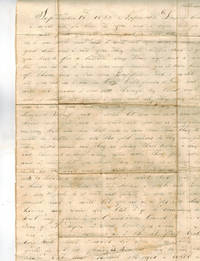
1855007164Sacramento California 1855. Two manuscript letters in ink both on ruled paper with folding creases the 1855 letter 8" x 12 1/2" with single spaced writing both sides approx. 500 words. The 1856 letter 15" x 10" folded in half to make 4 pp. approx. 300 words with small blindstamp top left corner depicting an eagle. The earlier letter is headed "September 18th 1855 Naperville Dupage County Illinois" and ends "Michael direct your letters Nevada County Nevada post office California". George writes to his brother Michael in Naperville that he has "seen a good dele sins i rote you they last letter" including a hundred "inshins" and some "Buffellow". He adds that "we had good luck all they way of may we left Council Bluff" and that he is not home sick yet. He then talks of the gold mines river mining what they are paying and the cost of things such as board "from five to ten dollars a week" "Beaf" "wors 15 to 20 cents" and "potato" "4 cent per pound". He adds that he intends to have some gold before he comes home and that "girls are not so plenty here as they are in state". He closes by asking his brother to write him and to remain at home in Illinois to care for their parents. The 1856 letter headed Sacramento august 3th 1856 informs his brother that he is well and "down to Sacramento now" working on a farm feeding a "schrasing" thrashing machine and that "they times is verry hard in California now". He adds that he had some money "stole" while he was in the mountains but since coming down into the valley he was making money and will send some home soon. The letter ends with George wishing to see them all soon and that he is not home sick. The third page of the letter bears a drawing of a wing or leaf eleven smaller versions of the same image interspersed on page 2. A fascinating testimonial on California during the gold rush written in a strong hand and in a wonderful vernacular style by a good observer. . HOLOGRAPH LETTER SIGNED. Manuscript. Very Good. books
177726884London England: Printed for the Company of Stationers 1777. Twenty-two issues of this yearly British almanac bound in one volume; consecutive and inclusive from the 1777 issue to 1797. These are printed in red & black have the tax stamps on the margins of the title pages and are of 32 pages' length with exceptions or notes as below: 1782: On page 31 the section "VI Rebus by Mr. R. Richardson of Frosterly" has been solved with the manuscript letters & names of clues neatly written at the margins. 1786: pgs 1-2 15-32; However another issue is bound after this incomplete issue that is entire in 48 pages. These almanacs are noted on the title pages as printed for the Company of Stationers; and this "extra" issue is noted on the title page as "Printed for T. Carnan in St. Paul's Church Yard; who after an expensive Suit in Law and Equity by the unanimous Opinion of the Judges of the Court of Common Please dispossessed the Stationers' Company of their pretended exclusive Privilege of Printing Almanacks which they had usurped for two Centuries; a convincing Proof that no unjust Monopoly will ever stand the Test of an English Court of Justice." 1788: pgs 1-2 15-32 only. 1793 Misbound pages out of order and complete 32 pages. 1795: A name of "Old Batholomew" has been added in ms. at the 4th Sept. in the monthly almanac pages section. 1797 pgs 1-16 only. "The existence of the Ladies' Diary or the Woman's Almanack an 18th century English magazine devoted largely to problems and puzzles in mathematics indicates that stereotypes about the inability of women to understand and enjoy mathematics were less strongly believed in the 18th century than they are today.The Ladies' Diary became one of the widely read 18th century magazines devoted to the popularization of science and mathematics; these were addressed mainly to readers with no specialized training in the subjectsThe Ladies' Diary differed from these others primarily in the language used in some of the problems--language which reminds the reader that the problems were addressed to women" from the excellent overview of the magazine its influence & impact by Teri Perl San Francisco State Univ. Historia Mathematica 6 1979 article on the 'Diary' Indecipherable by us previous owner name on back endpaper.Approx. 4" x 6 3/8" size; bound in marbled-paper covered boards leather corners edges tinted yellow; spine covering gone; wear to the edges tips of the binding; bottom cord of top board let go; the block still solidly sewn some edges trimmed close; contents generally clean and in good condition. . First Edition. Hard Cover. Good. Printed for the Company of Stationers hardcover books
1929WRCLIT48622New York: International Publishers 1929. Black cloth stamped in yellow. Spine a little cocked and cloth faintly spotted light edgewear ink mark on bottom-edge small ink stamp on rear endsheet; just a good sound copy without dust jacket. First edition of the author's first clothbound book a collection of short stories poems and two verse dramas relating to the struggle of the proletariat. HANNA 1443. International Publishers hardcover books
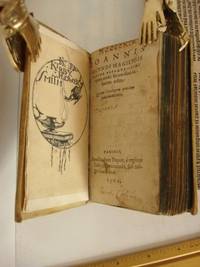
15617610Paris: Jacobum Dupuis 1561. Second edition. Vellum. Very Good. 16mo. ff.172. BOUND WITH: Marullo Michele or Marullo Tarcaniota Michele. EPIGRAMMATA & HYMNI. Paris: Jacobum Dupuis. 1561. ff.92. Title with outer margin restoration 1/2" vertical strip of later paper with a few letters of title & imprint in manuscript. 2 pages of cont. manuscript notes in German at back. Both works bound togetherin cont. vellum soiled. Large bookplate of American classical scholar Kirby Flower Smith 1862-1918. I: The second edition of the works of Secundus. Also found with the variant imprint of A. Wechelum as in both Adams S838 and BL French STC p. 397. II: Uncommon edition of the Greek scholar and Neo Latin poet Marullo 1458-1500. Not in BL French STC. Adams T145 under "Tarchaniota" and with the variant imprint of Wechelum. Jacobum Dupuis hardcover books
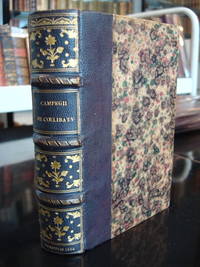
15546266Venice: Ad Signum Spei 1554. First edition. Very Good. Sm. 8vo. 1696pp. Title page with a large allegorical woodcut vignette. BOUND WITH: Campeggi Tommaso. OPUS. DE AUCTORITATE & POTESTATE ROMANI PONTIFICIS & Alia Opuscula Quae Indicantur in Sequenti Pagina. Venice: Apud Paulum Manutium Aldi F. 1555. Sm. 8vo. ff.12223. Lg. woodcut anchor & dolphin printer's device on title. Both works nicely bound together in 19th century brown morocco gilt decorated spine over marbled boards. Bookplate of James Stevens Cox on front pastedown. First editions of two of Campegii's main works. The first is his tract on celibacy the second is his treatise on the power of the Pope ff.1-116 followed by 19 other theological treatises. I. BM STC Italian p. 142. Not in Adams. II. BM STC Italian p. 142. Adams C477. Renouard ALDUS p. 164. Ad Signum Spei hardcover books
1975M3072In:: Medical Radiography and Photography Vol. 51 No. 1 1975. 1975. 4to. 2-19 pp. 26 figs. Printed wrappers. Fine. Medical Radiography and Photography, Vol. 51, No. 1, (1975). unknown books
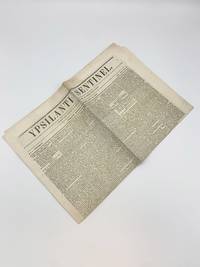
1859403850Ypsilanti MI: C. Woodruff 1859. Newspaper 22 x 16 inches. 4 pp. In fine folded condition. A fine and lengthy report from the west providing details on the gold resources of the country descriptions of the various diggings the amounts of gold taken by various companies and individuals the Gregory Diggings the abandonment of the Platte River washings the constitution convention etc. <br/><br/> C. Woodruff unknown books