Gold IvanABAA
542 résultats
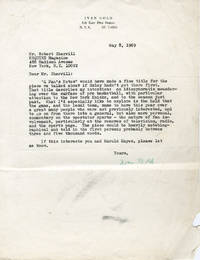
1969WRCLIT77055New York 1969. One-half page on. a quarto sheet of letterhead ca. 150 words. Lower blank corner snagged and creased a few smudges to lower blank portion; good. To editor and journalist Robert Sherrill at ESQUIRE proposing an article of some 5000 words ". an idiosyncratic meandering over the surface of pro basketball with particular attention to the New York Knicks . the nature of fan involvement particularly at the removes of television radio and the sports page. The piece would be heavily autobiographical." He observes that "'A Fan's Notes' would have made a fine title for the piece . if Exley hadn't got there first." Signed in full in ink. Gold's first novel was published the same year. unknown books
608358not signed from the 1956 film "The Solid Gold Cadillac." 1. 3/4 length shot of Judy Holliday and Paul Douglas with Arthur O'Connell and two unidentified actresses. 2. 3/4 length shot of Judy Holliday pointing her finger at Paul Douglas at a board meeting with five men and one woman. Photographs are on single weight stock; 10" x 8"; very good minor signs of handling; few small pin holes and corner tear photo #1; few soft creases; 1956. No Binding. Very Good. unknown books
607481not signed from the 1956 film "The Solid Gold Cadillac." 1. 3/4 length shot of Judy Holliday and Paul Douglas. 2. 3/4 length shot of Judy Holliday pointing her finger at Arthur O'Connell in a office setting with many other looking on. Photographs are on single weight stock; 10" x 8"; very good minor signs of handling; 1956. No Binding. Very Good. unknown books
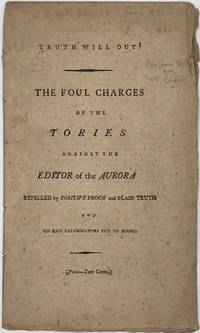
179865755Philadelphia: Printed at the Aurora Office 1798. First edition issue with the type ornament at the foot of p. 12. 8vo. 4 12 pp. Sabin 97270: "Probably written by William Duane . in the prefatory remarks the sentiments of the ‘Editor' are given throughout in the third person and as Duane was associated with Bache on the ‘Aurora' either of them might be the author." Evans 33648. Disbound pamphlet. Very good unopened copy. <br/><br/> Printed at the Aurora Office unknown books
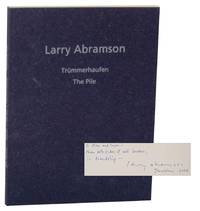
2005136255Osnabruck: Feliz-Nussbaum Haus 2005. First edition. Softcover. 74 pages. Exhibition catalog for a show that ran June 26 through August 28 2005 at the Felix-Nussbaum Haus and then September 24 through December 3 2005 at the Museum of Are Ein Harod. Text in English German and Hebrew. Includes numerous black and white images. A fine copy in wrappers. Signed and inscribed by Abramson on the title page and rather uncommon as such. Feliz-Nussbaum Haus unknown books
1982004543New York: Arbor House 1982 1982. F. Soft cover. Dust Jacket Included. Published in New York by Arbor House in 1982. Uncorrected Proofs with First Edition number sequence printed on copyright page "10 9 8 7 6 5 4 3 2 1." This copy is SIGNED by the author. Book fine except for two pen marks on front cover: one adding the day of publication and the other is marking the price down from "$14.50" to "$14.25". DJ fine except for slight creasing along top and bottom edges and slight fading on covers and spine. New York: Arbor House, 1982 unknown books
1982702802NY: Arbor House. 1982. Advance Uncorrected Proof. Very Good in wrappers laid into a Very Good publisher's proof DJ. Unless otherwise noted our first editions are first printings. First Edition. Softcover. Very Good. Arbor House paperback books
1866WRCAM50657Washington 1866. 6pp. Folio gathered signatures. Mild soiling and toning. Very good. After the Civil War the government moved quickly to control the western Indian tribes and this treaty is one of the first actions taken. The treaty was concluded Oct. 19 1865 at Fort Sully Dakota Territory amended and proclaimed March 17 1866. The treaty calls for the Sioux's subjugation to the U.S. government the ceasing of Sioux attacks on whites and their withdrawal from overland routes made through their country. The government agrees to pay them $7000 annually for twenty years for allowing free travel on these routes. The treaty is signed in print by Brig. Gen. Sibley among others. EBERSTADT 130. unknown books
1866WRCAM26697BWashington 1866. 6pp. Folio. Gathered signatures. Mild toning. Very good. One of the Fort Sully treaties. "These famous treaties were concluded at Fort Sully Dakota Territory by Newton Edmunds E.B. Taylor and Generals S.R. Curtis and H.H. Sibley. They stipulate a cessation of hostilities and depredations by the various bands and their withdrawal from the overland routes established or to be established through their country etc. Among the witnesses is Hezeiah L. Hosmer Chief Justice of Montana Territory" - Eberstadt. EBERSTADT INDIAN TREATIES 130. unknown books
1866WRCAM26697AWashington 1866. 6pp. Folio. Gathered signatures. Mild toning. Very good. One of the Fort Sully treaties. "These famous treaties were concluded at Fort Sully Dakota Territory by Newton Edmunds E.B. Taylor and Generals S.R. Curtis and H.H. Sibley. They stipulate a cessation of hostilities and depredations by the various bands and their withdrawal from the overland routes established or to be established through their country etc. Among the witnesses is Hezeiah L. Hosmer Chief Justice of Montana Territory" - Eberstadt. EBERSTADT INDIAN TREATIES 130. unknown books
1866WRCAM26697Washington 1866. 6pp. Folio. Disbound leaves. Minor chipping staining. Very good. One of the Fort Sully treaties. "These famous treaties were concluded at Fort Sully Dakota Territory by Newton Edmunds E.B. Taylor and Generals S.R. Curtis and H.H. Sibley. They stipulate a cessation of hostilities and depredations by the various bands and their withdrawal from the overland routes established or to be established through their country etc. Among the witnesses is Hezeiah L. Hosmer Chief Justice of Montana Territory" - Eberstadt. EBERSTADT INDIAN TREATIES 130. unknown books
1866WRCAM26696Washington 1866. 7pp. Folio. Dbd. Minor chips tears. Very good. One of the famous Sioux treaties of Fort Sully. "These famous treaties were concluded at Fort Sully Dakota Territory by Newton Edmunds E.B. Taylor and Generals S.R. Curtis and H.H. Sibley. They stipulate a cessation of hostilities and depredations by the various bands and their withdrawal from the overland routes established or to be established through their country etc. Among the witnesses is Hezekiah L. Hosmer Chief Justice of Montana Territory" - Eberstadt. EBERSTADT INDIAN TREATIES 130. unknown books
1866WRCAM50657AWashington 1866. 6pp. Folio gathered signatures. Mild soiling and toning. Very good. After the Civil War the government moved quickly to control the western Indian tribes and this treaty is one of the first actions taken. The treaty was concluded Oct. 19 1865 at Fort Sully Dakota Territory amended and proclaimed March 17 1866. The treaty calls for the Sioux's subjugation to the U.S. government the ceasing of Sioux attacks on whites and their withdrawal from overland routes made through their country. The government agrees to pay them $7000 annually for twenty years for allowing free travel on these routes. The treaty is signed in print by Brig. Gen. Sibley among others. EBERSTADT 130. unknown books
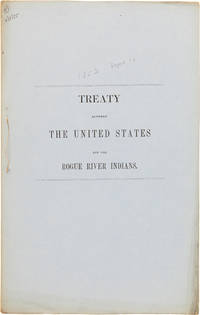
1855WRCAM50640Washington 1855. 7pp. Printed on blue paper. Folio stitched as issued. Gatherings loose. Edges toned internally clean. Very good. Concluded September 10 1853 proclaimed February 5 1855. Concluded by Joel Palmer at Table Rock in Oregon Territory. The Rogue River tribe agrees to sell their lands between Rogue River and Siskiyou Mountains in return for $60000. EBERSTADT 109. unknown books
20131318119Lexington: Ulan Press 2013. Hardcover. Octavo; Reprint of 1923 edition;VG; Paperback; Yellowish green spine with black text; Covers have slight bumping the tips but clean and sturdy; Front paste down and front free end papers have minor marks and limited creases to the bottom tips due to folds; Text block is ex-library and has rubber stamps to the front and end papers otherwise clean; 379p. 1318119. FP New Rockville Stock. Ulan Press hardcover books
177969261Dublin: Printed for S. Price et al 1779. First Edition. Hardcover. Good. Having served in a Massachusetts regiment during the French and Indian Wars Carver was sent in 1766 by Robert Rogers then governor of Mackinac to map the main rivers of Wisconsin and Minnesota in preparation for an expedition to search for an overland Northwest Passage. He traveled the Fox-Wisconsin route then up the Mississipii and Minnesota rivers to a point west of the Falls of St. Anthony where he wintered with the Sioux Indians. In 1767 he joined the party sent by Rogers to find a route to the Pacific. They traveled as far as Grand Portage on Lake Superior when they were forced to turn back for lack of supplies. This account based on his journal includes vivid descriptions of the Wisconsin and Minnesota territories Indian life and customs and a short treatise on tobacco. It was tremendously popular in both America and Europe and is thought to be the first work to mention a large mountain range to the west presumably the Rocky Mountains. Two copper plates. Octavo. The period calf binding has been expertly rebacked with a new brown leather spine and modern endpapers. The contents are a trifle toned with some occasional mild soiling and smudging. Period previous owner's ink signature to the title page and two concluding blank leaves. Lacking the folding frontispiece map and the preceding leaves. Howes C215; Sabin 11184. Printed for S. Price, [et al] hardcover books
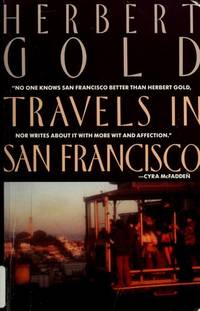
1990UGOLTRA00SDArcade Pub. c1990. Good. Gold Herbert. Travels In San Francisco. New York: Arcade Pub. c1990. 196pp. 8vo. Hardcover with silver stamping on the spine. Book condition: Good. Slight shelf wear and some soiling. Dust Jacket Condition: Good with heavy rubbing to back and front of dj. Arcade Pub. hardcover books
1990017781New York: Arcade Publishing Little Brown and Company 1990. 1st Edition. viii 196p. b/w illus. dj. Arcade Publishing, Little Brown and Company unknown books
1778JC14437Liege: F. J. Desoer 1778. First Edition. Hardcover. Very Good. 12mo. 303pp. Contemporary French mottled calf. Traité d'éducation morale qui a remporté le prix de la Société des sciences de Harlem sur cette question : Comment on doit gouverner le coeur & l'esprit d'un enfant pour le rendre heureux & utile. Par M. Formey. auquel on a ajouté quelques pensées relatives à ce sujet. <br/><br/>Formey was professor of philosophy at Berlin who authored several books on the writings of Rousseau. This work on education is quite scarce. F. J. Desoer hardcover books
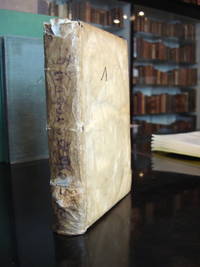
15548113Paris: Jacobum Kerver 1554. Second printing. Vellum. Very Good. 8vo. 64416pp. Woodcut portrait of the author on title. Orig. limp vellum somewhat soiled and spine a bit chipped at top. Some text soiling. Front free endpaper lacking. French legal scholar's 1488-1558 treatise on the aspect of Roman law pertaining to inheritance and succession. It was first printed in 1550. Jacobum Kerver hardcover books
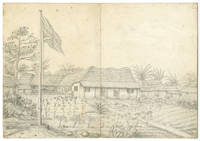
1836WRCAM52991N.p. but near present-day Prampram Ghana 1836. Three pencil sketches on wove paper each approximately 7 x 10 inches. Central vertical crease to each drawing the first two titled in a contemporary hand in pencil to verso the third similarly titled below the image. Very good. An attractive set of skillfully-executed original pencil sketches featuring British colonial structures in Prampram Gold Coast present-day Ghana likely between 1819 and 1836. The sketches are titled in pencil as follows: "Commandant's Residence Pam Pram Gold Coast" "Lower Town Pam Pram from the Upper Town" and "Abandoned Fort at Appolonia from the Beach." <br> <br> The Union Jack flies proudly in the foreground of the sketch of the Commandant's residence. Officially Great Britain colonized the Gold Coast region from 1867 until the independence of Ghana in 1957 though the British had maintained and controlled forts along the West African coastline since long before 1867. Fort Appolonia in the extreme southwestern corner of the country had been a British trading and military outpost from 1691 until 1819 and then again from 1836 onwards when it changed hands from the British to the Dutch then back to the British again. As such if the artist here labeled Fort Appolonia as "Abandoned" he or she must have sketched the fort during the period it was shuttered between 1819 and 1836. <br> <br> A fascinating trio of original sketches offering unique views from a rarely- visualized period in British colonial affairs in West Africa. unknown books
192821819NY: Schimer 1928. First Edition. Glory Road only. Dedicated to Paul Robeson. 4to self wraps pp. 16. Illustrated cover by Bobri. Moderate wear to the covers and partially disbound good. Wolfe was a Roumanian who found a reminder in American Blacks of the roving gypsies of his native country. He wrote a number of songs on Black subjects. Schimer unknown books
7024Japan: 1816 or after. A fine complete and uncommonly well-illustrated set of scrolls concerning the famous gold silver and copper mine on Sado Island illustrating all the steps from mining to refining to minting along with the administrative and commercial activities associated with the mines. We have had several sets of "Sado Island Scrolls" and this is by far the finest in terms of the quality of the illustration completeness and richness of detail. The skilled artist of these scrolls has provided an enormous amount of valuable factual content by labeling each depicted person's role in the production of gold silver and copper. For a really excellent account of the history of mining on Sado Island and the scrolls produced there see Hamish Todd "The British Library's Sado Mining Scrolls" in The British Library Journal Vol. 24 No. 1 Spring 1998 pp. 130-43. Our description is largely based on this wonderful and beautifully researched article. Gold silver and copper mining on Sado Island just off the coast of Niigata Prefecture had its beginnings in ancient times. With the discovery in 1601 of the rich Aikawa gold and silver mine Sado experienced an economic boom. The Edo shogunate assembled miners and slave laborers mostly the homeless from throughout Japan and sent them to Sado to exploit the Aikawa mine and three other principal mines. It soon became the largest gold and silver mine in Japan attracting a population of 200000 and to a very large degree financed the Edo shogunate for several hundred years. A series of unique mining smelting and minting technologies developed at Sado were disseminated to other mines within Japan. Today the Sado complex of mines is on the "Tentative List" of Unesco World Heritage Sites. The Aikawa mine was one of the few mines at the time to be based on kodobori mine-digging. A series of pre-modern mine management systems and mining-related technologies ranging from mining to smelting were developed at Sado including methods for extracting gold from silver such as the Chinese haifuki cupellation method brought in from the Iwami Ginzan Silver Mine Shimane Prefecture; the yakikin method; as well as manufacturing-based operational formats such as the yoseseriba. It is particularly important to remember that the entire series of processes from mining and smelting to ultimately the production of gold coinage were carried out at this single mine and its environs. The finely drawn scrolls depict every process of extraction refining and minting. Each scroll has a title on a label on the outside: "Sado kozan saikutsu jikkei" "Actual View of Sado Mining". As we unroll the scroll we find another title "Sashu kingin saisei zenzu" "Sado Gold & Silver Extracted & Processed Illustrated" and a grand index of the pictorial contents of the three scrolls. The first scroll begins with a map showing the Aikawa mountain and the numerous entrances to the mining complex with names and locations of refining buildings. This is followed by wonderful paintings of the main entrance to the mine and the surrounding buildings; miners entering and working in the shafts; the ladders made from logs into which steps have been cut; lamps made of iron dishes to hold oil and attached to long iron handles; buckets and pulleys to remove water; baskets to carry ore; government officials the mine operator and surveyors discussing the best location for a new tunnel; carpenters constructing support beams; etc. Each person has a label so we know his exact title and function. The remainder of the scroll takes place outside of the mine: blacksmiths making tools; women removing waste material from the ore and placing the ore in sieves to be washed under the watchful eye of government supervisors; the administrative center for the mine where the ore is graded for sale to the smelters with a bookkeeper recording all the transactions; a back office where managers senior administrators of the mine and accountants are meeting; a room where the ore is examined once again; the ore sewn into sacks and carried out to be loaded onto oxen to be transported to the smelting works; a storage area with big locks; another government office where mine workers turned in their ID cards at the beginning of their shifts; the building known as Kanaba where the ore was pulverized to win the precious metals; a horsetail sieve to separate the ore into various constituents; grinding of the ore using ishiusu grindstones; the process of nekonagashi which used cotton cloth in wooden troughs to extract the very smallest particles using the gravimetric principle etc. The second scroll depicts the smelters called fukidaiku with men operating the bellows all watched by a guard. The gold/silver/lead alloy was then taken to an area called the Haifukidoko where the alloy was subjected to roasting in a cupel. The following scene shows the government office where the gold sujimengane and silver yamabukigin samples are examined. Now we shift to the scenes showing the processing of copper. We see the pulverizing and winning of the copper using methods similar to those for gold and silver with the addition of extensive smelting scenes employing large smelting furnaces nibukidoko mabukidoko and nanbandoko. There are a number of processing scenes including daifukisho which are not present in the BL set of scrolls. From the copper works we move to the coast of Sado where we see the extraction of alluvial gold and silver from the sand of the beaches by means of a technique called sluicing or nekonagashi. An Archimedes screw is used to draw water up to form a flow that could be used for sluicing. The material is then taken to a building called the Hamanagashi no seriba for further processing. The third scroll is devoted to minting in the Kobandokoro where small coins called koban were produced. Using the cementation process called shioyaki the partly refined gold is further refined. Above is a criss-cross construction of wooden planks known as a senryodana designed to trap any gold dust mixed with smoke from the smelting. The workers are wearing only loin cloths to prevent theft. The powdered gold is then mixed with salt and shaped into cones. Then the cones are burned slowly for seven or eight hours. Further processing steps are shown finally resulting in balls of gold called yosegane suitable for minting. Next the silver by-product is shown being processed and refined in a series of scenes. The following series of scenes show the gold being formed into metal strips called nobegane which were then polished by salt before being sent to the office run by the Goto family the Goto Yakusho. We see Sanemon Goto 2nd d. 1845 in his office. He succeeded to running the Goto Yakusho in 1816 and this is the basis for dating these scrolls. In this office the strips were tested for purity before being cut into small sections. In fine condition. There is minor marginal worming in the beginning of the second and third scrolls. hardcover books
1960300531New York The Dial Press 1960. 1960. First edition. 8vo. Dust jacket designed by Paul Bacon price clipped. Very good. 256 pages. No signatures or bookplates. 1st Edition. Hardcover. Very Good/Very Good. New York, The Dial Press, 1960. hardcover books
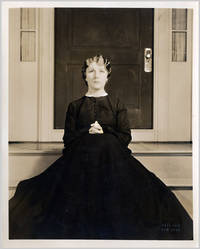
1932WRCLIT73415New York: Vandamm Studio 1932. Original 10 x 8" double weight sepia toned portrait photograph. Vandamm studio stamp and identifying text on verso small Vandamm blindstamp in lower right corner. Fine. A superb meditative character portrait of Judith Anderson in the role of Lavinia Mannon in the Theatre Guild revival of O'Neill's play staged by Philip Moeller which ran for 16 performances in May 1932 at the Alvin Theatre. The Vandamm Studio were the Broadway photographers of record for nearly four decades. While it is not possible to absolutely credit this photo to Florence she specialized in the character portraits while Tommy covered the photographs of staged productions. Vandamm Studio unknown books