Mojzes, IngeAntiquariat.de

19 126 résultats
195618448ABVienna, 1956-1958. 47 : 32 cm. 64 dibujos en lapiz en papel especial.
195614629ABVienna, 1956-1958. 47 : 32 cm. 64 pencil drawings of special paper.
1940D12397America c. 1940s. Group of approximately 30 costume and fashion designs for women; on a variety of papers or board ranging in size from about 8x10 to 15x21 inches; using chalk crayon watercolor ink and even a bit of collage. Includes dresses hats and gowns -- many possibly for Advance Patterns Fashions and Fabrics. Some dated all signed by the artist. Some a little worn along the edges but condition is VG or better overall suitable for display. <br/><br/>Much of Teed's original artwork is now in the collection of the Museum of Fine Arts in Boston. This diverse group shows glamorous fashion in a variety of illustrative styles from spare line drawings on black paper to gowns trimmed in paper doily to finished and highly detailed watercolors. unknown
193963709Aussig Usti Nad Labem Czechoslovakia & Vienna: C. Wolfrum ca. 1939. Folio. 50 leaves. 1 leaf with type-written explanation of all the fashions illustrated in the catalogue. 44 hand-coloured pochoir fashion designs on translucent paper each with item number printed below 5 leaves with printed designs showing the backs of all the fashions some pencil shading and details added. Original textured beige softcovers embossed WMI Wolfrum Manufacturing on front cover metal spiral bound as issued some dustsoiling & wear to fore-edges of covers very slight bumping to couple corners still a VG copy w/ beautifully illustrated fashion designs. First edition of this exceedingly scarce original trade catalogue issued by the C. Wolfrum textile firm in Czechoslovakia for its Vienna Austria market around the time of the forced annexation of the Sudetenland by Nazi Germany in 1939. The firm was famed for its woolen & silk textiles for women’s fashions and their catalogues were very desired. This catalogue includes fashions for silk rayon & wool women’s dress suits leisure suits formal evening dresses & winter coats all evoking the fashion trends of the period. The designs in the catalogue reflect the rising influence of militaristic styles and fascism with square-edged shoulder pads the plate hats as well as the emphasis on tight waists and long skirts. There are a couple designs with distinctive chocolate brown for leisure wear reflecting the heavy Nazi-influenced fashion design of the period. In addition the slim lines were enhanced by cutting clothes across the fabric avoiding bunches of gathers at the waist for full skirts allowing material to flow. In addition the evening wear dresses emphasized low or no backs and hair was to be grown long and worn swept up. This catalogue also includes a few evening formal dress designs clearly inspired by the dresses worn by Vivien Leigh in the 1939 Gone With the Wind Movie with the puffed sleeves polk-a-dot patterns and fabrics. No copies in Worldcat. C. Wolfrum, paperback
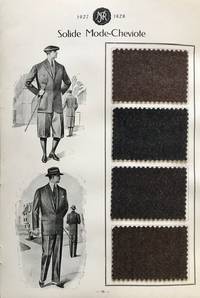
192757311Graz Austria: Richard Neurath Kaiserfeldgasse 19 und 21 1927. Two vols. 1st - Folio. 11 x 13.75 in. 45 1 pp. on thick boards. With 246 tipped-in fabric samples of wools wool blends 27 fashion plate illustrations 2 for women’s coats w/ price list and letter to salesmen dated August 1927. Original quarter-black cloth over embossed & decorated boards flaps at fore-edges w/ handle and clasp raised gilt lettering on front cover minor shelfwear rubbing clasp guard repaired & reinforced still VG complete exemplar retaining the original button clasp; together with 4to. 8.25 x 11.25 in. 4 pp unpaginated. w/ 16 additional wool and wool-blend samples tipped-in self-printed covers rounded corners. First edition of this unusually rare fashion salesman sample catalogue for men’s suits and sporting wear during the Roaring 20’s with many of the suits sporting vests while also featured are shooting & hiking suits sportswear and a rich array of fabrics drawing upon English fashion designs. Following World War I there was a concerted move away from starched collars and formal three-piece suits towards soft collars one- or two-button suit jackets and even often worn without a waistcoat. Also featured in this catalogue are many examples of the plus-fours developed out of ordinary knickers these short-legged pants were a baggier version of their predecessors and proved popular for hikers golfers and other outdoors activities. Also featured are winter coat fabrics and designs for women in velour and thick felt twill. The laid-in additional catalogue promoted the latest Loden Merino wool fabrics and thick camel hair woolens. Neurath 1882-1948 operated a successful mail-order tailoring business until the 1938 Anschluss when the Nazi’s annexed Austria and forced the April 10 plebiscite. He survived the War and later died in Tel Aviv Israel in 1948. The building which housed his offices and tailoring facilities in Graz is now the home of the popular Cafe Kaiserfeld. No copies in Worldcat. Richard Neurath, Kaiserfeldgasse 19 und 21, hardcover
193953215New York: Singer Sewing Machine Manufacturing Co. Departamento de Educacion January 1941; 1939. Two vols. 1st - Tall 8vo. 225 1 pp. Over 150 colour and black & white photo illustrations diagrams. Black textured softcovers gilt lettering & decoration printed on front cover edgewear bumping to corners minor soiling old tape repairs to front cover still G- copy; 2nd -- Oblong 4to. 12 x 7.75 in. 54 pp. on pink-tinted paper with 57 tipped-in fabric embroidered sewing samples including over on linen silk lace satin and wool textiles each w/ school stamp approving sample. Half-blue cloth post-binder over blue goards gilt lettering stamped on front cover sewn at gutter margin w/ white silk ribbon soiling minor dampstain curving to covers from the bulk of the tipped-in samples on the leaves still a VG exemplar. Both preserved in blue textured cardboard box & lid minor edgewear faint tidemark to lower fore-edge 1 corner. Fourth revised edition of this well-illustrated embroidery guide on stitches to be learned and executed on Singer Sewing Machines together with a beautifully done sample book showing Ms. Alos’ skills in learning the necessary skills in her Singer school in Villa Canas Argentina. The Singer Sewing Machine company developed special Singer Sewing Academia in Argentina Mexico and many other South American countries as well as Spain between the World Wars. These special private schools for professional dressmakers using the Singer manuals allowed female-owned dressmaking businesses to grow and create professional spaces separte from men. In addition these academias allowed women to pay by the class and embroidery was one of the advanced skills which commanded higher wages for women at the time. Singer actively encouraged this movement in order to develop home-based businesses and academias which in turn increased their sales of sewing machines. The sample book begins with a number of decorative types of embroidery stitches monograms and then displays floral patterns spider-web patterns laces a beautifully embroidered red roses and carnations on purple silks and satins. Worldcat locates 2 copies of the Libro Singer Bibliotecas del Tecnologico de Monterrey Mexico; British Library 3rd editions; See: Ketteler Sewing through the years in art women and society; Paula de la Cruz-Fernandez Atlantic Threads: Singer in Spain and Mexico 1860-1940 pp. 198-210. Singer Sewing Machine Manufacturing Co., Departamento de Educacion, paperback
1940D12397America c. 1940s. Group of approximately 30 costume and fashion designs for women; on a variety of papers or board ranging in size from about 8x10 to 15x21 inches; using chalk crayon watercolor ink and even a bit of collage. Includes dresses hats and gowns -- many possibly for Advance Patterns Fashions and Fabrics. Some dated all signed by the artist. Some a little worn along the edges but condition is VG or better overall suitable for display. <br/><br/>Much of Teed's original artwork is now in the collection of the Museum of Fine Arts in Boston. This diverse group shows glamorous fashion in a variety of illustrative styles from spare line drawings on black paper to gowns trimmed in paper doily to finished and highly detailed watercolors. unknown books
21925From Brockwood Park Bramdean Hampshire and Ojai California. Between 1978 and 2008. A total of twenty-eight items of correspondence comprising: nineteen Autograph Letters Signed two on the backs of cards two Typed Letters Signed and seven Autograph Cards Signed. In good condition. All signed 'Mary' and the large part addressed to 'Christopher' with a few to 'Kit' and one to 'Dear Phyl i.e. Fry's wife Phyllis dear Christopher'. The correspondence indicates a deep affection and long-standing intimacy. In 1987 she transcribes entries from her diary of 1958 regarding dinners in Rome between the Frys and Zimbalists while Fry was working on the script of the film 'Ben Hur' which Sam Zimbalist produced commenting: 'it is startling to find how these pale ink lines evoke us then – almost 20 sic years ago'. Later in the letter she states: 'I wish I could have seen the tv broadcast of The Lady and hope you have a video recording of it. It is like wanting to again hear the English language rising and thundering like winter surf and pure as a Bach prelude. Since Christopher Fry this does not happen these days.' In 1997 she writes: 'So many things hovered in my head all night some of them reaching back to Italian summer days when you and Phyl and Sam and I were together. An unbroken line began then for me of feeling whenever I was with Phyl and you that all was well with the world. That has continued ever since – something wondrously enduring.' And in 2000 she tells him that hearing his news 'is a sort of centre of gravity'. Topics include: her pleasure in his messages and calls texts he has sent her 'What you have said about death and love touches so many things I feel profoundly and the eloquence is no less than the truth.' her admiration for his work 'Language is such a root of human understanding. Other writers seem to be stuttering alongside the eloquence of your plays. Your language unfolds in breadth in splendour a music of the mind. It is as if you are creating language of a different order new and yet with its original and intrinsic meaning freed.' her travels her health in 1988: 'I seem to be hobbling about with little grace but ground-covering success' the taking of vitamins a centenarian's death. In 1999 she comments on a list of 'Krishnamurti books' she is sending him concluding by noting that 'Krishnamurti's Notebook' is 'one that is not personal for a time a daily recording of consciousness. In it he notes the curious physical pain he called “the processâ€. It had begun with extreme severity in 1922 after a spiritual experience that altered his life and continued to manifest from time to time with differing intensity. He did not consider it as physical illness but as having to do with perceptive ability. He never took anything to mitigate or affect it and seldom spoke of it.' From Brockwood Park, Bramdean, Hampshire, and Ojai, California. Between 1978 and 2008. unknown
Cm. 39 x 51, pp. (50) di testo esplicativo e 12 splendide tavole fuori testo in litografia a colori. Leg. edit. in cart. ill. a colori. Ottimo stato di conservazione. Testo di spiegazione in svedese, francese, tedesco ed inglese. Le 12 tavole raffigurano momenti della vita popolare svedese.
Cm. 30, frontepsizio, pp. (4) d'introduzione e 50 tavole fuori testo, ciascuna accompagnata da una carta di testo esplicativo. Tutte le tavole sono inquadrate da una ricca cornice ornamentale e contengono immagini dei religiosi nei loro tipici abbigliamenti, in fine coloritura coeva. Legatura del tempo in mezza pelle con punte, dorso a nervi con titoli e fregi in oro. Tagli in oro e sguardie marmorizzate. Qualche fioritura limitata alle carte di testo e poche tracce d'uso, peraltro esemplare genuino e ben conservato. Opera affascinante e rara, munita da un bell'apparato iconografico.
Cm. 27,5, x 20, pp. 624. Con molte incisioni nel testo e 58 belle tavole f.t. in fine coloritura coeva + 2 tavole ripiegate in nero. Solida ed elegante legatura coeva in mezza plle con punte, dorso liscio con titoli e fregi romantici in oro. Esemplare fresco ed in eccellente stato di conservazione, a carte candide. Raccolta apparsa nel 1858 di questa celebre pubblicazione di moda parigina.
Cm. 42, pp. (4) 37 (5) + 100 splendide tavole in cromolitografia, ciascuna accompagnata da una carta di descrizione. Cartella edit. in mezza tela e cartonato a stampa con lacci di chiusura. A fogli sciolti, come d'origine. Esemplare genuino, completo e ben conservato. Raccolta storica che spiega ed illustra l’evoluzione dell’arte del tessuto dall’epoca degli egiziani all’Ottocento. Importante documento iconografico che si avvale di un’ottima qualità di stampa.
Cm. 20,5, pp. xv (1) 174 + (2) d'errata. Legatura coeva in cart. alla rustica con dorso ricoperto in carta dipinta. Esemplare genuino e marginoso, in ottimo stato di conservazione. Edizione originale ed unica di una delle pochissime opere dedicate alla barba.
This is a very good 5 volume hardcover set (complete) three volumes with dustwrappers, two without. All volumes very clean inside, no marks. The off white dustwrappers are tanned and have a few stains to the spine of the last volume only and several closed edge tears. Two volumes have faint tan stains to top page-edge not visible internally. All text in Russian. The set is edited by V. F. Ryndin. All drawings by V.I. Kozlinskii. Additional editing and text by Elena Kurbatova and Elizaveta Berman. This set covers Russian costume design for staged productions from 1750 to 1917. In other words from the beginning of Russian drama to the Russian Revolution. All volumes are illustrated with drawings similar to fashion drawings in French and German periodicals from the late 19th century. All volumes have some color drawings as well as black & white. All volumes also have some technical details to guide the costume designers making period costumes: some of the illustrations are like pattern designs for tailors. A spectacular resource. 12" high X 9" wide, 170 & 182 & 182 & 182 & 222 pages. The volumes were all published between 1960 and 1972. Volume 1: 1750-1830, volume 2: 1830-1850, volume 3: 1850-1870, volume 4: 1870-1890, volume 5: 1890-1917. Foreign buyers should expect extra postage. These books will be securely wrapped and packed in a sturdy box and sent with tracking.
190015592ABca. 1900. 9 : 15 cm. Colour Aquatint Framed under glas.
In -folio, 40 pp., legatura in carta marmorizzata. Manca a Kress.
18810054931881 Paris, Conquet, 1881-1883. Deux ouvrages reliés en un volume grand in-8 (293 X 202 mm) demi-maroquin havane à coins, dos à nerfs entièrement orné de fers dorés et listels de maroquin noir, titre doré, tête dorée (Allô). Premier ouvrage : portrait-frontispice, (4) ff., XXIV-104 pages, 24 planches (1) f. de table, (1) f. blanc - Second ouvrage : portrait-frontispice, (3) ff. dont un blanc, XXIX-24 pages, 12 planches, (1) f. de table, (1) f. blanc. Quelques petites taches sombres à la reliure, rousseurs claires au corps d'ouvrage.
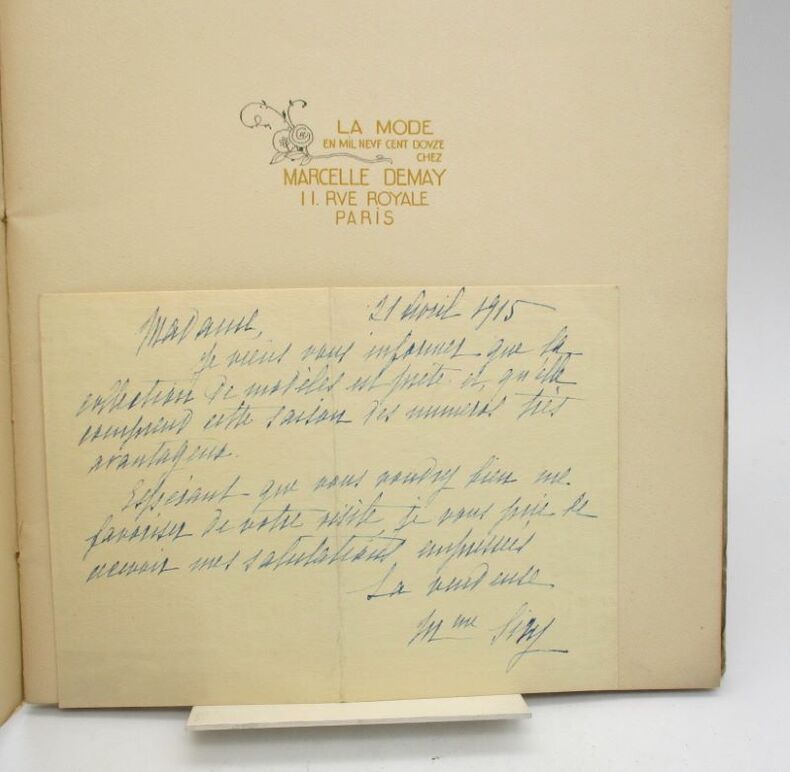
16265Paris, Draeger frères, 1912. In-12, non paginé, broché, couverture originale illustrée et dorée (rousseurs et taches à la couverture)
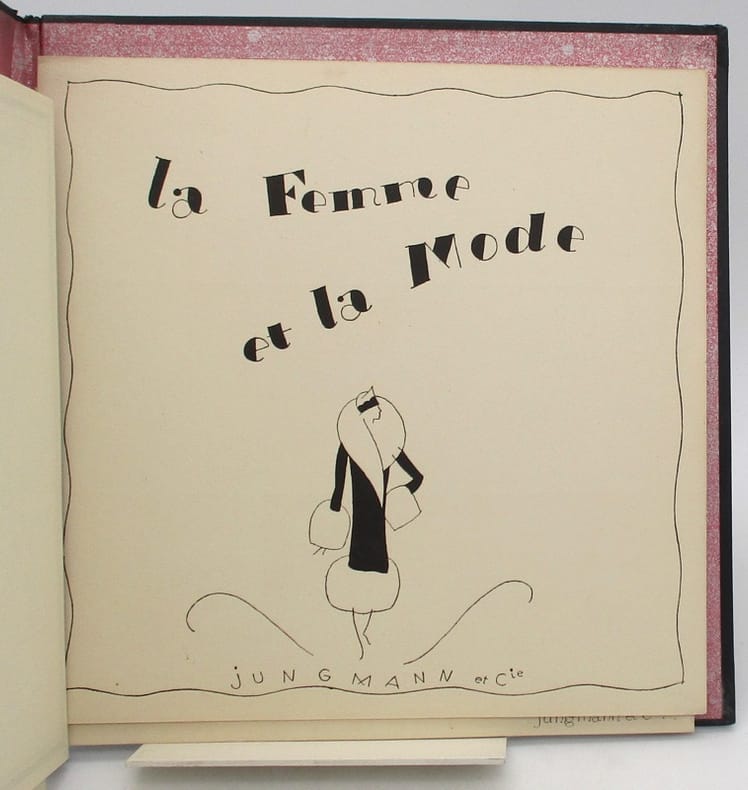
15673Paris, Tolmer pour Jungmann, [1926]. Petit in-4, 17 + 6 pl. en noir, chemise noire en carton fort, illustrée d'une composition dorée et gaufrée dans le goût des miniatures mogholes.
182984961Hrsg. v. J. A. Bergk. Jg. 32 (1830). 104 Hefte und 52 Beihefte in 1 Bd. Leipzig, Industrie-Comptoir, 1829. 4to. Mit 104 (67 kolorierten, 55 gefalteten) Tafeln, meist in Kupferstich. Ca. 520 S. Hellbrauner Hldr. d. Zt. mit etwas Rückenvergoldung und rotem Rückenschild; leicht fleckig. [11 Warenabbildungen]
182983395Hrsg. v. J. A. Bergk. Jg. 31 (1829). 104 Hefte und 52 Beihefte in 1 Bd. Leipzig, Industrie-Comptoir, 1829. 4to. Mit 104 (64 kolorierten) teils gefalteten Tafeln, meist in Kupferstich. Ca. 520 S. Hellbrauner Hldr. d. Zt. mit etwas Rückenvergoldung und rotem Rückenschild; leicht fleckig. [12 Warenabbildungen]
1930225341930 1 in-folio Gouache sur carton signée à droite, (1930), 38 x 28.5 cm.
Milano, anno 1913. In 8vo grande (cm. 24,5); tela originale con titolo in oro al dorso. raccolta di 24fascicoli di 382 pp. + inserti pubblicitari. Con applicati più di 100 campioni di stoffe colorate.
1920nc1425Corrard Pierre Modes et manières d'aujourd'hui, Sélection Abraxas-libris Inconnu 1920 "UNE PROVENANCE EXCEPTIONNELLE. UN EXEMPLAIRE SANS ÉQUIVALENT. AN EXCEPTIONAL ORIGIN. AN UNPRECEDENTED COPY. très exemplaire de cette chemise de la collection ""Modes et manières d'aujourd'hui"", la publication du meilleur de la mode du début du XXe siècle, par les artistes l'ayant faite, au plus haut de leur art. Le projet est porté par Pierre Corrard, écrivain et éditeur de grand talent. Afin d'accompagner la révolution artistique et vestimentaire des années folles, il publie, en 1912, une première chemise, avec des illustrations de Georges Lepape. Devant l'accueil fait à cette première publication, il décide, chaque année, de proposer une chemise identique, avec des auteurs et des artistes différents. En 1920, c'est Robert Bonfils et Gérard d'Houville qui vont fournir à Pierre Corrard les éléments pour réaliser la chemise annuelle. Cette chemise se présente comme toutes les autres de la série : sous un cartonnage fort, dont le premier plat est frappé des seuls titres et années, avec, en son centre, une illustration couleurs, les planches prennent place dans un ensemble de quatre rabats fait du même papier que celui illustrant la contre garde, et dont le motif a été dessiné par l'artiste réalisant les planches intérieures. L'ouvrage, en feuilles, débute par une page de titre reprenant l'illustration de couverture. Puis viennent les pages proposant le texte, et, après le colophon, les planches illustrées. Un soin tout particulier est apporté à la réalisation de ces planches, de la gravure au passage des pochoirs. La provenance de notre exemplaire est exceptionnelle : il provient directement de la famille Corrard. Stocké dans leur résidence, notre exemplaire est dans un état presque parfait, tel que sorti de chez l'imprimeur. Il est même encore sous son papier cristal d'origine. Il est bien complet des rubans et des rabats de chemise (qui, hélas, très fragiles, manquent ou sont très abîmés sur les exemplaires courants). Les nôtres sont intacts, parfaits et magnifiques même si le ruban n'est plus attaché au 4° plat. Bien qu'il date de plus de 100 ans, il est quasi comme neuf, si ce n'est le travail du temps sur le papier (petites piqûres sur les plats). Notre exemplaire est un des 271 exemplaires numérotés sur Papier vélin d'Arches (sur un tirage total à 300 exemplaires). Livraison a domicile (La Poste) ou en Mondial Relay sur simple demande."