834 résultats
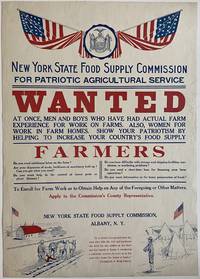
295376Albany: New York State Food Supply Commission. Treidler Adolf. Original poster. Color lithograph. 23.75" x 16.75"<br/><br/> This World War I poster published by the New York State Food Supply Commission was part of a homefront mobilization effort specifically for "patriotic agricultural service". The poster calls for men and boys to enroll for farm work and women to work in farm homes. It also offers help to farmers with problems related to lack of labor shipments storage marketing preservation pest and disease control and financing.<br>The top of poster is adorned by New York State seal flanked by American flags. The bottom features illustrations of farm and battle scenes with a quote by Charles S. Whitman that reads "It is clearly recognized that the man who tills the soil and produces the food for the soldier in the field and his family at home is rendering a patriotic service as truly as is the man who bears the brunt of battle." The poster is in good condition. Mounted on linen.<br/><br/> New York State Food Supply Commission unknown books
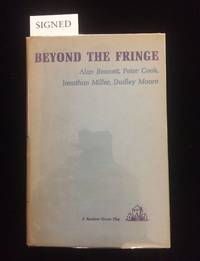
1963011166NY: Random House 1963. 1st Edition. Hardcover. Near Fine/Very Good. First US edition of the 1961 watershed British satirical revue that launched the careers of its authors and foreran the likes of Monty Python and a new generation of political and cultural satirists. Near fine copy in dustjacket with closed tears spine foot and lightly toned at edges more to spine. INSCRIBED BY BOTH COOK AND MOORE: "To Jane. Merry Christmas. Happy Birthday Best Wishes Peter Cook Dudley Moore" Jane is Jane Emerson who with her husband Bob managed Manhattan's Drama Book Shop patronized by Broadway professionals and aficionados alike. Random House hardcover books
193844544New York : W. W. Norton & Co 1938 . FIRST EDITION # 106 of an edition limited to 112 copies signed by the author. Hardcover. Very good/Good. New York : W. W. Norton & Co 1938 . FIRST EDITION # 106 of an edition limited to 112 copies signed by the author. Signed by the author. Copious b/w illustrations. 179 pp. Hardcover. Small 4to. Dark blue cloth. Top edge gilt. Light glue-stain on front paste-down from removal of bookplate; the acetate pocket at front which holds the signed photo seems to have been too small for the photo so the photo is wavy with a couple of light creases at the fore-edge; former ownerÕs name and inscription on half-title. Overall a very clean tight copy of this scarce title in a good only dust jacket that seems to have been ÒborrowedÓ from a Bonaza copy. Very good/Good. Insurance required to ship this item. W. W. Norton & Co hardcover books
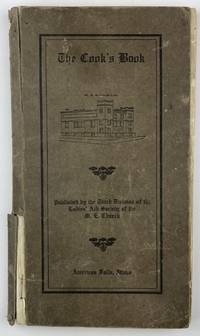
19151888American Falls Id 1915. Good. 891pp. plus three blank leaves for manuscript notes. Narrow octavo. Original brown printed wrappers. Covers worn and chipped lightly soiled separated from text block. Outer leaves a bit chipped some light scattered soiling. Final three leaves with manuscript recipes. Unrecorded community cook book for the Ladies' Aid Society of the Methodist Episcopal Church in American Falls Idaho. The preface contains a list of contributors though individual recipes are not identified with a specific woman. In addition to the usual range of meat cheese soups vegetable bread and dessert recipes this work includes sections on "Canning and Drying Vegetables" and "Meat Canning Recipes." These speak to the slightly frontier nature of living in southeastern Idaho at the start of the twentieth century. At the time American Falls was a town of about 1000 people. Local ads are interspersed throughout. Not in OCLC. unknown books
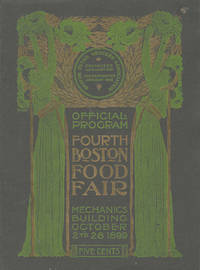
18997503Boston: F.M. Porter Co 1899. Quarto stapled in wrappers 24 x 17.5 cm. 80 pages; 1 plate. Illustrated black & white and chromolithograph plate. Advertising. FIRST EDITION. The "Official catalog musical program list of exhibitors" for this fourth congress of members of the Boston Retail Grocers Association. The association was founded in 1881 and held its first food fair that year. Photographic portraits of the senior members of the Association are included as is a description of Miss Nellie Dot Ranche of Chicago who was brought in for the occasion to run the Domestic Science Programs. It's interesting that the committee reached out to the Midwest at this moment when Cooking Schools in Boston were on the rise and very visible. The copious advertising displays a range of categories of goods one would find in a grocery of the turn of the 19th century: coffee cocoa mustard Havana cigars root beer Ceylon tea French Coca Wine virgin olive oil nut meats and salt as well as household goods including: thread collars washing liquids bluing ink. Also represented are goods and services aimed at the grocers and retailers: boxes and bags promotional printing specialized contracting refrigeration etc. Tiny bit of spotting to green and gold-printed gray wrappers otherwise fine. OCLC locates just one copy Winterthur. F.M. Porter Co unknown books
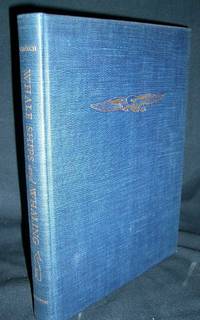
19386689New York. W.W. Norton and Co. 1938. Bound in pictorial gilt decorated blue cloth. Decorated endpapers reproducing pages from the log book of the Whaler Royal William dated 1834. t.e.g. 4to. This edition limited to 112 numbered copies of which this is number 69 signed by Albert Cook Church. Illustrated throughout with vintage monochrome photographs depicting all aspects of the 19th century whaling industry. Also included is a sepia-tone 8x10 photograph of the ship "Charles H. Morgan" encased as a frontis in glassine and signed by church. This signed Limited Edition extremely scarce. A Very Fine copy. W.W. Norton and Co. hardcover books
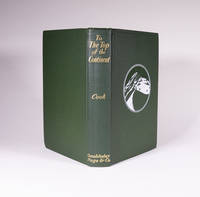
1908NTTX.919<p>New York: Doubleday Page & Company 1908. First Edition. 8vo – 23.5cm. xxi 321 pp. Appendices ABC & D. 46 black-and-white illustrations including black-and-white photographs drawings and 6 maps – full-page and in text full-page color frontis of Mount McKinley with tissue guard. No prior ownership markings hinges un-cracked no foxing. Publisher's dark green cloth covered boards with cover scene of Mt. McKinley; gilt titles on spine. A Near Fine and complete copy. Neate 184; Arctic Bibliography 3390.</p><p>The famous account of Cook's alleged fraudulent claim of his ascent of Mount McKinley. With detailed description of the approaches and the routes up Mt. McKinley in a narrative of two expeditions 1903 and 1906.<br /></p> Doubleday, Page & Company hardcover books
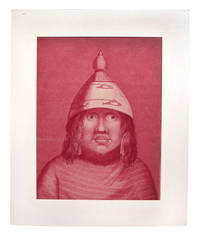
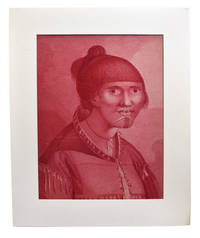
321098Germany Early 19th century. Red pen-and-ink drawing by Buchler after the engraving A Woman of Nootka Sound from Cook's third voyage on paper board. Titled and signed below the image. 21 x 16 inches. Chipped in left margin with some loss tear into the image. Red pen-and-ink drawing by Buchler after the engraving A Woman of Nootka Sound from Cook's third voyage on paper board. Titled and signed below the image. 21 x 16 inches. unknown books
321097Germany Early 19th century. Red pen-and-ink drawing by Buchler after the engraving A Woman of Oonalaska from Cook's third voyage on paper board. Titled and signed below the image. 21 1/2 x 16 inches. Chipped in lower margin with some loss to the title tear into the image. Red pen-and-ink drawing by Buchler after the engraving A Woman of Oonalaska from Cook's third voyage on paper board. Titled and signed below the image. 21 1/2 x 16 inches. unknown books
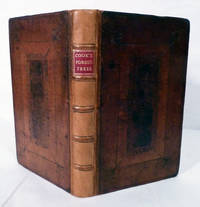
172419972London: Eliz. Bell John Darby Arthur Bettesworth et al. 1724. Third Edition Corrected. leather-bound. Contemporary cambridge style full morocco with rectangular cover panels decorated in blind modern reback with raised bands and red leather spine label printed in gilt. Near fine. 273 3 pages. 19.5 x 12 cm. Copper engraved frontispiece four copper engraved folding plates at rear -- illustrations for avenues walks and lawns. First published 1676. the author was gardener to the Earl of Essex. Also included are "Rules and Tables shewing how the Ingenious Planter may measure superficial Figures divide Woods or Land and measure Timber and other solid Bodies either by Arithmetick or Geometry: With the Uses of that excellent Line the "Line of Numbers" by several new Examples and many other rules useful for most Men." Modest scattered toning armorial bookplate. Eliz. Bell, John Darby, Arthur Bettesworth, et al. unknown books
191385497London: Thos. Cook & Son 1913. 2nd ed. Hardcover. Good. maps 3 folding 122p. Thin flexible yellow cloth covers. 18cm. Inked letters erased from front cover although still faintly visible. Covers moderately soiled. No Jacket. The first edition of this uncommon guide book was published under a slightly different title in 1910. <br/><br/> Thos. Cook & Son hardcover books
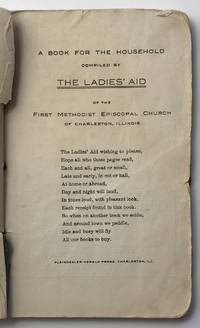
19051240Charleston: Plain Dealer Press 1905. About good. 851pp. Original printed wrapper string-tied. Spine perished wrappers heavily worn and chipped soiling. Contemporary ownership inscription on front flyleaf. Wear and soiling to text p.33 torn away but present p.35 torn. An early and apparently unrecorded regional cook book from a small town in central Illinois. This work was likely published as a charity effort by the ladies of the First Methodist Episcopal Church in Charleston. In addition to the numerous recipes for soups meats desserts drinks sauces and cheeses the book is full of advertisements for local businesses in the area. Many of the recipes are attributed to individuals. We find no record of this work in OCLC or in the trade. A rare survival likely published in a small run for local distribution. Plain Dealer Press unknown books
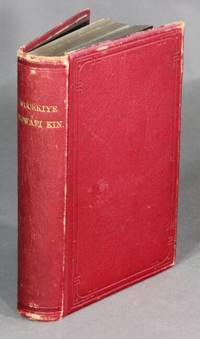
187842947New York: published by the New York Bible and Common Prayer Book Society for the Indian Commission of the Protestant Episcopal Church 1878. 8vo pp. xxii 664; publisher's full red morocco lettered in gilt on spine a.e.g.; worn at edges else very good and sound. Written in the Santee dialect. Pilling notes that the literal translation of the title is as follows: "Fellowship a-crying-to-him something-written the and covenants how they-give-to-them the; and fellowship unmysterious in the deed and custom the America country in United States in Protestant Episcopal Church they-use-it the according-to: and also Psalter or David his-songs the." Also that Hinman and Cook were aided in the translation by the Rev. D. W. Hemans and Mr. Luke C. Walker. Pilling Siouan p. 37; Pilling Proof-sheets p. 352. <br/><br/> published by the New York Bible and Common Prayer Book Society for the Indian Commission of the Protestant Episcopal Church unknown books
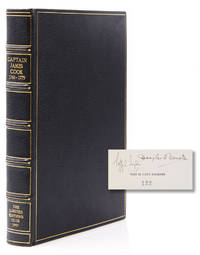
1957315526New York: Limited Editions Club 1957. Number 122 of 1500 copies signed by the artist and printer Douglas A. Dunstan. Printed at the Griffin Press Adelaide Australia. With a frontispiece in color after the plaque by Flaxman and Illustrations by Australian artist Geoffrey C. Ingelton. 4to. Bound in full blue morocco a.e.g. with maps endpapers bound in at back by Zaehnsdorf for Aspreys. Fine. Number 122 of 1500 copies signed by the artist and printer Douglas A. Dunstan. Printed at the Griffin Press Adelaide Australia. With a frontispiece in color after the plaque by Flaxman and Illustrations by Australian artist Geoffrey C. Ingelton. 4to. Limited Editions Club unknown books
1988314557New Haven & London: Paul Mellon Center for Studies in British Art by Yale University Press 1988. First American Edition. Illustrated. xv 247; xiii 274; xxi 233; 235-669 pp. 4 vols. Folio. Brown cloth. Fine in fine dustjackets. First American Edition. Illustrated. xv 247; xiii 274; xxi 233; 235-669 pp. 4 vols. Folio. "Captain James Cook's three voyages of exploration to the Pacific between 1768 and 1780 were the first of the great European voyages of discovery to carry professional artists. The Art of Captain Cook's Voyages contains all the known drawings and paintings done for these voyages as well as a fascinating narrative and explanatory text by Bernard Smith and Rudiger Joppien. Volume III describing Cook's final voyages is of particular interest for its descriptions of the Pacific Northwest of America as well as Australia New Zealand and the Pacific Islands. Paul Mellon Center for Studies in British Art by Yale University Press unknown books
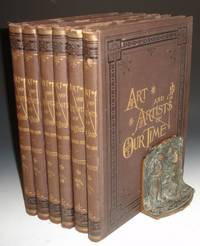
025280New York; 1888: Selmar Hess. Small Folio. In six volumes. Originally produced in parts then produced in a small 3 volume edition. Clarence Cook was not only the first but also the foremost art critic of the last part of the 19th Century. While Europeans were disdainful of American art he was able to show how Whistler and Gardiner were the equals of the best of Europe's artists. He founded a Pre-Raphaelite organization and led in the "Truth in Art" movement. Besides 188 full page engravings there are hundreds of smaller ones which provide the reader with the best contemporary account of the contemporary art movement in the late 19th Century and providing for the first time examples of why America's finest artists were the equal to any others on the world stage. Rarely found complete in the six volume set. Bound in publisher's brown cloth decorated in black lettered gilt spines black and gilt silk like endpapers all edges gilt volume one with a bit of rubbed white paintmost likely from being against a white painted shelf wall. All volumes in beautiful condition with light spots of wear chipping to head of volume five. Very nice. Selmar Hess unknown books
30413<p>Collection of 434 letters 1241 manuscript pages 8 retained mailing envelopes dated 24 January 1915 - 20 July 1919. </p><p> The bulk of the letters in this collection 364 out of 434 were written by Harry Charles Cook to his fiancée and later wife Frances Blanche Christian. And there are 22 letters written by Blanche to her husband Harry. In early 1916 Harry wrote from <i>"10 Harrington Street N.W"</i> London England where he was enlisted in the Royal Engineers Post Section REPS during World War One. By mid-1916 his letters are addressed<i>"A.P.O. 3"</i> sometimes adding<i>"R.E.P.S."</i> In late 1916 his return address changes to <i>"A.PO.S. I"</i> and sometimes he adds <i>"Boulogne"</i> which means he has moved over into France. This remains his postal box. Several letters mention his address as being <i>"1st Cav Div. Supply Column"</i> which is the 1st Cavalry Division Supply Column." Another couple of letters have his address as being <i>"14 General Hospital Victoria Hotel Boulogne"</i> where he was laid up for a bit. Some of the undated letters has his address as being <i>"5 Frederick Street Kings Cross W.C."</i>which is in London perhaps another residence while with the REPS in London.</p><p>This collection also includes 23 incoming letters to Blanche from various people one of whom Harry's brother Frederick W. Cook was also serving in the military. Frederick writes 7 letters to Blanche. Blanche's brother Edward "Frank" Christian who is also serving in the military wrote Blanche 9 letters. Harry's parents also wrote to Harry. His father Charles Cook wrote 14 letters to his son and his mother Elizabeth sent 9 letters to him. Harry's brother Frederick wrote 2 letters to his Harry.</p><p> The years the letters were written and their quantity are as follows: 1915 23 letters; 1916 63 letters 1917 72 letters; 1918 88 letters 1919 37 letters plus an additional 151 letters that are not dated but do fit into the 1915-1919 time period and could be further put into chronological order upon further examination of the contents of said letters or return addresses. About five of the letters appear to be incomplete.</p><p><b> Harry Charles Cook 1892-</b></p><p> Harry Charles Cook was born in 1892 in Birmingham England the son of Charles G. Cook 1865- and his wife Elizabeth 1864- . Both of his parents were born in Birmingham and had married by about the year 1890. </p><p> During the course of the correspondence offered here 1915-1919 Harry's parents lived at 55 Alton Road in the Selly Oak area of Birmingham. The 1901 English Census found the Cook family living at 34 Cregoe Street in the Ladywood area of Birmingham about three miles from the Alton Street address and by the Census of 1911 they were already living at the Alton Street address.</p><p> Harry had an older brother Frederick William Cook born about 1891. Frederick also served in World War One and is represented in this correspondence with two letters written to Harry and seven to his sister-in-law Blanche Christian Cook he is often mentioned in other letters written by Harry his parents or Blanche. Frederick served in the 14th Battalion Royal Warwickshire Regiment 21st Infantry fighting in France. The 14th Battalion was one of three City of Birmingham battalions that were all deployed to the Western Front in France on 21 November 1915. The 14th Service Battalion 1st Birmingham formed part of 95th Brigade 32nd Division though on 28 December 1915 it was transferred to 13th Brigade 5th Division. The battalion was moved to the Italian Front with the rest of the 5th Division in November 1917 but returned to the Western Front to take part in the defense against the major German offensives of April 1918. On 5 October 1918 it became the Pioneer Battalion of the 5th Division. Through reading correspondence in this collection Frederick is found to have been in the military hospital at Manchester and was then was stationed at #138 Labor Camp B.E.F. in France.</p><p> There were also three other children besides Harry and Frederick that were born to Harry's parents but they were all dead by 1911. In 1901 one of Harry's siblings Horace was still alive. In that year 1901 the family had the help of a live-in domestic servant. </p><p> In the 1901 English Census Harry's father is seen working as a tobacconist on his own account then in 1911 he is found working as a coal agent. Harry and his brother Frederick were children in 1901 however by 1911 Harry is found working as a postman and his brother Frederick as a clerk in an electrical store. In this same 1911 Census we find Harry's grandfather William George Cook living with the family. He was born about 1843 at Great Alne Warwickshire England and was still working as a pipe mount maker.</p><p> Harry married Frances Blanche Christian in the spring of 1916. Her first name actually appears to have been Frances but she went by her middle name of Blanche. Blanche was born 17 January 1892 at Douglas Isle of Man England. She was the daughter of Thomas Christian and Elizabeth Clucas. Blanche's father Thomas was born about 1852 at Lezayre on the Isle of Man and spoke both Manx and English. He was a builder. Blanche's mother Elizabeth was also born on the Isle of Man at Bradden about the year 1862. Blanche had several siblings one of whom a brother Edward Frank Christian was born 4 June 1898. He went by the name of "Frank" and is represented in this correspondence with nine letters written to his sister Blanche while he was serving in the military in WWI. Frank was attached to the Mediterranean Expeditionary Force serving in Egypt and elsewhere.</p><p><b> Royal Engineers Postal Section REPS</b></p><p> When the correspondence begins Harry is in military service with the Royal Engineers Postal Section or "REPS" as it was universally known. In peacetime REPS was a part-time reserve unit made up of England's Government Post Office GPO men who had had a smattering of military training. This unit of postal workers was immediately subsumed into the Army when WW1 broke out but the Army was only in nominal command. This operation was controlled by the GPO. Even questions in Parliament about forces mail were answered by the Postmaster General rather than the War Minister. The 1911 Census showed that Harry was a postman thus when the war broke out he presumably was ushered into military service with the REPS.</p><p> The GPO was already a huge operation before war broke out in 1914. It employed over 250000 people and had revenue of £32m making it the biggest economic enterprise in Britain and the largest single employer of labor in the world according to the British Postal Museum & Archive. But at its peak during the war it was dealing with an extra 12 million letters and a million parcels being sent to soldiers each week. For fighting soldiers it was essential to morale and the British Army knew that. It considered delivering letters to the front as important as delivering rations and ammunition.</p><p> At the outbreak of war the unit almost immediately created a sorting office in London's Regent's Park - a gigantic wooden hut covering several acres. Called the "Home Depot" it employed 2500 staff mainly women to sort post. When this collection of correspondence begins Harry C. Cook is working in London and appears to be living at <i>"10 Harrington Street N.W."</i> other letters show him at "<i>5 Frederick Street Kings Cross W.C." </i>References in Harry's letters to Blanche include information on his work in London.</p><p> Outward mail was sorted by military unit. Each morning bosses would be informed by Whitehall of the latest movements of ships and battalions so each item of mail could be dispatched to the right place. On its outward journey to the Western Front a fleet of three ton army lorries would take the mail to Folkestone or Southampton where ships would shuttle it across to Army Postal Service APS depots in Le Havre Boulogne and Calais. Some of Harry's letters show a couple of different APS addresses for him with one in Boulogne. </p><p> Trains ran back and forth across Picardy now part of Hauts-de-France France under cover of darkness dropping some mail off along the route and unloading the rest at railheads where special REPS lorries took them to the "refilling points" for divisional supplies. Regimental post orderlies would sort the mail at the roadside and carts would be wheeled to the front line to deliver it to individual soldiers. The objective was to hand out letters from home with the evening meal. It's said that no matter how tired and hungry the soldiers were they always read the letter before eating the food.</p><p> Letters back were collected from the men from field post offices. These were equipped as comprehensively as a village sub-office according to "Masters of the Post: The Authorized History of the Royal Mail" by Duncan Campbell Smith. Men could even buy War Savings Certificates there exactly as the population did back home. The mail was date-stamped with the field postmark and sent to the base post office for its journey home.</p><p> At the beginning of the war every letter home was opened and read by a junior officer. It was then opened and read again at the Home Depot to ensure that it contained no classified information about troop movements or casualties. Eventually men could opt for an "Honour Envelope" which meant the letter would only be read in London saving the embarrassment of having their deeply personal endearments read by a censor who they knew. </p><p> Wherever armed forces were engaged REPS would follow delivering to ships of the Royal Navy anywhere in the world and to soldiers away from the fixed positions of the Western Front. Those postal workers who went to war were probably glad to be handling letters and parcels rather than rifles and bayonets but their truly magnificent work was as important to the war effort as the weapons. Indeed mail exchanged between soldiers and loved ones was a weapon. Those who wielded it made a huge contribution to the outcome of the war. </p><p><b> Examples of Letters</b></p><p><i>"10 Harrington St. N.W.</i></p><p><i>My darling Sweetheart</i></p><p><i> .You know dearest how crowded the train was when you saw it well sweetheart we had to change at Rugby and wait for the Holyhead to London. train down. When it arrived it was full up with troops going back to the trenches. We had to scramble in as best we could and it was a picture to see us. Some lying on the floor underneath the others feet others standing as best as they could. One of the fellows who had been drinking a lot wanted to -- well you know. He tried to do it through the carriage window but could not manage it. So what do you think he did Pulled off his boot done it into that and then emptied it through the window. What do you think of it dear eh A bit alright what! Well the train arrived at Euston at 4:20. I hurried to my billet and was in bed at 5 am but sweetheart I was so tired in fact I am now. Well we worked from 8 am to 5 pm. I went to the old billet to get my washing but they could only find my shirt socks and did not know where my pants were so I have to go again. It's a bit thick don't you think so.</i></p><p><i>.I have not heard anything about inoculation yet but as soon as I do I will wire for you and then we will have a glorious time here take you everywhere in the dark streets and everywhere you like.Yours ever loving & affectionate sweetheart Hal"</i></p><p><i>"10 Harrington St N.W. 28. 2. 16</i></p><p><i>My darling Girl</i></p><p><i> .Love nearly all the papers in London are publishing articles about this army and you should read what they call us. It is nothing else but jealousy but it will cause such a lot of discontent amongst the other troops don't you think so. This is one of the poems:</i></p><p><i>What did you do in the great war Daddy</i></p><p><i>Tell me where did you go</i></p><p><i>I joined the R. E.'s - it was only a wheeze-</i></p><p><i>and worked at the G.P.O.</i></p><p><i>Pry what did you get fro that Daddy</i></p><p><i>Was it only a shilling a day</i></p><p><i>But Daddy smiled and winked at his child And said that's not Solomon's way.</i></p><p><i>We fought for the gold not the glory</i></p><p><i>For never a German we saw</i></p><p><i>On behalf of our betters we sorted up letters Right through that terrible war.</i></p><p><i>Say love what do you think of it eh a bit rotten isn't it.</i></p><p><i>Your ever loving sweetheart Hal"</i></p><p><i>"10 Harrington St. 1st April '16</i></p><p><i>My darling Girl</i></p><p><i> How are you this morning I hope you are better. The weather is beautiful down here these last two days. Last night we had another scare love at about 9 pm the Zephs were reported on the way to London. They said there was about 6 of them.</i></p><p><i> So of course the usual thing happened lights out. The whole town was in semi-darkness but anyhow they never paid us the visit.</i></p><p><i>It did us one good turn love we finished at 11 pm instead of 11:30 pm so you see love "it is an ill wind etc. etc. & so on." Darling we have another rotten order and that is everyman is to be indoor by 10 pm.</i></p><p><i>Those who wish to stay out later must give a special reason and obtain a pass until the time required. Love it is nearly as bad as you used to be isn't it only we are likely to be locked up all day & night for be naughty. What do you think of it dear</i></p><p><i>.Your ever loving sweetheart Hal"</i></p><p><i>"10 Harrington St N.W. 13 May '16</i></p><p><i>My darling Girl</i></p><p><i> I trust you are still well and in the pink as I am at present. I have been wishing you was coming to see me again tomorrow. It would be jolly fine wouldn't it if you could. Hone I am so sorry I did not write you everyday last week. But you see dear I only missed once and that was through not having enough stamps. Next week they have changed our duties round about. one two of the days we are to work from 9am to 6 pm and the reminder from 2pm to midnight. A bit rough isn't dear.</i></p><p><i> .Sweetheart don't forget to let me have some money soon so as I can buy the necessary will you love as we don't want to wait until the last day like before but I will not bring my knicks until later as I might be tempted to put them on. I am also trying to get some new putties if I can. They are inspecting every man now to see if he shaves every morning and if he does not they are going to give him pack drill. Goodness only knows where he will get the pack from unless they make him waltz about with some parcel bags. What a life eh dear. Talk about Karno's army nothing in it.With sincere and lasting love your loving sweetheart Hal"</i></p><p><i>"No.133814 A.P.O. 3 Boulogne REPS</i></p><p><i>My darling Wife</i></p><p><i> Just arrived at the above after travelling about France. We left London on Thursday at 11:30 am travelled to the coast arriving there about 3 pm. We embarked at 4:30 pm and did not land until 7:30 am Friday. The sea was awfully rough and the sickness was terrible but fortunately I was not sick at all. We had to go up to a rest camp after arriving until 9 pm. It was a dud time there love nothing to eat but Bully beef and biscuits and the tea we had was rotten. At 9 pm we set off again to another town which we arrived at 7:30 am Saturday. The scenery was lovely. I wish you could have seen it dear I know no one would appreciate it more than you. After staying there until 4:30 pm we started off again for this place. We had quite a jolly time coming here especially with the French soldiers in route. But the trains well they are worse than the Isle of Man trains. They only travel at 5 mile an hour and then stop when the drive thinks he wants his dinner or something to eat. Oh it is quite amusing. All the time we have been travelling we have had nobes at all or anything other to eat only Bully beef biscuits and cheese. Well dear how are you going on are you well I do sincerely hope so Don't forget to write me often as you can.Your loving hubby Hal"</i></p><p><i>"No.133814 R.E.P.S. A.P.O.3 7th June '16</i></p><p><i>My dearest</i></p><p><i> How are you I trust you are in the best of health but don't forget to let me know how you are when you write. I have not heard from you yet but perhaps it is a bit early yet. It does seem strange to be by the sea once again.</i></p><p><i>.It does seem strange to be amongst the French people. Talk about 'parlavous & compre." Nothing in it. Of course we cannot understand them very well. We have to make signs it is like being deaf & dumb to mix with them. we are billeted in a sort of a shed where the rats are and sleeping on boards with one blanket for bedding. What a change eh dear We have to get up at 6 am parade for inspection & breakfast at 8 am but the food is very good considering.I have been told not to shave the upper lip so when you see your hubby again there will be quite a football team on his face. We all have to be in at 9 pm or else the lock up. Oh it is a life I can tell you . Well dearest how are thing going on at home.Your ever loving hubby Hal"</i></p><p><i>"A.P.O.3 July 12 1916</i></p><p><i>My dearest</i></p><p><i> Just a line trusting you are still well and happy.Really speaking this town is quite a change from any in England there is only the sea front to go to. There is some picture houses but nothing compared with those in Birm. So you see love there is not much to enjoy yourself with her.Do you know love these last few days there have been hundreds of wounded men coming down the line to be sent on to England some with their legs off others with their heads badly hurt and it is terrible to see them and do you know love it makes me think of Fred.Last Sunday night love when I was going round the quay I saw a boat bring a body of a British sailor in. His face was nocked about terribly and his feet were decaying but the clothes were in a good condition but the smell was terrible. On the sights here Everyday thousands of troops come in here for the line but they are all cheerful. Love when you have read this be careful not to repeat it to only those you can trust won't you.Your loving hubby Hal"</i></p><p><i>"Lc/Cpl. F.W. Cook #1578 14th Batt R.W. Rgt 29th Infantry base Depot Rouen B.E.F. France 31/7/16</i></p><p><i>Dear Blanche</i></p><p><i> I suppose you must think that I have entirely forgotten to write you but the fact of the matter is I couldn't find your address.I expect I should be going up the line very shortly now. It's a bit rotten Hal & I can't see one another but maybe I shall come across him somewhere or other. He is evidently having a rough & ready time of it "somewhere in France" but according to his letters seems to be enjoying the life. The weather down here is awfully hot what's it like in Birm taking things all round it is much better at the Base than I expected although I consider the parades are very heavy I have been very fortunate to have my old chums along with me from Chiseldon but they have all gone up the line now. How's things going down in general with you Blanche now that the one & only is away on the 'Continog." Let's hope we are all back home safe & soon once again eh that's the talk.Well Blanche the boys seem to be getting a move on now in the West so lets hope it will soon come to an end. I don't think there is really any more news for the present but will write again at first opportunity & don't forget to lets hear from you will you.Au-revoir Blanche Yours etc Fred"</i></p><p><i>"A.P.O.S.1 Nov 16th 1916</i></p><p><i>Dearest</i></p><p><i> Just another letter trusting you are still well and happy. I am so pleased to hear you are feeling A 1 and I sincerely trust you will always remain so. Your previous letter love saying you went over New St. Station and you seemed to be the only looker on made me think you was downhearted. Cheer up love it may not be long before we are together once again and you know I am just s anxious to be with you as you are with me. Let us both look to the bright days in store for us and to think love we are far better off than some especially the poor boys in the trenches up to their necks in mud for it is nothing else here. So cheer up darling and when I return I will do my very best to make you happy.Hal"</i></p><p><i>"Lc/Cpl F.W. Cook #1578 E Ward Red Cross Hospital "Lawnhurst" Didsbury Manchester 27 Nov '16</i></p><p><i>Dear Blanche</i></p><p><i> Just a letter to let you know of my new abode. The doctor at Leicester Rd has marked nearly all of the patients out to other hospitals & convalescent homes to make room for a big convoy that is expected there. Well along with two other chums I have landed at his place & believe me Blanche its "some" house. It's simply fine. The lady who is still resident here has given over the house for convalescent soldiers it's a fine old English style of house splendidly fitted out with billiard room conservatory & everything you could wish for looking out across lawns & gardens. We get excellent food & served in style too for a way of a change. Could you manage to come & have a look round this way at all. If you could I should be very glad.</i></p><p><i> This place comes very welcome for a change from Leicester Rd as I was getting about fed up of that Hospital. I shall still continue to have massage treatment here. My leg is getting much stronger & I can bend it more but I am afraid it will always be slightly stiff. I am still on crutches & unable to bear much weight on the leg.</i></p><p><i>Well Blanche I am fairly stuck up for a razor & have to borrow to shave so if you can manage to send a "safety" razor I should be very glad. How's things going at Warley Blanche. I should very much like to come & see you. Well there is really no more news for the present. So I shall have to conclude trusting you are in the pink.</i></p><p><i>I remain yours etc. Fred"</i></p> books
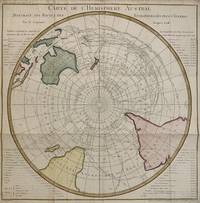
294870Paris. unbound. Bernard Direxit. Map. Engraving with modern hand coloring. Image measures 22 3/4" x 23".<br/><br/> This incredibly detailed polar projection map of the Southern Hemisphere is a French edition of Captain James Cook's famous second voyage to the region. It depicts the coastlines of Australia New Zealand and other Southeast Asian and South Pacific islands in addition to Madagascar and parts of Africa and South America. Most notably the map includes detailed depictions of voyages to the region between 1595 and 1775. Surrounding the projection are latitude and longitudes of islands many discovered in Cook's voyages. Map was beautifully engraved in 1778 by Bernard Direxit and published in the Abrege de l'Histoire Generale des Voyages. The map is in good condition. Shows wear along original fold lines. Minor foxing to top margin does not affect image. <br><BR>Captain Cook 1728 -1779 was among the most famous and important explorer navigator cartographer and captain of his time whose scientific and geographical knowledge influenced his successors well into the 20th century. He started sailing as a teenager and went on to join the Royal Navy in 1755. In 1766 he was commissioned to explore the Pacific and went on the sail thousands of miles across largely uncharted regions of the world. These three historic voyages led him to some of the first sightings of Antarctica his discovery of many Polynesian islands including the Hawaiian Islands first European contact with east Australia the circumnavigation of New Zealand and the first correct mapping of the Pacific Northwest.<br/><br/> unknown books
70593A collection of material kept by Gloria Sabath and her husband Fred concerning a McDonald's hamburger franchise location the couple owned in Carson California. The materials in this group include everything from memos about managing worker interest in labor unions to approved McDonald's décor options of the 1970s. There are also marketing reports laying out various corporate strategies of the popular hamburger chain along with workbooks and diplomas related to the Sabath's attendance at Hamburger University in Chicago. The following provides a complete list of the materials in this collection: approximately 50 sheets of McDonald's stationary with the golden arches logo on the top and "licensee of McDonald's System Inc." along the bottom edge; 1984 Ronald McDonald Olympic Coloring Calendar; McDonald's Salutes the Olympic Games 1984 Los Angeles 20 page stapled 8.5 x 11 inch brochure; a black leatherette valise with a gold stamped McDonald's logo on the front containing a welcome letter to Hamburger University for Gloria Sabath along with four McDonald's guidebooks about stat reports a handout on better training and a crew certification program; a document outlining a November 1974 "Guarantee Campaign" promoted by the McDonald's Operators of Southern California; McDonald's Training Aids Catalog for October 1974; McDonald's 1974 First Quarter Promotion program; Master's Degrees in "Hamburgerology" awarded to the Sabath's in 1984 from Hamburger University along with four other framed diplomas and eight photographs of the couple with other McDonald's officials; a variety of McDonald's swag including a French fry box shaped tote bag McDonaldland playdough dried out four plastic trays and 1974 McDonaldland stationary; a legal size folder with marketing materials for McDonalds in 1971 with multiple reports and charts about building repeat customers; a yellow three-ring binder for local store promotion & gift catalog including a price sheet franchise owners could order everything from plastic hand puppets to McDonald's monogrammed golf bags; a 1971 brochure of approved environmental décor for McDonald's showing three schemes: Colonial Contemporary and Mediterranean along with related items; a 1974 Christmas gifts folder with a variety of gifts "you will be proud to give to employees family and friends."; a small 1967 brochure listing all of the McDonald's in the United States with photographs of the products offered; a small brochure circa 1970s that provides an outline of the employee relations tools available to franchise owners including a two hour seminar to "show store management what kinds of issues cause crew people to go to a union for help."; a folding brochure for Hamburger University circa 1975; 1974 order forms for a variety of McDonald's-branded giveaways; a 28-page brochure for the McDonald's Group Insurance Plan for health including dental and life insurance for all fulltime employees updated February 1 1974; a folding brochure dated August 1998 providing nutrition facts for all McDonald's products; a green folder with two pockets providing tips for service enhancement; a red and white folder with two pockets and information about the 1976 celebration of the opening of McDonald's 4000th restaurant in Montreal Quebec; a dozen miscellaneous papers mostly from the McDonald's Los Angeles region about promotions changes in personnel a variety of marketing programs and other issues impacting franchise owners including a 1974 letter about the $2 minimum wage and compliance. unknown books
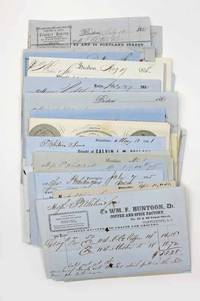
1860422391860. The preponderance printed on blue paper. Sizes range from 4-1/8" x 6-7/8" to 7-3/8" x 7-1/2" <br/><br/>"Paul Whitin helped found the Northbridge Cotton Manufacturing Company in Northbridge Massachusetts in 1809 and in 1816 joined his brothers-in-law in founding the Whitin & Fletchers mill in South Northbridge now Whitinsville of which he became sole owner in 1826. Around this time his two elder sons Paul Jr. and John joined him forming P. Whitin & Sons. Operating under that name Paul and John purchased the Northbridge Cotton Manufacturing Company mill after the death of their father in 1831 and they later added their younger brothers Charles and James to the company. The company prospered and supplemented its cotton production with the manufacture of pickers looms and other machinery. About half of the houses in Whitinsville were owned by the company and rented to its employees most of whom worked in the shop and foundry; a few employees were clerks in the company store." UM website. The P. Whitin & Sons firm was dissolved in 1864. This collection of receipts documents their purchases of foodstuffs & other sundry items from divers merchants in Providence R.I. e.g. Wm. F. Huntoon. Coffee & Spices Worcester e.g. L. Spring 2nd. Flour Meal Salt et al & Boston e.g. W. Baker & Co. Chocolate & Cocoa. A nice cache of material documenting food prices in the Northeast during the mid-19th C. unknown books
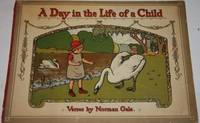
005786London etc.: Raphael Tuck & Sons Ltd. First edition. Hardcover. Paper pastedown on boards of medium strength card. Cloth spine. . Very Good. Scarce with no copies on OCLC First Search. N.d. circa 1910s. Reference to Queen Alexandra when she clearly was already a dowager queen and attire depicted consistent with the teens. Oblong 4to 24 by 33 cm. Unpaginated eighteen pages of narrative including insides of cover. Twelve of the pages are full color plates the remaining pages of the narrative are black white and red. Plus front and rear cover are in full color. The book tells not so much a story as much as the various events that might occur in the life of children from afffluent families residing in the idyllic countryside or by a immaculately groomed park -- goat-drawn cart rides playing with model ships flying a kite an afternoon tea etc. It is a world with nannies nurses pet dogs cats and gentle domestic farm animals. We believe that the book might have been issued while the First World War was underway for it offers up a reassuring escapism and there is one page entitled "The Tiny Army" showing little girls playing with a cavalry of toy wheeled stick horses but this is content that could plausibly have predated or followed the war as well. The illustrations have a winsome dream-like simplicity. One can see echoes of the Queen Anne style of book illustration epitomized by Walter Crane's output. Thus the appeal of the book would have been at least as strong for adults wistful for "a more innocent time". Condition: red cloth spine with rubbing and a few pinprick holes and closed tearing along the edge. Moderate amount of soiling to the boards. A faint inscription on the front cover. <br/><br/> Raphael Tuck & Sons, Ltd. hardcover books
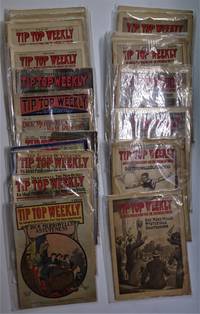
1904008446New York: Street & Smith 1904. No.s 794 796 798 827 in addition to those above. 27 separate issues of this iconic boy's weekly magazine. One issue 1904 two issues 1907 two issues 1908 four issues 1910 17 issues 1911 one issue 1912. Ranging in condition from Good to Near Fine overall the large majority Very Good or better a few with prior owner name and/or old pencil prices. . First Printings. Newsprint. Very Good. 4to - over 9¾" - 12" tall. Street & Smith Paperback books
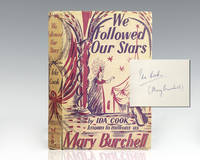
1956115069London: Mills & Boon Limited 1956. First Mills & Boon edition of the author's autobiography first published in Great Britain in 1950 by Hamish Hamilton. Octavo original cloth illustrated. Signed by the author on the front free endpaper with both her given and pen name "Ida Cook Mary Burchell." Near fine in a very good dust jacket. Jacket design by Rosemary Slattery. Books signed by Burchell are rare. Between 1936 and 1985 British novelist Ida Cook wrote 122 romance novels under the pen name Mary Burchell to fund the escape of nearly 30 Jews during World War II. She helped to found and from 1966 to 1986 was the second president of the Romantic Novelists' Association. In 1950 Cook published her autobiography We Followed Our Stars later re-edited and expanded as Safe Passage which is currently in print. Mills & Boon Limited hardcover books
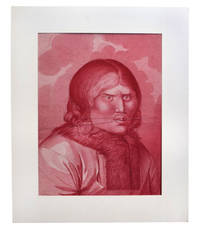
321096Germany Early 19th century. Red pen-and-ink drawing by Buchler after the engraving Man of Kamtschatka from Cook's third voyage on laid paper. Titled and signed below the image. 23 x 18 1/2 inches. Hard horizontal crease through the image edge tears. Red pen-and-ink drawing by Buchler after the engraving Man of Kamtschatka from Cook's third voyage on laid paper. Titled and signed below the image. 23 x 18 1/2 inches. unknown books
1827684181827. Dudley 1827. McCoy Freedom of the Press. Dudley 1827. McCoy Freedom of the Press. A Draper is Charged with Seditious Libel for Displaying a Strike Notice in His Shop Window Trial. Cook Samuel 1786-1861 Defendant. A Full Report of the Trial of Samuel Cook Draper Dudley For an Alleged Seditious Libel Tried at Worcester Aug. 1 1827 Before Mr. Justice Littledale. Taken in Short Hand by an Eminent Writer. Dudley Worcester: Sold by S. Cook Draper 1827. ii 72 pp. Octavo 8-1/4" x 5-1/4". Stab-stitched pamphlet bound into period-style quarter morocco over marbled boards gilt titles and ornaments to spine endpapers renewed. Light toning to text somewhat heavier in places "4" in early hand to head of title page. $850. Only edition. Cook a linen draper and political radical was found guilty of displaying in his shop window a handbill promoting a nailers' strike that accused government ministers of contributing to the starvation of the people. However his punishment was light being bound over for the sum 200 to receive sentence "when called upon." This pamphlet was published by Cook to raise money for his legal expenses. A note at the foot of p. 72 is an appeal for additional financial assistance: "S. Cook will be happy to receive and Subscriptions towards his late expenses and towards such subsequent proceedings as may be deemed requisite." OCLC locates 4 copies 2 in North America Duke Southern Illinois University. McCoy Freedom of the Press Supplement IC318. unknown books