1 329 résultats
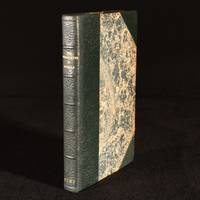
1799k013G.302GB: Printed by W. Bulmer and Co for G Nicol Etc 1799. Text approaches near Fine. In old half mid-brown leather and speckled paper covered boards.Gold on burgundy title label. Binding sound but minor wear to extremities. . 1st Edition. Hardback. VG/No DW. Printed by W. Bulmer and Co,, for G Nicol Etc Hardcover
1797BS11GTBN1610London: B. Macmillan 1797. Hardback later half-calf marbled paper covered boards and end-papers. 21.5cm x 14cm. x 314pp. With folding coloured map and 2 plates. 2nd edition 1797. With name written to title page. A wonderful copy. bs11. 2nd Edition. Hard Cover. Very Good. B. Macmillan Hardcover
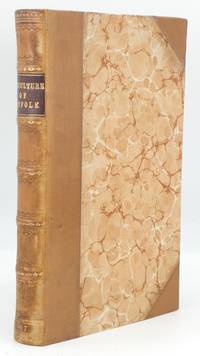
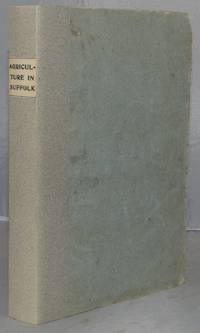
1797974Q22London: B. Macmillan 1797 . First edition. Leather. Very Good Indeed. 8.5" by 5.5". Not Stated. An uncommon first edition of Arthur Young's agricultural study relating to Suffolk complete with a hand coloured folding map and two additional folding plates. The first edition. Illustrated with a hand coloured folding map and two engraved folding plates. Collated complete. The work of Arthur Young an English agriculturalist known for his various writings on the subject as well as his travel works. Despite not being a successful farmer himself Young built up a reputation as an expert on agricultural improvement. This particular work presents a view of agricultural practices in Suffolk compiled by Young when he was secretary of the Board of Agriculture for consideration of the board to make improvements. Young was appointed to this role in 1793 spending the following years preparing surveys to try and bring change to farming practices. Rebound in half cloth with marbled paper-covered boards with the endpapers and blanks renewed and the half title discarded. Rebound in half cloth with marbled paper-covered boards with the endpapers and blanks renewed and the half title discarded. Externally lovely. Internally firmly bound. Pages are bright and generally clean with the occasional mark or spot. Very Good Indeed B. Macmillan hardcover
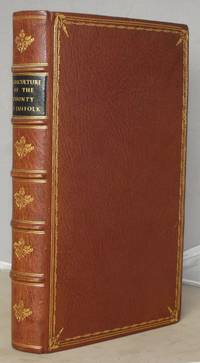
1797BS67GILTBRNLondon: B. MacMillan 1797. Hardback recent full-morocco gilt title to spine label. New end-papers. 23cm x 15cm. 15pp 314pp. Complete with folding map and 2 plates. Previous owner's details and annotations to front blank. A little occasional spotting. A splendid copy. bs67. Hard Cover. Very Good. B. MacMillan Hardcover
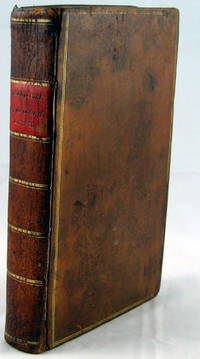
17995976London Pall Mall: G. Nicoll Bookseller To His Majesty and the Board of Agriculture. Very Good. 1799. First Edition; First Printing. Hardcover leather binding. First Edition 1799. Very good hardback bound in full brown leather; contains detailed text numerous fold-out colour maps and many copper plate illustrations of agricultural objects; Edges of spine split but binding is tight; Corners slightly bumped; Some rubbing and scuffing to covers; All pages are very good. A handsome copy. ; 8vo 8" - 9" tall; 455 pages . G. Nicoll Bookseller To His Majesty and the Board of Agriculture hardcover
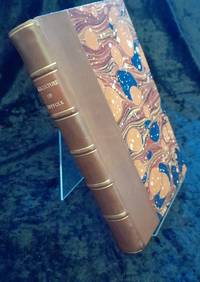
1797001372<p>London: printed by B. Macmillan for G Nicol bookseller to His Majesty the Prince of Wales and the Board of Agriculture 1797. 2nd Edition . Hardcover. Very Good. 8vo x pp11 - 314 complete with fold out hand coloured map and two fold out engraved plates. Hardcover no dust jacket. Handsomely rebound with brown calf spine with gilt titles and five raised bands over marbled boards in near fine condition. Inside old library stamps to title page last page backs of fold outs and bottom of pp87 otherwise all pages and plates in very good condition bright and clean with very minimal aging. A nice beautifully bound copy. <br /><br /></p> printed by B. Macmillan for G Nicol bookseller to His Majesty the Prince of Wales and the Board of Agriculture hardcover
1797R32BLKGRY27ALondon: B. MacMillan 1797. Original wraps new paper spine with label and custom made slipcase. 314pp. Complete with hand-coloured map and 2 folding plates. Previous owner's bookplate to inside front cover owners' written details to front free end-paper. Fore edges rough cut. A rather pleasing copy. r32. Soft Cover. Good . B. MacMillan Paperback
17061303990Venezia 1706. Hardcover. Quarto; pp 240; Fair; brown spine with gilt text; Genealogy of Jesus Christ According to the Flesh never published in English 19th century translation from Italian to English; Ownership of this manuscript conveys copyright; Book of manuscript handwritten; quarter leather with marbleized boards have moderate to severe wear to exterior spine has heavy chipping half of spine's exterior is missing but still attached to boards title label to spine intact; lower corner of front board bent chipped and missing leather; corners of boards adjacent to spine is bumped and rubbing to marbled boards; text block have light staining on the first five pages darkening to exterior edges; Additional shipping may be necessary due to size/weight restrictions for international/expedited orders. 1303990. Rockville Non-Retail Listings. hardcover books
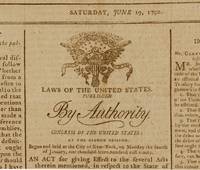
179052510New York: John Fenno no. 41 Broad-Street near the Exchange 1790. First edtion. Softcover. Fine. Two leaves folio 16.25 by 10 in. Edges slightly trimmed; a touch of mild foxing else a fine crisp copy. Housed in linen clamshell box with gilt paper label at spine and previous owner's dediction pasted to inside cover.<br /> <br /> The first known published appearance of Jewish support for the newly elected president of the United States George Washington. One week after Washinton's inauguration Levi Sheftall on behalf of the newly reorganized Savannah Hebrew Congregation wrote him an elegant and effusive letter of congratulation. This letter along with Washington's reply was published for the first time by the United States Gazette:<br /> <br /> "Sir We have long been anxious of congratulating you on your appointment. and of testifying our unbounded confidence in your integrity and unblemished virtue. Your unexampled liberality and extensive philanthropy have dispelled that cloud of bigotry and superstition which has long as a veil shaded religion -- unrivetted the fetters of enthusiasm -- enfranchised us with all the privileges and immunities of free citizens and initiated us into the grand mass of legislative mechanism. May the great Author of worlds grant you all happiness and a continuance of guardianship to that freedom which under the auspices of heaven your magnanimity and wisdom have given these States."<br /> <br /> Washington's reply is undated but addressed "To the Hebrew Congregation of the City of Savannah." After accepting their congratulations he extends this hope: "May the same wonder-working Deity who long since delivering the Hebrews from their Egyptian Oppressors planted them in the promised land -- whose providential agency has lately been conspicuous in established these United States as an independent nation -- still continue to water them with the dews of Heaven and to make the inhabitants of every denomination participate in the temporal and spiritual blessings of that people whose God is Jehovah. George Washington." <br /> <br /> Provenance: old entry of . Hopkins at top margin first leaf trimmed. Six weeks later <br /> <br /> References: Enc. Jud. first ed. 1972 vol. 16; Evans Amer. Bibl. vol. 8; From the Ends of the Earth Judaica Treasures of the Library of Congress. John Fenno, no. 41 Broad-Street, near the Exchange unknown
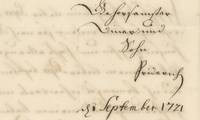
17213633109/1721. <blockquote><p>Theirs was a famously combative relationship; Frederick would attempt to flee to Britain 9 years later</p></blockquote><p>In his early youth Frederick lived with his mother and sister Wilhelmine although they regularly visited their father's hunting lodge at Königs Wusterhausen. Frederick and his older sister formed a close relationship which lasted until her death in 1758. Frederick was educated to speak both French and German and many of his tutors were French Calvinists.</p><p>The relationship between Frederick the Great and his father Frederick William I was deeply strained and often hostile. Frederick William I was a rigid militaristic ruler who valued discipline obedience and a strong army above all else while his son was drawn to music literature and French Enlightenment culture. The King saw these interests as weak and unmanly and he frequently criticized and even physically punished Frederick in an attempt to force him into a more soldierly mold.</p><p>Their conflict reached a peak in 1730 when Frederick attempted to flee Prussia to escape his father’s control. The plan failed and Frederick William I reacted harshly—he had Frederick arrested and forced him to watch the execution of his close friend Hans Hermann von Katte who had helped in the escape attempt. Although Frederick later became a brilliant military ruler the emotional distance between father and son never fully disappeared. In fact Frederick’s later embrace of culture and philosophy can be seen partly as a reaction against his father’s severity.</p><p>Wusterhausen was an important royal residence in early 18th-century Prussia and played a key role in the upbringing of Frederick the Great. In the early 1720s when Frederick was still a child he spent time there with his father Frederick William I who used the palace as a retreat from Berlin. The site was known for the King’s informal “Tobacco Parliament†where political and military matters were discussed. For the young Frederick Wusterhausen symbolized the strict militaristic environment imposed by his father which sharply contrasted with his own developing interests in culture music and Enlightenment thought—tensions that would later shape his character and reign.</p><p><strong>Autograph letter signed</strong> in old Germanic script from then Prince Frederick to the King ""<em>My dear Papa"" ""in September 1721.""</em> The General mentioned is likely Johann Matthias von der Schulenburg.</p><p><em>""I hope that my dear Papa is still doing well and I am longing very much to go to Wusterhausen. I am constantly hoping that my dear Papa will order for me to come. I am awaiting with the greatest impatience to see my dear Papa. I am humbly requesting my dear Papa that he may let me come to Wusterhausen. I remain my dear Papa’s Most obedient servant and son Frederich.""</em></p><p><em>""The general Schulenburg has told me that my dear Papa is still doing well about which I am very glad and he also asked me to be godfather.""</em></p><p><img class=""alignnone wp-image-25018 size-post-window"" src=""https://cdn.raabcollection.com/wp-content/uploads/20231204144051/Folder-site-11-1600x1327.jpg"" alt=""historical memorabilia dealer"" width=""1600"" height=""1327"" /></p> unknown
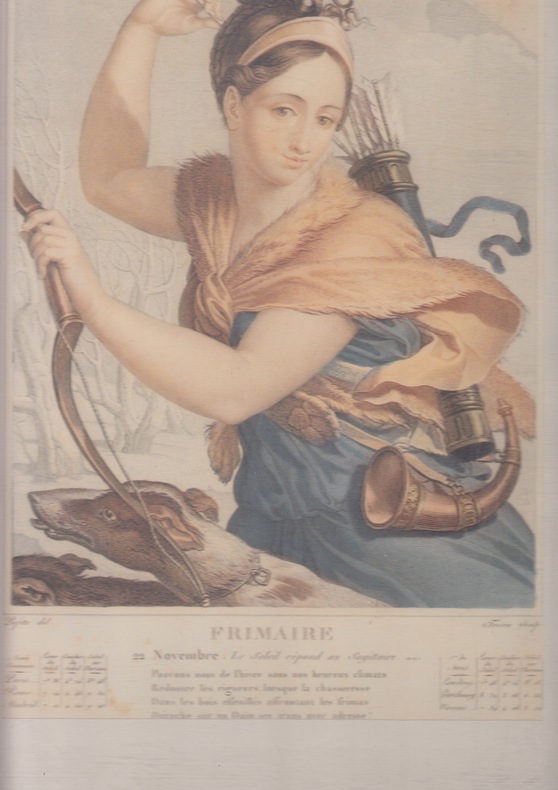
1797242091797 Auteur: Salvatore Tresca; Louis Lafitte- A Paris : Chez l'auteur, rue de Sorbonne, no. 389, [1797 ou 1798] 1 est. : pointillé, color à la poupée ; 27 x 20,5 cm (tr. c.) Lafitte del. ; Tresca sculp.Images de la Révolution française .Figures allégoriques -- 1789-1799 Typologie:Calendrier …[Calendrier républicain] Mois républicains. : [estampe] / [dessiné par L. Lafitte] ; [gravé par S. Tresca].Sous plexiglas,cadre moderne,cache aux limites de l'image à marges collées ,dans l'état,trés rare. Publication:[Paris] : [L. Lafitte], [1797 ou 1798] Lafitte, Louis (1770-1828)Description matérielle:1 eau-forte, pointillé, coul. ; 27 x 20,5 cm (tr. c.) .Image visible sur https://fr.wikipedia.org/wiki/Calendrier_républicain
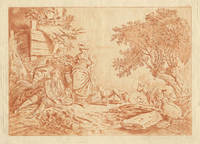
177021071770. Soft ground etching. 209mm by 290mm platemark 275mm by 371mm sheet. Fine soft ground etching printed in a orange / red ink on laid paper.<br /> A French etching in the manner of Boucher. A shepherd and shepherdess rest by water amongst sheep goats a donkey and a child. unknown
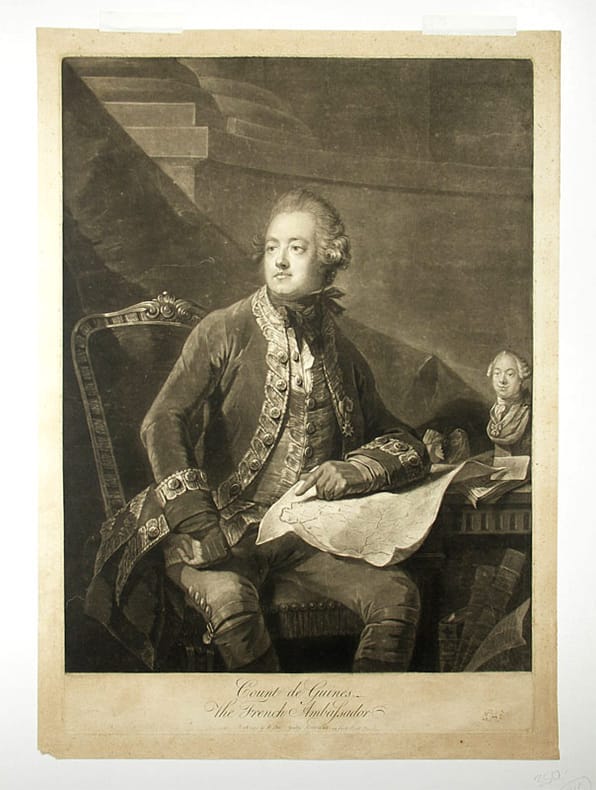
1774184CGLondon, P. Sion, 1774. Kupferdruck in Schabkunst. Bildgrösse: 46 (50 Platte) x 35 cm. Blattgrösse: 54,5 x 39 cm.
1774184CG1774. London P. Sion 1774. Kupferdruck in Schabkunst. Bildgrösse: 46 50 Platte x 35 cm. Blattgrösse: 545 x 39 cm. Mit 15 cm langem hinterlegten Einriss. unknown
1755623394Wolfenbüttel, Meißner, 1755-57. 8 Bl., 192 S.; 7 Bl., 183 S.; 7 Bl., 208 S. Mit 3 gestochenen Frontispizen mit Siegelabbildungen. Moderner Pappband. [2 Warenabbildungen]
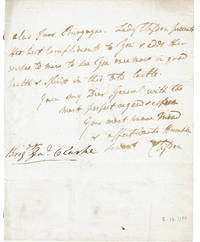
178894952December 8 1788. 1788. Very good. - Over 45 words penned on 9-1/4 inch high by 7-1/4 inch wide creamy white watermarked paper. Apparently only one page of a longer letter likely missing an attached leaf from what is claimed by the endorsement on the verso to be a letter of recommendation. Only the closing lines and sentiments are present. "Lady Clifden presents her best compliments to you and adds her wishes to mine to see you once more in good health & spirits in this old Castle." Signed "Clifden". "Brig. Gen. Clarke" is penned in darker ink in a contemporary hand next to the Viscount's signature. A few letters are smudged including the first letter in Viscount Clifden's signature. The letter is folded for mailing with ink annotations centered on the verso indicating that the letter was penned by Lord Clifden on December 8 1788 and received nearly a year later on September 1st 1789. The letter is additionally identified as "Recommending Mr. ". There are remnants of gray paper adhering to one edge of the verso indicating that the letter was once mounted. Very good. <p>The Irish peer & politician James Agar 1st Viscount Clifden 1734-1789 was a Member of Parliament for Gowran. He together with William Ponsonby 1st Baron Ponsonby held the post of joint Postmaster General of Ireland from 1784 to 1789. December 8, 1788. unknown
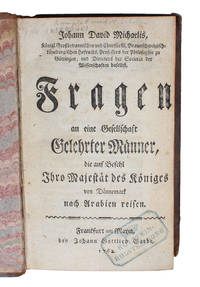
176256918Frankfurt am Mayn, Garbe, 1762. 8vo. Very nice contemporary full mottled calf with five raised bands to richly gilt spine. Titlelabel with gilt lettering. A bit of wear to spine, causing slight loss of leather and a neat restoration to lower compartment. A paperlabel pasted on top of spine. Small loss of leather to back board. A stamp on title-page (Holstein=Holsteinborg). (70), 397 pp., 4 folded tables, paginated 391-97. Internally clean, some quires printed on thick paper.
176256918Frankfurt am Mayn Garbe 1762. 8vo. Very nice contemporary full mottled calf with five raised bands to richly gilt spine. Titlelabel with gilt lettering. A bit of wear to spine causing slight loss of leather and a neat restoration to lower compartment. A paperlabel pasted on top of spine. Small loss of leather to back board. A stamp on title-page Holstein=Holsteinborg. 70 397 pp. 4 folded tables paginated 391-97. Internally clean some quires printed on thick paper. <br/><br/><em>The rare first edition of the founding work of Niebuhr's Arabia-expedition which would gain world-wide fame and establish the scientific description of the Arabian peninsula. The present work consists in 100 questions the answers to which constitute the purpose of the Royal Danish Arabia Expedition. In fact the present work is the handbook of Niebuhr's travel to Arabia Felix as its author is the spiritual father of it. The work is extraordinary in many ways and it not only served as the basis for the Arabia-expedition it also constitutes a forerunner of modern bible science that would begin to emerge a few decades later. Johann Davis Michaelis 1717-19 was a theologian and orientalist whose fame today rests upon the present work and upon the fact that he was responsible for the first scientific expedition to Arabia Felix namely that of Niebuhr. In 1753 he had come up with the idea for the the Royal Danish Arabia Expedition 1761-1767 and had gotten the Danish minister Bernstoff to agree to it. In 1760 when the expedition was becoming a reality Michaelis recommended Niebuhr as a participant and he outlined the entire purpose of the trip - namaly the list of 100 questions that he prepared and published for the members of the expedition in order for them to answer in the course of the voyage. For all intents and purposes Michaelis was the spiritual father of the Arabia-expedition. As a theologian and an orientalist many of Michaelis' questions have root in the Bible. But unlike many other theolgians of the time Michaelis sought to shed light over biblical themes through sources outside of the Bible - especially from the Middle East not least Arabia. In this regard his 100 Questions also came to be a precursor to the emergence of modern bible science.Although the expedition would have never taken place had it not been for Michaelis and his 100 questions - many of which are also purely naturalistic - he could not quite have foreseen the scientific outcome of the expedition. He had not foreseen that Niebuhr would become the founder of the scientific description of the Arabian peninsula and that Niebuhr's notes would become the basis for the first decipherment of Mesopotamian and Persian cuneiform. On the contrary he was probably quite disappointed that his questions were not all answered as thoroughly as the had anticipated. Adding to that Niebuhr's answer to the questions "only" takes up six pages in the preface to "Description of Arabia" although the text itself contains many detailed explanations and answers to Michaelis' questions. </em> hardcover
178660750Kiøbenhavn (Copenhagen), C.F. Holm, 1786. 8vo. In contemporary full calf with five raised bands and gilt lettering to spine. Double line gilt boarders of boards. Light wear to extremities, scratches to boards and light miscolouring to spine. Light occassional marginal brownspotting. Deaccession-stamp to title page. Overall a nice copy. XVI, 414 pp. + 7 folded engraved plates.
179153565Kiøbenhavn, Høpffner, (1791). 4to. Uden omslag som udkommet. (4) pp.
17401318107Halle, J. H. Grunert, 1740. Kl.-4to. 4 Bl., 103, (1) S. Rücken-Broschur (etwas angestaubt, Stempel auf Titelrückseite).
178341192Bath 1783. Watercolour on laid paper with manuscript description on verso of the fine gold-leaf frame. Image size: 13 1/2 x 8 3/4 inches. Framed size: 22 1/4 x 18 inches. Thomas Robins a native of Bath was an enigmatic artist known for his watercolors. A small number of signed watercolors in the Broughton Collection at Cambridge University have been attributed to him particularly in an album inscribed as 'Drawings of Flowers Ehret and Robins.' In 1967 the Bath and West Agricultural Society sold a collection of 'Pictures of Exotic Plants and Insects' by Thomas Robins the Younger who was the son and pupil of the first Thomas Robins. Though there have been debates about differentiating their artistic styles the exhibition Gardens of Delight curated by John Harris at the R.I.B.A. in 1976 not only established the importance of the elder Robins' work in 18th-century English Topographical drawing but also shed light on the distinctive style of his son. Thomas Robins the Younger followed in his father's footsteps focusing on capturing grand residences gardens and the natural world. He drew inspiration from his father both in the subjects he chose and his artistic approach. Robins the Elder's views and landscapes are often noted for exuding the charm and freshness of a personal discovery and the similar joy of a chance encounter manifests here in the watercolour's dynamic scene. The image captures a split-second moment when a butterfly and a bee hovering into the scene from different directions about to land on the plant already blissfully occupied by their fellow creatures. By choosing to depict this moment Robins the Younger suspends the viewer in a state of anticipation that intense delicious but ultimately fleeting moment that can only be re-lived through memory or masterly depictions; the present's work ability to captivate and delight makes it an exquisite example of an especially fine decorative watercolour. The Linnaean and common English names of the plants and insects along with their classification and order are noted on a sheet of paper accompanying this watercolour. Depicted plants include: "shrubby rose colour'd periwinkle" "greater Indian cress or Nasturtium" and "double strip'd stock Gilliflower." The insects shown descending upon the petals are "Marmoris or Half Mourner Butterfly" "East Indian Bee Tyger Moth" and "English Bee Tyger Moth or Death's Head."<br/> <br/> The Fitzwilliam Museum University of Cambridge exhibition catalogue: British Flower Drawings: An Eight Selection Principally from the Broughton Collection 1 July - 18 October 1981. unknown
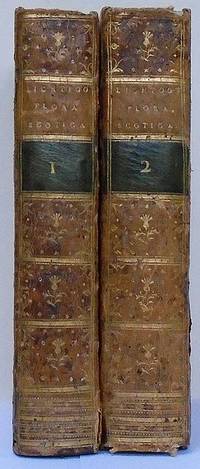
177761127for B. White London. 1777. 1st. Ed. Two volume set with printed title-pages two illustrated title-pages and 35 fine copper engraved plates 9 being fold-out. 8vo. Hardbacks. Some spotting o/w. contents fine. Marbled fore-edges. Early quarter calf binding with gilt floral decoration in good to vg. condition - externally the hinges show some wear internally they are fine. The "only professedly complete work on the plants of Scotland until 1821" Henrey. The work begins with a section on the fauna of Scotland a sketch of ‘Caledonian Zoology’ as Lightfoot called it in his Preface. The author of this part of the work was Thomas Pennant. Five of the fine copper engraved plates are ornithological depicting an Osprey Hooded Crow Knot Sand-piper Long-legged Plover Black Headed Gull and Black Gull. The remainder are fine botanical. for B. White, London. hardcover
179425-501<p>The Titles says quite enough. Please see photos for title Pages and Contents.</p> First Volume: Sold by JORDAN, FLEET STREET; AND RIDGEWAY, YORK STREET. Second Volume: Printed for the Author by E. Miller hardcover
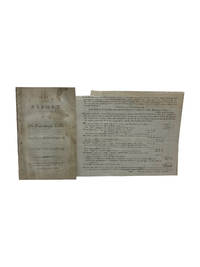
1789003915<p>London: T. Becket and J. Johnson 1789. 2 iii-iv 1 2-56pp; 4p. Disbound. Title slightly soiled with tea stain final leaf also slightly soiled text generally clean. Also included is a 4p leaflet with a drop-head title 'Proceedings of the Philanthropic Society relative to Mr. Robert Young'. The Philanthropic Society was set up in 1788 seemingly at the house of Robert Young. It would "seek out in the 'Augean stable of filth disease and iniquity which disgraces the Metropolis' and train-up to 'virtue and usefulness in life the children of vagrants and such who are in the paths of vice and infamy'" Whitten 'Protection Prevention Reformation: a history of the Philanthropic Society 1788-1848' page 22. However it seems that Young who also started a variety of other schemes 'mishandled' the funds raised possibly diverting the money into other schemes and by 1790 had been dismissed from the Society. The second leaflet relates to the accounts of the Society and Mr. Young's expenses and the charges of financial impropriety against him. Nine locations in ESTC the second mentioned is not located possibly not separately issued. First Edition. Unbound. Good. 8vo. Pamphlet.</p> T. Becket and J. Johnson paperback