1 544 résultats
198165424Gallery. As New. 1981. Paperback. 0938608010 . FREE UPGRADE to Courier/Priority Shipping Upon Request IN STOCK AND IMMEDIATELY AVAILABLE FOR SHIPMENT - AS NEW THE TEXT BLOCK IS PRISTINE CLEAN UNMARKED AND IN EXCELLENT CONDITION - - 48 pp. With one text ill. And 36 ills. On 38 pls. 20 col. . 29 x 24 cm. -- with a bonus offer-- . Gallery paperback
1994Q-8475063306Turespana 1994-05-01. Paperback. New. New. In shrink wrap. Looks like an interesting title! Turespan?a paperback
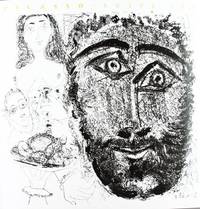
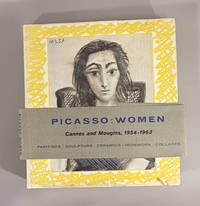
19643117084PARIS/AMSTERDAM: Editions Cercle D' Art/Harry N. Abrams. Near Fine in Very Good dust jacket. 1964. First Edition; First Printing. Hardcover. First edition. Fine in very good dust jacket. 199pp. 11 1/4" X 12" Lacks the wrap-around belly band. Previous owner's bookplate on front paste-down. 1'-inch tear at head of front panel of jacket. A few shorter tears and light creasing at base of rear cover. The stapled pictorial paperback insert "Picasso: Women" with introductory comments by Milton S. Fox laid-in. Full color illustrations tipped-in. ; 11 1/4" X 12"; 199 pages . Editions Cercle D' Art/Harry N. Abrams hardcover
216<p>Paris France / Amsterdam Netherlands: Editions Cercle D'Art S.A./Harry N. Abrams n.d. First English language edition translated from the French by Humphrey Hare. Thick folio. 11-1/4 in. x 12 in. 204 pages. Profusely illustrated with tipped-in color plate reproductions.</p><p>Sturdy and handsome joint publication with oatmeal cloth lettered with colorful letters by Picasso created specifically for the publication of this book - "Picasso alphabet" see publisher's note; "when approached by the French co-publisher the painter laughingly said that it was so long since he had written out an alphabet that he had forgotten how."</p><p>Near fine in original cloth-covered boards very minute toning to to edges of board from jacket off-setting. Near fine pictorial dust jacket with original lettered obo strip.</p><p>Additional postage may be required for oversize book.</p> hardcover
19649032651Monte Carlo: André Sauret 1964. Softcover. Near Fine. One of 2500 numbered copies. Preface by Sabartès. Text in French. Lacks dust jacket and original lithograph. Beautifully illustrated throughout in color and black and white. Previous owner's neat signature on front interior endpaper. 9 3/4 x 12 1/2 inches. 155 pages. <br/><br/> André Sauret paperback
19649032652Monte Carlo: André Sauret 1964. Softcover. Near Fine. One of 2500 numbered copies. Text in French. Lacks dust jacket and original lithograph. Beautifully illustrated throughout in color and black and white. Previous owner's neat signature on front interior endpaper. 9 3/4 x 12 1/2 inches. 208 pages. <br/><br/> André Sauret paperback
3929935007.Gloose_leaf. Good. Access codes and supplements are not guaranteed with used items. May be an ex-library book. unknown
198867284Edition Cantz Distribution. New. 1988. Hardcover. FREE UPGRADE to Courier/Priority Shipping Upon Request - IN STOCK AND IMMEDIATELY AVAILABLE FOR SHIPMENT - Flawless copy brand new pristine never opened -- Text in German. 370 pp. With 495 ills. 24 col. . 29 x 25 cm. -- with a bonus offer-- . Edition Cantz (Distribution) hardcover
3791314912.Gpaperback. Good. Access codes and supplements are not guaranteed with used items. May be an ex-library book. paperback
02-0765New York: Avant Garde 1969. Square 4to. 60 pp. "This special issue of avant-garde is devoted entirely to one subject: a series of erotic gravures or engravings by Pablo Picasso The Pre-eminent Artist of Our Time. They are intended to stand as Picasso himself has said as an abiding celebration of life itself." Very good in wraps. New York: Avant Garde, 1969. paperback
50-0027Lombreuil France: Éditions des Nouvelles Images 1971. Distributed graphics by Dow & Frosini. Serigraph after Picasso’s 1959 linocut. 2 colors. 26 x 30 inches. 55 x 65 cm. 1 cm. and less stain along outside edge of one 4 cm. margin not affecting the image. Lombreuil, France: Éditions des Nouvelles Images, 1971. Distributed graphics by Dow & Frosini. unknown
194748620Paris.: Latitud Curenta y Uno. Le Degré Quarante et Un / 41º. 1947 / 1948. . Oblong folio. 396 x 620 mm. Etching grattoir and burin on copper by Picasso printed on a full sheet of parchment pierced at edges for printing and with central fold by Roger Lacourière Paris; sheet size: 396 x 310 mm folded 396 x 620 mm unfolded. A very rare signed proof of the cover for 'Pis'mo: Escrito por Iliazd / Grabado por Picasso' Picasso's 1948 collaboration with Iliazd.Picasso's etching with grattoir and burin is for the vellum cover of the 1948 book 'Pis'mo' also known as 'Escrito por Iliazd / Grabado por Picasso'. The text of the book is a love poem in Russian by Iliazd one of the very few he wrote after leaving Georgia inspired by his meeting with Olga Djordjadze - Picasso too met her later - in Cannes in 1946. Picasso's print includes the title in Russian correctly at the top and incorrectly and effaced beneath as well as at right the figure of a woman seen from behind and turned away from the viewer; Picasso has dated the print '3 mars 47' in the copperplate which is printed in reverse.The present proof is printed on a sheet of vellum as for the published book although slightly whiter and slightly thinner than the published version and while it does have a central fold it is unfolded at the head and foot and is pierced around the outer edge of the sheet with small pinholes as part of the printing process. Signed at lower right by Picasso the sheet is annotated by Iliazd verso above and beneath the visible platemark 'haut' and 'bas' and 'Plier à l'envers'; Iliazd appears too to have drawn a pencil frame it differs from the engraved area to the verso beneath the 'haut' and 'bas'. A different hand has annotated the foot of the blank area adjacent to the printed section: 'Picasso P. Eau-forte pour la couverture du livre d'Iliazd 'ESCRITO' 1er Epreuve d'essai sur parchemin / le livre a été tiré à 66 exemplaires'.Proofs of the cover are very rare and examples signed by Picasso rarer still. Baer suggests that several trials and proofs were taken from Picasso's plate noting the 'bon à tirer' example on 'vélin sans filigrane' Georges Bloch's copy on parchment inscribed 'tirage d'essai' by Iliazd and signed at a later date by Picasso 'environ 7 épreuves sur parchemin avec annotations d'Iliazd sur la préparation du parchemin et le séchage' as well as a final signed example sold by Sotheby's in the 1970s.'In his poem 'Rogelio Lacourière pêcheur de cuivres' published in 'Hommage à Roger Lacourière 1968 Iliazd recalls in poetic terms the genesis of the book's title etching. The story goes that Lacourière had given Picasso a plate which was too large and which had a white mark to indicate where it should later be cut. Picasso - tempted by this extra space and the unexpected freedom it gave him - etched a nude on it. Lacourière therefore refrained from cutting the plate and Iliazd noticed that the asymmetry thus created in the title etching echoed his conception of the folded pages: the 'magnaminous' painter had 'transfigured' the book.' Patrick Cramer.Baer 785Ba; Bloch 462; see Cramer 48. Latitud Curenta y Uno. (Le Degré Quarante et Un / 41º). unknown
05-00191945. Wool tapestry after the painting. 97 x 120 cm. 38 x 47.5 inches. Picasso Project no. 45-012. 1945. unknown
1367117Museo Nacional Centro de Arte Reina Sofía. Collectible - Very Good. Condition: Very Good; Very Good clean copy. Few light marks on back cover. Museo Nacional Centro de Arte Reina Sofía unknown
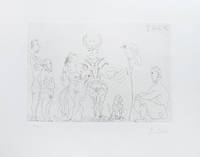
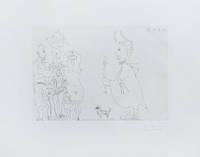
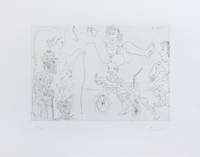
1066681968 . Etching 1968 on Auvergne Richard-de-Bas wove paper signed in pencil numbered from the edition of 30 printed and published by Atelier Crommelynck Paris 37 x 47.8 cm. 14½ x 18¾ in.<br /> Le Cocu Magnifique is a farcical play written by Belgian dramatist Fernand Crommelynck about a jealous man Bruno who because of this jealously ends the play by losing his wife Stella. Bruno is the kind of man who sees an enemy in the other sex; he seeks to control a woman but he can never obtain this dominance because the female soul eludes him. It is because he cannot bear Stella's love that he will in the end be cuckolded. The play premiered in Paris in December 1920 and in 1968 Picasso produced a series of 12 etchings and aquatints based on the play's text. Picasso and Crommelynck knew each other for many years and for some time Picasso had intended to illustrate the play. Picasso's dramatic and often explicit depiction of Crommelynck's story is well suited to the stark black and white media of aquatint and etching. <br /> B. 1244-1255; BA. 1432-1443; C. BKS 140 1968 unknown
1066751968 . Etching 1968 on Auvergne Richard-de-Bas wove paper signed in pencil numbered from the edition of 30 printed and published by Atelier Crommelynck Paris 37 x 47.8 cm. 14½ x 18¾ in.<br /> Le Cocu Magnifique is a farcical play written by Belgian dramatist Fernand Crommelynck about a jealous man Bruno who because of this jealously ends the play by losing his wife Stella. Bruno is the kind of man who sees an enemy in the other sex; he seeks to control a woman but he can never obtain this dominance because the female soul eludes him. It is because he cannot bear Stella's love that he will in the end be cuckolded. The play premiered in Paris in December 1920 and in 1968 Picasso produced a series of 12 etchings and aquatints based on the play's text. Picasso and Crommelynck knew each other for many years and for some time Picasso had intended to illustrate the play. Picasso's dramatic and often explicit depiction of Crommelynck's story is well suited to the stark black and white media of aquatint and etching. <br /> B. 1244-1255; BA. 1432-1443; C. BKS 140 1968 unknown
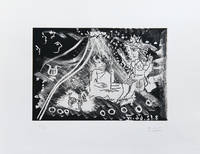
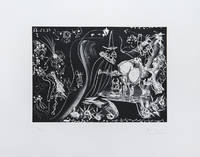
1066811968 . Etching and aquatint 1968 on Auvergne Richard-de-Bas wove paper signed in pencil numbered from the edition of 30 printed and published by Atelier Crommelynck Paris 37 x 47.8 cm. 14½ x 18¾ in.<br /> 107 MP22mod Le Cocu Magnifique is a farcical play written by Belgian dramatist Fernand Crommelynck about a jealous man Bruno who because of this jealously ends the play by losing his wife Stella. Bruno is the kind of man who sees an enemy in the other sex; he seeks to control a woman but he can never obtain this dominance because the female soul eludes him. It is because he cannot bear Stella's love that he will in the end be cuckolded. The play premiered in Paris in December 1920 and in 1968 Picasso produced a series of 12 etchings and aquatints based on the play's text. Picasso and Crommelynck knew each other for many years and for some time Picasso had intended to illustrate the play. Picasso's dramatic and often explicit depiction of Crommelynck's story is well suited to the stark black and white media of aquatint and etching. <br /> B. 1244-1255; BA. 1432-1443; C. BKS 140 1968 unknown
1066741968 . Etching 1968 on Auvergne Richard-de-Bas wove paper signed in pencil numbered from the edition of 30 printed and published by Atelier Crommelynck Paris 37 x 47.8 cm. 14½ x 18¾ in.<br /> Le Cocu Magnifique is a farcical play written by Belgian dramatist Fernand Crommelynck about a jealous man Bruno who because of this jealously ends the play by losing his wife Stella. Bruno is the kind of man who sees an enemy in the other sex; he seeks to control a woman but he can never obtain this dominance because the female soul eludes him. It is because he cannot bear Stella's love that he will in the end be cuckolded. The play premiered in Paris in December 1920 and in 1968 Picasso produced a series of 12 etchings and aquatints based on the play's text. Picasso and Crommelynck knew each other for many years and for some time Picasso had intended to illustrate the play. Picasso's dramatic and often explicit depiction of Crommelynck's story is well suited to the stark black and white media of aquatint and etching. <br /> B. 1244-1255; BA. 1432-1443; C. BKS 140 1968 unknown
1066731968 . Etching and aquatint 1968 on Auvergne Richard-de-Bas wove paper signed in pencil numbered from the edition of 30 printed and published by Atelier Crommelynck Paris 37 x 47.8 cm. 14½ x 18¾ in.<br /> Le Cocu Magnifique is a farcical play written by Belgian dramatist Fernand Crommelynck about a jealous man Bruno who because of this jealously ends the play by losing his wife Stella. Bruno is the kind of man who sees an enemy in the other sex; he seeks to control a woman but he can never obtain this dominance because the female soul eludes him. It is because he cannot bear Stella's love that he will in the end be cuckolded. The play premiered in Paris in December 1920 and in 1968 Picasso produced a series of 12 etchings and aquatints based on the play's text. Picasso and Crommelynck knew each other for many years and for some time Picasso had intended to illustrate the play. Picasso's dramatic and often explicit depiction of Crommelynck's story is well suited to the stark black and white media of aquatint and etching. <br /> B. 1244-1255; BA. 1432-1443; C. BKS 140 1968 unknown
1066711968 . Etching 1968 on Auvergne Richard-de-Bas wove paper signed in pencil numbered from the edition of 30 printed and published by Atelier Crommelynck Paris 37 x 47.8 cm. 14½ x 18¾ in.<br /> Le Cocu Magnifique is a farcical play written by Belgian dramatist Fernand Crommelynck about a jealous man Bruno who because of this jealously ends the play by losing his wife Stella. Bruno is the kind of man who sees an enemy in the other sex; he seeks to control a woman but he can never obtain this dominance because the female soul eludes him. It is because he cannot bear Stella's love that he will in the end be cuckolded. The play premiered in Paris in December 1920 and in 1968 Picasso produced a series of 12 etchings and aquatints based on the play's text. Picasso and Crommelynck knew each other for many years and for some time Picasso had intended to illustrate the play. Picasso's dramatic and often explicit depiction of Crommelynck's story is well suited to the stark black and white media of aquatint and etching. <br /> B. 1244-1255; BA. 1432-1443; C. BKS 140 1968 unknown
1066771968 . Etching and aquatint 1968 on Auvergne Richard-de-Bas wove paper signed in pencil numbered from the edition of 30 printed and published by Atelier Crommelynck Paris 37 x 47.8 cm. 14½ x 18¾ in.<br /> Le Cocu Magnifique is a farcical play written by Belgian dramatist Fernand Crommelynck about a jealous man Bruno who because of this jealously ends the play by losing his wife Stella. Bruno is the kind of man who sees an enemy in the other sex; he seeks to control a woman but he can never obtain this dominance because the female soul eludes him. It is because he cannot bear Stella's love that he will in the end be cuckolded. The play premiered in Paris in December 1920 and in 1968 Picasso produced a series of 12 etchings and aquatints based on the play's text. Picasso and Crommelynck knew each other for many years and for some time Picasso had intended to illustrate the play. Picasso's dramatic and often explicit depiction of Crommelynck's story is well suited to the stark black and white media of aquatint and etching. <br /> B. 1244-1255; BA. 1432-1443; C. BKS 140 1968 unknown
1066721968 . Etching 1968 on Auvergne Richard-de-Bas wove paper signed in pencil numbered from the edition of 30 printed and published by Atelier Crommelynck Paris 37 x 47.8 cm. 14½ x 18¾ in.<br /> Le Cocu Magnifique is a farcical play written by Belgian dramatist Fernand Crommelynck about a jealous man Bruno who because of this jealously ends the play by losing his wife Stella. Bruno is the kind of man who sees an enemy in the other sex; he seeks to control a woman but he can never obtain this dominance because the female soul eludes him. It is because he cannot bear Stella's love that he will in the end be cuckolded. The play premiered in Paris in December 1920 and in 1968 Picasso produced a series of 12 etchings and aquatints based on the play's text. Picasso and Crommelynck knew each other for many years and for some time Picasso had intended to illustrate the play. Picasso's dramatic and often explicit depiction of Crommelynck's story is well suited to the stark black and white media of aquatint and etching. <br /> B. 1244-1255; BA. 1432-1443; C. BKS 140 1968 unknown
1970177615London: Calder and Boyars 1970. 1st Edition in this form. Hardback. Fine cloth copy in a near-fine very slightly edge-nicked and dust-dulled dw now mylar-sleeved. Remains particularly and surprisingly well-preserved overall; tight bright clean and strong.; 8vo 8"" - 9"" tall; 63 pages; Physical desc.: 63 p. 22 cm. Subjects: Drama -- Plays. Notes: Translated edition by Sir Roland Penrose published originally in 1945. London: Calder and Boyars hardcover
10353München Schirmer/Mosel 1989. 4° 496 S. 184 teilw. farb. Tafeln OLwd. m. OU. in Schuber. Schuber min. läd. kl. Einr. in OU. Zusammengestellt und bearbeitet von Marie-Laure Bernadac und Christine Piot. Mit einem deutschen Vorwort von Michel Leiris. Ansonsten alle Texte auf Französisch. «Seine Poesie ist so plastisch wie seine Malerei poetisch ist» André Breton. 010 München, Schirmer/Mosel, 1989 unknown
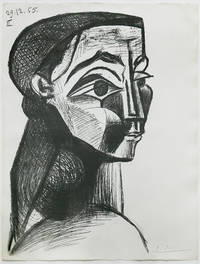
1070751955 . Lithograph 1955 on Arches wove paper signed in pencil by the artist numbered 25/50 from the edition of 50 printed by Mourlot Paris published by Galerie Louise Leiris Paris sheet: 66.4 x 50 cm. 26 x 19¾ in.<br /> This abstract three-quarter profile is of Picasso's second wife Jacqueline Roque. The couple met during the summer of 1952 whilst Roque was working at Georges and Suzanne Ramié's Madoura pottery works in Vallauris the studio where Picasso made his ceramics in the South of France. The couples love endured until the artist's death in 1973 Picasso adored Jacqueline so much so that for seventeen of the twenty years the couple spent together - the longest relationship of Picasso's life - Roque was the only female Picasso painted. When Picasso embarked on his late great period his biographer John Richardson succinctly defined and characterised as 'l'époque Jacqueline.' In this lithograph Picasso bestows Roque with an elegant sphinx-like appearance. The straight line of the nose which extends directly from the forehead to the tip is particularly evocative of these ancient Egyptian sculptures as well as in the calm gaze in her characteristically almond-shaped eyes.<br /> Bloch 780; Mourlot 272. 1955 unknown