1 544 résultats
198851420Musees Nationaux. As New. 1988. Paperback. 2711821773 . FREE UPGRADE to Courier/Priority Shipping Upon Request IN STOCK AND IMMEDIATELY AVAILABLE FOR SHIPMENT - Text block pristine pages tight to spine - -- with a bonus offer-- . Musees Nationaux paperback
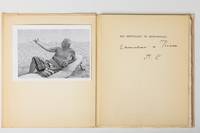
26670Lisle-sur-Sorgue et Alès PAB été 1960. 1 vol. 210 x 260 mm de 23 p. et 5 planches. En feuilles sous couverture imprimée. Édition originale. Illustré de 5 empreintes naturelles composées par Picasso. Tirage unique à 50 exemplaires sur Arches celui-ci justifié à l’encre par l’auteur : « Exemplaire de Picasso R.C. ». Les pierres et le fer qui ont servi aux empreintes ont été trouvés dans les monts du Vaucluse par René Char PAB et Jacques Polge sur le site du massif des « Dentelles de Montmirail » du latin « mons mirabilis » signifiant « mont ou montagne admirable ». Le lieu tient son nom de l'érosion qui a façonné la forme de ces montagnes de telle façon que la roche taillée par le temps semble ciselée comme un ruban dentelé à la silhouette unique. Elles se situent aux premiers abords du Mont Ventoux dans le Vaucluse à une trentaine de kilomètres de Lisle-sur-la-Sorgue où Char résidait. Les Dentelles de Montmirail sont publiées au même moment pendant l'été 1960 ; Picasso séjourne alors à Cannes en compagnie de Jacqueline Roque qu'il allait épouser l'année suivante. Cette dédicace est l'une des premières marques d'une amitié et d'une association naissante que la mort de Braque en 1963 renforceront. Si les premiers échanges datent d'avant-guerre par l'intermédiaire d'Eluard ce n'est qu'à partir de 1958 que Char et Picasso collaboreront. Eluard disparu c'est essentiellement grâce à la persévérance de Pierre André Benoit que les contacts se renouent et que Picasso accepte en marge des grands illustrés qu'il donne chez Broder de collaborer aux minuscules de PAB grâce au procédé des celluloïds : « lorsque PAB rencontre Picasso en 1956 il a 35 ans Picasso en a 75. En mai 1956 pour illustrer un texte de jeunesse de René Crevel compagnon de route des surréalistes que Picasso répond à PAB lui retournant par la poste sans un mot la minuscule plaque de celluloïd gravée d'un visage. Ce sera Nuit. Picasso lui si célèbre et si sollicité pourquoi répond-il finalement à ce jeune éditeur cévenol Peut-être parce que PAB propose des textes de personnes proches de Picasso ou de personnes qui l'ont été : Crevel Tzara René Char. Mais PAB sait aussi le séduire en l'invitant à jouer avec des techniques nouvelles : le celluloïd puis la cartalégraphie. Il interpelle Picasso qui a le goût du défi technique insistant toujours dans ses courriers sur l'aspect ludique « amusant » de ses propositions : « voyez si mon projet vous chante » lui écrit-il le 7 mai 1958 en lui adressant le poème L'Escalier de Flore de René Char. » Picasso et le livre d'artiste Exposition 2018 préface. Char préfacera en 1973 le catalogue de l'exposition Picasso à Avignon qui paraîtra juste après la mort du peintre le 8 avril 1973. C'est au total dix-sept livres que PAB réalise avec Picasso entre 1956 et 1974 ce qui fait de lui l'éditeur avec qui l'artiste a le plus collaboré. Lisle-sur-Sorgue et Alès, PAB, été 1960. 1 vol. (210 x 260 mm) de 23 p. et 5 planches. En feuilles, sous couverture imprimée unknown
1963mon0003318188Abrams 1963T. hardcover. Very Good. . Abrams hardcover
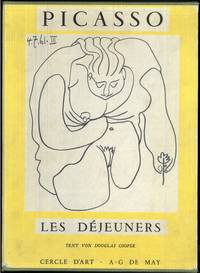
196275267Paris - Düsseldorf - Lausanne 1962. Folio. Rikt dekorert originalt striebind. I dekorert pappkassett. 35 s. Illustrert med 165 plansjer i svart/hvitt og farver. Cercle d’Art - A G de May Tysk. <br/><br/><em>Den tyske utgaven skal være uvanlig. Pent eksemplar. </em> unknown
1970G5 - HAY004351970. Paris Editions Cercle d'Art et Editions La Farandole. relié pleine toile éditeur. Excellent état. in-4. avec quelques illustrations dans le texte et aussi les planches illustrées de 100 reproductions de dessins d'enfants et de Picasso sur le thème de la tauromachie ; sur la page de garde un dessin collectif des écoliers de Vallauris ; couverture ornée d'un dessin en couleurs de Picasso. unknown
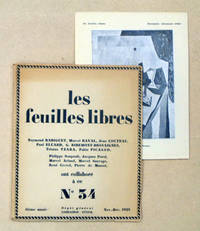
87797Paris Les feuilles libres 1923. Gr.8° S. 211 - 269 8 Taf. davon 2 montiert davon 1 lose Brosch. Etw. gebräunt eckknittrig u. tlw. randrissig innen allg. tadellos. Enth.: Raymond Radiguet: «Le prisonnier des mers»; Marcel Raval: «Raymond Radiguet» Jean Cocteau: «Pablo Picasso» Paul Eluard: «Ta foi» G. Ribemont-Dessaignes; «L’oeil couchant» Tristan Tzara: «Faites vos jeux» nur Teil 4; dazu Kritiken/Rezensionen. 7 Tafeln mit Werken von Pablo Picasso. - «Raymond Radiguet Marcel Raval Jean Cocteau Paul Eluard G. Ribemont-Dessaignes Tristan Tzara Pablo Picasso Philippe Soupault Jacques Porel Marcel Arland Marcel Sauvage René Crevel Pierre de Massot ont collaboré à ce No. 34». 010 Paris, Les feuilles libres, 1923 unknown
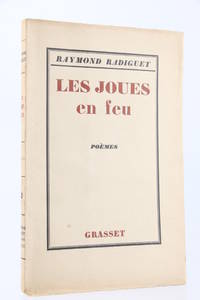
192579936Paris: Grasset 1925. Fine. Grasset Paris 1925 12 x 19 cm broché Edition with some parts in first edition one of 1100 numbered copies on pure thread paper. Work illustrated with a portrait of the author by Pablo Picasso. Spine with a very slight lack at foot. Grasset unknown
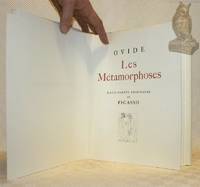
2370Geneva: Edito Service. Hardcover. Near Fine. Near Fine condition hardcover in Very Good slipcase. Hardcover containe two volumes the first is "Suite des reproductions des eaux-fortes de Pablo Picasso pour illustrer les Metamorphoses d"ovide" and the second is "Les Metamorposes D'Ovide" 394 pages. Facsimile of the 1931 original work this is a beautiful facsimile with loose plates and text. This is a LIMITED EDITION and is numbered 3576. Edito Service hardcover
118448GenÂve : Edito-Service sans date. 300x235mm. en feuilles couverture rempliÂŽe chemise avec dos en cuir et chemise cartonnÂŽ et embo”tage marbrÂŽ et parcheminÂŽ. Fac-similÂŽ de lՎdition Skira de 1931 numÂŽrotÂŽ n.¡ 2965 A. Bel exemplaire. 2218 Edito-Service unknown
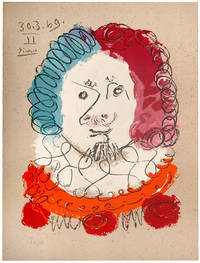
1203761969 . Lithograph in colours 1969 on wove paper with the artist's printed signature as issued numbered from the American edition of 250 marked 'A' Printed by Marcel Salinas New York with his blindstamp verso Published by Harry N. Abrahams inc. New York 65 x 50 cm. 25½ x 19¾ in.<br /> <br /> 1969 unknown
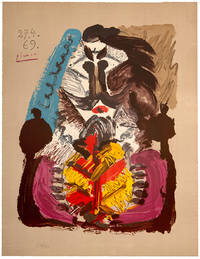
1203811969 . Lithograph in colours 1969 on wove paper with the artist's printed signature as issued numbered from the American edition of 250 marked 'A' Printed by Marcel Salinas New York with his blindstamp verso Published by Harry N. Abrahams inc. New York 65 x 50 cm. 25½ x 19¾ in.<br /> <br /> 1969 unknown
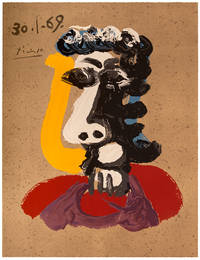
1203841969 . Lithograph in colours 1969 on wove paper with the artist's printed signature as issued numbered from the American edition of 250 marked 'A' Printed by Marcel Salinas New York with his blindstamp verso Published by Harry N. Abrahams inc. New York 65 x 50 cm. 25½ x 19¾ in.<br /> <br /> 1969 unknown
196869751Paris: Flammarion 1968. Fine. Flammarion Paris 1968 15.50 x 21.50 cm broché First edition in French one of 60 numbered copies on pur fil paper the only deluxe copies. A handsome copy. Flammarion unknown
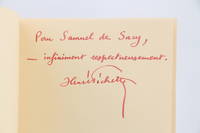
195888251Paris: Mercure de France 1958. Fine. Mercure de France Paris 1958 14 x 20.50 cm broché sous étui First collected edition one of 20 numbered copies on vélin madagascar deluxe copy. Work illustrated with lithographs by Bazaine Gromaire Picasso Villon. Handsome copy despite the spine and back cover partially and lightly sunned without gravity. Autograph inscription signed by Henri Pichette: ""Pour Samuel de Sacy - infiniment respectueusement."" Like all the ""madagascar"" copies our copy is complete with the suite of illustrations as stipulated in the justification page. Mercure de France unknown
28434Alès PAB mars 1967. 1 vol. 260 x 335 mm de 34 p. et 2 f. En feuilles sous emboîtage signé de Julie Nadot. . Première édition illustrée par Picasso : 4 cartalégraphies originales à pleine page 1966 représentant des masques telluriques. Un des 60 exemplaires sur Rives signés par Picasso et PAB n° 12. Exemplaire enrichi de 2 tirages supplémentaires de 2 des gravures l'un comportant un envoi signé : « Pour Char Picasso » l'autre signé par l'artiste. . L'édition PAB est la dernière qui sera donnée des Transparents qui ont fait l'objet de nombreuses rééditions depuis leur première parution en 1949 au Mercure de France. Avant Picasso Louis Fernandez Vieira da Silva Nicolas de Staël s'y étaient risqués. Les Transparents aux yeux de Char étaient les personnages de son enfance peu à peu disparus du paysage rural : jusqu'à dix-sept - tous des hommes - se trouveront décrits dans les différentes éditions que donnera le poète : Toquebiol Joseph Puissantseigneur Laurent de Venasque Crillon le brave Odin le Roc Raymond de Ridet entre autres formeront cette curieuse et respectée cohorte de figures d'errants. Picasso en donnera ici quatre saisissants portraits par un procédé nouveau pour lui mais qu'il avait vu utiliser par Georges Braque avec PAB : « Un carton plan ou ondulé souple ou plus rigide est découpé déchiré incisé ou gratté par l'artiste puis fixé par l'imprimeur sur un support à la hauteur typographique finalement encré et tiré » Coron Le Fruit donné p. 39. La cartalégraphie constitue un développement de la gravure sur celluloïd déjà pratiquée par Picasso avec PAB. Grâce à procédé PAB imprima huit livres de Braque dont le premier en 1959 Dans vos jardins. Après Picasso ce fut au tour de Joan Miró d'être conquis en 1975 ; il réalisa cinq découpes : trois furent employées dans Pour 1971. Exemplaire exceptionnellement enrichi conservé dans un délicat emboîtage de Julie Nadot. De la bibliothèque R. & B. Loliée ex-libris et Didier Pineau-Valencienne ex-libris. Bloch 1236. Alès, PAB, (mars) 1967. 1 vol. (260 x 335 mm) de 34 p. et [2] f. En feuilles, sous emboîtage signé de Julie Nadot. unknown
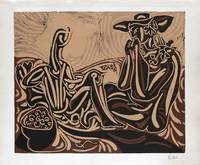
1959149973Paris: Galerie Louise Leiris 1959. Edition of 50. Signed in pencil lower right by Picasso numbered lower left. Linocut printed in black mauve brown and beige on Arches wove paper. Image size 53 x 63.8cm. Sheet size 62 x 75cm. Framed size: 85.5 x 95.3 cm. Small closed tear to extreme lower edge not affecting the image and hidden by the mount otherwise in excellent condition. Presented in a black gesso and gilt frame. Bloch 937; Baer 1241. unknown
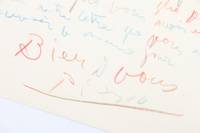
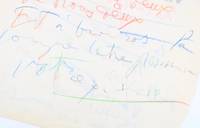
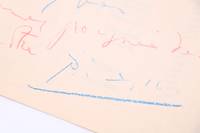
1955855571955. Fine. 20 décembre 1955 26.80 x 20.90 cm un feuillet Multi-colored autograph letter to Max Pellequer Elegant multi-colored autograph letter by Pablo Picasso to Max Pellequer signed and dated 'December 20 1955'. A leaf in multi-color pencil blue green orange and red. Traces of transverse folds. This ""graphic"" letter in the most literal sense constitutes a superb polychrome and artistic link in an epistolary chain that linked Picasso and his prominent patron for decades. Despite his prolific correspondence Picasso's entirely autographed letters are extremely rare as Laurence Madeline points out in her article on the confidential activity of the great artist:The inertia paralyzing Picasso who preferred his work as an artist to that of a secretary made the letters he took pleasure in writing more essential and more touching Laurence Madeline Picasso épistolier L'Herne no. 106. Living on the hills over Cannes the painter was indeed helped by his faithful secretary and childhood friend Jaume Sabartés who was responsible for writing numerous missives save a few correspondents notably Pellequer. Picasso wrote each of Pellequer's letters even the most insignificant in an ample voluptuous script playing with letters and words as graphic objects blending aesthetically in the space of the page in perfect contrast to the prosaic nature of the letter's content. It could even be argued that his artistic soul largely invaded his daily and administrative correspondence with his banker and ardent collector of his works. Part of their correspondence is kept at the National Picasso Museum in Paris. An extraordinary recipient. Banker and collector Max Pellequer was introduced to Picasso in 1914 by his uncle by marriage André Level. He quickly became one of Picasso's most important collectors and his financial advisor for over 30 years. Pellequer's interest in his art began as early as the 1910's when he purchased a Picasso bronze from the art dealer Ambroise Vollard. During the 1930s and 1940s as Picasso's personal banker he secured and enhanced the painter's wealth and allowed him to settle comfortably in the South of France. Picasso created a superb ex-libris on copper for him bought him paintings including La mer à L'Estaque by Cézanne now in the Picasso museum and offered him a few works. Pellequer assembled a vast collection of paintings by the great masters of modern art: Degas Raoul Dufy Paul Gauguin Fernand Léger Henri Matisse Joan Miró Modigliani and Maurice Utrillo today preserved in the most important international museums. The epistolary art of Picasso. Picasso's epistolary production acted as an outlet for his incessant creative energy which was expressed in ceramics sculptures photographs illustrations collages or poetry. Each letter was an opportunity for genius to blossom regardless of the administrative content of his exchanges with Pellequer. Perhaps to counteract the dullness of his work Picasso redoubled his efforts: an explosion of color calligraphic letters across the page. to conjure up beauty and adorn his words in shimmering hues using oil pastels black felt-tip pens or colored pencils.These alphabet letters numbers words and sentences placed on the paper like so many musical scales are literally brought to life by the creative power of the painter. The years of La Californie in Cannes. Living with Jacqueline Roque in the villa La Californie at the time of this letter the painter was producing a series of captivating lithographed portraits of his partner. Paradoxically this colorful letter corresponds to a very monochrome period of his work a superb counterpart to the black washes on zinc. Matisse with whom Pellequer also corresponded had died a month earlier. A very beautiful and visual illustration of Picasso's need for total expression through his correspondence with one of his close advisors and friends. unknown
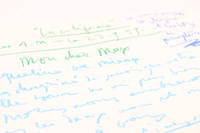
195989523Cannes 1959. Fine. A polychrome and artistic link in an epistolary chain that linked Picasso to his prominent patron for decades Cannes 23 septembre 1959 21 x 27 cm un feuillet Multi-coloured autograph letter from Pablo Picasso to Max Pellequer signed and dated by the artist on September 23 1959. The document includes the autograph address of his villa La Californie. Ten lines in blue and green pencils on a watermarked BFK Rives sheet.Minor folds and marks. A very elegant letter written in pastel colours by Pablo Picasso. Despite his prolific correspondence Picasso's entirely autographed letters are extremely rare as Laurence Madeline points out in her article on the confidential activity of the great artist:The inertia paralyzing Picasso who preferred his work as an artist to that of a secretary made the letters he took pleasure in writing more essential and more touching Laurence Madeline Picasso épistolier L'Herne no. 106. Living on the hills over Cannes the painter was indeed helped by his faithful secretary and childhood friend Jaume Sabartés who was responsible for writing numerous missives save a few correspondents notably Pellequer. Picasso wrote each of Pellequer's letters even the most insignificant in an ample voluptuous script playing with letters and words as graphic objects blending aesthetically in the space of the page in perfect contrast to the prosaic nature of the letter's content. It could even be argued that his artistic soul largely invaded his daily and administrative correspondence with his banker and ardent collector of his works. Part of their correspondence is kept at the National Picasso Museum in Paris. An extraordinary recipient. Banker and collector Max Pellequer was introduced to Picasso in 1914 by his uncle by marriage André Level. He quickly became one of Picasso's most important collectors and his financial advisor for over 30 years. Pellequer's interest in his art began as early as the 1910's when he purchased a Picasso bronze from the art dealer Ambroise Vollard. During the 1930s and 1940s as Picasso's personal banker he secured and enhanced the painter's wealth and allowed him to settle comfortably in the South of France. Picasso created a superb ex-libris on copper for him bought him paintings including La mer à L'Estaque by Cézanne now in the Picasso museum and offered him a few works. Pellequer assembled a vast collection of paintings by the great masters of modern art: Degas Raoul Dufy Paul Gauguin Fernand Léger Henri Matisse Joan Miró Modigliani and Maurice Utrillo today preserved in the most important international museums. The epistolary art of Picasso. Picasso's epistolary production acted as an outlet for his incessant creative energy which was expressed in ceramics sculptures photographs illustrations collages or poetry. Each letter was an opportunity for genius to blossom regardless of the administrative content of his exchanges with Pellequer. Perhaps to counteract the dullness of his work Picasso redoubled his efforts: an explosion of color calligraphic letters across the page. to conjure up beauty and adorn his words in shimmering hues using oil pastels black felt-tip pens or colored pencils.These alphabet letters numbers words and sentences placed on the paper like so many musical scales are literally brought to life by the creative power of the painter. The years of La Californie in Cannes. Living with Jacqueline Roque in the villa La Californie at the time of this letter the painter was producing a series of captivating lithographed portraits of his partner. Paradoxically this colorful letter corresponds to a very monochrome period of his work a superb counterpart to the black washes on zinc. Matisse with whom Pellequer also corresponded had died a month earlier. A very beautiful and visual illustration of Picasso's need for total expression through his correspondence with one of his close advisors an unknown
1958895271958. Fine. 23 septembre 1958 20 x 17.5 cm Deux pages sur un feuillet Multi-coloured autograph letter from Pablo Picasso to Max Pellequer signed and dated by the artist on September 23 1958. The document includes the autograph address of his villa La Californie. 13 lines in a multi-coloured tip pen orange red blue and green on a sheet marked VIA WESTERN UNION.Minor folds. Tear in the lower left corner. Colour is not systematically used in Pablo Picasso's letters. It would seem that the artist wanted to make a kind gesture towards his friend and banker Max Pellequer because the more aesthetically pleasing his letters are the more valuable they are. The use of a multicoloured pen in letter writing was a practice shared by several artists notably Paul Éluard. Despite his prolific correspondence Picasso's entirely autographed letters are extremely rare as Laurence Madeline points out in her article on the confidential activity of the great artist:The inertia paralyzing Picasso who preferred his work as an artist to that of a secretary made the letters he took pleasure in writing more essential and more touching Laurence Madeline Picasso épistolier L'Herne no. 106. Living on the hills over Cannes the painter was indeed helped by his faithful secretary and childhood friend Jaume Sabartés who was responsible for writing numerous missives save a few correspondents notably Pellequer. Picasso wrote each of Pellequer's letters even the most insignificant in an ample voluptuous script playing with letters and words as graphic objects blending aesthetically in the space of the page in perfect contrast to the prosaic nature of the letter's content. It could even be argued that his artistic soul largely invaded his daily and administrative correspondence with his banker and ardent collector of his works. Part of their correspondence is kept at the National Picasso Museum in Paris. An extraordinary recipient. Banker and collector Max Pellequer was introduced to Picasso in 1914 by his uncle by marriage André Level. He quickly became one of Picasso's most important collectors and his financial advisor for over 30 years. Pellequer's interest in his art began as early as the 1910's when he purchased a Picasso bronze from the art dealer Ambroise Vollard. During the 1930s and 1940s as Picasso's personal banker he secured and enhanced the painter's wealth and allowed him to settle comfortably in the South of France. Picasso created a superb ex-libris on copper for him bought him paintings including La mer à L'Estaque by Cézanne now in the Picasso museum and offered him a few works. Pellequer assembled a vast collection of paintings by the great masters of modern art: Degas Raoul Dufy Paul Gauguin Fernand Léger Henri Matisse Joan Miró Modigliani and Maurice Utrillo today preserved in the most important international museums. The epistolary art of Picasso. Picasso's epistolary production acted as an outlet for his incessant creative energy which was expressed in ceramics sculptures photographs illustrations collages or poetry. Each letter was an opportunity for genius to blossom regardless of the administrative content of his exchanges with Pellequer. Perhaps to counteract the dullness of his work Picasso redoubled his efforts: an explosion of color calligraphic letters across the page. to conjure up beauty and adorn his words in shimmering hues using oil pastels black felt-tip pens or colored pencils.These alphabet letters numbers words and sentences placed on the paper like so many musical scales are literally brought to life by the creative power of the painter. The years of La Californie in Cannes. Living with Jacqueline Roque in the villa La Californie at the time of this letter the painter was producing a series of captivating lithographed portraits of his partner. Paradoxically this colorful letter corresponds to a very monochrome period of his work a superb cou unknown
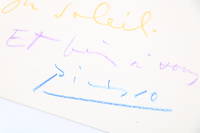
195689526Cannes 1956. Fine. A polychrome and artistic link in an epistolary chain that linked Picasso to his prominent patron for decades Cannes 5 juin 1956 13.5 x 21 cm un feuillet Multi-coloured autograph letter from Pablo Picasso to Max Pellequer signed and dated by the artist on June 5 1956. The document includes the autograph address of his villa La Californie. Twelve lines in orange pink blue yellow and purple pencil on one sheet. Minor folds. A very elegant letter written in pastel colours by Pablo Picasso. Despite his prolific correspondence Picasso's entirely autographed letters are extremely rare as Laurence Madeline points out in her article on the confidential activity of the great artist:The inertia paralyzing Picasso who preferred his work as an artist to that of a secretary made the letters he took pleasure in writing more essential and more touching Laurence Madeline Picasso épistolier L'Herne no. 106. Living on the hills over Cannes the painter was indeed helped by his faithful secretary and childhood friend Jaume Sabartés who was responsible for writing numerous missives save a few correspondents notably Pellequer. Picasso wrote each of Pellequer's letters even the most insignificant in an ample voluptuous script playing with letters and words as graphic objects blending aesthetically in the space of the page in perfect contrast to the prosaic nature of the letter's content. It could even be argued that his artistic soul largely invaded his daily and administrative correspondence with his banker and ardent collector of his works. Part of their correspondence is kept at the National Picasso Museum in Paris. An extraordinary recipient. Banker and collector Max Pellequer was introduced to Picasso in 1914 by his uncle by marriage André Level. He quickly became one of Picasso's most important collectors and his financial advisor for over 30 years. Pellequer's interest in his art began as early as the 1910's when he purchased a Picasso bronze from the art dealer Ambroise Vollard. During the 1930s and 1940s as Picasso's personal banker he secured and enhanced the painter's wealth and allowed him to settle comfortably in the South of France. Picasso created a superb ex-libris on copper for him bought him paintings including La mer à L'Estaque by Cézanne now in the Picasso museum and offered him a few works. Pellequer assembled a vast collection of paintings by the great masters of modern art: Degas Raoul Dufy Paul Gauguin Fernand Léger Henri Matisse Joan Miró Modigliani and Maurice Utrillo today preserved in the most important international museums. The epistolary art of Picasso. Picasso's epistolary production acted as an outlet for his incessant creative energy which was expressed in ceramics sculptures photographs illustrations collages or poetry. Each letter was an opportunity for genius to blossom regardless of the administrative content of his exchanges with Pellequer. Perhaps to counteract the dullness of his work Picasso redoubled his efforts: an explosion of color calligraphic letters across the page. to conjure up beauty and adorn his words in shimmering hues using oil pastels black felt-tip pens or colored pencils.These alphabet letters numbers words and sentences placed on the paper like so many musical scales are literally brought to life by the creative power of the painter. The years of La Californie in Cannes. Living with Jacqueline Roque in the villa La Californie at the time of this letter the painter was producing a series of captivating lithographed portraits of his partner. Paradoxically this colorful letter corresponds to a very monochrome period of his work a superb counterpart to the black washes on zinc. Matisse with whom Pellequer also corresponded had died a month earlier. A very beautiful and visual illustration of Picasso's need for total expression through his correspondence with one of his close advisors and friends. unknown
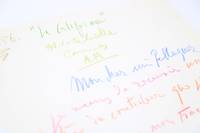
1956895241956. Fine. ""Mistral et soleil"" Mistral and sunshine 7 juin 1956 26.80 x 20.90 cm un feuillet dont deux lignes sur une page Autograph letter in blue and red pencil by Pablo Picasso to Max Pellequer signed and dated by the author on June 7 1956. The document includes the autograph address of his villa La Californie. 12 lines on the front of the letter and two lines on the back on a printed notice announcing the forthcoming publication of a book by Thérèse Leroy. Minor folds and a slight crease in the lower left corner. We have here a rare written account of Pablo Picasso engaging in self-deprecation. In his villa ""Californie"" the painter found a printed poster announcing the forthcoming publication of the book ""La technique du classement"" The Technique of Classification. On this announcement he humorously wrote the following words: ""Je vais m'y mettre. Un peu sur le tard"" I'll get started on it with slight delay well aware that he preferred to devote his time to his art rather than to administrative tasks. Picasso refers here to the topic of his letter the discovery of a new insurance document requested by its recipient. Max Pellequer who managed his finances knew only too well the disorderly nature of his friend the artist with 50000 works to his credit. Picasso's true concerns however seem to reflect in the letter's graphic composition. He changed the colour and size of the characters to highlight what really mattered to him: beauty and friendship. « Mistral et soleil. Allez bien et bonne poignée de main de votre Picasso » ! ""Mistral and sunshine and a proper handshake to you from Picasso""! Despite his prolific correspondence Picasso's entirely autographed letters are extremely rare as Laurence Madeline points out in her article on the confidential activity of the great artist:The inertia paralyzing Picasso who preferred his work as an artist to that of a secretary made the letters he took pleasure in writing more essential and more touching Laurence Madeline Picasso épistolier L'Herne no. 106. Living on the hills over Cannes the painter was indeed helped by his faithful secretary and childhood friend Jaume Sabartés who was responsible for writing numerous missives save a few correspondents notably Pellequer. Picasso wrote each of Pellequer's letters even the most insignificant in an ample voluptuous script playing with letters and words as graphic objects blending aesthetically in the space of the page in perfect contrast to the prosaic nature of the letter's content. It could even be argued that his artistic soul largely invaded his daily and administrative correspondence with his banker and ardent collector of his works. Part of their correspondence is kept at the National Picasso Museum in Paris. An extraordinary recipient. Banker and collector Max Pellequer was introduced to Picasso in 1914 by his uncle by marriage André Level. He quickly became one of Picasso's most important collectors and his financial advisor for over 30 years. Pellequer's interest in his art began as early as the 1910's when he purchased a Picasso bronze from the art dealer Ambroise Vollard. During the 1930s and 1940s as Picasso's personal banker he secured and enhanced the painter's wealth and allowed him to settle comfortably in the South of France. Picasso created a superb ex-libris on copper for him bought him paintings including La mer à L'Estaque by Cézanne now in the Picasso museum and offered him a few works. Pellequer assembled a vast collection of paintings by the great masters of modern art: Degas Raoul Dufy Paul Gauguin Fernand Léger Henri Matisse Joan Miró Modigliani and Maurice Utrillo today preserved in the most important international museums. The epistolary art of Picasso. Picasso's epistolary production acted as an outlet for his incessant creative energy which was expressed in ceramics sculptures photographs illustrations collages or poetry. Each letter unknown
195689529Cannes 1956. Fine. 'I continue my work with passion' Cannes 27 janvier 1956 21 x 27 cm un feuillet Autograph letter by Pablo Picasso to Max Pellequer vividly executed in multiple colours signed and dated by the artist 27 January 1956 addressed from his villa La Californie. Fourteen lines written in green blue pink orange red violet and turquoise pencil on a watermarked BFK Rives sheet.A few negligible transverse folds as expected from mailing. Picasso did not regularly employ colour in his correspondence. Here however he seems to have offered a gracious gesture to his friend and banker Max Pellequer as the more visually striking his letters the more sought-after they become. To speak of his work Picasso turns to red pencil: je continue mon travail avec ardeur - a telling choice that conveys the fervour he wished to bring to his art. Although Picasso maintained a substantial correspondence letters written entirely in his own hand remain exceedingly scarce. As Laurence Madeline observes in her study of this private facet of the artists life: The inertia that paralyses Picasso who prefers his activity as an artist to that of a secretary renders the letters he does choose to write all the more essential and touching Picasso épistolier LHerne no. 106. From his home overlooking Cannes Picasso was assisted by his devoted secretary and childhood companion Jaume Sabartés who penned many of the artists letters - except those destined for Pellequer. To him Picasso wrote every message himself however trivial in a generous flowing script playing with letters and words as though they were graphic elements arranged in an aesthetic dialogue across the sheet far removed from the sobriety of the text. His artistic impulse seems to have seeped into even his most routine administrative exchanges with his banker and impassioned collector. Part of the Picasso-Pellequer correspondence is held today by the Musée national Picasso in Paris. A singular recipient Max Pellequer banker and collector was introduced to Pablo Picasso in 1914 by his uncle by marriage André Level. He quickly emerged as one of the artists foremost collectors and in time became Picassos financial adviser for over three decades. Pellequers engagement with Picassos oeuvre began in the 1910s notably through a bronze jester acquired from Ambroise Vollard. During the 1930s and 1940s he became Picassos personal banker safeguarding the artists wealth and facilitating his comfortable establishment in the South of France. Their friendship was lifelong and intensely collaborative. Among other commissions Picasso executed a splendid copper ex-libris for Pellequer; Pellequer purchased paintings such as Cézannes La mer à LEstaque Musée Picasso Paris; and Picasso reciprocated with gifts of several works. A discerning and avid collector Pellequer assembled one of the finest collections of modern masterworks - Degas Dufy Gauguin Léger Matisse Miró Modigliani and Utrillo - today preserved in major international museums. The epistolary art of Picasso Picassos correspondence served as an outlet for his relentless creative energy expressed across ceramics sculpture photography illustrations collages and poetry. Every letter provided a space for the emergence of genius irrespective of the prosaic content of his exchanges with Pellequer. To counterbalance such banality Picasso took care to arrange his letters diagonally across the page enlivening them with colour from pastels felt pens or coloured pencils. Letters numerals words and sentences became visual and musical elements animated by the painters imaginative force. A striking and vividly visual illustration of Picassos imperative for total self-expression manifested through his correspondence with one of his closest friends and advisers. unknown
1964GB0007JJWM6I5N01McGraw-Hill Book Co 1964. Hardcover. Acceptable. Missing dust jacket; Readable copy. Pages may have considerable notes/highlighting. ~ ThriftBooks: Read More Spend Less.Dust jacket quality is not guaranteed. McGraw-Hill Book Co hardcover
1964GB0007JJWM6I3N01McGraw-Hill Book Co 1964. Hardcover. Good. Missing dust jacket; Pages can have notes/highlighting. Spine may show signs of wear. ~ ThriftBooks: Read More Spend Less.Dust jacket quality is not guaranteed. McGraw-Hill Book Co hardcover
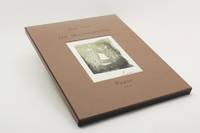
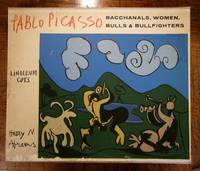
196214645New York: Harry N. Abrams 1962. First. Hardcover. Good. Slipcase with pastedown has gotten a bit chewed up. Several scuffs and nicks and chips of the pastedown edges are visible. Clothbound hardcover is in very good shape. These lino cuts are well preserved and impressive. There is some foxing at the edges and tissue guards are missing so there has been some ghosting on the versos but the images themselves are fresh and bright. Harry N. Abrams hardcover