195 résultats
18472111902160200580Zenkoji Daimoncho Tsutaya Bangoro Bookbinding 1847. Soft Cover. Fine. Volume: 1 Zenkoji Daimoncho Tsutaya Bangoro Bookbinding paperback
185055957London: Chapman and Hall 1850. 8vo. xi 1 216 pp. plus 32 pp. publisher’s catalogue. Steel-engraved frontisp. of Queen Victoria w/ nearly 200 woodcut text engravings designs & plates 30 Fabric paper and wallpaper samples 1 sample w/ small hole. Black ribbed publisher’s cloth gilt lettering & spine minor wear & fraying to spine rear outer joint minor bumping to corners some offsetting to a few leaves from the samples still a VG- copy. First edition thus of this famed journal which aimed to improve the standards of British manufacturers and artists for the decorative and applied arts targeting the fast rising Victorian British middle class. This second volume is dedicated to the Duchess of Sutherland Mistress of the Robes and close friend of Queen Victoria as well as prominent abolitionist. There are numerous references throughout to the forthcoming 1851 Crystal Palace Exhibition as Cole 1808-1882 continually encouraged designers to reach a balance between utility and ornament and raise the quality of British manufacturing. He was elected the chairman of the Society of Arts in 1846 and was able to direct the organizing of the Exhibition which received over 6 million visitors and turned the profits from the Exhibition into founding the South Kensington Museum now the Victoria & Albert Museum. The Journal displays many samples of textiles wall papers embroidered textiles and silks. In addition there are extensive sections on pottery glass metalwork lighting sculpture furniture and much more. Of interest are the excellent articles on book arts book design including expositions by Ruskin the report on the forthcoming Exhibition to Prince Albert and more. These Journal volumes have become quite scarce in the market of late and they were all heavily used throughout the 19th century for reference and inspiration. Chapman and Hall, hardcover
190011706Anstalt J. Gasterstaedt, Wien ca. 1900. 106 Tafeln mit 2804 Abbildungen in Hälfte der Naturgrösse dunkelgrüner Kaliko - Einband, gebundene Ausgabe, goldgeprägter Deckel, Exemplar in guten Erhaltungszustand
189951352New York: Frederick A. Stokes Company 1899. First Edition. Octavo 21.5cm; black and gray illustrated paper-covered boards with title label at upper spine; 962pp; illus. Gentle sunning to spine and upper rear cover light wear to spine ends and board corners with minute board exposure to lower corners a few tiny stains to lower front cover and a tiny vintage booksellers ticket to lower rear pastedown; hinges sound and clean throughout; Very Good. <br/><br/>Attractive copy of this masterpiece of Art Nouveau book design and a key Will Bradley work. The title poem remains Crane's most searing indictment of war condensing the spirit of The Red Badge of Courage into a work of 32 lines. BAL 4083. Frederick A. Stokes Company unknown books
188018114ABWien, ca. 1880. 16 : 41 cm.
18512111902160201412Kawauchiya Shinjiro 1851. Soft Cover. Fine. Number of books: 5 Kawauchiya Shinjiro paperback
18632111902160201223Not Available 1863. Soft Cover. Fine. Volume: 1 Not Available paperback
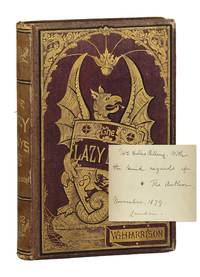
187730067London: William H. Harrison 1877. Very Good. London: William H. Harrison 1877. First Edition. Octavo 18.5cm.; publisher's purple pictorial cloth designed by Florence Claxton elaborately embossed in gilt and black all edges gilt black glazed endpapers; iv5-156pp. Cloth a bit scuffed and worn along extremities with brief exposure at corners and spine ends spine cloth faded brief split to rear joint rear hinge cracked but holding textblock slightly shaken in binding else a Very Good bright example. <br /> Inscribed on front flyleaf to the American medium "Mrs. Hollis Billing With the kind regards of The Author / November 1879. London."<br /> <br /> Scarce collection of humorous poems and vignettes by the British author and editor of The Spiritualist. Running in the London Spiritualist circles Harrison would presumably have made the acquaintance of the inscribee American medium Mary Hollis Billing and her husband who served on the 1877 Committee of the Theosophical Society in London. <br /> <br /> Contents only glancingly Spiritualist though true to form the imprint provides the publication date based on different calendars: A.D. 1877 Popular Chronology; A.M. 5877 Torquemada; A.M. 50800077 Huxley. Like many Spiritualists of the day Harrison was especially interested in photography and several pieces in this volume relate to the art and science of the form. Notably "The Lay of the Photographer" describes in nineteen stanzas the chemical transformations of pyroxylin iodine and silver to develop photographs. Needless to say the poem is not very good.<br /> <br /> Advertisements for the present work attribute the cover design to British illustrator cartoonist and fringe Pre-Raphaelite Florence Claxton 1838-1920. One contemporary reviewer aptly describes the book as "handsomely-bound and griffin-guarded" Liverpool Daily Courier. William H. Harrison unknown
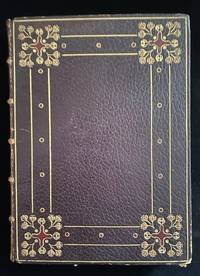
1894013830Boston: Copeland and Day 1894. First Edition Thus. Hardcover. Very Good. As stated on the colophon the first complete edition this one of 500 copies on French paper with lettering and decorations by Bertram Grosvenor Goodhue in a custom inlay leather binding by Virginia Chester signed and dated 1911. Full dark green crushed morocco elaborately decorated front and rear covers and their versos aeg. Executed in Art Nouveau style perfectly appropriate to Goodhue's decorations. Signed by Chester with gilt pressed conjoined initials VC flanked by 19 and 11 for 1911 at the bottom of the rear inside cover. Spine moderately worn corners worn joints too more noticeably to front and shallow loss at spine ends more noticeably at top. Chester dropped out of university in Illinois in 1902 due to illness and took up bookbinding as a hobby. She never returned to college but continued professionally with bookbinding studying in Chicago with Gertrude Stiles in New York with Helen Haskell and in Paris with Henri Mulhae and Jules Domont. Around 1912 or so she returned to the Chicago and opened her own bookbinding studio in the Fine Arts Building. Penciled at the bottom of the fly leaf is perhaps her notes or a collector's: "Virgina Chester / Chicago/ 1024 Fine Arts Bldg/ code/ 11/28/13/ code". This binding appears to have been influenced by French design and technique. Copeland and Day hardcover
18892111902160201047Usomatsu Inoue Ryuunsha 1889. Soft Cover. Fine. Number of books: 2 books Usomatsu Inoue Ryuunsha paperback
19001653431900. KIMONO DESIGN. Album of 15 elaborate silk kimono designs. Folio. 335 x 260 mm bound in contemporary silk over boards. NP. ND. A stunning and most unusual production which consists of 15 designs for kimonos printed using woodblocks on textile and each mounted within a different elaborate hand-painted border. In addition elaborate designs have been sown onto the printed outlines. Altogether a unique and impressive piece of book-making. hardcover books
190018325Wien, Gerlach & Schenk, o. J. (1899 oder 1900). XII, 78 S. mit zahlr. teils farb. Abb. 8 farb. Tafeln. Gr.-8°. Lose in OKart.-Flügelmappe (Rücken fachmännisch erneuert, hinterlegte Einrisse, hs. Name und Reste einen Buchhandelsschildchens am Vorderdeckel). [3 Warenabbildungen]
1890249781New York 1890. Approximately 34 items on various stock including George D. Thompson letterhead. Various sizes generally 7 x 3 1-2 in to 11 x 8 1/2 in. Some toning some designs show signs of previous mounting on verso generally very good. Approximately 34 items on various stock including George D. Thompson letterhead. Various sizes generally 7 x 3 1-2 in to 11 x 8 1/2 in. Watercolor designs in Classical Romantic and Chinoise styles for leather screens manufactured by George D. Thompson & Co. The company letterhead advertises "Hand tooled and painted chair leathers and wall panels . Period designs still life flower bird & fruit panels hand painted bellows trays humidors book covers." Some designs give dimensions and prices on verso. unknown
1890249781New York 1890. Approximately 34 items on various stock including George D. Thompson letterhead. Various sizes generally 7 x 3 1-2 in to 11 x 8 1/2 in. Some toning some designs show signs of previous mounting on verso generally very good. Approximately 34 items on various stock including George D. Thompson letterhead. Various sizes generally 7 x 3 1-2 in to 11 x 8 1/2 in. Watercolor designs in Classical Romantic and Chinoise styles for leather screens manufactured by George D. Thompson & Co. The company letterhead advertises "Hand tooled and painted chair leathers and wall panels . Period designs still life flower bird & fruit panels hand painted bellows trays humidors book covers." Some designs give dimensions and prices on verso. unknown books
18993100FBKyoto, Verlag Yamada Unsodo [Yamada Naosaburo], Meiji 32 [1899]. 2°. 37 x 25,5 cm. [22] Blatt. Original-Broschur nach Blockbuchart gebunden und mit seidenem Titelschild.
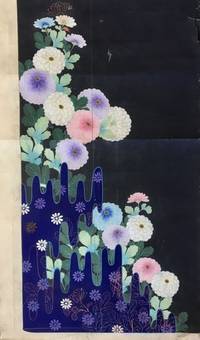
181956897Kyoto Japan: Marubeni Shoten Design Dept. Keimeikai Textile & Dyeing Studio Tanioka Shoten Design Dept. ca. 1918-1945. Folio. 61 original hand-painted inked and pencil designs with a few on a lightly toned but quality semi-translucent paper the majority on thick paper stock and still others with two pieces carefully pasted together with contiguous designs sized from 9 x 15 in. up to 19.25 x 38.5 in. with 13 of the pieces larger the larger size a number of them sized 18 x 32 in. and many in the 14.25 x 15.5 in. size colour painted; the majority feature the design studio chop or crest at lower corners throughout many w/ annotations in margins several w/ change orders neatly annotated or even the title of the design and still many others w/ Roman numeric inventory codes in margins as well two still retaining original small silk samples many with creasing or minor tears & edgewear or creasing to fore-edges a few w/ small & large closed tears while others show some creasing and thumbing from continued use still an exceptional group of manuscripts. This superb archive of 61 original hand-painted kimono designs furnishes an exceptional visual array of Taisho- and early Showa-era Japanese motifs and styles. A number of the designs evoke traditional Japanese Ukiyo-e woodblock prints with deep vivid colours and well rendered illustrations. Many of these designs incorporate floral patterns including Kiku Chrysanthemum Botan Mon Peony Pattern Manju Kiku Marigolds Japanese Irises Morning Glory Cockscomb Ivy Dahlias and many other botanical motifs. In addition there are many illustrating ornately embroidered designs austere bamboo mushrooms and intriguing landscapes some with a small portion fully painted in with brilliant colouring while the outline of the kimono fills out the drawing. Two of the designs still features their original small attached silk kimono sample more reminiscent of Western Design houses which often attached their chosen fabric samples to their clothing designs. A few of the designs are executed on translucent thin paper for the kimono draper to transfer the design to white silk or other fabrics via some type of carbon paper process. Another of the designs has been executed on a stunning silver metallic paper with palm or bamboo leaf fronds executed in vivid blues & browns. Some feature a nearly surrealist quality while several others include illustrations of doves or chickens. Two of the designs incorporate Art Deco representations of Chinese Junks and Japanese sailing vessels typical of the 1930’s prior to World War II. In the Taisho Era a new era opened for textile designers working with Kyoto drapers and department stores with many having trained at new art colleges and then working in the design studios of Marubeni Keimeikai Textile & Dyeing Studio and others. The Tachiki Artist design studio designs on thin translucent paper include one with designer stamp of character embedded within a skull. Some appear to have two different date stamps for the Marubeni Shoten Design and some are unsigned or stamped. The Taisho- and Showa-era kimonos featured brighter colours more groundbreaking designs as Japan’s designers embraced traditional dress and transformed it into a new garment equally appealing to the “Moga†or brazen “Modern Girl.†The designer notes include instructions to “leave a little more space between the fans;†“Drop the little fan crest;†“too much white bush clover†on the pine cones and even that Matsuo Taishichi had ordered a design for “clothes for paying a visit for a young person.†The Marubeni Shoten originated with Chubei Itho who began in 1858 as a salesman for linen cloth and by 1872 had opened his drapery store Benchu in Senba Osaka. By 1918 Chubei Itoh had expanded the business into Osaka and deciced to merge with Itochu Shoten Ltd. becoming Marubeni Shoten with their own drapers shops and many contracts with department stores. Later by the mid-1950s Marubeni merged with the company that operated the Takashimaya Dept. Store Chain all the while preserving their design studio and artists. See: Yuko Fukatsu-Fukuoka The Evolution of Yuzen-dyeing Techniques and Designs After the Meiji Restoration 2004; Arisa Shinko Tomikawa Hand Painted Kyo Yuzen Atelier “Arisa†A Brief Introduction 2020; Annie Van Asche Japanese Kimono Fashion of the Early Twentieth Century Textile Society of America Symposium Proceedings 2000; Our History Our Roots Marubeni Corporation 2020. Marubeni Shoten Design Dept., Keimeikai Textile & Dyeing Studio, Tanioka Shoten Design Dept., hardcover
1815832561815. DESIGN Matsuoka Tokikata; Honma Hyakuri. SHOKUMON ZUE. 7 vols. privately published by Hyakuri apparently from 1815-25 as a completion of work begun by Tokikata in the late 18th very early 19th century. 19.3 x 26.9 cm string-bound Japanese-style fukuro toji with printed paper title labels - all bindings match. Hundreds of beautiful color textile designs reproduced in color woodcut. Nobleman Ladies Ceremonial dress Brocades Imperial costumes all are covered. Important and quite scarce as few sets were produced. Some worming otherwise the overall condition is very good. unknown
1815832561815. DESIGN Matsuoka Tokikata; Honma Hyakuri. SHOKUMON ZUE. 7 vols. privately published by Hyakuri apparently from 1815-25 as a completion of work begun by Tokikata in the late 18th very early 19th century. 19.3 x 26.9 cm string-bound Japanese-style fukuro toji with printed paper title labels - all bindings match. Hundreds of beautiful color textile designs reproduced in color woodcut. Nobleman Ladies Ceremonial dress Brocades Imperial costumes all are covered. Important and quite scarce as few sets were produced. Some worming otherwise the overall condition is very good. unknown books
18171653311817. JAPANESE TEXTILE DESIGN. Shozoku shokumon zue. By Matsuoka Tokikata and Hinma Hyakuri. Seven volumes. Containing a total of 160 Japanese folded sheets illustrated with a profusion of colour woodcut-printed designs. 8vo. 268 x 193 mm bound in original Japanese paper wrappers stitched laid in a new Japanese folding chitsu case. Tokyo: 1817-1825. First Edition. A fine set of this important compendium of early Japanese textile design which is also a masterpiece of Japanese bookmaking. Matsuoka Tokikata began compiling the work in the late eighteenth century and it was completed by Honma Hyakuri early in the nineteenth century. The work is divided into five parts: I. Karginu: Colour designs of hunting clothing; II. Jokan: Costume design for court ladies; III. Reifuku: Ceremonial dresses; IV. Nishiki orimono: Designs on brocades; V. Gyoko: Costumes used for Imperial visits. The delicately coloured designs include many that are refined and subtle and many that are elaborate and ravishingly beautiful. The imagery is classical Japanese: a profusion of varieties fill the pages of these volumes with flowers birds bamboo rivers and flowing waters insects butterflies fish coloured patterns and blind-stamped ornaments. Of the greatest rarity. Some minor wear to wrappers but overall a fine set. hardcover books
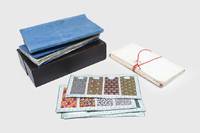
1820181123Likely Norwich: c.1820s. An eye-catching and infectious spectacle A prepossessing collection of textile swatches for clothing or furnishing likely produced in Norwich for selling to the German market. Using the whole spectrum of colours the designs incorporate stripes geometric shapes diaper patterns zigzags and chevrons floral and foliate motifs and ikat designs. The samples are arranged by pattern under titles in German and at times French and Italian. These include for example Weisbodige Croisé white strips and colour chevron-pattern stripes Rothbodige Köper thick red stripes alternating with those of other colours and Cuttni multicolour swatches with fine diaper or lozenge patterning. The samples are woven from wool a factor - together with their design - that points to their origin in Norfolk. "The presentation of choice in the books of samples from Norwich is literally fascinating with some pages so stunning and dazzling in their effect and we might argue that it could be the effect of the whole page that seduces the buyer rather than the individual sample. The almost infinite variations of colour and pattern accentuated in their intensity in the context of a book or card create an eye-catching and infectious spectacle" Mitchell. Accompanying these books are two other unrelated sets of several dozen samples both dating from later in the 19th century and at least one from France. Provenance: Cora Ginsburg 1910-2002 the expert in fine textiles purchased by her in England in 1962 - Stephen C. Massey. 2 vols tall octavo 260 x 150 mm. With 1063 unique samples of varying sizes mounted on rectos of 125 leaves printed in ornamental blue 2 folding at fore edge manuscript titles and numbers direct to leaves or on labels. Contemporary blue paper wrappers manuscript number or label on inner front covers. Housed in 19th-century calf pull-off box green lining and gilt decoration. Within custom blue cloth box with red label by James Brockman. Samples fine and bright wrappers creased pull-off box worn: a well-preserved collection. Victoria Mitchell "A Marketplace in Miniature: Norwich Pattern Books as Cultural Agency." hardcover