29 262 résultats
194739069Fanara Egypt: Der Tribüne 1947. First edition. Softcover. g to g. Folio. Unpaginated. 11 leaves. Original illustrated wrappers. This rare issue of "Schlemil" a German POW Camp Newspaper provides a first-hand account of the feelings and emotions of the men as well as their day-to-day activities during their internment in Fanara Egypt. This issue the fourth was the first published in 1947 issues 1-3 were published in 1946. The last issue No. 8 was also also published in 1947 shortly before the prisoners were shipped home 1947 through 1948. Of all the German POW camps camp 307 had the highest rate of German mortality. The reason can primarily be found in the harsh climatic conditions. Indeed unlike to the soldiers of the Africa corps who were fit for the tropics the soldiers who were taken prisoners in Italy Greece and its islands had many difficulties with the climate in Egypt. Hot wind and sandstorms in spring great heat in summer and severe cold in the winter impaired life in the strange climate. This led to the well known "Declaration of the captured Lutheran Pastors in Egypt". The front cover of this copy of "Schlemihl" features a drawing depicting a German POW painting a newlywed couple with the year 1947 at the upper left corner. The illustrator must have expressed to see his wish come true being freed and shipped home and marry his sweetheart. The newspaper contains poetry and short stories with a strong anti-Nazi stance. There are 5 other illustrations throughout the whole issue. Each leaf is printed on recto only. Some age-toning and creasing to wrappers with tiny chipping and closed tear at upper front and back cover. Upper corner slightly creased throughout. Text in German. Wrappers in overall good interior in good condition. Declaration of the captured Lutheran Pastors in Egypt:<br /> <br /> The captured Lutheran Pastors in Egypt moved by the emotional situation of their fellow prisoners in the Middle East which has become extraordinarily critical and in obedience to their sworn duties of office would like to make the following declaration before the British authorities before the German public before their fellow prisoners and also before the Christians of the world.<br /> <br /> For at least the last two and a half years and for the most part substantially longer periods German Prisoners of War have been held in the Middle East whose number at this time amounts to more than 60 000. They have been put to work in a climate which for half the year is positively unbearable for a European. Through the long duration of imprisonment through the separation from their relatives through the bad news from home through the impossibility of effectively helping them their relatives and for many the “C†people through the completely immeasurable continuance of their imprisonment the emotional burden of these prisoners has reached a degree which gives grounds for the gravest fears for the future.<br /> <br /> The symptoms which are already manifesting themselves are shocking enough: the incidences where prisoners break down emotionally so completely that they become mentally ill are increasing. Alone in one Work Company 2719 of 5000 men no fewer than six prisoners have been admitted to the appropriate department of the British military hospital because of mental illness. Above all the cases are increasing where prisoners are ending their own lives which appear unbearable to them. In the last month in just one of the three British Military Districts in Egypt five cases of suicide are known to us.<br /> <br /> This is because the majority of Prisoners of War in the Middle East have come to a total collapse of trust in the promises and declarations of the British custodial powers. The emotional strain which has arisen from this among the Prisoners of War is extreme. The most important reasons to name only these few which have led to this crisis are the following:<br /> <br /> 1. At the end of last year more than eighteen months after the capitulation the Prisoners of War were advised of the Repatriation Plan as it was to be binding for the year 1947. This Repatriation Plan gave the individual the opportunity to envisage within an admittedly broad framework according to his score and his political classification his return home. This plan has not been carried out.<br /> <br /> On 30 September 1947 the British Government announced that it would be necessary for it to reduce the repatriation to a fraction of the planned quota because of shortages of ships. Can one think ill of Prisoners of War that they held the following declaration which had been printed in the papers for some time against the British Prime Minister Attlee: that the work of the Prisoners of War at this time was the only available reparation from Germany and could not be done without Or that they received the impression from the speech to the Lower House on March 27 of the Member of Parliament for Ipswich Mr. R.R. Stokes that the reason for the sluggish pace of the repatriation from the Middle East is that the local British authorities held the manpower of the Prisoners of War to be so indispensable that they would simply have to wait for repatriation Can one think ill of the German Prisoners of War who due to previous experience are already full of mistrust today take into consideration that the almost complete halt to repatriation will not just last until the end of the year but that probably the closing date for repatriation the end of 1948 won’t be adhered to<br /> <br /> With great and honest thankfulness the Prisoners of War of the Middle East have experienced the intervention for the easing of the lot of the captured and their speedier return home by men of the British public above all from a great number of Bishops the Member of Parliament Stokes a man such as Viktor Gollancz and finally a group of more than sixty Lower House members. In the Middle East hardly any of this has come about and the result is growing bitterness and hopelessness instability and despair amongst the Prisoners of War. <br /> <br /> 2. A further and exceedingly grave burden for the morale and emotional bearing of the Prisoners of War lies in the recently released regulation that in future Prisoners of War will only be allowed to take in the vicinity of ten pounds of approved luggage to Germany. Germany faces another winter of starvation. Thousands of Prisoners of War have saved their hard earned tiny wages for months and years and have allowed themselves nothing in order to be able to bring a few tins of fat which is lacking most and other foodstuffs to their relatives. Many came to terms with the repeated deferment of their repatriation and found themselves a new mainstay by telling themselves: I can help my relatives to at least a small extent by sending along foodstuffs especially fat with returning comrades.<br /> <br /> Because of the new announcement all this is brought to nought. It has aroused bitterness particularly because it is so completely incomprehensible. The foodstuffs in question are in the markets in Egypt and can be obtained in the camp canteens in great quantities to be used by the Prisoners of War at will. Why should they not be able to save these and take them home No one is hurt by this and the money which is spent stays in the country. <br /> <br /> Finally particularly destructive and embittering is the thought that contrary to the natural development of things where the treatment of Prisoners of war should be gentler and better with the growing interval since the end of the war it is only becoming sharper and more severe. The Prisoners of War can absolutely not understand that they who have actually already have been discriminated against through their late return home are further discriminated against in the hardest and most burdensome way by the aforementioned announcement while the comrades who were lucky enough to return home earlier could take such foodstuffs so vitally necessary for a starving Germany freely and without limits.<br /> <br /> 3. A further hardship and exceedingly heavy emotional burden is the treatment of the Prisoners of War who have placed under “Automatical Arrest†A.A. namely those whose identity is suspected to be that of a wanted war criminal or those who are needed as witnesses in such a case. They are held in custody here indefinitely often being unable to discover why and without sentence. Despite the fact that the British authorities have had at least two years and often considerably longer at their disposal to prove identities and make investigations in countless cases the affected Prisoners of War are put under “A.A.†only hours before their repatriation. In two cases men were even fetched down from the repatriation ship a procedure which it is hardly too harsh to characterise with the expression “emotional abuseâ€. <br /> <br /> Apart from all rules about humanity this kind of procedure also contradicts all accepted laws in the Allied countries in that Prisoners of War are punished for being war criminals when they haven’t been convicted. Indefinite imprisonment for a Prisoner of War who has waited for repatriation according to a classification and score is nothing other than punishment.<br /> <br /> An example: A Prisoner of War rank Oberfeldwebel Staff Sergeant was placed under “A.A.†in December 1945 without being given any notice because he was mistaken for his brother a Leutnant Second Lieutenant who had died in the war. His assertions were not believed. He pointed out that a comrade of his dead brother could be found in the same camp and could be interrogated about this. This was refused. Only after the intervention of a Lower House member Mr. Stokes who was approached about it was the case taken up. The interrogation of the commandant was carried out and the affected person released although subject to the agreement of a superior central office. He has still not been repatriated to this day despite being scheduled for repatriation by British doctors since April because of severe asthma. That is one of several dozen cases.<br /> <br /> It is understandable that the feeling of complete absence of rights emotionally oppresses particularly these Prisoners of War and brings them to despair. <br /> <br /> 4. The Prisoners of War gratefully acknowledge that the vast majority of commandants of camps and of work companies honestly strive to lighten their burden through good food through the improvement of canteens and recreation rooms through sporting events radio cinema theatre and musical performances and also through opportunities for further education. They have complete understanding for the fact that because of their special situation in Egypt their freedom of movement cannot be as extensive as in England itself.<br /> <br /> What they do not understand however is the severity of punishment with which often only a trifling offence is often only punished by mistake. In many cases the admissible maximum penalty – twenty-eight days’ detention - is lengthened. In most of the cases the severity of the punishment bears no relationship to the severity of the misdemeanour. An example: In recent times a Prisoner of War was punished with fourteen days’ detention and loss of Work Points ie the extension of his captivity by many months because he had accidentally and not on purpose had the command post flag of a passing British military car. Examples of this sort could be continued for a long time. The severity of such penalties have a particularly hard emotional effect on the Prisoners of War who are in the third to fifth year of their captivity none of them any longer in complete possession of their emotional resilience. They therefore experience these punishments as more severe than another person would. <br /> <br /> We captured Lutheran Pastors in Egypt have hitherto purposely kept silent before the public about the completely unnecessary cases of severity and the partly open injustice for example physical mistreatment of Prisoners of War in the Detention Centres. We have tried through personal calls at the responsible British departments to do away with these things in the belief that this was about the unauthorised actions of a subordinate authority such as they appear in every human community.<br /> <br /> We asked ourselves earnestly whether we could continue to keep silence in the present situation. In thinking this we considered that one had - and rightly so - reproached our Nation and our Lutheran Church with silence when we should have spoken out. In the Stuttgart Declaration of October 1945 the Lutheran Church did penitence for this failure before the whole world.<br /> <br /> From this in earnest self-examination we came to the opinion that in further silence toward the injustice that has happened and still does happen to the Prisoners of War in the Middle East we would be guilty before the office of spiritual care which is our command before our consciences before our Lutheran Church in Germany and our German People and not least before God the Lord in front of whose Judgment Seat we will all one day need to answer for ourselves. We would have to be silent if our opponents in the past war had told us that they wanted to fall upon us in the name of revenge and retaliation. Then we would only have been able to say to our fellow captives: See where unlawfulness and Godlessness lead; see how the dreadful law of retaliation makes itself felt! In that case we could only have bowed dumbly before the deserved justice of God.<br /> <br /> But our former opponents did not say this. Rather they ceremoniously proclaimed that in the names of justice and humanity and in the spirit of Christendom with their unchanging qualities they had gone into the war and brought it to an end. In this spirit they would lead our people in a new way.<br /> <br /> That however gives us the courage and the right; today it lays the holy duty upon us as spiritual carers for our fellow captive brothers with all the earnestness of our duty of care to beg their leading personages and their responsible authorities to no longer passively watch the injustice that has been and is still being done to the Prisoners of War in the Middle East but rather to remedy the great spiritual need and despair which daily continue to gain ground through practical effective and quick measures.<br /> <br /> We have the bitter and serious concern that otherwise our fellow captives in the Middle East will lose the ultimate and best thing that we in the spirit of Christ so dearly wanted to show them how many have already lost it!: the belief and trust that in this world not power not the spirit of vengeance and retribution not the justice of the strong have the last word; rather that co-existence in the spirit of right justice humanity reconciliation and brotherly helpfulness within nations and between nations is possible.<br /> <br /> In the name and by order of the captured Lutheran Pastors in Egypt.<br /> <br /> Signed Norbert Rückert<br /> <br /> Dean of Pastors for the Middle East<br /> <br /> P.W. Camp 380<br /> <br /> 11 October 1947. Der Tribüne unknown
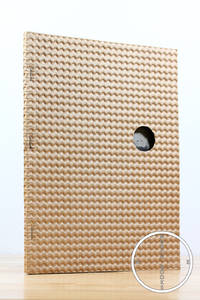
196330459New York: Film Culture 1963. Paperback. First Edition. 8.25 x 11in. Unpaginated complete. Publisher's 'waved' cardboard wraps by Maciunas with the cut-out revealing Brakhage's solarized eye. The most lauded and sought after of Brakhage's writings. Signed and inscribed by the author: "Jan. 14 1999. To Stan Fowler Stan Brakhage." This copy was signed in conjunction with The Stan Brakhage film festival at the Boulder Public Library with the original program laid-in. NEAR FINE. Shows the panels ever so slightly rubbed a small single spot of discoloration at the spine else Fine/As New. An exceptionally maintained copy. As pictured. Film Culture paperback
19933115419Sacramento: Cotangent. Fine in Fine dust jacket. 1993. First Edition; First Printing. Softcover. Limited edition. Copy #25 of 200 of which 185 are hand-bound and laid into printed black dust jackets. SIGNED by William T. Vollmann and designer Ben Pax on colophon. Printed by the Poltroon Press. 30pp. 8 1/4" X 10" Preceded in 1990 by a CoTangent edition of one handwritten folio copy. This copy may be unique as the author has made a watercolor painting of a hand on the half-title page. The story was first published in 1991 in the collection "Thirteen Stories and Thirteen Epitaphs." The present edition has some minor corrections and revisions. ; 8 1/4" X 10"; 30 pages . Cotangent. paperback
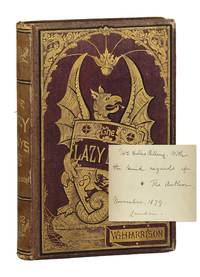
187730067London: William H. Harrison 1877. Very Good. London: William H. Harrison 1877. First Edition. Octavo 18.5cm.; publisher's purple pictorial cloth designed by Florence Claxton elaborately embossed in gilt and black all edges gilt black glazed endpapers; iv5-156pp. Cloth a bit scuffed and worn along extremities with brief exposure at corners and spine ends spine cloth faded brief split to rear joint rear hinge cracked but holding textblock slightly shaken in binding else a Very Good bright example. <br /> Inscribed on front flyleaf to the American medium "Mrs. Hollis Billing With the kind regards of The Author / November 1879. London."<br /> <br /> Scarce collection of humorous poems and vignettes by the British author and editor of The Spiritualist. Running in the London Spiritualist circles Harrison would presumably have made the acquaintance of the inscribee American medium Mary Hollis Billing and her husband who served on the 1877 Committee of the Theosophical Society in London. <br /> <br /> Contents only glancingly Spiritualist though true to form the imprint provides the publication date based on different calendars: A.D. 1877 Popular Chronology; A.M. 5877 Torquemada; A.M. 50800077 Huxley. Like many Spiritualists of the day Harrison was especially interested in photography and several pieces in this volume relate to the art and science of the form. Notably "The Lay of the Photographer" describes in nineteen stanzas the chemical transformations of pyroxylin iodine and silver to develop photographs. Needless to say the poem is not very good.<br /> <br /> Advertisements for the present work attribute the cover design to British illustrator cartoonist and fringe Pre-Raphaelite Florence Claxton 1838-1920. One contemporary reviewer aptly describes the book as "handsomely-bound and griffin-guarded" Liverpool Daily Courier. William H. Harrison unknown
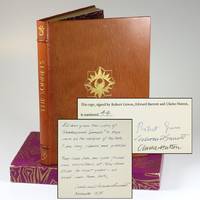
007866London: The Swallow Press 1975. Full leather. This is an exquisite finely bound strikingly unconventionally illustrated edition of The Sonnets by poet playwright dramatist and primus inter pares William Shakespeare. 300 copies were produced thus of which this is number 44 signed on the colophon by Robert Graves who contributes a substantive Preface Edward Burrett the book designer and Clarke Hutton the illustrator. A troika of features distinguish this copy. First is exceptional condition. Second this copy is accompanied by the original publishers prospectus and order form. Third this is a designers presentation copy evidenced by a lengthy signed and dated 1975 gift inscription by Edward Burrett and his wife Cecile on the recto of the blank preceding the half title. Edward Burrett 1909-1995 was a noted specialist and connoisseur in book design a founding member of the Society of Typographic Designers and founding proprietor of the Penmiel Press. <br /> <br />This large volume measures 10 x 14 inches 25.4 x 35.6 cm bound in full Niger Morocco goatskin by Sangorski and Sutcliffe the contents printed on laid paper with each of the one hundred and fifty-four Sonnets allocated a single page. The volume is housed in a felt-lined purple and gold paper-covered slipcase featuring an interlocking pattern of swallows which is mirrored on the pastedowns of the book. The Sonnets features 40 illustrations on various tinted papers by Clarke Hutton 1898-1984 one of the most eminent and influential book illustrators of his time. Hutton adds something unique to Shakespeares work which so often comes accompanied by traditional engravings rather than modernist line work. The colophon features the signatures of Robert Graves Edward Burrett and Clarke Hutton below the limitation number 44. The signatures of the book designer Edward Burrett and his wife Cecile are also found beneath their autograph gift inscription. Laid in are the large and beautifully printed publishers prospectus featuring a specimen page and extensive information about the edition. Also laid in is the publishers order form. <br /> <br />The volume is in truly fine condition with no appreciable wear or flaws to either the binding or contents. The slipcase remains bright and fully intact with superficial overall scuffing. <br /> <br />William Shakespeare 1564-1616 left a cultural and literary legacy whose continuing influence is difficult to overstate. His stature so dominates English letters that it verges on biblical proportion. To the point Shakespeare is often assumed to have been born on 23 April St. Georges Day so that Englands national poet and her patron saint share the same day of celebration akin to how Christs birthday is asserted onto the winter solstice. <br /> <br />Shakespeares plays are the most conspicuous aspect of his literary legacy but as Robert Graves states in his Preface Shakespeare built up a double reputation in literature; as a classic English playwright and as author of the Sonnets his profound meditations on love. In the plays we are frequently aware of Shakespeare the poet; in the Sonnets we recognize his role as dramatist. The author of the Sonnets became incomparably greater than his contemporaries precisely because he needed to see himself and his beloved in dramatic and human terms. <br /> <br />Robert Graves 1895-1985 was an English poet novelist critic and translator perhaps best known today as a pioneer and master of the historical fiction genre for his Claudius series compellingly fictionalizing the Roman Emperor. Born to a middle-class family with an Irish Gaelic scholar father Gravess early life shaped his love for myth and poetry even as boxing shaped his repeatedly broken nose. In 1913 he received a scholarship to study classics at St Johns College Oxford. However he did not take his place at the university until after WWI; in 1914 he enlisted almost immediately after the outbreak of war joining a regiment which included fellow war poet Siegfried Sassoon. <br/><br/> The Swallow Press hardcover
195857499AB5 Nummern. Ulm, HfG, 1958-1959. 28x30 cm. 80 Seiten durchpaginiert, mit s/w. Abbildungen. In losen Bogen.
195857499ABUlm, HfG, 1958-1959. 28x30 cm. 80 Seiten durchpaginiert, mit s/w. Abbildungen. In losen Bogen. 5 Nummern.
058622Berkeley Ca: Pacific Editions / Arif Press 1986. 1st Edition . Hardcover. Fine/Box. 36 Pp. #143 Of A Limited Edition Of 165 Copies Of Which 130 Were For Sale. Unique Rag Papers In Two Colors Commissioned From Twinrocker Paper Mill And Hand Bound In Gold Stamped Leater Gray Boards In A Custom Made Box Covered In Gold-Stamped Van Heel Cloth From Holland With A Printed Spine Label. Signed By Thomas And Goldyne On The Limitation Page. Fine. Also With The Prospectus 8 Pp Covers Also Fine. Box Fine But Small Bump To Lower Front Tip. With The Printed Folder Enclosed A Signed Color Print By Goldyne Apparently Issued Only With The 35 Copies Not For Sale. <br/> <br/> Pacific Editions / Arif Press hardcover
19902080202102501722Mao Ishikawa 1990. Soft Cover. Fine. The book is in fine condition. Mao Ishikawa paperback
Small 4to, general printed title-page, 3, 12, 12, 12 leaves of engraved plates, occasional fingering and spotting, cont. boards, rebacked. A reissue of four extremely rare suites of engravings dating from the second half of the eighteenth century, each with a separate title-page, intended to provide examples of classical vases from which British designers could copy. (1) A new book of vases by Wm Darling Sculp. (3 un-numbered plates). (2) Eighteen vases modern and antique. London: published by I & J Taylor at the Architectural Library, High Holborn, [178-?]. (18 images on 12 plates, numbered 1 - 12). (3) Vases and tripods on twelve plates. London: published by I Taylor in Holborn near Chancery Lane, [178-?]. (numbered 1 - 12). (4) Fourteen vases from the antique. London: printed for I Taylor at the Bible & Crown in Holborn near Chancery Lane, [178-?]. (14 images on 12 plates, numbered I - XII). Provenance: Inscribed on front endpaper Jesse Hill, Newcastle, Staffs, 1826.
Hardcover Like New. Ships directly from publishers being a new release book . Pls. allow a minimum of 25 business days delivery time.
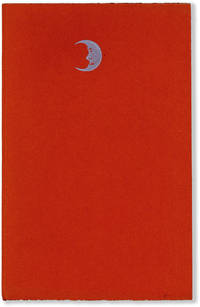
65888West Burke VT: Janus Press 1976. First Edition. One of 150 copies unsigned as issued. Orange wrappers with silver moon decoration printed in two colors with double-page cut-out endpapers; 8vo. ".designed handset in Monotype Times Roman printed torn cut and bound by Claire Van Vliet at the Janus Press on and of Kozu Fabriano and Canson paper. The endpapers are the topiary gardens of Levens Hall Westmorland England. This is copy no 85." Back cover almost imperceptibly sunned along the front edge else Fine unopened.<br /> <br /> Claire Van Vliet's work has been heavily collected for over 50 years well before she won an early MacArthur Foundation "genius" grant in 1989 with many institutions subscribing. This title particularly elusive in the trade. Janus Press unknown
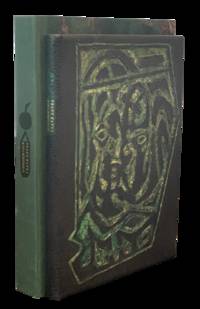
5061New York: The Limited Editions Club 1984. Limited to 1500 signed copies this being #858. Quarto 28x21cm 61pp. Illustrations by José Luis Cuevas and signed by him at the colophon. Design binding by Jarmila Jelena Sobotova. French structure full black goatskin with mirror image green cutout designs on upper and lower boards. Green morocco spine label in the shape of a pedestal with an apple balancing on top lettered in gilt. Top edge painted green hand sewn head and tailbands in black and green silk. Green and black marbled endpapers by Sobotova. Fine condition in matching Solander box. Kafka's famous novella from the Limited Editions Club with interpretive illustrations from Mexican artist José Luis Cuevas 1934-2017. This copy in a unique design binding from Czech artist Jarmila Jelena Sobotova former student of Jan Sobota 1939-2012. A copy of Sobotova's own description of this project is included and sheds some light on her process of creating this tremendous volume: "The top and back covers decorations are based on Cuevas interpretation of the story - metamorphosis of a man. There are two mirror images that appears skewed in abstract way. This design was created by cutting out the shapes in the leather after the book was covered. The depressions were filled with leather dust and painted with insect like acrylic colors." Accompanying the book is an exhibit catalogue featuring the works of both Jan and Jarmila from the Mildred Hawn Exhibition Gallery at SMU in Dallas 1995 which both artists have signed. The Limited Editions Club unknown
193042955Philadelphia 1930. Very good. Extensive custom catalogue containing metal fixtures and display equipment for hardware stores published by David Lupton's Sons a steel company based in Philadelphia. The catalogue includes suggestions for store layout providing examples of merchandise display on Lupton display cases and shelving with extensive diagrams showing the proper distribution of for example various-sized shovels on a particular shelving unit. From a stamp appearing several times throughout the album and on a piece of laid-in marketing ephemera which reads "Bowes Hardware & Plumbing 425 Danforth Ave Toronto" this particular album was almost certainly compiled by Lupton for Bowes as part of its "Store Planning Service" referred to on the album's cover. A fascinating example of the marketing and merchandizing of U.S. hardware store equipment and a glimpse into the process of starting a North American small business during the height of The Great Depression. Hardcover. Oblong 4to. album. Screw-bound leather-covered boards with publisher's text in printed in gold to front cover. Holds photos diagrams text and paint swatches all affixed to 29 dark-gray stiff leaves divided into four sections. Appears almost entirely complete with corners of several captions torn off. Album about very good overall with many affixed papers toned from age or glue-stained but all remain readable. Sound overall. Additionally laid-in are 21 clippings and advertising ephemera relating to hardware stores including several in Toronto. hardcover
1911902691911. EHON - Design Book Yamada Unsôdô publisher. MOMIJI. Kyoto: Yamada Unsodo Meiji 44 1911. 26.5 x 19 cm. Orihon with printed paper covers over boards. Thirty double fold sets of color woodcuts detailing the leaf forms of some 187 different species of Japanese maple. A scarce example of Unsodo's wonderful design work with a naturalistic theme from the early part of the 20th century. The covers are a bit worn but the impressions and colors are very good. Complete as issued in one volume. unknown books
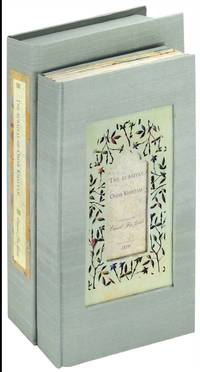
36224Freeville NY: Carol Schwartzott 2007. Hard Cover. Fine in very good box. Hard Cover. 5 of 25 copies signed and numbered by the book artist. This is a particularly beautiful version of the famous Rubaiyat. In her artist's statement Schwartzott writes that as a collector of Rubaiyats she began to toy with creating her own version in 2006. "The book is divided into seven segments each separated by a divider of hand-marbled Japanese paper. The first contains the title page and introduction and the last an artist's statement bibliography and colophon. The remaining five are dedicated to the seventy-five quatrains of FitzGerald's first edition. Each contains a vellum window reminiscent of a Persian archway that opens to reveal my version of a miniature painting." Bound in light blue Japanese cloth with an intricate wood cut out to front board. The pristine interior was laser printed with archival ink onto Mohawk Via vellum and Moab Entrada paper. The prints were then finished with color pencil paint gold and silver leaf. Housed in clamshell box covered in the same cloth as the book. There is a light crease to the upper left corner of the box otherwise in fine condition. Unpaginated. ARTB/122122. Carol Schwartzott unknown
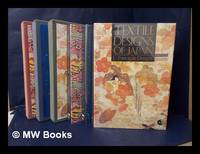
1980106311Tokyo ; New York : Kodansha International 1980. 1st Revised Edition. Hardback. Exceptional copies all; fine in an equally fine dust jackets and all housed in colour-printed clam shell boxes. A particularly and surprisingly well-preserved set; tight bright clean and especially sharp-cornered. Literally as new. ; 1 pages; Description: 3 v. : ill. some col. ; 37 cm. Contents: v. 1. Free-style designs. --v. 2. Geometric designs. --v. 3. Okinawan Ainu & foreign designs. Subjects: Textile design --Japan. Textile fabrics --Japan. Tokyo ; New York : Kodansha International hardcover
Z1-I-009-00456Cambridge University Press. Used - Good. Ships from UK in 48 hours or less usually same day. Your purchase helps support Sri Lankan Children's Charity 'The Rainbow Centre'. Ex-library so some stamps and wear but in good overall condition. 100% money back guarantee. We are a world class secondhand bookstore based in Hertfordshire United Kingdom and specialize in high quality textbooks across an enormous variety of subjects. We aim to provide a vast range of textbooks rare and collectible books at a great price. Our donations to The Rainbow Centre have helped provide an education and a safe haven to hundreds of children who live in appalling conditions. We provide a 100% money back guarantee and are dedicated to providing our customers with the highest standards of service in the bookselling industry. Cambridge University Press unknown
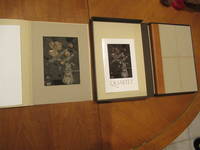
Cartella in cartone rigido cm 22 x 30,5 circa, con apertura a 3 falde. All'interno: fascicolo di pp. 28, dal titolo "Monografia", con storia dei coloranti naturali; pieghevole di 6 facciate con la Cartella colori; foglio ancora intero con 6 cartoncini fustellati (il foglio ha spazi tratteggiati per staccarne le varie parti) con gli Isolatori di colore; 3 fogli sciolti plastificati con illustrazioni in trasparenza con simulatore A e B; 40 cartoncini colorati cm 10 x 29,5 suddivisi in due gruppi da 20 ed inseriti nelle due tasche centrali del raccoglitore (con indicazione dei diversi codici colore). Edizione non venale di questo manuale edito dal Centro Design Montefibre (designer: Massimo Morozzi, Andrea Branzi, Clino Trini Castelli) di cui vennero pubblicate 3 edizioni in anni successivi (1975, 1976, 1977). "Nel 1973 la societa' Montefibre, anche per reagire alla crisi petrolifera e dei suoi derivati, fonda a Milano il Centro Design Montefibre (CDM) che rimarra' in funzione fino al 1977, destinato alla concezione e allo sviluppo di prodotti e servizi innovativi da applicare nel campo del tessile. La direzione del settore moda e' affidata a Elio Fiorucci mentre quella del settore design a Massimo Morozzi, Andrea Branzi e Clino Trini Castelli. Le ricerche del CDM si orientano verso l'individuazione dei fattori immateriali legati ai diversi livelli percettivi che caratterizzano lo spazio e verso il controllo di tutti gli strumenti e i parametri che si pongono all'origine della progettazione tradizionale. Il CDM elabora quindi varie forme scritte con l'obiettivo di diffondere nuovi e piu' efficaci parametri qualitativi e rendere comprensibili alla cultura del progetto e all'interno del processo produttivo, in special modo nell'industria pesante, le ragioni delle scelte riguardanti i colori... con l'intento di divulgare nel mondo industriale la cultura del colore, il CDM tra il 1975 e il 1977 elabora il programma di ricerca "Colordinamo" che ripensa le metodologie progettuali arricchendole di strumenti meta-progettuali, intesi come attivita' d'indirizzo, servizio e supporto nella scelta dei valori cromatici... Le tre edizioni dei manuali "Colordinamo" (Branzi, Trini Castelli & Morozzi, 1975; 1976; 1977) presentano una gamma cromatica di quaranta colori organizzati in famiglie e un apparato operativo, progettato appositamente, costituito da un isolatore e da un simulatore di colore da utilizzare per la comparazione dei colori presenti nella cartella e per la riproduzione industriale delle tinte..." Questi manuali ebbero grande risonanza meritandosi molti articoli su riviste mentre il Colordinamo 1977 fu addirittura insignito del Compasso d'oro. Cfr. Oppedisano, "I colori? Scappano sempre..." in: "Ais/Design. Ettore Sottsass Archives".
In-4° grande, pp. 12 e 40 tavole, suddivise in 10 cahiers da 4 tavv. ciascuno, incise all’acquaforte e all’acquatinta. Legatura in cartonato rigido, dorso restaurato. Graziosa raccolta, completa, di motivi ornamentali ripresi dalle grottesche e dagli arabeschi di Ercolano, delle antiche ville e palazzi romani e da quelli rinascimentali di Raffaello. Le tavole furono tutte incise da Guyot, da disegni di Lavallee Poussin ( i primi 5 cahiers), Voisin, Le Clerc, Berthelot, e Janneret, che chiude con l’ultimo cahiers in cui i motivi ornamentali sono rappresentati in scenari architettonici d’interni. Le tavole in buone condizioni, la parte di testo con leggero spotting. decorazioni appartamenti arredamento grottesche arabeschi ornamental decoration grotesque arabesque interior design
1958 reprint of the 1950 second edition. xxxii, 1151 pages including index and several fold-outs. Black and white photos. Numerous detailed line drawings. Presents a compendium of all phases of modern hydroelectric practice. Chapters include: Rainfall; Evaporation; Factors affecting Runoff; River Gaging; Float Measurements; Estimating Stream Flow; Flood Flows; Investigation of Sites; Hydraulics; Head, Power and Efficiency; Pondage and Storage; Types of Hydro Plants; Cost of Steam Power; Cost of Hydro Power; Market Requirements and Load Studies; Capacity and Development and Economic Advisability of Hydro; Reports; Solid Gravity Concrete Dams; Arch Dams; Buttressed Concrete Dams; Earth Dams - General Design Principles; Earth Dam Stability; Details of Earth Dams; Rock-Fill Dams; Timber Dams and Stell Dams; Preparation and Protection of Foundations for Dams; Spillways and Headwater Control; Intakes; Conduits; Canals; Flumes; Steel Pipe; Wood-Stave Pipe and Concrete Pipe; Tunnels; Water Hamer; Surge Tanks; Powerhouse Substructure; Powerhouse Superstructure; Hydraulic Turbines; Parts and Auxiliaries for Hydraulics; Electrical Design; Generators, Exciters, and Transformers; Switching, Wiring and Auxiliary Power and Lighting; Transmission Lines; Plant Operation. Above-average wear to publisher's maroon cloth lettered in gilt upon backstrip. Narrow opening in binding after half-title page. Binding slack but intact. Minimal markings. A worthy reference copy of this superlative reference. Book
2091502135500338Not Available N.A. Soft Cover. Fine. The book is in fine condition. Not Available paperback
1987036884Wien, Jugend & Volk, 1987. 4°, geb. Pappeinbd. m. OSU., 127 S. - sehr gutes Exemplar
192546578ABMünchen, A. Langen 1925. Gr.-8°. 115, (1) S. Original-Leinwand. Einband etwas angestaubt und minimal fleckig, Block etwas verzogen. Durchgehend wellig, aber nicht verklebt und ohne Klebespuren. Wenige Seiten mit schwacher Farbspur. Das letzte Bl. etwas knittrig und geringf. angeschmutzt. Der hintere fl. Vorsatz entfernt. (=Bauhausbücher 7).
Outstanding series of skilfully drawn and well printed monogram specimens for use in applied arts, artisanry and industry, particularly rare even in single issues. – Content, Artist: Besides a brief history of monograms with particular focus on Britain, present work by British engraver George Barclay (1830-72) and some contributors covers hundreds of illustrations of monogram specimens with two or multiple interlaced letters, Christian names and symbols, as well as crowns, heraldic attributes, trade emblems and typefaces. – The collection was designed „to assist medal, die, silver and gem engravers and chasers, or those who, like illuminators and embroiderers, have need to produce monograms or conventionalised alphabet. A clearly sensible written text is appended to a series of examples that have unquestionably been produced by persons of considerable taste, and whom study has qualified for the task.“ (Review for part A in »Athenaeum«, 15th Sept. 1860). – Present set contains 13 parts of 15 published (A, B, E, F, G, H, IJK, L, M, N, O&P, Q&R, S). Barclay had intended to issue a total of 20 parts, but publication ceased with the letter S upon his death. Alas, this set misses the part issues for letters C (1861, 5 pl., 1 text l.), D (5 pl.). All original typographic wrappers in differently coloured stock are bound in, as well as title pages for parts E, F and G. All plates are protected by lettered tissue guards. – Barclay also published »Thirty Varieties of the Monogram« and »What is a Monogram?« (an extract of present work) among others, works that he promotes on the rear wrappers of the part issues. – Condition: Ex library copy (K.k. Staatsgewerbeschule, Graz, Austria) with the institution's stamp on front wrappers and plates, the latter also with inventory stamp. The set was bound by the institution's bookbinder cutting the book-block at the tail-edge, no text loss however. – Rarity: Very rare in trade, even in less complete sets or single part issues. WorldCat, KVK and viaLibri Libraries locate only 8 holdings in institutional holdings worldwide, at least 3 with a higher number of missing parts (Cambridge; Edinburgh (NLS); London (BL [91 pl.], V&A [12 parts]), Oxford (Bodleian Lib.,[11 parts [A, C-N]), New York (Columbia), Paris (BnF [10 parts]). RBH shows no auction records at all.