10 867 résultats
In-4°; pp. 492, (4), segue Hymni per totum annum... pp. 70, (2) con colophon Antverpiae excudebat Christophorus Plantinus Architypographus Regius anno MDLXXIII; frontespizio stampato in rosso e nero, entro bordura xilografica e al centro un grande tondo con l’Ascensione della Vergine (il monogramma di firma A.V.L, Antonius van Leest, l’incisore.). L’intero testo (tranne le ultime 70 pagine) è stampato con parti in rosso, ogni pagina entro ricca bordura xilografica a quattro legni. Nel testo illustrazioni di Pieter van der Brocht incise su legno da Antonius van Leest (i nomi dei due artisti fiamminghi si trovano espressi per intero nell’ultima illustrazione, quella dell’Apocalisse, con data 1572; nelle altre incisioni con i monogrammi). Rara edizione, e una delle prime, riccamente illustrata dell’Officium riformato di Pio V, libro d’ore di Plantin, qui nella versione (Variante C) con illustrazioni e bordure xilografiche. Le xilografie a piena pagina sono 19. Legatura in piena pelle con titolo in oro al dorso. Alcuni fori di tarlo passanti al margine interno bianco delle prime e ultime carte.
Single sheet, ca. 191 x 232 mm. The drawing shows a simple farmhouse built of wood and stone, signed and dated in the artist's own hand on the verso: "Elise. 1848". At the time, Elisabeth, later famous as "Sisi", Empress of Austria, was ten years old and lived at Possenhofen Castle on Lake Starnberg. - Minor stains and a little browned. Provenance: House of Wittelsbach (former Royal Family of Bavaria).
18482111902160200704Sculpture by Kisuke Oshima 1848. Soft Cover. Fine. Volume: 1 Sculpture by Kisuke Oshima paperback
Jeweils ca. 215 x 336 mm. Aquarell bzw. Gouache mit Goldhöhung auf Papier. Auf Fälzen unter Passepartout montiert. Vier wohl noch dem 16. Jahrhundert angehörende Idealbildnisse aus einer Porträtserie der frühen Grafen von Zollern, wie sie um 1560 Basilius Herold im Auftrag von Karl I. von Hohenzollern prägte und die Frühneuzeit hindurch weitgehend akzeptiert blieb. "Da die Grafen von Zollern erst 1061 mit Burchard ins Licht treten und erst [... Friedrich III.] die Würde eines Burggrafen von Nürnberg erwarb, handelt es sich um ein Produkt späthumanistischer Geschichtsklitterung. Der Zollerschen Hauschronik zufolge war die entsprechende historische Forschung ein Gemeinschaftswerk Graf Karls I. aus der schwäbischen Linie (1516-76) und des Historikers Johann Basilius Herold. Damals müssen auch die Idealbildnisse der ersten Grafen geschaffen worden sein, die sich formal mit rekonstruierten Ahnenreihen, etwa der Wittelsbacher, aus dieser Zeit vergleichen lassen" (Haus der bayerischen Geschichte, online). - Es liegen vor: Danko (840), der angebliche Sohn des fingierten Stammherrn Tassilo, Rudolf (892), Friedrich I. (980) und Eitel Friedrich II. (1273). Die Grafen werden jeweils in Prachtrüstung unter einem Säulenbogen dargestellt; an den Säulen prangen in hübscher Gouache das Hauswappen der Zollern sowie das der jeweiligen Ehegemahlin (von Cilli, von Rieneck, von Hohenberg und von Schlüsselberg). In einer Kartusche unter dem Portrait jeweils eine mehrzeilige handschriftliche Beschreibung des Abgebildeten nebst Nennung der Ehegemahlin. - Hübsche, wohlerhaltene Folge.
WITH TWO IMPRESSIONS, IN FIRST AND SECOND STATES, OF ONE OF KIYOSHI HASEGAWA'S MOST IMPORTANT PRINTS. *** Etched half-title, 16 pp. plus 12 loose engravings. *** A monograph on engraving followed by short biographies of each of the six artists, accompanied by a suite of large engravings by Cami, Cottet, Decaris, Jeannisson, Hasegawa, and Lemagny. From a total edition of 320 copies, all printed on fine Marais wove paper, this is ONE OF ONLY 60 SETS WITH THE ENGRAVINGS IN TWO STATES: THE FIRST STATE ON RIVES WOVE PAPER, SIGNED IN PENCIL, AND THE SECOND STATE ON MARAIS WOVE PAPER. Hasegawa's engraving, "Anemones et fleurs de champs dans un verre a facettes" (Kyoto 368, also known as "Bouquet sur fond de dentelle"), is considered one of his masterpieces. Folio (38 x 28 cm). Loose as issued in the original folding case. Folding case lightly worn and spotted. CONTENTS FINE AND BRIGHT. ALL OF THE PRINTS IN BRILLIANT CONDITION.
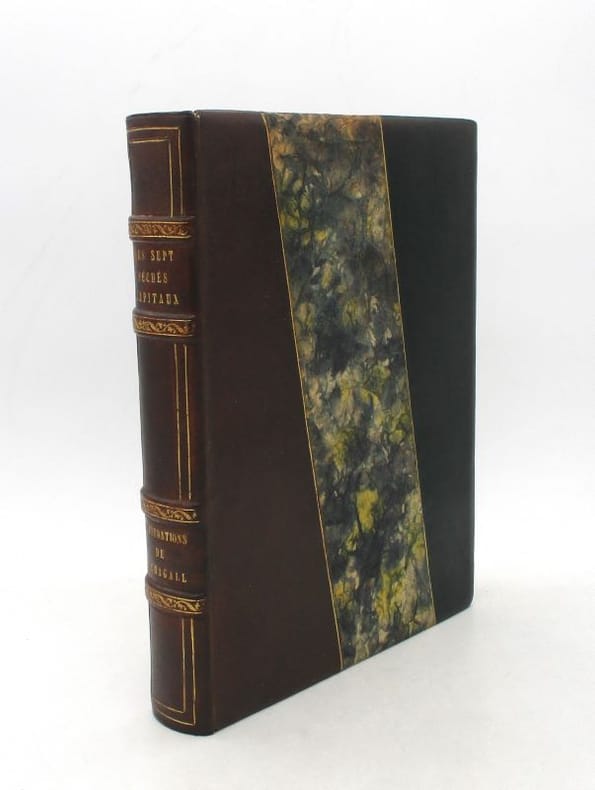
22758Paris, Simon Kra, 1926. In-4, 183 pp. 31 pl., demi-maroquin brun à bande verte de Guglielmoni, filets dorés sur les plats, dos à nerfs orné de filets et frises dorés, tête dorée, couverture conservée (dos légèrement insolé, trois minuscules épidermures aux angles des coiffes, pâles rousseurs et décharges).
Ca. 114 x 160 cm (map size; visible size ca. 131.5 x 177.5 cm). Engraved. Framed and glazed in broad burl wood veneer frame with insignificant damage (141 x 187.5 cm). Monumental reconstructive map of ancient Syracuse and its surroundings from Vincenzo Mirabella e Alagona's famous 1613 publication "Dichiarazioni della pianta dell'antiche Siracuse", dedicated to Philip III of Spain, King of Sicily. The map covers a large area, roughly from the island Ortygia, the historical centre of Syracuse, to the Euryalus fortress, and from the source of the river Ciane to the so-called House of Archimedes, and shows often fantastical renderings of such important monuments as the Temple of Apollo, the Greek and Roman theatres, and the ancient quarries called Latomie, including a staffage of fantastical ships. - The ornamental border, featuring reproductions of the obverse and reverse of 39 Greek coins, was specially engraved and described for the publication. Many of the coins of the notorious tyrant Dionysius I of Syracuse and subsequent rulers show the famous triskelion composed of three bent knees, a symbol which today forms part of the flag of Sicily. The dedication of the book to Philip III of Spain is repeated in an inscription with the title of the map and the name of its author. The dedicatee is also represented by the monumental coat of arms in the upper right corner of the map. The nine copperplate engravings are signed by the otherwise unknown Francesco Lomia from Syracuse and are dated 1612, but the plates were published with the book in 1613. - Vincenzo Mirabella e Alagona (1570-1624) was a historian, archaeologist, and architect from Syracuse. He married into one of the leading families of the city, held public offices, and realized several building projects, such as the Theatine Church of San Andrea and the renewal of the cathedral square. In 1608 he accompanied Caravaggio on several visits to the Latomie. The painter subsequently coined the name “Ear of Dionysius” for one of the ancient quarries, which is still in common use. - Generally well preserved, with small chafed areas to some plates, one of which with hand-drawn additions, and some stains.
Aquatint etching on paper (leaf ca. 290 x 380 mm; plate 270 x 350 mm; illustration 245 x 315 mm). A domestic scene of a couple fighting at a table, a shrouded dark figure watching from the background. Captioned "Vexation and Strife" and signed "Calcutta J. M. del. et sculp. 1797". Printed on laid paper with the bend watermark of J. Whatman (Heawood 104). Very rare aquatint and etching by James Moffat, with a rare Calcutta imprint. The subject of the print is a subtle caricature of domestic strife over the intoxication of a (supposedly) British colonial. The only other known copy is described as follows by Yale's Lewis Warpole Library catalogue: "In the center of the image a woman, dressed in a short shift, angrily pulls a bottle from the hand of a drunken man. The man sits at an oval drop-leaf table with his right fist raised and a cigar hanging from his mouth as smoke billows around his head. He holds onto a bottle with his left hand, a glass and pile of cigars at his elbow. The woman standing over the table on the left angrily points with her left hand to a clock on the wall which shows the time as 5:05. In the background on the left, a dark-faced, cloaked figure stands before the curtained doorway on the left; the double doors on the right are shut. Also on the table is a lit candle in a glass globe; an overturned pitcher pours onto the floor in the foreground". - James Moffat (1775-1815) was a Scottish engraver who worked in India. He arrived in Calcutta in 1789, joining the "Calcutta Gazette" in 1797. Moffat is mainly known for his topographical views of India, but he also produced several satirical prints such as the present specimen. He "supplemented his income by producing satires of Anglo-Indians (British colonials who spent time in India) at a time when these were becoming increasingly popular" (Smylitopoulos, p. 12). Most of these satirical scenes were sent by the amateur artist to London to be engraved and published, but the present example with its Calcutta imprint in the signature proves the exception to this rule. - Moffat's topographical views of cities, buildings, rivers and other landscape features are rare, and his satirical domestic scenes are even rarer. The only other copy that can be traced in institutional possession that that in the Lewis Warpole Library at Yale University, and it almost never appears in the trade, with only two records in historical auction results (one in 1933 and one in 2020, possibly the present copy). - Two small tears, one in the top margin and the other in the bottom, neither affecting the illustration. Very slightly stained in the margins. Overall in very good condition. OCLC 701812946 (a single copy, at Yale). For Moffat's career cf. H. de Almeida & George H. Gilpin, Indian Renaissance: British Romantic Art and the Prospect of India (2005) pp. 249f.; C. Smylitopoulos, "Portrait of a Nabob: Graphic Satire, Portraiture, and the Anglo-Indian in the Late Eighteenth Century", in: RACAR 37.1 (2012), pp. 10-25.
305:508 mm, mounted on cardboard. Fine, large horizontal watercolour picturing a noble lady nude in the bathtub under a parted canopy, with ladies-in-waiting staring aghast or trying to shield their mistress from view, while four puttos gracefully fly from the canopy, a gentleman in 18th-century costume, seated on a sopha, faces the scene, and a small orchestra plays at far right. - A rare example of a risqué drawing by Shepard, best known for shaping the definitive image of "Winnie-the-Pooh", but also a prolific staff-member of "Punch" and illustrator of favourites such as "The Wind in the Willows" and "David Copperfield". - Some spotting. Signed in red "Ernest H. Shepard" at lower right. While the drawing is clearly marked for reproduction (size markings; notes "Sketch 3 Colour Double"; "Henry Stone" [i.e., the Banbury-based colour printing and photo-engraving concern], etc.), it is unclear if it was actually published - the book for which it was intended could not be traced, and the subject matter does not fit easily into the artist's known canon, the flamboyant period costumes reminiscent of his work for "Everybody's Pepys", but also showing Shepard as a highly accomplished, albeit tamer disciple of Aubrey Beardsley with an inclination toward Rococo rather than Art Nouveau.
15604483DBFrankfurt., W. Han., um 1560. 8°. (4) Blatt, 490 S., (9) Blatt. Mit Titelholzschnitt, 79 Textholzschnitten. Geprägter Schweinslederband der Zeit und zwei Messingschliessen. + Wichtig: Für unsere Kunden in der EU erfolgt der Versand alle 14 Tage verzollt ab Deutschland / Postbank-Konto in Deutschland vorhanden +
11 stampe a rilievo di Claire Falkenstein su matrice in filo di rame saldato, numerate e firmate a matita (cm 45x45). Testi di Michel Tapié e Berto Morucchio in italiano e inglese La stampa e le pressioni sono state eseguite sui torchi di Giorgio Upiglio con la collaborazione tecnica di Renato Volpini e Guiancarlo Pozzi. La carta fabbricata a mano è delle Cartiere di Fabriano. Impaginazione di Piero Marras. Sulla custodia è applicato un bassorilievo in ottone dell'Artista.. cm 70x50. pp.. . . . Edizione originale di 70 + XXX es. numerati. . Coi suoi ferri, coi suoi morceaux choisies, stabilì anzitutto una segreta impalcatura su cui posto il foglio doveva aderire come l'anima il corpo, o più modestamente, ma non meno vitalmente, la pelle i diffrenti organi. Per pressione e per impressione si sviluppava il suo discorso plastico già iniziato nel periodo 1953-1958 con l'object-gravure, espsoto nel 1958 alla galleria "Il Segno" di Roma (da testo di Morucchio)
In-folio, cartella originale rigida, che contiene in fogli sciolti il frontespizio della serie, le 10 litografie, tutte numerate, firmate dall’autore e con l’indicazione del soggetto, e un ultimo foglio con indicazioni sulla stampa e la tiratura; tiratura limitata, dopo la stampa le matrici furono distrutte. Litografo Igino Alessandrini. Ottimo esemplare.
Cartella con 10 acqueforti acquetinte a colori di Kumi Sugai, numerate e firmate a matita dall'Artista (cm 60x50). Testo di Alain Jouffroy Incisioni tirate da Giorgio Upiglio su carta Fabriano con filigrana dell'Editore. cm 60x50. pp. 8 + incisioni. . Ottimo (Fine). . Prima edizione di 50 + X es. numerati. .
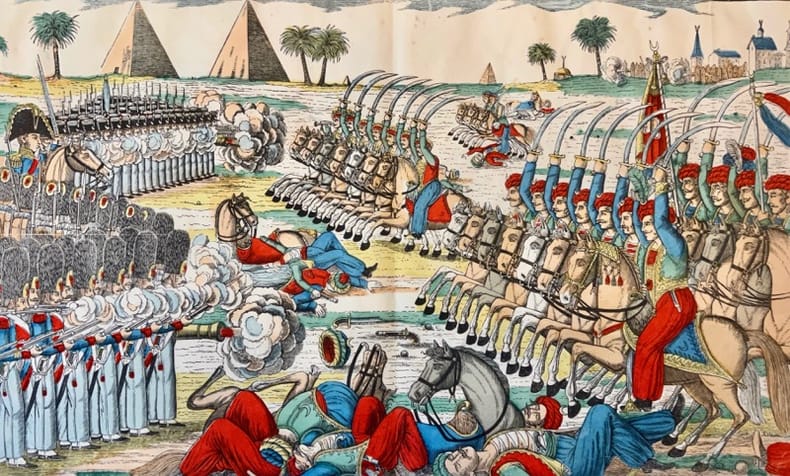
186013842Épinal, Fabrique de Pellerin, Imprimeur-Libraire, [1860 ca]. 56 planches en couleurs (63,5 x 41 cm chacune), reliées en 1 vol. in-plano, demi-percaline verte (reliure de l'époque).
18904984DBZürich, Orell Füssli, ca. 1890 - 1920. 8°. Orig.-Broschuren. + Wichtig: Für unsere Kunden in der EU erfolgt der Versand alle 14 Tage verzollt ab Deutschland / Postbank-Konto in Deutschland vorhanden +, 4984DB|4984DB_2|4984DB_3|4984DB_4 664 Exemplare. [4 Warenabbildungen]
590 x 460 mm. Pastel on vellum. Framed and glazed. Unsigned, undated half-length portrait of the Duke (1757-1828), Goethe's friend and patron, in his early twenties. This work by an unidentified Thuringian master strongly resembles the one at Dornburg castle listed as no. 19 in Hans Wahl's census ("Pastellgemälde von unbekannter Hand. 1775-80"). Goethe frequently stayed at this Ducal palace when in Dornburg on business. The painting is probably one of a small number of contemporary copies based on the oil painting by Johann Ernst Heinsius (Wahl no. 14), but with softer contours and brighter colours, as common for pastel crayons. - Two tears of about eight centimetres each near top and bottom edge of paper, professionally restored. Occasional rubbing to colours; some overpaintings and staining. Ownership of the anthroposophical physician Karl Hanno Matthiolius (1923-91), dated Solingen-Landwehr, 28 Nov. 1945, on the reverse. H. Wahl, "Die Bildnisse Carl Augusts von Weimar" (Weimar 1925), no. 19.
19001421261900. JAPANESE ORNAMENTAL WOODBLOCK PRINTS. Bijutsu Kai. Collection of Pictures Regarding Colour Designs for Japanese Textiles Costumes. Five parts in one volume. Five folding plates and 18 full-page coloured woodblock prints per section for a total of 95 original illustrations. 8vo 232 x 160 mm. bound in Japanese accordion style with Japanese fold pages and silk-thread stitched spine in new linen cloth folding box with leather spine label. Kyoto: Geisodo ca. 1900. A superb set of this important compendium of early Japanese textile designs showing a great variety of patterns and scenes. The woodblock prints are often exceptional Japanese images very much in the wabi-sabi tradition. Not in Hillier The Art of the Japanese Book 1987. hardcover
19001421261900. JAPANESE ORNAMENTAL WOODBLOCK PRINTS. Bijutsu Kai. Collection of Pictures Regarding Colour Designs for Japanese Textiles Costumes. Five parts in one volume. Five folding plates and 18 full-page coloured woodblock prints per section for a total of 95 original illustrations. 8vo. 232 x 160 mm bound in Japanese accordion style with Japanese fold pages and silk-thread stitched spine in new linen cloth folding box with leather spine label. Kyoto: Geisodo ca. 1900. A superb set of this important compendium of early Japanese textile designs showing a great variety of patterns and scenes. The woodblock prints are often exceptional Japanese images very much in the sabi-wabi tradition. Not in Hillier The Art of the Japanese Book 1987. hardcover books
1995126799Black Sparrow Graphic Art, Santa Rosa, 1995. Leinen
18904984DB664 Exemplare. Zürich, Orell Füssli, ca. 1890–1920. 8°. Orig.-Broschuren.
Large 4to (180 x 255 mm). 24 watercolours on 22 ff. With several additional pencil sketches. Original black half leather with green cloth covers and pen holder. Impressive album of vibrant watercolours documenting the extensive Ceylonese journey of a female British artist, Frances de la Poer. The volume opens with a depiction of a "Madras Conjurer" in Kandy, performing the "great mango trick" with two cobras, wherein the performer gives the illusion of the sudden germination and growth of a mango tree (drawn from life and dated Kandy, 31 Dec. 1895). The second drawing shows a crowd gathered before a Buddhist temple in Kandy. - Setting out from Kandy, the artist explored the countryside, drawing landscapes in Yattawatta, the tea harvest on Coolbawn estate in Navalapitiya, a pandal in Bandarawala, the surroundings of Haldummulla, a verandah in Pelmadulla, two views of Adam's Peak, men riding elephants in Ratnapura, the famous Elephant Rock (Ethagala) of Kurunegala, and four impressions from the beaches of Bentota. The final watercolour in the album is a beautiful impression of a beach sunset, dated 18 February 1896. - Frances de la Poer (ca. 1850-1925) was the youngest daughter of the Irish nobleman John William de la Poer (1816-51). In 1881 she married Thomas William Gaston Monsell, 2nd Baron Emly, son of the liberal politician William Monsell. - Spine professionally restored; generally well preserved. Album bought from Roberson & Co., London, with his ticket to front pastedown.
1952015764Paris Pierre Seghers 1952 In-4 Broché à la japonaise Signé par l'auteur
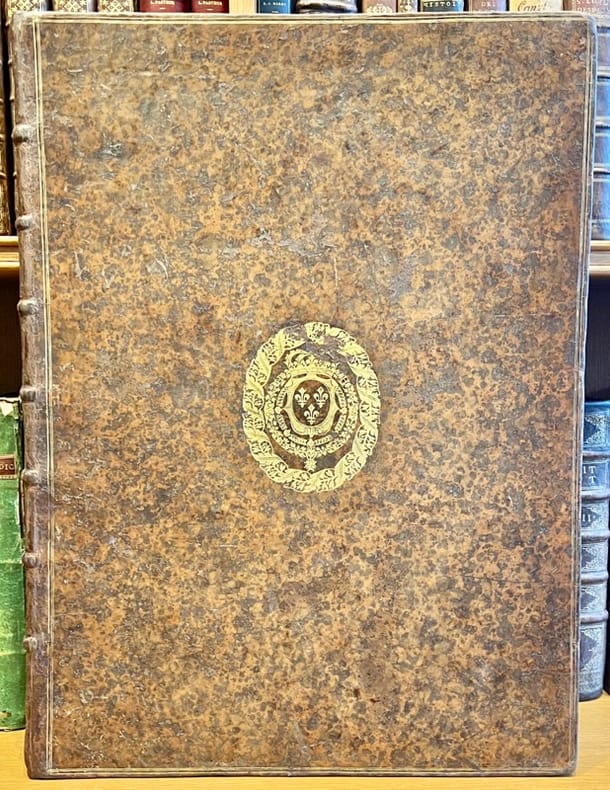
167042444Paris, Imprimerie royale, 1670. 2 parties en 1 vol. grand in-folio (550 x 410 mm) de (8)-43 pp., 1 f.bl., titre frontispice et titre gravé, 16 emblèmes gravés dans le texte, 4 planches sur double page, 47-(1) pp., titre gravé, 16 emblèmes gravés dans le texte, 4 planches sur double page, veau brun granité, dos à nerfs orné de chiffres couronnés, triple filet doré d’encadrement sur les plats, armes frappées or au centre, frise sur les coupes, tranches jaspées (reliure de l’époque).
Cartella originale, in folio, contenente 12 fogli sciolti: il frontespizio, 10 litografie numerate e firmate a matita dall’autore, un testo in fac-simile con le note sulla stampa e sulla tiratura; la cartella fa parte della collana di cartelle litografiche diretta da Libero de Libero per lo studio di Villa Giulia; il litografo è Igino Alessandrini; esemplare 12 di 80. La copertina è di Mino Maccari. Le tavole del “Romanzo nero” riportano alla memoria l’episodio di cronaca della prostituta assassinata e fatta a pezzi nella pineta del Tombolo.
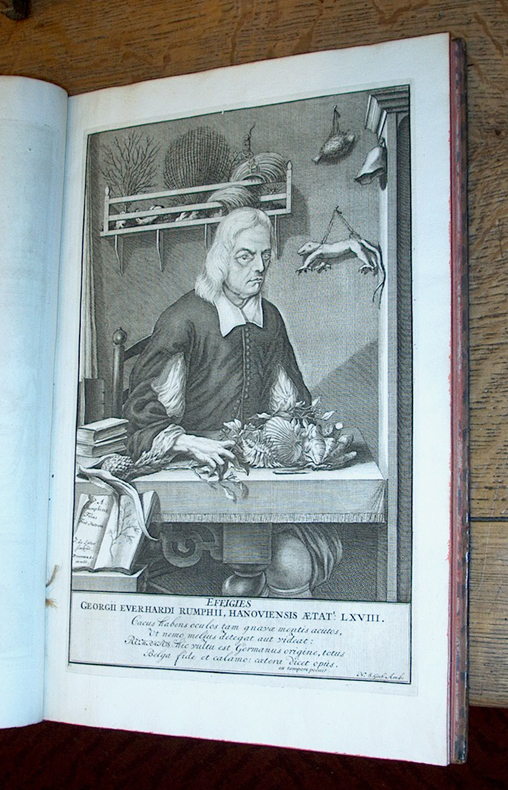
1711002657Lugduni Batavorum (Leide, Leyde), Apud Petrum Van der Aa, Bibliopolam, 1711 In-folio (41 x 27 cm), (1) ff., 15 pp., (8) pp., veau marbré, dos à six nerfs orné, pièce de titre de maroquin rouge, triple filet à froid entourant les plats, double filet doré sur les coupes, tranches rouges (reliure d'époque). Illustré d'un frontispice, un portrait de l'auteur, 1 vignette de titre, 4 vignettes dans le texte, et 60 planches gravées. Première édition en latin du "Cabinet des raretés de l'île d'Amboine" (Amboinsche Rariteitkamer), publié en hollandais en 1705 ; l'auteur, atteint de cécité, est ici représenté dans son cabinet. Précieux exemplaire provenant de la famille de Charles de MONTESQUIEU, de la bibliothèque du Château de la Brède, avec l'ex-libris des Secondat, barons de la Brède et de Montesquieu, "Virtutem Fortuna Secondat, Ex Bibliotheca Bredanense", et les initiales C. M. à l'encre. Bel exemplaire. // Folio (41 x 27 cm), (1) ff., 15 pp., (8) pp., marbled calf, spine tooled raised on six bands, red morocco title label, triple blind fillet borders on covers, double gilt fillet on turns-in, red edges (contemporary binding). Illustrated with a frontispiece, a portrait of the author, 1 vignette on title, 4 vignettes in the text, and 60 engraved plates. First edition in latin of the "Ambonese Curiosity Cabinet" (Amboinsche Rariteitkamer), first published in german in 1705 ; the author, blind, is here depicted in his office. Precious copy from Charles de MONTESQUIEU family, from the "Château de la Brède" library, with the book-plate of the Secondat, barons de la Brède et de Montesquieu "Virtutem Fortuna Secondat , Ex Bibliotheca Bredanense", and initials C. M. hand-written. Fine copy (Nissen ZBI 3520)