10 865 résultats
241610 Planche N°47, format 29 x 40 cm (toutes marges). Chromolithographie d'époque avec le timbre à sec de l'Imprimerie Chaix (Lugt 1777c). Notre exemplaire est une des très rares épreuves imprimées sur papier Japon, 2 toutes petites traces de punaisage chaque extrémité de la marge supérieure (Our plate is one of the few copies printed on Japanese paper. Original plate in good condition). LES MAITRES DE L'AFFICHE, prestigieuse publication d'art, éditée par l'atelier de lithographie Chaix, dont la parution s'étala de décembre 1895 à novembre 1900. Chaque livraison comportait 4 planches de reproduction en chromolithographie d'une remarquable qualité d'impression des plus belles affiches illustrées des grands artistes français et étrangers (auxquelles il faut ajouter 16 planches de lithographies originales offertes en prime aux abonnés). Lors de l'Exposition universelle de 1889, fut organisée la première exposition rétrospective dévolue à l'affiche, celle-ci devait valider la reconnaissance officielle d'appartenance de l'affiche au monde de l'art. Jules Chéret (1836-1932) y sera sacré '' Maître de l'affiche '', c'est aussi à cette date que Seurat commencera à collectionner les affiches de Chéret. Bel exemplaire ( Photographies sur demande / We can send pictures of this book on simple request )
12 litografie originali a 3 colori di Antonio Calderara (cm 23,5x10), firmate e datate a matita dall'Artista sul retro. Testo in tedesco di H. Gappmayr ''Farbe, Mab und Licht" ("Misura, colore, luce") Stampato su carta Filicarta. Cm 24x10,5. pp. 36. . Ottimo (Fine). . Prima edizione di 90 esemplari numerati (First edition of 90 numbered copies). .
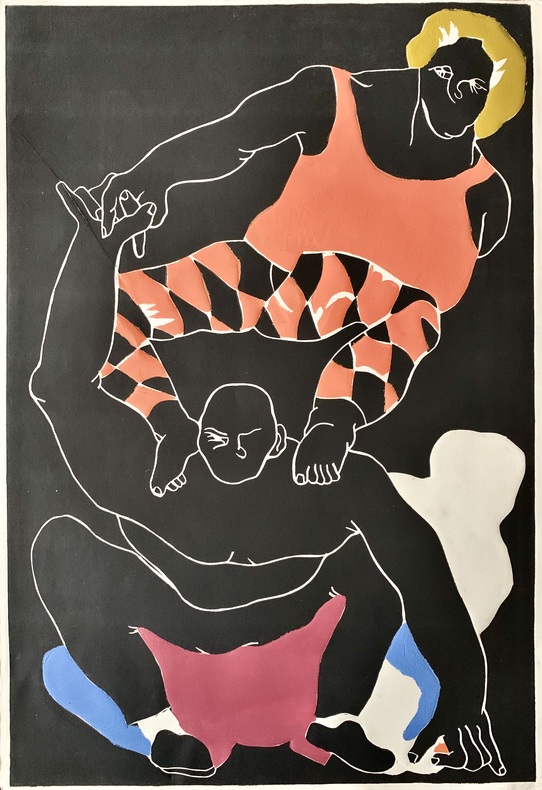
awd-649Linogravure signée et datée 1971, tirage à 3 ex. (52,5/75 cm). Bon état.
Acquaforte e bulino. Tiratura: 60 es. su carta a mano + X es. su carta Giappone + alcune p.d.a. (alcuni es. colorati a mano dall'Artista) Firma e numerazione a matita. Stampata da Giorgio Upiglio, Milano. Esemplare 27/60. cm 24,5x34,7 (Foglio 50x60). pp.. . Ottimo (Fine). . Tiratura: 60 + X + alcune p.d.a. .
4 Bll. (als Blockbuch gebunden) mit mont. handschriftl. Titel, 3 handschriftl. Gedichten [von Rudolf Pointner?] u. den 3 Orig.-Holzschnitten (ca. 25:18 cm) von Edgar Jené. Karton der Zeit mit marmor. Umschlag und hs. Deckelschild ("Naturgaben"). 4to. Wohl sehr frühe Arbeit des österreichischen Künstlers Edgar Jené, vermutlich nur in kleinster Auflage (vielleicht aber auch nur dieses eine Exemplar) handschriftlich hergestellt. Während die ersten beiden Holzschnitte noch unausgereift und unausgewogen wirken, hat das dritte Blatt bereits den für Jené so typischen surrealistischen Anklang.
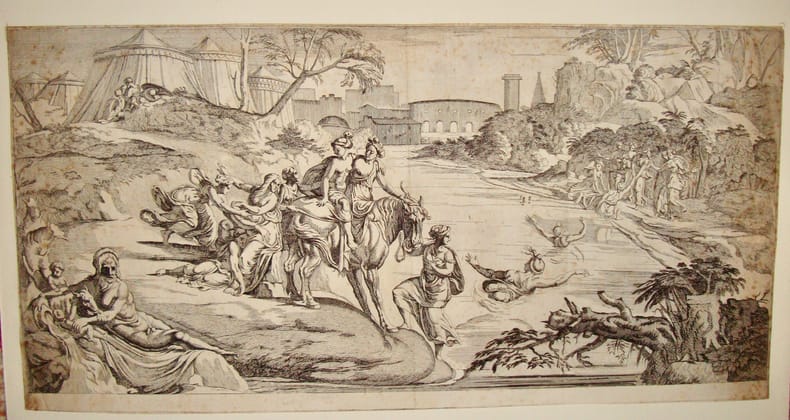
6617Épreuve retouchée par Philippe Thomassin (1536-1600). Très belle épreuve d'après Raphaël. Bartsch t. XV p. 206 n° 31.
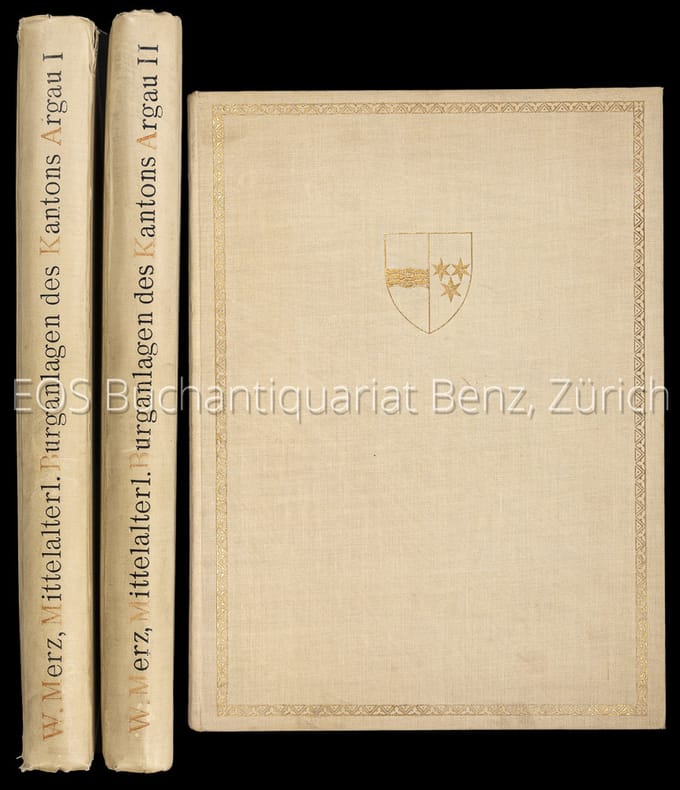
19054179DBAarau, Sauerländer, 1905-1929. 4°. XII, 344, 10 S.; X S.345-714; IX, 186 (1) S. Mit zahlr. Tafeln, Stammtafeln und Abb. im Text. Orig.-Leinenbände (nicht uniform). + Wichtig: Für unsere Kunden in der EU erfolgt der Versand alle 14 Tage verzollt ab Deutschland / Postbank-Konto in Deutschland vorhanden +, A|B|C|D 3 Bände. [4 Warenabbildungen]
Sei incisioni originali all'acquaforte acquatinta a colori realizzate con una, due e tre lastre per foglio. Six original etching-aquatints in colours by Gaston Orellana Tiratura eseguita coi torchi di Giorgio Upiglio a Milano su carta delle Cartiere Filicarta. Esemplare 61/99. cm 28x30; 25,5x2,5 (Foglio 55x42,5). pp. cartella in mezza tela cm 56x44. . Perfetto (Mint). . Tiratura 99 + X. . ''A lo largo, de tu pais alargado; las largas lineas tuyas, Gaston, Chile es tan alargado y triste; una pincelada azul, y el mar; Ya sabes, reposar es muy dificil. . . '' (Asturias, Buenos Aires 1958)
19145Paris, chez la Vve Chereau, s.d. In-8 oblong, 27 ff., veau marbré brun, triple filet doré en encadrement sur les plats, dos long orné de caissons et fleurons dorés, pièce de titre noire (petits manques, 2 mors fendus, coiffe supérieure arasée, quelques petites taches ou rousseurs, 5 gravures manquantes).
14692Très rare estampe d'après Jules Romain. Voir Bartsch tome XVI, p. 395, 49. L'estampe est très proche de celle gravée par René Boyvin (milieu du XVIè). Au verso à la plume et encre brune: F. Rechberger 1805. Celui-ci fut conservateur de la collection Moriz von Fries, puis entra à l'Albertina. Sa signature se trouve sur les feuilles de la collection du comte von Fries. En feuille. Ancienne réparation dans l'angle supérieur droit. Bon XVIè 64 x 75 cm
Puntasecca, acquaforte e acquatinta originale in nero Firma, data, titolo e numerazione a matita. Timbro a secco dello stampatore Giorgio Upiglio. Stampata su carta Hahnemuhle 350 g. Esemplare 7/30. cm 83x59 (Foglio 98,5x69). . . Ottimo (Fine). . Tiratura 30. .
Puntasecca e calcografia originale Firma, data e numerazione a matita. Timbro a secco dello stampatore Giorgio Upiglio. Carta Graphia. Esemplare 2/20. cm 49x66 (Foglio 60x80). pp.. . Ottimo (Fine). . Tiratura 20. .
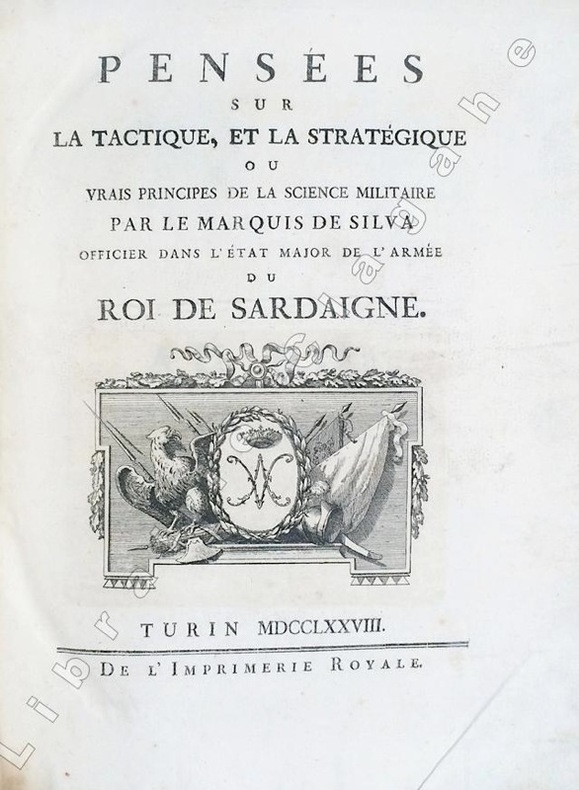
17786494Turin, Imprimerie Royale, 1778 ; in-4 ; demi-veau glacé havane, dos à faux-nerfs dorés et palettes décoratives, pièce de titre vert-pistache, tranches mouchetées de bleu (reliure de l'époque) ; (14), 359, (1 bl.) ; (4), 55, (1) pp. et 30 planches gravées dépliantes.SUIVI DE : "CONSIDERATIONS SUR LA GUERRE DE 1769 ENTRE LES RUSSES ET LES TURCS. Nouvelle édition corrigée et augmentée de plusieurs notes historiques."
Each 216:298 mm. (Opaque) watercolor and pencil on solid cardboard, monogrammed. Finely executed drawings, showing some female allegories (a red rose, a bellflower and red weed). - Decorative gouaches by the artist Stern, who emigrated to Hollywood via Paris in 1933.
The album contains the frontispiece, one leaf with an ideogram, the colophon, one frame for kite, one leaf with title and two leaves with index engravings, the woodcut reproduction of Hokusai's famous view, 18 hand-painted sails on Japanese paper each in their black folder with the stylized design of the sail and the title. All the paintings are executed by master Kato Tatsusaburo, who has been painting and making kites for more than sixty years / Il portfolio contiene il frontespizio, una pagina con ideogramma, il colophon, una struttura in bambù per aquiloni, una pagina con titolo, due pagine con indice delle 18 forme di aquiloni, una riproduzione xilografica della famosa vista di Hokusai, 18 acquiloni dipinti a mano su carta giapponese, ciascuno nella sua cartella nera con impresso al piatto il disegno stilizzato dell'acquilone e il titolo. Tutti i dipinti sono stati eseguiti dal maestro Kato Tatsusaburo, che ha dipinto e realizzato aquiloni per oltre sessant'anni Original bordeaux cloth case with gold ideogram. Copy N. 10 / Cartella in tela bordeaux con ideogramma in oro impresso al piatto anteriore. Copia n. 10. Folio (cm 49,5 x 35,5). . . . . Edizione originale di 100 esemplari numerati (Original edition of 100 numbered copies). . Guarda il video
Tecnica mista su base litografica Firma e data a matita in basso a destra. Cm 100x70. . . Perfetto (Mint). . . .
Litografia originale dalla cartella ''El circulo de piedra'' Firma e numerazione a matita. Timbro a secco dell'Editore Giorgio Upiglio. Stampata su carta delle Cartiere Filicarta. cm 55x45. pp.. . . . Tiratura 125 + XXV. .
Litografia a tre colori Firma e data a matita. Carta Arches. Cm 76,5x56,6. . . . . Tiratura 200. .
2 vols., folio, First and Sole Edition, with 277 reproductions of engravings and 25 head- and tail-pieces; original white buckram, covers mildly age-soiled else a very good, clean copy. EDITION LIMITED TO 210 COPIES.
8vo., First Edition thus, with engraved frontispiece, 40 engravings (a number full-page) and large folding map; elegantly bound in full dark green crushed morocco, sides with gilt frame border, back with raised bands, second and fourth compartments lettered and ruled in gilt, all other compartments tooled in gilt, gilt edges, gilt doublures, hand-made endpapers, ribbon marker, in custom-made marbled slip-case, an elegant copy ideal as a gift or for presentation. navy buckram, gilt back, bevelled boards, gilt top, covers very lightly age-soiled. backstrip sunned (but all gilt wholly legible) else a very good, bright, clean copy. EDITION LIMITED TO 1500 COPIES. Printed from the plates of Macmillan's definitive Wessex Edition and so including both the expanded Preface of 1912 and the episode of the dance at the hay-trusser's (pp.76-79) present there for the first time. See Purdy p.77.
2092902138300218Hosei shobo N.A. Soft Cover. Fine. The book is in fine condition. Hosei shobo paperback
CONTAINS AN ORIGINAL LITHOGRAPH AND SEVEN LINOCUTS BY PABLO PICASSOÁ. RARE issue of the prestigious art publication "XXe siècle". This issue is dedicated to the work of Pablo Picasso, and features numerous articles written by his friends, both artists and art critics. The texts are accompanied by numerous color and b&w reproductions of his works. 320x250mm. 138 pages [+2]. Red cloth Hardcover with illustrated dust-jacket. Jacket slightly rubbed, dirty and yellowing. Jacket upper corners and edge wrinkled. Cover edges dirty. Cover corners and spine edges slightly bumped. [SUMMARY]: This extremely rare issue of an influential art periodical, which features an original lithograph and seven linocuts by one of 20th-century most illustrious artists, is in good condition.
- Lucien Vogel éditeur, Paris 1921, 18x24cm, en feuilles. - Set of eight original prints in color, drawn on laid paper, signed lower right and left boards. The boards are introduced by a text signed Jean Cocteau and represent costumes for Shakespeare (two Bergeres Paulina or Time). Original prints made ??for the illustration of The Gazette fashionable, one of the finest and most influential twentieth century fashion magazines, celebrating the talent of creators and artists French burgeoning art deco. Famous fashion magazine founded in 1912 by Lucien Vogel, The Gazette fashionable appeared until 1925 with an interruption during the War of 1915 to 1920, due to mobilization of its editor. She is 69 Deliveries from just 2000 copies and is illustrated including 573 color plates and 148 sketches depicting models of fashion designers. Upon publication, these luxury publications "are for bibliophiles and worldly aesthetes" (Françoise Tétart-Vittu "good Gazette of tone" in the fashion dictionary, 2016). Printed on fine laid paper, they use a typeface created specifically for the magazine by Georges Peignot, the Cochin character, taken in 1946 by Christian Dior. The prints are made with the technique of metal stencil, enhanced color and some outlined in gold or palladium. The adventure began in 1912 when Lucien Vogel, man of the world and fashion - it has already participated in Femina magazine - decided to found with his wife Cosette de Brunhoff (John's sister, the father of Babar) Gazette good tone in which the subtitle is then "Art, fashions and frivolities." Georges Charensol quotes the editor: "In 1910, he observed, there was no truly artistic fashion magazine and representative of the spirit of his time. So I thought of making a glossy magazine with truly modern artists [...] I was certain of success because for any fashion country can compete with France. "(" A great art editor. Lucien Vogel "in literary News, No. 133, May 1925). The success of the magazine is immediate, not only in France but also the US and South America. Originally, Vogel therefore brings together a group of seven artists: André-Édouard Marty and Pierre Brissaud, followed by Georges Lepape and Dammicourt; and finally his friends from the School of Fine Arts as are George Barbier, Bernard Boutet de Monvel or Charles Martin. Other talents come quickly reach the equipped Guy Arnoux, Léon Bakst, Benito, Boutet de Monvel, Umberto Brunelleschi, Chas Laborde, Jean-Gabriel Domergue, Raoul Dufy, Edward Halouze Alexander Iacovleff, Jean Emile Laboureur Charles Loupot, Charles Martin, Maggie Salcedo. These artists, mostly unknown when Lucien Vogel appealed to them, will eventually become iconic figures and artistic sought. These are the same illustrators who make the drawings advertisements Gazette. The boards highlight the dresses and sublime seven artists of the time: Lanvin, Doeuillet, Paquin, Poiret, Worth, Vionnet and Doucet. The designers provide for each number of exclusive models. Nevertheless, some of Illustrations contained no real model, but only the idea that the illustrator is done in the fashion of the day. Gazette fashionable is a milestone in the history of fashion. Combining the aesthetic requirement and plastic unit, it brings together for the first time the great talents of the world of arts, literature and fashion and imposed by this alchemy, a new image of women, slender, independent and bold, also driven by the new generation of designers Coco Chanel, Jean Patou, Rochas Marcel ... Recovery in 1920 by Condé Montrose Nast, Gazette fashionable modeled for the new composition and the aesthetic choices of the "little dying newspaper" that Nast had bought a few years ago: the Vogue magazine. [FRENCH VERSION FOLLOWS] Réunion de carnets extraits de la Gazette du Bon Ton ainsi constituée : Intérieurs modernes par MAM (Croquis, La Gazette du Bon ton, 1921 n°1). Ensemble de quatre lithographies originales en couleur, tirées sur papier vergé. Installation mode
18325557CBAu Chateau de Laufen près de la Chute du Rhin à Schaffhouse, Louis Bleuler, (nach 1832). Quer-4°. 32 Aquatinta-Tafeln. Orig.-Pappband mit Goldprägung.
19054179DB3 Bände. Aarau, Sauerländer, 1905-1929. 4°. XII, 344, 10 S.; X S.345-714; IX, 186 (1) S. Mit zahlr. Tafeln, Stammtafeln und Abb. im Text. Orig.-Leinenbände (nicht uniform).