4 698 résultats
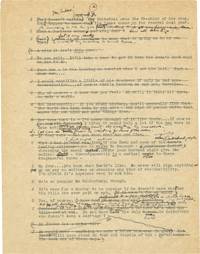
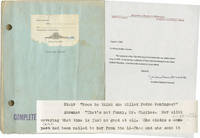
1935124528Beverly Hills CA: Metro-Goldwyn-Mayer MGM 1935. Dashiell Hammett's original submitted Treatment script for the first sequel to "The Thin Man" here referred to only as "Thin Man Sequel" and ultimately titled "After the Thin Man." With a single manuscript correction by Hammett and letter of provenance from Hammett's daughter Josephine Hammett Marshall regarding the discovery of the treatment in the family's estate. <br /> <br /> The first "Thin Man" film released in 1934 and based on Hammett's novel was a smash hit and is today a key film in the American screwball comedy cycle. Five sequels were made between 1936 and 1947 all starring the original acting team of William Powell and Myrna Loy and this previously unknown attempt at a sequel by Hammett was clearly commissioned by MGM but never produced making this script an entire unpublished Hammett work. The story is a completely original one never reworked for the other films very much written in Hammett's trademark style and reading a bit more like a story treatment i.e. a novel than a final screenplay which is likely as far as the story got on the road to production. <br /> <br /> The piece is dated Sept. 17 1935 at the lower right corner of the front panel along with Hammett's name and Hammett's name is noted in pencil next to the title label though not in Hammett's hand. There is only one single-word correction to the entire text at page 83 in Hammett's hand where the word "compact" is replaced with "cigarette case." <br /> <br /> Accompanying the screenplay is a typed letter signed from Hammett's daughter who edited a recently published collection of Hammett's letters on her personal stationery stating that the screenplay was discovered by Hammett's wife in 1980 and that it had been a part of the family's estate until that time. Probably one of only 2-3 copies that could have been produced and very possibly the only copy extant. To our knowledge no other copy of this story in any form has ever been recorded at auction or sold on the market. <br /> <br /> Light blue titled wrappers with the white MGM studio label present manuscript pencil notation of Hammett's name secretarial rubber-stamped COMPLETE dated September 17 1935 with a single credit for Hammett. 115 leaves mimeograph duplication. Pages and wrapper Very Good plus bound with two gold brads. In a custom clamshell box. <br /> <br /> Full pagination available upon request. Metro-Goldwyn-Mayer [MGM] unknown
142842N.p.: N.p. 1981. Handmade vernacular conceptual journal documenting the shooting of Robert Frank's 1981 film "Energy and How to Get It" circa 1980-1981. <br /> <br /> Includes tipped in ephemera drawings business cards and 46 Polaroids of Wurlitzer Robert Frank June Leaf and "Lightning" Bob. Annotations and captions throughout by Wurlitzer. Also included are 4 reference photos all likely unique from the shooting of the film: two showing both Wurlitzer and Frank one showing Wurlitzer and one of the "Enola Gay" aircraft in the film. <br /> <br /> Mead Memo notebook spiral bound. Green wrappers. 4.25 x 6 inches Very Good overall tipped in photos Near Fine. Reference photos 8 x 10 inches Near Fine. N.p. unknown
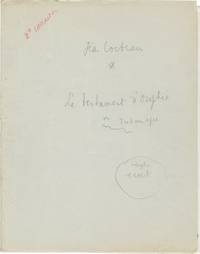
1958167441N.p.: N.p. 1958. Vintage ribbon copy typescript treatment for the 1960 French film. With substantive annotations in director Jean Cocteau's hand throughout noting deletions and amending dialogue. <br /> <br /> Full provenance available. <br /> <br /> The final film in Cocteau's "Orphic" trilogy following "The Blood of a Poet" 1930 and "Orphee" 1950. The only film in the trilogy featuring Cocteau himself as an aging poet who knows he is dying as indeed he was his greatest desire being to experience rebirth so that he can qualify for celestial immortality. <br /> <br /> With cameos by Pablo Picasso Charles Aznavour bullfighter Luis Miguel Dominguen and Yul Brynner. A few seconds of color are spliced in at one point a surreal effect used prior to this film in "Portrait of Jennie" 1948 and later in Samuel Fuller's "Shock Corridor" 1963. <br /> <br /> Having run out of funds in mid-production Cocteau was given money to complete filming by François Truffaut who used the prize money he had won at Cannes for "Les Quatre Cents Coups" 1959. <br /> <br /> Unbound housed in a gray paper folder. Title and Cocteau's name in manuscript pencil on the front of the folder. 31 leaves with last page of text numbered 28. Ribbon copy typescript on onionskin stock rectos only. Pages Fine unbound. N.p. unknown
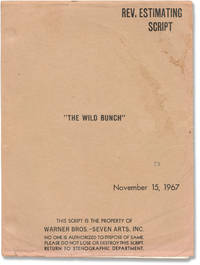
1967160830Burbank CA: Warner Brothers / Seven Arts 1967. Revised Estimating script for the 1969 Western film.<br /> <br /> Sam Peckinpah's classic revisionist Western of nearly inestimable importance and violence made at the peak of his career and which-along with "Straw Dogs" 1971-remains the lasting testament to his vision. A major contributor to the "end of the West" theme so prevalent of the genre in the 1970s and one of the earliest New Hollywood Westerns. <br /> <br /> Set in Mexico shot on location in Mexico and Spain. <br /> <br /> Beige titled Warner Brothers wrappers dated November 15 1967 noted as Rev. Estimating Script and stamped copy No. 75. Title page present dated 11/15/67 with credits for screenwriters Wallen Green and Sam Peckinpah and story credit for Roy Sickner. 125 leaves with last page of text numbered 123. Mimeograph duplication rectos only. Pages about Fine wrapper Very Good plus bound internally with two gold brads. <br /> <br /> National Film Registry. Ebert I. Hardy US. Pitts 4934. Rosenbaum 1000. Schrader Canon Fodder 28. Warner Brothers / Seven Arts unknown
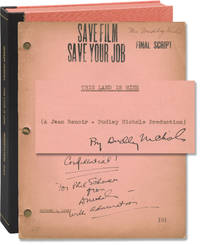
1942151348Santa Ana CA: RKO Radio Pictures 1942. Final Draft screenplay for the 1942 film. Copy belonging to legendary screenwriter Dudley Nichols inscribed by Nichols to Los Angeles Times film critic Phil Scheuer on the title page: "By Dudley Nichols / Confidential! / For Phil Scheuer from D. Nichols-with admiration." Nichols' ownership name is also in manuscript pencil at the top right corner.<br /> <br /> Renoir's second American feature an anti-fascist propaganda film following a meek schoolteacher in a German-occupied European country who is falsely accused of murder and forced to take a stand against the Nazis and their collaborators. <br /> <br /> At the peak of his career Nichols worked with many key Golden Age directors including John Ford George Cukor Howard Hawks Fritz Lang and of course Jean Renoir. He was a founding member of the Screen Writers Guild and is best remembered for "The Informer" 1935 for which Nichols won an Academy Award "Bringing Up Baby" 1938 "Stagecoach" 1939 "For Whom the Bell Tolls" 1943 "Scarlet Street" 1945 "And Then There Were None" 1945 "The Bells of St. Mary's" 1945 and "The Tin Star" 1957. He continued to write prolifically for film up until the time of his death in 1960. <br /> <br /> Housed in a custom quarter-leather clamshell box. <br /> <br /> Pink titled wrappers noted as FINAL on the front wrapper rubber-stamped copy No. 104 dated OCTOBER 2 1942 with credits for director Jean Renoir and screenwriter Dudley Nichols. Distribution page present with receipt removed. Title page integral with the front wrapper. 169 leaves with last page of text numbered 162. Mimeograph duplication rectos only. Pages Near Fine wrapper Near Fine bound with three gold brads. RKO Radio Pictures unknown
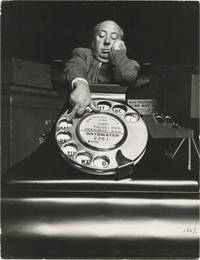
1954153634N.p.: N.p. 1954. Archive of five vintage borderless oversize photographs of director Alfred Hitchcock with various cast and crew members on the set of the 1954 film noir. Manuscript ink and pencil annotations to the verso including layout annotations "FILE" stamps and the stamp of photographer Sanford H. Roth. Four photographs with printed mimeo snipes affixed to the verso and four photographs with manuscript annotations noting their appearance in the May 24 1954 issue of Life magazine. <br /> <br /> Brooklyn-born photojournalist Sanford Roth was best known for his portrait photography capturing intimate and now iconic images of artists and actors throughout his decades-long career including Marc Chagall Joan Crawford Albert Einstein Henri Matisse and Elizabeth Taylor among many others. <br /> <br /> Based on the 1952 play by Frederick Knott who also wrote the screenplay about a tennis player who arranges to have his wife framed for murder after discovering her infidelity. The only Hitchcock film to be shot in 3D although the format would ultimately be discarded for theatrical release and the first of three Hitchcock films to feature actress Grace Kelly followed by "Rear Window" 1954 and "To Catch a Thief" 1955. <br /> <br /> One photograph features Hitchcock leaning over a giant rotary dial a prop made as a result of Warner Brothers' proprietary 3D camera rig. Hitchcock wanted the first shot of the film to feature a finger pressing the letter M on a rotary dial telephone but the specialized 3D camera was unable to focus the close-up correctly leading the director to order a giant finger made from wood and a proportionally large dial in order to achieve the effect. <br /> <br /> Four photographs 10 x 13.5 inches one photograph 9.5 x 13.5 inches. Lightly edgeworn else generally Near Fine. <br /> <br /> Grant US. Selby US. Spicer US. N.p. unknown
1949143058Tokyo: Film Art Association 1949. First Draft script for the 1949 Japanese film noir. Manuscript ink and pencil annotations from production on two leaves. Text in Japanese. <br /> <br /> Generally considered to be the greatest film noir made in Japan and hugely influential on American film noir of the 1950s and 1960s. <br /> <br /> White titled wrappers. 96 leaves with last page of text numbered 96. Mechanical duplication. Toning due to aging throughout wrapper split at spine with mild foxing otherwise Good condition. <br /> <br /> BFI 534. Criterion Collection 233. Grant Japan. Selby Japan. Spicer Japan Classic Noir. Film Art Association unknown
147168Beverly Hills CA: E-K-Corporation / United Artists 1971. First Draft script for the 1973 film written nine months before the production began.<br /> <br /> From the estate of film producer Elliott Kastner whose best known credits include "The Missouri Breaks" Arthur Penn 1976 and "Heat" Michael Mann 1996.<br /> <br /> Based on Chandler's 1953 novel the sixth and penultimate Philip Marlowe book. Screenwriter Leigh Brackett who also co-wrote the screenplay for "The Big Sleep" 1946 updated not just the setting from the 1950s to the 1970s but the attitudes themes and relationships as well. The result was less of a straight adaptation than it was a satire of the traditional detective story a New Hollywood classic. <br /> <br /> Shot on location in Los Angeles Malibu Hollywood and Mexico<br /> <br /> Black titled Studio Duplicating Service Inc. wrappers. Title page present dated September 1971 noted as First Draft with credits for screenwriter Leigh Brackett. 109 leaves with last page of text numbered 108. Mimeograph duplication rectos only. Pages Near Fine wrapper Near Fine bound with two gold brads.<br /> <br /> Grant US. Silver Classic Noir. Spicer US. E-K-Corporation / United Artists unknown
1936147033Burbank CA: Warner Brothers 1936. Collection of nine vintage oversize photographs from the 1936 film. Each with a mimeo snipe on the verso. <br /> <br /> Based on the 1930 Pulitzer Prize winning play by Marc Connelly itself based on "Ol' Man Adam an' His Chillun" a 1928 collection of pseudo African American folk tales by Roark Bradford. One of only a handful of films to feature an all-Black cast made by a major Hollywood studio during the Golden Age becoming the highest grossing such film and remaining so until surpassed by "Carmen Jones" in 1954. <br /> <br /> 14 x 11 inches. Very Good with light edgewear and light vertical creasing down the center. Warner Brothers unknown
1938163880N.p.: N.p. 1938. James Hilton's typescript draft screenplay for the 1939 film an adaptation of his own 1937 novel the only such adaptation he ever completed. With the author's profuse manuscript ink annotations as well as many pages executed entirely in manuscript ink throughout. <br /> <br /> Included is a privately commissioned essay by Hilton scholar Kurt Kausler detailing both the history of Hilton's work on the film an analysis and a breakdown of the manuscript.<br /> <br /> Almost certainly Hilton's first corrected manuscript screenplay for the film. After Jack Warner raised concerns about the script being too long screenwriter Milton Krims was employed to clean up and shorten it-though in the end Hilton received sole credit as screenwriter.<br /> <br /> A man hires an Austrian governess and both are suspected of murder when his wife is discovered to be dead.<br /> <br /> 123 leaves a gathering demonstrating the author's method his attention to detail and his extreme frugality with the use of paper the last most likely due to wartime shortages. The script consists of a ribbon copy typescript leaves on both onionskin and paper stock with manuscript emendations on virtually every page in many cases both recto and verso with some leaves executed on the versos of unrelated previous work by Hilton b leaves consisting entirely of text executed in manuscript ink c hand-cut partial leaves and d a handful of later Xerographically duplicated facsimiles of Hilton's original annotated typescript leaves. <br /> <br /> Included is a very detailed analysis of the manuscript as well as the events surrounding its creation along with a detailed breakdown of the manuscript elements.<br /> <br /> Hilton's manuscript leaves Very Good to Fine quite supple and well preserved. Housed in a modern white three-ring binder. Leaves individually held in modern mylar page protectors. N.p. unknown
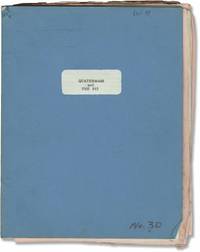
1967162979London: Hammer Film Productions 1967. Draft script for the 1967 film. Working script belonging to an unknown cast or crew member with annotations in manuscript pencil and ink throughout largely noting deletions.<br /> <br /> A gathering of ancient human remains and a mysterious metallic object are discovered buried beneath the site of a planned extension to the London Underground. Renowned scientist Bernard Quatermass is called in to investigate. Based on the successful 1950s British science fiction serial "The Quatermass Experiment" and a follow-up to the films "The Quatermass Xperiment" 1955 and "Quatermass 2" 1957.<br /> <br /> Blue untitled wrappers with a die-cut title window in the British style on the front wrapper. Title page present dated 25th January 1967 with credit for screenwriter Nigel Kneale. 154 leaves with last page of text numbered 131. Roneograph duplication on eye-rest green stock rectos only with undated pink and green revision pages mimeograph laid in throughout. Pages Good moderately worn with foxing on some revision fore-edges wrapper Very Good plus bound internally with two silver brads. Hammer Film Productions unknown
1943156715Beverly Hills CA: Metro-Goldwyn-Mayer MGM 1943. Draft script for the 1945 film. Copy belonging to an unknown crew member with their manuscript annotations in pencil on several pages. <br /> <br /> Based on the 1890 novel by Oscar Wilde about a man whose portrait magically takes on the ability to absorb the sins of his debauched life while he remains unaged. Nominated for three Academy Awards winning one for Best Cinematography. <br /> <br /> Set in London. <br /> <br /> Goldenrod studio wrappers rubber-stamped FILE COPY and COMPLETE on the front wrapper noted as copy No. 67 and production No. 5069 dated 11-5-43 with credits for director Albert Lewin. Title page integral with the first page of the text. 168 leaves with last page of text numbered 169. Mimeograph duplication rectos only with a single pink revision page dated 3-13-44. Pages about Near Fine wrapper Good only with a tear on the bottom right portion of the front wrapper and rear wrapper split from the binding bound with two gold brads. <br /> <br /> Selby US. Metro-Goldwyn-Mayer [MGM] unknown
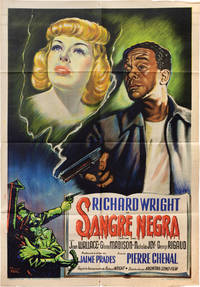
1950158441Buenos Aires: Industia Argentina 1950. Vintage one sheet poster for the Argentinean release of the 1951 film the film's country of origin and whose premiere preceded the US release by more than three months.<br /> <br /> Richard Wright accepted an offer to star as the leading man in the film adaptation of his own novel after initial choice Canada Lee was stuck in South African customs after shooting "Cry the Beloved Country" 1951. Lee had starred in Orson Welles' prior stage adaptation.<br /> <br /> Set in Chicago and shot on location in Chicago and Argentina. <br /> <br /> 29 x 43.25 inches folded as issued. With a few small closed tears and creases at the extremities else Near Fine. Bright and unfaded. Industia Argentina unknown
1931151422Beverly Hills CA: Metro-Goldwyn-Mayer MGM 1931. Draft script for the 1931 film with annotations in manuscript pencil primarily in later half of script largely regarding dialogue but also setting and shots. <br /> <br /> A largely fictionalized account of the life of Mata Hari exotic dancer and courtesan who was executed by France for espionage during World War I. A sensation in the US and Europe it was Greta Garbo's most commercially successful film. The pre-Code film was censored upon its reissue in 1936 which was the only version believed to exist until 2005 when an uncut French and Dutch subtitled version was screened at the Cinematheque Royale de Belgique in Brussels.<br /> <br /> Set in 1917 Paris shot on location in Agoura California. <br /> <br /> Tan titled wrappers with credits for screenwriters Benjamin Glazer and Leo Birinski and M-G-M label dated "Copied May 4 1931." Title page present with credits for screenwriters Benjamin Glazer and Leo Birinski. 172 leaves with last page of text numbered 169. Mimeograph duplication rectos only with six white revision pages dated June 5 1931. Pages Very Good plus with foxing and edgewear and stain to upper right of title page Wrapper Very Good with light soiling and chipping and closed tears to extremities and spine and upper right section cut from rear wrapper bound with two gold brads. Metro-Goldwyn-Mayer [MGM] unknown
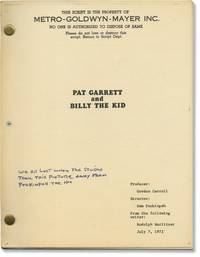
166485Beverly Hills CA: Metro-Goldwyn-Mayer MGM 1972. Draft script for the 1975 film. Annotation in manuscript ink on the front wrapper noting "We all lost when the studio took this picture away from Peckinpah the hed" sic. <br /> <br /> A very nearly experimental Western made by Sam Peckinpah at his peak sufficiently strange to have remained of interest only to the most intense fans of Western revisionism. Comparable only to "McCabe and Mrs. Miller" 1971 and "The Shooting" 1966 in terms of sheer impressionism being laid upon the genre with iconic imagery and super-stylization in every frame. <br /> <br /> Shot on location in Durango Mexico.<br /> <br /> Beige titled Metro-Goldwyn-Mayer front wrapper dated July 7 1972 with credits for Peckinpah and screenwriter Rudolph Wurlitzer. Missing rear wrapper. Title page integral with front wrapper. 125 leaves with last page of text numbered 134. Mimeograph duplication rectos only with blue and gray revision pages throughout dated variously between July 3 and 25 1972. Pages Very Good plus wrapper Very Good bound with two gold brads. Metro-Goldwyn-Mayer [MGM] unknown
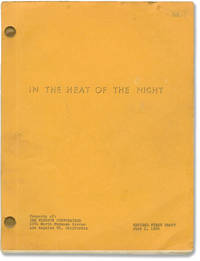
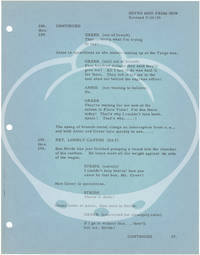
1966152454Los Angeles: The Mirisch Corporation 1966. Revised First Draft script for the 1967 film. Laid in is a Call Sheet from the production dated Tuesday November 29 1966. <br /> <br /> Based on John Ball's 1965 novel. An African American police detective from Philadelphia is recruited to help solve a murder in a small bigoted Mississippi town. Winner of five Academy Awards including Best Picture and Best Actor for Rod Steiger nominated for two others. After the success of the film version the characters were developed further for a police procedural television series in 1988 developed by James Lee Barrett and starring Carroll O'Connor and Howard Rollins which aired on NBC then CBS from 1988 to 1995.<br /> <br /> Set in the fictional town of Sparta Mississippi and shot largely on location in Illinois. Poitier insisted the movie be filmed in the North because of a 1964 incident in Mississippi in which he and Harry Belafonte had been run off the road and almost killed by Klansmen while in the state to support the SNCC Student Non-Violent Coordinating Committee.<br /> <br /> Goldenrod titled wrappers noted as REVISED FIRST DRAFT on the front wrapper rubber-stamped copy No. 84 dated July 1 1966. Title page present dated July 1 1966 noted as REVISED FIRST DRAFT with credits for screenwriter Stirliing Silliphant. 134 leaves with last page of text numbered 140. Mimeograph duplication rectos only with blue pink and white revision pages throughout dated variously between 7/27/66 and 8/10/66. Pages with damp stain on top right of last several pages else Near Fine wrapper Very Good plus bound with two gold brads.<br /> <br /> Call Sheet 8.5 x 14 inches folded horizontally. Near Fine<br /> <br /> National Film Registry. Criterion Collection 959. Penzler 101 Greatest Films of Mystery and Suspense. The Mirisch Corporation unknown
132794Universal City CA: Universal Pictures 1986. Archive of three title card maquettes hand lettered by Harold Adler for the 1963 film. Also included are two fascinating autograph letters both elaborately designed and executed in a calligraphic style from Adler to author illustrator and editor Fridolf Johnson relating to Adler's work with Hitchcock. <br /> <br /> Harold Adler was a calligrapher who created hand lettered titles on over 100 films worked frequently with Alfred Hitchcock and was a favorite of legendary title sequence designers Saul Bass and Pablo Ferro. In addition to "The Birds" 1963 his credits include "Comanche!" 1956 "The Man with the Golden Arm" 1955 "The Seven Year Itch" 1955 "Carmen Jones" 1954 "Psycho" 1960 "In the Heat of the Night" 1967 and "Justine" 1969. <br /> <br /> In 2012 an exhibition of Adler's work was organized by noted typographer and design historian Jill Bell at the American Advertising Federation Kansas City. <br /> <br /> In the first letter dated May 16 1986 Adler describes after touching on other topics meeting Hitchcock and then presenting him with layout ideas for the titles. He then goes into detail regarding his answer to a question about the techniques of artist Eric Gill stating that Hitchcock "was amazed" by this answer and after that would "request 'to be sure to bring that nice young man along" meaning Adler whenever he had a job for Adler's firm. <br /> <br /> The second letter dated June 10th 1986 focuses almost exclusively on Adler's work on "The Birds" going into some detail regarding both the creative and technical processes of producing hand lettered titles for films. He also describes Hitchcock as "an unusual person to work with. He was a master at what he did knew what he wanted and smoked the finest cigars." He then concludes the letter with some brief remarks on how his approach to title lettering evolved over the course of his career. <br /> <br /> The letters themselves are works of art executed in a variety of inks in Adler's detailed penmanship with Johnson's name on each in particular receiving full calligraphic treatment. <br /> <br /> Also included are draft title cards for the film stylistically similar to each other but much different from the titles used in the finished film. Two of the cards are marked as "camera ready" in manuscript colored pencil with titles executed in white paint on black board. The third card photo stat on black paper which accompanied the June 10th letter has been annotated by Adler on both the recto and verso explaining the in more detail the technical process of putting the lettering on film. <br /> <br /> Overall a significant collection of material illuminating a little explored aspect of film design with a direct and significant connection to a seminal work by a director known for personally overseeing all aspects of production. <br /> <br /> Each letter 19 x 24 inches single leaf rectos only. May 16th letter folded twice for mailing June 10th letter folded. Two long diagonal creases to the May 16th letter else both are Fine. Original mailing envelope for the May 16th letter included. <br /> <br /> "Camera ready" title cards 22 x 14 inches. Lightly rubbed and about Near Fine. Third card 18 x 4 inches. Near Fine. <br /> <br /> National Film Registry. Clover Men Women and Chainsaws. Godard Histoires du cinema. Universal Pictures unknown
1955156909Burbank CA: Warner Brothers 1955. Draft script for the 1956 revisionist Western. <br /> <br /> Near the end of Randolph Scott's career producer Harry Brown Scott and director Budd Boetticher began work on a series of intelligent films that would combine Scott's minimalist acting style with Boetticher's lean approach to filmmaking. The result was a series of films today referred to as the "Ranown" cycle a rich canon that formed a strong stylistic whole. Boetticher's approach to storytelling was traditional in the sense that it involved traditional Western characters but revisionist in that his protagonist invariably worked alone and sought his own brand of morality rather than one established by tradition government and family. Apart from ardent fans of Westerns these films went unrecognized by most until Martin Scorsese made a case for them in his 1995 BFI documentary "A Personal Journey with Martin Scorsese Through American Movies." <br /> <br /> Gray titled wrappers dated September 15 1955 with credits for screenwriter Burt Kennedy. Title page present dated September 15 1955 with credits for screenwriter Burt Kennedy. 100 leaves with last page of text numbered 99. Mimeograph duplication rectos only with blue revision pages throughout dated variously between 9/19/55 and 9/20/55. Pages and wrapper Very Good plus with tide marks on the bottom edges of the title page and front wrapper bound internally with three gold brads. Housed in a custom brown quarter-leather clamshell box. <br /> <br /> Pitts 3788. Schrader 52. Scorsese A Personal Journey Through American Movies. Warner Brothers unknown
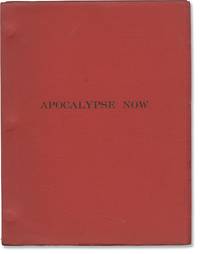
162426Beverly Hills CA: United Artists 1975. Draft script for the 1979 film. <br /> <br /> Loosely based on the 1899 novella "Heart of Darkness" by Joseph Conrad. The ultimate reflection of the American experience in Vietnam taking Conrad's dark vision of an expedition up the Congo and transplanting it to Vietnam-era Cambodia. <br /> <br /> Nominated for eight Academy Awards winning two. Winner of the Palme d'Or.<br /> <br /> Shot on grueling location in the Philippines. <br /> <br /> Red untitled wrappers. Title page present dated December 3 1975 with credits for director Francis Ford Coppola screenwriter John Milius and author Joseph Conrad. 154 leaves with last page of text numbered 153. Xerographic duplication rectos only. Pages Near Fine wrapper Very Good plus with front wrapper partially detached from the binding bound with two gold brads.<br /> <br /> National Film Registry. Ebert I. Godard Histoires du Cinema. Rosenbaum 1000. United Artists unknown
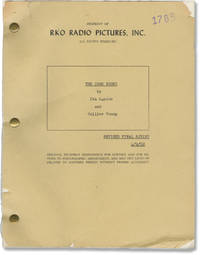
1952158191Culver City CA: RKO Radio Pictures 1952. Revised Final Script for the 1953 film here under its working title "The Cook Story." Carbon typescript master clean with just a handful of typeovers throughout.<br /> <br /> Based on the true account of serial killer Billy Cook. Gilbert and Roy Lovejoy and O'Brien are two buddies on a fishing trip who stop to pick up a hitchhiker named Emmett Talman whom they learn is an escaped serial killer. To make things more daunting Emmett informs the buddies of their impending death carried out once they reach Mexico.<br /> <br /> This early draft of the script precedes shooting-which began on June 24 1952-by nearly three months and includes a bookend context at the beginning and end of the story wherein we are introduced to the home lives and problems of the film's two protagonists. The final film takes a more minimal approach wherein these bookends are removed and the story begins simply with the two men on a vacation together in the mountains of the California.<br /> <br /> Shot on location in California. One of Lupino's final and best known directorial credits followed the same year by "The Bigamist" 1953 and finally "The Trouble with Angels" 1966. <br /> <br /> Tan titled wrappers noted as REVISED FINAL SCRIPT on the front wrapper dated 4/9/52 stamped production number 1785 at the top right corner with credits for screenwriters Lupino and Young. Carbon typescript master on onionskin stock. 94 leaves with last page of text numbered 92. Mechanical duplication. Pages Near Fine wrapper Wrapper Very Good or better pages Near Fine bound with three gold brads. <br /> <br /> National Film Registry. Grant US. Selby Canon US. Silver Classic Noir. Spicer US.2. RKO Radio Pictures unknown
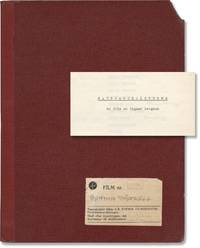
1962171100Stockholm: Svensk Filmindustri SF 1962. Draft script for the 1963 Swedish film. Copy belonging to actor Bertha Sånnell with her name in manuscript ink on a label affixed to the front wrapper her annotations in manuscript ink and pencil on two script pages and on a sheet of lined paper bound in at the rear of the script.<br /> <br /> The second entry in Ingmar Bergman's legendary and highly personal "Faith" trilogy a series of films that launched an important phase in the director's career. A quiet relentless meditation on the nature of faith imperfection and beauty. <br /> <br /> Red untitled wrappers. Title page present undated with credit for Bergman. 135 leaves with last page of text numbered 133. Mimeograph duplication rectos only. Pages Very Good plus wrapper Good perfect-bound with the spine of the wrapper and the first two leaves detached from the text block.<br /> <br /> Criterion Collection 210. Ebert III. Svensk Filmindustri [SF] unknown
1934144598Culver City CA: RKO Radio Pictures 1934. Draft script for the 1935 film. In a custom quarter leather clamshell box.<br /> <br /> The second of two films based on Liam O'Flaherty's 1925 novel the first being Arthur Robison's 1929 British feature about a former Republic Army member during the Irish War of Independence who turns in one of his comrades to the British in order to use the bounty money to book passage to America for himself and his girlfriend who has been forced into prostitution. <br /> <br /> Winner of four Academy Awards including Best Adapted Screenplay Best Director and Best Actor for McLaglen nominated for two others including Best Picture. Screenwriter Dudley Nichols became the first person to decline an Academy Award when his refused his Oscar due to an ongoing dispute between the Screen Writers Guild and the Academy though he would eventually claim it three years later. <br /> <br /> Detached green wrappers noting the title screenwriter and director on the spine in manuscript ink. Title page integral with first page of text with credits for screenwriter Nichols and novelist O'Flaherty. 105 leaves with last page of text numbered 105. Mimeograph duplication. Pages Near Fine wrapper Very Good side-stapled. <br /> <br /> National Film Registry. RKO Radio Pictures unknown
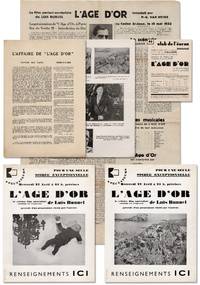
1932169144N.p.: N.p. 1932. A small archive of five vintage French pamphlets flyers and broadsides announcing 1931 and 1932 screenings of the banned 1930 surrealist film. All items are housed loose in a custom bound volume with a "L'Affaire de L'Age d'Or" label on the spine with each item laid in on separate leaves overlaid with heavy protective tissue housed in a custom slipcase. Rare.<br /> <br /> The archive includes:<br /> <br /> "L'Affaire de 'L'Age d'Or'" bi-fold pamphlet printed on rectos and versos with a satin-finish photo illustrated insert also printed on the recto and verso published by Nancy Cunard on the occasion of her January 1931 private screening of the film in London. The bi-fold includes the essay "Exposé des Faits" "Statement of Facts" describing the film's initial riotous reception "Extraits du Programme" "Excerpts from the Program" a "Questionnaire" regarding political and legal actions taken in response to the film and an extensive "Extraits de la Presse" "Excerpts from the Press" followed the names of signatories Maxime Alexandre Aragon André Breton René Char René Crevel Salvador Dali Paul Eluard Georges Malkine Benjamin Péret Man Ray Georges Sadoul Yves Tanguy André Thirion Tristan Tzara Pierre Unik and Albert Valentin.<br /> <br /> Two satin-finish variants of a flyer printed on rectos only for a screening of the film on April 27 1932 by Les Spectateurs de l'Avant-Garde at La Bellevilloise a workers' cooperative theatre with each flyer featuring a different image from the film. A second screening was later added on April 30 not noted on the flyers. The screenings were decidedly low-key private events with Buñuel insisting "No protests." French director Jean Vigo was reportedly among the participants of the screenings.<br /> <br /> And two items relating to a screening presented by Le Club de L'Ecran at Cine-Casino in Belgium on May 10 1932:<br /> <br /> A 4 x 5.5 inch announcement for the screening printed on the recto only noting the film as being presented by P.G. van Hecke Paul-Gustave Van Hecke followed by seating and ticket prices purchase locations and Club de L'Ecran membership prices.<br /> <br /> A large newsprint broadside printed on the recto and the verso for Le Club de L'Ecran announcing the May 10th screening with articles on the recto regarding the film club's activities and an excerpt from the Surrealist manifesto published upon the film's premiere with the verso dedicated entirely to numerous texts and articles on "L'Age d'Or" featuring two images from the film and a portrait of Buñuel.<br /> <br /> A key and archetypal work of Surrealist cinema alongside "Un Chien Andalou" 1929 also written by Buñuel and Dali and directed by Buñuel featuring a series of absurdist vignettes scathingly and sardonically rebuking the sexual hypocrisy of bourgeois society the Catholic Church and 20th century European society in general.<br /> <br /> The violence the uproar "L'Age d'Or" created remains as shocking as the film itself: days into the first screenings at Studio 28 on December 3 1930 the theatre was stormed by fascist youths enraged at the film's perceived anti-patriotic and anti-Christian message. Demonstrators threw ink at the screen shouted anti-Semitic death threats smashed the theatre windows and completely destroyed an exhibition of surrealist books and art in the foyer. In response the Board of Censors re-reviewed the film and on December 10 the film was banned from further public showings in France. The film's producers subsequently withdrew "L'Age d'or" from commercial distribution and public exhibition for more than 40 years although three years later in 1933 the film was privately exhibited at the Museum of Modern Art in New York.<br /> <br /> "L'Affaire de 'L'Age d'Or':" Bi-fold 7.5 x 10.5 inches. About Near Fine with a Very Good plus 7.5 x 10 inch insert with both items previously folded horizontally.<br /> <br /> Two Les Spectateurs April 27 Flyers: 8.25 x 10.5 inches. One Near Fine. One Very Good plus with light creasing faint toning and a .25 inch closed tear to the top edge.<br /> <br /> Le Club de L'Ecran Announcement: 4 x 5.5 inches. Near Fine.<br /> <br /> Le Club de L'Ecran Broadside: 14.25 x 21.75 inches folded as issued. About Near Fine with an additional lightly toned horizontal fold.<br /> <br /> Housed in a 9.25 x 12 inch custom bound Near Fine volume with a 9.5 x 12.25 inch Near Fine slipcase.<br /> <br /> BFI. Rosenbaum 1000. Vogel Film as a Subversive Art. N.p. unknown
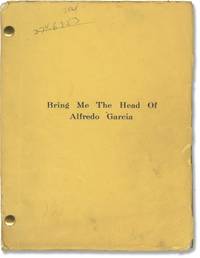
166560N.p.: N.p. 1972. Early Draft script for the 1974 film file copy belonging to director Sam Peckinpah. Dated July 8 1972 over a year before production commenced and notably featuring the original ending with Bennie getting away-in true Peckinpah fashion the director would later rewrite the ending to show Bennie dying in a shootout. With Peckinpah's brief annotations in manuscript ink on the title page and two leaves of the script. <br /> <br /> Warren Oates stars as Bennie a bartender who travels through the Mexican underworld accompanied by his sex worker girlfriend to collect the bounty on the head of a gigolo. The only Peckinpah film not re-cut by the studio.<br /> <br /> Shot on location in Mexico. <br /> <br /> Yellow titled wrappers. Title page present dated July 8 1972 with credits for Peckinpah and screenwriter Gordon Dawson. 128 leaves with last page of text numbered 126. Xerographic duplication rectos only. Pages Near Fine wrapper Very Good plus bound with two gold brads.<br /> <br /> Ebert II. Nilsen Warped and Faded. Rosenbaum 1000. Twilight Time 497. N.p. unknown
1964131051Beverly Hills CA: Metro-Goldwyn-Mayer MGM 1964. Draft script for the 1965 film based on the 1948 novel by Evelyn Waugh legendarily co-written by Terry Southern and Christopher Isherwood. Deluxe working script belonging to uncredited crew member William Todd Mason with his name and phone number in manuscript ink on the title page and some brief penciled annotations on three pages. Laid in is a corner stapled three-page Staff and Crew list with two name additions in manuscript red ink on the second page. <br /> <br /> Included is a vintage studio still photograph from the film. <br /> <br /> An early draft issued nearly two years prior to the film's October 1965 release with substantial differences from the finished film. <br /> <br /> The sister film to "Dr. Strangelove" and in the eyes of many just as much a masterpiece of exquisitely wrought black humor. Made in the US but in a dense British-American style. Ostensibly a satire on the funeral business in which a young British poet winds up in a Hollywood cemetery as part of an inheritance arrangement-but in reality a satire of Hollywood itself as well as the Western malaise of the mid 1960s. <br /> <br /> Script: Self wrappers presumably as this draft was issued. Title page present rubber stamped copy No. 70 dated July 21 1964 with credits for screenwriters Southern and Isherwood. 158 leaves mimeograph duplication with blue revision pages throughout dated 7-22-64. Pages Fine wrapper Fine bound with two gold brads. <br /> <br /> Staff and Crew listing: two leaves slightly worn with annotations on the second page. Metro-Goldwyn-Mayer [MGM] unknown