4 698 résultats
1966140604Los Angeles: Expanding Cinema 1966. Shooting final for the 1966 film. Copy belonging to actor Peter Haskell with his manuscript annotations throughout and his shooting schedule laid in. <br /> <br /> Mary Ellen Bute's final film and the first cinematic adaptation of James Joyce's masterfully complex work of fiction. Shot over a two year period Bute was tasked with transforming Joyce's impenetrable prose without losing any of the work's surreal lyrical essence. The subsequent film maintains the original novel's oneiric style. Bute and her husband Ted Nemeth were longtime collaborators and Nemeth worked as both cinematographer and producer of the film. In 1965 it was honored at the Cannes Film Festival as Best Debut and remains Bute's sole feature length film. <br /> <br /> Shot on location in New York City and Dublin. <br /> <br /> Brown untitled wrappers. Title page present dated March 4 1963 and December 3 1962 noted as Shooting Final with credits for screenwriters Mary Ellen Bute Romana Javitz and T. J. Nemeth Jr and editor A.I.M.S. Street. 148 leaves with last page of text numbered 139. Mimeograph duplication with onionskin revision pages throughout. Pages Very Good plus wrapper Very Good plus. Some pages detaching and wrapper slightly cracked. Bound internally with prong binding. Expanding Cinema unknown
150822Culver City CA: Culver City Studios 1973. Third Revision Draft script for the 1973 film with the name "Jim Woods" in manuscript ink on top right of front wrapper and page two of screenplay likely uncredited Set Painter James T. Woods with copy numbers "76" on top left of front wrapper and "13" on top right of title page in manuscript marker and on back wrapper are numeric entries in manuscript ink. Following script is a one page "APPENDIX A -- TV PLATE -- LUNA'S PARTY" featuring dialogue between a mother and child regarding a holiday party.<br /> <br /> Woody Allen is a health food store owner who is cryogenically frozen in 1973 only to be revived 200 years later to help lead a rebellion against an inept totalitarian government. Winner of a Hugo Award for Best Dramatic Presentation. <br /> <br /> Shot on location in Colorado and California. <br /> <br /> Beige titled wrappers. Title page present dated March 1 1973 noted as REVISION #3 with credits for screenwriters Woody Allen and Marshall Brickman. 131 leaves with last page of text numbered 129. Mimeograph duplication rectos only with yellow and blue revision pages throughout. Pages Very Good plus with silverfish damage to outer edge of last 15 pages wrapper Very Good plus with silverfish damage to outer edge of back wrapper bound with two gold brads. Culver City Studios unknown
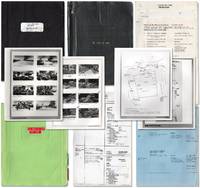
168810N.p.: Silverworld Films 1980. Large archive including two heavily annotated Revised Draft scripts one lined 30 pages of storyboards a large blueprint of the military compound in the film story two maps a "The Dogs of War / New York" folder of location facts and contacts a 30-page shooting schedule and over 200 pages of daily revised shooting schedules call sheets and various memos from the 1980 film.<br /> <br /> Detail as follows:<br /> <br /> A heavily annotated Revised Draft script dated November 5 1979 with manuscript pencil ink marker and orange highlighter annotations on nearly every page.<br /> <br /> A heavily annotated Lined Revised Draft script dated February 12 1980 with manuscript ink and marker annotations on nearly every page. <br /> <br /> 30 matte-finish prints of storyboards most containing eight storyboards per page.<br /> <br /> A large blueprint of the military compound with several pencil and ink annotations.<br /> <br /> Two matte-finish prints of maps one of the final battle garrison and one of the Belize airstrip with annotations in blue ink.<br /> <br /> A folder with the label "The Dogs of War / New York" on the front wrapper containing a three page Memo six pages of New York shooting schedules 14 location fact sheets and a two-page location contact List.<br /> <br /> A 30 page Shooting Schedule and over 200 pages of daily Revised Shooting Schedules call sheets and memos many with manuscript ink annotations.<br /> <br /> Based on Frederick Forsyth's 1974 novel about a ruthless mercenary who after being tortured and deported is hired to lead a group of soldiers in a coup against a small African dictatorship so a British tycoon can plunder the nation's platinum resources.<br /> <br /> Set in the fictional African country of Zangaro shot on location in Belize City London Miami and New York.<br /> <br /> November 5 1979 Revised script:<br /> <br /> Black untitled wrappers with a die-cut window in the British fashion. Title page present dated November 5 1979 noted as Revised with credits for screenwriter Gary M. Devore and author Frederick Forsythe. 117 leaves with last page of text numbered 115. Xerographic duplication rectos only. Pages Near Fine wrapper Near Fine bound internally with two silver brads.<br /> <br /> February 12 1980 Draft script:<br /> <br /> Black titled Studio Duplicating Service wrappers. Title page present dated February 12 1980 noted as Revised with credits for screenwriter Gary M. Devore and author Frederick Forsythe. 124 leaves with last page of text numbered 122. Xerographic duplication on blue leaves rectos only. Pages Near Fine wrapper Very Good plus bound with two gold brads.<br /> <br /> Storyboards and Maps: 8 x 10 inches. Near Fine.<br /> <br /> Blueprint: 48.5 x 25.25 inches folded. Very Good plus with light toning light edgewear pinholes tape shadows and cello tape at the extremities.<br /> <br /> "New York" Folder: Generic green folder 9 x 11.5 inches. Near Fine.<br /> <br /> Shooting Schedules Call Sheets and Memos: 8.5 x 11 inches 8 x 13 inches and 8.5 x 14 inches. Very Good plus overall with wear commiserate with production use. Silverworld Films unknown
1930166622Paris: Studio 28 1930. Vintage review-program for Luis Buñuel's 1930 surrealist masterpiece created for the film's public premiere at Studio 28 cinema in Montmartre. Program in two parts bound dos-a-dos. Text in French.<br /> <br /> The first section of the review-program is dedicated to "L'Age d'or" presenting the film's scenario alongside subtitles and dialogue accompanied by a manifesto on surrealism and a catalog of 20 works by Max Ernst Salvador Dalí Man Ray and others which were exhibited alongside the film's screenings at Studio 28. <br /> <br /> The second part of the program is an overview of film programs at Studio 28 with stills from films by Epstein Ivens Melies and others. <br /> <br /> The violence of the uproar "L'Age d'Or" created remains almost as shocking as the film itself: days into the first screenings at Studio 28 on December 3 1930 the theatre was stormed by fascist youths enraged at the film's perceived anti-patriotic and anti-Christian message. Demonstrators threw ink at the screen shouted antisemitic death threats smashed the theatre windows and completely destroyed the exhibition of surrealist books and artwork in the foyer. In response the Board of Censors re-reviewed the film and on December 10 the film was banned from further public showings in France. The film's producers subsequently withdrew "L'Age d'or" from commercial distribution and public exhibition for more than 40 years although three years later in 1933 the film was privately exhibited at the Museum of Modern Art in New York.<br /> <br /> Page edges faintly foxed else about Near Fine in perfect-bound gold wrappers with a single annotation in manuscript ink censoring a line relating to one of the film's characters and Jesus Christ. Lacking the errata slip. Studio 28 unknown
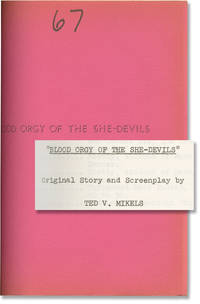
155115Hollywood: Occult Productions 1973. Draft script for the 1973 film. Working production copy housed in a black leather binder with production materials bound in before and after the script including handwritten cast and crew contact information and call sheets. <br /> <br /> A young woman joins a black magic coven governed by a psychic witch queen with dubious and eventually murderous intentions. Considered one of the best and arguably most polished releases from noted psychotronic Z-budget horror director Ted V. Mikels heavily inspired by "Rosemary's Baby" 1968 and the occult concerns of the Age of Aquarius. <br /> <br /> Pink titled wrappers. Title page present undated with credits for director-screenwriter Ted V. Mikels. 67 leaves with last page of text numbered 64. Mimeograph duplication rectos only. Pages Near Fine wrapper Near Fine. <br /> <br /> Nightmare USA. Occult Productions unknown
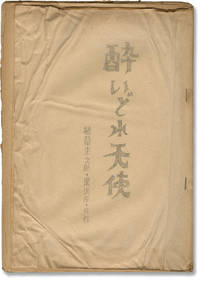
1948151633Tokyo: Toho Company 1948. Draft script for the 1948 Japanese film noir. Text and titles in Japanese.<br /> <br /> The first of sixteen film collaborations between director Akira Kurosawa and actor Toshiro Mifune. Kurosawa's seventh film saw him exploring the inter workings and motivations of the yakuza and machismo. Censorship was tight regarding the occupation forbidding criticism of Americans leading Kurosawa to slip in references to the US presence in Japan satirizing jazz "pan pan" girls unlicensed prostitutes catering to American soldiers and Western clothing and hairstyles.<br /> <br /> Set in the slums of postwar Japan.<br /> <br /> White titled wrappers. Approximately 40 leaves with last page of text numbered 79. Mimeograph duplication printed on rectos and versos. Pages Very Good plus wrapper Very Good plus covered in a protective plastic wrapping from when the script was used during filming side stapled. <br /> <br /> BFI 638. Criterion Collection 413. Grant Japan. Toho Company unknown
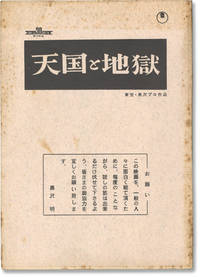
1962160922Tokyo: Toho / Kurosawa Productions 1962. Draft script for the 1963 Japanese film. Text and titles in Japanese.<br /> <br /> A legendary Japanese noir based on American author Ed McBain's 1959 novel "King's Ransom." A wealthy industrialist is contacted by a gang of crooks who inform him that they have kidnapped his son and are holding him hostage in exchange for an enormous ransom. The industrialist soon realizes however that the boy they have taken is in fact the son of his chauffeur-and must decide whether he will bankrupt himself and his family in order to save a child that is not his own. A nuanced portrait of a man facing the potential destruction of his future further elevated by morally ambiguous characters and the gritty realism of its world. The fifteenth and penultimate film that leading actor Toshiro Mifune would make with director Akira Kurosawa and one of the highest grossing Japanese films of 1963 breaking Kurosawa's box office record for the third time.<br /> <br /> Shot on location in Kanagawa Japan. <br /> <br /> White titled perfect-bound wrappers dated 1962 with a protective titled dust jacket. Approximately 94 leaves with last page of text numbered e-37. Mimeograph duplication printed on rectos and versos. Pages Very Good plus wrapper Very Good plus with light foxing on the top and bottom page edges. Jacket Very Good with moderate foxing on the extremities.<br /> <br /> Criterion Collection 24. Grant Japan. Selby Japan. Spicer Japan. Toho / Kurosawa Productions unknown
1963148710Tokyo: Kurosawa Production Co 1963. Draft script for the 1965 Japanese film preceding the release by nearly two years. Text and titles in Japanese. <br /> <br /> Based on Shugoro Yamamoto's short story collection "Akahige Shinryotan." Toshiro Mifune's final film with director Akira Kurosawa considered one of the director's masterpieces following a small-town doctor and his new intern a highly educated arrogant young man. <br /> <br /> Set in the Edo district of Koishikawa.<br /> <br /> White titled wrappers with a blue titled dust jacket. Title page present dated 1963. 65 leaves with last page of text numbered g-17. Mimeograph duplication rectos only. Pages Very Good plus wrapper Very Good plus with light foxing to the rear wrapper with perfect binding. Jacket is Very Good plus with light foxing to the fore-edges and rear panel. Kurosawa Production Co unknown
1944147297Los Angeles: Vanguard Films 1944. Temporary Shooting script for the 1945 film here under the working title "The House of Dr. Edwardes." <br /> <br /> Based on the 1927 novel "The House of Dr. Edwardes" by Hilary Saint George Saunders and John Palmer. After director Alfred Hitchcock learned that producer David O. Selznick wanted to make a "psychiatric" story for the screen he persuaded Selznick to buy the rights to the novel he and his wife were in the process of adapting. Nominated for six Academy Awards including Best Picture Best Director and Best Supporting Actor for Michael Chekhov winning one.<br /> <br /> Blue titled wrappers noted as TEMPORARY SHOOTING SCRIPT on the front wrapper dated June 14 1944 with a credit for screenwriter Hecht. Distribution page present rubber-stamped copy No. 1620 with receipt removed. 176 leaves with last page of text numbered 176. Mimeograph duplication rectos only. Pages Near Fine wrapper Near Fine bound with three gold brads. <br /> <br /> In a custom royal blue cloth covered clamshell box with black leather spine label and titles and decoration in gilt.<br /> <br /> Grant US. Selby Canon. Silver Classic Noir. Spicer US. Vanguard Films unknown
1967149909New York: Andy Warhol Film 1967. Vintage poster for the 1967 film. The film originally screened at the Hudson Theater in a 95-minute version although this cut is considered lost. A 109-minute version would screen in 1968 as the first film shown at the New Andy Warhol Garrick Theater renamed as such after Warhol recovered from being shot by Valerie Solanas. <br /> <br /> One of several sexploitation influenced films made by Warhol an episodic story of a biker who has no bike and is both eroticized by the camera and emasculated by various Warhol superstars throughout. <br /> <br /> 19 x 25 inches rolled. Near Fine with some light soil and an almost imperceptible professional repair to a tear at the top edge. <br /> <br /> Murphy The Black Hole of Cinema. Warholstars. Andy Warhol Film unknown
1967149869New York: Andy Warhol Film 1967. Vintage poster for the 1967 film. Two versions of the film were shot - one with an all nude all male cast that was never released publicly and one with both male and female actors wearing G-strings which was originally screened at the Hudson Theater in New York. <br /> <br /> A stylistic breakthrough in that the film entirely jettisons any pretense to plot dramatic action or sex found in Andy Warhol's previous sexploitation experiments instead featuring extended monologues by superstar Viva and conversations with others that touch on a variety of controversial topics. One of Warhol's most overtly political films also starring draft resister Andrew Duggan and the first pairing of Viva with Taylor Mead who would appear together in several more Warhol films. <br /> <br /> 19 x 25 inches rolled on archival linen with a small amount of professional restoration and repair. Near Fine with minor soil. <br /> <br /> Murphy The Black Hole of the Camera. Warholstars. Andy Warhol Film unknown
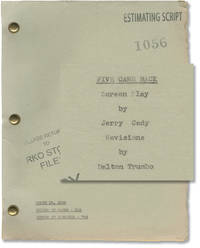
1939152589Culver City CA: RKO Radio Pictures 1939. Estimating script for the 1939 film.<br /> <br /> In his 1970 biography of Nathanael West Jay Martin notes: "On June 6 1938 West was hired for his 'established' salary of $350 a week by RKO Pictures-the first of five major studios to employ him-to make a screenplay from an original story by Richard Carroll. Putting everything else aside within a week he outlined his plans for treating the material. He fretted all weekend over whether the outline would be accepted knowing that he could be out of a job again on Monday. <br /> <br /> On late Monday afternoon he was persuaded to telephone the executive producer Lee Marcus who told him to go ahead at once to the screenplay. On July 20 West finished a first draft for what would be one of his most successful films. After eight weeks in all having polished his script West was released by RKO. <br /> <br /> At this point it appeared that West had a good chance to earn a single credit for this high budget B-quality movie but the studio called in a hack writer Jerry Cady to polish West's script. After Cady's work on it proved unsatisfactory Dalton Trumbo came in to do a revision before the film went into production. Trumbo eliminated most of the revisions made by Cady restored some of West's material and made still other alterations. By this time West had returned to New York and although his secretary demanded that he ask the guild to arbitrate the credits he appeared indifferent and nearly missed getting any screen credit at all."<br /> <br /> An aerial melodrama about nine passengers on a commercial flight from Los Angeles to Panama City who crash-land in the Amazon rainforest. The production helped launch the career of a then-unknown Lucille Ball and paved the way for later disaster epics of the 1970s as well as the popular television sitcom "Gilligan's Island." <br /> <br /> Set in Los Angeles and the Amazon rainforest. <br /> <br /> Green titled wrappers stamped ESTIMATING DRAFT on the front wrapper dated March 15 1939 with credits for screenwriters Jerry Cady and Dalton Trumbo. Title page integral with the first page of text. 133 leaves with last page of text numbered 133. Carbon typescript on yellow onionskin stock. Pages and wrapper Near Fine bound with three gold brads. RKO Radio Pictures unknown
1959139477Paris: Les Films du Carrosse 1959. Original French Grande poster for the 1959 film. Poster design by Boris Grinsson. <br /> <br /> Truffaut's auspicious debut winner of Best Director at Cannes nominated for the Palme d'Or and also nominated for a Best Original Screenplay Oscar the following year. <br /> <br /> 47 x 62 inches. Linen backed and rolled. Bright and Fine. <br /> <br /> Capitaine 207. Warren Vol. 1 p. 159. Les Films du Carrosse unknown
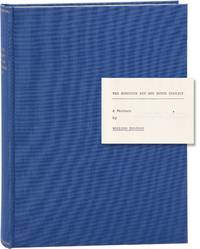
1969156803N.p.: N.p. 1969. Early Draft script for the classic 1969 Western film seen here under the working title "The Sundance Kid and Butch Cassidy." Bound in full blue cloth with the original wrappers bound in. <br /> <br /> A landmark of New Hollywood cinema and arguably the high spot as well as the beginning of an incredible streak of inventive cinematic achievements directed by George Roy Hill in the 1960s and 1970s including "Slaughterhouse-Five" 1972 "The Sting" 1973 and "Slap Shot" 1977. <br /> <br /> Loosely based on fact about two outlaws on the run from a lethal posse after a string of train robberies. They flee to Bolivia in search of a a better way to be thieves but ultimately meet their doom. Winner of four Academy Awards including Best Screenplay for William Goldman. <br /> <br /> Set in Wyoming and Bolivia and shot on location in New Mexico California Utah Colorado and Arizona in the US and in Morelos Guerrero and Sonora in Mexico. <br /> <br /> Blue untitled wrappers. Title page present undated with credits for screenwriter William Goldman. 177 leaves with last page of text numbered 175. Xerographic duplication rectos only. Pages Near Fine wrapper Very Good plus. Housed in a custom red and blue quarter-leather clamshell box. <br /> <br /> National Film Registry. Hardy The Western. Pitts 586. N.p. unknown
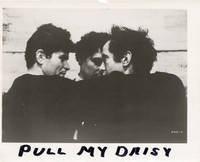
1959160564N.p.: N.p. 1959. Four vintage reference photographs by John Cohen from the 1959 short film. Three with the title in manuscript ink on the bottom margin of the recto and one with a provenance label on the verso. <br /> <br /> Based on a purportedly true incident in the life of Beat icons Neal and Carolyn Cassady wherein a couple's dinner party for a visiting bishop is crashed by their zany bohemian friends. Adapted by Jack Kerouac from the third act of his play "Beat Generation" with voiceover narration by Kerouac and a title taken from the poem of the same name co-written by Kerouac Cassady and Allen Ginsberg. <br /> <br /> For years the film was rumored to have been entirely unscripted capturing a real event at co-director Alfred Leslie's loft in the Bowery until Leslie revealed in a 1968 interview that the film had in fact been scripted heavily rehearsed and shot in a photography studio. <br /> <br /> 10 x 8 inches. Small chips at the top edges else about Near Fine. <br /> <br /> National Film Registry. N.p. unknown
158009Beverly Hills CA: Faces 1975. Draft script for the 1976 film. Copy belonging to crew member Lanie Heffernan with her annotations in manuscript ink on two pages in the script including her name on the top right corner of revision page 2A. <br /> <br /> Laid in with the script is a 30-page shooting schedule dated July 7 1975 and a four-page staff and crew list dated July 8 1975. <br /> <br /> The fourth of five films made by pioneering independent filmmaker John Cassavetes under his Faces distribution company about a strip club owner who is forced to perform a hit by the mob as payment for gambling debts. <br /> <br /> Red titled wrappers noted as copy No. 5 in manuscript ink annotation on the front wrapper. Title page present dated June 1975 with credit for director and screenwriter John Cassavetes. 115 leaves with last page of text numbered 96. Xerographic duplication rectos only with blue and pink revision pages throughout dated variously between 7/7/75 and 7/9/75. Pages Near Fine wrapper Very Good plus with moderate wear on the rear wrapper. Housed in a black three-ring binder. <br /> <br /> Criterion Collection 254. Silver Classic Noir. Spicer US. Faces unknown
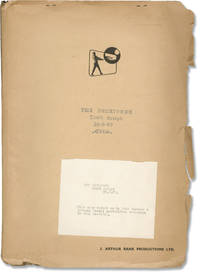
1957151146London: J. Arthur Rank 1957. Third Draft script for an unproduced film. Copy belonging to novelist and screenwriter John Masters with his name in manuscript pencil on the front wrapper his manuscript pencil annotations to virtually every page and two handwritten pages stapled to the verso of the front wrapper noting concerns about the script and deletions. <br /> <br /> Based on Masters' 1952 novel about a British officer who goes undercover to infiltrate a thuggee cult ritually murdering travelers in colonial India. <br /> <br /> Masters who served in the Indian Army from 1933 to 1949 was best known for his historical fiction set in India most notably his 1954 novel "Bhowani Junction" which was adapted for film by director George Cukor in 1956. Modern scholars have acknowledged Masters' influence on British historical fiction and in later works his relative sympathy towards Indian nationalists while simultaneously criticizing his revisionist occasionally imperialist tone. Masters also released three successful autobiographical volumes "Bugles and a Tiger" 1956 "Road Past Mandalay" 1961 and "Pilgrim Son" 1971. <br /> <br /> Beige titled wrappers noted as Draft Script on the front wrapper dated 26-3-57 with a typed label affixed on the front wrapper dated 26.3.57 crediting novelist and screenwriter John Masters and screenwriter Anthony Perry and noting Masters' annotations throughout. Title page present noted as DRAFT THREE with credits for novelist and screenwriter John Masters. 114 leaves with last page of text numbered 112. Mimeograph duplication rectos only. Pages Near Fine wrapper Very Good plus bound internally with a silver prong. J. Arthur Rank unknown
1969144659New York: Jerome Hellman Productions 1969. Draft script for the 1969 film. Copy belonging to the film's still photographer Ron Munkasci with his name in red manuscript ink at the top right corner of the title page.<br /> <br /> Based on the 1965 novel by James Leo Herlihy about an unlikely friendship between a would-be gigolo and an ailing con artist. Cornerstone film of the New Hollywood cinema nominated for seven Academy Awards winning Best Adapted Screenplay Best Director and Best Picture. <br /> <br /> Set in New York City shot on location in Miami Manhattan and Big Spring Texas. <br /> <br /> Dark blue titled wrappers noted as DRAFT SCREENPLAY at the bottom right and with the logo for JEROME HELLMAN PRODUCTIONS at bottom center. Title page present with credits for screenwriter Waldo Salt novelist James Leo Herlihy producer Jerome Hellman and director John Schlesinger noted as "A JEROME HELLMAN-JOHN SCHLESINGER PRODUCTION." 122 leaves with last page of text numbered 121. Mimeograph duplication rectos only. Pages Near Fine with some offsetting to the title page due to a newspaper clipping still present laid in wrapper Very Good plus.<br /> <br /> National Film Registry. Jerome Hellman Productions unknown
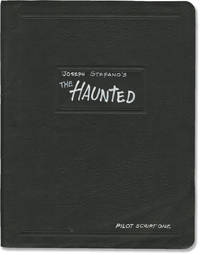
1964147167Los Angeles: Villa di Stefano Productions 1964. First Draft script for the 1964 television film which originally aired on CBS. With actor Martin Landau's copied annotations throughout. Included are a set of synopses for proposed episodes a shooting schedule a distributor's announcement booklet and various other documents related to production. <br /> <br /> Also included is an original celluloid print of the film on a single reel in its original mailing case with cloth straps dated 2/18/65 addressed from director Joseph Stefano to Landau on the mailing label in manuscript black ink and INSCRIBED by Stefano to Landau at the top left corner of the case in the same ink: "To Martin / Whose splendid brilliance and warmth put the special spark in this bright fire / Your grateful and admiring friend / Joe Stefano."<br /> <br /> Fearful of being buried alive a woman installs a phone in the crypt in which she plans to be in case of emergencies. Months after her death the phone begins to ring presenting a new ghostly case for Landau's paranormal investigator. <br /> <br /> The film was intended to be the pilot for a new paranormal thriller series tentatively titled "The Haunted" as titled on the front wrapper but the series wasn't picked up and the pilot was released as a television movie after additional footage was shot. <br /> <br /> Black titled wrappers with credits for director-screenwriter Joseph Stefano noted as PILOT SCRIPT ONE. Title page present dated July 27 1964 noted as PILOT SCRIPT ONE with credits for director-screenwriter Joseph Stefano. 77 leaves with last page of text numbered 76. Early Xerox rectos only. Pages Near Fine wrapper Near Fine bound internally with three silver brads. <br /> <br /> Film reel and film stock are unexamined. Villa di Stefano Productions unknown
1952121979Mexico City: Ultramar Films 1952. Draft script for the 1954 Mexican film. Also included are seven film still photographs from the film.<br /> <br /> A rare pre-production script from Luis Buñuel's first color film one of the key productions from his Mexican period written with Hugo Butler who was at the time living in self-imposed exile in Mexico with Dalton Trumbo both blacklisted by the HUAC and writing under various pseudonyms. Single substantive manuscript pencil correction toward the end of the text. <br /> <br /> One of Buñuel's more straightforward narratives quite faithful to the source material but with a whopping dream sequence as bizarre as anything one might find in the director's later work. <br /> <br /> Tall side-stapled self-wrappers dated "Mexico / 1952" with credits for director-screenwriter Buñuel screenwriter Butler under the Roll pseudonym and producers Oscar Dancigers and Henry F. Ehrlich. 95 leaves mimeograph duplication. Very Good condition toned at the edges some offsetting on the front wrapper and a 1-inch tear at the left margin. Ultramar Films unknown
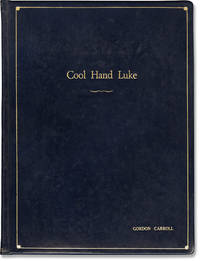
1966160717Burbank CA: Warner Brothers / Jalem Productions 1966. Draft script for the 1967 film. Specially bound copy belonging to producer Gordon Carroll bound in full blue leather with Carroll's name in gilt on the bottom right corner of the front board.<br /> <br /> Based on the 1965 novel by Donn Pearce who co-wrote the screenplay about the experiences of a hard-nosed Vietnam veteran after he is sentenced to two years on a chain gang in a prison camp. Winner of a Best Supporting Actor Oscar for George Kennedy and nominated for three others including Best Adapted Screenplay.<br /> <br /> Set in Florida.<br /> <br /> Title page present dated 9/29/66 with credits for screenwriters Frank R. Pierson and Hal Dresner and novelist Donn Pearce. 152 leaves with last page of text numbered 143A. Mimeograph duplication on eye-rest green stock rectos only with blue revision pages throughout dated variously between 10/23/66 and 2/9/67. Pages Near Fine.<br /> <br /> National Film Registry. Ebert III. Warner Brothers / Jalem Productions unknown
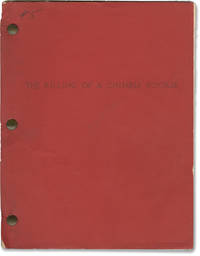
1966141453Tokyo: Toho Company 1966. Draft script for the 1966 film. Text in Japanese. <br /> <br /> A pornographer is keeping a low profile to keep out of the way of the mob while also is trying to keep the various people in his life happy including his stepdaughter stepson mistress and wife who believes her first husband was reincarnated as a carp. <br /> <br /> White titled perfect-bound wrappers. Title page present. 178 leaves with last page of text numbered 27. Mechanical duplication. Pages Near Fine wrapper Near Fine. <br /> <br /> Criterion Collection 207. Toho Company unknown
1968137925Beverly Hills CA: Metro-Goldwyn-Mayer MGM 1968. Archive including 20 vintage linen-backed production photographs a trade advertisement a film program and a souvenir booklet from the 1968 film "2001: A Space Odyssey." From the collection of NASA scientific consultant Frederick I. Ordway III with images prominently featuring Ordway production designer Harry Lange Arthur C. Clarke Stanley Kubrick and others. One photograph has Ordway's name written on the recto in silver marker. All photographs mounted on matte board as issued. <br /> <br /> Ordway and Clarke began working together on matters of science fact in 1951 and Clarke personally invited him to be the factual advisor on the film. <br /> <br /> Kubrick's sprawling science fiction epic traces the evolution of human intelligence under the influence of an unspecified alien force. Along with "Blade Runner" Kubrick's masterpiece forever altered the standard for visual and conceptual sophistication in science fiction and genre films. The pre-production for the film set standards as well as Kubrick hired one of the greatest science fiction authors of the 1960s Arthur C. Clarke to be his screenwriter and hired over 20 scientists like Ordway to consult on every detail of the film. The film's high degree of scientific accuracy coupled with bleeding-edge special effects and minimal use of dialogue make "2001" universally recognized as one of the most influential films ever made. The development of the film was kept strictly under wraps and behind-the-scenes material of any kind is rare. <br /> <br /> Winner of an Academy Award for Best Special Effects and nominated for three others including Best Director. Set in space shot on location in Scotland England Arizona and Utah. <br /> <br /> Photographs 8 x 10 inches mounted on 11 x 14 inch matte board. Trade advertisement 9 x 12 inches full-color creased. Souvenir booklet 7.25 x 16 inches full-color 12 leaves saddle stapled folded. Program 5.5 x 8.5 inches black and white saddle stapled single leaf. Very Good to Near Fine. Metro-Goldwyn-Mayer [MGM] unknown
1969137209Burbank CA: American Broadcasting Company ABC 1969. Collection of 217 individually numbered contact sheets amounting to 2650 images from the 1969 film. Housed in two original three-ring binders from the film's publicity department. The occasional frame is circled or crossed through in red marker. A robust collection that documents nearly every facet of the film's production including numerous candid images of the cast and crew at work. <br /> <br /> Woody Allen's first film as a director one of the great American comedies the film that set the template for Allen's 1970s work. A massive archive documenting the birth of an utterly new and unique voice in cinema one that would become something even bigger in 1979. <br /> <br /> Set and shot in San Francisco and inside the walls of San Quentin State Prison. <br /> <br /> Sheets 8 x 10 inches most in three-hole mylar sleeves some with holes punched directly in left margin others laid in. Very Good overall few frames excised general modest edgewear. Binders with signs of use as expected one spine label missing other partially lacking but with titles intact. American Broadcasting Company [ABC] unknown
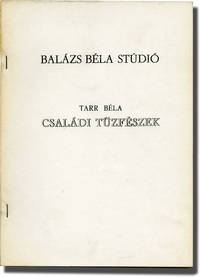
145506Budapest: Balsz Bela Studio 1977. Vintage post-production promotional script for the 1977 Hungarian film. Includes a prose narrative describing the film story reviews quotes and critical essays. Text in Hungarian.<br /> <br /> Easily the most rigidly philosophical promotional script ever issued with the narrative portion being essentially one long run-on sentence wherein Tarr describes his intentions for his first film. It would be 30 years before the rest of the world caught on to his genius and he would retire just 10 years after that. He passed away in 2026 at the age of 70.<br /> <br /> Off-white titled card wrappers saddle stapled. Title page present followed by a cast and credits list dated 1977. 56 leaves with last page of text numbered 54. Mimeograph front wrapper printed with offset duplication. Rectos only. Pages and wrapper about Near Fine with light toning at the edges of the wrappers. Balsz Bela Studio unknown