8 853 résultats
1967149869New York: Andy Warhol Film 1967. Vintage poster for the 1967 film. Two versions of the film were shot - one with an all nude all male cast that was never released publicly and one with both male and female actors wearing G-strings which was originally screened at the Hudson Theater in New York. <br /> <br /> A stylistic breakthrough in that the film entirely jettisons any pretense to plot dramatic action or sex found in Andy Warhol's previous sexploitation experiments instead featuring extended monologues by superstar Viva and conversations with others that touch on a variety of controversial topics. One of Warhol's most overtly political films also starring draft resister Andrew Duggan and the first pairing of Viva with Taylor Mead who would appear together in several more Warhol films. <br /> <br /> 19 x 25 inches rolled on archival linen with a small amount of professional restoration and repair. Near Fine with minor soil. <br /> <br /> Murphy The Black Hole of the Camera. Warholstars. Andy Warhol Film unknown
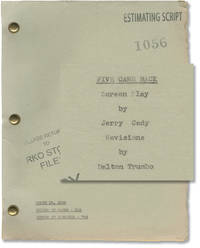
1939152589Culver City CA: RKO Radio Pictures 1939. Estimating script for the 1939 film.<br /> <br /> In his 1970 biography of Nathanael West Jay Martin notes: "On June 6 1938 West was hired for his 'established' salary of $350 a week by RKO Pictures-the first of five major studios to employ him-to make a screenplay from an original story by Richard Carroll. Putting everything else aside within a week he outlined his plans for treating the material. He fretted all weekend over whether the outline would be accepted knowing that he could be out of a job again on Monday. <br /> <br /> On late Monday afternoon he was persuaded to telephone the executive producer Lee Marcus who told him to go ahead at once to the screenplay. On July 20 West finished a first draft for what would be one of his most successful films. After eight weeks in all having polished his script West was released by RKO. <br /> <br /> At this point it appeared that West had a good chance to earn a single credit for this high budget B-quality movie but the studio called in a hack writer Jerry Cady to polish West's script. After Cady's work on it proved unsatisfactory Dalton Trumbo came in to do a revision before the film went into production. Trumbo eliminated most of the revisions made by Cady restored some of West's material and made still other alterations. By this time West had returned to New York and although his secretary demanded that he ask the guild to arbitrate the credits he appeared indifferent and nearly missed getting any screen credit at all."<br /> <br /> An aerial melodrama about nine passengers on a commercial flight from Los Angeles to Panama City who crash-land in the Amazon rainforest. The production helped launch the career of a then-unknown Lucille Ball and paved the way for later disaster epics of the 1970s as well as the popular television sitcom "Gilligan's Island." <br /> <br /> Set in Los Angeles and the Amazon rainforest. <br /> <br /> Green titled wrappers stamped ESTIMATING DRAFT on the front wrapper dated March 15 1939 with credits for screenwriters Jerry Cady and Dalton Trumbo. Title page integral with the first page of text. 133 leaves with last page of text numbered 133. Carbon typescript on yellow onionskin stock. Pages and wrapper Near Fine bound with three gold brads. RKO Radio Pictures unknown
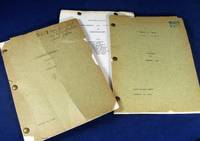
1946003013Los Angeles: Universal Studios 1946. Doyle A. Conan. DRESSED TO KILL here bearing the initial later discarded title "Prelude To Murder". Los Angeles: Universal Studios 1946. This unique film studio screenplay archive consists of THREE original screenplays. 1. A "First Revised Draft" dated January 3rd 1946 the screenwriter's original carbon copy typescript unannotated consisting of 94pp of onion-skin paper. Brad-bound in original drab brown Universal Studios covers which are a little brittle and chipped else Very Good bearing the stamped production number 7337. 2. Complete 78pp brad-bound shooting script consisting of a mix of original ribbon-copy typescript and studio-mimeographed white pages dated January 16th 1946 with production number 7337 stamped on the cover. This remarkable writer's draft contains extensive author-revised annotations emendations revisions and additions throughout. This is accomplished via a cut-and-paste the insertion of additional leaves and new dialogue and description scrawled on the versos an exceptional artifact which boldly captures the revision process of this last entry in the Sherlock Holmes' Universal Studios film series. The front cover has been neatly reinforced with tape and bears the original penciled filing notation indicating that this particular script is the copy from which the final draft was produced. 3. Dated April 25th 1946 the complete original studio-mimeographed self-wrapper final post-production dialogue continuity script bound with two brads at the top. In Very Good condition. The title DRESSED TO KILL refers to the film's wily femme fatale Hilda Courtney played by Patricia Morison an homage to Irene Adler from "A Scandal In Bohemia" complete with a familiar misdirection trick which Hilda uses to fool Watson into revealing a hidden location. The plot is an amalgam of several Holmes stories but also draws from other plots in the Universal Sherlock film canon: a convicted thief in Dartmoor Prison hides stolen Bank of England printing plates inside three music boxes -- leading to the murder or attempted murder of their owners using the central device of a secret code which of course only Holmes can brilliantly break. Starring Basil Rathbone and Nigel Bruce in their final film together DRESSED TO KILL opened on June 7th 1946 to excellent reviews but also to rumors that it was to be the last of the Universal Sherlock films; by October of that year Producer Roy William Neill truly the visionary of the film series died and that signaled the end of one of the most successful franchises in Universal Studios history. Unique. Please see the other Universal Sherlock scripts we have in stock. Signed. Original Wraps. Very Good. Script. Universal Studios Paperback books
1959139477Paris: Les Films du Carrosse 1959. Original French Grande poster for the 1959 film. Poster design by Boris Grinsson. <br /> <br /> Truffaut's auspicious debut winner of Best Director at Cannes nominated for the Palme d'Or and also nominated for a Best Original Screenplay Oscar the following year. <br /> <br /> 47 x 62 inches. Linen backed and rolled. Bright and Fine. <br /> <br /> Capitaine 207. Warren Vol. 1 p. 159. Les Films du Carrosse unknown
1981143723Los Angeles: CBS Television Network 1981. Wardrobe breakdown pages and shooting schedule for the 1981 television film which originally aired on October 24 1981 on CBS. Archive belonging to an unknown crew member in the wardrobe department with holograph annotations on every page and 94 Polaroid photographs tipped onto pages throughout. <br/><br/>A cult classic. Charles "Bubba" Ritter Larry Drake is wrongfully accused of attacking young Marylee Williams Tonya Crowe. He is murdered by a group of vigilantes while disguised as a scarecrow. The killers are tracked down and terrorized by a mysterious scarecrow after Bubba's innocence is revealed. <br/><br/>Set in the American South. Shot on location in California. <br/><br/>100 leaves xerographically duplicated without wrappers as issued. Pages and photographs Very Good bound with two gold brads. CBS Television Network unknown books
1924141664Berlin: Film-Kurier 1924. Original German programs for duology "Die Nibelungen" one each for "Die Nibelungen: Siegfried" and "Die Nibelungen: Kriemhild's Revenge." Based on the thirteenth century epic poem "Nibelungenlied." Text in German. <br/><br/>Film-Kurier was the first German film journal published daily beginning in 1919. Film-Kurier's classic era lasted until 1933 when its publisher Alfred Weiner had to flee Germany because of his Jewish origins. The issues from this era remain striking to this day because they were printed using a gravure reproduction process. Each day's issue would focus on a single film. <br/><br/>9 x 11.75 inches. Each program six pages folded loose leaves as issued. Very Good plus with a horizontal fold tiny pinholes to the corners and an occasional short closed tear. <br/><br/>Masters of Cinema 46. Film-Kurier unknown books
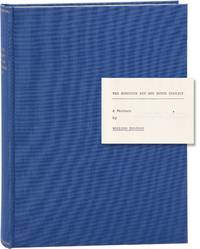
1969156803N.p.: N.p. 1969. Early Draft script for the classic 1969 Western film seen here under the working title "The Sundance Kid and Butch Cassidy." Bound in full blue cloth with the original wrappers bound in. <br /> <br /> A landmark of New Hollywood cinema and arguably the high spot as well as the beginning of an incredible streak of inventive cinematic achievements directed by George Roy Hill in the 1960s and 1970s including "Slaughterhouse-Five" 1972 "The Sting" 1973 and "Slap Shot" 1977. <br /> <br /> Loosely based on fact about two outlaws on the run from a lethal posse after a string of train robberies. They flee to Bolivia in search of a a better way to be thieves but ultimately meet their doom. Winner of four Academy Awards including Best Screenplay for William Goldman. <br /> <br /> Set in Wyoming and Bolivia and shot on location in New Mexico California Utah Colorado and Arizona in the US and in Morelos Guerrero and Sonora in Mexico. <br /> <br /> Blue untitled wrappers. Title page present undated with credits for screenwriter William Goldman. 177 leaves with last page of text numbered 175. Xerographic duplication rectos only. Pages Near Fine wrapper Very Good plus. Housed in a custom red and blue quarter-leather clamshell box. <br /> <br /> National Film Registry. Hardy The Western. Pitts 586. N.p. unknown
1927134522Beverly Hills CA: Metro-Goldwyn-Mayer MGM 1927. Shooting script for the 1928 film. Original typescript with descriptive text in black type and intertitles in red type. Holograph ink and pencil annotations on the front wrapper noting starring performers draft type and crediting screenwriter Meehan. With a few annotations in holograph pencil throughout. <br/><br/>Based on the 1923 Broadway play by David Belasco and Tom Cushing in turn an adaptation of the 1919 story "Ridi Pagliaccio" by Fausto Martini about two clowns who find an abandoned child. Years later one of the clowns falls in love with her and knowing that they can never be together performs a deadly stunt without safety protections. A partially lost film including an alternative happy ending. Nominated for an Academy Award in 1929 for Best Title Writing the only year for that category. <br/><br/>Set in Italy shot on location in Elysian Park a suburb of Los Angeles California. <br/><br/>Blue studio wrappers noted as FIRST TEMPORARY INCOMPLETE and struck through with Final Draft inscribed on the front wrapper rubber-stamped copy No. 1640 and production No. 5272 dated Nov. 19 1927 with credits for playwrights Belasco and Cushing and in ink screenwriter Meehan. 73 unnumbered leaves typescript on watermarked onionskin stock. Pages Near Fine wrapper Very Good split at the spine now encapsulated in mylar bound with two gold brads. Metro-Goldwyn-Mayer [MGM] unknown books
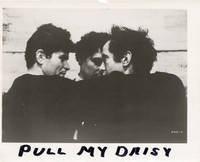
1959160564N.p.: N.p. 1959. Four vintage reference photographs by John Cohen from the 1959 short film. Three with the title in manuscript ink on the bottom margin of the recto and one with a provenance label on the verso. <br /> <br /> Based on a purportedly true incident in the life of Beat icons Neal and Carolyn Cassady wherein a couple's dinner party for a visiting bishop is crashed by their zany bohemian friends. Adapted by Jack Kerouac from the third act of his play "Beat Generation" with voiceover narration by Kerouac and a title taken from the poem of the same name co-written by Kerouac Cassady and Allen Ginsberg. <br /> <br /> For years the film was rumored to have been entirely unscripted capturing a real event at co-director Alfred Leslie's loft in the Bowery until Leslie revealed in a 1968 interview that the film had in fact been scripted heavily rehearsed and shot in a photography studio. <br /> <br /> 10 x 8 inches. Small chips at the top edges else about Near Fine. <br /> <br /> National Film Registry. N.p. unknown
158009Beverly Hills CA: Faces 1975. Draft script for the 1976 film. Copy belonging to crew member Lanie Heffernan with her annotations in manuscript ink on two pages in the script including her name on the top right corner of revision page 2A. <br /> <br /> Laid in with the script is a 30-page shooting schedule dated July 7 1975 and a four-page staff and crew list dated July 8 1975. <br /> <br /> The fourth of five films made by pioneering independent filmmaker John Cassavetes under his Faces distribution company about a strip club owner who is forced to perform a hit by the mob as payment for gambling debts. <br /> <br /> Red titled wrappers noted as copy No. 5 in manuscript ink annotation on the front wrapper. Title page present dated June 1975 with credit for director and screenwriter John Cassavetes. 115 leaves with last page of text numbered 96. Xerographic duplication rectos only with blue and pink revision pages throughout dated variously between 7/7/75 and 7/9/75. Pages Near Fine wrapper Very Good plus with moderate wear on the rear wrapper. Housed in a black three-ring binder. <br /> <br /> Criterion Collection 254. Silver Classic Noir. Spicer US. Faces unknown
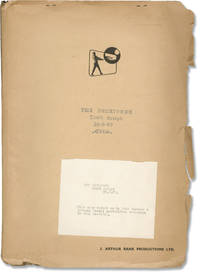
1957151146London: J. Arthur Rank 1957. Third Draft script for an unproduced film. Copy belonging to novelist and screenwriter John Masters with his name in manuscript pencil on the front wrapper his manuscript pencil annotations to virtually every page and two handwritten pages stapled to the verso of the front wrapper noting concerns about the script and deletions. <br /> <br /> Based on Masters' 1952 novel about a British officer who goes undercover to infiltrate a thuggee cult ritually murdering travelers in colonial India. <br /> <br /> Masters who served in the Indian Army from 1933 to 1949 was best known for his historical fiction set in India most notably his 1954 novel "Bhowani Junction" which was adapted for film by director George Cukor in 1956. Modern scholars have acknowledged Masters' influence on British historical fiction and in later works his relative sympathy towards Indian nationalists while simultaneously criticizing his revisionist occasionally imperialist tone. Masters also released three successful autobiographical volumes "Bugles and a Tiger" 1956 "Road Past Mandalay" 1961 and "Pilgrim Son" 1971. <br /> <br /> Beige titled wrappers noted as Draft Script on the front wrapper dated 26-3-57 with a typed label affixed on the front wrapper dated 26.3.57 crediting novelist and screenwriter John Masters and screenwriter Anthony Perry and noting Masters' annotations throughout. Title page present noted as DRAFT THREE with credits for novelist and screenwriter John Masters. 114 leaves with last page of text numbered 112. Mimeograph duplication rectos only. Pages Near Fine wrapper Very Good plus bound internally with a silver prong. J. Arthur Rank unknown
1957151146London: J. Arthur Rank 1957. Third Draft script for an unproduced film. Copy belonging to novelist and screenwriter John Masters with his name in holograph pencil to the front wrapper his holograph pencil annotations to virtually every page and two handwritten pages stapled to the verso of the front wrapper noting concerns about the script and deletions. <br/><br/>Based on Masters' 1952 novel which follows a British officer who goes undercover to infiltrate a thuggee cult who have been ritually murdering travelers in colonial India. <br/><br/>Masters who served in the Indian Army from 1933 to 1949 was best known for his historical fiction set in India most notably his 1954 novel "Bhowani Junction" which was adapted for film by director George Cukor in 1956. Modern scholars have acknowledged Masters' influence on British historical fiction and in later works his relative sympathy towards Indian nationalists while simultaneously criticizing his revisionist occasionally imperialist tone. Masters also released three successful autobiographical volumes "Bugles and a Tiger" 1956 "Road Past Mandalay" 1961 and "Pilgrim Son" 1971. <br/><br/>Beige titled wrappers noted as Draft Script on the front wrapper dated 26-3-57 with a typed label affixed to the front wrapper dated 26.3.57 crediting novelist and screenwriter John Masters and screenwriter Anthony Perry and noting Masters' annotations throughout. Title page present noted as DRAFT THREE with credits for novelist and screenwriter John Masters. 114 leaves with last page of text numbered 112. Mimeograph duplication rectos only. Pages Near Fine wrapper Very Good plus bound internally with a silver prong. J. Arthur Rank unknown books
1946143620N.p.: Monogram Pictures 1946. Typescript of the Final Shooting script for the 1947 Poverty Row film noir. <br/><br/>Based on Cornell Woolrich's short story "Two Men in a Furnished Room" first published in the 1946 short story anthology "The Dancing Detective" under his pseudonym William Irish. <br/><br/>The tale of a manhunt for the murderer of a woman with a twin told through a series of flashbacks and plot twists "The Guilty" is a prototypical Poverty Row second feature. <br/><br/>Set in New York City. <br/><br/>Yellow titled self wrappers noted as "Exact typed copy of final shooting script" on the front wrapper dated 1946. Title page present with credits for screenwriter Robert Presnell Sr. and novelist Cornell Woolrich. 120 leaves with last page of text numbered 111. Carbon typescript on onionskin stock. Pages Fine wrapper Near Fine bound with three gold brads. <br/><br/>Grant US. Selby US Masterwork. Silver and Ward Classic Noir. Spicer US. Monogram Pictures unknown books
1969144659New York: Jerome Hellman Productions 1969. Draft script for the 1969 film. Copy belonging to the film's still photographer Ron Munkasci with his name in red manuscript ink at the top right corner of the title page.<br /> <br /> Based on the 1965 novel by James Leo Herlihy about an unlikely friendship between a would-be gigolo and an ailing con artist. Cornerstone film of the New Hollywood cinema nominated for seven Academy Awards winning Best Adapted Screenplay Best Director and Best Picture. <br /> <br /> Set in New York City shot on location in Miami Manhattan and Big Spring Texas. <br /> <br /> Dark blue titled wrappers noted as DRAFT SCREENPLAY at the bottom right and with the logo for JEROME HELLMAN PRODUCTIONS at bottom center. Title page present with credits for screenwriter Waldo Salt novelist James Leo Herlihy producer Jerome Hellman and director John Schlesinger noted as "A JEROME HELLMAN-JOHN SCHLESINGER PRODUCTION." 122 leaves with last page of text numbered 121. Mimeograph duplication rectos only. Pages Near Fine with some offsetting to the title page due to a newspaper clipping still present laid in wrapper Very Good plus.<br /> <br /> National Film Registry. Jerome Hellman Productions unknown
1955135819Universal City CA: Universal Pictures 1955. Revised Final Draft script for the 1956 film. Copy belonging to the script supervisor Adele Cannon profusely annotated throughout in holograph ink and pencil. Included is a studio still photograph from the film featuring the Creature and people in peril. <br/><br/>Third installment in the "Gill-man" series after "Creature from the Black Lagoon" 1954 and "Revenge of the Creature" 1955. After a laboratory fire severely damages the Creature's gills the head of the research team suggests an operation that will allow their subject to breathe air and walk on land. The operations seems successful until a violent confrontation leaves the Creature badly injured. Alone in alien territory the Gill-man shuffles off into the sea in anticlimactic resolution. <br/><br/>Where the first two films employed then-genre bending 3D effects this conclusion to the series was issued in 2D. Champion diver Ricou Browning again portrays the creature in the underwater sequences and Don Megowan as the land-walker. The Creature is perhaps the most popular of the underwater monsters of cinema rivaling Wes Craven's "Swamp Thing" 1982. <br/><br/>Set in Florida. <br/><br/>Salmon titled wrappers noted as FINAL SCREENPLAY on the front wrapper dated August 22 1955. Title page present undated with a credit for screenwriter Ross. 172 leaves with last page of text numbered 95. Mimeograph duplication with yellow blue and pink revision pages throughout dated variously between 8/29/55 and 9/22/55 and mimeograph scene annotations on the verso of nearly every page. Pages and wrapper Very Good plus bound with two silver screw brads. Photograph Very Good with staple holes and creases. <br/><br/>Lentz US. Universal Pictures unknown books
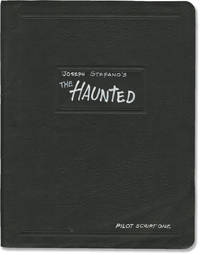
1964147167Los Angeles: Villa di Stefano Productions 1964. First Draft script for the 1964 television film which originally aired on CBS. With actor Martin Landau's copied annotations throughout. Included are a set of synopses for proposed episodes a shooting schedule a distributor's announcement booklet and various other documents related to production. <br /> <br /> Also included is an original celluloid print of the film on a single reel in its original mailing case with cloth straps dated 2/18/65 addressed from director Joseph Stefano to Landau on the mailing label in manuscript black ink and INSCRIBED by Stefano to Landau at the top left corner of the case in the same ink: "To Martin / Whose splendid brilliance and warmth put the special spark in this bright fire / Your grateful and admiring friend / Joe Stefano."<br /> <br /> Fearful of being buried alive a woman installs a phone in the crypt in which she plans to be in case of emergencies. Months after her death the phone begins to ring presenting a new ghostly case for Landau's paranormal investigator. <br /> <br /> The film was intended to be the pilot for a new paranormal thriller series tentatively titled "The Haunted" as titled on the front wrapper but the series wasn't picked up and the pilot was released as a television movie after additional footage was shot. <br /> <br /> Black titled wrappers with credits for director-screenwriter Joseph Stefano noted as PILOT SCRIPT ONE. Title page present dated July 27 1964 noted as PILOT SCRIPT ONE with credits for director-screenwriter Joseph Stefano. 77 leaves with last page of text numbered 76. Early Xerox rectos only. Pages Near Fine wrapper Near Fine bound internally with three silver brads. <br /> <br /> Film reel and film stock are unexamined. Villa di Stefano Productions unknown
1972131589N.p.: N.p. 1972. Draft script for an unproduced film "Player Piano" based on Kurt Vonnegut's first novel. <br/><br/>After his directorial debut with Jules Feiffer's "Little Murders" in 1971 Alan Arkin wrote this adaptation of Vonnegut's legendary science fiction novel and announced plans to direct in the summer of 1972 with Edward Pressman and Burtt Harris producing. <br/><br/>Green titled wrappers. Title page present with a notation in holograph pencil of copy No. 8 the initials "N.H." at the top right corner with credits for screenwriters Arkin and Patinkin and novelist Vonnegut. 182 leaves mimeograph duplication. Pages Near Fine wrapper Very Good bound with two gold screw brads. N.p. unknown books
1971139346Hollywood: Paramount Pictures 1971. Script archive built around the Revised First Draft script for the 1972 film. Copy belonging to Burt Bluestein with his name on the title page in holograph pencil and annotations throughout in holograph pencil and ink. Bluestein although not credited at the film's release was presumably involved with production design as indicated by the annotations concerning camera angles and props and his film credits as both assistant director and production manager. The script is accompanied by various interoffice pages like cast and crew lists emergency contact lists shooting schedules and interoffice memos including one discussing the film's hiatus and the possibility of Ron Talsky costume designer working with Otto Preminger during the hiatus. Between this script and the film's release dates Talsky did work for Preminger on his film "Such Good Friends" 1971. <br/><br/>Based on Knowles' 1959 best-selling first novel. Two young teens Finny Heyl and Gene Stevenson consider the draft if it should happen and make their way through school during WWII. <br/><br/>Shot on location in Massachusetts and New Hampshire. Actor Heyl's only film credit. <br/><br/>Title page present dated 1971 noted as FIRST DRAFT Revised with credits for novelist Knowles and screenwriter Segal. 163 leaves with last leaf of text being the tenth page of a shooting schedule. Various printing methods with a few manuscript and typed pages and yellow and pink revision pages throughout dated May 1971 yellow and two pages dated Jan 1971 pink. Pages Very Good plus overall bound in a black three-ring binder. Paramount Pictures unknown books
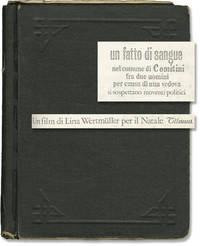
1978148341London: Lord Grade 1978. Draft script for the 1978 film here under the working title "Titoli di Testa." Copy belonging to script supervisor Franca Invernizzi with her extensive holograph annotations on nearly every page and many page versos regarding camera shots takes timing and dialogue. Bound in after the script is an annotated list of scenes and several handwritten pages of Invernizzi's notes. Text in Italian.<br/><br/>In 1920s Sicily a capitalist and a socialist vie for the affections of a grief-stricken woman whose husband was killed by a fascist mafioso. The follow-up to director Lina Wertmuller's Oscar-nominated 1976 film "Seven Beauties" and a lyrical formidable film in its own right. <br/><br/>Set and shot on location in Sicily. <br/><br/>Script:<br/><br/>Black faux-leather untitled wrappers. Title page present with credits for director Lina Wertmuller. 326 leaves with last page of text numbered 301. Xerographic duplication rectos only with white undated revision pages throughout. Pages Very Good with some revision pages lightly worn and toned to the edges wrapper Very Good lightly edgeworn with several tape repairs to the spine with perfect binding.<br/><br/>List of scenes:<br/><br/>10 leaves with last page numbered 10. Xerographic duplication rectos only. Pages Very Good plus with light edgewear. Lord Grade unknown books
1952121979Mexico City: Ultramar Films 1952. Draft script for the 1954 Mexican film. Also included are seven film still photographs from the film.<br /> <br /> A rare pre-production script from Luis Buñuel's first color film one of the key productions from his Mexican period written with Hugo Butler who was at the time living in self-imposed exile in Mexico with Dalton Trumbo both blacklisted by the HUAC and writing under various pseudonyms. Single substantive manuscript pencil correction toward the end of the text. <br /> <br /> One of Buñuel's more straightforward narratives quite faithful to the source material but with a whopping dream sequence as bizarre as anything one might find in the director's later work. <br /> <br /> Tall side-stapled self-wrappers dated "Mexico / 1952" with credits for director-screenwriter Buñuel screenwriter Butler under the Roll pseudonym and producers Oscar Dancigers and Henry F. Ehrlich. 95 leaves mimeograph duplication. Very Good condition toned at the edges some offsetting on the front wrapper and a 1-inch tear at the left margin. Ultramar Films unknown
1960143342Tokyo: Toho Company 1960. Draft script for the 1960 film. With the stamp of cast/crew member Takahashi Toshihiro to the page edges and holograph ink annotations to the rear wrapper. Text and titles in Japanese.<br/><br/>A film that bought depictions of modern life into Japanese films of the 1960s particularly with respect to the idea of the independent woman. A young widowed bar hostess finds herself torn between a conventional life and potential financial independence when she must decide to either remarry or open her own bar. <br/><br/>Set in Tokyo's Ginza district shot on location in Tokyo. <br/><br/>White titled wrappers noted as 2 on the front wrapper. Title page present. 94 leaves with last page of text numbered f-31. Xerographic duplication printed on rectos and versos. Pages Near Fine wrapper Good with foxing wear to the binding and light soil overall. With perfect binding.<br/><br/>BFI 694. Criterion Collection 377. Toho Company unknown books
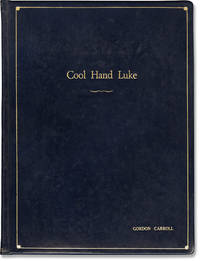
1966160717Burbank CA: Warner Brothers / Jalem Productions 1966. Draft script for the 1967 film. Specially bound copy belonging to producer Gordon Carroll bound in full blue leather with Carroll's name in gilt on the bottom right corner of the front board.<br /> <br /> Based on the 1965 novel by Donn Pearce who co-wrote the screenplay about the experiences of a hard-nosed Vietnam veteran after he is sentenced to two years on a chain gang in a prison camp. Winner of a Best Supporting Actor Oscar for George Kennedy and nominated for three others including Best Adapted Screenplay.<br /> <br /> Set in Florida.<br /> <br /> Title page present dated 9/29/66 with credits for screenwriters Frank R. Pierson and Hal Dresner and novelist Donn Pearce. 152 leaves with last page of text numbered 143A. Mimeograph duplication on eye-rest green stock rectos only with blue revision pages throughout dated variously between 10/23/66 and 2/9/67. Pages Near Fine.<br /> <br /> National Film Registry. Ebert III. Warner Brothers / Jalem Productions unknown
1948137021Los Angeles: Twentieth Century-Fox 1948. Revised Final Draft script for the 1948 film. Copy belonging to an uncredited member of the film cast or crew with that person's name in holograph pencil on the front wrapper. Notations in holograph pencil on the title page noting members of the cast and on a few pages. Housed in a custom cloth clamshell box. From the Richard Manney collection of film noir. <br/><br/>Red titled wrappers noted as REVISED FINAL on the front wrapper rubber-stamped copy No. 24 dated February 10 1948. Title page present dated February 10 1948 noted as Revised Final with a credit for screenwriter Sturges. 153 leaves with last page of text numbered 154. Mimeograph duplication dated variously betwee 2/10/48 and 2/13/48 with blue revision pages throughout dated variously between 2/16/48 and 3/4/48. Pages Near Fine wrapper Very Good plus bound internally with three gold brads. <br/><br/>Criterion Collection 292. Selby US. Twentieth Century-Fox unknown books
1966141453Tokyo: Toho Company 1966. Draft script for the 1966 film. Text in Japanese. <br /> <br /> A pornographer is keeping a low profile to keep out of the way of the mob while also is trying to keep the various people in his life happy including his stepdaughter stepson mistress and wife who believes her first husband was reincarnated as a carp. <br /> <br /> White titled perfect-bound wrappers. Title page present. 178 leaves with last page of text numbered 27. Mechanical duplication. Pages Near Fine wrapper Near Fine. <br /> <br /> Criterion Collection 207. Toho Company unknown
1950128821Beverly Hills CA: Metro-Goldwyn-Mayer MGM 1950. Revised Composite script for the 1951 film. Two front wrappers present one with the script department receipt intact both noting changes dated 5-12-50 to the script. <br/><br/>Tom and Ellen Bowen Astaire and Powell are siblings with a dance act in New York. Their agent books them a gig in London while the Royal Wedding is in progress. On their cruise to England Ellen meets Lord John Brindale Lawford and she misses rehearsal. Upon arriving Tom holds auditions for dance partners and meets Anne Churchill. The siblings are at arms defending their romances and trying to keep their dance act stable. Loosely based on the real-life dancing partners Fred Astaire and his sister Adele. <br/><br/>Shot on location in England and California. <br/><br/>Goldenrod titled wrappers with two front wrappers present as issued both rubber stamped COMPOSITE SCRIPT on the front wrapper and copy No. 173 on the white studio label dated 5-2-50 with "changes of 5-12-50" and credits for director Donen producer Freed and screenwriter Lerner. Distribution receipt present on the second goldenrod wrapper. 153 leaves mimeograph duplication with pink revision pages throughout dated variously between 5-2-50 and 8-2-50. Pages Near Fine wrapper Near Fine bound with two gold brads. Metro-Goldwyn-Mayer [MGM] unknown books