4 698 résultats
1966141426Tokyo: Nikkatsu 1966. Draft script for the 1966 film. Text in Japanese. <br /> <br /> Based on a novel by Takashi Suzuki a repressed Catholic young man living in a boardinghouse is infatuated with the landlady's daughter and when he cannot express his feelings he turns to violence. He joins a gang and begins a fighting routine exploiting the weakness of classmates. <br /> <br /> Set in Okayama shot on location in Japan. <br /> <br /> Red titled perfect-bound wrappers. Title page present. 113 leaves with last page of text numbered 19. Mechanical duplication. Pages Near Fine wrapper Near Fine. <br /> <br /> Criterion Collection 269. Nikkatsu unknown
1959141461Tokyo: Nikkatsu 1959. Draft script for the 1959 film. Text in Japanese. <br /> <br /> Based on Sueko Yasumoto's novel and one of the first examples of media dealing with the plight of zainchi or ethnically Korean Japanese citizens and their identity and struggles. One man has always worked faithfully for the Toho Company and another man is working for an underworld boss trying to scam Toho. They find each other again when one begins trailing and investigating the other. <br /> <br /> White titled perfect-bound wrappers. Title page present. 177 leaves with last page of text numbered 16. Mechanical duplication. Pages Very Good plus wrapper Very Good plus bound with two staples. Nikkatsu unknown
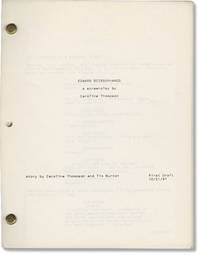
162755Los Angeles: Twentieth Century-Fox 1987. First Draft script for the 1990 film.<br /> <br /> Tim Burton's second "Modern Prometheus" film following his 1984 short "Frankenweenie" about a mad scientist who dies before he can complete his latest creation: a nearly complete human being. The creation is left with scissors for hands and doomed to live a life of solitude until a kindly mild-mannered Avon Lady welcomes him into her home.<br /> <br /> Often cited as the director's masterpiece released two years after his hilarious and creepy romp "Beetlejuice" 1988 one year after his beloved comic adaptation "Batman" 1989 and two years before his second and final contribution to the Dark Knight legend "Batman Returns" 1992. <br /> <br /> Self wrappers integral with title page dated October 21 1987. Noted as First Draft with credit for screenwriter Caroline Thompson. 117 leaves with last page of text numbered 116. Xerographic duplication circa late 1980s font rectos only. Pages about Fine wrapper Near Fine bound with two gold brads. Twentieth Century-Fox unknown
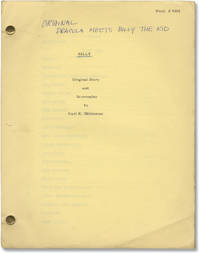
1965158305N.p.: N.p. 1965. Draft script for the 1966 film here under the working title "Billy." Annotation in manuscript ink on the title page amending the title to "Original Dracula Meets Billy the Kid." Copy likely belonging to screenwriter Carl K. Hittleman with annotations in manuscript ink and pencil on virtually every page amending dialogue and scene numbers with two unnumbered pages bound in created on a different typewriter.<br /> <br /> Dracula travels to the American West intent on making the fiancée of the now reformed Billy the Kid his next victim. One of director William Beaudine's final films originally released on a double bill with Beaudine's other Western horror picture "Jesse James Meets Frankenstein's Daughter." <br /> <br /> Front wrapper integral with title page with credits for screenwriter Carl K. Hittleman. 114 leaves with last page of text numbered 110. Ribbon copy typescript rectos only. Pages Near Fine with cello tape repair and reinforcement to final page bound with two gold brads. N.p. unknown
1969143218Tokyo: Gendai Eigasha 1969. Draft script for the 1969 film. Front wrapper notes a date of 1969 and credit as a Gendai Eigasha production. <br /> <br /> The second page is a elegaic introduction to the film story: "On the erotology and insurrection of sugi Sakae who wrote of dancing as flowers strangled and left in spring and It Noe who lived her entire life in confused beauty-we the youth and you and I in our degenerate joy which reaches an unbalanced complicity are talking."<br /> <br /> Based on the life of anarchist Sakae sugi and his relationship with three women.It is the first film in Yoshida's trilogy of Japanese radicalism followed by "Heroic Purgatory" 1970 and "Coup d'Etat" 1973. Considered to be one of the most representative films from the Japanese New Wave movement. <br /> <br /> Set in and shot on location in Japan. <br /> <br /> White titled wrappers dated 1969. Title page present. 86 leaves with last page of text numbered d-44. Mechanical duplication. Pages Near Fine wrapper Very Good plus with mild foxing on rear wrapper title on spine. Gendai Eigasha unknown
152527N.p.: N.p. 1970. Dialogue transcript for the infamous unfinished film musical undated circa 1968. Copy belonging to Frank Zappa with a single annotation in Zappa's hand on the top of the first page. <br /> <br /> Full provenance available.<br /> <br /> A transcript detailing multiple takes of ten scenes shot by Zappa for his long-planned but never finished experimental film. Transcript primarily addresses scenes featuring Don Preston and Phyllis Smith Altenhaus but also contains dialogue intended to be spoken by Carl Zappa Billy Mundi Aynsley Dunbar Jimmy Carl Black and Zappa himself. <br /> <br /> Originally innovated in 1967 by Zappa featuring his then-band the Mothers of Invention the film would morph in various ways over the course of the next decade but would ultimately never come to fruition due to a lack of financing. In 1969 the Mothers of Invention released the acclaimed double album "Uncle Meat" an instrumental soundtrack to the unfinished film. Finally in 1987 a direct-to-video "making of" documentary of the uncompleted film was released.<br /> <br /> Transparent front wrapper with orange back wrapper and spine. 59 leaves with last page of text numbered 58. Mimeograph duplication rectos only. Pages with light stain on first leaf else Near Fine wrapper Very Good plus bound internally with three silver brads. N.p. unknown
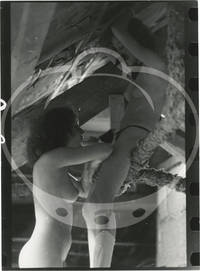
153250N.p.: N.p. 1975. Archive of 95 vintage borderless reference photographs essentially keybook photos demonstrating sequences from the 1975 French pornographic film. Included with the collection is a French pressbook for the film.<br /> <br /> Class barriers dissolve and invert in unusual and unexpected ways at the reading of an aristocratic patriarch's will.<br /> <br /> 9.5 x 7 inches. Near Fine. <br /> <br /> Bier 160. N.p. unknown
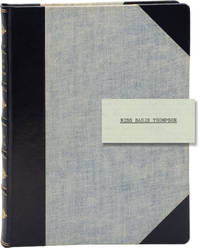
1953161400N.p.: N.p. 1953. Third Revised Final Draft script for the 1953 film with rainbow revisions. Specially bound copy belonging to producer Jerry Wald with his name in gilt on the spine. <br /> <br /> Jerry Wald is best remembered for his long and successful association with Warner Brothers as both a screenwriter and producer of a number of notable films including "Mildred Pierce" 1945 "Humoresque" 1946 "Key Largo" 1948 and "Flamingo Road" 1949. In the 1950s he moved to Twentieth Century-Fox and was the producer there for "An Affair to Remember" 1957 "Peyton Place" 1957 and "Sons and Lovers" 1960. <br /> <br /> Based on W. Somerset Maugham's 1921 short story "Miss Thompson" wherein a Christian missionary makes the salvation of a Hawaiian nightclub singer his personal project.<br /> <br /> Set and shot on location in Kauai Hawaii.<br /> <br /> Bound in light blue cloth with navy quarter leather binding with five raised bands and gilt titles on the spine. Title page present dated March 31 1953 noted as THIRD REVISED FINAL DRAFT with credits for screenwriter Harry Kleiner. 131 leaves with last page of text numbered 123. Mimeograph duplication rectos only with blue yellow pink teal goldenrod and white revision pages throughout dated variously between April 3 1953 and June 5 1953. Pages Near FIne binding Near Fine. N.p. unknown
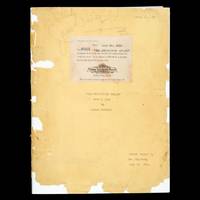
29792Culver City Calif. : Metro-Goldwyn-Mayer MGM July 24 1928. Original yellow wrappers preserved with some marginal loss on later card covers 303 x 230 mm front wrapper with typed title at centre '""The Mysterious Island"" / Screen Play / by / Lucien Hubbard'; at top right is typed 'Prod. No. 273' and at lower right 'Script Okayed by Mr. Thalberg. July 24 1928'; above the title is the original MGM studio label rubber-stamped 'No. 4664' with the typed film title and same date of July 24 1928; the pencilled name 'Jane Daly' i.e. Jacqueline Gadsden above the label appears to be written in the film star's own hand while her name is also written in pencil but in a different hand near the foot of the front wrapper; 121 leaves 280 x 215 mm mimeograph duplication; the film's title crediting Hubbard as the screenwriter and dated July 24 1928 is integral with the first page of the script; contents very clean throughout corners a little dog-eared with the two original brads in place. Rare and important draft shooting script for the Hollywood film The Mysterious Island. Loosely adapted from Jules Verne's science fiction novel L’ile mystérieuse this MGM production - a part-talkie - was filmed in two-strip Technicolour and had a checkered production history: shooting had commenced in 1926 but the film was not released until 5 October 1929. Lucien Hubbard 1888-1971 was officialy credited as the writer of the screenplay and as director even though scenes shot earlier by Maurice Tourneur and Benjamin Christensen - both removed from the project by Irving Thalberg because of their painstaking approach to filmmaking - were used in the final version. Lucien Hubbard is today perhaps best-known as the producer of the silent film Wings 1927 for which he won an Academy Award. Until recently a single ten-minute reel with a colour sequence in the UCLA Film and Television Archive was thought to be the only portion of The Mysterious Island that had survived in Technicolour although complete black-and-white prints had always been known. Then in 2013 experts from George Eastman House discovered that a colour print had been preserved in the Czech National Film Archive; the restored colour print of the film was screened at the 33rd Pordenone Silent Film Festival in October 2014. The cast of The Mysterious Island included Lionel Barrymore Count Andre Dakkar Jane Daly Jacqueline Gadsden Sonia Lloyd Hughes Nikolai Montagu Love Falon Harry Gribbon Mikhail Snitz Edwards Anton Gibson Gowland Dmitry Dolores Brinkman Teresa and Major Roup an underwater creature. Art direction was by Cedric Gibbons with technical effects by James Basevi Louis H. Tolhurst and Irving R. Ries. Jacqueline Gadsden 1900-1986 was an American film actress during the silent era. Her most famous role was in It 1927 in which she starred alongsde Clara Bow. In 1924 she had married William Harry Daly and in fact she made two other films in the same year that The Mysterious Island was released 1929 - one for Columbia and another for MGM - in which she was billed under the name Jane Daly. The Mysterious Island was her last film prior to retirement from motion pictures.  unknown
1959143374Kanagawa Japan: Daiei Studios 1959. Draft script for the 1959 Japanese film. Based on the 1956 novel by Tanizaki Jun'ichir "Kagi" or "The Key". Winner of the 1960 Jury Prize at the Cannes Film Festival.<br /> <br /> Shot on location in Japan. All titles and text in Japanese. <br /> <br /> White titled wrappers with black and gold titles and various rubber stamps on the front wrapper. Title page not present. 122 leaves with last page of text numbered "e-28." Mechanical duplication. Near Fine with light age toning. Daiei Studios unknown
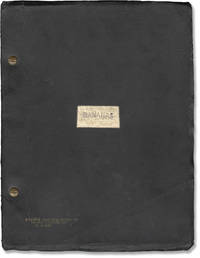
159835New York: Rollins and Joffe Productions 1970. Draft script for the 1971 film. Annotations in manuscript ink on the title page striking the working title "El Weirdo." <br /> <br /> The draft notably features the film's original ending which Woody Allen's editor Ralph Rosenblum convinced him to replace showing Allen emerging from a bombing in inadvertent sooty blackface and participating in a Black uprising on a university campus.<br /> <br /> Anxious to impress his activist ex-girlfriend a blue collar worker travels to a fictitious South American country where he is unwittingly conscripted into a group of violent revolutionaries. Allen's third feature film the first in which he had nearly full creative control and the third and final film he wrote with Mickey Rose. Preceded by "What's Up Tiger Lily" 1966 and "Take the Money and Run" 1969.<br /> <br /> Set in the fictional "banana republic" of San Marcos and shot on location in New York and Puerto Rico. <br /> <br /> Black Studio Duplicating Service wrappers with a rubber stamped titled label. Title page present dated March 24 1970 with credits for screenwriters Woody Allen and Mickey Rose. 126 leaves with last page of text numbered 116. Mimeograph duplication rectos only with pink yellow and green revision pages throughout dated variously between 4-28-70 and 4-30-28. Pages Near Fine wrapper Very Good plus bound with two gold screw brads. Rollins and Joffe Productions unknown
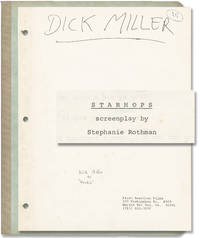
154198Marina del Rey: First American Films 1978. Draft script for the 1978 film. Copy belonging to actor Dick Miller with his name on the front wrapper and title page and his manuscript ink annotations throughout. Missing seven pages likely as used or issued.<br /> <br /> Screenwriter Stephanie Rothman worked as one of two female directors the other being Barbara Peeters at Roger Corman's New World Pictures most notably directing the films "The Student Nurses" 1970 and "Terminal Island" 1974. Rothman was initially intended to direct "Starhops" but executives at Dimension Pictures chose to drastically rewrite the script and hire Peeters as director instead leading Rothman to remove her name from the script. The script on offer here is solely authored by Rothman.<br /> <br /> Set and shot on location in Venice Beach.<br /> <br /> Blue titled wrappers. Title page present with credits for screenwriter Stephanie Rothman. 108 leaves with last page of text numbered 105. Xerographic duplication rectos only. Pages and wrapper Very Good plus with faint foxing to the final leaf and light rusting to the binding bound internally with a silver prong. First American Films unknown
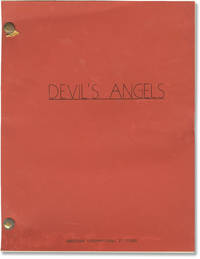
1966154165Los Angeles: American International Pictures AIP 1966. Draft script for the 1967 film. Copy belonging to actor Dick Miller with his name on the title page and his manuscript ink and pencil annotations throughout. Miller was initially cast in the role of Leroy although a motorcycle crash during filming left him with several broken ribs leading to his replacement by actor George Sims. <br /> <br /> From the estate of Dick Miller.<br /> <br /> Violence threatens to erupt in a small town when a gang of former Hell's Angels bikers are wrongfully accused of sexually assaulting a teenage girl. One of a handful of films in which actor John Cassavetes agreed to star in order to secure financing for his independent 1968 film "Faces."<br /> <br /> Shot on location throughout Arizona. <br /> <br /> Red titled American International Pictures wrappers. Title page present dated 12-7-66 with credits for screenwriter Charles B. Griffith. 105 leaves with last page of text numbered 104. Mimeograph duplication rectos only with blue revision pages throughout dated 12-7-66. Pages Near Fine wrapper Near Fine bound with two gold brads.<br /> <br /> McPadden Heavy Metal Movies. American International Pictures [AIP] unknown
148727Tokyo: Toei 1974. Draft script for the 1974 Japanese film. Text and titles in Japanese. <br /> <br /> Based on a series of magazine articles written by journalist Koichi Iiboshi which were in turn based on memoirs written by yakuza crime boss Kozo Mino. The fifth and final film in director Kinji Fukasaku's yakuza pentalogy following feuding gangs in post-war Hiroshima. <br /> <br /> Recently the subject of a complete restoration helmed and issued by Arrow Films in England.<br /> <br /> Tan titled perfect-bound wrappers. 67 leaves with last page of text numbered D27. Mimeograph duplication printed on rectos and versos. Pages Very Good plus wrapper Very Good with light dampstains to the extremities.<br /> <br /> Arrow 2164. Toei unknown
1956143240Tokyo: Nikkatsu 1956. First Draft script for the 1956 film. Title in English on rear wrapper. <br /> <br /> Based on a 1946 children's novel by Michio Takeyama about a conscience-driven Japanese soldier who adopts the lifestyle of a Buddhist monk after he fails to get his countrymen to surrender to an overwhelming force. Nominated for a Best Foreign Language Film Academy Award. <br /> <br /> Set in Burma during WWll shot on location in Burma and near the Izu Peninsula in Japan. <br /> <br /> White titled wrappers. Title page present. 70 leaves with last page of text numbered e-25. Mechanical duplication. Pages Near Fine with some toning due to age wrapper Very Good with mild foxing and light water damage near spine. <br /> <br /> Criterion Collection 379. Eureka Masters of Cinema 12. Nikkatsu unknown
1950131050Los Angeles: Twentieth Century-Fox 1950. Revised First Draft Continuity script for the 1951 film. Included is an index to the script breakdown detailing various scenes and script page numbers with revisions. Copy belonging to Dane Anderson an uncredited member of the crew with his name on the front wrapper of the script breakdown and annotations throughout in manuscript pencil. File copy rubber-stamped on the front wrapper. <br /> <br /> Based on Weidman's 1937 novel and Vera Caspary's loose adaptation. Harriet Boyd Hayward is a fashion designer who partners with Teddy Dailey whom she loves and Sam Jaffe and starts a new business dedicated to selling affordable women's dresses. A rival fashion company lead by Noble Sanders momentarily distracts Harriet but at the last minute she realizes her true devotion to Teddy and Sam. <br /> <br /> Screenwriter Polonsky was blacklisted shortly after the film's release refusing to answer questions before the House Un-American Activities Committee. <br /> <br /> White titled wrappers rubber-stamped as REVISED FIRST DRAFT CONTINUITY on the front wrapper copy No. 3 and production No. 2446.8 dated August 4 1950. Distribution page present with receipt removed. Title page present dated August 4 1950 noted as Revised 1st Draft Continuity with a credit for screenwriter Polonsky. 170 leaves with last page of text numbered 168. Mimeograph on eye-rest green stock. Pages and wrapper Near Fine internally bound with three gold brads. <br /> <br /> Script Breakdown: self wrappers as issued. 88 leaves dated 10/2/50 mimeograph on eye-rest green stock. Near Fine bound with three gold brads. Twentieth Century-Fox unknown
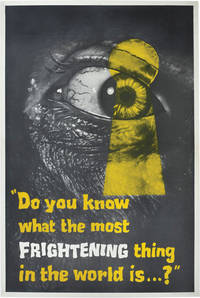
1960125095London: Michael Powell Theatre 1960. Vintage British Advance Poster for the classic 1960 film. The British Double Crown poster for the film turns up from time to time but this Advance issue which does not state the film's title is a rarity. <br /> <br /> Noted director Powell's most controversial film about a serial killer who films his female victims as they are dying. Reviled by critics on its release and today considered a masterpiece it is the second of three feature films director made after parting ways with his longtime filmmaking partner Emeric Pressburger. Ostensibly a film about a killer with serious Freudian issues but later reassessed as much more conceptual and complex. Roger Ebert pointed out famously in his 1999 review of the film that the audience is implicated as much as the killer."Movies make us into voyeurs. We sit in the dark watching other people's lives. It is the bargain the cinema strikes with us although most films are too well-behaved to mention it."<br /> <br /> Martin Scorsese is probably the most famous fan of the film and takes Ebert's argument further saying "I have always felt that "Peeping Tom" and "8 " say everything that can be said about filmmaking about the process of dealing with film the objectivity and subjectivity of it and the confusion between the two. "8 " captures the glamour and enjoyment of film-making while "Peeping Tom" shows the aggression of it how the camera violates. From studying them you can discover everything about people who make films or at least people who express themselves through films."<br /> <br /> 30 x 20 inches. About Near Fine on archival linen with some expert restoration at the top edge and folds. Archivally framed with an acid-free mat and UV plexi. <br /> <br /> Criterion Collection 58. Grant p. 495. Spicer p. 446. Michael Powell [Theatre] unknown
1929137372Budapest: Hunnia Filmstudio 1929. Specially bound copy of an Early Draft script for the Hungarian film released in Hungry in 1932 as "Tavaszi zapor" in Frace in 1933 as "Marie Legende Hongroise" and in the United States in 1935 as "Spring Shower." Housed in a likely hand-sewn floral cloth-covered portfolio the script is INSCRIBED by the Hungarian-American feminist and radical socialist screenwriter Ilona Fulop on the title page: "To Mac: / Because You still trust me! / Ilona / Christmas 1929 / Hollywood Cal." A unique and attractive item and probably the only surviving copy of the script. <br /> <br /> The story of a poor girl driven out of her village when she becomes pregnant by her employer's wealthy fiance finding refuge working as a maid in a brothel. After her daughter is taken from her however she falls into alcoholism and dies. A maid in Heaven as she was on earth she saves her daughter from befalling a similar fate by "emptying her mop bucket" on her daughter's head via a rain shower at a pivotal moment. <br /> <br /> A multinational production in which a Hungarian screenwriter and Hungarian director both with experience in Hollywood shot a film starring a French actress using frozen assets from a French producer that had been mandated for exclusively Hungarian use. Though not a box office success at the time it is now regarded as one of the all-time great films originating from the country. In a 1919 article entitled "What is 'Revolution' Doing to Love" screenwriter Fulop describes herself as a socialist radical as opposed to a revolutionary or a Bolshevik and her desire to further equal rights for women strongly defines her as a modern-day feminist as well. "Spring Showers" with its women- and proletarian-friendly plot thus comes as little surprise. <br /> <br /> Housed in floral cloth-covered portfolio titled wrappers. Title page present with credits for screenwriter Fulop. 78 leaves with last page of text numbered 77. Carbon typescript. Pages Very Good portfolio Very Good bound with a single line of hand-stitching. Hunnia Filmstudio unknown
1963146394Hollywood: Paramount Pictures 1963. Revised Draft script for the 1964 film. With a few manuscript pencil annotations throughout mostly relating to line revisions and props. <br /> <br /> Based on the 1959 French play by Jean Anouilh. King Henry II's malcontent relationship with the Church leads to the appointment of his close friend Thomas Becket as the Archbishop of Canterbury. Henry does not anticipate however how seriously Becket will take the vocation leading to the dissolution of their friendship in the face of Becket's rising political power. Nominated for eleven Academy Awards winning one for Best Adapted Screenplay. <br /> <br /> Set in England and France.<br /> <br /> Beige titled wrappers. Title page present dated 12th February 1963 noted as REVISED. 157 leaves with last page of text numbered 155. Mimeograph duplication on yellow stock rectos only. Pages Near Fine wrapper Very Good plus with some rusting near the binding bound internally with three silver brads. Paramount Pictures unknown
1961144660Paris: Cinedis 1961. Archive of 749 vintage keybook photographs from the 1961 French-Italian film. Over 200 are loose the remainder being affixed with cello tape on thick stock in two folio sized spiral bound notebooks with one title label present. Each photograph is numbered in manuscript pencil on the versos 13 photographs credit photographer Water Limot 18 with his name stamped on the verso and each notebook page with corresponding numerical annotations in manuscript pencil. Also included is a vintage Cinedis manila mailing envelope.<br /> <br /> Limot's action photographs are poignantly interlaced with on-the-set images including tender exchanged between actors Bourvil Annie Fratellini and Colette Castel herself seen in striking authority behind a handheld camera. A few feature Black musicians <br /> <br /> in the background surrounded by paparazzi and a few photos are slightly more candid with subjects hamming for the camera. <br /> <br /> A businessman wants to buy land around the village of Cabosse claiming his desire for seclusion but with intentions to sell the water from the village fountain purportedly a fountain of youth. <br /> <br /> 747 photos are 3.5 x 4.5 inches or slightly smaller with small white borders at the foot and 2 photos are 5 x 7 inches. Light curling and most with tape ghosts and discoloration else Near Fine. Envelope and notebooks Very Good overall. Cinedis unknown
1965132451Los Angeles: Twentieth Century-Fox 1965. First Draft script for the 1965 film. Included are production notes dated November 1965 laid in and an architectural sketch of the "sky truck" noted as "REVISED / APR. 22. '65" As deluxe a script for this film as we have seen and a highspot for noted director Robert Aldrich. <br /> <br /> One of the great adventure films of the twentieth century wherein a cargo plane with fewer than a dozen men goes down in the Sahara in a sandstorm. One of the men is an airplane designer who comes up with the idea of ripping off the undamaged wing and using it as the basis for an airplane they will build to escape before food and water are depleted. <br /> <br /> Black titled wrappers noted as 2ND DRAFT on the front wrapper dated April 6th. Distribution page present with receipt removed. Title page present with credits for screenwriter Heller and novelist Trevor. 178 leaves mechanical duplication with blue and pink revision pages throughout dated variously between 4/15/65 and 4/27/65. Pages Near Fine wrapper about Near Fine with a small fingernail-size bruise at the top left corner of the front wrapper. Bound internally with three gold brads. Twentieth Century-Fox unknown
1940155765Culver City CA: RKO Radio Pictures 1940. Final script for the 1941 screwball comedy film with "286" in manuscript pencil to the top right of the front wrapper. Laid in is a ribbon copy typescript listing the five lead actors on RKO letterhead.<br /> <br /> A cantankerous tycoon goes undercover as a shoe clerk at his own New York department store in order to identify labor agitators but finds himself befriending the workers and becoming sympathetic to their needs. A key film in the American screwball comedy cycle with proletarian elements deftly woven into a hilarious and whip-smart story. Nominated for two Academy Awards for Best Screenplay and Best Supporting Actor for Charles Coburn.<br /> <br /> Pink titled wrappers rubber-stamped FINAL SCRIPT on the front wrapper rubber-stamped copy No. 60 dated November 26 1940 with credits for screenwriter Norman Krasna. Distribution page integral with title page with receipt removed dated 11/26/40 noted as FINAL. 163 leaves with last page of text numbered 158. Mimeograph duplication rectos only. Pages Very Good plus with a small amount of silverfish damage on the second and third leaves with foxing to the top edge and faint foxing to the fore-edge wrapper Very Good plus with light foxing and soiling bound with three gold brads.<br /> <br /> Byrge and Miller The Screwball Comedy Films: A History and Filmography. Olive 53203. RKO Radio Pictures unknown
141442Burbank CA: Cinema Epoch 1977. Draft script for the 1977 film. Text in Japanese. <br /> <br /> A female golfer tries to perform to the very best of her abilities but must contend with the men in her life her neighbors her family and a stalker who will not leave her alone. <br /> <br /> Pink titled perfect-bound wrappers. Title page present. 118 leaves with last page of text numbered 110. Mechanical duplication. Pages Very Good plus wrapper Very Good plus. Cinema Epoch unknown
1961141438Tokyo: Nikkatsu 1961. Treatment script for the 1961 film. Text in Japanese. <br /> <br /> A 1920s playwright meets a beautiful woman who might be the ghost of his patron's deceased wife. <br /> <br /> White titled perfect-bound wrappers. Title page present. 39 leaves with last page of text numbered 38. Mechanical duplication. Pages Very Good plus wrapper Very Good plus. Nikkatsu unknown
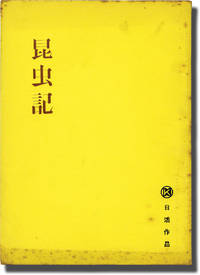
1963141423Tokyo: Nikkatsu 1963. Draft script for the 1963 film. Text in Japanese. <br /> <br /> A metaphor for the experience of Japanese citizens in the postwar era told through the perspective of a woman named Tome born into a lower class family. She finds herself in a cycle of self-defeat repeating the same mistakes that have always plagued her. <br /> <br /> Yellow titled perfect-bound wrappers. Title page present. 156 leaves with last page of text numbered 29. Mechanical duplication. Pages Near Fine wrapper Near Fine. <br /> <br /> Criterion Collection 473. Eureka 22. Nikkatsu unknown