8 894 résultats
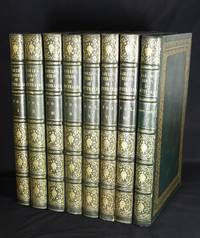
186929221London: by the author printed by Richard and John E. Taylor 1840-_ 1869. First edition. A FINE COPY OF GOULD'S MOST IMPORTANT WORK which was issued in 41 parts over 30 years and occupied more than half of his career. In the original publishers' full morocco gilt stamped binding.<br /> <br /> Provenance: Presented to the Right Reverend Mathew Blagden Hale by the members of the Church of England and other Denominations of Christians of Western Australia Perth October 28th 1876. With large presentation label printed in gold dated in each volume. Mathew Blagden Hale 1811-1895 was the first Bishop of Western Australia and founder of Hale School.<br /> <br /> Gould started work on the Birds of Australia in 1837 but ceased this effort when he found he did not have enough material to work from in England. He and his family departed for Australia where his wife had two brothers and remained there for 18 months collecting new specimens in New South Wales and Tasmania. John Gilbert was sent to collect specimens from Western Australia Queensland and South Australia. As Gould had introductions to the explorers working at the time he also received contributions of specimens from Sturt and Grey. As a result of this intensive effort 300 new species were claimed by Gould. <br /> <br /> AUSTRALIAN EXPLORERS' CONTRIBUTION TO GOULD'S BIRDS OF AUSTRALIA<br /> <br /> In May 1838 Gould his wife Elizabeth John Gilbert their zoological collector one of their sons a nephew & two servants sailed for Australia. On their 27 montsh stay in the Colonies they received assistance from all sides ~ the Colonial Governors and most importantly the early explorers of Australia's interior.<br /> <br /> In Tasmania the Goulds were looked after by the Governor Sir John Franklin of later Arctic fame and Lady Franklin who were greatly interested in the flora and fauna of the country. Gould and Gilbert explored much of Tasmania and the Bass Strait islands. <br /> <br /> In February 1839 John Gilbert departed for an eleven month stay in the Swan River Colony. Gilbert made further explorations to the Northern Territory with Ludwig Leichhardt but during Leichhardt's overland expedition in 1845 from Brisbane to Port Essington was tragically killed by aboriginals. Book - Journal of an Overland Expedition in Australia. 1847.<br /> <br /> In June of 1839 Gould began a journey with Captain Charles Sturt from Adelaide to "the Murray Scrubs" the Mallee returning to Adelaide in July from where he visited Kangaroo Island before returning to Hobart. Books- Two Expeditions into the Interior of Southern Australia. 1833 & Narrative of an Expedition into Central Australia. 1849.<br /> <br /> Contributions of specimens & information came from all quarters. George French Angas contributed eggs and information about the Yellow- eared Black Cockatoo. Book- South Australia Illustrated one of the great Australian topographical view books. In the course of his hydrographical voyage on the H.M.S. Rattlesnake John MacGillivray contributed information about the Great Palm Cockatoo. Book- Narrative of the Voyage of H.M.S. Rattlesnake commanded by the late Captain Owen Stanley. 1852 Cape York area. T.L. Mitchell surveyor general of New South Wales supplied descriptions of the Leadbeater's Cockatoo commonly known as the "Major Mitchell". Books- Three Expeditions into the Interior of Eastern Australia.1838 & Journal of an Expedition into the Interior of Tropical Australia.1848. <br /> <br /> The last voyage of the "Beagle" was in Australian waters from 1837 to 1843. In 1841 Capt. Wickham suffering ill-health was relieved of his command by Lieut. John Lort Stokes Book - Discoveries in Australia; with an account of the Coasts and Rivers explored and surveyed during the Voyage of H.M.S. Beagle In the Years 1837- 1843. 1846. The task of the expedition was to survey those parts of the northern coast of Australia not already charted by Flinders or King. Accompanying them on this trip was the young lieutenant George Grey whose duty it was to explore the land in Australia's northwest with a view to establishing a permanent settlement there. Book - Journals of Two Expeditions of Discovery in North-West and Western Australia. 1841 The scientific appendices in volume two of Grey's "Journals" include one on birds by John Gould ~ " Mr. Gould kindly forwarded the following enumeration of the species which have come under his notice as inhabiting that part of the country Western Australia." There follows a 7 pp listing of birds of W.A. "Officers of the Beagle" are credited by Gould's "Handbook to the Birds of Australia" as supplying information on the Rose-breasted Cockatoo. <br /> <br /> To conclude the history of Australia's inland exploration is inextricably bound up with Gould's masterwork The Birds of Australia. It was an extremely fertile and productive time in Australia ~ Sturt Mitchell & Angas in eastern & southern Australia; Leichhardt MacGillivray Stokes & Grey in the north & west. Reading the letter-press that accompanies each color plate of Gould's Birds bears witness to the combined efforts of Gould and the explorers and settlers of Australia ~ Gould constantly refers to specimens and information on the birds' customs and habitat sent to him by various explorers. Many times this spirit of cooperation overflows into the naming of the bird itself. Gould was the touchstone who pulled together the contributions of Australia's explorers into the foundation work on Australia's ornithology. This combined with Gould's work with Darwin interpreting the specimens from the famous "Beagle" voyages takes Gould's Birds of Australia out of a strictly natural history realm and places it firmly alongside the great scientific discovery expeditions of the 19th century.<br /> <br /> GOULD'S CONTRIBUTION TO DARWIN'S THEORY OF EVOLUTION<br /> <br /> Before the Goulds' plans for the work on the Birds of Australia came to fruition John Gould became involved in a co-operative project with another scholar - Charles Darwin. In October 1836 Darwin returned to England from his 5 year circumnavigation on the H.M.S. Beagle on which John Lort Stokes served for 18 years- rising from midshipman in 1825 to commander in 1841. Darwin needed expert help in the description & identification of the preserved birds insects rocks shells & insects for his production of the Zoology of the Voyages of H.M.S. Beagle. Darwin had heard of Gould's books from Thomas Campbell Eyton a naturalist friend from Cambridge days who had bought Gould's Toucan prints. They were expensive he wrote but of good value as he had since been offered a higher price! Through the Zoological Society where Gould had established his reputation as a premier taxidermist Darwin initially made contact with Gould about a special Rhea seen during his travels in Northern Patagonia. This Rhea was an ostrich of dark mottled color with shorter legs than the Common Rhea. Conrad Martens the artist on the Beagle expedition shot one for food and it was cooked and eaten before Darwin realized that it was a less-known species. Fortunately the head neck feathers & skin had been preserved and were sent to the Zoological Society where it was put together and a nearly perfect specimen made for display. Gould classified the Rhea as a new species "Rhea Darwinii". <br /> <br /> The third volume of the "Zoology of the Voyage of the H.M.S. Beagle" contained fifty bird plates which was advertised by Darwin as "taken from sketches made by Mr. Gould himself and executed on stone by Mrs. Gould". When Gould & Darwin were examining the birds brought from the Galapagos Islands they were fascinated by a group of about thirteen finches of the same species which had curiously different-sized beaks. These modifications occurred on different islands and it was the investigation of this and other scientific data accumulated over a long period that led to Darwin's theories of evolution by adaptation formulated many years later. Frank Sulloway Harvard University 1982 has investigated Gould's part in Darwin's theory of evolution and shows that Gould astutely realised the basic peculiarities of these birds thus paving the way for Darwin's first notes on the "Transmutation of Species". Gould presented descriptions of the Galapagos finches and mockingbird specimens at the Zoological Society in January 1837. However he was unable to finish his work for Darwin. Due to the rush before the Goulds' departure to Australia parts of his manuscript were left unresolved and the work was completed by George Robert Gray of the British Museum.<br /> <br /> As Gould only published 250 sets of "The Birds of Australia" the number of complete copies which could possibly come on the market is significantly diminished by many factors ~ the work was issued in parts and not all copies were bound which would contribute to their demise over time. Many of the sets that survive are in institutional hands and unlikely to come onto the market. Over the last 20 years at least 10 copies have been "broken up" and sold as plates. This loss of a number of complete sets will certainly lead to a complete and undisturbed Gould attracting a premium by virtue of its increasing scarcity. <br /> <br /> 8 imperial folio volumes including supplement 2 pp list of subscribers 681 hand-colored lithograph plates including 3 double-page by John and Elizabeth Gould or by Gould and H.C. Richter. Printed by Hullmandel and Walton. Occasional minor spotting. Uniformly bound in publisher's green period full green morocco sides with gilt borders spines gilt in 6 compartments gilt edge by Clyde. The books are presently in the UK. <br /> <br /> Nissen IVB 370; Anker 174 and 179; Fine Bird Books p. 78; Wood p. 365; Zimmer pp 255-6 and 259; Sauer 9 and 18; Ferguson 4773 & 10032a. <br /> <br /> Bibliography: Lambourne Maureen Wm. McEvoy & Dr. Gordon Sauer. "John Gould - BIRD MAN" London 1987 Wantrup Jonathan "Australian Rare Books 1788-1900" Sydney 1987. by the author, printed by Richard and John E. Taylor, (1840-_ unknown
1837ABC_46027London Calcutta etc.: various publishers 1837. Half calf with marbled sides and lettering in gold on spine or cloth with marbled sides and a spine label. 8vo. Some illustrated with plates and maps. 107 volumes many containing multiple articles. Handsomely bound extraordinary collection of important scientific journal articles by 19th and 20th century Western explorers of Afghanistan Central Asia China the Himalayas India including Assam Bengal Kashmir and Punjab Karakoram Pakistan including Sindh and Tibet with content covering anthropology archaeology exploration geography geology glaciology history language and grammar mountaineering and politics. At the time these were the far outskirts of the world for Western science where a lot was yet to be learned. Often the maps in these journals are the first modern maps of such regions and findings were the first to be scientifically published.Generally in very good condition.Please inquire for a full list of contents. various publishers, hardcover
1891BB009<p> CHINA: Propaganda against Western Missionaries<br /></p><p>The Cause of the Riots in the Yangtse Valley. A "Complete Picture Gallery" by CHOU HAN. Hankow China 1891. With 32 full=page woodblock plates printed in color. Oblong 4to original printed wrappers sewn spine soiling minor repairs.</p><p>The author Chou Han is described by the translator Griffith John 1831-1912 as 'a gentleman of high official rank Taotai in Hunan' and was part of an orchestrated propaganda campaign aimed at discouraging Western Christian missionaries from working and traveling in China. This volume was perhaps his most significant and horrific attack on western culture managing a "reptile press" in Hunan creating unrest and distrust amongst the Chinese people see John's "A Voice from China" 1907 p. 220. Chou Han himself is probably represented in plates IX XIII XXVI and XXIX; the images are virulently anti-foreigner and specifically anti-Christian. John translated and circulated the present work to draw attention to the British authorities of the problems faced by missionaries in Asia. </p><p>Very Rare. ONLY 3 COPIES CAN BE TRACED AT AUCTION IN THE PAST 40 YEARS ABPC & RBH. </p><br /> paperback books
A modern Jew, perhaps for the first time, analyzes western civilization as an expression of the Gentile way of life and shows where this clashes with the nature and spiritual impulses of the Jew. - paraphrased from front flap of replica dust jacket included with this copy. "We Jews, we, the destroyers, will remain the destroyers for ever. Nothing that you will do will meet our needs and demands - The wretched fate which scattered us through your midst has thrust this unwelcome role upon us." - p. 155. "I console myself with the thought that if this book offends by its assertiveness, God knows that the infinite tactfulness of thousands of other Jews seems to have offended no less. Whatever we do we are damned - and I would rather be damned standing up than lying down." - p. 221. "Born in Romania, Maurice Samuel [1895-1972] moved to the United States in 1914. A Jewish intellectual and writer, he is best known for You Gentiles." - Wikipedia. [6], 7-221pp. 7.75" x 5.5". Narrow opening in binding at title page. Unmarked with average wear and soiling. Book
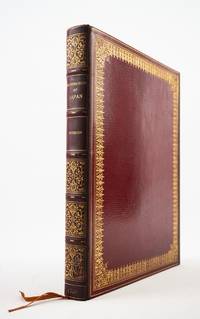
1822ST20877London: Printed for R. Ackermann 1822. First English Edition. 300 x 235 mm. 11 3/4 x 9 1/2". xvi 325 1 pp.Translated by Frederic Shoberl. <br/> Imposing contemporary crimson straight-grain morocco gilt covers with filigree frame with densely massed scrolling fleurons raised bands spine gilt in compartments with radiating viny scrolls surrounded by leaves and annular dots marbled endleaves all edges gilt. WITH 13 HAND-COLORED PLATES in etching and aquatint many after Japanese artworks one folding. Bookplate removed from front flyleaf. Bookseller's ticket of J. L. Thompson & Co Kobe Japan on front pastedown. Abbey Travel 557; Tooley 489; Martin Hardie "English Coloured Books" pp. 113-14. See also E. F. Strange "Japanese Illustration" pp. xxiii-xxiv. Spine and fore-edge of upper board slightly darkened a few minute flakes to lowest spine compartment but the binding extremely well preserved with very lustrous boards. Final 10 leaves slightly creased one repaired marginal tear but still A FINE COPY INTERNALLY exceptionally bright smooth and entirely fresh and clean.<br/> <br/> This generously proportioned production illustrated with 13 vibrant colored plates is a rare European account of Japan during the period in which the country was "closed" to the west offered here in its first English edition. Originally published in French in 1820 "Illustrations of Japan" is comprised of a history and description of the Tokugawa shogunate which Titsingh had translated from the Japanese plus Titsingh's own observations on the language customs and ceremonies of the Japanese people. The present English edition is accompanied by plates in etching and aquatint enhanced with hand coloring. Our author Dutch diplomat Isaac Titsingh 1745-1812 spent 14 years in Nagasaki for the Dutch East India company and between 1779-84 he served as trade director-cum-ambassador travelling to Edo now Tokyo for audiences with the shogun and other high officials in the shogunate. Unlike most of his Western contemporaries Titsingh was open-minded and curious about the people he encountered engaging with their art and culture; in fact art historian and Victoria & Albert Museum keeper Edward F. Strange tells us that Titsingh is the earliest known European collector of Japanese prints of which a number appear in the present volume. Our publisher Rudolph Ackermann 1764-1834 made his living issuing sumptuously illustrated books such as the present volume and was an early adopter of color aquatint and lithography technologies; Hardie writes that he was "the great presiding genius before whose magic wand so many pictorial books sprang into existence." In very attractive period morocco this is a particularly appealing copy of the work free of the foxing and offsetting that often plague copies of this and other large-format color illustrated books. Printed for R. Ackermann unknown
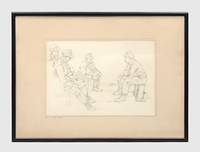
19421366441942. Original artwork from the Western Desert executed by Rommel's Kriegsmaler Wilhelm Wessel Three fine studies by Wilhelm Wessel Rommel's war artist Kriegsmaler executed in the field while serving as an officer with the Afrikakorps. Wessel 1904-1971 studied briefly with Kandinsky at the Bauhaus and then with Kurt Schwitters in Berlin. In 1924 he began a four-year journey through Turkey Greece Palestine and Egypt. From 1927 to 1931 studied Sumerian and Byzantine archaeology at the University of Berlin at the same time studying under expressionist painter Karl Hofer whose work was later branded as degenerate by the Nazis and included in their entartete kunst exhibition. Between 1931 and 1939 he taught art in Berlin and Westphalia. He served throughout the Second World War in France Russia North Africa and Italy initially as an officer with a Panzergrenadier regiment. In 1941 he was severely wounded during the opening of Operation Barbarossa and after recuperating joined Rommel in North Africa as a Kriegsmaler. His book Mit Rommel in der Wüste With Rommel in the Desert was published at Essen in 1943. At the conclusion of hostilities he was briefly a prisoner of war before resuming his career as an artist. "As a promoter of abstract art Wessel organized the first post-war German art exhibition at the Stedelijk Museum in Amsterdam. and took part in a number of group exhibitions" from Venice to Tokyo and "had solo exhibitions in Berlin Wüppertal Wiesbaden Vienna Stuttgart Munich Paris and elsewhere" Benezit. He was the first chairman of the West German Artists' Federation and as such sponsored an early exhibition of American art in Düsseldorf in 1956. Some of his war prints were loaned to NATO in Brussels. Provenance: acquired in 1975 from the artist's widow Irmgard Wessel-Zumloh 1907-1980 herself an accomplished artist by an American army veteran J. William Keithan Jr. 1925-2010. Keithan served with the 42nd "Rainbow" Division and after the war had a long career as an executive with the Westin Hotel chain in charge of the design and construction of over 50 hotels around the world. He has provided a 3-page typed account of the acquisition of this group in which he says: "We talked of many things. Of how General Rommel and Wessel were good friends and how after World War II Frau Rommel and son Manfred were frequently visitors to her home in Iserlohn. She was adamant in her refusal to sell or contribute any of Wessel's work to the German people or the German government". Together with a substantial album comprising 39 photographs of Wessel's war images acquired from the Canadian War Museum and Archives of New Zealand. Auction records for Wessel's post-war work are plentiful but we have not found a single example of any of his original war art appearing at auction or being otherwise offered for sale. Charcoal pastel and pencil drawings. The group comprises: a Original black-and-white charcoal drawing on pale grey paper signed "Wih. Wessel 42" measuring 460 x 590 mm; inscribed lower left corner in pencil "Hinter den Stützpunkten bei Eluel El-Aggara" "Behind the bases at Eluel El-Aggara"; Al 'Aqqarah Libya lies some 100 km west of Tobruk. An attractive and atmospheric evocation of the Libyan desert at dusk: against a low horizon a column of German lorries negotiates hills and scrubby terrain plumes of smoke billow in the distance. Reproduced in Mit Rommel in der Wüste colour plate 15. b Original coloured pastel drawing unsigned and untitled; image: 330 x 465 mm mounted overall: 500 x 620 mm. A striking image of a desert dawn patrol by three German armoured vehicles two Sd. Kfz. 222 scout cars and a Sd. Kfz. 231 armoured car their wheels kicking up sand; the low horizon line rising sun and big sky with flaring white cloud make for a most dramatic picture. Not reproduced in Mit Rommel in der Wüste and presumably unpublished. c Original pencil drawing signed "Wessel 42" entitled "German Soldiers Talking" inscribed in pencil on mount; image: 235 x 350 mm mounted framed and glazed overall: 410 x 570 mm. Label on verso noting its purchase from Wessel's widow in 1975. Reproduced as a half-page illustration in Mit Rommel in der Wüste p. 45. All pieces in excellent condition. unknown
19069347London 1906. Edwardian station map approx 40 x 60 inches this example 101 x 150.5 cm printed in colours some restoration with small areas of loss along the folds made good blank verso. Un-titled undated and without a printer this exceptionally scarce early poster was created for display in stations but establishing which ones presents a challenge. We can date it with reasonable confidence to 1906 or perhaps a fraction earlier. Our map predates the western extension of the Central London Railway to Wood Lane which opened for the Franco-British Exhibition in 1908. Angel is still shown as the terminus of the City & South London Railway but the western extension to Euston which opened in May 1907 is under construction. The use of a green border appears to be a nod to the successful series of green-bordered UERL Underground Group maps but as those were introduced in 1907 it might be the other way around. Another unusual design feature is the two tone shading in line colours of the names of interchange stations such as The Bank. The Bakerloo Line which opened in March 1906 appears to be shown as a thin dotted black line but as it was owned by the rival UERL its use for dating purposes cannot be guaranteed: this is most emphatically not a UERL map. Just three underground lines are highlighted none of which was under the UERL umbrella in 1906: The Central London Railway the City & South London Railway and the Great Northern & City Railway the first two purchased by the UERL and the latter by the Metropolitan Railway all in 1913. Two mainline companies are featured: the Great Northern Railway with its terminus at Finsbury Park and the Great Western Railway which served Paddington. Of these two the GWR is far more prominent with an inset showing the route to Reading. The map promotes travel across London using the highlighted routes at the expense of all others including the UERL: all are razor thin black and unobtrusive with no further differentiation between underground mainline and suburban services and seemingly haphazard naming of stations. It seems likely that our map was a joint response by three of the independent underground railway companies to the growing power of the UERL possibly in co-operation with the GWR and was created for display in any of their stations. We have been unable to locate another example. Map unknown
1897WRCAM56506Various locations in Oregon California and Colorado 1897. Seventy-nine printing out paper photographic prints each image 6 x 8 inches on 9 1/2 x 11 1/4 inch medium weight sheets all but two captioned in the negative. Minor surface wear to a handful of prints several with minor emulsion chipping to edges some curling to prints. Overall very good or better condition. An extraordinary collection of large handsomely-produced photographic prints documenting the exploits of a group of travelers who set out by train through Oregon California and Colorado in 1897. The photographs which are skillfully composed and indicative of an experienced photographer picture a wide variety of both urban and rural settings along the Pacific Coast and in Colorado showing a mixture of horse-drawn and cable and street cars but nary an automobile and constitute a unique and evocative time capsule for numerous locations in the American West in the final few years of the 19th century. <br> <br> The first image features a large group of women and children posed outside a railroad car with the image captioned "The R&W 97 Transcontinental Party." In fact two of the images reference the party as "R&W" which likely refers to the company or family who participated in the railway excursion. The travelers were apparently well-to-do by their dress and by the variety of notable high-end hotels they visited. The selection of photographs here was likely hand-picked by one of the members of the excursion after the journey was completed. <br> <br> The preponderance of the images document locations in California. These include two different views of Mount Shasta scenes in Yosemite Park sites in Santa Cruz and several images each in and around San Francisco Santa Cruz and Los Angeles. The Yosemite Park pictures show members of the group taking a horse-drawn carriage through a redwood tree and other Yosemite landmarks are captioned "Yosemite from Inspiration Point" "Bridal Veil Falls" "Two Brothers of the Yosemite" "Trail to Glacier Pt." "A fallen Monarch of the Yosemite" the famous downed redwood tree and "Wawona Point." <br> <br> The San Francisco images include Stanford University two images a view of Stanford's Tomb in Menlo Park the driveway to the Crocker residence a striking image of downtown focused on the Spreckels Building the San Francisco City Hall building the "Courtyard of the Palace Hotel" Golden Gate Park a spectacular view across the ocean from Golden Gate Park the entrance to Sutro Park and the esplanade in Sutro Park. <br> <br> Images in Santa Cruz depict the residence of Major Frank McLaughlin known as the Golden Gate Villa an elevated view of the beach at Santa Cruz a scene of several travelers in a horse-drawn carriage captioned "Our four in hand on the cliff drive Santa Cruz Cal." and three striking views of the cliffs including two featuring the "Natural Bridge" Cliff at Santa Cruz. <br> <br> The Los Angeles area is well represented in the photographs which picture the downtown courthouse a downtown street scene showing the Van Nuys Hotel the year it opened a view down Spring Street West Lake Park East Side Park four images including the entrance an orange grove in Riverside picturing one of the travelers Magnolia Avenue in Riverside an "Orange grower's home" in Riverside a pair of horses pulling a streetcar labeled "Riverside & Arlington Ry." before the line was electrified in 1899 and an interesting street scene in downtown Riverside. <br> <br> Other sites in California comprise the Hotel Coronado four pictures including an unusual view of the "Drive to the Entrance" of the hotel Coronado Beach two views the "Ruins of Capistrano" the remnants of the mission church the train depot at Fresno a residence in San Jose the "View from Mt. Hamilton" near San Jose and the road to the hedge maze at the Hotel Del Monte in Monterey. <br> <br> The Colorado pictures include a breathtaking elevated view of a snowy Denver taken from the top of the capitol building. Other Colorado scenes include a view of New Castle from the train Glenwood Springs an image of horse-drawn carriages crossing a bridge over the river in Glenwood Springs and two images capturing the incline tram up the Royal Gorge near Canon City. The collection also includes a handful of images in Portland Oregon. These feature the Portland wharf three separate shots of the Portland Hotel the "Residence of Dr. McKenzie" and a horse- drawn carriage ride on City Park Drive. <br> <br> Eight of the more intriguing images in the collection were taken while aboard the traveling party's moving railroad car and picture the vast landscape of the American West in California Colorado and Nevada. The captions for these read "From Top of Mountain near Scisco" "We pass through Eagle Cañon" "Leaving Leadvill sic behind us" "Some Colorado Scenery" "On the Rio Grande Western" and "Princeton Harvard & Yale" a distant view of the three mountains named for those Ivy League schools in the "Collegiate Peaks" region of the Rocky Mountains. One image likely in Colorado but with location unidentified is captioned "Mountains rising thousands of feet all around." There are even a couple of images taken from the train while passing briefly through Nevada including one of the "Humboldt Desert." <br> <br> In addition to the aforementioned image picturing the women and children of the "R&W 97 Transcontinental Party" there are a handful of images focused on other various members. One is captioned "The R&W 97 Philharmonic Symposium" and features six men standing on a railroad handcar with musical instruments. The words and music to "Sweet Rosy O'Grady" have been written into the photographic negative at center along with a humorous musical quatrain at right referencing one of the traveling party. This latter bit reads "The Director General Russ Couldn't play with us with us He was not allowed to toot So he kept time with His Boot." Additional pictures of the group feature them dining inside an unnamed restaurant posed in front of a giant redwood near Santa Cruz and sitting on chairs in a semi-circle in Sutro Park. The latter photograph is captioned "The Russo Hershian Family will now perform." The collection is rounded out with a striking photograph of a woman in a white dress posing for the camera against a white wall which is captioned "Miss Lethbridge." <br> <br> Though the subjects of the traveling party in these pictures are ultimately unknown to us their journey is emblematic of an entire generation's fascination with the railroad and the American West. In addition these large and impressive prints which capture both the urban development of California Oregon and Colorado along with the majesty of the rural settings in these states document their travels in an unusually rich and deluxe format. <br> <br> A unique and rich collection of western photographs produced in the last few years of the 19th century. unknown books
Folio (320 x 215mm). (16) ll, including frontispiece, 618 pp, (14) ll. Engraved frontispiece, title in red and black with large engraved vignette, numerous engraved illustrations including large-format ones, and numerous woodcut illustrations, headpieces and initials, with final blank. Contemporary vellum, manuscript title on spine. Somewhat browned and with a small defect in the engraved title-page, but still in good condition, binding slightly bowed.
20172081502111904155Tianjin ancient books 2017. Soft Cover. Fine. The book is in fine condition. Tianjin ancient books paperback
190662652St. Louis MO: Holt St. Louis Streets Dept. 1906. Forty-four of 46 original linen-backed panoramic silver gelatin photographs comprised of 116 approx. 8 x 10 in. images divided into 2-4 panel panoramic photographs w/ captions neatly written w/in negatives at lower fore-edge annotations in red & black ink occasional pencil notes sectional numbers on versos edgewear & rubbing some lifting to fore-edges of some of the images creasing soot soiling to versos minor over-exposure to some images still a VG archive. This historic archive of panoramic photographs meticulously document the now largely disappeared and built-over River des Peres in a Ruscha-like manner and if pasted end-to-end would span nearly 100 feet. Capturing the River des Peres Valley which still meandered at the beginning of the 20th-Century along the Western boundaries of St. Louis MO and reveal a fast-growing Western city industrializing and appropriating the marshy lowlands farms and rural areas into factories breweries and railroad routes. Eleven of the images wind through Forest Park where much of the river had been channeled in 1904 through wooden sewers and culverts in order to cut down on the stench and prepare the park for the 1904 St. Louis World’s Fair. Holt 1866-1925 was renowned for his excessive photographic documentation leading groups of city engineers armed with large format cameras shooting on glass plate negatives recording the sprawling activities of the burgeoning St. Louis community in the Progressive Era. As evidenced by this meticulously shot archive of panoramic images Holt and his team document from the Mouth of River des Peres looking North with railroad bridge in right foreground and steamers in the river alongside the banks. The images continue along the River des Peres capturing the brewery next to the Railroad and between Broadway & Alabama Ave.; the sprawling unidentified factory on Webster; and also demarcating where the City Limits Stones were set and what numbers. A four-panel panoramic photo denotes the Saints Peter & Paul Cemetery on Gravois Avenue followed by others indicating different distances from Gravois Road bridges and houses along the road a road grading and roadbuilding team West of Gravois and then recording the rural lowland areas Southwest of Gravois and then towards Echelberger Street. About halfway through the series the images begin capturing more industrial and suburban development including the St. Louis & San Francisco Railroad Line Frisco RR telephone poles along Fyler Ave. Frisco RR stone station on Fyler with nearby culvert; the Hirsch Rolling Mill Co. complex with railcars labeled and carrying steel and railroad bridge in the distance. The photos show the River des Peres winding around revealing the Clifton Heights in the background; between Knox and Sulpher Ave. with Fire Engine House in the right foreground and many different railroad company cars including those for the Cotton Belt Line the Chicago Peoria & St. Louis RR the Missouri Kansas & Texas RR; and many for the Frisco RR. Several photos shot by Holt and his team May 10 1906 capture the sprawling Laclede Fire Brick Manufacturing Co. complex the Frisco RR Arch Bridge and even a Birds-Eye view. Other photos approaching Forest Park also depict the Police Headquarters Stables the Forest Park Highlands and once in the Park a group of boys playing baseball in the lower foreground. The final three-panel panoramic photo was taken looking West with Delmar Blvd. on the right and the Frisco RR trestle in the middle foreground Delmar Garden in the background and center field filled with the trestle stretching over the River des Peres. Unsurprisingly this cataloguer could find no similar partial or extant collection of images and the original negatives appear to have probably been dumped by St. Louis City Hall housecleaning around 1950 when they offloaded the thousands of photos shot by the Holt for the Street Department. The historically invaluable images were all sold at an auction comprising three 13 foot high stacks of negatives nearly all of them on glass. Purchased originally by Swekosky the collection was lent to Dick Lemen of Moline IL who cleaned printed and enlarged the photos purchased them and later donated the remnants of what he preserved to the St. Louis Mercantile Library. These photographs capture a Western waterway almost entirely displaced with nearly all of its original route completely rebuilt as it was engineered to operate as the backbone of the St. Louis sewer system and almost completely underground with just a few sections near the mouth with a channel and paved bans. In 1904 the Forest Park section was covered in a “large wooden box†to prevent visitors to the World’s Fair from breathing the unhealthy stench and after a 1915 flood backed up sewers killed 11 people in flooding and destroyed over 1000 homes chief engineer Horner was ordered to prepare a plan to completely control and build over the River des Peres. It still carries storm water and sewage in separate pipes and now that the channel has almost no direct source from the Mississippi River and all of the lowland meadows wetlands and areas that existed at the beginning of the 20th Century have been entirely paved over there largely remains no water to supply the river itself. Some of the River at the site of the former Carondelet Coke Plant has been largely remediated and a short piece connected to the Mississippi Greenway near River City Casino. See: Kelly Moffitt Salvaged Photographs from the St. Louis Street Department circa 1900-1930 Catalogued in New Book St. Louis on the Air St. Louis Public Radio Aug. 2 2017; Enter Dick Lemen Dr. William G. Swekosky The collection Grows Unwieldy Lafayette Square Archives 2020; Michael Allen The Harnessed Channel: How the River Des Peres Became a Sewer Preservation Research Office Nov. 27 2010; Chris Naffziger Reconnecting with the Roots of River des Peres in St. Louis Terrain Magazine 2022. Holt, [St. Louis Streets Dept.], unknown
16702080502106917709Not Available 1670. Soft Cover. Fine. The book is in fine condition. Not Available paperback
42856London : s.n. 1835. Quarto 250 x 200 mm 3 pp; printed on letterpress; fourth side docketed 'Mission to Western Australia' and with Webster Collection stamp with number 2621 in ms.; original vertical and horizontal folds some toning else very well preserved. The foundation document for the Western Australian Missionary Society recording the resolution for its establishment made on 30 September 1835. The document also gives details of Honorary Secretary Captain F. C. Irwin's proposal for an Appeal to raise funds for the sending of missionaries to the Swan River colony and for their maintenance there which includes the observation that 'the Natives of the country who are still in the lowest state of barbarism continue in the grossest heathen darkness without a single Christian teacher of any denomination among them.' Ferguson 2070 Very rare. Trove locates only three copies in Australian collections NLA; SNSW; SLWA which represent two different printings: the SLWA and Mitchell Library copies have the variant '10s.' for 'Ten Shillings' in the last line on the first page. Note: The NLA copy is fully digitised and may be viewed at the following link: https://catalogue.nla.gov.au/catalog/2914171 Provenance: Private collection Australia; ex Maggs Bros. London c.1978; ex Webster Collection. Kenneth Athol Webster 1906-1967 was a New Zealand-born dealer and collector in manuscripts books paintings and ethnographic artefacts relating to the Pacific. In the two decades after World War Two he built one of the largest and most important collections of this type of material ever assembled. unknown
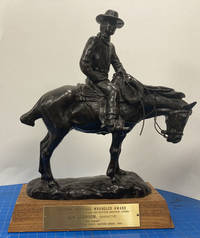
50746Oklahoma City: National Cowboy & Western Heritage Museum 1985. 1985. BRONZE WRANGLER AWARD. Wrangler bronze 13" x 9 1/2" x 4 3/4" overall on a 1 3/4" wood base complete with a 1 3/4" x 5 1/2" brass plague. The bronze is signed by "R. Muno" and weighs almost ten pounds. The brass plague is inscribed: "Western Heritage Wrangler Award / National Cowboy Hall Of Fame and Western Heritage Center / Ben Johnson Narrator / 'THE DREAM' / Outstanding Special Short Feature Award 1985." The Bronze Wrangler is an award presented annually by the National Cowboy & Western Heritage Museum at the Western Heritage Awards to honor the top works in Western music film television and literature. Provenance: Ben Johnson estate. Francis Benjamin Johnson Jr. June 13 1918 - April 8 1996 was an American film and television actor stuntman and world-champion rodeo cowboy. Tall and laconic Johnson brought authenticity to many roles in Westerns with his droll manner and expert horsemanship. The son of a rancher Johnson arrived in Hollywood to deliver a consignment of horses for a film. He did stunt-double work for several years before breaking into acting with the help of John Ford. An elegiac portrayal of a former cowboy theater owner in the 1950s coming-of-age drama The Last Picture Show won Johnson the 1971 Academy Award BAFTA Award and Golden Globe Award for Best Supporting Actor. Johnson also operated a horse-breeding ranch throughout his career. Although he said he had succeeded by sticking to what he knew shrewd real estate investments made Johnson worth an estimated $100 million by his later years. He was an actor from 1939 until 1996 and is the only true cowboy to have won an Academy Award. The film The Dream was directed by Joe Pytka born November 4 1938 an American film television commercial and music video director born in Pittsburgh Pennsylvania. He holds the record for the most nominations for the Directors Guild of America Award for Outstanding Directing - Commercials. Pytka gets a call from a new agency in Minneapolis to do a short film for U.S. West a telephone company and the idea was a 'teaser' film of cowboys saddling their horses at predawn. The art director was Pat Burnham and the writer was Bill Miller. Pytka asks whether or not they have the account. Told no simply the current assignment Pytka says "Let's do something big!" Pytka had been filming Busch Beer commercials for a number of years and was familiar with locations and cowboys. He also knew that the number of convincing cowboy actors in Hollywood was extremely limited. He needed to get away from Los Angeles where he knew a great cowboy that had a great hat. "Cowboys are defined by their hats and boots . The thing should be realistic. Real cowboys. Real horses . There are horses and there are horses. For example a cowboy wouldn't be caught dead on a paint horse." The short film was shot mostly in Monument Valley with a select few real cowboys as that is their home. Most amazing to Pytka was how the cowboys and their horses are completely as one. The film was shot and almost everything done in a single day. By some stroke of good fortune the agency has gotten the great cowboy actor Ben Johnson to record the narration. In the session Johnson remarked that we'd gotten some real cowboys there a huge compliment since he was a real wrangler before he discovered that he could make more money in Hollywood than in Oklahoma. National Cowboy & Western Heritage Museum, 1985. unknown
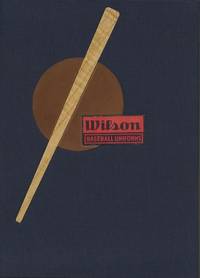
193050786New York Chicago San Francisco: Wilson-Western Sporting Goods Company 1930. First edition. 2 volumes. 8vo. The wrappers are illustrated with Rogers Hornsby in batting stance on the front cover. There are some marginal tears and general wear and soiling especially to the Made -To -Measure catalogue; else in very good condition. Housed in a custom-made clamshell box of cloth with inlays of wood and leather. These two companion catalogues illustrate off-the-rack and tailor-made uniforms in a variety of price ranges. They contain original wool flannel samples a drawing of the complete uniform full description and price. The READY-TO-WEAR catalogue is sixteen pages plus covers fully illustrated and contains thirty-two uniform samples in a variety of colors and pinstripes. The MADE-TO-MEASURE catalogue is thirteen pages plus covers contains illustrations and sixty uniform samples in a variety of colors and pinstripes. Additionally there are endorsements for mitts with photo portraits by Bill Terry and Ray Schalk. We have been unable to locate any other copies of these or other Wilson swatch book catalogues in OCLC or any other database. The library of The Baseball Hall of Fame in Cooperstown New York had heard that such catalogues were produced but had never seen one. Rare. <br/><br/> Wilson-Western Sporting Goods Company hardcover books
1872WRCAM29311Various places 1872. Twelve cards each 17 x 13 inches a.e.g. with manuscript captions in lower margins. Images are 9 x 6 1/2 inches except the two oval images of San Francisco. Some minor soiling on cards some images slightly faded. Very good. Archivally matted protected with a mylar sheet. An excellent collection of views quite early for Hawaii and New Zealand. The four views of Honolulu include one wide view of the town a view of a side street with a church steeple in the background the Pali mountain pass and the harbor with several large vessels at anchor. In New Zealand the Supreme Court building in Christchurch and the city of Littleton are displayed. The San Francisco images include the Palace Hotel and the famous Cliff House. Of particular interest are the three views of the Central Pacific Railway. The sections of the track include Capestown the Palisade and Summit Station each with fresh evidence of the line's recent completion. Also in the collection is one image of a railroad along the banks of Salt Lake and three wide views of Salt Lake City one with the Mormon tabernacle completed in 1871 prominently featured. An attractive collection of views each quite displayable. unknown books
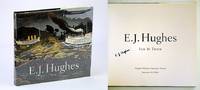
2002547H0222Canada: Douglas & McIntyre / Vancouver Art Gallery. Fine in Fine dust jacket. 2002. First Printing. Hardcover. 1550548999 . Signed by E.J. Hughes upon title page. 226 pages. Index of works. Chronology. Selected bibliography. Oblong 11" x 12". "Lavishly illustrated with 100 full colour and 25 black-and-white reproductions of prints drawings and paintings this is the first full-scale volume to honour the artistic life and work of E.J. Hughes from the start of his long career in the 1930s to the present. His unique talent for depicting the landscape in a way that both he and viewers believe it should be rather than the way it actually is enables us to experience and understand place and nature in new and deeper ways." - from dust jacket. Clean bright and unmarked with very light wear. Dust jacket now preserved in glossy new archival-grade Brodart. A marvelous gift for any devotee of E.J. Hughes and his magnificent art.; 4to - over 9¾" - 12" tall; E.J. Hughes British Columbia Canadian Artists Painters Landscape Painting Vancouver Island Signed; Signed by Authors . Douglas & McIntyre / Vancouver Art Gallery hardcover
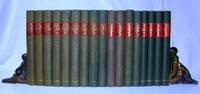
1937617G1246Victoria British Columbia: The Archives of British Columbia/British Columbia Historical Association. Good. 1937. First Edition. Hardcover. Seventeen volumes individually and uniformly bound in green cloth with with red labels and gilt lettering upon backstrips. Index in each volume. Fold-out maps. Black and white plates. Includes all issues from 1937 through 1945 and 1947 through 1954. Bindings tight. Unmarked. Moderate wear. A magnificent repository of early British Columbia history. Very heavy. Special shipping considerations may apply.; 8vo - over 7¾" - 9¾" tall; British Columbia Quarterly History . The Archives of British Columbia/British Columbia Historical Association hardcover
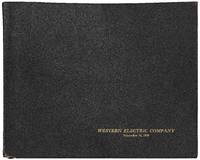
1928545041Cicero Illionis 1928. Hardcover. Very Good. Oblong folio 12 ½" x 10. A handsome presentation album consisting of three letterpress leaves followed by 27 gelatin silver prints neatly mounted on the rectos of thick card leaves each with a letterpress caption printed underneath. All but the first print measure 8" x 10". Screw-bound in flexible leather covers lettered in gold on the front cover. Head and tail of spine are torn the cardboard leaves are slightly bowed very good or better.<br /> <br /> The album was prepared "upon the occasion of a visit of city officials and business men of Baltimore to the Hawthorne Works of the Western Electric Company." It contains crisp professional views mostly of the Hawthorne factory complex at Cicero Illinois as well as a few views of other parts of the Company's operations such as the plant in Kearny New Jersey and the distribution houses in New York and Kansas City. Among the many visually striking views are "A three and one-half acre" interior the "Reel Yard operating by Floodlight" throngs of employees at a "Hawthorne-Club Open-Air Dance" and a final view of employees leaving the complex under a dramatic sunset "After the day's work."<br /> <br /> At the peak of its operations from 1905 through 1983 the Hawthorne Works employed upwards of 45000 people in the production of radio systems radar and telephone equipment and related consumer goods. Located in a suburb of Chicago the complex also gained notoriety for the term "Hawthorne effect" which "refers to the type of reactivity in which individuals modify an aspect of their behavior in response to their awareness of being observed."<br /> <br /> An early scarce promotional album dating from the heyday of Western Electric during the roaring twenties. hardcover
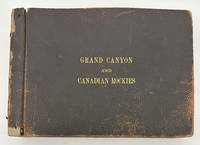
19103375Numerous locations including New Mexico Arizona California but mostly British Columbia 1910. About very good. Forty-six leaves illustrated with 232 photographs between 3.25 x 5.5 inches including forty small panoramic images measuring around 3.5 x 12 inches some manuscript annotations some images captioned in the negative. Oblong folio. Contemporary pebbled leather stamped in gilt "Grand Canyon and Canadian Rockies" on the front cover formerly string tied but binding and leaves now loose. One image roughly removed from the album minor chipping to some leaves but otherwise minor wear. An unusual and wholly engrossing collection of western American vernacular photography titled in manuscript on the first page "Views taken by M.H. Fussell of trip taken by Sarah E. Fussell and himself to Los Angeles to attend Amer. Med. Asso. On return trip via Canadian Rockies camping at Emerald Lake near Field Canada as seen by pictures." The author of this inscription was Dr. Milton Howard Fussell 1855-1921 longtime Philadelphia physician and instructor of clinical medicine at the University of Pennsylvania who was the head of the Medical Ward at Episcopal Hospital until shortly before his death. Dr. Fussell must have also had a passion for photography as the present photographs were apparently taken by him along the course of his trip to the west coast with many of the pictures displaying Dr. Fussell's captions in the negative. A few of the captions are written backwards adding to the amateur character of Dr. Fussell's otherwise well-composed pictures.<br /> <br /> While on the way to California Dr. Fussell's photographs begin in Chicago with a couple of small panoramas of Lincoln Park but the scene swiftly shifts to the American West with images of Native Americans among them shots of "Indian children" and an "Indian Village" a "Pueblo at Laguna" numerous shots of New Mexico Las Vegas Raton and Albuquerque several small panoramic scenes of the majestic Grand Canyon and more. During their visit to the Grand Canyon Dr. and Mrs. Fussell took the chance to snap portraits of each other under which the annotation reads "The climbers. It took 12 hours to make the trip up & down. Hot!!!" On the way to California Dr. Fussell also took a couple of images of Kansas and Nevada before proceeding to snap about a half dozen pictures of the Sacramento Valley.<br /> <br /> The photographs from this point forward constituting the majority of the pictures in the album concentrate on the latter half of Dr. and Mrs. Fussell's expedition to British Columbia and the Canadian Rockies. After visiting Victoria and Vancouver the Fussells stayed at Camp Crusoe on Emerald Lake. This portion of their trip includes a few more images of the travelers themselves including a shot of Sarah with a large dead black bear. In addition to several small panoramas of Emerald Lake Dr. Fussell captures scenes of the natural wonders of British Columbia such as Mt. Burgess Mt. Wapta Bow Valley Yoho River Emerald Glacier Valley of Ten Peaks Kicking Horse Canyon Bow River Lake Louise Moraine Lake Mirror Lake Fraser River and more. The last few leaves feature other scenes in British Columbia and elsewhere with a street scene in Banff a view of the "Prairie Town of Suscatchewan B.C." a handful of pictures featuring the Sierra Nevadas and several photos captioned "Over the Coast Range" taken from a train.<br /> <br /> A unique photographic record of a West Coast excursion taken by a notable Philadelphian and his wife in the early 20th century. unknown
184625916Paris: French Admiralty chart 1846. Very rare early map of the south west coast of Western Australia just 17 years after the founding of the colony. The map covers much of the Western Australian coast from the Dampier Archipelago in the north Broome Exmouth Gulf Shark Bay Perth Geographe Bay Cape Leeuwin Albany all the way to Port Lincoln in South Australia. To our knowledge the only copy held in an Australian institution is at the State Library of Western Australia. It is not recorded in the collection of National Library of Australia collection nor other Australian institutions.<br /> <br /> It is very interesting for the early inland detail. The areas around Perth and Fremantle are shown extending inland to Beverley York Bejoording Toodjoy and Northam on the Swan River with the Swan Avon & Moore Rivers.<br /> <br /> There are 4 insets: Plan de la entree de la Riviere Cygnes Swan River et de l'Ile Rottnest J. L. Stokes; Plan de Port Grey nomme aussi Baie Champion Captain Wickham Plan du Havre Peel dans la Baie Warnbro Lieut. J. S. Roe Plan de la Baie Warnbro J.S. Roe. Coastal features include Baie de l'Esperence; Houtmann's Abrolhos; Albany north east of Albany a mountain described as "Montagne escarpee visible a 10 lieues"; Golfe Exmouth with a prominent Cape Nord Ouest. Depth soundings are taken all around the coast. <br /> <br /> Daussy maps are rare. The State Library of Western Australia holds two. Their copy of this map bears the "Prix deux francs" lower right; with an applied printed chart sellers label from P. Sauvat Bordeaux below the rule on the lower right. They also hold the following: "Carte des mers Australes partie comprise entre les méridiens du Cap de Bonne Espérance et du Port du Roi Georges" cartographic material / dressée par M. Daussy Ingénieur Hydrographe en Chef ; gravé par Jacobs ; écrit par J.M. Hacq. MAPR0000018. This map is recorded as Tooley 1470 and Libraries Australia ID 23501679 which calls it "Rare". <br /> <br /> Centered below the margin - Ecrit de J. M. Hacq Grave par Jacobs lower left Noo. 1111 in upper right margin. Printed area 34.5 x 23.25" with very large margins 40 1/4 x 27 1/2". Backed with tissue on the center fold and margin edges supporting some small closed tears. <br /> <br /> In magnificent condition overall. An extremely rare map especially in this condition. French Admiralty chart unknown
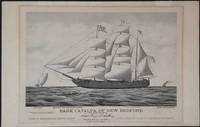
187623907Boston: Forbes Lith. Mfg. Co. 1876. First edition. This scarce tinted lithograph was issued to commemorate the escape of Irish political prisoners from Fremantle W.A. on April 17th 1876. The Fenians are shown rowing towards the bark which is under full sail. The Catalpa is flying a flag with the initials "J T R" - for John T Richardson the ship's agent. A pennant with the letter C the Fenian flag and the American flag are also flying. <br /> <br /> The police boat is in hot pursuit and the British steamship "Georgette" is steaming in from a distance. Among the Fenians freed in this effort was John Boyle O'Reilly who became a leading citizen in Boston and was later to edit the 'Boston Pilot'. <br /> <br /> Captain George Anthony an American whaling captain out of New Bedford Massachusetts recruited a crew for this mission and set sail for Western Australia where two Fenian agents John Breslin and Tom Desmond had already established themselves with aliases. With several delays the day for the escape was set for the 17th of April when most of the convict garrison was distracted by watching the Perth Yacht Club regatta.<br /> <br /> Captain Anthony who refused to surrender the escaped prisoners to the British later sold his story to Zephaniah W. Pease who published the account in 'The Catalpa Expedition'. See also Laubenstein 'The Emerald Whaler'.<br /> <br /> On its arrival in New York in August of 1876 the Catalpa was met with great crowds; jubilant celebrations were held in the US and Ireland.<br /> <br /> 17 x 13" on paper 22 x 14 1/4". For information on the artist E. N. Russell see Blasdale Artists of New Bedford pp 160-161; Kendall Prints 28; Ingalls 318. OCLC: 191908718 1 copy at the Boston Athenaeum. Trove 45254 at the Australian National Maritime Museum; and 57714676 at the State Library of Western Australia. Professionally deacidified. In very good condition. <br /> <br /> A rare print important for its depiction of an important Western Australian colonial event. Forbes Lith. Mfg. Co. unknown
44211<p>Japan and Western Medicine. Oranda jin Geka ryoji no zu Dutch Surgery in Nagasaki. Original pen ink and watercolor drawing on light brown-toned silk with 4 vertical lines of Japanese characters in the upper left corner. Japan: late 18th or early 19th century. 483 x 363 mm. mounted as a scroll at a modern date on light grey silk backed with paper with a half-round hanging rail with braided ribbon attached at the top and a suspension bar at the foot measuring 914 x 443 mm. overall; preserved in a custom-made wooden box. A few tiny pinholes in upper corners of image but fine with the coloring fresh and bright.</p> <p> This striking image showing an amputation carried out by a Dutch surgeon in Japan was most likely painted in the late eighteenth or early nineteenth century during Japan's self-imposed period of national isolation. The hand-painted image is related but by no means identical to a Nagasaki woodblock print titled "Surgery by a Dutch Physician" one of many popular souvenir prints depicting scenes unique to Nagasaki which at the time was the sole point of contact between Japan and the outside world. See our reproduction of the print. It may be that our scroll is the original of the image; however it is also possible that both hand-painted and woodcut versions of the image were produced simultaneously.</p> <p> Western surgery came to Japan in the sixteenth and seventeenth centuries via the Portuguese who in 1543 became the first Europeans to make direct contact with Japan and the Dutch who became the only European nation allowed to trade with Japan after Japan's expulsion of the Portuguese in 1639. Surgeons attached to the Dutch East India Company established practices at the island of Dejima in Nagasaki Bay which led to the formation of several Japanese schools of surgery based on European methods. "This aspect of Western medicine known as K m -ry geka or 'Surgery of the Red-Haired' has had a profound effect on the development of surgical practice in Japan" Van Gulik p. 37. Van Gulik "Dutch surgery in Japan" in Red-Hair Medicine: Dutch-Japanese Medical Relations ed. Beukers et al. pp. 37-50. </p> <p>. unknown
44211<p>Japan and Western Medicine. Oranda jin Geka ryoji no zu Dutch Surgery in Nagasaki. Original pen ink and watercolor drawing on light brown-toned silk with 4 vertical lines of Japanese characters in the upper left corner. Japan: late 18th or early 19th century. 483 x 363 mm. mounted as a scroll at a modern date on light grey silk backed with paper with a half-round hanging rail with braided ribbon attached at the top and a suspension bar at the foot measuring 914 x 443 mm. overall; preserved in a custom-made wooden box. A few tiny pinholes in upper corners of image but fine with the coloring fresh and bright.</p> <p> This striking image showing an amputation carried out by a Dutch surgeon in Japan was most likely painted in the late eighteenth or early nineteenth century during Japan's self-imposed period of national isolation. The hand-painted image is related but by no means identical to a Nagasaki woodblock print titled "Surgery by a Dutch Physician" one of many popular souvenir prints depicting scenes unique to Nagasaki which at the time was the sole point of contact between Japan and the outside world. See our reproduction of the print. It may be that our scroll is the original of the image; however it is also possible that both hand-painted and woodcut versions of the image were produced simultaneously.</p> <p> Western surgery came to Japan in the sixteenth and seventeenth centuries via the Portuguese who in 1543 became the first Europeans to make direct contact with Japan and the Dutch who became the only European nation allowed to trade with Japan after Japan's expulsion of the Portuguese in 1639. Surgeons attached to the Dutch East India Company established practices at the island of Dejima in Nagasaki Bay which led to the formation of several Japanese schools of surgery based on European methods. "This aspect of Western medicine known as K m -ry geka or ‘Surgery of the Red-Haired' has had a profound effect on the development of surgical practice in Japan" Van Gulik p. 37. Van Gulik "Dutch surgery in Japan" in Red-Hair Medicine: Dutch-Japanese Medical Relations ed. Beukers et al. pp. 37-50. </p> <p>. unknown books
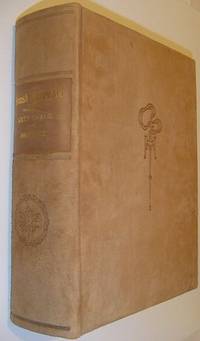
1913559a9589British Columbia: British Columbia Historical Association 1913. Book. Fine. Hardcover. Signed by Authors. First Edition. Folio - over 12" - 15" tall. Unread. As new. Number 216 of limited edition of 350 copies. Signed by co-author R.E. Gosnell. "Few publications if any of similar size and excellence have been produced in Canada." - From Editor's Foreword. Part I includes 210 pages and eighteen chapters which constitute "a survey of events from the earliest times down to the Union of the Crown Colony of British Columbia with the Dominion of Canada." Part II is "a history mainly political and economic of the Province since Confederation up to the present time." Part I is preceded and followed by dozens of tissue-protected black and white portraits of individuals influential in the early history of the province complete with their brief biographies upon the tissue. Part II comprises eighteen chapters over 226 pages plus 5 pages of addenda followed by dozens of tissue protected portraits of "some of the men conspicuous as present day factors in development." Top edge gilt. Gilt lettering upon backstrip. Marbled endpapers. Exceptionally clean bright and unmarked with zero wear. Brown suede exterior appears as fresh as the day it was applied over 100 years ago. This majestic fourteen pound tome measures 13" x 10.5" x 4". A magnificent acquisition for any serious collector of British Columbia history. A better copy will not be found. Lowther 1607 Hale 2523 Edwards & Lort 3177 Strathern 495. British Columbia Historical Association Hardcover