[Western Photographica]. [Alaska]Biblio.com

8 931 résultats
19053538Copper River Valley Ak 1905. Very good. Forty-five printing-out paper photographs between 3.25 x 3.25 and 4 x 6 inches plus three real photo postcards. Minor wear a few creases occasional light soiling. A unique collection of almost fifty images capturing scenes in and around Copper Center in the Copper River Valley of Alaska in the years after gold was first found there in 1898. The images document pioneers panning for gold running dog sled teams posed in front of early wooden buildings in a bleak snow-covered landscape and more as well as capturing shots of a riverside mill a wooden bridge scenery on the Copper River and the majesty of the surrounding forests. A handful of the images capture pioneer women and children posed for the camera in winter clothing worn to combat the bitter Alaskan winters. One image pictures three men and two dogs standing outside the Hotel Holman an early Copper Center roadhouse that began in a tent but was opened in a wooden structure in 1899; the present image captures the post-1899 wooden structure. The Holman Hotel was established in July 1898 by Copper Center's first resident Andrew Holman in order to provide shelter for prospectors on their way to the Klondike gold fields. Copper Center is located northeast of Anchorage and served as a brief but important way station for gold prospectors in southeastern Alaska; one image here apparently pictures the early riverside settlement or is perhaps an early view of Anchorage. A rare view of Alaskan life in an uncommonly-seen settlement during the first decade of the 20th century. unknown
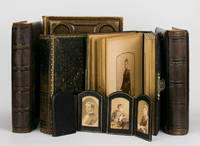
100720The photographs cartes de visite and cabinet cards depict Annie Griffith Roberts her first husband Dr James Hawkins her second husband Dr Edward Bruce Robertson and Oriana one of the children of the second marriage. The Robertsons came to Australia in 1887; Oriana married into the Moodie family of 'Wando Dale' Coleraine Victoria. Of primary importance are the approximately 50 portraits featuring prominent members of pioneering Western District pastoral families: the Camerons of 'Dunan'; the Edgars of Pine Hills; the Gardiners of Nangwary; the McConochies of Konongwootong; and the Trangmars of Burswood. The photographs are contained in five full-leather quarto albums and an attractive arch-topped six-panel folding panoramic frame for cartes de visite in full morocco. 6 items. unknown
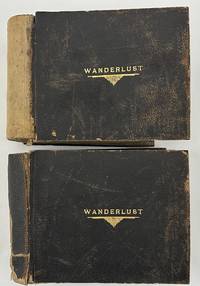
19235280Various locations in the American Southwest and West 1923. About very good. Two oblong folio photograph albums bound in brown pebbled leather each titled in gilt on front cover "WANDERLUST" containing a total of 266 full-page vernacular and professional photographs. First albums: 146 leaves illustrated with 128 full-page landscape photographs each around 6 x 8 inches or slightly larger and occasional manuscript or hand-fashioned sectional title pages and maps. Second volume: 148 leaves illustrated with 138 photographs and occasional manuscript or hand-fashioned sectional title pages. All contents mounted one per page to recto of each leaf. Spines perished but holding strong boards worn scuffed and soiled. Contents noticeably curled with minor to moderate dust-soiling throughout. A studio photograph of a young man is laid-in to the first album likely the compiler of the albums but sadly unidentified. An elaborately-produced pair of vernacular photograph albums documenting an epic cross-country train excursion in 1923 by a well-to-do but anonymous traveler from New York comprised of over 260 full-page photographs. The photographs are a mixture of silver gelatin images printing out paper prints handcolored photographs and a handful of cyanotypes. Most of the images appear to be taken by the traveler en route but some images may have been bought along the way. The images largely picture the landscape or architecture seen along the way with a healthy number of images showing the railroad and the railcars themselves with many images taken at train depots. The occasional manuscript sectional title pages denote the regions of travel as the compiler moved west to California and then eventually back east towards home.<br /> <br /> The first album begins with a manuscript title leaf quoting the text of Gerald Gould's poem "Wanderlust" supplemented by two small drawings and two thumbnail photographs. A map on the second leaf traces the voyage from New York down through the American South and Southwest to California and back to New York through Arizona Colorado and the Midwest. Thereafter the album is comprised mostly of full-page photographs grouped together by location with anywhere from a few to several images per section. The first section in the first album shows the first major stop on the trip -- Washington D.C. and Mount Vernon; this section contains photographs of the Capitol the Lincoln Monument other D.C. buildings and several on the grounds of George Washington's home at Mount Vernon. The album then includes sections featuring New Orleans six photographs; the route between New Orleans and El Paso five images including the train depot at Langtry Texas; El Paso five shots featuring the city and street views; Juarez Mexico eight shots mostly either street scenes or a bullfight; "Thru New Mexico and Arizona" four images; The Apache Trail in Arizona nineteen shots mostly desert landscapes but with some buildings along the trail; and onward through the Carriso Gorge seven photos to California beginning at Coronado Beach eight photographs. The remainder of the first album features California locations namely San Diego sixteen images mostly missions; Pasadena ten photos mostly featuring gardens; Catalina Island eight shots of the island scenery or the bay; Los Angeles eight views in Santa Monica Venice and Ocean Park; and ending with fourteen images featuring missions and other notable structures in Santa Barbara.<br /> <br /> The second volume picks up the excursion in Del Monte California featuring fifteen scenes in Carmel by the Sea and Monterey. The photographic journey of California then continues to Santa Cruz and the Big Trees five shots; San Francisco eleven views around the city and in the Japanese gardens; Mt. Tamalpais a dozen shots of elevated vistas big trees and forests; Yosemite National Park twenty park views; Mariposa Big Trees seven shots; and ends with the Glenwood Mission Inn in Riverside twenty-two images of the hotel grounds and other local scenery and missions around Riverside. The remainder of the album features photographs from the Grand Canyon in Arizona twenty-six images mostly landscapes but with a few featuring Native American ceremonies and Colorado Springs twenty landscapes and other views of the city surrounding desert Pikes Peak and so forth. Concerned mostly with scenery of the American South Southwest and West Coast the compiler did not see fit to record photographs of the remainder of his trip back home to New York. In addition to the information contained in the photographs here the elaborate materiality custom matching albums with matching gilt titles to the front board handcrafted sectional title pages the hand-drawn and traced map and the nature of the organization of the albums arranged in the order of travel from east to west and back east again speaks volumes about the importance the compiler placed on the trip.<br /> <br /> Substantially documented western travel albums are growing rare in the market and the present example is one of the most carefully-assembled examples we have ever seen. unknown
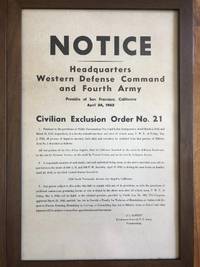
1942222721942. Japanese InternmentWWII Framed original broadside issued April 24 1942 by the Western Defense Command enforcing Executive Order 9066 by the compulsory removal of Japanese Americans from a designated district of Los Angeles. The broadside directs "all persons of Japanese ancestry both alien and non-alien" to present themselves for relocation initiating their forced transfer to government custody. This document dates to the first phase of the federal mass incarceration program that uprooted more than 120000 Japanese Americans approximately two-thirds of whom were United States citizens.<br /> <br /> Civilian Exclusion Order No. 41 Large format broadside framed. Western Defense Command and Fourth Army. San Francisco: U.S. Army April 24 1942. The notice mandates that a "responsible member of each family and each individual living alone" report to a designated Civil Control Station between April 25 and April 26 1942 and warns that failure to comply would result in criminal penalties under Public Law No. 503 and possible immediate apprehension. The text specifies the geographic boundaries of the exclusion zone within Los Angeles and outlines the administrative procedure for removal including reporting instructions and compliance requirements. The exceptionally fast pace of mass incarceration is especially evident here as the poster issued April 24 commands representatives to report immediately over the following two days for instruction and mandates all Japanese and Japanese-Americans be vacated from the area by May 1 the following week. During this period immigrants and citizens alike were suddenly ripped from their homes schools and jobs forced to say good-bye to neighbors loved ones and pets and pack whatever belongings were permitted by the U.S. government for internment of an indeterminate length of time.<br /> <br /> Posted publicly in affected neighborhoods across California Oregon and Washington exclusion orders such as this were a key part of the first phase of Japanese American mass incarceration. They introduced military command into neighborhood-level enforcement and a suspension of civil liberties for the West Coast Japanese immigrant population. The order is dated less than five months after the attack on Pearl Harbor when the U.S. was rapidly expanding federal emergency powers on the home front parallel to increasing involvement in WWII abroad. Exhibiting some damage including folds creases pinholes and several small tears at edges with a some in the center many have been repaired with acid-free archival tape en verso. No loss to paper. Overall good condition. A rare and historically significant artifact of wartime racial profiling and a sobering reminder of the fragility of constitutional protections during times of crisis. unknown
Rarissima carta geografica dell'Africa Occidentale, con gli arcipelaghi delle Canarie e Azzore.La mappa è tratta dal 'Geografia di M. Livio Sanuto : distinta in XII libri : ne quali, oltra l'esplicatione di molti luoghi di Tolomeo, e della Bussola, e dell'Aguglia, si dichiarano le Prouincie, Popoli, Regni... dell'Africa. Con XII tauole di esse Africa in dissegno di rame / aggiuntiui de piu tre Indici da M. Giouan Carlo Saraceni... ; [aiutato a ciò da Giulio suo fratello, che di propia mano tagliò tutti li Rami'.Si tratta del primo atlante dedicato esclusivamnete all'Africa, con le tavole disegnate da Livio Sanuto e finemente tradotte in rame dal fratello Giulio. L'opera venne pubblicata postuma a Venezia nel 1588, da Damiano Zenaro ed a cura di Carlo Saraceni.Incisione in rame, restauri perfettamente eseguit alla piega centrale ed a dei fori di tarlo presenti nella parte superiore ed inferiore, per il resto in ottimo stato di conservazione.Rara ed affascinante mappa dell'Africa. A very rare map of Western Africa, showing the Canary Islands & Azores.The map is taken form 'Geografia di M. Livio Sanuto : distinta in XII libri : ne quali, oltra l'esplicatione di molti luoghi di Tolomeo, e della Bussola, e dell'Aguglia, si dichiarano le Prouincie, Popoli, Regni... dell'Africa. Con XII tauole di esse Africa in dissegno di rame / aggiuntiui de piu tre Indici da M. Giouan Carlo Saraceni... ; [aiutato a ciò da Giulio suo fratello, che di propia mano tagliò tutti li Rami'.First printed atlas of Africa, published postumously by Sanuto's friend Saraceni who added the tables of contents and the preface on the life of the author.The maps were drawn by Sanuto and finely engraved by his brother Jules. The atlas is divided into twelve books, the first containing notes on scientific observation, the declination of the magnetic needle and corrections to the work, the second explains the divisions of Sanuto's prospective description of the world, and the other ten on Africa which was the only section he completed before his death.Livio Sanuto (c.1520-1576), was a Venetian cosmographer, mathematician and maker of terrestrial globes. Sanuto was one of the so-called Lafreri school of engravers, whose output signalled the transition between the maps of Ptolemy and the maps of Mercator and Ortelius. Livio and his brother Giulio, planned a massive and comprehensive atlas to include maps and descriptions of the whole world, which he believed would be more accurate than any previously published. Unfortunately, he died in 1576 having only completed 12 maps of Africa. The 12 maps were eventually published in 1588 by Livio's brother Giulio, under the title "Geografia Di M. Livio Sanuto..." . In the compliation of this and the other African maps, Sanuto relied on Gastaldi's 1564 map and Portuguese sea charts for the mapping of the coasts and for information about the interior, used accounts by Duarte Barbosa and João de Barros. After its publication in 1588, this work was copied by other leading map makers for nearly a century afterwards.Seas are decorated with contemporary sailing vessels and monsters.Etching with engraving, some expert repairs at the central folds and at worm holes along the upper and lower edge, otherwise in good condition. Betz, The Mapping of Africa, p. 145; Norwich, 15; Almagià 1946.
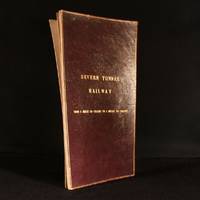
1890948F10London: Not Stated c1890 . Leather. Good. 17.5" by 9.5". Anonymous. An annotated and hand coloured lithograph map of the Severn Tunnel Railway belonging to the office of the Great Western Railway's Chief Engineer's Office. A vanishingly scarce lithograph map of the Severn Tunnel a tunnel linking South Gloucestershire to Monmouthshire built under the estuary of the River Severn and reaching a length of 4 miles 628 yards or 7012 m.Large portions of the map have been partially hand coloured with extensive annotations in both pencil and ink.With several stamps reading both 'Great Western Railway Chief Engineers Office Paddington' and 'To Be Returned to Chief Engineer's Plan Office G. W. R. Paddington' to both the recto and verso of the map.During the period of the tunnel railway's construction Chief Engineers of GWR included Joseph Armstrong William Dean and George Armstrong.The map is divided into fourteen plates mounted on linen and folding concertina style bound in morocco boards. The front board reads 'Severn Tunnel Railway: From 54 Miles 60 Chains to 7 Miles 50 Chains'.The majority of the pencil annotations detail the owner's and acreage of the pieces of land the railway runs through with the local Parishes of different sections of the railway also detailed. Further annotations include measurements and depths reference numbers for deeds and details of freeholds.A fascinating and very scarce map with a clear association to GWR the company responsible for constructing the tunnel offering insight into the land surrounding the tunnel. In the original limp morocco covered boards. Light rubbing to boards. Internally map mounted on linen and folding concertina style. Map significantly age toned with handling marks throughout. Large portion of map hand coloured with extensive pencil and ink annotations. Stamps throughout to both the recto and verso of the map. Good Not Stated hardcover
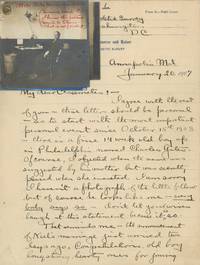
1940List3440United States France and Germany 1940. Approximately 469 total items. Fifty-nine pieces of loose correspondence one with four photographs affixed. In large letter album approximately 199 pieces of written material: 118 pieces of incoming correspondence twenty-one drafts of outgoing correspondence and sixty other. 139 photographs: nine cabinet cards thirty-three smaller mounted or framed photos eleven CDVs or tintypes nineteen in small photo album sixty-six loose photographs and one real photo postcard. Eight pieces of loose miscellaneous written material totaling sixty-four pages; nine forms applications etc; forty-five clippings generally affixed to notebook pages; and ten pieces of unsorted ephemera. Written material generally dating from about 1891–1928. Photographic material and ephemera generally dating from about 1870s or earlier to 1943. Letter album with covers detached and damage to edges of paper very good plus; other material generally excellent. Overall very good to excellent. Charles Colt Yates 1868–1944 was born in Binghamton New York. He received a BS in Physics and an MS in Civil Engineering from the Case School of Applied Science now Case Western Reserve University before joining the US Coast and Geodetic Survey in 1892. Yates’ work with the USC&GS took him around the US and abroad; his work included observing the earth’s surface density in Hawaii; surveying Lake Pontchartrain the Alaska–Yukon border and the Aleutian Islands; surveying and ship-building in the Philippines and Hong Kong; and surveying the oyster bars in Maryland and Delaware.<br /> <br /> Offered here is a large collection of photographic and written material belonging to Yates. The photographs are almost entirely family shots. Subjects are generally identified verso by their initials and include Yates; his grandparents James Dennison Colt and Abigail Weber; his parents Walter Lloyd Yates and Charlotte Colt; and especially his brother Alonzo Colt Yates sister-in-law Elizabeth Deming and their children Evelyn and Lloyd Deming Yates.<br /> <br /> The written material relates to Yates’ work and includes incoming correspondence particularly work assignments sent by the Survey’s various superintendents; Yates’ drafts of outgoing correspondence; field expense forms—providing a look at the more quotidian activities of the Survey’s researchers—and departmental circulars; resumes and applications; notes and article drafts; and newspaper clippings. The latter generally relate to either the 1916 controversy around Woodrow Wilson’s scientific appointments particularly of E. Lester Jones or to the 1916 and 1928 Merchant Marine Acts. The merchant marine issue preoccupied Yates as several of his letters and articles concern the subject; other of his articles are an 1898 “Report on the Establishment of a Self Registering Tide Gauge at Morehead City N.C†and a 1914 report on oceanography.<br /> <br /> Early in his career Yates apparently wanted out of the Survey writing to several different people seeking a teaching position and explaining that his “desire to become a teacher and ultimately a professor is so great that I am willing to make a considerable sacrifice†in terms of pay July 16 1896. Of course there would have been upsides to leaving the Survey as working conditions at the time were far from ritzy; for instance fellow officer Alex S. Christie wrote of the employee at the Sandy Hook tidal station in New Jersey:<br /> <br /> “Where now located on the west side of this sand spit the observer is completely isolated and threatens to resign. He has no love for nature and no resources within himself. I could be very happy there.†July 26 1892<br /> <br /> Similarly Superintendent William Ward Duffield attempted to convince Yates that the conditions on the Alaska-Yukon boundary survey were more tolerable than he might think:<br /> <br /> “It might pertinently be added here that the American Transportation and Trading Company has a number of stations on the Yukon and carries a large stock of goods including drugs etc. at points near the boundary. The country is better supplied with means of existence and communication than was supposed sometime ago.†February 29 1896<br /> <br /> As references for a teaching position Yates offered his Case classmate and highly decorated electrical engineer Comfort Avery Adams then at Harvard and Case president Cady Staley. Yates corresponded occasionally with Staley including helping him with research by among other things giving him honest advice on the use of a theodolite:<br /> <br /> “From a personal experience: to approach a Vertical Circle without ever having seen one and having had it explained by a textbook is not only awkward but an embarrassing experience and perhaps even a disastrous experience when the proper approach of the level correction is reached.†February 24 1897<br /> <br /> Another Case affiliate with whom Yates corresponded was Albert A. Michelson then at the University of Chicago. Michelson is best known for the 1887 Michelson-Morley experiment a test of the speed of light performed at Case with Edward W. Morley and the assistance of Comfort Adams then a student. Yates had sent Michelson an observation of some kind—though he did not save the draft of this outgoing letter—and Michelson responds with several pages of reasoning:<br /> <br /> “I scarcely think it likely that refraction is the cause of the color observed – but even if this were the case it would not help matters much. The angle subtended by the spectrum could certainly not be less than 10†if a consistent color could be appreciated . Nevertheless I would recommend that the color phenomenon be carefully observed and recorded – for it may throw light on other matters of importance – even tho not of immediate practical use.†March 8 1896<br /> <br /> Yates also kept up with his Case classmates; several letter drafts in the archive are addressed “dear Classmates†and seem to be part of a semi-regular correspondence where the former classmates would update each other on their careers and lives though only Yates’ outgoing mail is represented. Yates writes a particularly interesting letter to his classmates describing his time in the Philippines and Hong Kong the surveying of which had become part of the USC&GS’s duties after the US assumed control of the territory:<br /> <br /> “I was just leaving for a surveying cruise along the south west coast of Samar Island the island General ‘Jakey’ Smith and brother officers made so famous by their approved ‘water cure’ and other ancient methods of obtaining information from the natives. We had an excellent Thanksgiving’s dinner in Jakey’s former residence the ‘bungalow’ at Tacloban and although many of his officers were still there I feel quite certain that water was not mentioned but their liquid method of obtaining information was probably even more effective. No doubt the natives of Samar are well subdued at least we judged so from the fact that when they saw any of our boats put off from the ship they immediately abandoned house and home to the old and crippled. Apparently Americans are to be trusted in reference to these two classes. Disappearing streaks of red skirts indicating retreating females were sometimes seen but our male ‘little brown brother’ was rarely discovered even on a run. This was quite a change from our previous experiences in other parts of the Philippines which had not received the benefit of the same intimate contact with our methods of civilization. In fact we were usually accompanied along the beach by a swarm of men women and children of all sizes and ages who though always polite and gentle were a nuisance sometimes through unintentionally getting in the way of our work.†October 15 1903<br /> <br /> The “water cure†was a form of torture similar to waterboarding often used by American soldiers during the Philippine-American War. General Smith was infamous not for use of the “water cure†but for his orders during the Pacification of Samar to execute everyone over age ten and turn the island into a “howling wildernessâ€; during the campaign several thousand civilians were killed.<br /> Later Yates explained to his classmates that he had had a nervous breakdown while stationed in Asia following the death of his only child at five months old and was sent home January 20 1907. He was assigned to survey oyster fields for the Maryland Shell Fish Commission which he described as “surrounded by politicians as our work seems to be the political issue of the Stateâ€.<br /> <br /> In fact at this time Yates seems to have become more interested in politics especially the Merchant Marine acts mentioned earlier. He sent out his article titled “By-products and Relative Values of a Merchant Marine†to several potential publishers and also corresponded with Congressmen regarding the act including Jesse D. Price of Maryland Frank P. Woods of Iowa and Joshua W. Alexander of Missouri. He wrote to the latter who was the 1916 act’s sponsor:<br /> <br /> “If you succeed in passing the Bill you will deserve oceans of credit and even if you fail you will have gained the sincere admiration of those who have studied the subject and know the great aggregate of vested shipping interests both foreign and domestic which are fighting you so hard because they fear the results to their personal interest of the founding of a real American Marine which would be brought about by the passage of your Bill.†May 16 1916<br /> <br /> Yates was also interested in the 1928 Act which concerned shipbuilding—having built ships for the Survey in Hong Kong and Wisconsin—and wrote an article that year giving suggestions for it. Otherwise the more recent contents of the archive are mainly ephemera of Yates’ brother diplomat Alonzo Colt Yates 1864–1950 including an ID card and passport.<br /> <br /> Overall a unique collection of an employee of the US government’s first and for a long time only scientific agency the archive provides a look at the agency’s activities at home and across the globe. It also provides some history of the early days of the Case School of Applied Science especially the activities of early alumni and faculty. unknown
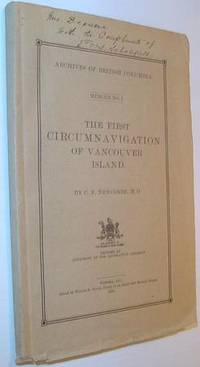
1914724a7836Victoria BC: Government of British Columbia B.C. 1914. Book. Good. Paperback. First Edition. 8vo - over 7¾" - 9¾" tall. 69 pages. Complete with 8 protected map plates. Signed and inscribed by E.O.S. Scholefield Archivist of British Columbia atop front cover. Pages 3-4 constitute a letter of submittal by Mr. Scholefield to the Honourable Henry Esson Young Provincial Secretary. This work "represents the first bulletin of the British Columbia Provincial Archives Department." - page 3. "Vindicates the contention of Captain Vancouver that his ships were the first to complete the navigation of the inner channels which separate Vancouver Island from the British Columbia mainland." - M. Menzies. Errata neatly affixed to verso of Map List. Map plate V loose but present. Rough cut edges. Contents clean unmarked and lightly toned. Short openings to bottom edges of beige card covers. Strathern 399. Government of British Columbia (B.C.) Paperback
19251729801925. THE WESTERN SHADE CLOTH COMPANY. Color Harmony with Luxor Shades. 47 colour plates and 14 coloured sample sheets. Oblong folio 277 x 342 mm publisher's decorated cloth. Chicago: William Volker 1925. A fine copy of this rare elaborately produced work containing many plates with cut-outs. Not listed on OCLC. hardcover
1963ZB3938051963-1994. volumes 1-32; lacks volume 4. 1963-1994. partly bound library markings textually clean & tight price is for the set. - If you are reading this this item is actually physically in our stock and ready for shipment once ordered. We are not bookjackers. Buyer is responsible for any additional duties taxes or fees required by recipient's country. Photos available upon request. unknown
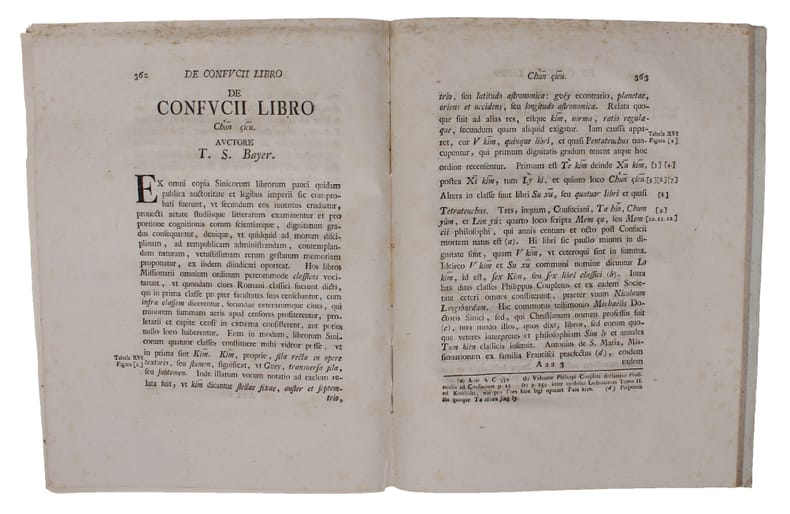
174050862Petropoli, St. Petersburg, Typis Academiae, 1740. 4to. No wrappers. In: ""Classes Tertia continens Historica. Commentarii Academiae Scientiarum Imperialis Petropolitanae"", Tomus VII ad Annos 1734 & 1735. The whole section of ""Historica""offered. Title-page to Tome VII (with engraved vignette), halftitle (to the section) a. pp. 345-426, 6 engraved plates. Bayer's paper: pp. 362-426 and 5 engraved plates with numerous chinese characters. Clean and broad-margined.
174050862Petropoli St. Petersburg Typis Academiae 1740. 4to. No wrappers. In: "Classes Tertia continens Historica. Commentarii Academiae Scientiarum Imperialis Petropolitanae" Tomus VII ad Annos 1734 & 1735. The whole section of "Historica"offered. Title-page to Tome VII with engraved vignette halftitle to the section a. pp. 345-426 6 engraved plates. Bayer's paper: pp. 362-426 and 5 engraved plates with numerous chinese characters. Clean and broad-margined. <br/><br/><em>First printing in part of the first Western translation of any part of Confusius' influential Chun Cieu being the fourth volume of his works. "The title Chun Cieu Chunqiu signifies the Spring and Autumn. He discourses like an historian of the expditions of diversr princes of their Virtues and Vices of the fatigues they underwent. The title is an emblematic title because that states flourish when their Princes are endowed wit Virtue and Wisdom which is represented by the Spring and that on the contrary they fall like the leaves and are utterly destroyed when their Princes are dispirated or are wicked which is represented by the Autumn."James Legge.The section also comprises Bayer. Elementa Calmucia. 1 pp. and 1 engraved plate numerous characters and Bayer. De Venedis et Eridano Fluvvio. Pp. 346-361. </em> unknown
Full leather. 12mo. X, 285 pages. 19 cm Second edition, improved and enlarged (1st edition was 1823) . Singerman 0431. Exhibiting Chap. I. The destruction of Jerusalem. Chap. II. The certain restoration of Judah and Israel. Chap. III. The present state of Judah and Israel. Chap. IV. An address of the Prophet Isaiah to the United States relative to their restoration. An attempt to identify the lost tribes of Israel with the North American Indians. By Ethan Smith, Pastor of a church in Poultney (Vt. ) . Numerous scholars have identified the significant parallels between View of the Hebrews and the Book of Mormon (written in 1830) . Bound in original leather, plain design. Subjects: Indians - Origin. Lost tribes of Israel. Jews - Restoration. Light soiling to endpages, lightly foxed throughout, internal hinges previously reinforced with tape, overall very fresh and clean. Very good + condition. (KH-1-17)
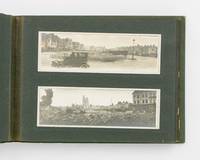
115314Very Good. Green buckram 193 × 253 mm stamped in blind 'Kodak Panorams' sic containing 36 gelatin silver panoramic photographs between 55 × 170 mm and 60 × 180 mm each loosely inserted two-to-a-page behind window mounts in specially-designed album leaves; 14 are captioned in pencil at the head of the print and 7 have a reference number between 67 and 83; many of the earlier photographs not featuring images of war are captioned on the verso in ink. Buckram slightly marked and rubbed; mild silvering-out to some prints; overall both the album and the photographs are in excellent condition. The heart of the album consists of 19 striking images of towns between Lens near Arras and Maurepas near Saint Quentin and the panoramic format of the photographs captures the horrifying extent of artillery damage. The towns identified in pencil on the images are Albert Lens Peronne Roye Villers Carbonnel Moreuil Souchez La Maisonnette Maurepas Bouchevesnes Combles and Hangard with a further identified view of the Canal du Nord. This area saw some of the heaviest fighting on the Western Front. Particularly noteworthy are three uncaptioned views of the destruction to the centre of Arras with these panoramas far more evocative than the ubiquitous snapshots. One image albeit poorly exposed shows a large homemade sign erected on the ruins of a church: 'Lens Veut Renaître' Lens Wants To Be Reborn. <p>Several of the early images in the album are also of interest. One shows a field hospital identified as 'Hôpital de campagne américain' almost certainly one of several run by the American Ambulance Volunteer Field Service present in France from the beginning of the war. Another shows an establishment at Notre Dame de la Mer almost certainly the Ecole nationale belge des mutilés de guerre near Port-Villez. <p> The other photographs are of the French Alps 1913; the baroque Château de Vaux-le-Vicomte near Melun four items 1914; a Paris streetscape 'Ce que l'on voyait en Juin 1915 du balcon de la chambre de Maman à Paris'; the Chateau de Brécourt three items 1915 including one with two women captioned 'Emma et Léonie dans la région de ma tranchée'; the Seine at Vernon two items 1915; and sepia-toned images of Mont Saint Michel and the shrine at Lourdes. unknown
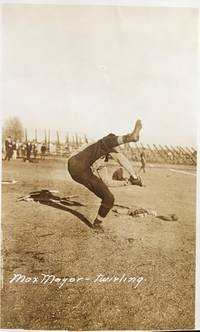
191157465Portland & Corvallis OR: Charles Bleeg Bert Pilkington Oregon Agricultural College 1911-1912. Oblong folio. 15.25 x 11.25 in. 46 pp unpaginated. on thick brown paper stock all w/ die-cut slots. With 137 photos on matte finish photo paper and Real Photo Postcard paper stock sized 3.5 x 5.5 in. up to 5 x 7 in. many w/ ink annotations on versos some of the RPPC w/ MS ALS & postal cancels on versos. Contemporary limp brown cloth post-binder gilt lettering stamped on front cover punch sewn at gutter margin w/ brown silk braid minor creasing edgewear minor bumping to yapp edges still VG exemplar w/ most of the images retaining bright strong contrast. This Progressive Era photo album serves as an exceptional visual record of sporting life in the Pacific Northwest in the early 20th Century. The album opens with a number of photographs on photo paper stock and Real Photo Postcard paper stock depicting amateur teams in the Pacific Northwest including players wearing uniforms marked with CH H within Diamond border and Columbia Hardware team uniform. There are also several images of the Oregon Agricultural College now OSU baseball team including image of Walter “Keck going for first base†in May 1911. Keck was center fielder for the 1910-1911 OAC baseball team; “Max Meyer - Twirling†for his wind-up as pitcher for the 1911 team with note on verso from Bert to Charles asking him if “have you anything on the Popcorn Kings that has anything on this fellow;†or “Our Ball Players†with Bert writing that “Mysterious Walker and his bunch of ball tossers. Walker is second from left. Moore was kicked out.†Bert also sent a few images of the OAC Regiment passing in review marching and the assembly hall at the College. Also included are shots of fishermen and strings of fish in and around Forest Grove the Wilson River and views of hiking and wagons driving on the beach near Cannon Beach and Ecola Oregon together with views of the Cannon Beach Home inn and the group standing atop a massive Douglas Fir tree stump next to the cabin. In addition to images of baseball teams playing there are also photos of the Beaverton July 4th celebration in 1911 view of the Hotel Beaverton with flags and bunting draped across the front and crowds in the street. An RPPC addressed to Charles from “Kenneth†alias “Crooky†details games played by the Emporia State Normal School against the Aggies with score of 6-6 won 7-2 against the Kansas State Manual Trade School when he suffered a concussion and were playing the Kansas State Normals at Emporia later that week in 1911. One of the auto camping photos shows Bert Pilkington and his wife Annie Bleeg Pilkington Charles’ older sister setting with their two children against their touring car and auto tent whiles others depict hiking in the forest and fishing alongside the stream. The remainder of the album focuses on the 1912 fishing adventures by Charles Bleeg and friends including Warren Woodard and “Doc Wadsworth†as they drove from Forest Grove along the Wilson River to Tillamook and fishing and camping along the way. The images show the 1912 Schacht Brass Era touring car members of the fishing party with their surprising amounts of catches of trout camp scenes digging out the Schacht from the mud alongside the rough roads and the bucolic beauty of rural Oregon at the time. Four of the images are larger and include a “Flashlight†view of the group seated amidst their camping equipment laundry hanging above their heads hatchets on the wall behind and fishing equipment while others show fishing rods creels and equipment and fish literally spilling out in a cornucopia and labeled “A day’s sport -- on the Big Nestucca August 15 1912.†Bleeg 1891-1979 worked for Archer & Combs who were wholesale hardware dealers specializing in automobile parts in the Brass Era and also sold automobiles such as the Schacht. The company later became Archer & Wiggins and he also worked for other firms in Portland OR while attending North Pacific College to become a dentist like his older brother Fred Bleeg. After graduating in 1915 and serving in World War I he set up offices in the historic Selling Building on NE 21st Ave. in Portland where his practice remained until the 1950’s. His son Charles Henry Bleeg 1922-2018 founded and operated the very successful Bleeg Motors on 16th & Sandy which was the oldest continuously operating car dealer in Oregon and in fact he remained in his offices working up to his death. Pilkington 1879-1937 was captain of the Oregon Agricultural College football team from 1904-1905 and later became professor of chemistry as well as athletic coach. He married Bleeg’s older sister who had attended OAC in 1907 and often referred to Charles in his notes on the RPPC’s as “Otter.†Charles Bleeg, Bert Pilkington, Oregon Agricultural College, hardcover
197564094The Museum. As New. 1975. Paperback. 0883600226 . FREE UPGRADE to Courier/Priority Shipping Upon Request IN STOCK AND IMMEDIATELY AVAILABLE FOR SHIPMENT - AS NEW THE TEXT BLOCK IS PRISTINE CLEAN UNMARKED AND IN EXCELLENT CONDITION - - 236 pp. With 264 ills. On 151 pls. 26 col. . 24 x 22 cm. -- with a bonus offer-- . The Museum paperback
197159853Flagstaff AZ: Northland Press. As New. 1971. Paperback. 0873580869 . FREE UPGRADE to Courier/Priority Shipping Upon Request IN STOCK AND IMMEDIATELY AVAILABLE FOR SHIPMENT - AS NEW THE TEXT BLOCK IS PRISTINE CLEAN UNMARKED AND IN EXCELLENT CONDITION - - 48 pp. With 31 pls. 3 col. . 28 x 23 cm. -- with a bonus offer-- . Northland Press paperback
196959295Tokyo Japan: National Museum of Western Art. As New. 1969. Paperback. FREE UPGRADE to Courier/Priority Shipping Upon Request IN STOCK AND IMMEDIATELY AVAILABLE FOR SHIPMENT - AS NEW THE TEXT BLOCK IS PRISTINE CLEAN UNMARKED AND IN EXCELLENT CONDITION - - Text in Japanese with preface in French as well. 332 pp. With 220 ills. 23 col. . 21 x 15 cm. -- with a bonus offer-- . National Museum of Western Art paperback
199027847Tokyo: National Museum of Western Art. As New. 1990. Paperback. FREE UPGRADE to Courier/Priority Shipping Upon Request - IN STOCK AND IMMEDIATELY AVAILABLE FOR SHIPMENT - Text in Japanese with a few English translations. -- with a bonus offer-- . National Museum of Western Art paperback
199834710Museum. New. 1998. Hardcover. 0883600900 . FREE UPGRADE to Courier/Priority Shipping Upon Request - IN STOCK AND IMMEDIATELY AVAILABLE FOR SHIPMENT - FLAWLESS COPY - AVAILABLE IMMEDIATELY WHY WAIT -- 9 x 12 200pp. over 150 duotones -- One hundred fifty duotones 9 by 12 inches 200 pages. Both a cowboy and an artist Erwin E. Smith used photography to preserve a memory of the disappearing open-range cowboy. Between 1905 and 1912 he photographed cowboys on ranches in New Mexico Arizona and Texas. Accompanying the stunning duotone images is the first comprehensive biography of Smith's life as written by B. Byron Price. -- with a bonus offer-- . Museum hardcover
5171149-nnew. unknown
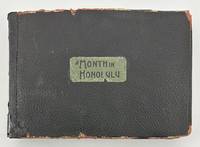
19143378Various locations in Southern California and Hawaii 1914. About very good. Sixty-one leaves illustrated with 214 mounted silver gelatin photographs most with manuscript annotations in white ink; plus numerous mounted postcards menus and assorted ephemera. Oblong quarto. Contemporary black textured limp cloth over boards. Edges a bit chipped and tattered inelegant black tape repairs to spine. First leaf detached contents otherwise clean. A wonderful annotated vernacular photograph album documenting a well-to-do family's vacation to Hawaii via brief stops along the West Coast in 1914. The album opens with a group image of the travelers in San Francisco numbering around twenty-two men women and children captioned "Southern California - Honolulu." This is followed by several pages picturing their initial journey from Seattle down to San Pedro Los Angeles and San Diego before they departed for Honolulu on the S.S. Matsonia on June 17. A passenger list is included and many of the images are captioned with the names of the subjects providing a nice opportunity for identifying the travelers by cross-referencing the passenger list.<br /> <br /> The group spends their vacation time at the Sea Side Hotel on Waikiki Beach in bathing houses and on the beach visiting local businesses plantations and other hotels surfing fishing and more. Through the course of the album much of the landscape of Waikiki is featured providing a snapshot of the hotel and details of its surroundings along with shots of a "Native Village" sugar cane fields and a plantation pineapple fields street views of Honolulu a picnic for "Kids of all nations" at Waikiki the Port of Honolulu and more. The album also features a few early images of surfing at Waikiki Beach. In mid-July true to the title of the album the group heads back across the Pacific Ocean aboard the R.M.S. Niagara after just one month.<br /> <br /> Most notable among the photographs are about thirty risqué images of local Hawaiian women interspersed throughout. The pictures of the "Native Girls" often feature them topless or scantily clad identifying them with additional captions such as "Hawaiian Beauty" "Maidens bathing" "Girls" "Hula Hula Dancers" and "The Ex. Queen of Hawaii." One group shot shows ten Hawaiian women eating fish captioned "'Lunau' sic Lu'au or Native feast." Another side-view image of a naked Hawaiian woman is annotated "The Natives are a sturdy race of people." There are also numerous images featuring other indigenous Hawaiian people in a variety of settings including a couple of images showing a "Hawaiian boy climbing a cocoa nut palm" two pictures of "Native fisher boys" a "Native hut" "Hawaiian kiddies" a "Native canoeist" a "Group of Natives" a "Native Priest - looks as if he had been fasting for some time" and images showing "Natives selling 'Leis' for departing visitors" and "Native 'Leis' vendors on Honolulu." The images of the Hawaiian women as well as the men combined with the captions provide an opportunity for further studying the ways in which affluent American mainlanders have traditionally viewed indigenous Hawaiians and other native peoples encountered throughout the world.<br /> <br /> In addition to the passenger list mentioned above the ephemeral items include shipboard menus a program for an onboard concert newspaper clippings cigar labels and postcards. The latter includes a series of forty-one vibrantly-colored postcards illustrated with Hawaiian fish. An interesting travel album detailing a trip to Hawaii at the outset of the First World War with many notable observations on indigenous peoples in Honolulu especially the young women of the island. unknown
191173aa1987British Columbia: British Columbia Telephone Company. Fair. 1911. First Edition. Hardcover. Telephone Talk was the glossy bimonthly publication of the British Columbia Telephone Company. It was written by employees for employees to present information of interest to those engaged in the plant traffic commercial operating accounting and other departments of the service. Each issue is replete with black and white photos and information on topics such as: company industry and technological news traffic levels expansion plans personnel announcements publicity and social events deaths weddings lists of exchanges and more. As such these issues serve as a vital preserve of rare and fascinating British Columbia history. This volume covers topics including: Photo portrait of the late J.M. Lefevre - father of the company; The Year Ahead; Development of the British Columbia Telephone Company until now; Vancouver rejects dial telephones; Simultaneous telephony and telegraphy; Selling telephone service; Lesson in Telephone Life; Portrait of Mr. H.W. Kent former company General Superintendant; Company meeting the situation; First Telephones in British Columbia; Portrait of Mr. C.F. Bollschweiler General Superintendant of Plant; New North Vancouver Office; Rough tests on Toll Circuits; When Phones were Novelties; Exchanges ranked in order of per cent good toll calls as of January 1911; Statement of Development - # of phones operating in each exchange as of 1 February 1911; Construction activity; An ideal telephone office - Mount Pleasant; Canada's telephone business; Canada - Birthplace of the Phone - summary of events since; Portrait of A.L. Littig; Coast-Kootenay Telephone Line; Many Messages over single wire; San Francisco Telephone Rates; New Telephone Office for Victoria; Photo of George McCartney; Loaded Cables in Submarine Work; Criticism of Government Service regarding phone installation in Winnipeg; What makes a good supervisor; photo of Victoria Exchange; Handling Press Messages by Phone; photo of new Fairmont office; Endorsement for Measured Rate System; Electrolytic Corrosion of Cables; Seymour Office Load Curves; Photo Portrait of George H. Halse; Telphone Cable Development; What the Two-Number System Is; photo of frame of new Victoria building; photo of aftermath of Grand Forks fire; Photo Portrait of Mr. William Farrell Company President; Trend of Electrical Practice; Photo of Conduit Trench along Broadway in Vancouver; Nineteen arguments for telephone directory advertising; Photos of two Vancouver operators; Toll Operators' Contest; Aerial Cable Across the Fraser - two steel strands replace cable washed away last year - photos; Portrait of Miss Mary Dickson Chief Operator at Seymour; Long Distance Telephony; Renewing Section of Gulf Cable with photos of several cable-laying scenes; Continuous service now in Ladysmith; Photo portrait of B.C. Tel. Officials; Nice photo of new Bayview office in Vancouver; Handling a Long Distance call; New Bayview Branch Exchange - model office - 3 pages; and more. Half-leather binding. Front board loose but present. Backstrip open along front and missing chips. Back hinge open. Signature of later company executive E.P. LaBelle upon front free endpaper. Mr. LaBelle's initials penned to top edge. Textblock sound.; 8vo - over 7¾" - 9¾" tall; Telus History British Columbia Telephone Company Telephony Telephone Talk Internal House Magazine Periodical and technological news traffic levels expansion plans personnel announcements publicity and social events deaths weddings lists of exc . British Columbia Telephone Company hardcover
1922733a1982British Columbia: British Columbia Telephone Company. Fair. 1922. First Edition. Hardcover. Telephone Talk was the glossy bimonthly publication of the British Columbia Telephone Company. It was written by employees for employees to present information of interest to those engaged in the plant traffic commercial operating accounting and other departments of the service. Each issue is replete with black and white photos and information on topics such as: company industry and technological news traffic levels expansion plans personnel announcements publicity and social events deaths weddings lists of exchanges and more. As such these issues serve as a vital preserve of rare and fascinating British Columbia history. This volume covers topics including: Nice photo montage of six female lower mainland agents; Commendation for Excellent service; Industrial Review - statistics for the province; Bar graph of phones in service between 1903 and 1921; When the telephone was a curiosity in the Capital City - nice seven page feature on the history of telephony in Victoria beginning in 1877; Page of the 1880 Victoria and Esquimalt phone book; Facsimile of letter dated 1878 from the Bell Telephone office in Brantford Ontario which says Mr. R.B. McMicking has accepted the agency of the company in British Columbia; City of Vancouver gets new phone number; Telephone development keeps pace with progress; Cover photo of the operating room of the Nanaimo exchange; Five-page illustrated article on Nanaimo including 35 year-old photo of downtown with Bastion visible and an 1890 photo of a portion of the downtown and bowl area; Trouble shooting in Kootenay; The manufacture of porcelain; photo of operators at work in New Westminster; 6-page illustrated feature on New Westminster with mid-90s photo of the Colonial Hotel and area plus a photo of Columbia street before the fire of 1898; Composite cables will be important betterment; Fairmont operating room photo; Great photo montage of the old wooden bridge connecting Nanaimo's Fitzwilliam St. with downtown the caption mentions E.P. LaBelle whose name is stamped on the top edge of this book; 11 page feature on the history of telephony in Vancouver with several photos from before 1900; pulling coils of duplex wire through the mountains by snow shoe!; Nice photos of the following exchanges - Seymour Fairmont Highland Bayview Victoria New Westminster North Vancouver Nanaimo Chemainus Cobble Hill Cumberland Belmont Duncan Courtenay Port Alberni Colquitz Ladysmith Keating Aldergrove Abbottsford Collingwood Fraser Port Moody Port Coquitlam West Vancouver Ladner Kerrisdale Eburne Milner Cloverdale Steveston Sidney Hammond Mission City Kamloops Agassiz Trail Rossland Kaslo Nelson Grand Forks Greenwood New Denver plus plant headquarters for the Mainland and Victoria; statement of development showing number of operating phones per community; Cover photo of the Foul Bay area of Victoria; More Switchboards for Seymour; Bayview Extension; Centralization of observation equipment; Demo. switchboard for school; Much outside construction; Seven duct miles of conduit laid in Seymour underground; Table showing exchanges in order of percent good toll calls; Alexander Graham Bell dies; Oaks Point snap shots; new motor control switchboard; Wireless telophony in early nineties article; Laying underground conduit in Shaughnessy; New aerial cable across Capilano River; Passing of William Farrell Company President; Rejuvinating used Plant material in machine shop; a peculiar case of hydrolysis; photo of Georgia street conduit trench; Second Annual Telephone Convention; 1885 B.C. Provincial Directory - article with 1885 photo of Vancouver Harbour; Autobiography of a switchboard plug; photo of burying conduit on Seymour in 1905; Appreciation shown by Port Alberni business men; Long Distance operators usually get their man; 7000 mile motor trip of B.C. Telephone man; The telephone directory - my favourite book; Map showing routing of two cable between; 8vo - over 7¾" - 9¾" tall; Telus History British Columbia Telephone Company Telephony Telephone Talk Internal House Magazine Periodical and technological news traffic levels expansion plans personnel announcements publicity and social events deaths weddings lists of exc . British Columbia Telephone Company hardcover
1958ZB393066Western Speech Communication Association 1958. Volumes 21-46 1958-1992 partly bound library markings textually clean & tight price is for the lot. - If you are reading this this item is actually physically in our stock and ready for shipment once ordered. We are not bookjackers. Buyer is responsible for any additional duties taxes or fees required by recipient's country. Photos available upon request. Western Speech Communication Association unknown