8 929 résultats
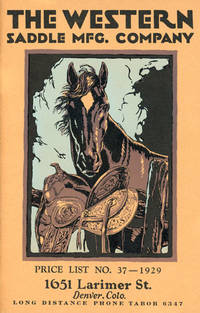
192947745N. P. Denver: Privately printed 1929. 1929. SADDLES. First edition. 8vo. Pictorial wrappers front cover in color 72 pp. illustrated. The Western Saddle Mfg. Co. basically specialized in making and repairing saddles therefore the catalog offers 52 pages of various saddles and their descriptions. Also depicted are chaparejos bridles bits reins spurs spur straps saddle blankets and pads spur rowels cuffs etc. Fine bright copy with original order blank and addressed envelope laid-in. Also laid-in is the original addressed and stamped pictorial mailing envelope. Privately printed, 1929. unknown
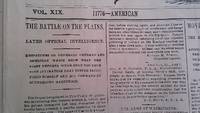
1876143791876. Americana Historic newspaper. The Press July 7 1876 issue Philadelphia PA. The first front-page story reports on the Battle of the Plains and General Custer's consequent demise. In part: "Despatches to Generals Sherman and Sheridan which show that the first reports were only too true - an intimation that Custer sacrificed himself and his command by blundering hardihood. The name Custer is a household word. It was marked deep on the hearts of our people during the brightest and darkest hours of the late rebellion. Custer fell- fell at the head of his command; fell where Death's sickle cut close and sure; fell and around him were gathered the gallant men of his commend who illustrated their bravery a full appreciation of Espirit du corps and amor patria." Front page is war-related. Slight wear and small tears around the edges. Only includes the front page spread pages 1278. A rare copy even incomplete. In very good condition. unknown
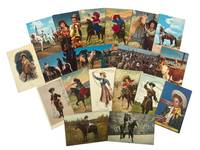
1890212411890. Archive of illustrated and photographic postcards documenting the popular image of the American cowgirl in late nineteenth- and early twentieth-century Western visual culture. Working in Cultural / Representational Mode the material traces how women participating in rodeo equestrian performance and frontier-themed entertainment were presented to mass audiences during a period when gender conventions in the United States remained heavily tied to domestic ideals. The postcards illustrate popular fascination with female riders engaged in activities associated with masculine frontier labor and spectacle including trick riding roping horse handling and armed performance. The archive also provides insight into the commercialization of the American West through souvenir imagery touring exhibitions rodeos and romanticized frontier iconography circulated through postcard publishing during the first half of the twentieth century.<br /> Collection consists of 19 postcards dating from approximately the 1890s through the 1950s including primarily colored lithograph and chromolithograph postcards alongside several later colored real photo postcards. Most measure approximately 3.5 x 5.25 inches. Images depict cowgirls mounted on horseback using lassoes pistols and whips in staged action scenes including bucking galloping roping demonstrations and parade formations. Earlier cards portray women riders wearing skirts or dresses while mounted reflecting transitional equestrian fashions prior to the widespread normalization of riding trousers for women during the 1920s. One postcard depicts a "Grand Entry" scene featuring numerous mounted cowboys and cowgirls carrying national flags from various countries suggesting an international rodeo or exhibition setting. Another early color postcard shows a man and woman posed together on horseback in cowboy attire. A postcard postmarked 1951 depicts a cowgirl tending to her horse and bears the handwritten verso inscription: "How we long for you in Fort Worth horses and more horses cowgirls too" addressed to Alabama. Several additional cards contain handwritten correspondence and postal markings dated between 1906 and 1908.<br /> The archive documents the enduring cultural construction of the cowgirl as both frontier laborer and commercial entertainment figure during the height of Western Americana imagery in American popular culture. The postcards capture changing attitudes toward women's athleticism mobility and public performance while preserving highly stylized depictions disseminated through inexpensive mass-produced print media. Particularly notable is the tension visible between conventional feminine presentation and physically demanding equestrian activity especially in the earlier cards depicting women riding aggressively while still dressed in skirts and formal attire. Minor edgewear scattered markings and light handling wear to some cards; overall very good condition. A cohesive visual archive of cowgirl imagery and the gendered mythology of the American West across more than half a century of postcard production. unknown
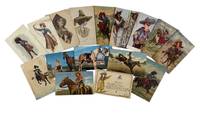
1890212421890. Archive of postcards documenting the popular image of the American cowgirl in Western Americana and early twentieth-century mass visual culture. Working in Cultural / Representational Mode the material illustrates how women participating in rodeo performance equestrian spectacle and frontier-themed entertainment were presented to national audiences during a period when women's public roles remained heavily circumscribed by conventional gender expectations. The postcards emphasize physical skill horseback mobility and frontier self-sufficiency through repeated depictions of women handling lassos firearms and bucking horses. Collectively the archive offers insight into the commercialization of the American West and the circulation of gendered frontier mythology through inexpensive illustrated print media from the late nineteenth century through the postwar period.<br /> Collection consists of 16 postcards dating approximately from the 1890s through the 1950s including early colored lithographs chromolithographs and colored real photo postcards. Each measures approximately 3.5 x 5.25 inches. Images portray cowgirls mounted on horseback in a variety of staged action scenes including lasso throwing galloping bucking and trick riding performances. Many women wear fitted riding outfits cowboy hats bandoliers holsters and western boots while posed with rifles pistols whips or ropes against rugged frontier backdrops. Several postcards emphasize dramatic movement with horses shown rearing trotting or in mid-action poses. The repeated use of lassos and firearms visually aligns the women with iconography traditionally associated with male cowboys in Wild West shows rodeo advertising and popular Western entertainment. Some postcards retain handwritten inscriptions on the versos.<br /> The archive preserves a long-running commercial visual tradition in which the cowgirl functioned simultaneously as frontier worker entertainer and symbol of female independence within American popular culture. Particularly notable is the tension between conventional femininity and the rugged physicality emphasized throughout the imagery with the women consistently portrayed as active riders and performers rather than domestic figures. The postcards also document the persistence of Western mythology across changing photographic and print technologies during the first half of the twentieth century. Minor edgewear and scattered markings to some cards; overall very good condition. A visually cohesive grouping documenting representations of women in frontier and rodeo culture across more than five decades of American postcard production. unknown
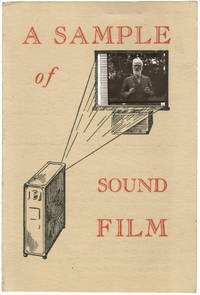
1928152558New York: Western Electric Sound System 1928. Vintage small two-color bi-fold housing an early sample of sound film promoting Western Electric's Portable Sound System circa 1928. Likely unique as we have been unable to locate another example.<br/><br/>The front features "A Sample of Sound Film" in bold red font with illustration of a projector and a screen atop support on front panel with the screen being a die-cut window revealing a single frame of film. The image on the film is of playwright George Bernard Shaw from the 1928 Fox Case Movietone News one of the earliest sound newsreels with three frames of film attached by staple to the rear panel also with die cut window allowing the viewer to hold the bi-fold to the light revealing Shaw.<br/><br/>The verso of front leaf beginning with the title "The Voice Behind the Screen" describes the "Western Electric Portable Sound System" featuring a projector amplifier horn and screen designed to fit into four small trunks able to withstand "rough handling in transportation" with a quality compatible to that "of the best equipped theatres." With a contemporary annotation in holograph ink on top of leaf "The Picture is Bernard Shaw." The recto of the second leaf upon which is affixed the three frames of film notes with arrow in red below film strip the "Sound Track" on the film with a simple illustration below a band of horizontal parallel lines noticeable on the film itself between left sprocket holes and film image. To the left of the film strip is the description "This piece of film is a sample of sound film recorded by the Western Electric Sound System." Following below is a physical description and summary explanation of the process "This is called the constant width varying density sound track and is characteristic of all 'Sound-on-Film' recording done by" followed by the Western Electric Sound System logo common to the period. The verso of the second leaf is of an illustration of patrons in a theatre before the screen the screen being the window revealing the still with an illustration in red of a telephone below followed by "Made by the makers of the nation's telephones."<br/><br/>3 x 4.25 inches. Near Fine. Western Electric Sound System unknown books
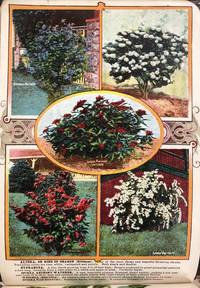
021955Rochester NY: Western New York Nursery Company. Very Good. Hardcover. Black staplebound cloth over thick cardstock. Boards are rubbed on edges and moderately worn. Binding is solid with slight separation at front. Interior mostly clean with soiling to edges; a few of the plates show light foxing. One plate has 1 3/4 inch closed tear. Brown endpapers. Front endpaper has an inch closed tear and 1/8 inch hole. Inside front board reminds the salesman to "Please handle Plate Book carefully and do not mark prices on the plates. " Produced by the Western New York Nursery Company and printed by Vredenburg & Company both of Rochester New York. From the University of Rochester "In the latter half of the nineteenth century Rochester New York was a leading American nursery center. Auxiliary to the nursery businesses there developed allied enterprises one of which was the production of colored fruit and flower prints designed to aid nurserymen and their travelling salesmen sell plants. This business in nurserymen's plates as these prints were also termed flourished until changes in marketing nursery products and the increasing use of colored illustrations in nursery catalogues caused its decline. By the early years of this 20th century the production and use of these plates was ending. A typical nurserymen's color plate was approximately 9 by 12 inches or the smaller "pocket size" of 6 by 9 inches which was introduced in the early 1870's. Each pictured a specimen of fruit flower shrub ornamental tree or occasionally a hardy vegetable such as rhubarb. Under the illustration would be its name perhaps a brief description of its attributes as much for the benefit of the salesman as the potential customer and the name and often city of the producer of the plate. These plates were generally printed on heavy paper stock to withstand wear." Our copy has chromolithographic plates divided into equal parts of fruits and ornamental plants. The book can be dated to no earlier than 1904 as the "Perfection Grape" won a Gold Medal at the 1904 St. Louis Exposition. An attractive salesmans fruit and plant book from the early 20th century. ; 5.5" x 8.5"; 72 pp . Western New York Nursery Company hardcover
19041259Various locations in South Dakota 1904. About very good. Twenty-seven silver gelatin photographs and six postcards on eighteen leaves; photos 4 x 5 inches. Small album. Original black cloth manuscript label on cover. Light wear and soiling. Some images lightly faded; most captioned in ink. Postcards a bit worn and soiled. A short but interesting album of photographs documenting life on the rural South Dakota prairie in 1904. A later caption reveals a bit of the backstory for the album: "Edward Merritt and ranch in S.D. when he and Rev. E.C. Smith had a week's vacation 1904. Carson's Ranch" and the first images in the album are of Carson's Ranch located about eight miles from Bradley South Dakota. Photos include shots of the house the family outbuildings and agricultural work. One photo shows two wagons back to back on an open prairie one of them stuck in a rut. Two mules stand patiently attached to the wagon in the foreground and the caption reads "Wagon with 80 bu wheat in the mire in the prairie on way from Carson's Ranch to Garden City S.D. Mr. Carson is in the wagon." During the week on holiday the author traveled around the northeaster corner of the state in the area between Aberdeen and Watertown. Named places include Waubay Bradley Garden City and Bristol. Several images show the parsonage at Montrose and we presume this is the home of the accompanying Rev. E.C. Smith as Montrose is near Sioux Falls farther south. Several images taken on the prairie show the group out in a buggy. In the first the buggy is slightly askew with horses disconnected and passengers standing around. The caption reads "Rev. L.L. Layne and wife & Edward Merritt after the accident crossing a bridge near Waubay S.D." The next photo shows the group laughing and eating pies "eating dinner on the prairie between Waubay and Enemy Swim Lake." The next two photos are blurry alas but both relate to local Native Americans. One shows a hole in the ground labeled "Dug out where 'Iron Star' Indian lived near Waubay S.D." and the second shows a cabin with a horse out front captioned: "Residence Indian ponies and canoe of Blue Dog Indian Enemy Swim Lake Sisseton Tribe Sioux Indians S.D." Though not an extensive album we nonetheless find it fascinating for its glimpse into life in rural South Dakota at the turn of the century. unknown books
Fine Armenian Full morocco. Roy. 8vo. (23 x 16 cm). In Armenian together with samples in Ottoman Turkish (Turkish with Arabic letters), Latin, Italian. 451, [4] p. First and Only Edition. Fuzuli is a poet who has an important place among the poets of Classical Turkish Literature XVI Century. Fuzûlî, as in history, is one of the most widely read and known poets in the world today. Having a large number of Fuzuli's works copies in Turkey and the world library, this is one of the most important pieces of evidence of love and attention. One of the important indicators of this situation is that Terzibasyan compared the works of Fuzûlî with his contemporaries in the West and Armenian poets in his work titled Numûne or Fuzûlî Commentary from the Mystical Poem of the Song. One of the personalities we can regard as one of the important indicators of this love for Fuzûlî is Priest Kevork Terzibasyan. Terzibasyan's interest and love for Fuzûlî's works led him to devote his life to Fuzûlî. Terzibasyan wrote a 3-volume book in Western Armenian. The first volume of the work was published in 1928. The second volume was published in 1929 after the death of Terzibasyan. These works were written in Western Armenian, and today there are only the first and second volumes. There are different claims about the third volume of Terizbasyan's book. This work of Terzibasyan is important in terms of showing how the poet Fuzûlî was interpreted from an Armenian pen. It is also important in terms of revealing similar and different aspects of Fuzûlî's contemporaries. From this point of view, it is possible to say that in the book of Terzibasyan, Fuzûlî is frequently emphasized that he is at a different point than Western and Eastern poetry within the scope of Eastern and Western poetry. This work of Terzibasyan is important in terms of revealing why an Armenian pastor devoted 20 years of his life to Fuzûlî. This situation even caused Terzibasyan to be exposed to criticism within his own society. At this point, it is seen that there is a section titled "Salute to Mustafa Kemal Pasha" in the work of a priest who has devoted his life to Fuzûlî. The answer to the questions of why and how Terzibasyan made a connection between Fuzûlî and Mustafa Kemal Pasha reveals the importance of the text once again. In this study, firstly, brief information about who is Terzibasyan will be given. The fact that there is a separate title about Mustafa Kemal Pasha in this work and his common points with Fuzûlî indicates that Terzibasyan had a great admiration and respect for Atatürk. Another point that draws attention in this work is that Terzibasyan compared Atatürk to poets and writers worldwide, the specially Italian poet Dante. It is possible to say that these similarities are rather related to the power and influence Atatürk had on his society. Terzibasyan as a cleric believes that future generations will only have the power to reconcile their values with the West by learning the past values. For this reason, in his work, he deals extensively with the effects of Fuzûlî on world poets and his reflections in the world of poetry, similar and different aspects of poets in the West and East. According to Terzibasyan, the only way for future generations to grasp this literary world is to learn the works of historical figures comprehensively. Terzibasyan believes that in such a way, new literature from Eastern literature will sprout. (Source: Mustafa Kemal Pasha in the Work of Kevork Terzibasyan named the Sample or Fuzuli Commentary from the Mystical Poem of the Orient, by Bozkus). This book is not translated into any language. Refii Cevat Ulunay, (1890-1968)'s article in 1968 stating that the book should be translated into Turkish was published in the literary journals of the period. Terzibashian (Gevorg Gerapaytzar Terzibasyan), (1862-1959), was born in Ankara city. Terzibasyan, who completed his primary education in Ankara, was noticed as a brilliant student during his... Extremely rare. Not
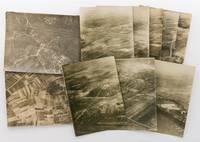
118696Very Good. All are gelatin silver prints on thick stock; eight are oblique photographs 207 × 154 mm; two are vertical views approximately 165 × 220 mm; the larger ones are slightly creased at the corners one of them a little more so; the others are in excellent condition. All images are captioned in the negative. All eight oblique views carry the same date 25 June 1918 preceded by 'A3 AEO 62°' ranges from 110 to 121. Place names on them are Hamel Hamel Wood Somme Accroche Wood Tailloux Wood and Vaire Wood. The vertical images are dated 3 May and 27 June 1918 and carry a larger set of alpha-numeric references commencing 'A3 AE A 715' and '35 AE B 929' respectively. All ten prints have the signature 'Capt Sexton' in indelible pencil on the verso. Digitised service records indicate the signature is that of Eric James Sexton of the Adelaide suburb of Hindmarsh; he enlisted on 14 August 1914 shortly before his 21st birthday and was appointed to the 10th Battalion with the rank of lieutenant. He was wounded at the landing at Gallipoli promoted to captain the following day and later invalided back to Australia disembarking on 6 August 1915. By January 1916 he was declared fit again for active service and re-embarked in April for England where he performed various training roles. On 14 February 1917 he transferred to the Australian Machine Gun Training Depot with the rank of major. He embarked for Australia on 12 March 1918 arriving in Melbourne on 22 May 1918. Accordingly Sexton did not serve in France and was a major not a captain by the time these photographs were produced. We cannot explain the anomalies but will let the photographs speak for themselves. Significantly they show the area where the important Battle of Hamel was fought on 4 July 1918. <p>'Hamel was a big battle in miniature involving the experimentation of tanks and small ammunition drops as part of a broader all-arms offensive. While a coordinated offensive was not a new approach to warfare Hamel represented the culmination of three years of learning and innovation on the Western Front testing an all-inclusive approach to mobile warfare. The flawless execution of the operation resulted in Hamel becoming a model for future operations on the Western Front. In his account of the event Monash famously wrote that "the perfected modern battle plan is like nothing so much as a score for an orchestral composition where the various arms and units are the instruments and the tasks they perform are their respective musical phrases' Ellen Cresswell: 'The Experiment - Innovations at the Battle of Hamel' Australian War Memorial website. 10 items. unknown
2026x-0197779123Oxford University Press Inc 2026. Paperback. New. 4th edition. 560 pages. 8.40x0.70x10.70 inches. Oxford University Press Inc paperback
Folio, xvi, 195, [1]pp., stitched as issued, orig. blue printed wrappers, spine lightly chipped. Important transportation Government Blue Book, predominantly relating to Western Australia.
2000x-1560220708Food Products Pr 2000. Hardcover. New. 1st edition. 382 pages. 8.75x6.25x1.50 inches. Food Products Pr hardcover
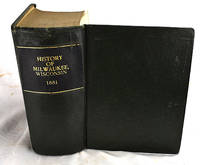
18812605130274<p>The Western Historical Company Chicago IL Published by A. T. Andreas 1881. First Edition. Hardcover. Very Good. Extremely thick. Hardcover. Rebound in the early 20th century. Good binding and cover. Clean unmarked pages. All edges gilt. Minor shelf wear. 1633 pages. Double page frontispiece of a birds-eye view of Milwaukee. Profusely illustrated with woodcuts and steel engraved portraits.</p> The Western Historical Company, Chicago, IL Published by A. T. Andreas hardcover
2012SKU0206858Routledge 2012-01-26. Hardcover. Good. Textbook May Have Highlights Notes and/or Underlining BOOK ONLY-NO ACCESS CODE NO CD Ships with Tracking Routledge hardcover
Pages 161-192. Features: Two pages of illustrations of dozens of U.S. Navy, Army and Air Force badges of rank; Photo of the H.M.S. "Barham", lost in the Mediterranean on November 25, 1941; Photo of crashed 'Sunderland' aircraft and her crew who were taken prisoner by Italy when they drifted to shore; Maps and photos of Burma and Amboina; Photo of Dutch submarine bringing U-boat prisoners to a British port; Photo of Capitan-Lieut. Gert Schreiber, of the sunken "U-95" coming ashore from the Dutch submarine; Pearl Harbor burial scene in Nuuanu Cemetery; Photo of "Norness" sunk 60 miles off Long Island; Photos of Damaged enemy vehicles outside Bardia, and dug-outs for Officers; Six photos in the Western desert (in Africa) - captured Panzer Commander General Von Ravenstein, captured U-boat crew, Axis naval prisoners under Sikh guard, German anti-tank mines removed by South African Engineers; The Debate and Its Results - article with maps of the Donets Basin and Benghazi; Photos of twelve personalities of the week include Major Barbara Stimson, Lieut. Achsa Bean, Sir Edward Meyerstein, Pan-American Conference at Rio, Mr. Curtin meeting defense chiefs, Vidkun Quisling, Sir Cecil Graves, Mr. R.W. Foot, Manuel Quezon and General Douglas MacArthur; Two photos of Japan's Imperial Household Guards; Five photos of American 'White' trucks used to haul British tanks; Photo of scorched earth at what was a Malayan rubber plantation; Photos from Singapore and the Malay Peninsula; Centerfold relief map entitled "Singapore Island Besieged by Japan - from Johore to our beleaguered fortress in the far east; Two-page illustration of an American Infantry Unit in an Irish village; Two pages with eleven dramatic illustrations of the Battle of Macassar Strait - Japan's greatest naval defeat of the war; One-page illustration shows how the main tank force is screened and supported by other mechanised units; One-page illustration of the formation of a battle fleet steaming into action; Two photos and cross-section diagram of the Jet-propelled Caproni-Campini Aeroplane; Photo of ladies shredding confidential documents; Five great photos of an Australian crew manning a British 25-pound Howitzer; Vintage ads; Classy back cover colour ad for BSA features Robert Havell illustration of The Oxford and Opposition Coaches. This issue was never stapled. Average wear. Unmarked. A sound copy of this great wartime issue. Book
62 x 43.5 cm one-sided colour pictorial map reduces to 22.5 x 10 cm when folded inside original blue card cover lettered in black. Illustrates the route of the CNR's Triangle Tour of British Columbia which included "Jasper National Park, Mount Robson Park, the Canadian Rockies, and the scenic seas of the North Pacific coast." Without saying so, the right side of the map switches scales so as not to display Lake Louise, a prime tourist attraction of rival railway Canadian Pacific. Includes eight sepia-tone photos of sights of interest along the way. Clean and unmarked with light wear. A well-preserved copy of this excellent piece of vintage Western Canadian tourist ephemera. Reference: Cornell University Library, Persuasive Maps: PJ Mode Collection 1219.01. Book
- EDIZIONE ORIGINALE, COLORITURA COEVA -Importante e decorativa mappa tratta dal "Nuovo Atlante Geografico Universale delineato sulle ultime osservazioni", edito a Roma dal 1792 fino al 1801, opera che la Calcografia Camerale commissionò al Cassini al fine di sostituire l’ormai obsoleto "Mercurio Geografico".Giovanni Maria Cassini, Chierico Regolare Somasco fu geografo e cartografo, ma anche intagliatore di architetture e prospettive - uno dei migliori discepoli di Giovanni Battista Piranesi - Cassini fu uno degli ultimi sferografi italiani del Settecento ed i suoi globi ebbero una notevole diffusione, come pure questo "Nuovo Atlante Geografico".Incisione in rame, coloritura coeva dei contorni, leggere bruniture, per il resto in ottimo stato di conservazione.L'Atlante del Cassini fu ristampato dalla Calcografia Camerale nel primo quarto del XIX secolo, prima del 1839. Solo gli esemplari di prima edizione come questo sono stampati su carta vergata coeva e sono colorati a mano in epoca. Le tirature del XIX secolo sono già su carta meccanica, priva di vergelle, e generalmente in bianco e nero. - FIRST EDITION, CONTEMPORARY OUTLINE COLOUR -The Italian painter and engraver, Giovanni Maria Cassini, produced this splendid map of as part of his epic three-volume atlas. Published in: Nuovo atlante geografico universale delineato sulle ultime osservazioni. Roma, Calcografia camerale, 1792-1801.Cassini was geographer and cartographer but he was also good at engraving architectural items and perspectives – he was one of the best disciples Giovanni Battista Piranesi had. Moreover, Cassini was one of the last artists to engrave spheres in the XVIII century and his globes were quite famous and widespread, and realized the most important Italian Atlas of the XVIII century; his maps always bear a cartouche, extremely rich in colours and details. Copperplate with fine original hand colour, some foxing, otherwise in very good condition.The Cassini's Atlas was reprinted by the Calcografia Camerale in the first quarter of XIXth century (before 1839). Only the first edition of the atlas is printed on contemporary laid paper, while the late issue are on XIXth century paper and often without colour.
72 pages. Features: Crisis 1957 - four distinguished Canadian reporters and commentators take a long, hard look at four varying aspects of the world crisis; The Challenge of Soviet Education - which is turning out engineers, scientists, teachers, craftsmen, economists and farm experts faster than Western education can; The Hungarians and What They Mean to Canada - Special Maclean's Album - colour photos with article by Peter C. Newman; Little-known fables which reflect the heart of Hungary; How the Hungarian Crisis Saved Our Family - it gave Steve Szemeti a one-in-a-million chance to joing his father and stepmother in Canada; Our Daily Bread - a moving story from Hungary published here in English for the first time; Nice two-colour one-page ad for the 1957 Plymouth; One-page colour ad for the 1957 Pontiac entitled "Portrait of Perfection'; Vintage one-page colour-photo ad for the Toronto-Dominion (TD) Bank features young boy deliverying newspapers; Nice colour-illustrated ad for Dow ale features hockey scene; Maxwell House coffee ad features man taking a break from his woodshop work; Pilkington Glass ad features classy colour photo from the residence of E.C. Vandervoort of Kingston, Ontario; Canadian Club ad features colour photos of Bill Thompson iceboating on Lake Ontario; Cheery one-page colour-photo ad for Old Vienna beer features couple in kitchen with bowl of salad and box of brew; One-page colour-photo ad for the 1957 Ford features scene at ski resort; One-page ad for IBM's colour typewriters; One-page colour-illustrated Chevrolet ad features station wagon being loaded with skis outside chalet; Vintage Allied Van Lines ad features couple on phone arranging their move; Classy back cover colour Coke ad features painting by Robert Fawcett of social scene in exotic Acapulco; and more. Moderate wear. Clean and unmarked. A quality vintage copy of this special issue. Book
60 pages. Features: Great ad for Dodge Trucks features delivery van, a pickup and a stake truck; Wonderful one-page International Trucks ad features tractor trailer hauling mature tree as part of construction of Treasure Island at the Golden Gate in San Francisco; Bewildered Congress groping for sound neutrality policy - article with three photos including Bernard Baruch; Defense Fever - America prepares for war; Photos of high income earners Louis B. Mayer and Greta Garbo; Italy's Seizure of Albania spreads fear from the Adriatic to the Dardanelles - major article with eight photos; Levantine Ferment; Hitler Yardstick; Refugee dilemmas in Europe; Hitler conscripts children 10 through 18 years-old for the Hitler Youth; Handsomme one-page color Packard auto ad features a 120 touring sedan; Nice two-color centerfold ad for Schlitz beer; Nice one-page two-color ad for Pontiac cars; Chevrolet car ad; Baby tumor cured with X-ray therapy; Western Union's photos by cable - with received image of Yankee Clipper aircraft; Early vintage ad for Titleist / Acushnet Golf Balls; Diary kept by Byrd's ancestor, William Byrd of Westover VA, is a gold mine of colonial data; Obituary for Joseph A. Lyons, Prime Minister of Australia; Nice 2/3-page ad for the Hotel Del Monte; New Oil Boom - four-state boom is centered near Forest City, Missouri; Full page introduction to Ernest K. Lindley of Newsweek's Washington Bureau - with photo; Photo of carload of dignitaries at New York's World's Fair includes Alfred E. Smith, Henry Ford, Mayor La Guardia, Grover Whalen (fair boss), and Edsel Ford at the wheel; Zeus cigarette holder ad; Color ad for Mount Vernon Whiskey on back cover features scene in George Washington's dining room. Average wear. Unmarked. A sound vintage copy Book
2019x-1526459515Sage Pubns Ltd 2019. Hardcover. New. 3rd edition. 376 pages. 10.00x8.00x1.00 inches. Sage Pubns Ltd hardcover
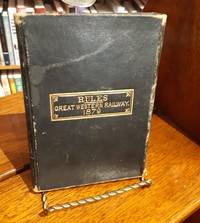
1879014135London Ontario: Advertiser Steam Presses / Great Western Railway 1879. 1st Edition . Hardcover. Very Good. First edition thus. 1879. Duodecimo/12mo. 102 pp. Very good. Black leather with flap enclosure binding. Gold titling to front board: "RULES. Great Western Railway. 1879." Ownership signature to FFEP: "Jos Anderson Conductor GWR Windsor July 29th 1879." A scarce rules and regulations book for the now defunct Great Western Railway in Ontario Canada. Marbled block. Clean throughout. The front hinge is lightly shaken though the binding is tight and fully intact. Black leather has a minor water stain to the front board. General wear and rubbing to the corners and extremities from use in the field. A scarce piece of rail and transportation history. A print copy is held in the Library and Archives of Canada. Securely shipped in a tracked box. <br/> <br/> Advertiser Steam Presses / Great Western Railway hardcover
190962496San Francisco CA & Portland OR: The Pacific Telephone and Telegraph Co. September 1909. 8vo. xvi 413 87 1 pp. business pages in pink-tinted paper and with early text illustrated ads. Frontisp. map of long-distance line. Gray-brown printed softcovers cover art of PT&T logo front cover original braid hanger still intact minor uniform interior toning couple corners w/ creasing & chipping some scuffing still a VG bright copy. First edition of this exceedingly scarce telephone directory for Portland & Oregon City OR un-incorporated Multnomah & Clackamas Counties as well as Vancouver WA and Clark County in the Progressive Era. This exceptional reference not only offers an essential tool in tracking residents in the Portland-Vancouver area at the beginning of the 20th-Century but also lists many of the Chinese-American & Japanese-American residents in Portland’s very small Chinatown as well as businesses including restaurants. Of note are listings for such notable Chinese-Americans as Seid Gain Back and Seid Gain Back Jr. who at the time were two of the wealthiest businessmen on the West Coast as well as James & Nellie Brown Chinese-American photographers in Portland OR. The Pacific Telephone & Telegraph Co. had been formed from the Pacific States Telephone Co. in 1907 just 2 years before and was headed by Scott and Glass who would later become subject to the California investigations into graft and bribery in San Francisco. No copies in Worldcat. The Pacific Telephone and Telegraph Co., paperback
2011293303Canada: Kingsley Knowledge Publishing 2011. First edition. Hardcover. Very Good/No dustjacket. 8vo. pp. 468 ""The volume covers basic science relevant to oil sands industry. In Chapter 1 after a brief geology review bitumen reserves major production projects and recovery methods are described. Chapters 2 and 3 are devoted to basic scientific principles including surface and colloidal science and fluid dynamics respectively. The three following chapters cover physical… Kingsley Knowledge Publishing hardcover
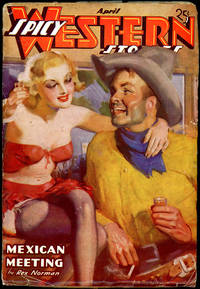
193719406Wilmington DE: Culture Publications Inc. 1937. Light edge wear and rubbing a very good to nearly fine copy. 19406. Octavo single issue cover by Ward pictorial wrappers. Pulp magazine. Culture Publications, Inc. unknown
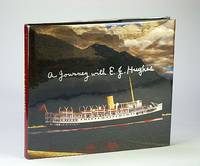
2005546H0645Vancouver BC Canada: Douglas & McIntyre Limited. Fine in Fine dust jacket. 2005. Second Edition. Hardcover. 1553651537 . Signed upon title page by author. 180 pages. Index. References. Biographical overview. List of works. Colour illustrated endpapers. "E.J. Hughes is famous for his unforgettably rich and accomplished landscapes primarily depicting the British Columbia coast. His works now command the highest auction prices ever paid for a living Canadian artist confirmation of his emergence as a major figure on the international art scene. The passionate collector has always been central to the emergence of important artists. In this extraordinarily personal account the world of a collector comes alive. Here are 76 Hughes sketches paintings and prints in colour and black and white - only a handful previously published in book form - accompanied by a text rich with anecdotes about the joys frustrations and satisfactions of the chase. This is a very human story of art as master - one which sheds important new light on Hughes and his work." - from dust jacket. "Hughes is the chronicler of a landscape almost too beautiful and too alive with spirit to be believed." - Globe and Mail. Clean bright and unmarked with negliglble wear. Dust jacket now preserved in glossy new archival-grade Brodart cover. Gift quality.; 4to - over 9¾" - 12" tall; CANADA BIOGRAPHY PAINTING COLLECTORS AND COLLECTING British Columbia Art Artists Coast Ferries Landscapes Sketches Paintings Prints Colour British Columbia; Signed by Authors . Douglas & McIntyre, Limited hardcover