Martin Luther King JrBiblio.com
7 433 résultats
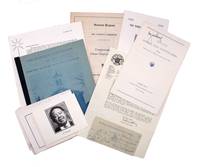
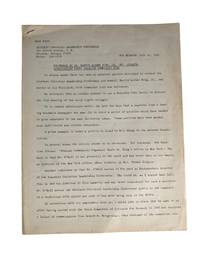
1963213641963. Civil Rights King Martin Luther Jr. Statement by Dr. Martin Luther King Jr. regarding allegations of communist ties issued July 25 1963 addresses public accusations that leaders of the Southern Christian Leadership Conference maintained communist affiliations during the height of the Civil Rights Movement and the Cold War. The statement responds to a report in the Atlanta Constitution alleging communist influence within the SCLC claims based in part on information circulated by federal investigators and informants monitoring King and his associates. King directly denounces the accusations as an effort to discredit the movement writing that the article represents "another attempt to use a McCarthy like tactic to distort the true meaning of the civil rights struggle." The document illustrates the political pressures facing civil rights leadership during 1963 when the FBI was actively using anti-communist rhetoric to detract from campaigns for racial equality.<br /> <br /> King Martin Luther Jr. Statement by Dr. Martin Luther King Jr. Re: Atlanta Constitution Story Charging Communist Ties. Atlanta: Southern Christian Leadership Conference July 25 1963. Two pages. The typed press release was issued from the SCLC headquarters at 334 Auburn Avenue N.E. Atlanta and addresses allegations concerning SCLC associates Stanley Levison and Jack O'Dell. King clarifies organizational roles within the movement and disputes claims that O'Dell directed the New York office writing: "The fact is that Mr. O'Dell is not presently on the staff and has never been in our employ as director of the New York office whose director is Rev. Thomas Kilgore." The statement acknowledges that O'Dell had earlier associations with communist organizations but asserts that he had renounced those ties and supported the SCLC commitment to nonviolence. King explains that under growing political pressure it was agreed that O'Dell would leave the organization noting: "It was mutually agreed that Mr. O'Dell should terminate his employment with us. This was done at a meeting in New York on June 26." Reaffirming the ideological foundations of the organization King declares that SCLC is "so firmly established as a Christian non violent movement that it would be impossible to be influenced in any way by the method or philosophy of Communism" further criticizing communist doctrine as grounded in "ethical relativism a metaphysical materialism a crippling totalitarianism and denial of human freedom."<br /> <br /> The statement was released during a pivotal period of the Civil Rights Movement only weeks before the March on Washington for Jobs and Freedom in August 1963 and shortly after King's meetings with officials in the Kennedy administration who expressed concern about alleged communist influence within civil rights organizations. During this period the Federal Bureau of Investigation under J. Edgar Hoover intensified surveillance of King and other civil rights leaders as part of broader federal monitoring of political activism during the Cold War. Documents such as this press release illustrate how civil rights leadership publicly defended the movement's philosophical foundations while confronting red baiting tactics that sought to undermine its legitimacy. Light creasing and minor toning along the edges with small areas of discoloration the type remaining sharp and legible very good condition. Provenance from the estate of civil rights leader Hosea Williams. A significant contemporary document issued by Martin Luther King Jr. responding to attempts to discredit the American Civil Rights Movement using fears surrounding communism generated by the Red Scare. unknown
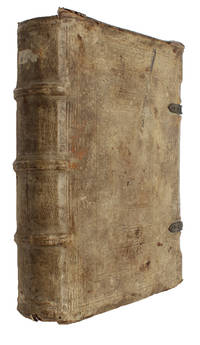
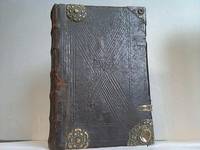
38587Donatus Ritzenhayn & Thomas Ribart and Christianus Rhodius. Jena. 1564 1566 1567 1570. First Jena edition. 4 Volumes. Thick folio. Vol. I: xii 540 only each leaf numbered so in reality the pages are double this number viii which comprise of a catalogue of Luther's letters etc. a half page errata and the publisher's colophon dated 1565. As the publisher's information is already given on the title-page this was an extra as from before the early 16th century this was where the information was to be found. Over this transitional period the publishers would sometimes give the information both on the title-page and at the rear. Often as in this case there were discrepancies. Vol. II: vi 571. Vol. III: iv 540 2pp errata. Vol. IV: iv 806 2 blank leaves. Woodcut borders to title-pages depicting the seals of the four evangelists and of Luther and Elector Johann Friedrich worshipping the crucified Christ; on verso of Vol. II title and on leaf following titles in Vols. III & IV are woodcuts depicting three Saxon princes and their coats of arms; woodcut initials many of cherubs engraved decorations. Uniformly bound in contemporary blind-stamped vellum over wooden boards highly decorated with a central portrait of Luther to upper and lower bds of all volumes. Raised bands later morocco spine labels with text in gilt. One whole original metal clasp remains to volume IV but all the upper boards retain the upper metal catch. The vellum is worn and soiled but the bindings are sound. The lower board to volume I has been sympathetically restored with a patch of later vellum possibly 17th/18th century. Each volume has a small neat bookplate from the C.M. College Library at Bala and there is one stamp to the front free e/p but these are 19th century and do not detract. There is some worming to vol. I but it does not affect the reading of the text. There is occ. contemporary underlining and signatures to title-pages. This set is sound. Pictures are available on request. The first complete edition of Luther's works was published at Wittemburg under the auspices of the Elector of Saxony between 1539 and 1559. Those in Latin were in four volumes and those in German in eight. These were subsequently reprinted at both Wittemberg and Jena. hardcover
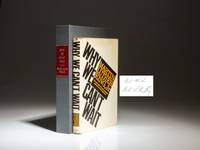
196416975New York: Harper & Row Publishers 1964. First Edition First Printing. Cloth. Very good/very good. Signed first edition first printing of Why We Can't Wait by Martin Luther King Jr. Octavo xii 178pp. Black cloth spine gray boards title stamped in gilt on spine. Slight bow to front cover. First edition statement on copyright page with "D-O" noting a first printing. Solid text block light rubbing to edges faint offsetting to endpapers a very good example. In the publisher's first state dust jacket $3.50 price and "0664" code on front flap and no mention of the Nobel Peace Prize on rear panel. Light shelf wear with dust remnants and small chips along edges. Three-inch closed tear to front panel stabilized with archival tissue repair on verso. Signed by the author on the front free endpaper "Best Wishes / Martin Luther King." Housed in a custom black cloth clamshell with title in gilt on spine. Why We Can't Wait details Martin Luther King Jr.'s prioritization of nonviolence in the Civil Rights Movement. He names events like Brown v. Board the decolonization of Africa and the centennial of the Emancipation Proclamation as reasons 1963 is the beginning of "The Negro Revolution." This book was published the same year King received the Nobel Peace Prize and simultaneously increased circulation of King's Letter from Birmingham Jail. Harper & Row, Publishers unknown
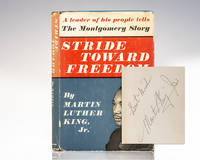
1958150588New York: Harper & Brothers Publishers 1958. First edition of Dr. Martin Luther King’s first book. Octavo original half cloth illustrated. Boldly signed by the author on the front free endpaper "Best Wishes Martin Luther King Jr." This book was signed at Coe College in October 1962 with a picture laid in of him there when he lectured there. From the library of a Civil Rights advocate and professor at Drake University. Fine in a near fine dust jacket. Rare and desirable signed and with provenance. Stride Toward Freedom is Dr. Martin Luther King Jr.'s account of the first successful large-scale application of nonviolence resistance in America is comprehensive revelatory and intimate. King described his book as "the chronicle of fifty thousand Negroes who took to heart the principles of nonviolence who learned to fight for their rights with the weapon of love and who in the process acquired a new estimate of their own human worth.'' Harper & Brothers, Publishers hardcover
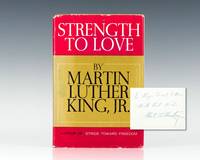
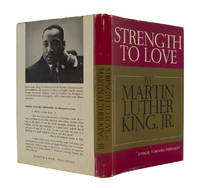
196341050New York: Harper & Row Publishers 1963. First edition of Dr. King’s second book of which Coretta Scott King noted “If there is one book Martin Luther King Jr. has written that people consistently tell me has changed their lives it is Strength to Love.â€Â Octavo original half cloth. Presentation copy inscribed by the author on the front free endpaper "To Major Ernest D. Muse With Best Wishes Martin Luther King." Fine in a very good dust jacket with light rubbing and a few small closed tears. Housed in a custom half morocco clamshell box. Rare and desirable signed and inscribed by Dr. King. Strength to Love was Martin Luther King’s first volume of sermons published the same year in which he penned his Letter from a Birmingham Jail and joined the historic March on Washington and delivered his famous I have a dream speech. The following year he won the Nobel Peace Prize. King notes in the preface: “In these turbulent days of uncertainty the evils of war and of economic and racial injustice threaten the very survival of the human race. Indeed we live in a day of grave crisis. The sermons in this volume have the present crisis as their background; and they have been selected for this volume because in one way or another they deal with the personal and collective problems that the crisis presents.†Coretta Scott King said about this book that it "best explains the central element of Martin Luther King Jr.' s philosophy of nonviolence: His belief in a divine loving presence that binds all life. By reaching into and beyond ourselves and tapping the transcendent moral ethic of love we shall overcome these evils." Harper & Row, Publishers hardcover
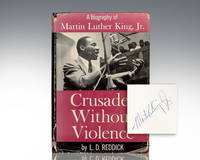
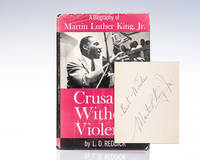
1959149245New York: Harper & Brothers Publishers 1959. First edition of one the earliest biographies of "the American Gandhi." Octavo original half cloth illustrated with black and white photographs. Boldly signed by Martin Luther King Jr. on the front free endpaper. Near fine in a very good dust jacket name to the pastedown. Jacket photograph by Dan Weiner. Housed in a custom half morocco clamshell box made by the Harcourt Bindery. Rare and desirable as only a few signed examples have appeared on the market. In Crusader Without Violence: A Biography of Martin Luther King Jr. 1959 L.D. Reddick offers one of the earliest comprehensive accounts of Dr. King’s life and leadership during the formative years of the Civil Rights Movement. Reddick a noted African American historian and archivist provides a detailed narrative of King’s rise to national prominence particularly highlighting his role in the Montgomery Bus Boycott and his unwavering commitment to nonviolent resistance. The biography is both informative and reverent emphasizing King's philosophical grounding in Gandhian principles and Christian ethics while also situating his activism within the broader historical context of racial injustice in America. Reddick’s work is significant not only for its biographical insight but also for its role in shaping the public perception of King as a moral leader and symbol of peaceful protest. Though limited by its publication date which predates many of King's most pivotal actions the book remains a valuable primary source for understanding early interpretations of King’s influence and the ideological foundations of the Civil Rights Movement. Harper & Brothers, Publishers hardcover
1959150589New York: Harper & Brothers Publishers 1959. First edition of one the earliest biographies of "the American Gandhi." Octavo original half cloth illustrated with black and white photographs. Boldly signed "Best Wishes Martin Luther King Jr." on the front free endpaper. This book was signed at Coe College in October 1962 when King lectured there. From the library of a Civil Rights advocate and professor at Drake University. Near fine in a near fine dust jacket. Jacket photograph by Dan Weiner. An exceptional example rare and desirable signed. In Crusader Without Violence: A Biography of Martin Luther King Jr. 1959 L.D. Reddick offers one of the earliest comprehensive accounts of Dr. King’s life and leadership during the formative years of the Civil Rights Movement. Reddick a noted African American historian and archivist provides a detailed narrative of King’s rise to national prominence particularly highlighting his role in the Montgomery Bus Boycott and his unwavering commitment to nonviolent resistance. The biography is both informative and reverent emphasizing King's philosophical grounding in Gandhian principles and Christian ethics while also situating his activism within the broader historical context of racial injustice in America. Reddick’s work is significant not only for its biographical insight but also for its role in shaping the public perception of King as a moral leader and symbol of peaceful protest. Though limited by its publication date which predates many of King's most pivotal actions the book remains a valuable primary source for understanding early interpretations of King’s influence and the ideological foundations of the Civil Rights Movement. Harper & Brothers, Publishers hardcover
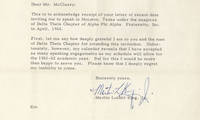
342301/12/61. <blockquote><p>Although he is not able to attend due the ramping up of the Civil Rights movement ""but for this I would be more than happy to serve you.â€</p><p> </p><p>We are not aware of another letter having reached the market connecting him with this important African American institution to which he is so closely tied</p></blockquote><p>While the Civil Rights movement had been gaining momentum for several years prior with key events like the Montgomery bus boycott in 1955 and the Greensboro sit-ins in 1960 the year 1961 marked a significant escalation and expansion of the movement. Some historians say that 1961 was when the movement truly gained national attention and began to coalesce as a more unified force.</p><p>In 1961 Martin Luther King Jr. was actively involved in the Movement delivering speeches participating in protests and supporting the cause generally. The was the first year after his return to Atlanta that his activities routinely went beyond his home base there. In May 1961 King's support of the Freedom Rides in Alabama which aimed to challenge segregation on interstate buses was crucial. In October he spoke at Columbia University in New York about the need for an executive order to outlaw segregation in federal programs and other areas of American public life. King visited Seattle in November 1961 and was initially scheduled to speak at First Presbyterian Church but the invitation was rescinded. He ultimately spoke at the University of Washington Temple De Hirsch Sinai Garfield High School and the Eagles Auditorium.</p><p>On December 15 King famously spoke at a mass meeting in Albany Georgia which began the Albany Movement. That movement aimed to end all forms of racial segregation in the city making it the first major effort in the modern civil rights era to desegregate an entire community. The next day King and Ralph Abernathy joined hundreds of black citizens behind bars on charges of parading without a permit and obstructing the sidewalk. King’s involvement attracted national media attention and inspired more people to join the protests. Albany and King entered into an agreement that if King left Albany the city would release jailed protesters on bail. However after King left Albany the city failed to uphold the agreement and protests and subsequent arrests continued into 1962.</p><p>Thus with the Albany speech imminent and many other speaking engagements upcoming his schedule was full. He had to turn down an invitation to speak at Texas Southern University for April 1962 as there were just too many conflicting obligations. In that month he had arranged a visit to Augusta Georgia to speak at Tabernacle Baptist Church alongside other SCLC leaders and was set to preach a sermon to a large crowd of around 3500 people in the Princeton University Chapel. His sermon there would focus on the importance of understanding and concern for others in the fight against racial hatred emphasizing that no race was superior and that both black and white people shared the responsibility to love their fellow humans. In April 1962 King was also involved in the development of the newly formed Gandhi Society for Human Rights an organization focused on non-violent civil rights activities.</p><p>Alpha Phi Alpha Fraternity Inc. is the first intercollegiate Greek-letter fraternity established for African American men.</p><p>In 1956 Martin Luther King was given the Alpha Award of Honor for “Christian leadership in the cause of first class citizenship for all mankind†at the 50th-anniversary convention of Alpha Phi Alpha. King called the event one of the happiest moments of his life and said that the award gave him “renewed courage to continue in the great and momentous struggle for justiceâ€.</p><p>Founded in 1906 at Cornell University in Ithaca New York Alpha Phi Alpha was the first fraternity created by African American students. Operating under the guiding principles of scholarship fellowship good character and the uplifting of humanity the fraternity counts Thurgood Marshall W. E. B. Du Bois and King among its notable members. King joined the Boston Sigma chapter of Alpha in June 1952 while a student at Boston University. Fraternity brothers supported King during the Montgomery bus boycott sitting behind him at his trial and donating money to the Montgomery Improvement Association.</p><p><strong>Typed letter signed</strong> on his personal letterhead Atlanta December 1 1961 to Willard C. McCleary of Texas Southern University who had invited King to speak in Houston in April 1962. <em>“This is to acknowledge receipt of your letter of recent date inviting me to speak in Houston Texas under the auspices of Delta Theta Chapter of Alpha Phi Alpha Fraternity Inc. in April 1962. First let me say how deeply grateful I am to you and the men of Delta Theta Chapter for extending this invitation. Unfortunately however my calendar reveals that I have accepted as many speaking engagements as my schedule will allow for the 1961-62 academic year. But for this I would be more than happy to serve you. Please know that I deeply regret my inability to come.â€</em></p><p>Letters of King connecting him to his own fraternity and one with such significance in the African American story are very uncommon.</p><p><img class=""alignnone wp-image-25018 size-post-window"" src=""https://cdn.raabcollection.com/wp-content/uploads/20231204144051/Folder-site-11-1600x1327.jpg"" alt="""" width=""1600"" height=""1327"" /></p> unknown
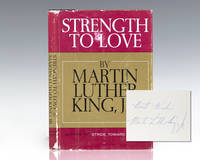
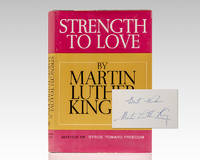
1963130633New York: Harper & Row Publishers 1963. First edition of Dr. King’s second book of which Coretta Scott King noted “If there is one book Martin Luther King Jr. has written that people consistently tell me has changed their lives it is Strength to Love.†Octavo original half cloth. Boldly signed by the author on the front free endpaper "Best Wishes Martin Luther King." Fine in a near fine dust jacket with light wear. Strength to Love was Martin Luther King’s first volume of sermons published the same year in which he penned his Letter from a Birmingham Jail and joined the historic March on Washington and delivered his famous I have a dream speech. The following year he won the Nobel Peace Prize. King notes in the preface: “In these turbulent days of uncertainty the evils of war and of economic and racial injustice threaten the very survival of the human race. Indeed we live in a day of grave crisis. The sermons in this volume have the present crisis as their background; and they have been selected for this volume because in one way or another they deal with the personal and collective problems that the crisis presents.†Coretta Scott King said about this book that it "best explains the central element of Martin Luther King Jr.' s philosophy of nonviolence: His belief in a divine loving presence that binds all life. By reaching into and beyond ourselves and tapping the transcendent moral ethic of love we shall overcome these evils." Harper & Row, Publishers hardcover
1963151642New York: Harper & Row Publishers 1963. First edition of Dr. King’s second book of which Coretta Scott King noted “If there is one book Martin Luther King Jr. has written that people consistently tell me has changed their lives it is Strength to Love.†Octavo original half cloth. Boldly signed by the author on the front free endpaper "Best Wishes Martin Luther King." Fine in a near fine dust jacket. Strength to Love was Martin Luther King’s first volume of sermons published the same year in which he penned his Letter from a Birmingham Jail and joined the historic March on Washington and delivered his famous I have a dream speech. The following year he won the Nobel Peace Prize. King notes in the preface: “In these turbulent days of uncertainty the evils of war and of economic and racial injustice threaten the very survival of the human race. Indeed we live in a day of grave crisis. The sermons in this volume have the present crisis as their background; and they have been selected for this volume because in one way or another they deal with the personal and collective problems that the crisis presents.†Coretta Scott King said about this book that it "best explains the central element of Martin Luther King Jr.' s philosophy of nonviolence: His belief in a divine loving presence that binds all life. By reaching into and beyond ourselves and tapping the transcendent moral ethic of love we shall overcome these evils." Harper & Row, Publishers hardcover
1958140945324New York: Harper & Brothers 1958. First Edition. Very Good. Advance uncorrected proof of the first edition. 5-3/4" x 7. Bound in publisher's stiff blue and white wraps with plastic comb-binding. Very Good. Half-title page with publisher's review slip glued to the top edge is detached from the binding. Rusty paperclip to top of one page sporadic marking mostly underlining and marginal brackets throughout. MLK's first book recounting his nonviolent successful organizing of the Montgomery bus boycott and the beginning of the Nonviolent Civil Rights Movement. Harper & Brothers unknown
155660674Ihenae Jena Rhodius Rödinger 1556. 4to. In contemporary blindstamped pigskin over wooden boards with three raised bands and two clasps. Wear and soiling to extremities. Pigskin partly detached to upper part of boards. Previous two owner's names in contemporary hand to title-page. A few occassional underlignings and marginal annotations in contemporary hand throughout. Small worm-tract affecting last 20 leaves internally generally fine. 10 367 pp. <br/><br/><em>Rare first printing of Martin Luther's early letters from 1507 to 1522 spanning the years from the celebration of his first Mass to his removal to Wartburg Castle after the Diet of Worms. Among them is a notable letter Cardinal Albrecht Archbishop of Magdeberg and Mainz accompanying a copy of the 95 Theses composed on the very day October 31st 1517 when Luther affixed the Theses to the door of the church in Wittenberg and Luther's first letter to Erasmus penned on March 28th 1519. These letters provide a most interesting perspective into Martin Luther's personal and public reflections on crucial aspects of the early days of the Reformation. The collection encompasses correspondence with figures such as Emperor Charles V Pope Leo X King Henry VIII Georg Spalatin Philip Melanchthon Frederick Elector of Saxony Andreas Karlstadt Cardinal Tommaso de Vio Cajetan and many others. The present work was edited by Joannes Aurifaber 1519-1575 Luther’s private secretary who lived with Luther at the time of his death: “Joannes Vinariensis; 1519–1575 was born in the county of Mansfeldt in 1519. He studied at Wittenberg where he heard the lectures of Luther and afterwards became tutor to Count Mansfeldt. In the war of 1544–45 he accompanied the army as field-preacher and then lived with Luther as his famulus or private secretary being present at his death in 1546. In the following year he spent six months in prison with John Frederick elector of Saxony who had been captured by the emperor Charles V. He held for some years the office of court-preacher at Weimar but owing to theological disputes was compelled to resign this office in 1561. In 1566 he was appointed to the Lutheran church at Erfurt and there remained till his death in November 1575. Besides taking a share in the first collected or Jena edition of Luther’s works 1556 Aurifaber sought out and published at Eisleben in 1564–1565 several writings not included in that edition. He also published Luther’s Letters 1556 1565 and Table Talk 1566. This popular work which has given him most of his fame is unfortunately but a second or third hand compilation.†Encyclopedia Britannica. A second volume was published as “Secundus tomus epistolarum†in 1565. Adams L1805 BM STC German 1455-1600; p. 535 </em> hardcover
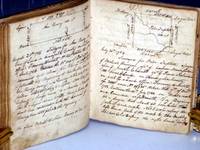
031811Major William Haymond 1740-1821 Revolutionary War officer and first surveyor of Harrison County Virginia appointed 1784 kept a rare detailed field diary of surveys from the late 18th century. Covering parcels of 1000-5000 acres the volume records names measurements maps and land patents often correcting and refining entries found in Sims Index to Land Grants in West Virginia. Patents under the new U.S. government some issued before the Constitution’s ratification are meticulously noted with hundreds of named purchasers. Among the most notable are surveys for John Tyler Sr. Governor of Virginia and father of President John Tyler. unknown
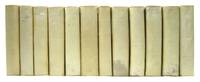
172910151Leipzig Johann Heinrich Zedler/Register: Leipzig Bernhard Christoph Breitkopf 1729-1733/1740. 12 bindings containing 22 volumes and a register 10 16 588 8 834 8 4 674 14 608 10 16 640 8 674 10 4 548 8 636 14 744 12 576 10 32 664 6 8 651 8 16 742 8 680 6 8 620 6 621 10 720 6 534 6 708 2 380 8 736 2 592 4 224 26 144 882 280 p. Contemporary Vellum Folio H. 345 x L. 225 x W. 7-85 cm. -the complete set is ca. 90 cm. wide- A single wormhole in the bottom margin of volume 13 top of the back covers of volume 19/20 21/22 and the register lack a small piece of vellum the text blocks are slightly browned at some places but not nearly as browned as usual page 451/452 of volume 9 is present a second time in volume 8 all 22 volumes are illustrated with a large engraved head-piece depicting Luther at the beginning of the main text. Firm and complete set of the works of Martin Luther 1484-1546. Included is a useful register which was specially made for this edition by Johann Jacob Greiff 1699-1767. The set is uniformly bound in firm vellum bindings which are in very good condition and surprisingly clean. Altogether a beautiful set of the life's work of the renowned Martin Luther. Leipzig Johann Heinrich Zedler/Register: Leipzig, Bernhard Christoph Breitkopf hardcover
1963JH1151489New York: Harper & Row 1963. Hardcover. . Very good condition./Very good moderatly edgeworn and rubbed dust jacket. . Not price clipped $3.50. Signed by author Best Wishes Martin Luther King Jr. Gift inscription by Kivie Kaplan who was a member of the NAACP and elected a member of the board in 1954. He certainly would have know Martin Luther King Jr. Wake up White Americans letter laid in. It mentions Kivie Kaplan as a jew who raises money for the NAACP. Philosophy Phl New York: Harper & Row hardcover
196368866New York: Harper & Row Publishers 1963. Full Description:<br> <br> KING Martin Luther Jr. Strength to Love. New York: Harper & Row Publishers 1963.<br> <br> Signed by King on front free end paper "Best Wishes/Martin Luther King". In publisher's dust jacket. Octavo 8 3/8 x 5 5/8 inches; 212 x 144 mm. x 2 146 2 blank pp. Below the signature is an ownership stamp reading "Golden State Mutual Life Ins. Co."<br> <br> Publisher's quarter black cloth over black paper boards. Spine lettered in gilt. In publisher's non-price clipped dust jacket. Jacket with some rubbing along edges and at the top of front panel. Top of jacket spine with some very minor chipping. Bottom of jacket spine with a one-inch closed tear. Overall a very good jacket and an about fine book.<br> <br> This copy's provenance is particularly interesting being that is was once part of the art collection of the Golden State Mutual Life Insurance Company the insurance company renown for being one of the largest Black-owned insurance companies in the Western United States and one of the few places in the 1920s that would insure Black people.<br> <br> "Golden State Mutual founder William Nickerson Jr. moved to Los Angeles from Texas in 1921 as an official representative of the Texas-based insurance company American Mutual Benefit Association. When he arrived in California he soon discovered that the state's existing insurance agencies viewed its 40000 Black citizens as either uninsurables or extraordinary risks. Black residents were only accepted at discriminatory premium rates or denied insurance coverage altogether." Online Archives of California.<br> <br> "The Golden State Mutual Life Insurance Company was founded on July 23 1925 in Los Angeles by William Nickerson Jr. George A. Beavers Jr. and Norman O. Houston. Their mission was to provide dignified employment for African Americans and to provide them with insurance protection. Golden State Mutual operated for eighty-four years and grew to become one of the largest Black-owned companies in the United States." Online Archives of California.<br> <br> "The Golden State Mutual Life Ins. Co. owned a significant collection of artwork by African American artists acquired and curated by one of their employees artist William Pajaud. As art historian Kellie Jones states the company had 'committed itself to supporting black creativity' since its founding but Pajaud 'moved Golden State to a new level of support for artists'.6 Employed in 1957 Pajaud worked initially as art director in design for the company and then ran the public relations department but as a trained artist had a knowledge of art and connections with many fellow artists. He proposed starting a company collection in 1965 to celebrate the company's fortieth birthday and with a small budget acquired over 200 works of art over the next twenty or so years. The collection was auctioned in 2007 when the company went out of business." Wikipedia.<br> <br> Strength to Love is the second book written by Martin Luther King Jr. and it is a collection of his sermons. This first edition was published in 1963 the same year he organized the nonviolent protests in Birmingham Alabama and organized the March on Washington where he gave his most famous "I Have A Dream" speech. He was awarded the Nobel Peace Prize the following year.<br> <br> HBS 68866.<br> <br> $10000. Harper & Row Publishers unknown
1729041022Leipzig Johann Heinrich Zedler/Register: Leipzig Bernhard Christoph Breitkopf 1729-1733/1740 1729. Hardcover. Very Good. Des Theuren Mannes Gottes D. Martin Luthers Sämtliche Theils von Ihm selbst Deutsch verfertigte theils aus dessen Lateinischen ins Deutsche übersetzte Schriften und Werke Welche aus allen vorhin Ausgegangenen Sammlungen zusammen getragen Und Anietzo in eine bequemere und nach denen Materien eingerichtete Ordnung gebracht nach denen ältesten und besten Exemplarien mit Fleisz übersehen und verbessert mit verschiedenen in denen Altenburgischen und andern Tomis ermangelnden Schrifften vermehret und mit nöthigen Vorberichten versehen. WITH in Volume XXII: M. Johann Jacob Greiffs Pastoris in Mölbis Vollständige Register über die XXII Leipziger Theile der gesammten Schriften Des seligen D. Martin Luthers Nebst einem auf die Wittenbergischen Jenischen 1740. 22 volumes in 22 bound vellum bindings. Marble endpapers. Interior very good pages evenly browned. Leipzig Johann Heinrich Zedler/Register: Leipzig, Bernhard Christoph Breitkopf 1729-1733/1740 hardcover
196365890Atlanta: np 1963. 8pp. Mimeographed on rectos only bound with single staple. Tanned overall else in very good condition. One of an unknown but no doubt small number printed for colleagues attendees and the press. Provenance upon request. "Dr. King discusses the issues of segregation poverty and discrimination within the City of Atlanta in this 1963 speech at the Pilgrimage for Democracy. He explains that although Atlanta was thought to be a place of "racial harmony" the reality of glaring discrimination in Atlanta's schools restaurants and housing has left the local Negro community "tired" and hungry for change." www.thekingcenter.org.<br /> <br /> We locate only one other example in the King papers at Stanford University. np unknown
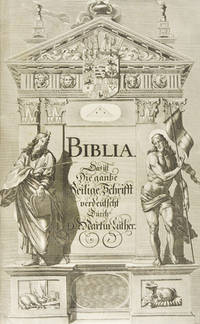
176820419Nürnberg Nuremberg: In Verlegung der Johann Andrea Endterischen Handlung 1768. Later edition. Hardcover. Very good. Three parts folio 17 3/4 x 12". 4: engraved title; main title 12: Preface to the 1736 Second Edition 2: Note to the Christian Reader on this New 1768 Edition 16: Preface to the 1640 i.e. 1641 Edition 2: List of Saxony's Electors pages 11 full-page engraved portraits of the Electors 1: full-page portrait of Martin Luther leaves 8: Short Introduction and Instruction Regarding the Holy Scriptures 2: Calendar 13: General Index 26: Name Index 11: Chronology 1: Personalities in the Maccabean and Herodian Eras 7: Explanations on the Old Testament 5: Charts of calandars weights money measures and distance in biblical times 4: Chronological Order of the Books of the Bible 7: Register/Table of the Old Testament 3: Martin Luther's Preface to the Old Testament; 740 Pentateuch; Former Prophets; Writings; 512 Latter Prophets and Apocrypha; 472 New Testament 473-480 Gospel Harmony 14: Creeds and Augsburg Confession pages. Text in German Gothic script; text within ruled borders marginal column for printed side notes; woodcut initials and ornaments; elaborate woodcut half titles in imitation of calligraphy at verso of initial text leaves for the second and third parts Prophets and New Testament. Complete with 48 copperplate engravings: 12 full-page portraits in the preleminaries Electors and Martin Luther; a full-page depiction of the construction of Noah's Ark; 27 full-page sectional illustrations 20 vignette compositions; 9 portraits of Prophets and Evangelists; 8 double-suite plates biblical lands from Egypt to Babylonia; Egypt and Canaan noting tribal allotments; Canaan in the New Testament era; Greece and Asia Minor with vignettes of the Temple; encampment of the Israelite tribes in the wilderness; bird's eye view of Jerusalem after Adrichem; view of Jerusalem in the New Testament era; Diet of Augsburg with legend.<br /> <br /> Contemporary calf lightly rubbed at extremities with some light scratching at rear board elaborately tooled in gilt depicting a neo-classical sanctuary on both boardsTetragrammaton in pediment on the front a cross in pediment on the rear; exquisite gauffered fore-edges ornamented in gilt against forest green wash depict a sunburst with architectural motifs; gilt turn-ins. Rebacked retaining original spine; endpapers renewed. 15 cm clean tear through text at leaf C4 in the New Testament reparable; final text leaf chipped at bottom edge not affecting text; tears at Diet of Augsburg plate and final text leaf expertly repaired at versos. Overall pages crisp and fresh with mild intermittent toning very occasional light stains and smudges and just a touch of damptstain at fore-edge in later leaves of the New Testament. A very good copy with clean plates in a beautiful magnificent binding complete with the folding plate of the Diet of Augsburg often lacking. Housed and protected in a modern custom red cloth slipcase.<br /> <br /> Final edition of the sumptuously illustrated Kurfürstenbibel Electors' Bible with a full apparatus of introductory and historical materials. Also known as the Weimar Bible it was compiled under the auspices of Ernst I Duke of Saxe-Gotha and Altenburg. Beginning in 1641 all editions were published by the prominent German printing dynasty of Endter. The maps views and illustrated divisional titles by Jacob van Sandrart and others made their first appearance in the edition of 1686. In this latest version the illustrated sectional titles are signed by Johann Chrisopher Claussner and most of the other views lack the signatures found in the 1686 edition. The earlier forewords by Salomon Glass ed. 1641 and Ernst Solomon Cyprian ed. 1736 are reprinted in the present edition.<br /> <br /> The preliminaries feature eleven full page engravings of Saxony's Electors from Friedrich III to Bernhard der Große followed by an engraved portrait of Martin Luther. Often lacking the final fold-out engraving depicts the Holy Roman Emperor and representatives of the German states in a large reception hall during the Diet of Augsburg. Participants are identified in the legend on the facing page. The conference was assembled by Charles V so that the Princes and Free Territories in Germany might explain their religious convictions in an attempt to restore religious and political unity in the Holy Roman Empire and rally support against the Turkish invasion. The consensus of the assembly is expressed in the Augsburg Confession the primary confession of faith of the Lutheran Church and one of the most important documents of the Reformation era. Written in both German and Latin the Confession was presented at the Diet of Augsburg on 25 June 1530; it is the fourth document contained in the Lutheran Book of Concord. References: Bibelsammlung Stuttgart E777; Delaveau & Hillard 16; Cf. Darlow & Moule 4217 note on ed. 1641; 4234 ed. 1736.<br /> <br /> Full title: Biblia Das ist die gantze Heilige Schrift Altes und Neues Testaments. Verdeutscht von Herrn Doctor Martin Luther: Und auf gnädigste Verordnung Des Durchlauchtigsten Fürsten und Herrn Herrn Ernsts Herzogen zu Sachsen Fülich Kleve und Berg von etlichen reinen Theologen dem eigentlichen Wort-Verstand nach erkläret wie hiervon weiter in der Vorrede gehandelt wird. daher über die gewöhnliche mit Fleiß verbesserte Biblische Register unter anderem zu finden ein Bericht von Vergleichung der Jüdischen und Biblischen Monden Maaß Gewicht Müntz und Elen mit den Unserigen: Sowohl auch eine Beschreibung der Stadt Jerusalem samt unterschiedlichen neuen Land-Tafeln und andern schönen Kupffer-Figuren und derselben Beschreibung: Welches alles dem Christlichen Leser zu mehrerm Verstand der Schrifft gute Anleitung geben kan. Zu Ende ist auch nebst den Christlichen Haupt-Symbolis die unveränderte Augspurgische Confession mit beygedruckt worden. Von neuem mit Fleiß übersehen durch fernere sowohl den Verstand als Lutheri Ubersetzung betreffende Anmerckungen erläutert auch mit einer kurzen Anweisung zur Erklärung der Heil. Schrift und andern Einleitungen vermehret. Mit königl. polnischem und Chur-Fürstl. Sächsischem Privilegio. In Verlegung der Johann Andrea Endterischen Handlung hardcover
352443Vp 1990. Together 11 items as listed below. Together 11 items as listed below. The present group comes from the papers of Alfonso and Lucy Campbell. The Campbells attended Dexter Avenue Baptist Church and became friendly with the King family. Both became deeply involved with the Montgomery Improvement Association and during the bus boycott Alfonso served as co-chair the Montgomery Improvement Association's Transportation Committee and chair of the Purchasing Committee. In 1964 the Campbells moved from Montgomery to Virginia when Alfonso became Assistant Dean of Men and Lucy a staff librarian at Hampton Institute.<br /> <br /> Included are the following in chronological order:<br /> <br /> 1. Souvenir Program. The Citizen's Committee Presents Congressman Adam Clayton Powell of New York. Alabama State College Gymnasium . November 3 1955. Montgomery AL: 1955. 12 pp. Original printed stiff staple-bound self-wrappers. Unrecorded in OCLC.<br /> <br /> 2. Ten Times One is Ten Club Presents Dr. Ralph J. Bunche Undersecretary of the United Nations. Alabama State College Gymnasium . May 27 1956. Montgomery:1956. 4pp. Unrecorded in OCLC. The program included a solo by Coretta Scott King.<br /> <br /> 3. The Eightieth Anniversary of the Dexter Avenue Baptist Church. Montgomery: 1957. 30pp. 4to. Blue printed wrappers. Later tape along the spine. Official printed booklet for the 80th anniversary celebration of the Dexter Avenue Baptist Church featuring a history of the Church a biography of Dr. Martin Luther King Jr. a program of events printed photographs of the church's various members and groups including Dr. King the Deacons and Trustees the Missionary Society Scholarship Committee the Choir Social Political Actions Committee and others as well as dozens of printed ads of congratulations and compliments from Montgomery's businesses and individuals. OCLC records a single copy at Swarthmore.<br /> <br /> 4. The Dexter Avenue Baptist Church Presents The First in a Series of Youth Programs . October 25 1959. Montgomery: 1959. 1p. single 4to sheet. Stamped signature of Martin Luther King Jr at top "M.L. King Jr; "Dexter Avenue Baptist Church School/J.T. Alexander Superintendent" rubber-stamp at bottom in purple ink and signed in pen by Enrollment Secretary Eileen Jones. Unrecorded in OCLC.<br /> <br /> 5. The Dexter Avenue Baptist Church Montgomery Alabama Presents A Salute to Dr. & Mrs. Martin Luther King . January 31 1960. Montgomery: 1960. 4pp. 8vo. Self-wrappers. Folds. Printed program for the farewell celebration for Dr. King at the Dexter Avenue Baptist Church featuring the banquet menu program of events and tributes and the various committees and their members. Unrecorded in OCLC.<br /> <br /> 6. Partially-printed check accomplished and signed by Alfonso Campbell issued to Martin Luther King Jr. in the amount of $10. Montgomery: February 1 1960. Endorsed on verso secretarially. Campbell donates to King the day after the testimonial dinner after his leaving Dexter Avenue Baptist.<br /> <br /> 7. A season's greeting card inscribed by Coretta Scott King to the Campbells signed "'The Martin Luther Kings' Coretta Martin Yoki Marty & Scotty. Atlanta: December 29 1961. With the original mailing envelope.<br /> <br /> 8. A printed season's greeting card send from the King family to the Campbells with the original mailing envelope. Atlanta: December 1965.<br /> <br /> 9. A printed season's greeting letter from the King family with printed signatures below with the original mailing envelope. Atlanta: December 19 1967. 1p.<br /> <br /> 10. The Twenty-sixth Annual Fall Convocation and the Dedication of Martin Luther King Hall. Ogden Hall . September 26 1968. Hampton Institute: 1968. Signed on the upper cover by Benjamin Mays. 8pp. <br /> <br /> 11. Typed letter secretarially signed by Coretta Scott King to Alfonso Campbell thanking him for a donation. Atlanta: July 1 1985. 1p.<br /> <br /> 12. A printed card from the Abernathy family thanking the Campbells for the sympathy. Atlanta: June 28 1990. unknown
2j5116Hans Krafft Wittenberg 1576. 14 nn./392 num. /447 num. Bl. Mit 2 Titelbordüre 1 Porträt des Herzogs zu Sachsen ganzseitigem Holzschnitt von Hans Brosamer und 216 Textholzschnitten meist von Johann Teufel und vielen Holzschnitt-Initialen. Original Leder-Einband mit 5 Schmuckbünden und 8 verzierten Kupferbeschlägen Rücken restauriert/Einbanddecken wurmstichig/Schließen fehlen/alte Anmerkungen auf Vorsatz/1 Titelbordüre u. Porträt mit hinterlegten Randläsuren u. etwas Bildverlust/20 Bl. mit kleinen Eckausrissen dadurch wenige Seiten mit unerheblichem Textverlust/teilw. knapp beschnitten mit leichtem Buchstabenverlust der gedruckten Marginalien/etwas fleckig/teils randfleckig/alte Marginalien. - Zweite Ausgabe der Krafftschen Bibel mit den zahlreichen eindrucksvollen Holzschnitten des Meisters Johann Teufel. Hans Brosamer 1495 in Fulda - 1554 in Erfurt war deutscher Maler Kupferstecher und Formschneider nach Lucas Cranach dem Älteren bei dem er Schüler war war er der zweite Illustrator der Luther-Bibel. Die Holzschnitte in der Ausgabe von 1576 sind identisch mit der ersten illustrierten Auflage von Brosamer aus 1550 - unknown
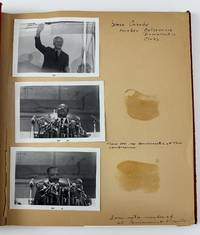
19675899Chicago and New Orleans: September 1967. 21 leaves illustrated with ninety-nine photographs mostly black-and-white but some in color. All ninety-nine images with a printed caption in the margin reading "Sep 67."Square folio. Contemporary red leatherette stamped in gilt on front cover string tied. Minor wear some images loose. Very good. An important photographic record of a notable moment in the interplay between the Civil Rights Movement the Black Power Movement and 1960s white liberalism documenting the 1967 National Conference on New Politics NCNP in Chicago. Simon Hall in his 2003 article in Journal of American Studies entitled "On the Trail of the Panther: Black Power and the 1967 Convention of the National Conference for New Politics" described the event as "one of the most ambitious attempts to forge a broad political alliance of antiwar organizations New Left insurgents and the radical wing of the Civil Rights Movement in 1960s America." The album is captioned on the inside front cover: "The National Conference on New Politics Aug. 31 - Sept. 4 1967 Palmer House Chicago." Seventy-five images document the conference many captioned on the album leaves identifying speakers attendees and settings or providing commentary.<br /> <br /> Chief among the delegates to the conference was Dr. Martin Luther King Jr. who delivered the keynote address on the first night. The title of the speech was "The Three Evils of Society" which King defined as “the sickness of racism excessive materialism and militarism.†The present album includes five candid shots of King from that night. These include four shots of King at the microphones during his keynote address three with captions that read "There are no communists at this conference" "I am not a member of 60 communist fronts" and "We do not believe in violence but rather civil disobedience on a vaster scale than ever before" respectively. The fourth photograph of King shows him sitting with Ralph Abernathy and Michael Wood this image captioned "Center: Michael Wood of the Nat'l Student Assn who blew the whistle on the CIA."<br /> <br /> In addition to the photographs of Dr. King the album includes dozens of candid shots of conference participants that reads like a who's-who of civil rights and Black Power activists of the moment including members of SCLC SNCC CORE and the Black Panthers. These portraits memorialize the conference participation of Julian Bond Dick Gregory Ralph Abernathy one of which catches him sleeping during King's speech and is humorously captioned "The alert audience of ML King" Hunter Pitts "Jack" O'Dell Floyd McKissick James Foreman Lois Allen Vietnam War protester Private Ronald Lockman and a woman from the "Mississippi Freedom Democratic Party" who appears to be Victoria Jackson Gray Adams.<br /> <br /> The album also pictures white members of the New Left or sympathetic supporters of the civil rights movement such as Dr. Benjamin Spock Dr. Donna Allen Women's Strike for Peace Simon Casady influential California Democrat William Pepper Executive Secretary of NCNP Clark Kissinger National Secretary of the Students for a Democratic Society and Robert Scheer publisher of the radical Ramparts magazine. The album also includes some shots of other unnamed notables and additional attendees views from the main conference floor a display of posters featuring "Heroes of the National Liberation Movement" such as Che Guevara Malcolm X and Stokely Carmichael and book displays by vendors such as the Progressive Labor Party Marxist publisher Lou Diskin CADRE Chicago Area Draft Resistors and the Student Mobilization Committee.<br /> <br /> An additional twenty-four color images picture H. Rap Brown Jamil Abdulla al-Amin and various scenes in New Orleans during Brown's trial for weapons charges in September 1967. Brown was a fiery activist who was that time serving as the fifth chairman of SNCC a post he held from May 1967 to June 1968. Incongruously Brown was a controversial head of SNCC for his constant calls for violent political action and even served a dual role as the head of SNCC and as Minister of Justice for the Black Panther Party in 1968. The first page of images featuring Brown in the present album is captioned: "Rap Brown in New Orleans. Arraigned on carrying a weapon in interstate while under criminal indictment in Maryland for inciting to riot & arson" referring to the riot in Cambridge Maryland earlier that summer. Seventeen of these images show Brown and his lawyers talking to reporters outside the courthouse then continuing to do so as Brown walks down the street and gets into a car. Seven of the images show various street scenes around New Orleans. Brown's trial was going on at the same time as the National Conference in Chicago. As such a handful of the latter images show James Foreman of SNCC who according to the manuscript caption "spoke for H. Rap Brown" at the conference. At the time Foreman was the International Affairs Director for SNCC.<br /> <br /> The conference was an odd combination of white liberals Civil Rights legends and Black Power advocates which according to a contemporary source "brought black militants and much of the white left into occasional dialogue and frequent chaos." A retrospective "This Week in History" piece in the Chicago Sun Times in 2021 set the scene of the conference and detailed Dr. King's keynote speech: "A haven for liberal politicians and supporters the National Conference for New Politics took place over Labor Day weekend in 1967. The Chicago Sun-Times extensively covered the conference where politicos activists and anti-war advocates mixed and mingled to excite their base and prepare for the upcoming election season. The highlight of the convention came on Aug. 31 when Dr. Martin Luther King Jr. took to the stage to deliver the keynote address to 4000 people at the Chicago Coliseum. 'The promise of a Great Society has been shipwrecked off the coast of Asia on the dreadful pinnacle of Vietnam' he told conference-goers. The war he said 'has torn up the Geneva agreement seriously impaired the United Nations exacerbated the hatreds between continents and worse still between races: it has frustrated our development at home.If the will of the people continues to be unheeded all men of good will must create a situation in which the 1967-68 elections are made a referendum on the war' he said. 'The American people must have an opportunity to vote into oblivion those who cannot detach themselves from militarism.' King’s speech touched on more than the Vietnam War. He called for a national employment agency noting that capitalism 'was built on the exploitation and suffering of Black slaves and continues to thrive on the exploitation of the poor -- both Black and white -- both here and abroad.' The activist referred to racism as 'that corrosive evil that will bring down the curtain on Western civilization.' King received a standing ovation after his speech. September unknown
1963140945155np: No Publisher 1963. Very Good. Original felt pennant from the March on Washington August 28 1963. Red felt with white stenciled lettering measuring 11" x 28. Very Good with light staining light creases and minor wear. <p>An historic event in the battle for civil rights when an estimated 250000 people showed up to this iconic event demanding civil and economic rights for African Americans. There Dr. Martin Luther King delivered his famous "I Have a Dream" speech in front of the Lincoln Memorial. [No Publisher] unknown
1748D9092Nuremberg: In Verlegung der Johann Andrea Endterischen Handlung Endter MDCCLXVIII 1748. Hardcover. Very Good. Large format folio 424 x 274 x 125mm. 144 740pp. 2 512 480 16pp. Additional engraved title of architectural motif with heraldry of Saxe-Gotha-Altenberg and the flanking figures of Moses and Christ with their attributes in niches below signed by J. C. Clausener. Illustrated with 45 plates including title most of them full-page few double-page engravings depicting biblical scenes and prophet portraits as well as some double-page maps and plans temples and Holy Land maps most illustrations also signed by Clausener. With the rare double-page engraving in rear showing royalty and court members in a large reception hall Bischöffliche oder Fürstliche Saal during the Confessio which took place in Augsburg in 1530 under Charles V. This plate is usually missing. Persons and part of the architecture in hall are indicated on the actual plate with small numbers 1-47 opposite page lists each number with name and title of person depicted and explanations of parts of the architecture. Engraved titles and decorated initials throughout. Text in German. Gothic script. Contemporary blind-tooled pigskin over beveled boards with brass corner pieces and bosses clasps and catches restored; marginal soiling with age few dampstains or light wear not overwhelming the large work in the least engravings wholly intact with only minor folds or stains only map of Israel with wide marginal tear otherwise an excellent survival. Formerly in the Evangelical Lutheran Church in America early clippings of poetical quotations c.1910 found in hinge of first quire. <br/><br/>Endters Kurfürstenbibel of 1748 an influential Luther Bible with exceptional engravings produced by the Gotha court. First published in 1641 under the authorization of Duke Kurfürst Ernst I of Saxe-Gotha. This is the so-called Kurfürstenbibel or Elector Bible because some of the engravings show various Dukes from the 16th and 17th centuries. At the realization of this major project prominent Lutheran theologians such as Johann Gerhard Solomon Glassius and Johann Michael Dilherr among others contributed to the work. This Bible was published with a glossary and added in-text explanations of Luthers original translation for the enlightenment of ordinary people. For nearly two centuries from 1613 to 1792 the successful family of Endter of Nuremberg printed the text of Luthers Bible. Specifically the Kurfürstenbibel was produced from 1641 to 1758 in fourteen editions. Today the large-format folio expenditures are amongst the most commonly encountered family Bibles from the 17th but especially the 18th century. The Gotha courts significant pool of sources as well as favor of the market place in Nuremberg gave rise to such an important project. Large-format and heavyweight in every sense of the word it remains a visually stunning work with its numerous portraits of princes in woodcuts and engravings this Elector Bible treated both theological aspects as well as those of the courtly self-understanding. In Verlegung der Johann Andrea Endterischen Handlung [Endter], MDCCLXVIII hardcover
196356230Philadelphia: American Friends Service Committee 1963. First Printing dated May 1963. 15pp. Just slightly rubbed and tanned with a light tiny crease to the edge of the rear else a near fine copy in publisher's stapled wraps Written by King while he was imprisoned in Birmingham Alabama the letter responds to a statement made by eight white clergymen who had criticized the civil rights protests and called for patience and calm. King argued that the protests were necessary for the civil rights movement and that the clergymen's call for patience was actually a call for inaction in the face of injustice. He also argued that the segregation laws in Birmingham were unjust and violated the principles of Christianity. <br/><br/> American Friends Service Committee paperback