26 503 résultats
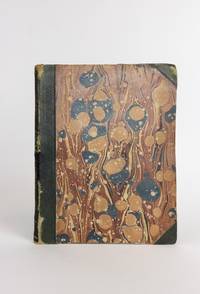
18860002014NORTH OXFORD COUNTY ON EAST NISSOURI WOODSTOCK. Fair. 1886. On offer is an interesting original later 19th Century Municipal Record book from North Oxford Ontario dated 1886-87. Titled: Township of North Oxford Debenture Accounts Henderson Creek Drain under By Law No. 176. 1886 & 1887. The treasurer is an Abraham John Hillsdon and the accounts are written in his hand ~ lists of income received and expenditures for this Henderson Creek Drain project in 1887. There are 29 written pages starting in 1887 with the last entry in 1895. They are sporadic in the book some at the front some in the middle and some right at the end of the book with blank pages in between. There is a small glued in handwritten receipt: 'Received from Mr. Hillsdon Treasurer of North Oxford the Sum of Five dollars and Seventy three cents ~ East Nissouri Township's share of the refund on the Henderson Creek Drain" signed David Lawrence Treasurer East Nissori'. Many names in this book a very interesting piece of south western Ontario history. The back of the book has several pages on the Gravel Account for 1894; Reports from Each Pathmaster of the Gravel Used in their Division; lists of names numbers of loads and pit locations. There is also a copy of By-Law # 176 for the year 1886 inserted ~ By-Law to provide for draining of parts of the first second and third concessions of the Township of North Oxford and for borrowing on the credit of the Municipality the sum of one thousand nine hundred and fifteen dollars for completing the same. Provisionally adopted the twentieth day of October A.D. 1886. Also there is a worn copy of the Seventh Annual Report for the Agricultural Mutual Assurance Association of Canada tucked in. The book itself is in fair shape having a cracked hinge some loose pages and some chipping but overall Fair.; 8vo - over 7¾" - 9¾" tall; KEYWORDS: HISTORY OF NORTH OXFORD COUNTY ABRAHAM JOHN HILLSDON KITCHENER ONTARIO UPPER CANADA GALT WATERLOO HENDERSON CREEK DRAIN DAVID LAWRENCE EAST NISSORI LAKESIDE THAMESFORD ECONOMY FINANCE WOODSTOCK INGERSOLL TILLSONBURG BLANDFORD-BLENHEIM EAST ZORRA-TAVISTOCK NORWICH SOUTH-WEST OXFORD TOWNSHIP OF ZORRA HESSE DISTRICT MENNONITES AMISH CANADIANA CANADIAN HANDWRITTEN MANUSCRIPT DOCUMENT LETTER AUTOGRAPH DIARY JOURNAL LOG KEEPSAKE WRITER HAND WRITTEN DOCUMENTS SIGNED LETTERS MANUSCRIPTS PHOTO ALBUM PHOTOGRAPHIC ALBUM HISTORICAL HOLOGRAPH WRITERS HANDSCHRIFT HANDGESCHRIEBEN MANUSKRIPT DIARIES JOURNALS LOGS AUTOGRAPHS PERSONAL MEMOIR MEMORIAL PERSONAL HISTORY antiquité contrat vélin document manuscrit papier Antike Brief Pergament Dokument Manuskript Papier oggetto d'antiquariato atto velina documento manoscritto carta antigüedad hecho vitela documento manuscrito Papel . unknown
1865235590Boston: Oliver Ditson & Co 1865. First edition front wrapper without portrait of Lincoln appearing in later issues. Engraved title and piano score; 5 pp. 1 vols. Folio. Loose as issued; split along spine with some chipping to extremities. First edition front wrapper without portrait of Lincoln appearing in later issues. Engraved title and piano score; 5 pp. 1 vols. Folio. Donizetti died 17 years before Lincoln having gone mad from syphilis. His Funeral March gained a measure of recognition in America after it was performed during Lincoln's funeral ceremonies. It is a heavy solemn piece in a minor with droning octaves in the bass a haunting chromatic figure in the middle register and a lyrical upper voice. see Barret Sale Lot 693; Stern Collection of Lincolniana Oliver Ditson & Co unknown
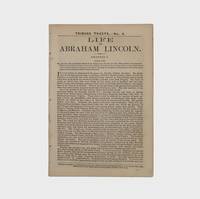
1860377692New York: Horace Greeley & Co 1860. 32pp. 8vo. Disbound. 32pp. 8vo. An early campaign biography of future president Abraham Lincoln written by John Locke Scripps of the New York Tribune. Scripps reports on the life of Abraham Lincoln in eight chapters touching on the major events of his life and career beginning with his early life and his move to Illinois through his transition from merchant to lawyer and legislator and covering his time in Congress with accounts of Lincoln's opposition to the Mexican-American War his support of the Wilmot Proviso and his involvement with the organization of the Republican Party. <br /> <br /> Wessen states that this edition was printed by Horace Greeley "from plates cast from the same type forms" as the 1860 Chicago edition which is considered the first published biography of Lincoln. An advertisement for the Tribune and the Tribune Almanac fills the bottom two thirds of the last page. <br /> <br /> "Most authentic of Lincoln campaign biographies" - Howes. Howes S247a "aa"; Managhan 79 note; Wessen Campaign Lifes of Abraham Lincoln 12 ref; Miles 418a; Abraham Lincoln: His Life in Print p. 85 Horace Greeley & Co unknown
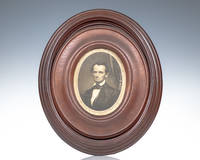
146474Engraved oval portrait of Abraham Lincoln the sixteenth president of the United States. Displayed in an antique wooden frame. The engraving measures 4.5 inches by 6 inches. The entire piece measures 10.75 inches by 12.75 inches. In near fine condition. Abraham Lincoln served as the 16th President of the United States from March 1861 until his assassination in April 1865. He led the United States through its Civil War and in doing so preserved the Union of the United States of America abolished slavery and strengthened the federal government. Lincoln began constructing his cabinet on election night and sought to create a cabinet that would unite the Republican party. His eventual cabinet would include his primary rivals for the Republican nomination and although his appointees held differing views on economic issues all were opposed to the expansion of slavery into the territories of the United States. The most senior cabinet post of Secretary of State was appointed to William Seward who had recently failed to win the 1860 Republican presidential nomination and Lincoln's choice for Secretary of the Treasury was Ohio Senator Salmon P. Chase Seward's primary political rival and the leader of a radical faction of the Republican party that sought the immediate abolition of slavery. unknown
161871449San Francisco:: The Flag's Evening Dispatch April 16 1865. single sheet folded to form four pages. Light horizontal crease is neatly reinforced with tissue; slight use at edges. . Folio. Two small engraved illustrations. Mourning borders throughout. Nearly the entire newspaper is devoted to assassination news including "A Wail for President Lincoln" written for the Flag's Dispatch. The Flag's Evening Dispatch, unknown
186482099New York:: National Union Executive Committee 1864. Creased where folded vertically and multiple times horizontally; some minor use to edges and a few tiny losses at folds; very attractive. . 11-1/2 x 8-3/4 inches. A Lincoln re-election broadside setting forth in detail and contrasting The Chicago Platform proposing "immediate efforts be made for a cessation of hostilities" and The Baltimore Platform "quelling by force of arms the rebellion." National Union Executive Committee, unknown
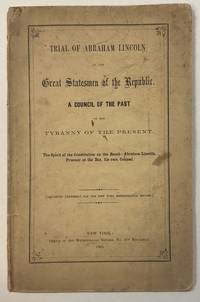
186340887New York: Office of the Metropolitan Record 1863. Original printed wrappers. Stitched. 29 1 blank 1- advertisement for 'The Washington Despotism Dissected' 1 blank pp. Light wear and fox. About Very Good.<br /> <br /> The Metropolitan Record whose Prospectus is printed on the rear wrapper calls itself "an unswerving opponent of fanaticism in every form and an advocate of constitutional liberty and the rights of the citizens against despotic usurpation." <br /> This pamphlet is "A mock trial wherein Lincoln was charged with treasonable intent purposes and designs and of having committed among other unconstitutional acts the following: 'Declared War against Sovereign States under pretence of repossessing himself of certain forts and other property; arresting citizens without process of law; suppressed liberty of speech; stopped publication of certain newspapers; placed the military power above the civil power; overthrown State Sovereignty; forced unconstitutional acts through Congress.' At the conclusion of the trial the Court addressed the 'Criminal' as follows: 'You have been tried and found wanting. You have been given the opportunity of saving a nation but you have stabbed it to the heart. You have converted your country into a despotism'." Eberstadt.<br /> "Quotations from Lincoln and others selected to discredit his administration" Monaghan. A second edition was printed in 1867. Sabin Monaghan and LCP do not collate the advertisement at page 31.<br /> FIRST EDITION. 111 Eberstadt 332. Monaghan 252. Sabin 41234. LCP 10399. Office of the Metropolitan Record unknown
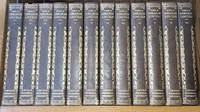
25.07Lincoln13<p>THE WORKS OF ABRAHAM LINCOLN. <br />Limited Sponsors Edition. <br />By Nicolay and Hay.<br />Complete in 12 volumes. </p><p><br />In remarkable condition for the age. <br />Good to very good overall. <br />Some extremity micro spine chipping and abrasions. </p><p><br />The bindings are original. <br />The bindings are the publisher's original full leather bindings. <br />The hinges are all sound. <br />An exceptional set. <br />In remarkable condition for the age. <br />Minor extremity wear. <br />Minor extremity chipping. <br />Small chip st head if volume two and base of volume six. <br />Hinges all sound. <br />The paper is high quality. </p><p>These are large volumes measuring approximately 9.25 inches tall. </p><p><br />This is a complete 12 volume set of the Works of Abraham Lincoln. <br />Copyrighted in 1894. <br />No date on title page. <br />This is the limited Sponsor's Edition by the Lincoln Memorial University. <br />The historical record dates this set as 1926. </p><p>by John G. Nicolay and John Hay these books are in very good condition. Thick heavy paper. Each of the 12 books has around 350 pages and measures 9.25" long 6.25" wide and 1.5" thick. </p><p>The main condition flaw is minor extremity chipping as shown in the pictures. <br />Small chip at the head of volume two base of volume six. <br />Light generalized abrasion. <br />Hinges sound. <br />Paper is high quality rag paper. </p><p><br />Includes signed limitation page from John Wesley Hill the Chancellor of Lincoln Memorial University. Monaghan 1471. </p><p>An exceptional set.</p><p>The Complete Works of Abraham Lincoln first published in 1894 was edited and compiled by President Lincoln's private secretaries John G. Nicolay and John Hay. The 1894 edition was the first scholarly attempt to collect and publish the complete writings of Lincoln. The New and Enlarged Complete Works of Abraham Lincoln was issued in 1905 by the Francis D. Tandy Company. This edition from 1926 The Sponsors Edition was published using the plates from the New and Enlarged work with an introduction by the Chancellor of Lincoln Memorial University.</p><p><br />This set will be well protected for shipping. </p><p>Please see my other listings for similar books. </p><p>25.07</p>
186323577.01<p>"<i>and that Government of the people for the people and for all people shall not perish from earth.</i>"</p><p>As printing technology advanced through the middle decades of the nineteenth century illustrated newspapers grew in popularity even though their engravings added a few weeks to press time. <i>Leslie's</i>printing—from December 5—includes an article containing the full text of Lincoln's timeless speech page 11. Illustrations include a centerfold spread with the formal dedication ceremony prominently placed and smaller views of Union and rebel graves defensive works Meade's headquarters and a view of the town centerfold. A large illustration of "<i>The War in Tennessee—Lookout Mountain and Its Vicinity</i>" appears on the front page.</p><p>There is no definitive text that captures exactly how Lincoln spoke that day though the AP reporter's text is most familiar. <i>Leslie's</i> printing following the <i>Philadelphia Enquirer</i>version contains variations most notably in the final two sentences regarding the nation's unfinished work and closing phrase of "<i>Government of the people for the people and for all people</i>" rather than "<i>of the people by the people and for the people.</i>"</p> <b>ABRAHAM LINCOLN. GETTYSBURG ADDRESS.</b>Newspaper <i>Frank Leslie's Illustrated Newspaper</i> New York December 5 1863. 16 pp. complete.<p><b><br /></b></p><p><b>Excerpt:</b></p><p>"<i>Fourscore and seven years ago our fathers brought forth upon this Continent a new nation conceived in liberty and dedicated to the proposition that all men are created equal. Now we are engaged in a great civil war testing the question whether this nation or any nation so conceived so dedicated can long endure. We are met on the great battle-field of that war. We are met to dedicate it on a portion of the field set apart as the final resting place of those who gave their lives for the nation's life; but the nation must live and it is altogether fitting and proper that we should do this. In a larger sense we cannot dedicate we cannot consecrate we cannot hallow this ground in reality. The number of men living and dead who struggled here have consecrated it far above our poor attempts to add to its consecration. The world will little know and nothing remember of what we see here but we cannot forget what these brave men did here. We own this offering to our dead. We imbibe increased devotion to that cause for which they here gave the last full measure of devotion; we here might resolve that they shall not have died in vain; that the nation shall under God have a new birth of freedom and that Government of the people for the people and for all people shall not perish from earth.</i>"</p><p><b>Historical Background</b></p><p>Though November 20th imprints are the most valuable newspaper publications of the Gettysburg Address none are as lavish as this issue of <i>Leslie's</i> and none show the cemetery or provide images of the ceremony. It is also interesting to note that the leading illustrated newspaper <i>Harper's Weekly</i> did not publish the Address or illustrate the ceremony. This <i>Leslie's</i> issue published in far smaller quantities than <i>Harper's</i> is quite scarce.</p><p><i>Frank Leslie's Illustrated Newspaper</i> was founded in 1852 and published until 1922. Originally established by <i>Illustrated London News</i>owner Frank Leslie 1821-1880 the weekly continued under the guidance of his widow suffragette Miriam Florence Leslie from 1880 until 1902 when she sold the highly recognizable brand. Specializing in patriotic topics and heavily reporting war efforts from the Civil War to World War I the newspaper also covered Arctic exploration the Klondike Gold Rush strikes and sporting events. Civil War reporting and illustration was among the paper's most successful ventures.</p><p><b>Historical Background</b></p><p>Lincoln's speech delivered at Gettysburg National Cemetery on November 19 1863 has endured as a supreme distillation of American values. Over the past 150 years it has become a compelling testament to the sacrifices required to achieve freedom for all Americans. Lincoln made his speech at the cemetery's dedication some four months after the bloody and pivotal battle that turned the tide of the Civil War in favor of the Union. Edward Everett the most famous orator of his day spoke first and his address took some ninety minutes to deliver. He evoked the ancient Greeks who save their society by defeating the Persians at Marathon drew upon Wellington's victory over Napoleon at Waterloo and then moved to a history of the Battle of Gettysburg—America's decisive victory in the struggle to save the nation. Though a masterpiece of period it has been largely forgotten.</p><p>Lincoln's speech delivered in only a few minutes has persisted despite his assertion that "the world will little note nor long remember what we say here." Much has been written about Lincoln's famous speech from whether he read it or memorized it to when and where he wrote it. Many Americans believe Lincoln wrote the speech on the back of an envelope while riding the train to Gettysburg. This charming piece of fiction originated in Mary Shipman Andrews's 1906 book <i>The Perfect Tribute</i>. The real Address's writing is more complex. When Secretary of State William Seward gave a prepared speech on the evening of November 18 he gave a copy to the Associated Press. Reporters then repeatedly harassed John Hay one of Lincoln's personal secretaries for a copy of the President's speech. Hay demurred having neither the text nor any idea when it would be available. Based on the paper Lincoln used for his two drafts one page of Executive Mansion stationery and a page of lined paper then 2 identical pages of lined paper historian Gabor Boritt has concluded that the "likelihood remains that having written the first part of his speech in Washington Lincoln finished his First Draft in the evening in Gettysburg and then hurriedly wrote his Second Draft the next morning" Boritt 273. The text of the second draft is closest to the words recorded by reporters at the scene and is generally considered to be Lincoln's reading copy.</p><p>Newspaper copies and reports are another story one complicated by the fact that most witnesses to the dedication ceremony and speech outlived Lincoln by decades. But the words he spoke at Gettysburg only gained traction as his seminal contribution in the 1880s. As both the Lincoln legend and the speech's significance grew following the Civil War Reconstruction the Centennial and the rise of Jim Crow many more people than could have been possibly involved in the event have staked their claims to a Gettysburg Address connection.</p><p>With the advent of the telegraph news reporting had become big business and Lincoln surrounded himself with the press corps. Roy Basler editor of the <i>Collected Works of Abraham Lincoln</i> noted four reporters making shorthand notes of the speech: Associated Press and <i>New York Herald</i> reporter Joseph Gilbert <i>Boston Daily Advertiser</i> reporter Charles Hale and reporters from the <i>Chicago Tribune</i> and <i>Philadelphia Enquirer</i>. Gabor Boritt author of the definitive <i>The Gettysburg Gospel</i> adds John Hay one of Lincoln's personal secretaries to the list and refers to at least 23 additional reporters on the scene including many of Lincoln's allies in the Republican press. Known as "Lincoln's dog" <i>Philadelphia Press</i>owner John Forney offered a drunken pro-Lincoln rant on the evening before the speech but he was sober enough to wait for a slew of correspondents to arrive to take down his words.</p><p>What has come down as the standard version of the Address was compiled from Lincoln's drafts reports of what he spoke at the time and later revisions made by Lincoln himself. What is certain however is that "variations of the AP version reached more Americans in 1863 than any other" Boritt 239. The <i>New York Herald</i> received the text by telegraph and published it the next day. Later when Lincoln penned copies of his speech he is said to have referenced the AP report. A longtime story credits Joseph I. Gilbertof the Associated Press as having had "actually consulted Lincoln's delivery text briefly after the ceremony." This noted Garry Wills in 1992 "makes his version more authoritative for some scholars." Wills correctly credits the AP text as authoritative and in terms of cultural significance no other version had the reach of the AP's wording. The AP version and its slight variants usually comma placement and capitalization are easily identifiable because of the phrase "dedicated here to the refinished work…" rather than the correct "unfinished work."</p><p>However Gilbert's claim to be the reporter who delivered the AP's text does not withstand scrutiny. Gilbert did work for the AP at the time of the speech but he only made his assertion in 1914. In the ensuing fifty-four years the event's stature had grown to near-Biblical proportions. Gilbert recalled being so taken with Lincoln's words that he stopped recording the speech in shorthand. He claimed the President fortuitously allowed him to look at the manuscript copy and Gilbert insisted that "the press report was made from the copy no transcription from shorthand notes was necessary Boritt 371. However the AP version missed the word "poor" which other reporters caught and was present in the second draft; it also contained the phrase "under God" which was absent from the draft and notes five interruptions for applause followed by sustained applause at the speech's conclusion. When asked in 1917 Gilbert denied hearing any applause at all. These and other critical elements of the AP text cast serious doubt on Gilbert's claims.</p><p>Gabor Boritt writes that <i>Boston Daily Advertiser</i> reporter Charles Hale's eyewitness handwritten version should be preferred since it relied only on what Lincoln said; although one could counter-argue that he may not have captured Lincoln's words exactly. Both Boritt and Wills agree that while many other reporters' transcripts are generally inferior they nevertheless captured the word "poor" that both the AP and Hale missed. Interestingly when Hale's paper the <i>Boston Daily Advertiser</i> first published the Address on November 20 the paper incorrectly printed "The world will note nor long remember what we say here but it can never forbid what they did here" omitting the word "little" before "note" and changing "forget" to "forbid" —an odd discontinuity for a claim to the authoritative text though the reporter lamented that the speech had "suffered somewhat at the hands of telegraphers."</p><p>Versions printed on November 20 1863 are the Address's first appearance anywhere and are highly desirable as are other early printings. The <i>Washington Daily Chronicle</i> also owned by John Forney published Edward Everett's speech in its entirety but failed to include Lincoln's words in their November 20 edition so the paper published a 16-page pamphlet entitled "The Gettysburg Solemnities" dated November 22. It contained a number of the day's speeches and was the first time Lincoln's speech was printed separately. There are only three known copies a fourth disappeared from a library the last one on the market having sold at auction and then resold privately for approximately $650000. The first publication in book form printed by Baker and Godwin of New York was entitled <i>An Oration Delivered on The Battlefield of Gettysburg November 19 1863 at the Consecration of the Cemetery Prepared for the Interment of the Remains of Those Who Fell in the Battles of July 1st 2d and 3d 1863</i> also appeared within the week. Copies have sold privately for over $30000.</p><p><b>Gettysburg Address Manuscripts</b></p><p>Five manuscript versions written in Lincoln's hand are known. Library of Congress.</p><p>1. First draft the Nicolay copy after Lincoln's personal secretary John Nicolay. Library of Congress.</p><p>2. Second draft the Hay copy after Lincoln's personal secretary John Hay.</p><p>Much ink has been spilled over which of the first two was the copy Lincoln read; the answer is probably neither.</p><p>Three more versions were written later for charitable purposes and more closely approximate the words that Lincoln actually spoke.</p><p>3. The copy given to Edward Everett was intended as a fundraiser for the New York Metropolitan Fair; it is now at the Abraham Lincoln Presidential Library in Springfield Illinois.</p><p>4. George Bancroft requested a copy to be lithographed and sold at the Baltimore Sanitary Fair to support the troops. Lincoln agreed but did not pen a title or signature and ran into the margins. Cornell University.</p><p>5. Because the Bancroft copy was impractical to reproduce Lincoln penned another adding the title and his signature. This known as the Bliss copy after Bancroft's stepson is at the White House.</p><p><b>Condition</b></p><p>Some loss to the gutter margin; the only text/engravings affected are along the vertical fold of the center spread on pages 8-9 168-69. The majority of the issue including the text of Lincoln's Address is in good or better condition.</p> books
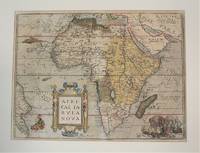
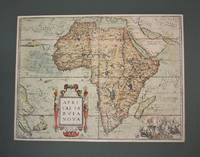
1570M10981Antwerp Belgium 1570. Very Good age toning. Notes: Map of Africa Continent by Abraham Ortelius published in Theatrum Orbis Terrarum <br>Latin Text on verso. Size : 367x495 mm 14.45x19.49 Inches Coloring: Original Hand Coloring Reference: Marcel P. R. van den Broecke #8.<br><br> Category: Maps Africa Continent; unknown
1570M10980Antwerp Belgium 1570. Very Good age toning. . Notes: Map of Africa Continent by Abraham Ortelius published in Theatrum Orbis Terrarum<br>Latin Text on verso. Size : 378x507 mm 14.88x19.96 Inches Coloring: Original Hand Coloring Reference: Marcel P. R. van den Broecke #8. Category: Maps Africa Continent; unknown
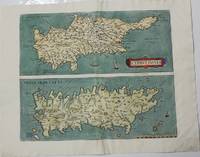
1573M9822Netherlands c.1573. Very Good. Notes: Latin text on verso. Size : 362x433 mm 14.25x17.05 Inches Coloring: Hand Colored Category: Maps Mediterranean Islands; unknown
15903400<p>Very Good. c1590. 16th century map with original hand-colored outlines of Luxembourg. Decorative cartouche. Some foxing most apparent to margins. Latin text to verso with colored historiated initial. Otherwise a handsome copy. Please see image. Plate size approximately 19 1/2 x 14 1/2 in. Overall size approx. 21 1/2 x 17 1/2 in 550 x 445 mm.; 1 pages; All shipments through USPS insured Priority Mail. .</p>
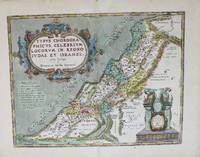
1595M6473Antwerp: Ortelius c. 1595. Very Good; margins shaved. Notes: "From 1595L onwards this successor of plate 171 a previous edition of the map which has 4 ships instead of the 3 on this plate and "SIGENENSI" instead of "SIGENENS" in the cartouche moves to the Parergon. Bertius bought a number of sheets with this map and included the map in his historical 1619 atlas 'Theatrum Geographiae Veteris'." van den Broecke Size : 340x457 mm 13.39x17.99 Inches Coloring: Hand Colored Reference: Marcel P.R. van den Broecke 172<br>Tooley 358 Category: Maps Asia Middle East Holy Land & Palestine; Maps Africa North Egypt; Ortelius unknown
15753397<p>Very Good. 1575. 16th century map with original hand-colored outlines of the Italian region of Piedmont. Decorative cartouche. Some foxing most apparent to margins. Otherwise a handsome copy. Latin text to verso with colored historiated initial. Please see image. Plate size approximately 19 1/2 x 14 1/2 in. Overall size approx. 21 3/4 x 16 3/4 in 530 x 427 mm.; 1 pages; All shipments through USPS insured Priority Mail. .</p>
15843401<p>Very Good. 1584. 16th century map with original hand-colored outlines of Tuscany. Decorative cartouche. Some foxing most apparent to margins. Latin text to verso. Otherwise a handsome copy. Please see image. Plate size approximately 19 1/4 x 12 1/2 in. Overall size approx. 21 1/4 x 16 1/2 in 540 x 425 mm.; 1 pages; All shipments through USPS insured Priority Mail. .</p>
1606M8987Antwerp c.1606. Very Good. Notes: English text on verso. Size : 355x463 mm 13.98x18.23 Inches Coloring: Original Hand Coloring Reference: Van den Broecke 180. Category: Maps Asia Middle East Holy Land & Palestine; unknown
170133078Fulda 1701. Hardcover. fair. 4to. 185 leaves. Black cloth. Red edges. Illustrated title-page with Moses and Aaron on the sides and David killing Goliath at the bottom. Commentary on selections of the Zohar and other kabbalistic texts by Mordacai Ashkenazi published with the aid of his teacher Abraham Rovigo. These two kabbalists were both secret followers of the messianic claimant Sabbatai Sevi. Despite Sabbatai's conversion to Islam in 1666 and death in 1676 many of his followers continued to believe in him and worked to spread their particular heterodox brand of Judaism in defiance of the rabbinic establishment. As cover for his Sabbatian agenda Ashkenazi claimed that “Eshel Avraham†was simply a new interpretation of the Kabbalah based on his prophetic dreams. Ultimately this book is an important example of the success of the early eighteenth century Sabbatian underground to print books under the nose of the rabbinic authorities before it came out into the open with the printing of Nehemiah Hayon's “Migdal Oz.†Text in Hebrew. Backstrip missing but the book is still intact. Bottom corner chipped. Title-page torn and bottom strengthened. Slight worming to front leaves. Overall in fair condition. Steinschneider 4299:1. <br /> Samuel Wiener Bibliotheca Friedlandiana 991. hardcover
16671375442London: Francis Kirkman 1667. First Edition. Hardcover. Quarto 4 64 pages. In Good condition. Bound in 19th century half green leather with marbled paper boards spine with gilt lettering. With morderate rubbing and shelfwear middle of spine with a spot where spine is peeling away. Gutter opening at title page with lower section of text block detaching from spine. Ink math to title page I2 verso. E4 with large tear to upper fore corner some loss to text on verso.<br /> <br> <br /> <br> <br /> All leaves trimmed close with some minor occasional loss. With nine instances of single word ink marginalia some with matching underlining some partially trimmed away.<br /> <br> <br /> <br> <br /> With the bookplate of Richard Brinsley Sheridan to the front pastedown. His signature on the title page.<br /> <br> <br /> <br> <br /> Shelved case 0. ESTC R9308. Wing B445. Woodward & McManaway 8. Scarce with OCLC listing only 8 institutional copies of this state and no copies at auction since 1931. Another state of the edition with Thomas Dring named as publisher in imprint and with advertisement at bottom of A2v; this state lacks advertisement.<br /> <br> <br /> <br> <br /> Richard Brinsley Butler Sheridan 1751-1816 was an Anglo-Irish playwright writer and politician. He was the owner of the famed Theatre Royal Drury Lane in London and wrote several prominent plays including 'The Rivals' 'The Duenna' 'The School for Scandal' and 'A Trip to Scarborough.'. 1375442. Shelved Dupont Bookstore. Francis Kirkman hardcover
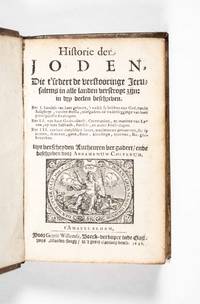
164948861Amsterdam: For Gerrit Willemsz by Adriaan Roest 1649. Second edition. Hardcover. Very Good. Three parts small octavo. A-X8 168 leaves: G5 signed F5; I2 as H2; I4 as H4. 18 293 25 indexpp. Woodcut printer’s device at title woodcut lettrines. Contemporary vellum with exposed thongs lightly soiled. Old entry at front pastedown. Occasional faint dampstain at bottom margin else a very good copy with clean text throughout.<br /> <br /> Second edition of this polemical history by “a strident condemner of the Jews†Sprunger. First published at Rotterdam by Jan van Waesberghe in 1608 the present work is the earliest reaction in print to the presence of Jews and their religion in the Dutch Republic van Rooden. Citing M. Bodian’s Hebrews of the Portuguese Nation R. Po-Chia Hsia describes the cultural context: “Coming initially in the 1590s as Portuguese merchants and Christian converts the so-called ‘New Christians’ Sephardic Jews in fact were welcomed by the Regents of Holland but were strongly opposed by the Reformed clergy. When the conversos reverted to the open practice of Judaism reaction from the Reformed Church was fierce. The predikant Abraham Coster 1575-1620 attacked the Sephardim as an ‘unclean people’ who sought to build a public synagogue ‘in which they can perform their evil and foolish ceremonies and spew forth their gross blasphemies against Christ and his holy gospels as well as their curses against the Christians and Christian authorities’â€. The present edition was later re-issued the following year with identical collation and pagination but designated as “Den 2den druck van nieuws oversienâ€. References: R. Po-Chia Hsia “Introduction†& P. van Rooden “Jews and Religious Toleration in the Dutch Republic†in: Calvinism and Religious Toleration 3; 137. Sprunger Trumpets from the Tower 81. NNBW 8 320: “Dit werk is een poging om de Amsterdamsche vroedschap te bewegen het bouwen van een nieuwe openbare synagoge te belettenâ€. For Gerrit Willemsz (by Adriaan Roest) hardcover
1643178066Paris: Pierre Des-Hayes 1643. Hardcover. Good staining to boards and text block book plate inside front cover age toning throughout as expected with age. Text and illustrations are otherwise very clear!. Tan vellum boards with faded off-white title block on spine 8 28 pages 2 68 pages 34 unnumbered leaves of plates bw illustrations throughout. Text in French. The Universal Way of Mr. Desargues Lyonnois: To Lay The Axle & Place The Hours & Other Things on the Sun Dials. Added engraved illustrated title page special engraved title page with ornamental border following p. 28. The plates are mostly printed on both sides of the leaves and many appear multiple times final plate numbered '28'. Engravings by Abraham Bosse. Pierre Des-Hayes hardcover books
1643178066Paris: Pierre Des-Hayes 1643. Hardcover. Good staining to boards and text block book plate inside front cover age toning throughout as expected with age. Text and illustrations are otherwise very clear!. Tan vellum boards with faded off-white title block on spine 8 28 pages 2 68 pages 34 unnumbered leaves of plates bw illustrations throughout. Text in French. The Universal Way of Mr. Desargues Lyonnois: To Lay The Axle & Place The Hours & Other Things on the Sun Dials. Added engraved illustrated title page special engraved title page with ornamental border following p. 28. The plates are mostly printed on both sides of the leaves and many appear multiple times final plate numbered '28'. Engravings by Abraham Bosse. Pierre Des-Hayes hardcover
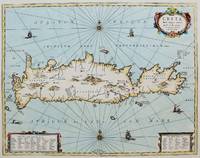
1640M8308Amsterdam c. 1640. Very Good. Notes: Striking map of Crete with decorative cartouche ships and one sea monster scattered along the ocean. The map is based on the earlier work of Ortelius. Size : 375x485 mm 14.75x19.10 Inches Coloring: Hand Colored Category: Maps Mediterranean Sea; Maps Europe Greece Macedonia; unknown
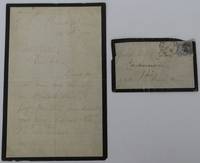
186921090191869. letter. very good. Autograph Letter signed by Laura Keene a successful actress who was the female lead in the play Our American Cousin on the evening that President Lincoln was shot at Ford's Theater in Washington D.C. It is rumored that Ms. Keene cradled the President's wounded head against her knees. Ms. Keene herself never offered any details. All accounts of her holding the President's head are from later remembrances. In this letter Ms. Keene writes to Judge Carter of Cincinnati regarding a play he has written and hopes to have produced. Included is a signed photo of Judge A.G.W. Carter and a broadsheet announcement for one of Carter's works "The Sicilian Sisters" and some other ephemera. Letter and envelope are creased some browning and fading small chip to second sheet; very good. unknown
109210Rare chromolithographic portrait of Abraham Lincoln in the style of E.C. Middleton. In near fine condition. Framed. The entire piece measures 22 inches by 19 inches. Abraham Lincoln served as the 16th President of the United States from March 1861 until his assassination in April 1865. He led the United States through its Civil War and in doing so preserved the Union of the United States of America abolished slavery and strengthened the federal government. Lincoln began constructing his cabinet on election night and sought to create a cabinet that would unite the Republican party. His eventual cabinet would include his primary rivals for the Republican nomination and although his appointees held differing views on economic issues all were opposed to the expansion of slavery into the territories of the United States. The most senior cabinet post of Secretary of State was appointed to William Seward who had recently failed to win the 1860 Republican presidential nomination and Lincoln's choice for Secretary of the Treasury was Ohio Senator Salmon P. Chase Seward's primary political rival and the leader of a radical faction of the Republican party that sought the immediate abolition of slavery. unknown books