775 résultats
1866375831Washington D.C.: John H. Littlefield; Wm. Terry Printer 1866. Photograph by John Goldin of Littlefield's painting on printed mount. Image 5 x 9 1/2 in.; mounted to 11 x 14 in. Faint toning to mount; fine. Photograph by John Goldin of Littlefield's painting on printed mount. Image 5 x 9 1/2 in.; mounted to 11 x 14 in. A published photograph of Littlefield's hyper-realistic Lincoln death-bed painting each figure meticulously rendered from photographs. <br /> Littlefield studied law under Lincoln in 1858 stumped for him in his Presidential bid and was rewarded with a position in the Treasury Department. After Lincoln's death Littlefield invented this tableau of twenty-five people ranged around the death-bed including Vice-President Johnson Surgeon Charles Leale and Mrs. Lincoln.<br /> "The artist used photographs as models for the twenty-five people gathered in the death room but his profile of the dying Lincoln shows a first-hand acquaintance" Ostendorf LINCOLN'S PHOTOGRAPHS p. 279. John H. Littlefield; Wm. Terry, Printer unknown
1866238120Washington D.C.: John H. Littlefield; Wm. Terry Printer 1866. Photograph by John Goldin of Littlefield's painting on printed mount. 1 vols. Image 11 1/2 x 18 3/4 in.; mounted to 19 x 24 in. Soiling to image vertical crease large chips to bottom of mount not affecting image or legend; good. Photograph by John Goldin of Littlefield's painting on printed mount. 1 vols. Image 11 1/2 x 18 3/4 in.; mounted to 19 x 24 in. A published photograph of Littlefield's hyper-realistic Lincoln death-bed painting each figure meticulously rendered from photographs. Littlefield studied law under Lincoln in 1858 stumped for him in his Presidential bid and was rewarded with a position in the Treasury Department. After Lincoln's death Littlefield invented this tableau of twenty-five people ranged around the death-bed including Vice-President Johnson Surgeon Chalres Leale and Mrs. Lincoln. "The artist used photographs as models for the twenty-five people gathered in the death room but his profile of the dying Lincoln shows a first-hand acquaintance" Ostendorf LINCOLN'S PHOTOGRAPHS p. 279. Provenance: Harper Family John H. Littlefield; Wm. Terry, Printer unknown
1866238011Washington D.C.: John H. Littlefield; Wm. Terry Printer 1866. Photograph by John Goldin of Littlefield's painting on printed mount. Image 8 1/2 x 13 3/4 in.; mounted to 13 x 17 in. Faint toning to mount; fine. Photograph by John Goldin of Littlefield's painting on printed mount. Image 8 1/2 x 13 3/4 in.; mounted to 13 x 17 in. A published photograph of Littlefield's hyper-realistic Lincoln death-bed painting each figure meticulously rendered from photographs. <br /> Littlefield studied law under Lincoln in 1858 stumped for him in his Presidential bid and was rewarded with a position in the Treasury Department. After Lincoln's death Littlefield invented this tableau of twenty-five people ranged around the death-bed including Vice-President Johnson Surgeon Charles Leale and Mrs. Lincoln.<br /> "The artist used photographs as models for the twenty-five people gathered in the death room but his profile of the dying Lincoln shows a first-hand acquaintance" Ostendorf LINCOLN'S PHOTOGRAPHS p. 279. John H. Littlefield; Wm. Terry, Printer unknown
1866238120Washington D.C.: John H. Littlefield; Wm. Terry Printer 1866. Photograph by John Goldin of Littlefield's painting on printed mount. 1 vols. Image 11 1/2 x 18 3/4 in.; mounted to 19 x 24 in. Soiling to image vertical crease large chips to bottom of mount not affecting image or legend; good. Photograph by John Goldin of Littlefield's painting on printed mount. 1 vols. Image 11 1/2 x 18 3/4 in.; mounted to 19 x 24 in. A published photograph of Littlefield's hyper-realistic Lincoln death-bed painting each figure meticulously rendered from photographs. Littlefield studied law under Lincoln in 1858 stumped for him in his Presidential bid and was rewarded with a position in the Treasury Department. After Lincoln's death Littlefield invented this tableau of twenty-five people ranged around the death-bed including Vice-President Johnson Surgeon Chalres Leale and Mrs. Lincoln. "The artist used photographs as models for the twenty-five people gathered in the death room but his profile of the dying Lincoln shows a first-hand acquaintance" Ostendorf LINCOLN'S PHOTOGRAPHS p. 279. Provenance: Harper Family John H. Littlefield; Wm. Terry, Printer unknown books
1866238011Washington D.C.: John H. Littlefield; Wm. Terry Printer 1866. Photograph by John Goldin of Littlefield's painting on printed mount. Image 8 1/2 x 13 3/4 in.; mounted to 13 x 17 in. Faint toning to mount; fine. Photograph by John Goldin of Littlefield's painting on printed mount. Image 8 1/2 x 13 3/4 in.; mounted to 13 x 17 in. A published photograph of Littlefield's hyper-realistic Lincoln death-bed painting each figure meticulously rendered from photographs. <br/>Littlefield studied law under Lincoln in 1858 stumped for him in his Presidential bid and was rewarded with a position in the Treasury Department. After Lincoln's death Littlefield invented this tableau of twenty-five people ranged around the death-bed including Vice-President Johnson Surgeon Charles Leale and Mrs. Lincoln.<br/>"The artist used photographs as models for the twenty-five people gathered in the death room but his profile of the dying Lincoln shows a first-hand acquaintance" Ostendorf LINCOLN'S PHOTOGRAPHS p. 279. John H. Littlefield; Wm. Terry, Printer unknown books
1864250627Harrisburg PA: Singerly & Myers 1864. First Edition. Hardcover. Good minus. Octavo; 108 iii pages publisher's black cloth edgeworn head of spine worn upper right corner uncovered foxing light dampstain affecting preliminary leaves and verso of the frontispiece map. <br/><br/>As usual then Lincoln's remarks known popularly of course as his "Gettysburg Address" got short schrift appearing here on an unnumbered page the penultimate page of this book. Edward Everett's full remarks appeared within along with a listing of those men buried in the cemetery and a second folding map of the grounds. Monaghan 195. Singerly & Myers hardcover
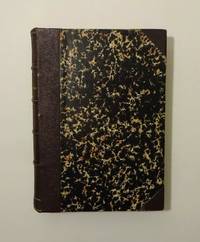
18782749This is a great condition copy of "Der Alcoholismus" "ALCOHOLISM" by Dr. Abraham Baer. 1878 1st edition; Verlag von August Hirschwald; Berlin Germany. The book is written entirely in German. Three-quarter leather binding with marbled covers and marbled end papers. The full title reads "Seine Verbreitung und seine Wirkung auf den individuellen und socialen Organismus sowie die Mittel ihn zu bekampfen "Its Distribution and its Effect on the Individual and Social Organism and the Means to Fight it".<br /><br />Condition:<br />The book is in terrific condition both inside and out. Clean covers with no stains and only a tiny scuff at the right edge of the spine; sharp corners. Tight binding with no cracks and no loose pages. Mostly clean interior with no tears or foxing and only some light stains at the outer margins of pages 174-176; there is a name and "Boston" written in pen on a front end paper.no other writing found. Verlag von August Hirschwald hardcover
187819770Berlin: A. Hirschwald 1878. Contemporary leather-backed boards. A very good copy; some stains to endpapers. An early work by Baer on alcoholism. What distinguishes the book is the extensive use of statistical samples and an astonishing attention to all facets of the disease from its incipient forms right through delirium tremens. Included is an overview of the problem in other European countries and a section devoted to the means of overcoming the problem for the community and individual. A superb piece of social history and hygiene. A. Hirschwald unknown
1842N2418Breslau: Leuckart 1842. First Edition . Half Cloth. Very Good. 8vo. 84pp. German text. Original wrappers preservedwith some expert repairs. Some yellowing. Otherwise very good. Extremely rare first edition. <br/> <br/> Leuckart hardcover
18841562Various places in South Africa Botswana 1884. Overall very good. 295pp. plus five additional letters totaling 60pp. altogether more than 38000 words. Composed mostly on small octavo sheets. Some wear to edges of initial and final few leaves slightly affecting text. Light even tanning. Written in a consistent legible script. An extensive and outstanding manuscript account of travel and exploration in southern Africa during late 1883 and early 1884 by Abraham Anscher a Polish Jewish immigrant to Chicago. The manuscript is composed in the form of a letter addressed to Edith Delia Rogalski but really comprises a travelogue or diary with entries written from September 1883 to mid-January 1884. Five additional letters accompany this account addressed to Edith's later husband Israel Jackson Roe; her parents Samuel and Sarah Rogalski; and her brother Benny. <br/><br/>Anscher's descriptions of his experiences in Africa cover a wide variety of topics including big game hunting; interactions with local indigenous peoples and their rulers; encounters with white missionaries traders and other hunters; ethnographic botanical geological and zoological observations and much more. His account is by turns dramatic and amusing interspersed with personal recollections of family and home cultural and religious notes his addressee was also a Polish-speaking Jewish immigrant to Chicago and reminiscences of earlier adventures in Colorado Utah the California gold fields and elsewhere.<br/><br/>Little can be readily discerned of the details of Anscher's biography beyond the pages of this manuscript. He was born in Mariampol then a part of Poland and today in Lithuania but clearly came to the United States at an early age and was well-educated. He was an adventurer at heart and spent several years in the West perhaps in the U.S. Army for part of this time and partly as a solo fortune seeker. At some point during the mid- to late-1870s he decided to take his adventuring talents to South Africa in order to satisfy his own wanderlust and to create a business of organizing guided African exploration and hunting. The stakes of his chosen profession are mentioned several times throughout his narrative such as when a party member dies of an unspecified illness "My lot is a very hard one just now and my position as promoter and chief adventurer is anything but enviable". From the additional letters present it is apparent that the young Ms. Rogalski was a former love interest of Anscher who spurned his affections and became engaged to a mutual friend. Indeed a letter here addressed to the fiancé offers an apology for presumption of writing to Edith in such a lengthy and cordial manner; at one time all of the individuals addressed by Anscher were a part of the same immigrant community in Chicago.<br/><br/>This absorbing account follows a lengthy excursion organized and led by Anscher across the Transvaal through Bechuanaland Matabeleland and beyond to a settlement he calls Tatti probably Francistown on the Tati River traveling through parts of modern-day South Africa and Botswana. They contain many details of great interest and his vignettes are well-written and dramatically delivered. An immense boa constrictor drops out of the treetops strangling a springbok before his eyes. He finds a five-year-old girl with a broken leg the only survivor of a village massacre; he sets her leg nurses her for a month and eventually conveys her to a missionary station. A young zebra joins the traveling party incurring the jealousy of the team's dogs. A large lizard is trained to sleep in a tent but only after his teeth are removed for safety. <br/><br/>His missive begins in medias res with his party already underway in South Africa near the Orange River in what he calls the "Tarka bush" during mid-September 1883. Anscher decides having missed his last opportunity to send mail "Now to put myself on guard against mischance and not be like the traditional foolish virgins who did not keep their lamps properly trimmed.to have a so-called running letter always open and ready" for his recipient. The group first traveled northeast near and along the Orange allowing Anscher to wax discursive concerning the river's wildlife:<br/><br/>"The wanderings of the river sometimes flowed through immense chasms over hung with stupendous precipices and then like a translucent lake with beautiful towering mimosas and willows reflected from its bosom and a rich variety of fine plumage though without a song; wild geese ducks snipes flamingoes in perfect security feeding on the banks beneath the green shade or basking in the sun's rays on the verdant islands far from the fowler's snare. The swallows also mounting aloft or skimming the surface of the mirror of the stream; while the ravens with their hoarse note might be seen seeking their daily food among the watery tribe or cawing on the bending tops of the weeping willows."<br/><br/>The party leaves the river and skirts the southern edge of the Kalahari to reach Lattakoo modern-day Dithakong a traditional departure point for excursions deeper into the interior of Africa during the 19th century. Thence they headed north again stopping often to hunt for food and sport:<br/><br/>"When on the Kama plains I went one night accompanied by Tytler and Winsloe and one native to a pool of water about two miles from camp. We did not wait more than about half an hour when we heard loud lapping at the water. The natives told me 'Ronimala ' be silent 'There is a lion.' Our next visitors were two buffaloes but we did not fire lest we attract the attention of the lions. Next came three giraffes and one we knocked over on the spot and wounded another but who got away. I have seen plenty of game in my time. I saw and hunted antelope and elk on the Laramie plains and in the Meek Mountains in America before the Union Pacific RR was built. I saw quite enough of buffalo in the Smokey Hills and Montana as well as south of the Green Horn Mountains between California and Arizona but such a variety of game big game and in such number as I saw some years ago in the Transvaal & Swaziland and hereabouts now I never saw anywhere."<br/><br/>As the excursion proceeds further into the interior their encounters with native tribes increases and Anscher observes them keenly and reports with a detailed if somewhat jaded 19th-century eye:<br/><br/>"The town of Kalabeg is already in the Matabele country. Of course they have no religion of any kind for there is no such thing as natural religion. Men acquire knowledge good or bad from instruction of men with more fertile brains. This holds good all the world over. The rainmakers here hold the position of prophets and divines of the so-called civilized countries. These rainmakers who are also the doctors and sextons have great influence over the minds of the people and are held in great estimation by them superior to that of their king who is likewise compelled to yield to the dictates of this personage the rainmaker. Nothing can exceed the freaks of fancy and the adroitness with which the rainmaker can awe the public mind and lead thousands captive at his will. Each tribe has one or more of them and they generally come from other countries for a prophet is seldom honored in his own country."<br/><br/>Arriving in Shoshong in what is now central Botswana Anscher meets some missionaries and witnesses a tribal gathering which leads him to remember the religious theories of a familial acquaintance back home:<br/><br/>"Was present at a Pitsoh or native congress this forenoon held by the natives about some tribe affairs. About 12000 natives present and wound up the proceedings with a war dance. As these tribes are considered by some religious enthusiasts to be of the lost tribes of Israel not your own but ours and as your uncle once spoke to me about them while at Chicago I would therefore request you to kindly tell him to disabuse his mind on this point and that the only peg whereon the so-called lost tribe maniacs hang their argument in favor of their hobby is that the natives practice a certain custom which history attributes to our father Abraham. But this ceremony takes place instead of at the age of 7 days old when they are about fourteen years old and even when older. But they have no tradition as to why it is done. If this simple custom entitles them to be call Jews why for my part they are quite welcome to the honor. But this is about all there is to build the theory on." <br/><br/>Despite his occasionally sarcastic and somewhat disparaging demeanor toward the natives he encounters Anchser seems overall to have a decent connection with them at a personal level and to understand a basic sense of shared humanity. In one particularly poignant episode Anscher meets a mother and father who have walked 300 miles to ransom their two teenaged sons enslaved by a local chief: <br/><br/>"Neither the man's looks nor ornaments excited the smallest emotion in the bosom of the chief and when he was solicited by one who felt something of a father's love to pity the old man who had walked so far and brought his all to purchase his own children he at last replied with a sneer that one of the boys died last year and for the other he wants an ox at least. 'But I have not even a goat' pleaded the old man 'the Matabele have taken all I had and destroyed my hut.' A sigh it was a heavy sigh burst from his bosom one dead and the other not permitted to see anymore. The chief walked off while the man sat leaning his head on the palm of his hand and his eye fixed on the ground apparently lost to everything but his grief. On taking up his trinkets to retire I told him to keep up a good heart that I would try to get him his boy. He started at the sound of my voice kneeled before me and laid down his trinket saying 'take all this but get me back my boy.' I got him his boy for a colored blanket and 1 lb. of tobacco."<br/><br/>When sad and homesick Anscher recalls his time in Chicago and in the West but it is often insufficient comfort. After departing Shoshong for Tatti Anscher must leave his group to "pioneer" a trail to the settlement:<br/><br/>"On the evening of my first day's journey I had to off-saddle a term used here on a waterless plain picketed my horse and went to bed minus my supper or dinner. I awoke suddenly by something touching me on my forehead like the cold nose of a dog but I could see nothing in the dark except my horse who was laying down poor fellow. After this occurrence I could sleep no longer. My head was hot my lips parched and had no taste even for a cigarette. I daresay some of you have experienced waiting for a train early in the morning in some out of the way small RR station where moments appear like days. Well waiting there is not a patch to lying in the dark in Africa's solitude waiting for daylight to come. I tried to divert my mind and think of anything but water but I could not do it! I tried to cool myself by thinking of Chicago in the month of Feb. but that only led me to snow and from snow to water. One may as well try Ovid's 'Remedia Amoris' to cure him from hankering after the girl he loves as to try Chicago in my case as a remedy when thirsty." <br/><br/>The difficulties of obtaining food and water establishing safe camp and finding routes through minimally charted territory evident in this final passage are an ever-present theme of the expedition but Anscher eventually guided his group to their destination where they intended to stay for a month or two before heading further north to Victoria Falls on the Zambezi River. The final entries describe life at the settlement and how a Portuguese colonial explorer and administrator Alexandre de Serpo Pinto whom they met in camp would be entrusted with the present manuscript as he traveled to Namaqualand on the west coast of Africa in the hopes that it would eventually find its way aboard a ship bound for America. Pinto was a fascinating figure in his own right -- he explored the interior of Africa for Portugal in the 1860s and 1870s and after this meeting with our author became the Portuguese Consul in Zanzibar.<br/><br/>Anscher's trail goes somewhat cold after January 1884 when he relinquished control of this massive "running letter." An additional fragment of a later letter to Edith Rogalski included here forwarded via a mining acquaintance in Kimberly contains a few tantalizing details of his onward expedition including an attack on their party near Victoria Falls by a group of slavers led by "an American Negro." He was also working on a journal and taking photographs which are mentioned several times throughout this account but the survival of this other material as well as the ultimate conclusion of this expedition are not known. A wonderful unpublished account of African exploration by a seemingly unlikely and apparently otherwise unknown American character. A complete transcription of the manuscript is available upon request. unknown books
18843195451884. 295pp. plus five additional letters totaling 60pp. altogether more than 38000 words. Composed mostly on small octavo sheets. Some wear to edges of initial and final few leaves slightly affecting text. Light even tanning. Written in a consistent legible script. Overall very good. 295pp. plus five additional letters totaling 60pp. altogether more than 38000 words. Composed mostly on small octavo sheets. An extensive and outstanding manuscript account of travel and exploration in southern Africa during late 1883 and early 1884 by Abraham Anscher a Polish Jewish immigrant to Chicago. The manuscript is composed in the form of a letter addressed to Edith Delia Rogalski but really comprises a travelogue or diary with entries written from September 1883 to mid-January 1884. Five additional letters accompany this account addressed to Edith's later husband Israel Jackson Roe; her parents Samuel and Sarah Rogalski; and her brother Benny. <br/> <br/>Anscher's descriptions of his experiences in Africa cover a wide variety of topics including big game hunting; interactions with local indigenous peoples and their rulers; encounters with white missionaries traders and other hunters; ethnographic botanical geological and zoological observations and much more. His account is by turns dramatic and amusing interspersed with personal recollections of family and home cultural and religious notes his addressee was also a Polish-speaking Jewish immigrant to Chicago and reminiscences of earlier adventures in Colorado Utah the California gold fields and elsewhere.<br/> <br/>Little can be readily discerned of the details of Anscher's biography beyond the pages of this manuscript. He was born in Mariampol then a part of Poland and today in Lithuania but clearly came to the United States at an early age and was well-educated. He was an adventurer at heart and spent several years in the West perhaps in the U.S. Army for part of this time and partly as a solo fortune seeker. At some point during the mid- to late-1870s he decided to take his adventuring talents to South Africa in order to satisfy his own wanderlust and to create a business of organizing guided African exploration and hunting. The stakes of his chosen profession are mentioned several times throughout his narrative such as when a party member dies of an unspecified illness "My lot is a very hard one just now and my position as promoter and chief adventurer is anything but enviable". From the additional letters present it is apparent that the young Ms. Rogalski was a former love interest of Anscher who spurned his affections and became engaged to a mutual friend. Indeed a letter here addressed to the fiancé offers an apology for the presumption of writing to Edith in such a lengthy and cordial manner; at one time all of the individuals addressed by Anscher were a part of the same immigrant community in Chicago.<br/> <br/>This absorbing account follows a lengthy excursion organized and led by Anscher across the Transvaal through Bechuanaland Matabeleland and beyond to a settlement he calls Tatti probably Francistown on the Tati River traveling through parts of modern-day South Africa and Botswana. They contain many details of great interest and his vignettes are well-written and dramatically delivered. An immense boa constrictor drops out of the treetops strangling a springbok before his eyes. He finds a five-year-old girl with a broken leg the only survivor of a village massacre; he sets her leg nurses her for a month and eventually conveys her to a missionary station. A young zebra joins the traveling party incurring the jealousy of the team's dogs. A large lizard is trained to sleep in a tent but only after his teeth are removed for safety. <br/> <br/>His missive begins in medias res with his party already underway in South Africa near the Orange River in what he calls the "Tarka bush" during mid-September 1883. Anscher decides having missed his last opportunity to send mail "Now to put myself on guard against mischance and not be like the traditional foolish virgins who did not keep their lamps properly trimmed.to have a so-called running letter always open and ready" for his recipient. The group first traveled northeast near and along the Orange allowing Anscher to wax discursive concerning the river's wildlife:<br/> <br/>"The wanderings of the river sometimes flowed through immense chasms over hung with stupendous precipices and then like a translucent lake with beautiful towering mimosas and willows reflected from its bosom and a rich variety of fine plumage though without a song; wild geese ducks snipes flamingoes in perfect security feeding on the banks beneath the green shade or basking in the sun's rays on the verdant islands far from the fowler's snare. The swallows also mounting aloft or skimming the surface of the mirror of the stream; while the ravens with their hoarse note might be seen seeking their daily food among the watery tribe or cawing on the bending tops of the weeping willows."<br/> <br/>The party leaves the river and skirts the southern edge of the Kalahari to reach Lattakoo modern-day Dithakong a traditional departure point for excursions deeper into the interior of Africa during the 19th century. Thence they headed north again stopping often to hunt for food and sport:<br/> <br/>"When on the Kama plains I went one night accompanied by Tytler and Winsloe and one native to a pool of water about two miles from camp. We did not wait more than about half an hour when we heard loud lapping at the water. The natives told me 'Ronimala ' be silent 'There is a lion." Our next visitors were two buffaloes but we did not fire lest we attract the attention of the lions. Next came three giraffes and one we knocked over on the spot and wounded another but who got away. I have seen plenty of game in my time. I saw and hunted antelope and elk on the Laramie plains and in the Meek Mountains in America before the Union Pacific RR was built. I saw quite enough of buffalo in the Smokey Hills and Montana as well as south of the Green Horn Mountains between California and Arizona but such a variety of game big game and in such number as I saw some years ago in the Transvaal & Swaziland and hereabouts now I never saw anywhere."<br/> <br/>As the excursion proceeds further into the interior their encounters with native tribes increases and Anscher observes them keenly and reports with a detailed if somewhat jaded 19th-century eye:<br/> <br/>"The town of Kalabeg is already in the Matabele country. Of course they have no religion of any kind for there is no such thing as natural religion. Men acquire knowledge good or bad from instruction of men with more fertile brains. This holds good all the world over. The rainmakers here hold the position of prophets and divines of the so-called civilized countries. These rainmakers who are also the doctors and sextons have great influence over the minds of the people and are held in great estimation by them superior to that of their king who is likewise compelled to yield to the dictates of this personage the rainmaker. Nothing can exceed the freaks of fancy and the adroitness with which the rainmaker can awe the public mind and lead thousands captive at his will. Each tribe has one or more of them and they generally come from other countries for a prophet is seldom honored in his own country."<br/> <br/>Arriving in Shoshong in what is now central Botswana Anscher meets some missionaries and witnesses a tribal gathering which leads him to remember the religious theories of a familial acquaintance back home:<br/> <br/>"Was present at a Pitsoh or native congress this forenoon held by the natives about some tribe affairs. About 12000 natives present and wound up the proceedings with a war dance. As these tribes are considered by some religious enthusiasts to be of the lost tribes of Israel not your own but ours and as your uncle once spoke to me about them while at Chicago I would therefore request you to kindly tell him to disabuse his mind on this point and that the only peg whereon the so-called lost tribe maniacs hang their argument in favor of their hobby is that the natives practice a certain custom which history attributes to our father Abraham. But this ceremony takes place instead of at the age of 7 days old when they are about fourteen years old and even when older. But they have no tradition as to why it is done. If this simple custom entitles them to be call Jews why for my part they are quite welcome to the honor. But this is about all there is to build the theory on." <br/> <br/>Despite his occasionally sarcastic and somewhat disparaging demeanor toward the natives he encounters Anchser seems overall to have a decent connection with them at a personal level and to understand a basic sense of shared humanity. In one particularly poignant episode Anscher meets a mother and father who have walked 300 miles to ransom their two teenaged sons enslaved by a local chief: <br/> <br/>"Neither the man's looks nor ornaments excited the smallest emotion in the bosom of the chief and when he was solicited by one who felt something of a father's love to pity the old man who had walked so far and brought his all to purchase his own children he at last replied with a sneer that one of the boys died last year and for the other he wants an ox at least. 'But I have not even a goat' pleaded the old man 'the Matabele have taken all I had and destroyed my hut.' A sigh it was a heavy sigh burst from his bosom one dead and the other not permitted to see anymore. The chief walked off while the man sat leaning his head on the palm of his hand and his eye fixed on the ground apparently lost to everything but his grief. On taking up his trinkets to retire I told him to keep up a good heart that I would try to get him his boy. He started at the sound of my voice kneeled before me and laid down his trinket saying 'take all this but get me back my boy.' I got him his boy for a colored blanket and 1 lb. of tobacco."<br/> <br/>When sad and homesick Anscher recalls his time in Chicago and in the West but it is often insufficient comfort. After departing Shoshong for Tatti Anscher must leave his group to "pioneer" a trail to the settlement:<br/> <br/>"On the evening of my first day's journey I had to off-saddle a term used here on a waterless plain picketed my horse and went to bed minus my supper or dinner. I awoke suddenly by something touching me on my forehead like the cold nose of a dog but I could see nothing in the dark except my horse who was laying down poor fellow. After this occurrence I could sleep no longer. My head was hot my lips parched and had no taste even for a cigarette. I daresay some of you have experienced waiting for a train early in the morning in some out of the way small RR station where moments appear like days. Well waiting there is not a patch to lying in the dark in Africa's solitude waiting for daylight to come. I tried to divert my mind and think of anything but water but I could not do it! I tried to cool myself by thinking of Chicago in the month of Feb. but that only led me to snow and from snow to water. One may as well try Ovid's 'Remedia Amoris' to cure him from hankering after the girl he loves as to try Chicago in my case as a remedy when thirsty." <br/> <br/>The difficulties of obtaining food and water establishing safe camp and finding routes through minimally charted territory evident in this final passage are an ever-present theme of the expedition but Anscher eventually guided his group to their destination where they intended to stay for a month or two before heading further north to Victoria Falls on the Zambezi River. The final entries describe life at the settlement and how a Portuguese colonial explorer and administrator Alexandre de Serpo Pinto whom they met in camp would be entrusted with the present manuscript as he traveled to Namaqualand on the west coast of Africa in the hopes that it would eventually find its way aboard a ship bound for America. Pinto was a fascinating figure in his own right -- he explored the interior of Africa for Portugal in the 1860s and 1870s and after this meeting with our author became the Portuguese Consul in Zanzibar.<br/> <br/>Anscher's trail goes somewhat cold after January 1884 when he relinquished control of this massive "running letter." An additional fragment of a later letter to Edith Rogalski included here forwarded via a mining acquaintance in Kimberly contains a few tantalizing details of his onward expedition including an attack on their party near Victoria Falls by a group of slavers led by "an American Negro." He was also working on a journal and taking photographs which are mentioned several times throughout this account but the survival of this other material as well as the ultimate conclusion of this expedition are not known. A wonderful unpublished account of African exploration by a seemingly unlikely and apparently otherwise unknown American character. unknown books
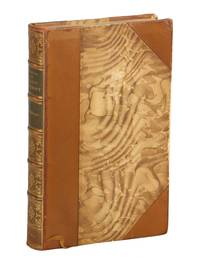
1864000010542London: Longman Green Longman Roberts & Green 1864. First edition. Hardcover. Very Good. 8vo. 5 vi-xiii 2 2-359 5 pp. Half smooth later ca. 1920 calf over marbled boards with the spine in six compartments two green morocco labels lettered in gold gold decorations on the spine; top edge gilt. Marbled endpapers and pastedowns. With a brown ribbon bookmark bound in. Bound by Zaehnsdorf for John Wanamaker the inventor of the price tag and the department store. PBS Who Made America "John Wanamaker Department Store". Wanamaker opened the first American department store in the mid-nineteenth century and printed the first ever copyrighted advertisement. He revolutionized shopping by offering higher-quality clothing and material goods for lower prices in a large retail space accessible to many city dwellers in Philadelphia. Kunitz and Haycraft 284. Edited by Abraham Hayward an essayist and prominent Victorian author. This volume contains excerpts from the diary of Miss Frances Williams Wynn its publication aided by her niece after Wynn's death. Miss Wynn was the daughter of a baronet and ran in upper-class English circles. Her diary recounts interesting incidents of this life urban legends and ghost stories and historical events she witnessed. Details on the French Revolution Napoleon's reign Austro-Hungarian politics the insanity of George III Ireland in 1840 and other historical anecdotes of interest are recorded here. The top corners bumped and rubbed overall a pleasing copy. Longman, Green, Longman, Roberts, & Green hardcover
1815045274Chez A. blussé et Fils reliure Rigide Dordrecht 1815 1013 pages en format 12 -20 cm - quelques rousseurs sur pages de garde - reliure rigide en cuir
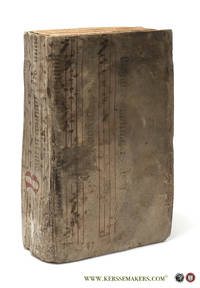
181554071Dordrecht: Chez A. Blussé et Fils 1815. 8vo 20x125 cm. ii: Catalogue 880 pp. printed in 2 columns. First quire with serious brown spots; tear in first leaf; convent-stamps on verso title; iregular bookblock. Some small brown spots in places; some quires browned or paper age-toned. - Bound in vellum sl. soiled: part of a manuscript-leaf with annotated music. - Used copy of the second N. - F. part. Chez A. Blussé et Fils hardcover
18755825BBBern, J. Dalp'sche Buch- und Kunsthandlung (K. Schmid), 1875. 8°. 69 S., (10) S. (Anzeigen). Mit 6 (dv. 2 gef.) Tafeln u. 5 Textillustr. in Holzstich nach Gustave Roux sowie 1 gef. chromolithogr. Karte (34 x 47 cm). Illustr. Orig.-Leinenband.
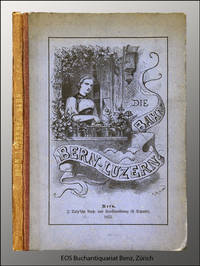
18755825BB1875. Bern J. Dalp'sche Buch- und Kunsthandlung K. Schmid 1875. 8°. 69 S. 10 S. Anzeigen. Mit 6 dv. 2 gef. Tafeln u. 5 Textillustr. in Holzstich nach Gustave Roux sowie 1 gef. chromolithogr. Karte 34 x 47 cm. Illustr. Orig.-Leinenband. Wäber S. 123; vgl. HBLS V 718 für Roth. - Einzige Ausgabe dieses Werks des Schweiz. Journalisten u. Schriftstellers Abraham Roth 1823-1880 dessen selbständige Publikationen hauptsächlich historisch-politische Themen u. geographische Gegenstände umfassen. Er war leidenschaftlicher Bergsteiger u. Mitbegründer des SAC. Die Tafeln nach dem Künstler Gustave Roux 1828-1885 zeigen Tägertschi Entlebuch Langnau Werthenstein Hünigen u. Diessbach; die Karte im Massstab 1:200'000 zeigt die Bahnlinie Bern-Luzern. - Leicht gebräunt. Einbandrücken mit altem Material restauriert. Vorsätze teilw. erneuert. unknown
1897107411897. Berlin Mayer & Müller 1897 4° 32 pp. orig. Rückenbroschur; letzte Seite angestaubt. Erstdruck! Max Abraham 1875-1922 theoretischer Physiker. Er studierte Physik an der Universität Berlin und promovierte 1897 bei Max Planck. Seine wissenschaftliche Arbeit stand meistens in direktem Bezug zur Maxwellschen Theorie des Elektromagnetismus. unknown
1865100229HBBerlin:, Stilke & van Muyden, 1865. 158 Seiten, (1) Seite (Errata), HLn. der Zeit, Titel von alter Hand auf Papierrückenschildchen, 22 x 14,5 cm. [3 Warenabbildungen]
189041239HB1890. Wien & Leipzig Urban & Schwarzenberg 1890. 82 S. 1 Bl. Inhaltsverzeichnis. Halbleinenband der Zeit mit goldgeprägtem Rückentitel marmoriertem Buntpapieraufsatz und umlaufendem Sprenkelschnitt leicht berieben mit Bibliotheksschild am unteren Kapital. Papier leicht angebräunt Notiz von alter Hand auf Vorsatz und Titel Titel mehrfach gestempelt. Sonst sauber und in guter Erhaltung unknown
1864544469New York: D. Appleton and Company 1864. Hardcover. Very Good. Third edition. Octavo. 65 3pp. Albumen frontispiece of a painting captioned "The Last Judgement". Two pages of music for a Gregorian Chant. Brown cloth gilt. All edges gilt. Small stain on front board some tears and light fraying at the crown very good. D. Appleton and Company hardcover
186536081Philadelphia: Jas. B. Rodgers Printer 52 & 54 North Sixth Street 1865. 1st printing Monaghan 757. Limited to 750 cc. INSCRIBED by the author at the top of the front wrapper. Printed grey paper wrappers. Age-toning to wrappers. A VG copy. 19 1 blank. 9-1/16" x 5-7/8" <br/><br/> Jas. B. Rodgers, Printer, 52 & 54 North Sixth Street unknown books
188814450New York: Baker & Taylor. Very Good- with no dust jacket. 1888. Hardcover. Rubbed corners light tone otherwise light wear. Solid hardcover. ; Abraham John Palmer physician Methodist minister and future Progessive Party state senator struggles with the late 19th-century changes in marriage relationships resulting from women's rights and the education of women. He identifies and offers advice on ten causes of disagreement in marraiges: "1. The ignorance of women in the conduct of households. 2. The lack of sympathy between men and women. 3. The lack of proper respect in both men and women for womanly employments. 4. The lack of business training in women. 5. The failure on the part of the husband to respect the wife's ownership of herself. 6. Habits of dissipation. 7. The undue idealism with which young people enter married life. 8. The interference of outsiders. 9. Finances. 10. The balance of power now resting in the hands of the husband." Interesting and revealing discussion of the impact of marital changes written by a man willing to understand and accept much of them. ; 85 pages . Baker & Taylor hardcover
1863292206No place: no publisher 1863. Softcover. Near Fine. First edition. Stitched self-wrappers. 16pp. Slight age-toning very near fine. Anti-Lincoln campaign material issued by pro-Fremont Republicans including a long statement by Ben Wade and Henry Winter Davis. no publisher] unknown
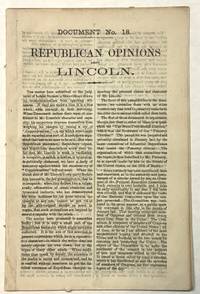
186442090np. 1864. Caption title as issued. 16pp printed in two columns per page. Stitched Very Good. <br /> <br /> This unusual item a Democratic Party campaign pamphlet is a compendium of "Derogatory Republican statements concerning Lincoln's capacity compiled for the campaign of 1864. The Pomeroy circular Fremont's letter of acceptance the Wade-Davis manifesto" Monaghan. It is a forceful reminder of the low esteem in which Lincoln was held during 1864 until Atlanta fell to the Union in September. <br /> FIRST EDITION. Monaghan 349. Sabin 70036. unknown
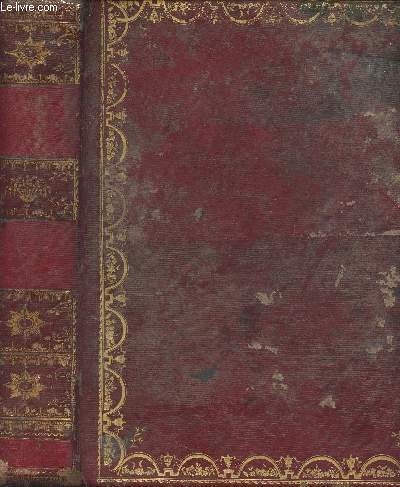
1807R300271640Imp. de Jean Foulquier et Compagnie. 1807. In-4. Relié plein cuir. Etat d'usage, Plats abîmés, Dos satisfaisant, Mouillures. 902 pages. Texte sur deux colonnes. Tranches dorées. Maroquain rouge. Mouillures sur l'ensemble de l'ouvrage, sans conséquence sur la lecture, mais altérant quelques peu la qualité du papier. Traces blanches sur les contreplats. Plats abîmés, épidermures sur le 2e plat. Pièces de titre et tomaison manquantes. Motifs dorés sur les plats et le dos.. . . . Classification Dewey : 348-Lois, règlement, jurisprudence