Trembley, AbrahamBiblio.com
394 résultats
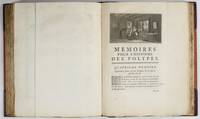
1744640861744. Leiden J. & H. Verbeej 1744 4° XVI 324 pp. 1 leaf "Avis au Relieur" illustrated with 4 large vignettes by J.v.Schley after C.Pronck with 13 full page engraved plates by Piere Lyonnet half leather; somewhat stained; very good coppy. BIRTH OF EXPERIMENTAL BIOLOGY FIRST EDITION! Abraham Trembley 1710-1784 Scientist Philosopher and Pioneer of Experimental Zoology from Geneva discovered the regenerative powers of the polyp and photosensitivity in an animal without eyes and he was the first to witness cell-division anddiscovered Hydra. Trembley was the first person to show that certain animals can be artificially multiplied by Division the first to make permanent grafts on animal tissues the first to prove by rigorous experiment that asexual reproduction by budding occurs in animals and the first to witness cell-division: he also discovered the process by which Protozoa multiply. These are only a few of his contributions to biological knowledge. A large part of his research was concerned with the little fresh-water polyp hydra an animal of particular importance today because it is one of the standard "types" used all over the world in teaching elementary biology to students of science medicine and agriculture. At the time of publication the immediate philosophical repercussions were even more startling animal soul was clearly shown to be material. The heterogenetic origin of life seemed to be confirmed. Bonnet suggested that the polyp bridged the animal and vegetable kingdoms nullifying their supposedly complete separation. Later he declared the polyp to be the key to the interpretation of nature. Baker Abraham Trembley the only full length account pp. VIII ff.; Forerunners of Darwin 1959 pp. 116 ff.; Nissen 4163; Wolf History of Science II 466; Dobell Leeuwenhoek; Shirley A. Roe Development of A. v. Haller's Views on Embryology in: Journal of the Hist of Biology 8 pp.167 ff.; S.G. & H.M. Lenhoff Hydra and the birth of experimental biology 1986. Garrison & Morton No. 307 hardcover
173741768London: Chez Jean Brindley Libraire de S. A. R. Monseigeur le Prince de Galles dans New Bond-street 1737. Folio. 20 3/4 x 14 1/4 inches. Second edition deluxe large paper issue with wide margins. 43 double-page engravings after Abraham van Diepenbeke including 42 numbered 1-42 and the unnumbered 1658 title with Anvers imprint. Engraved head-piece to first dedication. Numerous woodcut illustrations throughout the text and woodcut historiated and inhabited initials head- and tail-pieces and printer's ornaments. 12 1-236. 248 pp. Letterpress title with London imprint and four dedications to Henriette Cavendishe-Holles the King of Grande-Bretagne Charles Vicomte de Mansfield and to Cavaliers. Avertissement avant-propos four livres plus an Abbrege de la Cavalerie conclusion additions table des chapitres. With incisive manuscript commentary pencilled in the margins in both French and English. Text in French. Bound to style in eighteenth-century half leather over eighteenth-century comb marbled paper-covered boards and marbled endpapers<br/> <br/> Deluxe large paper issue of Cavendish's classic 1737 treatise on equestrianism with 43 splendid double-page engravings: "The illustrations are among the most beautiful to ever grace equestrian literature." Ramsay<br/> <br/> Though considered a country of horse lovers England only produced one early master of classical riding: William Cavendish Duke of Newcastle who was a Royalist living in exile until the restoration of King Charles II. During his exile Cavendish opened a riding school in Belgium and wrote the present work La Méthode et Invention Nouvelle de Dresser les Chevaux. This text was the first of Cavendish's two important books on breeding and training horses and was translated into French from his English manuscript and published in Antwerp in two issues: 1657 and 1658 though many of the 1657 title-pages have been altered by hand to read 1658. The first printing was largely incinerated by a fire in the bookseller's shop and is all but impossible to acquire. Brunet Offered here is the deluxe large paper issue of the second edition of Cavendish's first book a work long cherished by bibliophiles for its typographical excellence and the masterful quality of its illustrations. It is a work that has been esteemed by countless generations of horsemen and revered by such master riders as La Guérinière Comte d'Aure and Steinbrecht. It is a landmark of equestrianism. Steinkraus Cavendish's book has been called the only really outstanding work on the subject written by an Englishman. Toole-Stott In it Cavendish discusses a wide variety of equine subjects including the recognition of the age and disposition of a horse; the characteristics of various types of horses such as the Spanish the Barb the English horse and the Arabian; methods of maintenance; and instructions on proper riding: "You must in all Airs follow the strength spirit and disposition of the horse and do nothing against nature; for art is but to set nature in order and nothing else." Of the 43 wonderful double-page engraved plates after Abraham van Diepenbeke 24 depict the multiple stages Cavendish and his assistant Captain Mazin employed in training horses in complicated maneuvers. The quality of the impressions in the present 1737 edition surpasses even those of the original edition. Steinkraus This was the first edition of La Méthode et Invention Nouvelle de Dresser les Chevaux to be published in England with engravings pulled from the original 1658 copperplates which were acquired by the publisher Jean Brindley.<br/> <br/> Brunet I 1700. Graesse II 93. Huth 23. Lowndes 1663. Mennessier de la Lance II p. 250. Nissen ZBI 848. Podeschi Mellon Books on the Horse and Horsemanship pp. 26 49. Ramsay "Early Dressage Literature to 1800" IOBA 6.9.03. Steinkraus Introduction to A General System of Horsemanship 2000. Toole-Stott Circus and the Allied Arts: A World Bibliography 84. Wing N884-87. Chez Jean Brindley, Libraire de S. A. R. Monseigeur le Prince de Galles, dans New Bond-street unknown
173740577London: Chez Jean Brindley Libraire de S. A. R. Monseigeur le Prince de Galles dans New Bond-street 1737. Folio. 17 7/8 x 11 1/4 inches. Complete second edition. 43 double-page engravings after Abraham van Diepenbeke including 42 numbered 1-42 and the unnumbered 1658 title with Anvers imprint. Engraved head-piece to first dedication. Numerous woodcut illustrations throughout the text and woodcut historiated and inhabited initials head- and tail-pieces and printer's ornaments. 12 1-236. 248 pp. Letterpress title with London imprint and four dedications to Henriette Cavendishe-Holles the King of Grande-Bretagne Charles Vicomte de Mansfield and to Cavaliers. Avertissement avant-propos four livres plus an Abbrege de la Cavalerie conclusion additions table des chapitres. Text in French. Contemporary brown full morocco paneled blind with gilt filets on board edges and gilt dentelles seven raised bands forming eight compartments on a richly gilt spine with gilt-lettered red morocco titling-pieces in second and third compartments and gilt foliate tooling in rest marbled endpapers on laid paper all edges gilt<br/> <br/> Cavendish's classic 1737 treatise on equestrianism with 43 splendid double-page engravings: "The illustrations are among the most beautiful to ever grace equestrian literature." Ramsay<br/> <br/> Though considered a country of horse lovers England only produced one early master of classical riding: William Cavendish Duke of Newcastle who was a Royalist living in exile until the restoration of King Charles II. During his exile Cavendish opened a riding school in Belgium and wrote the present work La Méthode et Invention Nouvelle de Dresser les Chevaux. This text was the first of Cavendish's two important books on breeding and training horses and was translated into French from his English manuscript and published in Antwerp in two issues: 1657 and 1658 though many of the 1657 title-pages have been altered by hand to read 1658. The first printing was largely incinerated by a fire in the bookseller's shop and is all but impossible to acquire. Brunet Offered here is the second edition of Cavendish's first book a work long cherished by bibliophiles for its typographical excellence and the masterful quality of its illustrations. It is a work that has been esteemed by countless generations of horsemen and revered by such master riders as La Guérinière Comte d'Aure and Steinbrecht. It is a landmark of equestrianism. Steinkraus Cavendish's book has been called the only really outstanding work on the subject written by an Englishman. Toole-Stott In it Cavendish discusses a wide variety of equine subjects including the recognition of the age and disposition of a horse; the characteristics of various types of horses such as the Spanish the Barb the English horse and the Arabian; methods of maintenance; and instructions on proper riding: "You must in all Airs follow the strength spirit and disposition of the horse and do nothing against nature; for art is but to set nature in order and nothing else." Of the 43 wonderful double-page engraved plates after Abraham van Diepenbeke 24 depict the multiple stages Cavendish and his assistant Captain Mazin employed in training horses in complicated maneuvers. The quality of the impressions in the present 1737 edition surpasses even those of the original edition. Steinkraus This was the first edition of La Méthode et Invention Nouvelle de Dresser les Chevaux to be published in England with engravings pulled from the original 1658 copperplates which were acquired by the publisher Jean Brindley.<br/> <br/> Brunet I 1700. Graesse II 93. Huth 23. Lowndes 1663. Mennessier de la Lance II p. 250. Nissen ZBI 848. Podeschi Mellon Books on the Horse and Horsemanship pp. 26 49. Ramsay "Early Dressage Literature to 1800" IOBA 6.9.03. Steinkraus Introduction to A General System of Horsemanship 2000. Wing N884-87. Chez Jean Brindley, Libraire de S. A. R. Monseigeur le Prince de Galles, dans New Bond-street unknown
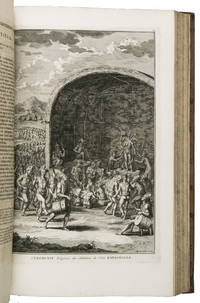
17275737The Hague 1727. Folio. Rutgert Christoffel Alberts vols. 1-3 and Isaac van der Kloot vols. 3-4; Amsterdam Hermannus Uytwerf; Rotterdam Jan Daniel Beman Contemporary gold tooled mottled brown calf with red and black morocco title and volume labels lettered in gold each volume with a central lozenge-shaped ornament on both boards surrounded by two decorative borders gold tooled board edges marbled edges. With an engraved frontispiece 8 title-pages 6 in red and black each with one of 3 different engraved vignettes plus 3 part-titles with a woodcut decoration 224 full-page engraved plates including 1 folding and 38 double-page plates an engraving on the dedication leaf in vol. 1 and a few engravings in the text. Further with several engraved headpieces woodcut tailpieces and a few woodcut decorated initials. 6 volumes vols. 3 4 & 6 in 2 parts each bound as 7. First Dutch edition of Picart's famous and richly illustrated work on religious customs ceremonies and costumes from all over the world. With its six volumes it is the most sumptuous publication ever on the religions of the world richly and beautifully illustrated with large and sometimes double-page or even folding engraved plates by the French engraver Bernard Picart 1673-1733 who lived in Amsterdam from 1708. The text was compiled from a wide range of sources including R. Simon J. Abbadie Dupin Thiers P. le Brun Boulainvilliers and Reland and edited by the Amsterdam publisher Jean Frederic Bernard for a French edition titled Ceremonies et coutumes religieuses de tous le peuples du monde first published in 1723. It was translated into Dutch for the present edition by Abraham Moubach.The first two volumes discuss the religion of the Jews and Roman Catholics including a double-page engraving of the interior of the Portuguese synagoge in Amsterdam. The third and fourth volume deal with the religions of the "heathens" in the Americas including Mexico India Ceylon the Brahmans in India China Japan Africa and the Persians in Iran. The fifth volume concerns the Greek orthodox church and the several groups of Protestants. The last volume describes the Anglicans and smaller groups such as Quakers Mennonites Adamites Freemasons and finally Islam. Altogether the most important 18th-century survey work on the world's religions and their customs lavishly illustrated with very finely executed plates.From the library of Frederick H. Rindge 1859-1905. The boards are somewhat rubbed. The works are slightly browned and foxed throughout with the final leaves of volume 3 affected more than the others. Otherwise in good condition.l Alt-Japan-Katalog 1149; STCN 191420778; cf. Cordier Japonica col. 435; Lipperheide 1808; Sabin 62600 all French ed. hardcover
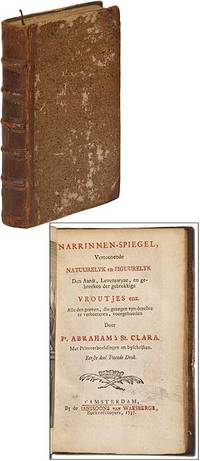
1737301340Amsterdam: By de Janssoons van Waesberge 1737. Hardcover. Very Good. 12mo. Volume One only. 3357pp. 25 engravings including frontispiece complete. Woodcut vignettes. Half calf and speckled papercovered boards woth red morocco spine label gilt raised bands. Tear along the margin of the plate impression on Plate 10 joints a bit worn but still a tight very good copy. Treatise holding up a mirror to the vanities and eccentricities of women influenced by Sebastian Brant's Narrenschiff Ship of Fools by a popular Decalced Augustinian monk and preacher son of a tavernkeeper known for his humor and eccentricity. A second volume was published in 1743. By de Janssoons van Waesberge hardcover
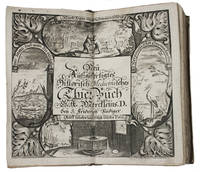
1714A5FCO31WXHODNuremberg 1714. 8vo. Johan Friedrich Rüdiger Contemporary vellum author and title in gold on spine. With a double-page engraved frontispiece engraved by Johan Lorentz Hönnig a double-page letterpress title-page printed in red and black and 95 engraved plates each depicting several animals. 26 732 72 pp. Second edition of a pre-Linnean zoological work describing in 4 parts the names appearance characteristics qualities and habitats of quadrupeds birds fishes and invertebrates together with their medicinal qualities and uses by the German physician Georg Abraham Mercklein 1644-1702. He frequently cites classical authorities in the fields of medicine and natural history like Galenus and Aristotle. Also included are some mythological animals including several kinds of unicorn p. 28 and a dragon p. 611. Ten pages are devoted to the characteristics of the silkworm pp. 678-687. At the end an index of the animals illnesses and cures.With an early owner's inscription on first flyleaf. Slightly browned some marginal thumbing or minor stains but still in very good condition. Binding slightly soiled but in good condition.l Nissen ZBI 2790; VD18 12232300; cf. Krivatsy 1772. hardcover
172164835Nürnberg, Christoph Weigel, 1703 (recte um 1721). Fol. Mit 101 Kupfertafeln von Caspar Luyken. 2 nn. Bll., Späterer blindgepr. Lwd.-Bd. m. etw. Rückenverg. u. goldgepr. Deckeltitel.
178151746Franckfurt am Mayn Johann Gottlieb Garbe 1781. Contemp. full calf. Raised bands richly gilt spine. A paperlabel pasted on upper part of spine. 141706 pp. and 4 folded engraved plates with many figs. Clean and fine. <br/><br/><em>The offered item is bound together with another work: Jetze Franz Christoph. geographie für Militaristen und andere zum selbstunterricht. Mit 2 Kupfertafeln. Liegnitz und leipzig David Siegert 1791. XII147 pp. a. 2 folded engraved plates. </em> hardcover
178151746Franckfurt am Mayn, Johann Gottlieb Garbe, 1781. Contemp. full calf. Raised bands, richly gilt spine. A paperlabel pasted on upper part of spine. (14),170,(6) pp. and 4 folded engraved plates with many figs. Clean and fine.
178150964BB(s.l.), (Giessen). (s.n.), 1781. 12°. 8 n.n. Bl., 136 S. mit einer gestochener Titelbordüre. Etwas späterer Pappband mit blauem goldgeprägtem Rückenschild.
177110865Leyden Johannes le Mair en Abraham Kallewier/ Leiden T. Koet 1771-1777. 74 3 8 62 8 14 1 7 1 8 15 7 30 p. Origineel goud-bestempeld Leer met ribben 8° Een bundel met zeldzame werken van en over de predikant en geliefd hoogleraar Nicolaas Hoogvliet 1729-1777. De laatste 30 pagina's bevatten diverse lijkdichten in een fraai oud handschrift overgenomen uit andere publicaties. Leyden, Johannes le Mair en Abraham Kallewier/ Leiden, T. Koet unknown
1772LA - HAY383231772. Leipzig Johann Friedrich Gleditsch. reliés plein cuir de l'époque. Plats frottés avec épidermures et dos ridés ; page de titres avec inscriptions à l'encre d'époque et déchirure avec manque de 2 cm en bas de l'éditeur et de la date sinon bonne reliure et intérieur très frais. 2 très fort pt in-8. avec une gravure en frontispice ; dos à 5 nerfs avec motifs et titres en caractères dorés ; toutes tranches rouges. unknown
1772LA - HAY383221772. Leipzig Johann Friedrich Gleditsch. relié plein cuir de l'époque. Plats frottés avec épidermures et dos ridé ; page de titres avec inscriptions à l'encre d'époque et déchirure avec manque de 2 cm en bas de l'éditeur et de la date sinon bonne reliure et intérieur très frais. très fort pt in-8. avec une gravure en frontispice ; dos à 5 nerfs avec motifs et titres en caractères dorés ; toutes tranches rouges. unknown
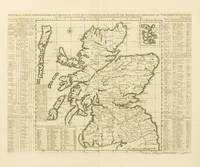
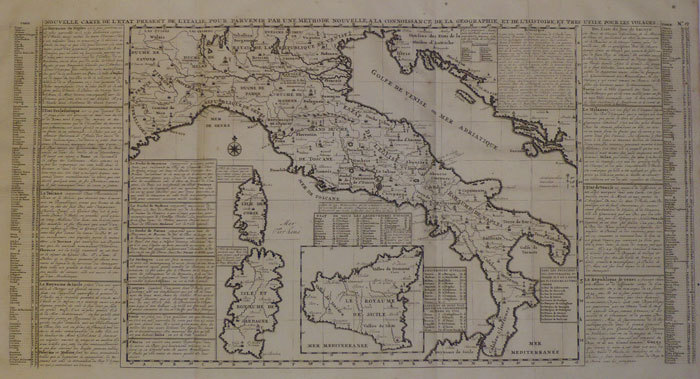
1719143633Amsterdam: L'Honoré et Chatelain 1719. Very Good. Amsterdam L'Honoré et Chatelain 1719. An engraved map printed surface 353 × 463 mm sheet size approximately 455 × 520 mm. Vertical centrefold crease as issued; a few faint spots; light creases and a few tiny closed tears about the edges well clear of the printed surface; a very good copy. From Chatelain's 'Atlas historique ou Nouvelle introduction à l'histoire à la chronologie & à la Geographie ancienne & moderne .'. With an inset map of the Orkney Islands. L'Honoré et Chatelain unknown
171025803Amsterdam 1710. Copper-engraved map period hand-colouring in outline. Tables upper left and along the right side. Attractive map of North America based upon De L'Isle's highly influential map of North America published in 1700.<br/> <br/> By combining a wealth of information and geographical observation with delicate engraving and an uncomplicated composition this elegant map is a superb example from the golden age of French mapmaking and was published in Chatelain's Atlas Historique an important encyclopaedic historical atlas. California is shown as a peninsula with a number of villages and mountains; the Mississippi River extends far north of its true source. The table along the right side details the various native tribes from each region with lettered references for locating on the map.<br/> <br/> Lowery 263; Phillips 579. unknown
1708LBW-3530[Amsterdam, 1708]. 354 x 462 mm.
1720LBW-8789[Amsterdam, circa 1720]. 469 x 593 mm.
171025803Amsterdam 1710. Copper-engraved map period hand-colouring in outline. Tables upper left and along the right side. Attractive map of North America based upon De L'Isle's highly influential map of North America published in 1700.<br/> <br/>By combining a wealth of information and geographical observation with delicate engraving and an uncomplicated composition this elegant map is a superb example from the golden age of French mapmaking and was published in Chatelain's Atlas Historique an important encyclopaedic historical atlas. California is shown as a peninsula with a number of villages and mountains; the Mississippi River extends far north of its true source. The table along the right side details the various native tribes from each region with lettered references for locating on the map.<br/> <br/>Lowery 263; Phillips 579. unknown books
1720LBW-1093Amsterdam, [circa 1720]. 331 x 654 mm.
1720LBW-1083Amsterdam circa 1720 463 x 619 mm.
1720LBW-1089Amsterdam circa 1720 380 x 477 mm.
1767D11183n.p. Berlin 1767. Hardcover. Very Good. 8vo 160 x 90mm. 4 363 1 pages. 18th-century mottled calf marbled endpapers and edges spine ends chipped scattered stains mostly marginal. Front flyleaf with contemporary French verse inscription Sur cet coteaux depouilles de verdure; je vois courir le lievre fuigtif et loiseau mort de froide accuse la nature and ownership inscription on title Elisabeth Lagravere. <br/><br/>French translation of Sulzers theory on the origins of pleasure following a Cartesian school of thought. Zurich native Johann George Sulzer was a well-established member of the Prussian Academy of Sciences and Belle-Lettres who published widely on the appreciation of art. Sulzers influence on aesthetic theory was well known within theoretical circles in late eighteenth century Berlin. Owing to the work of Descartes particularly his Passions of the Soul 1649 Sulzers work on the origins of pleasure aimed to initiate a move toward moral psychology and ethical theory within studies of the mind. Sulzer focused on the derivation of joy and gladness in the model of a Cartesian system; simply it opposed the idea of Hedonism which believed pleasure was the sole aim of humankind. Instead Sulzers theories supported a metaphysical experience within ones own cognitive condition. Sulzers work supplements the great accomplishment of many of his near contemporary theorists who contributed to the study of emotions Descartes Hobbes Malebranche and Spinoza. His work preceded that of Kants division of the mind into pleasure or pain and who with later Kant outwardly disagreed with the weakness of the proofs promulgated by Sulzer. Abraham Gotthelf Kästner was a German poet and mathematician also a devout Lutheran. He was known in his professional life for compiling and reflecting on content for textbook study. Kästner translated and revised this Sulzers theoretical work on pleasure showcasing his encyclopedic interests but remains better known for his contributions on the history of mathematics and his various epigrams. hardcover
1767D11183n.p. Berlin 1767. Hardcover. Very Good. 8vo 160 x 90mm. 4 363 1 pages. 18th-century mottled calf marbled endpapers and edges spine ends chipped scattered stains mostly marginal. Front flyleaf with contemporary French verse inscription Sur cet coteaux depouilles de verdure; je vois courir le lievre fuigtif et loiseau mort de froide accuse la nature and ownership inscription on title Elisabeth Lagravere. <br/><br/>French translation of Sulzers theory on the origins of pleasure following a Cartesian school of thought. Zurich native Johann George Sulzer was a well-established member of the Prussian Academy of Sciences and Belle-Lettres who published widely on the appreciation of art. Sulzers influence on aesthetic theory was well known within theoretical circles in late eighteenth century Berlin. Owing to the work of Descartes particularly his Passions of the Soul 1649 Sulzers work on the origins of pleasure aimed to initiate a move toward moral psychology and ethical theory within studies of the mind. Sulzer focused on the derivation of joy and gladness in the model of a Cartesian system; simply it opposed the idea of Hedonism which believed pleasure was the sole aim of humankind. Instead Sulzers theories supported a metaphysical experience within ones own cognitive condition. Sulzers work supplements the great accomplishment of many of his near contemporary theorists who contributed to the study of emotions Descartes Hobbes Malebranche and Spinoza. His work preceded that of Kants division of the mind into pleasure or pain and who with later Kant outwardly disagreed with the weakness of the proofs promulgated by Sulzer. Abraham Gotthelf Kästner was a German poet and mathematician also a devout Lutheran. He was known in his professional life for compiling and reflecting on content for textbook study. Kästner translated and revised this Sulzers theoretical work on pleasure showcasing his encyclopedic interests but remains better known for his contributions on the history of mathematics and his various epigrams. hardcover books
174212001Amsterdam Adrianus Douci 1742. 46 676 22 p. Origineel Leer met ribben goudbestempeld 4° Amsterdam, Adrianus Douci unknown