Abraham WilksBiblio.com
775 résultats
1888mon0000074974Chatto & Windus 1888. Hardcover. Very Good. in x in x in. Chatto & Windus hardcover
1836272742Verlag von Friedrich Winkler Passau 1836. Hardcover Rundumfarbschnitt ohne Schutzumschlag Zustand: mit einer Eintragung im Vorsatz. Rücken Ecken Kanten bestoßen berieben und abgeschabt. Rücken mit Papierstreifen verstärkt/repariert. Farbschnitt verblasst. Im Block hinten Spuren eines ehemaligen Feuchtigkeitsschadens jedoch ohne Wellung. In allem original. Verlag von Friedrich Winkler, Passau, hardcover
1807817F32New York: Alexander Ming 1807 . Leather. Very Good. 7.5" by 4.5". Not Stated. A very scarce early nineteenth century edition of John Nathan Hutchins' almanac of the movements of the sun moon and planets. The very scarce 1807 edition of 'Hutchins Improved' in a smart full morocco binding with gilt detailing.With calculations made by Abraham Shoemaker this is a charming account of the movements of the sun moon and planets in the year 1807 the '30th year of American Independence' according to the title page. Containing information on eclipses weather tides and lengths of days and nights.With a vignette illustration of the 'Anatomy of Man's body as governed by the twelve constellations' to the verso of the title page.A lovely and very scarce work of almanac of astronomy published in New York at the start of the nineteenth century. Rebound in full morocco with gilt detailing and endpapers renewed. Front joint starting with board holding firm. Attractive gilt dentelles. Internally firmly bound. Small loss to tail of title page with more significant losses to perimeter of final leaf. Small clear tape reinforcements to closed tears of title page and two further leaves. Light handling marks. Very Good Alexander Ming hardcover
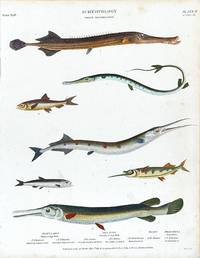
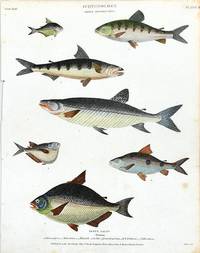
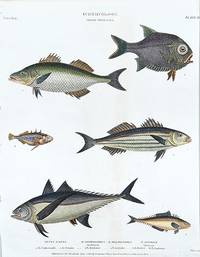
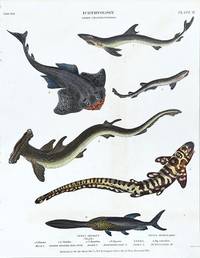
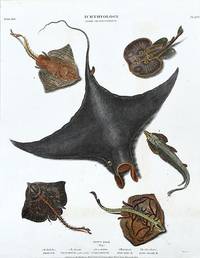
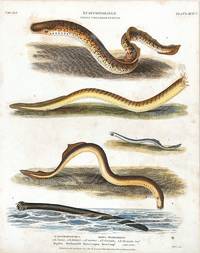
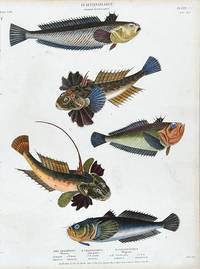
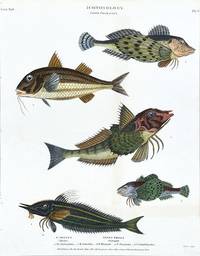
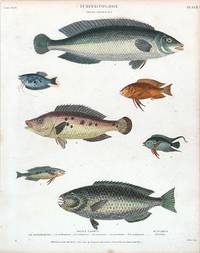
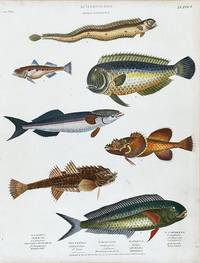
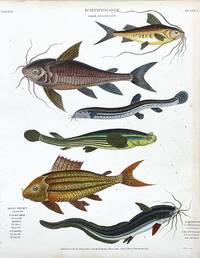
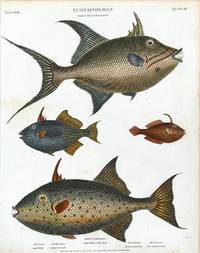
1808160894London: Londman Hurst Rees and Brown. 1808. From The Cyclopaedia or Universal Dictionary. Engraved by Milton. Copperplate engraving. Hand coloured. Good condition with light foxing. Sheet size: 36.5 x 21 cm. unknown
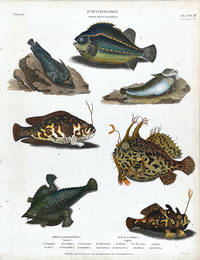
1805160901London: Londman Hurst Rees and Brown. 1805. From The Cyclopaedia or Universal Dictionary. Engraved by Milton. Copperplate engraving. Hand coloured. Good condition with light foxing. Sheet size: 36.5 x 21 cm. unknown
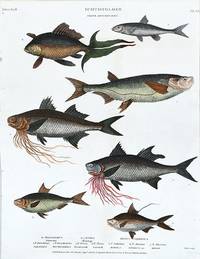
1805160916London: Londman Hurst Rees and Brown. 1805. From The Cyclopaedia or Universal Dictionary. Engraved by Milton. Copperplate engraving. Hand coloured. Good condition. Sheet size: 36.5 x 21 cm. unknown
1805160908London: Londman Hurst Rees and Brown. 1805. From The Cyclopaedia or Universal Dictionary. Engraved by Milton. Copperplate engraving. Hand coloured. Good condition with very light foxing. Sheet size: 36.5 x 21 cm. unknown
1805160907London: Londman Hurst Rees and Brown. 1805. From The Cyclopaedia or Universal Dictionary. Engraved by Milton. Copperplate engraving. Hand coloured. Good condition with light foxing and creasing. Sheet size: 36.5 x 21 cm. unknown
1805160905London: Londman Hurst Rees and Brown. 1805. From The Cyclopaedia or Universal Dictionary. Engraved by Milton. Copperplate engraving. Hand coloured. Good condition with light foxing and toning throughout. Sheet size: 36.5 x 21 cm. unknown
1805160910London: Londman Hurst Rees and Brown. 1805. From The Cyclopaedia or Universal Dictionary. Engraved by Milton. Copperplate engraving. Hand coloured. Good condition with light foxing and creasing. Sheet size: 36.5 x 21 cm. unknown
1805160915London: Londman Hurst Rees and Brown. 1805. From The Cyclopaedia or Universal Dictionary. Engraved by Milton. Copperplate engraving. Hand coloured. Good condition. Sheet size: 36.5 x 21 cm. unknown
1805160914London: Londman Hurst Rees and Brown. 1805. From The Cyclopaedia or Universal Dictionary. Engraved by Milton. Copperplate engraving. Hand coloured. Good condition with light foxing. Sheet size: 36.5 x 21 cm. unknown
1805160913London: Londman Hurst Rees and Brown. 1805. From The Cyclopaedia or Universal Dictionary. Engraved by Milton. Copperplate engraving. Hand coloured. Good condition with light foxing. Sheet size: 36.5 x 21 cm. unknown
1805160897London: Londman Hurst Rees and Brown. 1805. From The Cyclopaedia or Universal Dictionary. Engraved by Milton. Copperplate engraving. Hand coloured. Good condition with light foxing. Sheet size: 36.5 x 21 cm. unknown
1805160903London: Londman Hurst Rees and Brown. 1805. From The Cyclopaedia or Universal Dictionary. Engraved by Milton. Copperplate engraving. Hand coloured. Good condition with light foxing. Sheet size: 36.5 x 21 cm. unknown
1805160902London: Londman Hurst Rees and Brown. 1805. From The Cyclopaedia or Universal Dictionary. Engraved by Milton. Copperplate engraving. Hand coloured. Good condition with light foxing. Sheet size: 36.5 x 21 cm. unknown
1805160900London: Londman Hurst Rees and Brown. 1805. From The Cyclopaedia or Universal Dictionary. Engraved by Milton. Copperplate engraving. Hand coloured. Good condition with light foxing. Sheet size: 36.5 x 21 cm. unknown
1840100402Florence, J.P. Vieusseux, 1840, in-8, Front, VI-358 pp, Demi-basane tabac, Le frontispice gravé sur cuivre par l'auteur, le peintre sur porcelaine Abraham Constantin (1785-1855), représente la maison de la Fornarina à Rome. Édition originale de ce texte écrit à quatre mains et publié sous le nom de Constantin seul. Stendhal surnommait cet ami proche "Tantin", "Tantincons" ou encore "Constantin Porcelaine", en référence à son activité. Ils furent compagnons au cours du long séjour italien de Beyle commencé en 1836. La part des deux auteurs est désormais bien établie, grâce aux travaux de Sandra Teroni et Hélène de Jacquelot, publiés en préface de la réédition des Idées italiennes (Paris, Beaux-Arts de Paris, 2013). Plusieurs observations ajoutées par Stendhal sont parfois empruntées aux Promenades dans Rome ou à l'Histoire de la peinture en Italie. L'ouvrage a été conçu par les deux amis comme un guide des tableaux et des bâtiments italiens, à l'usage des voyageurs étrangers. Étiquette ex-libris "R.N." Petites rousseurs, dos passé et épidermé. Carteret II, 362. [Exposition 1983] Stendhal et l'Europe, Paris, BNF, n° 300. Couverture rigide
184016009Florence, Cabinet scientifique-littéraire de J. P. Vieusseux, 1840. Grand in-8 de VI-358 pages, demi-basane verte, dos lisse orné de filets dorés.
186525618<p>Frank Leslie published this print as a premium for his new family magazine <i>Frank Leslie's Chimney Corner</i> and copyrighted it on April 8 1865 just a week before Lincoln's death. The image created by engraver Henry B. Major and lithographer Joseph Knapp portrays Lincoln flanked by the First Lady and Vice President Andrew Johnson greeting Julia Dent Grant wife of Lieutenant General Ulysses S. Grant who stands nearby.</p><p>According to a notice printed at the bottom right corner "<i>Every Person who pays Ten Cents each for numbers 1 and 2 of Frank Leslie's Chimney Corner The New Family Paper is entitled to a copy of this PLATE without extra charge</i>" or individuals could purchase the print for $3.</p> <b>ABRAHAM LINCOLN.</b>Lithograph. "Grand Reception of the Notabilities of the Nation at the White House 1865" New York: Frank Leslie April 1865. 1 p. 19 x 23¾ in.<p><br /></p><p>In the first issue of <i>The Chimney Corner</i> Leslie described the "Grand Reception" image as "the most costly gift plate ever presented by any publisher in the United States having been produced at an expense of $10000."</p><p>"Every family should possess this truly national picture and carefully preserve it" Leslie continued "as it will transmit to future generations the men who have restored our great national unity. It is especially valuable as it contains an excellent likeness of our late lamented President introducing General Grant and his wife to Mrs. Lincoln." The picture contains "nearly 100 portraits of our most celebrated Generals Statesmen and Civilians also of many of our most distinguished American ladies. The likenesses are admirable having been taken from photographs by Brady."</p><p>The key giving the names of each individual portrait was published in issue number 4 of the <i>Chimney Corner</i> on June 24.</p><p>Included in the image are Generals Ulysses S. Grant John G. Foster William T. Sherman Hugh J. Kilpatrick Nathaniel P. Banks Philip H. Sheridan Winfield S. Hancock John A. Logan Joseph Hooker Benjamin F. Butler Oliver O. Howard John A. Dix and Henry W. Slocum. Admirals David Farragut and David Dixon Porter represent the Navy. Members of the cabinet include Secretary of War Edwin M. Stanton Secretary of State William H. Seward and Secretary of the Navy Gideon Welles. Members of Congress include Senator Henry B. Anthony of Rhode Island Senator William P. Fessenden of Maine Senator Charles Sumner of Massachusetts and Speaker of the House Schuyler Colfax of Indiana. Chief Justice Salmon P. Chase represents the U.S. Supreme Court. New York newspaper editors Horace Greeley Henry J. Raymond and James Gordon Bennett are also present. Prominent women include First Lady Mary Lincoln Ann S. Stephens dime novelist and magazine editor Miriam Folline Squier wife of Leslie's former editor-in-chief and Leslie's future wife Julia Dent Grant wife of Ulysses S. Grant Kate Chase Sprague daughter of Chief Justice and wife of Rhode Island Senator and Adele Cutts Douglas widow of Stephen A. Douglas. Others identified in the key include Ephraim G. Squier Leslie's former editor-in-chief archaeologist and U.S. commissioner to Peru Governor Andrew G. Curtin of Pennsylvania and Ambassador to Russia Cassius M. Clay of Kentucky.</p><p>Despite Leslie's copyright Anton Hohenstein created a very similar image entitled "Lincoln's Last Reception" which also featured Lincoln's meeting General Ulysses S. Grant's wife Julia. Published by John Smith in Philadelphia in 1865 and hand-colored "Lincoln's Last Reception" also included more than thirty military and political leaders and a few prominent women among the onlookers in the ballroom.</p><p><b><i>Frank Leslie's Chimney Corner</i></b> 1865-1884 was a weekly family newspaper published "every Tuesday" in New York by Frank Leslie. Each illustrated issue of sixteen pages contained serial fiction short stories poetry biographies history travel sketches natural history anecdotes and other subjects. According to the prospectus the newspaper would be "a welcome messenger of instruction and amusement to the young and old in the family and by the fireside—that altar around which cluster our holiest and most cherished recollections." Leslie had copyrighted the title in 1861 but "the great Rebellion now happily closing intervened to put a stop to the enterprise."</p><p><b>Frank Leslie</b> 1821-1880 was born in England as Henry Carter but he adopted the pseudonym of Frank Leslie to keep his artistic activities a secret from his relatives who disapproved. He came to the United States in 1848 and settled in New York in 1853 to engrave woodcuts for P. T. Barnum's <i>Illustrated News</i>. When that publication failed Leslie began work on his own series of illustrated publications including <i>Frank Leslie's Illustrated Newspaper</i> <i>The Budget of Fun</i> <i>Frank Leslie's Chimney Corner</i> and others. At his death he was deeply in debt but his second wife Miriam Folline Squier 1836-1914 continued his publications and again made them profitable even legally changing her name to Frank Leslie in 1881.</p><p><b>Condition</b></p><p>Spot-mounted to modern board mat toning moderate foxing minor edge wear. Would benefit from conservation.</p> Frank Leslie
186525618<p>Frank Leslie published this print as a premium for his new family magazine <i>Frank Leslie's Chimney Corner</i> and copyrighted it on April 8 1865 just a week before Lincoln's death. The image created by engraver Henry B. Major and lithographer Joseph Knapp portrays Lincoln flanked by the First Lady and Vice President Andrew Johnson greeting Julia Dent Grant wife of Lieutenant General Ulysses S. Grant who stands nearby.</p><p>According to a notice printed at the bottom right corner "<i>Every Person who pays Ten Cents each for numbers 1 and 2 of Frank Leslie's Chimney Corner The New Family Paper is entitled to a copy of this PLATE without extra charge</i>" or individuals could purchase the print for $3.</p> <b>ABRAHAM LINCOLN.</b>Lithograph. "Grand Reception of the Notabilities of the Nation at the White House 1865" New York: Frank Leslie April 1865. 1 p. 19 x 23¾ in.<p><br /></p><p>In the first issue of <i>The Chimney Corner</i> Leslie described the "Grand Reception" image as "the most costly gift plate ever presented by any publisher in the United States having been produced at an expense of $10000."</p><p>"Every family should possess this truly national picture and carefully preserve it" Leslie continued "as it will transmit to future generations the men who have restored our great national unity. It is especially valuable as it contains an excellent likeness of our late lamented President introducing General Grant and his wife to Mrs. Lincoln." The picture contains "nearly 100 portraits of our most celebrated Generals Statesmen and Civilians also of many of our most distinguished American ladies. The likenesses are admirable having been taken from photographs by Brady."</p><p>The key giving the names of each individual portrait was published in issue number 4 of the <i>Chimney Corner</i> on June 24.</p><p>Included in the image are Generals Ulysses S. Grant John G. Foster William T. Sherman Hugh J. Kilpatrick Nathaniel P. Banks Philip H. Sheridan Winfield S. Hancock John A. Logan Joseph Hooker Benjamin F. Butler Oliver O. Howard John A. Dix and Henry W. Slocum. Admirals David Farragut and David Dixon Porter represent the Navy. Members of the cabinet include Secretary of War Edwin M. Stanton Secretary of State William H. Seward and Secretary of the Navy Gideon Welles. Members of Congress include Senator Henry B. Anthony of Rhode Island Senator William P. Fessenden of Maine Senator Charles Sumner of Massachusetts and Speaker of the House Schuyler Colfax of Indiana. Chief Justice Salmon P. Chase represents the U.S. Supreme Court. New York newspaper editors Horace Greeley Henry J. Raymond and James Gordon Bennett are also present. Prominent women include First Lady Mary Lincoln Ann S. Stephens dime novelist and magazine editor Miriam Folline Squier wife of Leslie's former editor-in-chief and Leslie's future wife Julia Dent Grant wife of Ulysses S. Grant Kate Chase Sprague daughter of Chief Justice and wife of Rhode Island Senator and Adele Cutts Douglas widow of Stephen A. Douglas. Others identified in the key include Ephraim G. Squier Leslie's former editor-in-chief archaeologist and U.S. commissioner to Peru Governor Andrew G. Curtin of Pennsylvania and Ambassador to Russia Cassius M. Clay of Kentucky.</p><p>Despite Leslie's copyright Anton Hohenstein created a very similar image entitled "Lincoln's Last Reception" which also featured Lincoln's meeting General Ulysses S. Grant's wife Julia. Published by John Smith in Philadelphia in 1865 and hand-colored "Lincoln's Last Reception" also included more than thirty military and political leaders and a few prominent women among the onlookers in the ballroom.</p><p><b><i>Frank Leslie's Chimney Corner</i></b> 1865-1884 was a weekly family newspaper published "every Tuesday" in New York by Frank Leslie. Each illustrated issue of sixteen pages contained serial fiction short stories poetry biographies history travel sketches natural history anecdotes and other subjects. According to the prospectus the newspaper would be "a welcome messenger of instruction and amusement to the young and old in the family and by the fireside—that altar around which cluster our holiest and most cherished recollections." Leslie had copyrighted the title in 1861 but "the great Rebellion now happily closing intervened to put a stop to the enterprise."</p><p><b>Frank Leslie</b> 1821-1880 was born in England as Henry Carter but he adopted the pseudonym of Frank Leslie to keep his artistic activities a secret from his relatives who disapproved. He came to the United States in 1848 and settled in New York in 1853 to engrave woodcuts for P. T. Barnum's <i>Illustrated News</i>. When that publication failed Leslie began work on his own series of illustrated publications including <i>Frank Leslie's Illustrated Newspaper</i> <i>The Budget of Fun</i> <i>Frank Leslie's Chimney Corner</i> and others. At his death he was deeply in debt but his second wife Miriam Folline Squier 1836-1914 continued his publications and again made them profitable even legally changing her name to Frank Leslie in 1881.</p><p><b>Condition</b></p><p>Spot-mounted to modern board mat toning moderate foxing minor edge wear. Would benefit from conservation.</p> Frank Leslie books
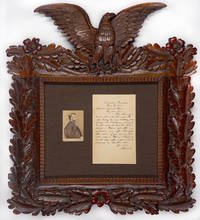
186132820663<br />One page. Beautifully presented in a spectacular 19th-century carved wood frame with surmounted eagle. <br />Abraham Lincoln writing at the outset of the Civil War recommends that the Army admit three volunteers from the highly divided city of Baltimore. He advises Adjutant General Lorenzo Thomas "I hate to reject any volunteers offered from what is called a Southern State."<br />Maryland's Southern sympathies were of paramount concern to Lincoln. On February 23 1861 learning of a rumored assassination plot president-elect Lincoln passed through Baltimore in secrecy to reach Washington. On April 19 1861 just a week after the surrender of Fort Sumter a mob killed four soldiers and wounded thirty-six more when the 6th Massachusetts Infantry passed through Baltimore en route to Washington. A week later Lincoln suspended the writ of habeas corpus to maintain control in the state. Maryland's governor had ordered the militia to burn railroad bridges north of the city to prevent more federal troops from coming through the city. Finally on May 13 federal troops occupied the city quelling pro-Confederate unrest.<br /> In this fine letter written just days later Lincoln asks Adjutant General Lorenzo Thomas "The three gentlemen who will hand you this note belong to an Artillery Company at Baltimore who wish to get into the United States service. Please give them an interview; and after they explain their case if you advise it I will receive them. I hate to reject any offered from what is called a Southern State."<br />This outstanding letter from the earliest days of the Civil War reflects Lincoln's intense desire to keep the people of Baltimore Maryland and the neighboring border states in the Union and to bring in new recruits wherever he could find them.<br />Important Lincoln letters relating to his concern about Baltimore and Maryland in the early days of his presidency are of great rarity.<br />OFFERED WITH:<br />Silk U.S. Flag Bunting from the Presidential Box at Ford's Theatre the Night of the Assassination. Ford's Theatre April 14 1865.<br />Section of an American flag in two pieces upper half 6 1â„2 x 8 1â„4 in. lower half 6 1â„4 x 7 1â„2 in. Horizontal separations light loss and fraying some stains. Oriented vertically. Handsomely framed.<br />This is a section of the bunting from the presidential box at Ford's Theatre where Abraham Lincoln was shot by John Wilkes Booth on April 14 1865. Harry C. Ford manager of stage shows at Ford's Theatre preserved the bunting and a few weeks later gave this section to John A. Ellinger see Provenance.<br />The bunting has an impeccable provenance. It came into the possession of Oliver R. Barrett perhaps the greatest of all Lincoln collectors and it was sold at his Parke Bernet auction in 1952. Elsie O. and Philip D. Sang the leading Lincoln and Civil War collectors of the second half of the century then acquired it. The bunting was sold in 1981 at the fifth Sang sale and has since been owned by two other leading Lincoln collectors Dr. John K. Lattimer and Dr. Blaine Houmes.<br />"The term 'draped" used by Ellinger who received the bunting from Ford would seem to indicate that this piece was from one of the two flags draped on the presidential-box balustrades and not mounted on a pole. … Known Provenance: Oliver R. Barrett Lincoln Collection … It is not known where the item is today" "The Oliver R. Barrett artifact" in Smyth & Garrett The Lincoln Assassination: The Flags of Ford's Theatre p. 70.
This is an evocative relic from a sacred place in American memory and one of the most momentous events in American history.<br />Please inquire for more details.
1821180976London: J. H. Burn R. and S. Prowett 1821. First edition. The descriptions that accompany these fine engravings of birds rabbits dogs and foxes were extracted from Bewick's History of British Birds and General History of Quadrupeds among others. Abraham Cooper 1787-1868 was a painter who specialized in animals and battle scenes in particular those showing horses. He apprenticed under the celebrated artist Benjamin Marshall contributed 189 engravings to Sporting Magazine and was elected to the Royal Academy in 1817. He is remembered today both for his depictions of racehorses and meticulously researched war scenes cementing his reputation as "a master of portraiture and composition" ODNB. Provenance: Stephen C. Massey. Octavo 225 x 140 mm pp. 36 bulked with blanks. Silver-engraved illustrations throughout each tissue-guarded additional silver-engraved title page 4 pp. of publisher's advertisements. Near-contemporary red calf green spine label spine tooled in gilt and blind boards with gilt double fillet and blind single fillet board edges and turn-ins milled in blind marbled endpapers red edges. Bookplate of George Gordon Massey. Spine sunned joints and extremities refurbished boards lightly marked minor foxing internally: a very good copy. hardcover
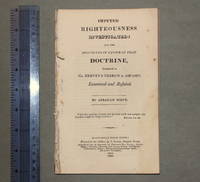
1822010472Newcastle upon Tyne: Printed for the author by J. Clark Newgate Street 1822 Book. Fair. Disbound. 62 2 pages. Disbound pamphlet without covers. Spotted and soiled throughout. Final page very stained. Printed for the author by J. Clark, Newgate Street unknown
1895TB28062New York: G. P. Putnam's Sons 1895. First Edition. Very good in light green buckram cloth covered boards with gilt text on the spine and on the front board. A small octavo measuring 7 1/2 by 5 inches with very light rubbing to the cloth at the ends of the spine and foxing to the end sheets. Without a dust jacket. Written in pencil on the title page beneath the pseudonym Heclawa the following inscription appears: "From the author A. Lincoln Himmelwright" The upper edge of the title page bears the name of a previous owner in pencil. Also of interest facing page 172 is a photograph titled "The Return to Kendrick" of six horsemen surrounded by many men standing in front of a building. Someone has drawn in pencil an arrow connected to one of the horsemen to the author's name also written in pencil. Given how obscure the faces of anyone are in this photograph it would have been the author or someone with first hand knowledge to make this identification. 259 pages of text and appendices followed by a fold-out map of the "Clearwater Basin and adjoining Territory" of what is now Idaho and western Montana. Illustrated with a frontispiece eleven engravings eleven photographs and one line drawing. The author published this book using a pseudonym due to the controversy surrounding the discovery of this lost hunting party for leaving their cook George Colegate behind unable to walk and thinking he was close to death. The cook's body was located year later six miles from where he had been left to die. G. P. Putnam's Sons hardcover books