387 résultats
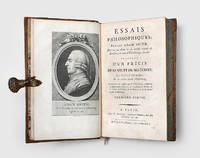
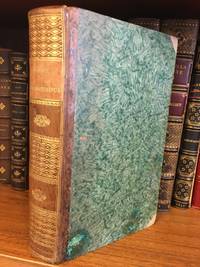
17971329312Paris: H. Agasse 1797. First French Edition. Hardcover. Octavo 316 283 pages; VG; bound in period quarter calf green marbled boards gilt titling and tooling to spine; mild wear and rubbing marbled paper slightly damaged in four places; speckled text block; interior clean with no names or markings; two parts bound together lacking frontispiece portrait as usual only bound into some copies; both half-titles and title pages present; JL consignment; shelved case 3. Essays on Philosophical Subjects is a posthumously published history of astronomy until Smith's own era plus some thoughts on ancient physics and metaphysics; This French translation published two years after the first English was translated by Pierre Prévost a Swiss philosopher and physicist who he demonstrated in 1791 that all bodies cold or hot emit heat by radiation. 1329312. Shelved Dupont Bookstore. H. Agasse hardcover books
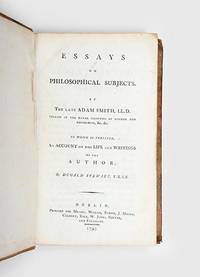
1795882052Dublin: Wogan Byrne J. Moore Etc. 1795. Original boards rebacked in leather with black labels and gold lettering. Contemporary owner's inscription above title page. Essays on astronomy and physics.In beautiful condition. First Irish Edition. Full Leather. Excellent. 8vo - over 7¾" - 9¾" tall. Wogan, Byrne, J. Moore Etc. Hardcover
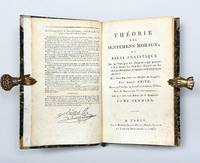
17641334674Paris: Briasson 1764. First French Edition. Hardcover. Octavos 2 volumes; VG; bound in contemporary acid-washed calf spines with two burgundy morocco labels each gilt titling and tooling; marbled endpapers; text block red; 1 leaf ad in volume 2 rear; JL consignment; shelved case 3. The first French edition was unauthorized the first authorized French translation would not appear until 1774. The 1774 translation was done by Blavet who published a letter from Smith in which Smith called Eidous's translation 'mortifying' a reaction which prompted Blavet to pursue his own attempt.;<br /> <br><br /> <br><br /> First appearing in 1759 The Theory of Moral Sentiments lays the ethical and philosophical groundwork for Smith's later economic work.;. 1334674. Shelved Dupont Bookstore. Briasson hardcover books
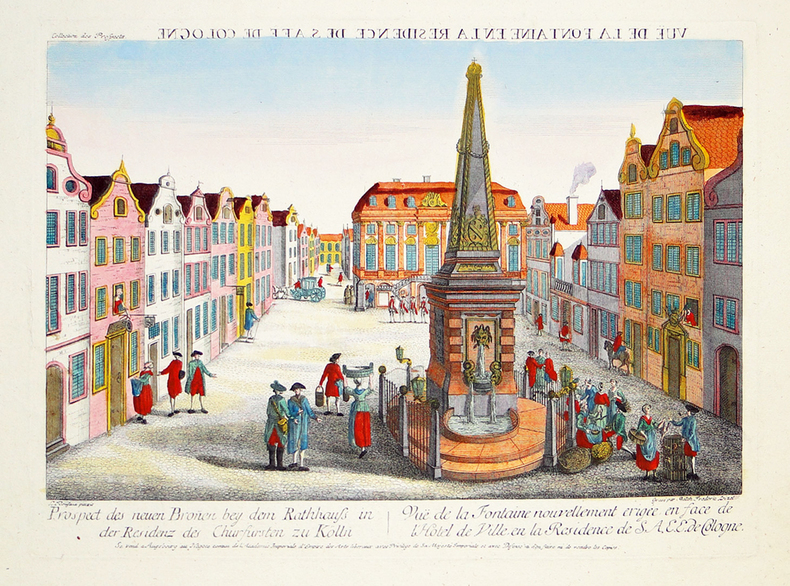
1780LBW-2791Augsbourg, Négoce commun de l'Académie Impériale d'Empire des Arts Libéraux, [circa 1780]. 295 x 395 mm.
1780LBW-2790Augsbourg, Négoce commun de l'Académie Impériale d'Empire des Arts Libéraux, [circa 1780]. 295 x 395 mm.
1773402036Mannheim, Schwan, 1773-78. 4to. Mit 6 gefalteten Kupfertafeln u. 4 gestochenen Titelvignetten. Moderner Halbpergament (Bd. 1) u. Halbpergament d. Zeit (Bd. 2-4, etwas fleckig u. verstaubt). [3 Warenabbildungen]
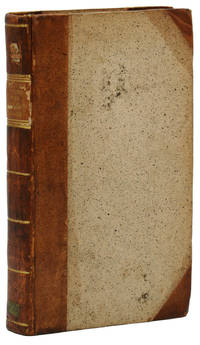
1791140940981Leipzig: In der Graffschen Buchhandlung 1791. First Edition Thus. Very Good. 463 pp. First edition of this second German translation overall of The Theory of Moral Sentiments made from the fifth English edition; no other German translation was published until 1926. Contemporary calf over speckled boards. Very Good. Binding lightly rubbed and marked spine with two small paper shelf tickets. Upper joint started but binding remains firm. Pages a little toned and with occasional foxing. In der Graffschen Buchhandlung unknown books
1791140940981Leipzig: In der Graffschen Buchhandlung 1791. First Edition Thus. Very Good. 463 pp. First edition of this second German translation overall of The Theory of Moral Sentiments made from the fifth English edition; no other German translation was published until 1926. Contemporary calf over speckled boards. Very Good. Binding lightly rubbed and marked spine with two small paper shelf tickets. Upper joint started but binding remains firm. Pages a little toned and with occasional foxing. In der Graffschen Buchhandlung unknown
179362455London: A. Strahan and T. Cadell. Very Good. 1793. Seventh Edition. Hardcover. Three volumes published in 1793 three years after his death; still stiff to open with bright crisp pages with very occasional age spot; in full contemporary tree calf still in very good condition; front board of volume one detached and nearly so to volume 3; unmarked but for name and bookplate to each volume. Spines are numbered with gilt decoration and red and black labels. Photos on request. . A. Strahan and T. Cadell hardcover
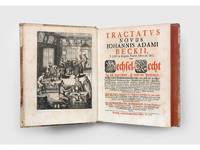
1729173121Nuremberg: Johann Georg Lochner 1729. Currency conversion First edition of this manual of the law and practice of currency exchange in the Holy Roman Empire including a striking frontispiece showing a busy exchange office overseen by Mercury the patron of trade. It covers promissory note and bills of exchange and demonstrates the strictness of imperial exchange law. Quarto 208 x 166 mm pp. 8 512. Engraved frontispiece folding table title page printed in red and black. Contemporary half vellum and marbled boards spine lettered in gilt red edges. Very slight soiling and rubbing to binding light browning and foxing to contents. A very good copy. hardcover
1795187211Dublin: Printed for Messrs. Wogan Byrne J. Moore and 5 others in Dublin 1795. Cementing the Smithian legacy First Dublin edition published the same year as the first. The Essays combines seven mainly pre-Moral Sentiments works by Smith with one of the earliest and most influential Smithian biographies by the prominent philosopher Dugald Stewart. Before his death in 1790 Smith arranged for some 16 volumes of his papers to be destroyed but he specifically selected the works in this collection to be spared for posthumous publication. The Essays range across philosophy aesthetics and the history of science remnants of an abandoned project to compile a comprehensive history of human philosophy. Many of them were conceived during Smith's brief period as a freelance teacher at Edinburgh in the 1750s but held back in the hope of publishing them as part of a much wider work. Among these pieces Roy Campbell highlights the History of Astronomy as "a truly remarkable piece of work. confirming the quite astonishing range and level of intellectual activity which Smith sustained in this period" p. 81. Stewart 1753-1828 a committed follower of Smith spoke extensively with those who had known him well: his Account of the Life and Writings pp. ix-cxxiii "continues to shape our understanding of Smith's character" Phillipson p. 275. Octavo 208 x 121 mm pp. ccxxiv 332. Contemporary tree sheep spine ruled and decorated in gilt and with later red calf label. Bumping and wear loss to spine ends foot of front joint and head of rear joint split but holding firm boards bowed paper flaws to e6-7 touching several words but sense recoverable contents otherwise crisp: a good copy. ESTC T33501; Jessop p. 172; Kress B.3037; Tribe 56; Vanderblue p. 43. Roy Campbell Adam Smith 1982; Nicholas Phillipson Adam Smith: An Enlightened Life 2010. hardcover
1732398561732. Amsterdam Janssonico-Waesbergios 1732 8° 12 179 19 1 Erores pp. mit 28 Frontisp. = 1.Taf. 1617 2223 Doppeltafeln Ledereinband d.Zt; feines Expl. Seltene und frühe lateinische Ausgabe der "Anatomischen Tabellen" des bekanntesten Kompendium der Anatomie des 18.Jhdts. Dieses Werk "stellte den ersten erfolgreichen Versuch dar den Wissensstoff der Anatomie der in den vergangenen zwei Jahrhunderten seit dem Erscheinen des Buches von Andreas Vesals "De corporis humani fabrica" im Jahre 1543 gewaltig angewachsen war in übersichtlicher und leicht lernbarer Form zusammenzufassen und mit Bildern zu erläutern." H.Goerke Die Beziehungen Japans zur europäischen Medizin im 18.Jhdt. J.Jap.Soc.Med.Hist. 20 1974 p.418-388 Johann Adam Kulmus 1689-1745 aus Breslau war Schüler von Herman Boerhaave 1668-1738 und des Anatomen Bernhard Albinus 1833-1721 in Leiden. Nach einer Studienreise durch Holland war er als Arzt in Danzig tätig und Professor für Medizin und Physik am Gymnasium in Danzig und hatte dort für seine Schüler und für Wundärzte die "Anatomischen Tabellen" verfaßt. Durch holländische Seefahrer gelangte sein Werk auch nach Japan und wurde übersetzt und unter dem Titel "Kaitai shinsho" von R. Mayeno herausgegeben. Dieses Buch war der Grundstein westlicher Medizin in Japan. Foundation of western Medicine in Japan! The rare Latin edition printed in Amsterdam of "Die Anatomische Tabellen". The Compendium became very well-known and wide-spread and it was the first anatomical compendium of modern medicine v. Goecke. The first edition is extremely rare since it was only designed for the use of Kulmus' students. The "Anatomische Tabellen" were even translated into Japanese. After the Japanese physicians MAYENO RYOTAKU 1723-1804 GENPAKU SUGITA 1733-1817 and JUN'AN NAKAGAWA 1739-1786 had convinced themselves the 4th of March 1771 in Kotsukappara near Edo by the dissection of an executed about 50 years old Japanese woman Aocha-Baba Mother Green Tea that those "Tabellen" presented the true anatomical relations thus demonstrated that anatomy as it had been taught in Japan up to that time was false. "The book in no way differed from what we saw before us. If we could translate parts of this Tâheru Anatomia we could gain a clear understanding entirely and advance medicine beyond its present level." Genpaku Sugita Rangaku katohajime 1815. So Kaitai Shinsho New Book on Human Dissections was the first complete translation of a medical work which originated on a German text. It represented an empirical approach to nature which was undermining the prestige of Chinese medicine in Japan. It took about 4 years and eleven attempts to translate it and was edited by GENPAKU SUGITA in 1774. The translator MAYENO RYOTAKU didn't sign it because of his extreme modesty. -cf. Hirsch-H. III 632; Heinrich Vianden Die Einführung der deutschen Medizin in Japan der Meiji-Zeit p.23ff.; Y. Fujikawa Der Arzt in der Japanischen Kultur p.58. Vorgebunden / bound in the front: DOUGLAS James 1675-1742. Bibliographiae anatomicae specimen: sive catalogus omnium pene auctorum qui ab Hippocrate ad Harveaum. Leiden: Gisbert Langerak 1734 8° Title printed in red and black 24 263 13 pp. Second edition enlarged of "the first attempt at a systematic medical bibliography" Garrison-Morton 6745 1st ed. 1715. This bio-bibliography which is also the first bibliography of anatomy describes about 2000 titles. Nachgebunden / bound in the back: DEL PAPA Giuseppe 1648-1735: De praecipuis humoribus qui humano corpore reperiuntur deque eorum historia qualitatibus et officiis exercitatio . . . Accedit Hieronymi Barbati exercitatio de sanguine et eius sero. Leiden: Conrad Wishoff 1736 8° 4 203 1 pp. Work on humoral pathology first published in 1733 also reprinting the 1667 tract on the blood by Girolamo Barbato announcing the discovery of serum. See Hirsch I 284. unknown
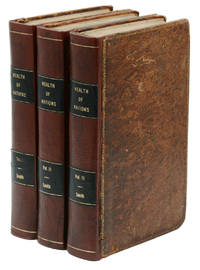
1791053487London: Strahan And Cadell 1791. 5th or later Edition . Full-calf. Very Good. Three Volumes As Issued. Complete With All Preliminary Blanks In All Volumes Cancels X5 And X8 In Volume 3. Contemporary Calf New But Old Style Black Morocco Labels Gilt In All Compartments. 8Vo. The Preeminent Classic Of Economic Thought Now Scarce In All Early Editions. This Is The Sixth Edition One Of 2000 Copies Identical To The Last Revision By Smith And The First Published After His Death. Worn Extremities Rubbed Spines Chipped Away At Top And Bottom Edges Apparently Repaired At Some Time; Leather Recently Conditioned Furbished Minor Repairs To Corners. Corporate Bookplates In All Volumes. A "Printing And The Mind Of Man" Title. Human Greeds Tend To Cancel Each Other Out And Are Dangerous Only When Government Interferes On One Side Or Another. Thus Government Has No Role To Play In Using Military Force Or Diplomatic Resources To Protect Foreign Trade Although Of Course No Self-Proclaimed Adam Smith Acolyte Politician Would Agree Despite Their Justifications Of Liberalism Free Trade Democracy Etc. : The Greed Of Politicians The Primary Fact Of Modern Life Was Not Fully Anticipated By Smith. The Main Point That Is Usually Cited From Smith'S Long Work 4 Volumes Neglecting 99% Of His Analysis Focuses Only On The Idea That Unrestricted Free Trade Is Better. Modern Interpretations Further Claim That Free Trade Is Always Better And Should Be The Primary Goal- Period That It Is An Absolute Necessity. A Thought Experiment Can Show How That Is Ridiculous. Imagine A World Where A Country Spends Far More On Sex Tourism Overseas Than On Purchasing Anything Else. The Sex Workers Overseas Will Spend Some Money On That Country'S Services And Goods But If There Is An Unbalanced Outflow Most Of The Money In The "Purchasing" Country Will End Up In The "Selling Country". The Purchasing Country Has Nothing To Show In The Long Term For All Those Transitory Pleasures It Purchased And The Country Will Dissolve As It Can No Longer Pay The Normal Everyday Debts Of Government And Private Activity. One Can Listen To Professional Economists That Say That Is Not True But If It Is Not True Why Do The Unfunded Debts Of Federal State And Local Governments Worldwide Keep Going Up And Why Can'T Governments Worldwide Come Up With Working Budgets The Problem Is Not Just In Regulation It Is Also A Problem Of Too Much Consumption. If That Analysis Is Wrong Where Is A Country That Can Provide A Current Budget That Is Based On Receipts Rather Than Expectations And When Have Those Expectations Ever Been Correct Over Say A Century In World History Economists Are Not Historians They Are Bureaucratic Advisors Who Sell Their Advice That Is Not Based On Long-Term Evidence Have Themselves Never Built Anything That Endures Can Point To No Physical Evidence That They Understand How The World Works And Have No Responsibilities When Things Fail. Every Empire And Every Government Fails When It Can No Longer Pay Enough To Sustain And Defend Itself. The Best Interpretation Of The Free Trade Argument Is That Free Trade Is Better For Most Businesses That Make Money From Selling And That In Itself Is Better For Society. If That In Itself Is Better Than Not Having Free Trade If Free Trade Is The Highest Principle In And Of Itself Then Slavery Imperialist Warfare Dictatorship Poisonous And Unhealthy Food Pollution And The Destruction Of Every Natural Thing Become Acceptable So Long As Free Trade Exists. We May Look Forward To Seeing Articles From Economists That Defend That Position And Also To Detailed Budgets For National State And City Governments That Is Within The Boundaries Of Their Receipts. Absent That We Must At Least Consider That Whatever Professional Advisors Say There Is An Issue In The Real World Of "Government Budgets" And We Are Left To Consider What Is The System Of Trade Laws That Make It More Likely That We Will In The Foreseeable Future Have Balanced Them. <br/> <br/> London: Strahan And Cadell unknown
178692581786 Frankfurth und Leipzig [i. e. Nürnberg], in der Grattenauerischen Buchhandlung, 1786. Un volume in-8° (110 x 168 mm) de 374 pages, reliure du début du XIXe siècle en cartonnage bleu, plats ornés de papier marbré, dos lisse orné de filets, pièce de titre jaune. Marges un peu courtes, page de titre brunie et tache angulaire claire sur les premiers feuillets, papier de couverture un peu frotté au do et sur les arêtes. Rare édition originale, imprimée à Nuremberg chez Ernst Christoph Grattenau (1744-1815), qui était franc-maçon et fut aussi membre de lOrdre des Illuminés de Weishaupt. Lindication de Francfort et Leipzig se réfère au fait que louvrage y était vendu en foires.
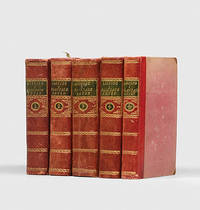
1797135144Stockholm: Henrik A. Nordström 17971801. First edition of all 50 parts of the Swedish literary periodical Läsning i blandade ämnen containing over 200 pages of passages from various sections of the Wealth of Nations making it the first opportunity for Swedish speakers to study Adam Smith. Georg Sartorius's abridgement of the Wealth of Nations the Handbuch der Staatswirthschaft. had appeared in a Swedish translation in 1800 but according to Tribe a complete translation has never appeared. There are many other translations from English in the periodical including biographies of Samuel Johnson and William Blackstone and poetry by Alexander Pope and Thomas Gray. 50 parts bound in 5 vols octavo 182 x 109 mm. Complete with 5 folding tables folding engraved map and 3 folding engraved plates of agricultural implements; woodcut vignettes on divisional titles. Contemporary red half morocco and marbled or drab boards spines with gilt roll rules green labels lettered and numbered in gilt blue edges silk bookmarkers. Contemporary ownership stamp of Daniel Eberstein to each title modern bookplate to each front pastedown. Occasional light spotting and the odd stain short tear to one leaf in vol. 3 with loss of 1 character; a very good set in an attractive contemporary binding. Vanderblue p. 32; not in Tribe; WorldCat lists copies at Yale Minnesota and Texas. On the influence of Smith in Sweden see Torbjörn Vallinder "University Professors and Amateur Writers: The Wealth of Nations in Sweden up to 1990" in Cheng-chung Lai Adam Smith Across Nations 2000. hardcover
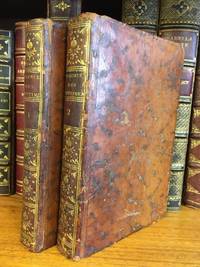
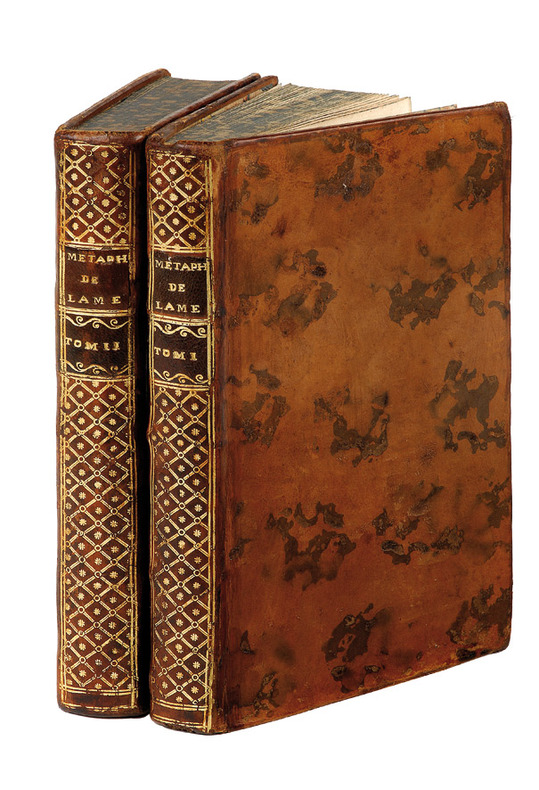
176417635Paris, Briasson, 1764 ; 2 tomes in-12, veau marbré, dos lisse décoré «à la grotesque» de croisillons étoilés, pièce de titre et de tomaison havane (reliure de l'époque) ; VIII (le premier feuillet est blanc), 302 pp. , (1) f. blanc ; (4), 370, (2) pp. (privilège).
17912306072London: Strahan 1791. 6th edition. hardcover. Very good. A handsome three volume set of the 6th edition. One of only 2000 copies published. Spines repaired but appear to be the original covers. The greatest work in the history of economics. Recounts not just the concept of the "invisible hand" but redefined national wealth in terms of products labor and productivity instead of government stashes of gold. Identical To The Last Revision By Smith And The First Published After His Death in 1790. Strahan unknown
1791140941390London: Printed for A. Strahan; and T. Caddell 1791. Sixth Edition. Very Good. The Sixth Edition. Complete in three volumes In contemporary full tree calf rebacked with new spines. Bindings worn former owner bookplate to pastedowns. Old tidemarks to preliminary pages and faintly to textblock edge light foxing and browning to pages light and sporadic pencil marks in text. Printed for A. Strahan; and T. Caddell unknown books
17912406110London: Printed for A. Strahan and T. Cadell 1791. 6th. hardcover. 6th edition as stated on title page 1791. One of 2000 sets published. All 3 books are in very good condition. Vol.1 has paper tape repair to front and rear gutters. All volumes have foxing soiling discoloration some water stains former owner's name on end papers or title page. Printed for A. Strahan and T. Cadell unknown
177017983Zagreb, Jander, o. J. (1770). 29 Bll., 522 S., 1 Bl. 4°. Mod. Pp. [4 Warenabbildungen]
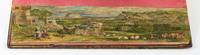
1788ST19954London: Printed for the Author and sold by Edwards in Pall Mall; Also by Edwards's in Halifax 1788. FIRST EDITION quarto issue with the etchings printed directly above the text. 257 x 205 mm. 10 1/8 x 8 1/8". iv 27 1 pp. 25 leaves; 11 1 pp. 25 leaves. Two parts bound in one volume. <br/> HANDSOME ORIGINAL ESTRUSCAN CALF BY EDWARDS OF HALIFAX covers with central panel of tree calf enclosed by a gilt Greek key border and a frame of stenciled dark brown palmettes on light tan calf this surrounded by graceful gilt ivy roll on dun-colored calf all within a gilt pentaglyph-and-metoped border smooth spine divided into panels by strips of inlaid black morocco tooled with gilt Greek key roll panels with inlaid central oval medal featuring an Etruscan vase calligraphic gilt flourishes at corners black morocco label bright pink endpapers all edges gilt expertly rebacked preserving original spine. WITH A FINE BRIGHTLY COLORED FORE-EDGE PAINTING OF THE CRAIGMILLAR CASTLE RUINS WITH EDINBURGH IN THE DISTANCE. WITH 50 ENGRAVED VIGNETTES 60 x 85 mm. of the ruins of Scottish castles and abbeys. A Large Paper Copy. Front pastedown with engraved armorial bookplate of Christopher Turnor Stoke Rochford Library. Lowndes 370; ESTC T153718 but with a variant title page. Front cover with a couple small areas of lost patina from insect activity rear cover just slightly marked upper corners a bit bumped faint freckled foxing in the margins more noticeable on the first two leaves slight offsetting of engravings on facing blank versos. A few condition issues but still a very attractive book the lovely binding retaining virtually all of its antique appeal and the contents with nothing approaching a significant problem.<br/> <br/> This is an excellent atypically large example of an Edwards of Halifax binding enhanced with a most appealing early fore-edge painting depicting one of the castles pictured in this attractive quarto edition. Scottish surgeon and antiquary Adam de Cardonnel 1746/7 - 1820 wrote and illustrated the present work "to preserve from oblivion the ancient remains of Caledonian splendour." Originally intended as a supplement to the popular "Pennant's Tour" of Scotland it appeared in four parts the first two in 1788 in a few different forms including an octavo edition and the second two published in 1793. The fore-edge painting features Craigmillar castle a Medieval fortress located a few miles from Edinburgh whose most famous guest was Mary Queen of Scots. One of her stays resulted in the so-called "Craigmillar bond" which set in motion plans to dispatch Mary's husband Henry Stuart. By the late 18th century the castle had fallen into disrepair and it appears in the present painting as an idyllic ruin with sheep and cows grazing in the fore-ground and the city with Edinburgh Castle rising in the distance. The Edwards of Halifax bindery was founded by William Edwards 1723-1808 and continued by several of his brothers half-brothers and sons by far the most important of the sons being Thomas who lived from 1762-1834. This famous firm produced a number of important innovations in binding design the most significant being the idea of concealing a painting under the gilt of the fore edge. This hidden treasure could be revealed once the edge was fanned out as a special surprise element of the volumes the Edwards firm bound--typically in Etruscan calf as here or in their patented transparent vellum. Although bindings produced by the Edwards workshop are almost never signed the present item is surely Edwards' work as indicated by the characteristic binding style and by the fact that our volume was actually sold by the Edwards firm. As usual there is no clear way to assign a precise date to the painting; while it is not done in the soft grays that can be firmly associated with the earliest Edwards examples it clearly is a painting done before 1850. While fore-edge paintings likely produced at the Edwards bindery and especially produced by their imitators appear in the marketplace with some regularity most offered are octavo or duodecimo in size. Of the fore-edge paintings attributed to Edwards of Halifax that have appeared in RBH over the past 65 years fewer than one in 10 were on quarto volumes. This copy was previously owned by the MP Christopher Turnor 1809-86 a member of the House of Commons and owner of more than 20000 acres in Linconshire where he built the grand Stoke Rochford Hall. Printed for the Author, and sold by Edwards, in Pall Mall; Also by Edwards's, in Halifax unknown
17686033NÜRNBERG: George Peter Monath 1768. Tercera edición.- 8º.- Encuadernación en media piel posterior.- Portada a dos tintas.- 6 hojas de Introducción e ÃÂndice de ilustraciones.- 696 páginas.- 4 hojas de ÃÂndice.- 45 láminas grabadas fuera de texto de las cuales 27 plegadas. Excelente ejemplar de esta obra clásica sobre el modo de cazar pájaros la más extensa y completa en su género que dedica un apartado amplio a la crÃÂa del canario. Los grabados representan formas diversas de jaulas trampas reclamos e ingenios para la captura de aves. Nissen 716 - Souhart p. 587 George Peter Monath unknown
1797166730Paris: H. Agasse 1797. A handsome copy of Smith's essays in French First edition in French this a superior copy preserving the half-titles and the fine portrait frontispiece often missing. "The writings that Joseph Black and James Hutton brought together in 1795 under the title Essays on Philosophical Subjects together with Dugald Stewart's 'Account' and Smith's 1755 letter to the Edinburgh Review were translated and published by Pierre Prévost as Essais philosophiques in 1797. Prévost added ten notes in the form of commentary directed to specific points as well as a more general essay 'Reflexions sur les oeuvres posthumes d'Adam Smith'" Tribe. Octavo 196 x 117 mm in 2 parts. Engraved portrait frontispiece of Smith by Benoît-Louis Prévost. Contemporary French speckled calf spine decorated in gilt black morocco label triple gilt fillet border to covers marbled endpapers and edges. Head of spine and front joint skilfully restored contents faintly browned else an attractive copy. Einaudi 5325; Goldsmiths' 16932; Jessop p. 172; Kress B.3505; Tribe 65; Vanderblue p. 44. unknown
1798157475Paris: chez F. Buisson 1798. Containing the first appearance of de Grouchy's Lettres sur la sympathie First edition of Sophie de Grouchy's translation "the best available in her language" Ross p. 365 which brought Smith's work to a much broader French audience following two ineffectual translations and which remains the standard French text. The edition includes the first appearance of de Grouchy's Lettres sur la sympathie her major contribution to moral philosophy. The translation was preceded in French editions by Marc-Antoine Eidous's translation of 1764 roundly criticized for its low quality and held by Smith to be responsible for the poor reception of his work on the continent and Jean-Louis Blavet's translation of 1774-5 which was poorly disseminated. A manuscript translation by Louis Alexandre Duc de la Rochefoucauld 1774 was abandoned and unpublished. In contrast de Grouchy's translation was praised from the start and commended for its faithfulness to the original text. "Smith was no longer alive by the time Grouchy published her own translation 1798; he died in 1790 but it is safe to say that he would have been happier with hers as she followed the text as precisely as she could attempting to capture the tone and rhythm as well as the multilayered meanings of his sentences" Bergès and Schliesser p. 9. The edition also includes a translation of Smith's Dissertation on the Origin of Language first published in The Philological Miscellany and thereafter appended to the third and subsequent editions of the Theory of Moral Sentiments. The translation was reprinted in 1830 1860 and 1981. De Grouchy was a prominent salon hostess during the French Revolution and under Napoleon. The Lettres sur la Sympathie appended to the translation form a response to Smith's Moral Sentiments but also offer an original and important contribution to moral philosophy. The text written from around 1791 to 1793 takes the form of eight letters addressed to C sometimes surmised as her husband the philosopher Condorcet more probably her brother-in-law the physiologist and philosopher Pierre Jean Georges Cabanis. De Grouchy in the first letter sets out her project to find the origins of sympathy and over the following letters sustains her argument that they are physiological based on experienced or imagined pain and pleasure. The Lettres have long been recognized in French scholarship - Jean-Paul de Lagrave's French edition of 1994 lists at least 15 works in French dealing with her from 1887 to 1987. In English scholarship her work has been recognized only more recently. English translations were published - independent from Smith's Theory - in 2008 edited and translated by Karin Brown and James E. McClellan III and 2019 edited and translated by Sandrine Bergès and Eric Schliesser both containing lengthy introductory monographs confirming the originality and importance of the Lettres. Karin Brown in 2008 bemoaned de Grouchy's then-invisibility in English scholarship - "the Lettres are certainly a notable if overlooked Enlightenment text. But more specifically there is significant recent interest in sympathy and sensibility in the literature of the eighteenth century and Sophie de Grouchy is the one contemporary woman philosopher who thought and wrote critically about sympathy. This otherwise informed and eye-opening scholarly reinterpretation of the role of sentiment in late-eighteenth century thought is unaware of Sophie de Grouchy or her contributions" Brown and McClellan p. xvi. 2 vols octavo 192 x 120 mm. With half-titles. Contemporary quarter sheep mottled sides spines lettered in gilt vellum tips plain endpapers marbled edges. Bookplate of Jules C. Alciatore 1901-1974 professor of literature at the University of Georgia whose research focused on the work of Stendhal. A few minor pencilled annotations. Bindings fresh and well preserved with only very minor rubbing contents lightly browned and foxed a few gatherings a little more substantially paper flaw to C4 and F1 in vol. II the former with loss affecting a few letters; an attractive copy in a well-preserved contemporary binding. Tribe 66. Sandrine Bergès & Eric Schliesser introduction to Sophie de Grouchy's Letters on Sympathy Oxford University Press 2019; Karin Brown & James E. McClellan Sophie de Grouchy: Letters on Sympathy 1798 a Critical Edition 2008; Ian Simpson Ross Life of Adam Smith 1995. hardcover
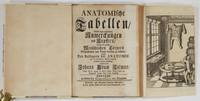
1725687051725. Danzig zu finden bey Cornelius von Beughem gedruckt von Thomas Johann Schreiber 1725 8° 24 Bl. 28 Kupfer auf 10 Taf.; Danzig 1725 36 Bl. Halbpergamenteinband; feines Expl. Sehr seltene dritte Ausgabe der "Anatomischen Tabellen" nebst erster Auflage der "Anmerkungen welche den Anatomischen Tabellen zu mehrer Erläuterung und deutlichem Begrieffe beygefüget" welche erstmals hier 1725 beigefügt worden sind. Diese beiden Teile wurden dann in den späteren Auflagen vereinigt und zu dem bekanntesten Kompendium der Anatomie des 18.Jhdts. Dieses Werk "stellte den ersten erfolgreichen Versuch dar den Wissensstoff der Anatomie der in den vergangenen zwei Jahrhunderten seit dem Erscheinen des Buches von Andreas Vesals "De corporis humani fabrica" im Jahre 1543 gewaltig angewachsen war in übersichtlicher und leicht lernbarer Form zusammenzufassen und mit Bildern zu erläutern." H.Goerke Die Beziehungen Japans zur europäischen Medizin im 18.Jhdt. J.Jap.Soc.Med.Hist. 20 1974 pp.418-388 Johann Adam Kulmus 1689-1745 aus Breslau war Schüler von Herman Boerhaave 1668-1738 und des Anatomen Bernhard Albinus 1833-1721 in Leiden. Nach einer Studienreise durch Holland war er als Arzt in Danzig tätig und Professor für Medizin und Physik am Gymnasium in Danzig und hatte dort für seine Schüler und für Wundärzte die "Anatomischen Tabellen" verfaßt. Durch holländische Seefahrer gelangte sein Werk auch nach Japan und wurde übersetzt und unter dem Titel "Kaitai shinsho" von R.Mayeno herausgegeben. Dieses Buch war der Grundstein westlicher Medizin in Japan. Foundation of western Medicine in Japan! The rare third and first complete of edition "Die Anatomische Tabellen" is the first edition of "Anmerkungen welche den Anatomischen Tabellen zu mehrer Erläuterung und deutlichem Begrieffe beygefüget". The later editions combined these two parts. The Compendium became very well known and wide-spread and it was the first anatomical compendium of modern medicine v. Goecke. The first edition is extremely rare since it was only designed for the use of Kulmus' students. The "Anatomische Tabellen" were even translated into Japanese. After the Japanese physicians MAYENO RYOTAKU 1723-1804 GENPAKU SUGITA 1733-1817 and JUN'AN NAKAGAWA 1739-1786 had convinced themselves the 4th of March 1771 in Kotsukappara near Edo by the dissection of an executed about 50 years old Japanese woman Aocha-Baba Mother Green Tea that those "Tabellen" presented the true anatomical relations thus demonstrated that anatomy as it had been taught in Japan up to that time was false. "The book in no way differed from what we saw before us. If we could translate parts of this Tâheru Anatomia we could gain a clear understanding entirely and advance medicine beyond its present level." Genpaku Sugita Rangaku katohajime 1815. So Kaitai Shinsho New Book on Human Dissections was the first complete translation of a medical work which originated on a German text. It represented an empirical approach to nature which was undermining the prestige of Chinese medicine in Japan. It took about 4 years and eleven attempts to translate it and was edited by GENPAKU SUGITA in 1774. The translator MAYENO RYOTAKU didn't sign it because of his extreme modesty. -cf. Hirsch-H. III 632; Heinrich Vianden Die Einführung der deutschen Medizin in Japan der Meiji-Zeit p.23ff.; Y.Fujikawa Der Arzt in der Japanischen Kultur p.58. unknown