NAPOLEON ,JOMARD,MONGELivre Rare Book
39 462 résultats
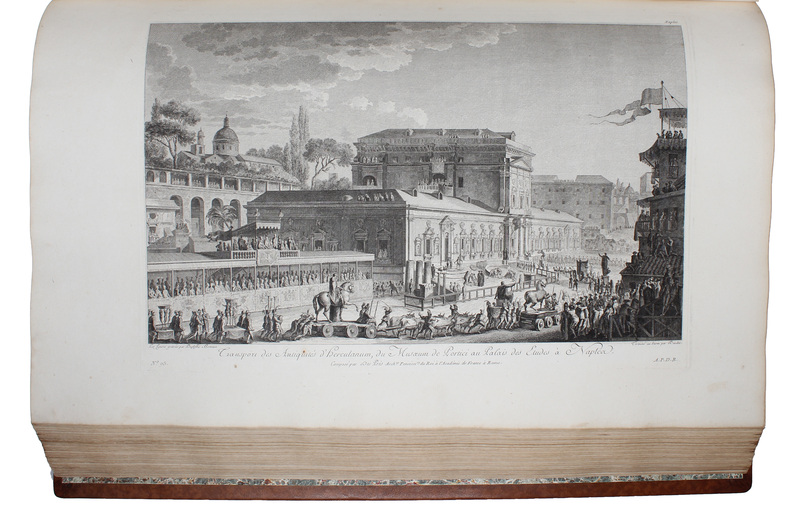
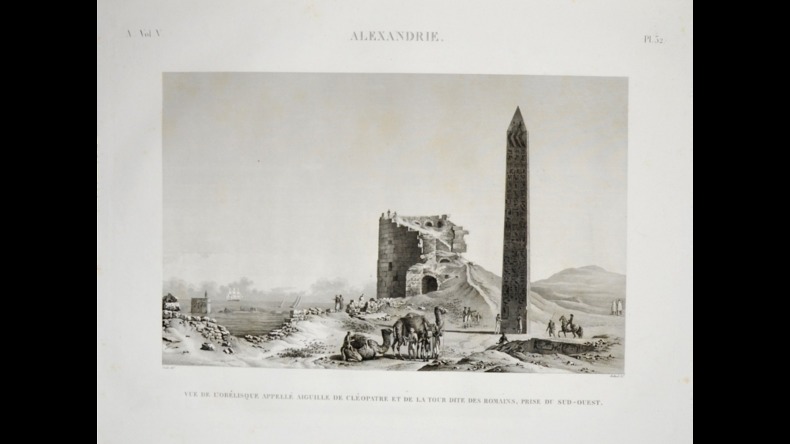
1820PHO-372TEXTE Paris, Panckoucke, 1820-1829. 24 tomes en 26 vol. de texte , in-8 Manquent : T 1-6-10-14-18 (3ème part) et 19 Un des monuments de l'Imprimerie Française et de l'archéologie mondiale, réalisé sous la direction de Vivant Denon et l'impulsion de Kléber après la Campagne d'Égypte. Broché. ATLAS Paris, Panckoucke, 1820-1829. 11 volumes IN PLANO, demi-basane havane ép., dos lisses ornés. Reliures usées, frottés. Qqs rousseurs par endroits. Ces 11 volumes d'atlas renferment au total 848 planches réparties : ANTIQUITÉS: 5 Volumes ,tome I, 91 planches; tome II, 85 planches ; tome III, 55 planches ; tome IV, 62 planches ; tome V, 82 planches + 16 planches pour la pierre de Rosette (2 par feuille) + 2 planches non numérotées. ÉTAT MODERNE : 2 volumes , 96 planches en numérotation continue + 31 planches + 11 planches (A-K) + 13 planches (AA-NN, pas de planche JJ) + 10 planches (a-k, pas de planche j). GÉOGRAPHIE : 1 volume : tableau d'assemblage, alphabet puis 47 planches (cartes sur double page) HISTOIRE NATURELLE : 3 volumes : tome I, 62 planches ,tome II, 105 planches ,tome II bis, tableau général des planches (volant en format plus petit) + 62 planches + 15 planches.
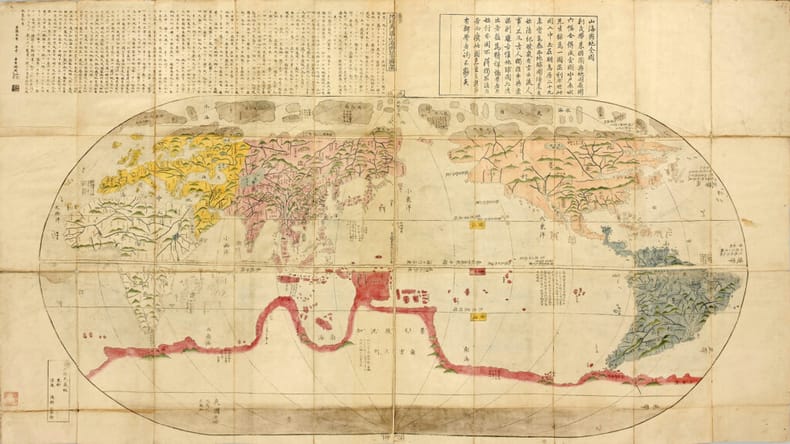
LCS-17476Première édition de cette superbe et rare carte du Monde publiée au Japon en 1785, qui montre l’état d’avancement des connaissances géographiques et cartographiques japonaises à la fin du XVIIIe siècle. Yamazaki Kinbe, Edo et Asana Yahei, Osaka, 5e année de la période Tenmei (1785).Grande carte de 165 x 91 cm gravée sur bois, entièrement coloriée à la main à l’époque. Tampon à l’encre rouge dans le bas. Repliée et préservée dans un étui de protection de toile bleu moderne. Très bon état de conservation.
Folio (22.5 x 35 cm). [ii], 11; [ii], 12-35; [i], 36-60; [i], 61-101; [i], 103-138 ll. Five secret military reconnaissance reports totalling 138 numbered leaves in typescript (some in carbon copies or duplicated) with insertions and manuscript additions, with 47 original photographs (3.5 x 6 to 8 x 13 cm) mounted on the leaves (3 of the 47 are longer panoramas, each built up from 2 to 3 photos) and a folding blueprint plan (26 x 48.5 cm). Contemporary brown half cloth with diapered cloth sides and printed paper labels on the spine and front cover. Kept in a modern cloth clamshell box. Five secret British military reconnaissance reports made by the South China Command in Hong Kong for the Under Secretary of State at the War Office in London from 1926 to 1928 and distributed in 1927 and 1928, giving a very detailed account of sites of military importance in Guangdong and Fujian provinces on the southeast coast of mainland China at a critical moment in Chinese history. It includes a description of the famous Whampoa (Huangpu) Military Academy, established by Sun Yat-sen in 1924 with help from the Soviet Union and commanded by the young Chiang Kai-shek in his first major post, the Guangzhou radio transmitting station, the aerodrome near the academy, arsenals, railways, fortifications, other prospective military targets, the topography of the region and possible landing sites for an invasion. The folding plan shows "The Asiatic Petroleum Co's wharf Amoy", with extensive soundings, reproducing a drawing dated 14 September 1919. The British were secretly preparing for military intervention in China during a period of tension between China and the western powers. Although the text gives some background information and a few anecdotes about events in China (some Chinese feared the compiler might be a Russian spy), it mostly leaves political opinions to the politicians and concentrates on the factual information the military would need if England decided to invade China. Sun Yat-sen died in March 1925 and in the wake of worker and student uprisings, the British-led Shanghai Municipal Police shot and killed at least nine protesters in Shanghai on 30 May, stoking the existing anti-British sentiments. The Chinese Communist Party and Sun Yat-sen's Nationalist Kuomintang had been allied against the warlords since 1923 but Chiang Kai-shek had commanded their National Revolutionary Army since 1925 and beginning in March 1926 he purged Communists in the military and declared martial law, a coup that made him the undisputed leader of the Kuomintang. Mao Zedong, still only one of several leaders of the Chinese Communist Party, was beginning to organise peasant militias in Guangzhou, planting the seeds of what would become the Red Army. In April 1927 the hostilities erupted in civil war, with Chiang killing thousands of Communists and Mao Zedong leading the Red Army against him was to prove equally ruthless. The British government under Conservative Prime Minister Stanley Baldwin saw dangerous Bolshevic influences on both sides, but were pleased that Chiang made a definitive break with the Communists. After Chaing captured Nanking in March 1927, British and American ships opened fire on uprisings against him, and the British built up their military presence around the Communist stronghold of Shanghai as well. In the event, this was the closest they came to an invasion, and the preparations shown by the present reports never went further. But they give a remarkably detailed picture of the military state of southern China at this critical moment and form a primary source for both the beginnings of the Chinese civil war and the British view of the situation. The five reports are: [Part 1:] Report on Canton City [= Guangzhou in Guangdong] (sent 13 October 1927 and referring to an arsenal established 16 June [1927]). [Part 2:] Report on Shekcheng Arsenal, Whampoa Military Academy, and other establishments near Canton (sent 15 June 1928 and including information gathered in Guangzhou on 31 May 1928). [Part 3:] Report on Swatow [= Shantou in Guangdong] (dated March 1926 and sent 28 July 1927; addendum sent 10 February 1928). [Part 4:] Amoy [= Xiamen in Fujian] (dated March 1926 and sent 28 July 1927). [Part 5:] Foochow [= Fuzhou in Fujian] (refers to a publication of 1925 and sent 28 July 1927). The reports of 1927 and 1928 (parts 1 & 2) were compiled by Captain Robin Hasluck Campbell (1894-1964) of the Royal Marines, who was to rise to the rank of Major-General in 1944, and he also added a page of addenda to the 1926 report on Shantou, which was written by Captain R.A. Slater. Two of the Hong Kong cover letters were signed by Major-General Charles Camac Luard (1867-1947), Commander of British Troops in South China, and the other two by officers under his command. The paper for part 3 is watermarked "D. Gestetner's|Rotary" and some texts in the volume seem likely to have been reproduced on a Gestetner stencil-based duplicating machine, though some may be carbon copies and others appear to have been typed directly. Most of the leaves added in India are watermarked "Government|of|India|T". The Hong Kong cover letters indicate that these reports were distributed in only three to five copies, all but one going to Asian offices (including Malaya, Singapore and Peking), and we have located no surviving copies besides the present ones. They were sent in 1927 and 1928 to the Headquarters of the British Army in Delhi, India, which passed them on to their General Staff Branch at its summer office in Simla in the latter year. It was in India, probably when the reports were sent to Simla, that they were bound together with the four original cover letters (the third for parts 3 to 5 and the fourth for the addenda to part 3) and some new additions: a new typescript table of contents for all five reports headed by a general drop-title (with a manuscript note telling the binder to have the title printed for the cover), a manuscript part-title inserted before each part and one additional cover letter written in Delhi. Also at that time, the British authorities in India mounted some of the cover letters on paper leaves (and seem to have remounted some of the photos on new leaves) and made some manuscript annotations. They also used a red pencil to number the leaves of the five reports in a single series including the cover letters and leaves with photos, but not the manuscript part-titles. The table of contents cites these new leaf numbers. The reports in parts 1-3 had been separately foliated in typescript without the added leaves: 8; [2], 19; [1], 9, [3] ll. Some worm holes, especially in the first few and last few leaves (slightly affecting 2 photographs), and with occasional minor chips and tears, the folding plan has separated at the folds, a folding photographic panorama assembled from 3 photographs has one part torn through and another photo has a faded patch, but most text leaves and photographs are in good condition. A detailed secret report of British military reconnaissance in southern China as the civil war between Communists and Nationalist broke out. For the British military's view of the circumstances: Jonathan Parkinson, The Royal Navy, China Station (2018), pp. 359-372.
192 x 390 mm. Folding manuscript chart in ink and blue, red, brown, and greenish colours on vellum, embellishments and some islands heightened in gold. Framed (61:41 cm). A finely drawn, small-scale portolan chart measuring only 39 centimetres across, showing the Mediterranean Sea with the northern coast of Africa, but also the coast of Portugal. The deeply cleft coastlines are typical of portolan charts; windrose lines emanate from 12 compass roses; there are two distance bar scales in the upper right and lower left corners. Uncommonly, no toponymic information has been added to the littoral. Decoration is sparse, though a trimount with crosses at the lower right indicates the location of the Holy Land. For a similar example cf. a chart attributed to Giovanni Battista Cavallini or his workshop in the Library of Congress, dating from ca. 1678 (LC Nautical charts on vellum, 20). - Traces of three vertical folds with repairs to occasional damage near top and lower edges; a larger vellum flaw on the right edge, measuring ca. 3 x 3 cm, has likewise been re-backed with paper (without loss to image). A decorative example.
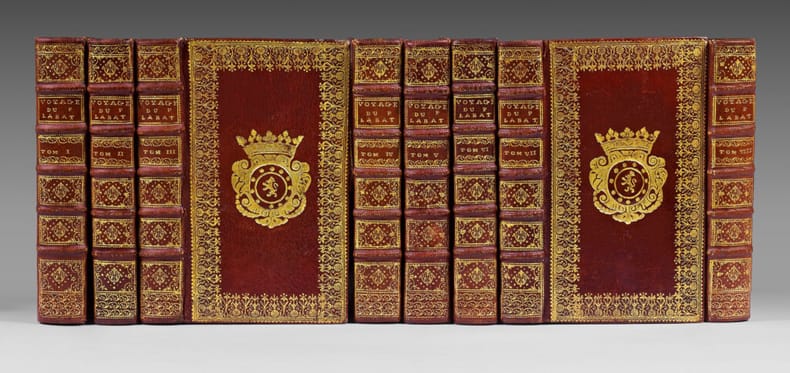
LCS-17690Exceptionnel exemplaire en maroquin de l’époque à dentelle aux armes du marquis de Herrenberg. Des bibliothèques des barons Horace de Landau et Alexis de Redé. Paris, Jean-Baptiste et Charles J.B. Delespine, 1730. 8 volumes in-12 de : I/ (3) ff., xxii pp., (1) f. de table, 459 pp., (35) pp. de table ; II/ (2) ff., 398 pp., 1 pl. dépliante, (17) ff. de table ; III/ (2) ff., 403 pp., 2 gravures hors-texte dont 1 dépliante, (29) pp. ; IV/ (3) ff., 413 pp. (mal numérotées 415), 1 pl. dépliante, (12) ff. ; V/ (2) ff., 401 pp., (11) pp. ; VI/ (2) ff., 388 pp., 1 pl. dépliante, (5) ff. ; VII/ (2) ff., 399 pp., (6) ff., VIII/ (4) ff., 411 pp. (mal numérotées 409), (9) ff. Qq. légères rousseurs. Maroquin rouge, large dentelle dorée encadrant les plats, armes frappées or au centre des plats, dos à nerfs ornés de fleurons dorés, filets dorés sur les coupes, tranches dorées. Reliure de l’époque. 164 x 95 mm.
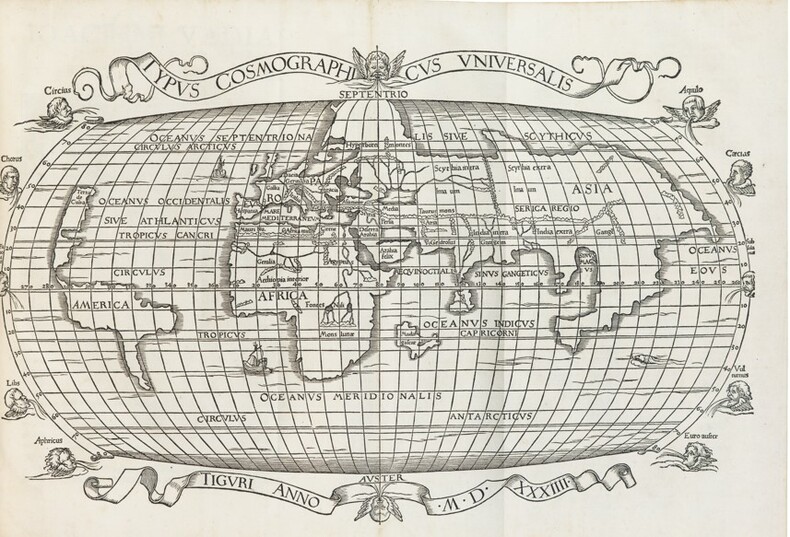
YTB-69Zurich, Christoph Froschauer, 1534. In-folio de 6 ff., 273 pp., 1 p. et 14 ff. ; une carte dépliante. Demi-peau de truie sur ais de bois. Reliure du siècle dernier. 272 x 180 mm. FIRST EDITION of Vadianus’s influential description of the world, with the very important map of the world depicting America for almost the first time, showing the complete outline of South America and according to Sabin « lacking in most of the copies located ». Alden & Landis 534/31; Harrisse, BAV 189 ; JCB I, p, 460 ; Karrow 58/47.1 ; Sabin 98279 (erroneously dated 1533) ; Shirley 70 ; VD 16, V20. The map is a reduced size copy of the world map attributed to Sebastian Munster published in Grynaeus's Novis orbis regionum ac insularum veteribus incognitarum (Basel, 1532) itself primarily based on Waldseemüller's map of 1507.Vadianus describes all the continents, seas and islands, regions, mountains and towns of the world, with separate chapters on Europe, Africa, Asia, Palestine and even Paradise, offering a geographical reading of biblical history, The description of America can be found on pp. 263-273, In the same year an octavo edition was published (without the map), later followed by several other editions. Very good copy. Joachim Vadian (1484-1551), de son nom de naissance von Watt, fut un universitaire humaniste et réformiste de Saint-Gall qui, après une carrière dans la médecine à l'étranger, revient dans sa ville d'origine et participa activement à la vie politique de celle-ci en se faisant élire au sein du Petit Conseil puis en assurant le rôle de Bourgmestre. Il défendit les idées de la Réforme et produisit des travaux sur l'histoire qui firent autorité en son temps. Ex-libris manuscrit ancien de Joann Hueber et ceux de Harrison D. Horblit et celui de B. Mendel qui furent chacun d'importants bibliophiles et collectionneurs américains d'ouvrages scientifiques portant notamment sur les grandes navigations et la découverte de l'Amérique. TRES BEL EXEMPLAIRE COMPLET DE LA MAPPEMONDE tirée Typus cosmographique universalis proposant une projection ovale du monde avec la mention « America » notée pour l’actuelle Amérique du sud tandis que le nord y est nommé « terras de cuba ».
1872602831870-1872. Folio-oblong (395 x 320 mm). Original brown half calf, recased - the original cloth (with gilt lettering to the front) has been expertly mounted on to the new boards, and most of the original gilt leather spine has been preserved over a perfectly matching new lovely brown half calf. ""Tordenskjold / 1870 - 1873"" in gilt lettering, partly worn of, to front board. End-papers renewed. 71 albumen print in various sizes and by various photographers (see below) mounted on 59 contemporary white cardboard leaves (measuring 370 x 310 mm), all re-hinged. The album was water-damaged at some point, but has been expertly and neatly restored and appears in overall very good condition with good tones. 1, Oval photo of Tordenskjold (205 x 60mm) 2, Photo of Tordenskjold (190 x 143 mm) 3, Crew aboard Tordenskjold (200 x 14 mm) 4, Crew aboard Tordenskjold (157 x 128 mm) 5, Crew and equipment aboard Tordenskjold (228 x 176 mm) 6, Naval officers about Tordenskjold (167 x 130 mm). 7, 8 small photos of various places on one plate (274 x 190 mm) 8, The harbor of Port Said. By Hippolyte Arnoux (247 x 190mm) 9, Muddigging machines in the channel of Port Said. By Hippolyte Arnoux. (245 x 190mm) 10, Port Said. By Hippolyte Arnoux. 11, Malta (262 x 207 mm) 12, Two photos of Malta (each measuring 134 x 120 mm) 13, Two photos of Gibraltar (Each measuring 148 x 114) 14, Deep Water Bay, Hong Kong (194 x 130 mm). 15, Two photos depicting telegraph-house and ships in Deep Water Bay (each measuring 150 x 112) 16, Boat with people. By Felice Beato, coloured (294 x 235 mm) 17, House next to river. By John Thomson, December 1870 (278 x 225 mm) 17, Seamen’s hospital in Hong Kong. (261 x 190 mm) 18, Hong Kong. (270 x 195 mm) 19, Hong Kong, by Floyd (270 x 192 mm) 20, Hong Kong, by Floyd (240 x 190 mm) 21, Two photos of sites in Hong Kong (each measuring 165 x 127 mm) 22, Five Sikhs in Hong Kong (215 x 244 mm) 23, Group of women in Hong Kong, (326 x 215 mm) 24, Two photos of Hong Kong harbour, one photo depicting “Cella” (182 x 105" 130 x 98 mm) 25, Villa at Canton. (264 x 190 mm) 26, Pagode in Xuexiu Park, Guangdong. By William Pryor Floyd. (195 x 246 mm) 27, Boats in Canton. William Pryor Floyd,(270 x 223 mm) 28, Pou-Ting-Qua’s Garden, Canton. By John Thomson. (289 x 230 mm) 29, Fields in Canton. (205 x 155 mm) 30, Houses in Canton. (267 x 210 mm) 31, Canton harbor. By John Thomson. (245 x 202 mm) 32, Boat on the Canton river. (274 x 204 mm) 33, Wall around Canton. (260 x 200 mm). 34, Boats in Canton (293 x 225) 35, Telegraphstation in Woosung. (150 x 110 mm) 36, Boats in Foochow. (287 x 232 mm) 37, Temple in Foochow. By John Thomson (190 x 237 mm) 38, Pagode in Foochow. Presumably by John Thomson. (287 x 220 mm). 39, Tomb of Fou Tcheou. By John Thomson. (290 x 225 mm). 40, Temple in Shanghai. (237 x 188 mm). 41, Shanghai. (232 x 176 mm) 42, Chaochow bridge, Kwangtung. By John Thomson. (266 x 204 mm). 43. Panorama of Nagasaki consisting of two photos. (371 x142 mm) 44, Two photos of Nagasaki. Felice Beato. (Each measuring 169 x 119 mm). 45, Two photos from Nagasaki. Presumably by Felice Beato. (Each measuring 165 x 118 mm) 46, Two photos from Nagasaki. Presumably by Felice Beato. (Each measuring 165 x 118 mm) 47, Temple in Nagasaki. Presumably by Felice Beato. (169 x 118 mm). 48, Photo of Japanese woman in kimono. By Felice Beato. (205 x 255 mm). 49, Two photos of officers in house in Yokohama. (162 x 125 mm). 50, The Abbot and Monks of Kushan Monastery. By John Thomson. (287 x 204 mm). 51, Wooden structure, presumably Nagasaki. Presumably by Felice Beato. (270 x 208 mm) 52, Pagode, presumably Nagasaki. Presumably by Felice Beato. (234 x 185 mm) 53, Cityscape with lake, presumably Nagasaki. Presumably by Felice Beato.. (280 x 228 mm). 54, Two photos, cemetery and stairs to temple. By Felice Beato. (Each measuring 168 x 118 mm). 55, People standing outside house, presumably Hong Kong. By John Thomson. (185 x 155 mm) 56, Guangzhou Great Norh Gate, Canton. By John Thomson (245 x 156 mm). 57, Two photos, one of the building of a telegraph station (presumably in Wladivostok) and a view of Wladivostok from the sea (154 x 123 130 x 99 mm). 58, Seascape of two ships. (130 x 140 mm). 59, Ship laying for anchor. (170 x 123 mm)
1870-1872. Folio-oblong (395 x 320 mm). Original brown half calf, recased - the original cloth (with gilt lettering to the front) has been expertly mounted on to the new boards, and most of the original gilt leather spine has been preserved over a perfectly matching new lovely brown half calf. ""Tordenskjold / 1870 - 1873"" in gilt lettering, partly worn of, to front board. End-papers renewed. 71 albumen print in various sizes and by various photographers (see below) mounted on 59 contemporary white cardboard leaves (measuring 370 x 310 mm), all re-hinged. The album was water-damaged at some point, but has been expertly and neatly retored and appears in overall very good condition with good tones. 1, Oval photo of Tordenskjold (205 x 60mm) 2, Photo of Tordenskjold (190 x 143 mm) 3, Crew aboard Tordenskjold (200 x 14 mm) 4, Crew aboard Tordenskjold (157 x 128 mm) 5, Crew and equipment aboard Tordenskjold (228 x 176 mm) 6, Naval officers about Tordenskjold (167 x 130 mm). 7, 8 small photos of various places on one plate (274 x 190 mm) 8, The harbor of Port Said. By Hippolyte Arnoux (247 x 190mm) 9, Muddigging machines in the channel of Port Said. By Hippolyte Arnoux. (245 x 190mm) 10, Port Said. By Hippolyte Arnoux. 11, Malta (262 x 207 mm) 12, Two photos of Malta (each measuring 134 x 120 mm) 13, Two photos of Gibraltar (Each measuring 148 x 114) 14, Deep Water Bay, Hong Kong (194 x 130 mm). 15, Two photos depicting telegraph-house and ships in Deep Water Bay (each measuring 150 x 112) 16, Boat with people. By Felice Beato, coloured (294 x 235 mm) 17, House next to river. By John Thomson, December 1870 (278 x 225 mm) 17, Seamen’s hospital in Hong Kong. (261 x 190 mm) 18, Hong Kong. (270 x 195 mm) 19, Hong Kong, by Floyd (270 x 192 mm) 20, Hong Kong, by Floyd (240 x 190 mm) 21, Two photos of sites in Hong Kong (each measuring 165 x 127 mm) 22, Five Persians in Hong Kong (215 x 244 mm) 23, Group of women in Hong Kong, (326 x 215 mm) 24, Two photos of Hong Kong harbour, one photo depicting “Cella” (182 x 105" 130 x 98 mm) 25, ??? Villa at Canton. (264 x 190 mm) 26, Pagode in Xuexiu Park, Guangdong. By William Pryor Floyd. (195 x 246 mm) 27, Boats in Canton. William Pryor Floyd,(270 x 223 mm) 28, Pou-Ting-Qua’s Garden, Canton. By John Thomson. (289 x 230 mm) 29, Fields in Canton. (205 x 155 mm) 30, Houses in Canton. (267 x 210 mm) 31, Canton harbor. By John Thomson. (245 x 202 mm) 32, Boat on the Canton river. (274 x 204 mm) 33, Wall around Canton. (260 x 200 mm). 34, Boats in Canton (293 x 225) 35, Telegraphstation in Woosung. (150 x 110 mm) 36, Boats in Foochow. (287 x 232 mm) 37, Temple in Foochow. By John Thomson (190 x 237 mm) 38, Pagode in Foochow. Presumably by John Thomson. (287 x 220 mm). 39, Tomb of Fou Tcheou. By John Thomson. (290 x 225 mm). 40, Temple in Shanghai. (237 x 188 mm). 41, Shanghai. (232 x 176 mm) 42, Chaochow bridge, Kwangtung. By John Thomson. (266 x 204 mm). 43. Panorama of Nagasaki consisting of two photos. (371 x142 mm) 44, Two photos of Nagasaki. Felice Beato. (Each measuring 169 x 119 mm). 45, Two photos from Nagasaki. Presumably by Felice Beato. (Each measuring 165 x 118 mm) 46, Two photos from Nagasaki. Presumably by Felice Beato. (Each measuring 165 x 118 mm) 47, Temple in Nagasaki. Presumably by Felice Beato. (169 x 118 mm). 48, Photo of Japanese woman in kimono. By Felice Beato. (205 x 255 mm). 49, Two photos of officers in house in Yokohama. (162 x 125 mm). 50, The Abbot and Monks of Kushan Monastery. By John Thomson. (287 x 204 mm). 51, Wooden structure, presumably Nagasaki. Presumably by Felice Beato. (270 x 208 mm) 52, Pagode, presumably Nagasaki. Presumably by Felice Beato. (234 x 185 mm) 53, Cityscape with lake, presumably Nagasaki. Presumably by Felice Beato.. (280 x 228 mm). 54, Two photos, cemetery and stairs to temple. By Felice Beato. (Each measuring 168 x 118 mm). 55, People standing outside house, presumably Hong Kong. By John Thomson. (185 x 155 mm) 56, Guangzhou Great Norh Gate, Canton. By John Thomson (245 x 156 mm). 57, Two photos, one of the building of a telegraph station (presumably in Wladivostok) and a view of Wladivostok from the sea (154 x 123 130 x 99 mm). 58, Seascape of two ships. (130 x 140 mm). 59, Ship laying for anchor. (170 x 123 mm)
17715000651London: Printed for T. Becket and P.A. De Hondt in the Strand 1771. A fine copy. Quarto; a fine copy in a Sangorski-style binding of half green morocco spine panelled in gilt between raised bands. <p><p>First edition of the earliest published account of Cook's first voyage to the Pacific: the rare first issue with the leaf of dedication to "The Right Honourable Lords of the Admiralty and to Mr. Banks and Dr. Solander" inserted by the publishers to add authenticity. This copy also has the first state of p. 90 recently identified and to be distinguished from an amended state where text begins "quantities.".</p> <p>This was the first of a series of so-called "surreptitious accounts" of Cook's various voyages to appear in print: the Admiralty found it practically impossible to enforce their ruling that no unofficial publications should pre-empt the official and lengthier accounts of the voyages naturally much slower in the press. In this case however legal action was taken against the publisher for using an unauthorised dedication forcing removal of the leaf during publication. "It is accordingly of the greatest rarity and copies of the book containing the dedication are far more valuable than those without it." Davidson. In this large copy the offending leaf has generous margins and retains its printed instruction to the binder "Place this next the title" which also interestingly indicates that the leaf was printed quite separately from the rest of the work.</p> <p>The British public's eagerness for news of the voyage needed more than newspaper accounts while the officially sanctioned narrative would be a long time coming. Published anonymously some two months after the return of the Endeavour and nearly two years before Hawkesworth's official account the Cook scholar Beaglehole demonstrated that the sailor James Magra was the author. His illicit sale of his journal to the publishers might well have confirmed Cook's opinion of him: 'one of those gentlemen frequently found on board Kings Ships that can very well be spared or to speake more planer good for nothing.'. He was a New Yorker and a loyalist. Whatever his skipper and the authorities may have thought of him it was Magra who got the first description of the voyage into print - the earliest printed account of the east coast of Australia published even before acceptance of the name Botany Bay here called Sting-ray Bay as Cook originally christened it.</p> <p>Magra later changed his name to Matra to claim a family inheritance. As Alan Frost has shown "The Precarious Life of James Mario Matra: Voyager with Cook; American Loyalist; Servant of Empire" 1995 Matra used his experiences on the east coast of Australia to draft his 1783 proposal for a penal colony at Botany Bay. Never shy in self-promotion he announced his hope of being made Governor. His plan like Sir Joseph Banks's before and George Young's after him had its effect on the planners of the First Fleet and he was called as an expert witness to the committee in charge of solving the question of transportation see Frost pp.113-122. His life has prompted a considerable literature with multiple studies of his career and importance including those by G.B. Barton George Anthony Wood James Watson who christened him the "Father of Australia" an accolade more often awarded to Joseph Banks and more recently Antonio Giordano who has him as "Australia's Spiritual Father" and Andrew Tink.</p> </p> . Printed for T. Becket and P.A. De Hondt, in the Strand unknown
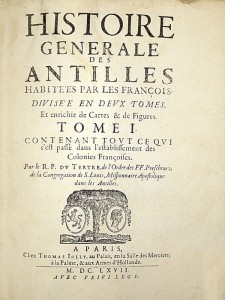
LCS-12255Première édition complète de l’Histoire des Antilles en reliure de l’époque. Paris, Thomas Jolly, 1667-1671.4 tomes en 4 volumes in-4. Veau brun granité, dos à nerfs ornés de fleurons dorés, coupes décorées, tranches jaspées. Reliure de l’époque. 233 x 183 mm.
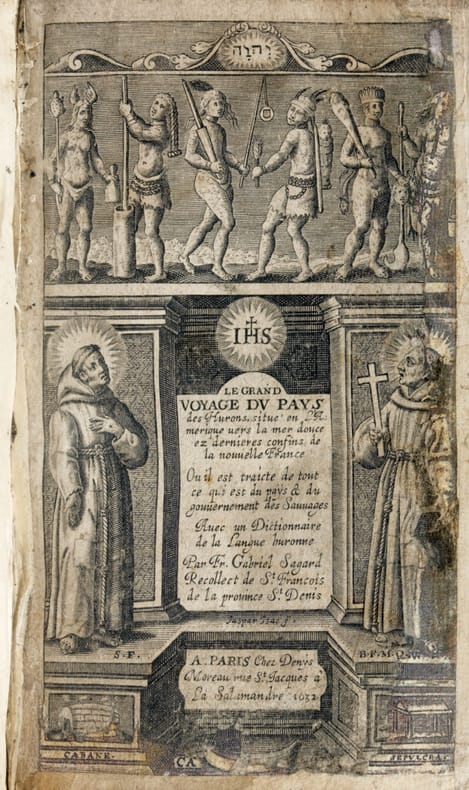
LCS-18550Édition originale de l’un des plus importants voyages français en Amérique du Nord et notamment au Canada, de la plus extrême rareté conservé tel le présent exemplaire dans sa première reliure en vélin de l’époque. A Paris, Chez Denys Moreau, 1632. Avec Privilège du Roy. In-8. [Suivi de :] Dictionnaire de la langue Huronne, Nécessaire à ceux qui n'ont l'intelligence d'icelle, & ont à traiter avec les Sauvages du pays. Par Fr. Gabriel Sagard, Recollet de S. François, de la Province de S. Denys. A Paris, Chez Denis Moreau, 1632. Avec Privilège du Roy. In-8. Soit deux parties en 1 volume in-8. Collationné complet: -Voyage : frontispice gravé par Jaspar Isac (ce frontispice représente des sauvages, sur les côtés sont les figures de saint François et du bienheureux frère Martin de Valence, fondateur des missions franciscaines en Amérique) ; titre ; 2 ff. pour une épître « Au roy des roys et tout puissant monarque du ciel et de la terre, sauveur du monde » ; 2 ff. pour une épître : « A tres illustre, genereux et puissant prince, Henry de Lorraine, comte d'Arcourt »; 3 ff. pour un avis «Au lecteur » ; 3 ff. pour la Table, le Privilège et l’Approbation ; ensemble 12 ff. lim. ; 380 pp., suivi de 2 ff.bl. Le privilège, daté du 21 juillet 1632, est accordé pour dix ans à Sagard, qui déclare en faire cession à Denys Moreau. L'achevé d'imprimer est du 10 août 1632. L'Approbation des pères de l'ordre est signée de Fr. Ignace Le Gault, « gardien du couvent des recollets de Paris ». Fr. Jean-Marie l’Escrivain et Fr. Ange Carrier. -Dictionnaire de la langue Huronne : 12 pp. (y compris le titre) et (66) ff., 7 ff. de table; ainsi complet. Restaurations: marge latérale du premier feuillet de texte sans perte de lettres; l’extrémité de l’angle inférieur droit des 4 feuillets suivants sans atteinte au texte, marge latérale du premier feuillet de titre sans manque de lettre, et du frontispice avec manque marginal, rares taches et mouillures atténuées à quelques feuillets; plein vélin du temps. Reliure d’origine avec manque de vélin restauré mais authentique. (Reliure de l’époque). 174 x 105 mm.
98185Arnhem Jan Jansz 1598. . First Latin edition. Small oblong folio 30; 10 ff. engraved plate to title-page 10 further plates & 5 maps with initial letter and colophon; engraved plate to title-page map of Bali 24 coastal profiles and a woodcut showing a pair of emu-like birds with initial letter. Contemporary vellum slightly cockled with some light soiling some early underlining in the text and neat ownership signature to title-page dated 1600. <br /> An anonymous account of the expedition led by Cornelis de Houtman published in the same year as the Dutch edition Journael vande Reyse der Hollandtsche Schepen ghedaen in Oost Indien. the title-page having the same plate. This is the first Latin edition the Arnhem issue. Two other Latin issues are known published in Paris and Middleburg the latter of which is most often seen.<br /><br />Houtman's voyage although disastrous in terms of the lives lost and barely profitable commercially demonstrated to the Dutch that they could circumvent the Portuguese monopoly on trade with the East Indies. In the year following Houtman's return twenty-five ships set out from Holland and Zeeland for the spice islands and thus began the history of the VOC the Dutch East Indies Company which was founded in 1602.<br /> Cf. Tiele pp119-120. Arnhem, Jan Jansz, 1598. hardcover
166598MCBSHUHD3NAmsterdam 1665. 4to. Gillis Joosten Saeghman Late 19th-century vellum with the title stamped on the spine with black foil a black single fillet border on both boards. With a woodcut vignette of ships on the title page 16 further woodcuts on integral leaves 1 full-page signed by Christoffel van Sichem IV and 9 half-page and smaller with his monogram and a woodcut ship in a cartouche plus 1 repeat woodcut decorated initials and decorative bands built up from cast fleurons. Set in textura types with incidental roman and italic. 32 pp. First Dutch translation of the accounts of three voyages to Greenland by Jens Munk John Monck Martin Frobisher and Godske Lindenau searching for a passage to the East Indies through the Hudson Strait. Also containing a description of Greenland and an account of whaling including an unsigned illustration of a beached sperm whale with new illustrations by Christoffel van Sichem IV 1642-1693. It is a Dutch translation of La Peyrère's 1647 Relation du Groenland 1647 via the somewhat abbreviated German translation published in Hulsius's 1650 collection which contains the additional description of Spitsbergen and a discourse on whaling. La Peyrère included revised versions of Jens Munk's account of his voyage to Hudson Bay originally published in Navigatio septentrionalis 1624 and the accounts of voyages by Martin Frobisher and Godske Lindenau. Red armorial library stamp of the Forschungsstelle Volk und Raum on the title page: this was a research institute active at The Hague during the occupation of The Netherlands by Nazi Germany. Good copy.l Alden & Landis 663/79; Gosch Danish Arctic expeditions II pp. lxii-lxiii; JCB III pp. 98-99; Tiele Mém. 256; Sabin 28641 & 51334; STCN 4 copies; cf. Howgego to 1800 F80-F81 L128 and M180. ABE CAT Alaska Canada & Greenland hardcover
50 watercolours (342 x 240 mm) mounted on album paper, all captioned in Chinese. In brown cloth. Oblong folio. Curious album of 50 watercolours, showing various portraits of people who do business in the streets of Beijing, among them a barber, street vendors, carpenters, jugglers, sculptors, beggars, mouse and rat catchers, newspaper salesmen, pickpockets, etc. The album also shows different types of machines such as slides and looms as well as everyday scenes: a young boy stealing the hat of an elderly man, another man collecting food discarded by the wealthy, a painter drawing the portrait of a deceased. - In very good condition, with ms. German translations of the Chinese captions.
178154307Paris, (Clousier imprimeur), 1781-86. Folio. (51 x 33,5 cm.). Bound to style in 5 uniform full light brown sprinckled full calf (bound in the 1970 ties). Blindtooled lineborders and blindtooled dentelles with blindtooled cornerpieces on covers. 7 raised bands. bands with gilding. Compartments gilt with flowers. Inner hinges in leather. Marbled endpapers. No wear to bindings. 5 halftitles, 5 title-pages with engraved vignette. I: (4),XIII,(3),252 pp. Without an engraved dedication-leaf (called for by Brunet ""épitre dédicatoire gravée). II: (4),XXVIII,283 pp. III: (4),XL,201,22 pp. IV: (4),II,(6),XVIII,266 pp. V: (4),(2),267-429,(1) pp., 434 engravings on 317 sheets, including the 14 plates with medals and coins (doubles médailles) + 13 mostly double-page engraved maps, plans and charts. More than 100 larger and smaller vignettes, head-and tailpieces, ornaments etc., 25 in 2 colours. Wide-margined with very few brownspots (a small brownspot on the phallus-plate in volume II), a few leaves with small closed tears in margin, 1 leaf having a printed line repaired (a weakness in the paper) but no loss of letters. Foot of last leaves in volume II with very light foxing. Plates and text fine a clean, gently washed.
Paris, (Clousier imprimeur), 1781-86. Folio. (51 x 33,5 cm.). Bound to style in 5 uniform full light brown sprinckled full calf (bound in the 1970 ties). Blindtooled lineborders and blindtooled dentelles with blindtooled cornerpieces on covers. 7 raised bands. bands with gilding. Compartments gilt with flowers. Inner hinges in leather. Marbled endpapers. No wear to bindings. 5 halftitles, 5 title-pages with engraved vignette. I: (4),XIII,(3),252 pp. Without an engraved dedication-leaf (called for by Brunet ""épitre dédicatoire gravée). II: (4),XXVIII,283 pp. III: (4),XL,201,22 pp. IV: (4),II,(6),XVIII,266 pp. V: (4),(2),267-429,(1) pp., 434 engravings on 317 sheets, including the 14 plates with medals and coins (doubles médailles) + 13 mostly double-page engraved maps, plans and charts. More than 100 larger and smaller vignettes, head-and tailpieces, ornaments etc., 25 in 2 colours. Wide-margined with very few brownspots (a small brownspot on the phallus-plate in volume II), a few leaves with small closed tears in margin, 1 leaf having a printed line repaired (a weakness in the paper) but no loss of letters. Foot of last leaves in volume II with very light foxing. Plates and text fine a clean, gently washed.
Large folio. 3 atlases bound in 2 vols. 203 plates plates comprising: [Album Historique, Ethnologique et Archéologique] large folding map mounted on linen, 59 lithographed plates (3 of which are folding), most coloured, part-coloured or tinted, bound with [Album Zoologie]: 40 hand-coloured engraved plates of mammals, birds, reptiles and fish, and insects; separately bound [Atlas Botanique]: 103 engraved plates. Half green morocco over green cloth boards, gilt title blind stamped to covers, spine gilt ruled with title and tooling. First edition: the complete atlas volumes of the most important work on Ethiopia. - "Increasing French interest in Ethiopia led to the despatch of an important scientific mission composed of Lefebvre, a naval officer, Petit and Quartin-Dillon, two medical doctors, and Vignaud, an artist, all of whom travelled extensively in Tegré, Bagemder, and Shawa from 1839 to 1843. The expedition visited the principal towns of Ethiopia Adwaz, Aksum, Adegrat, Chalaqot, Ankobar, Angolalah, and Gondar as well as villages markets and monasteries. The result of the mission was the most comprehensive study of the country produced up to that time" (Pankhurst). - Six text volumes (not present with this set) were issued. The first part of the very impressive plate volumes is devoted to the expedition's travels, ethnology and archaeology, and contains landscapes, portraits, weapons, etc. as well as antiquities at Aksum, Gondar, and elsewhere. Parts two and three are devoted to zoology and botany respectively. - Provenance: from the library of Princess Marie-Caroline, Duchesse de Berry (1798-1870), daughter of Francis I of the Two Sicilies and of Archduchess Maria Clementina of Austria, at Brunnsee Palace. She was a renowned collector, patron of the arts and bibliophile with one of the most impressive private libraries of her time. Examples from her library are much prized for their generally fine condition. - Some light foxing throughout; a fine copy. Nissen, ZBI 2420 & BBI 1663; Graesse IV, 141. Pankhurst 25. Gay 2653. Wood, p. 430.
1789184162Mostly at sea: 8 June 1786 - 31 March 1789. The last surviving crew member of Cook's Endeavour A window onto the later career of Isaac Manley 1755-1837 mourned on his death as the last remaining participant in Cook's historic first voyage. Manley joined Cook's crew aged only 13 and was promoted to midshipman on 5 February 1771 during the journey home. He rose to the rank of admiral of the red becoming one of the fifteen most senior officers in the Royal Navy. On the Endeavour Manley acted as servant to the master Robert Molineux. The ravages of disease in the later part of the voyage offered opportunities for advancement. Molineux died off Cape Town in April 1771 and Manley was promoted a day either side of the deaths of midshipmen John Bootie and Jonathan Monkhouse. "The Muster Rolls show Isaac being charged £3.13.2 for slops at this time and £15.18.6 for dead men's clothes presumably he was buying the dead middies' uniforms. And his tobacco charge which began at 19/- in September 1769 also increased to £1.8.6" Hill. Writing to the First Secretary of the Admiralty on his return to England Cook gave Manley his endorsement in typically reserved fashion: "Midshipmen Mr Isaac Smith and Mr Isaac Manly both too young for the preferment yet their behaviour merits the best recommendation" quoted by Hill. Manley signed up for Cook's second voyage but was discharged for still unknown reasons in April 1772 before the Resolution sailed. He was commissioned lieutenant in May 1777 serving with the Channel Fleet and in North America and the West Indies and fought in the Battle of the Saintes. In 1786 at the rank of commander he was appointed to HMS Fairy - the service covered by this log - and ended his active duties in 1790. While living the life of a landed gentleman he continued to earn promotion reaching flag rank in 1809. He was promoted to admiral of the red a few months before his death. The daily log commences on 8 June 1786: "Came on board and took the command of Her Majesty's Sloop Fairy by virtue of a commission dated the 17th May 1786." The ship is tasked with patrolling the Channel and cracking down on smugglers seizing spirits tobacco and other contraband. There are also references to punishing sailors for drunkenness and mutinous behaviour. In late 1787 Manley was also occupied with naval impressment and was ruthlessly effective recording ships stopped and men pressed-ganged. In 1788 the ship is ordered to Africa the log ending in media res on 31 March 1789 near the equator. a By family descent; b Sold at Sotheby's London "Atlases Maps Topographical Prints and Travel Books" 2 May 1985 Lot 220 buyer: Quaritch; c Sold by Quaritch c.1987 to Cecil George Whitmont 1912-1991 Australian collector with his bookplate and a selection of paperwork formerly in an improvised acetate rear pocket. Quarto 245 x 195 mm. With 182 leaves all but 3 pages filled in neat manuscript. Original quarter calf parchment sides. Housed in custom green cloth solander box green spine label. Wear from shipboard use contents clean: very good. Anthony Hill "Isaac Manley - Servant on Endeavour to Admiral" Captain Cook Society. hardcover
12,5 x 35 cm. Some occasional light worming, some slight damage affecting the text of 3 boards. Contained in a Chinese leather travelling trunk. Using imperial measures - metric was not used until after the Revolution of 1911 - these receipts are headed with either the title Chung the Celestial at Chuan-Tuan, or Military General the Protector of the People at Chu-Ling-Shan. There are 'labels' for men, women and children, giving the ingredients and name of the remedy pills, potions or powders to "restore youth" and similar purposes. Chinese medicine is of great antiquity and devoid of any outside influence. Legend has it that the Yellow Emperor, Huang Ti, wrote the first treatise on Chinese medicine in 300 BC. In its present form, the Nei Ching, on which most Chinese medical literature is founded, it is thought to date from the third century AD. The Nei Ching holds that "the blood current flows continously in a circle and never stops", anticipating Harvey by centuries. The Chinese materia medica has always been extensive and consists of vegetable, animal, including human, and mineral remedies. There were famous herbals from ancient times, but these ca. 1000 were collected by Li Shih-Chen in the Pen-ts'ao Kang-mu or Great Pharmacopoeia of the 16th Century. It was revised and reprinted many times in 52 volumes and is still authorative. The use of drugs is to restore the harmony of the Ying and Yang, related to the five organs, five planets, and five colours. Western influences did not occur until the 19th century, but today, with the revival of Taoist temples for healing which began to be tolerated again in the 1970s, and the profusion Chinese chemists, acupuncturists and hydrotherapists in the west, the Chinese can be said to have redressed the balance. The troubled history of the 20th century in China has made the survival of such ephemeral documents, and in such quantity, quite remarkable.
Oblong folio (362 x 274 mm). Contemporary block-bound silk album of 111 photographs. Various sizes; largest 212 x 155 mm. A photograph album comprising 111 personal photographs of Shanghai, including several images of battleships, various English-language shop signs for local businesses (such as "Hsing Loong Carpenter Mason and Painter"), and 12 photographs showing the burial procession of the mother of Shanghai businessman Pau Ching Po. Also, there are several photographs of the 1911 Xinhai Revolution in Shanghai: in November 1911, Shanghai citizens organised a rebellion and captured the city, establishing the Shanghai military on 8 November that same year. The photographs offered here depict the uprising in the streets as well as scenes of destroyed homes and weapons used when taking the city. The revolution resulted in the overthrow of the last imperial monarchy in China and the establishment of the Republic of China in 1912. - Also includes images of the German Theatre at the Lyceum, founded in 1930 as an amateur dramatics society, a photograph of Prince Adalbert of Prussia (1884-1948) at the Club Concordia in 1904 laying the foundation stone to the new German Club in Shanghai, and three photographs of the wedding of Wilhelm Knappe (1855-1910), the German Consul General in Shanghai from 1899 to 1906. - Very well preserved. Provenance: From the collection of Johannes Gottfried William Schröder (1870-1942). Born in India, the brother of the German poet Rudolf Alexander Schröder grew up in Bremen, trained as a merchant and visited India, China, Japan, and America. He established his own business in Shanghai in 1906. His intimate knowledge of East Asia led him to embrace the philosophy of anthroposophy.
4to. 15 vols. Half-titles in vols. I-II and IX-XIV; two engraved portrait frontispieces: Qianlong Emperor (vol. 1) and M. Amiot (vol. 15), 151 (of 158) engraved plates (some folding), maps and tables (lacking 7 plates in vol. 2). Contemporary French mottled calf. Spines gilt. First edition of this monumental survey of Chinese life in the 18th century as witnessed by the Jesuit missionaries. This work by missionaries including Cibot, Bourgeois, Poirot, Ko and Yang comprises translations of classic Chinese works of law, maxims and proverbs, as well as essays on Chinese linguistics, current affairs and scientific observation. Volume VII is a reprint of Amiot's "Art militaire des Chinois" (Paris 1772), the first translation into a European language of the ancient Chinese military strategy, while volume XII, the "Vie de Confucius", was more complete and accurate than any previous text on the subject. - Amiot, the main contributor, went to China in 1740 and soon won the confidence of the Qianlong Emperor, remaining for the rest of his life in Beijing after the suppression of the Jesuits in 1773. Fluent in both Chinese and Tartar, his works were amongst the first to bring the philosophy and life of the East to the western world, and his "Dictionnaire tatare-mantchou-français" (Paris 1789) was the first to introduce these languages to Europe. Many of the engravings are based on Chinese designs sent by Amiot to Henri Bertin, minister in charge of Chinese affairs under Louis XVI. - Volumes 16 and 17 were published much later in 1814 and under a different imprint, and complete sets are infrequently found on the market. - Some wear to spine ends and at edges. Provenance: from the library of Jean R. Perrette with his bookplate on the pastedown. Barbier III, 182. Brunet III, 1596. Cordier (Sinica) I, 54f. Lust 96 (vols. 1-16 only). Streit VII, 3419n (pp. 339-341). Cf. Quérard I, 52.
LCS-224Rare relation des missions jésuites au Japon à la fin du XVIe siècle, conservée dans son pur vélin souple de l’époque. In Padova, Appresso Francesco Bolzetta, 1599.Petit in-8 de 124 ff. Relié en plein vélin souple de l’époque, dos lisse avec le titre manuscrit. Chemise et étui de maroquin rouge. Ex libris manuscrit sur le titre.155 x 101 mm.
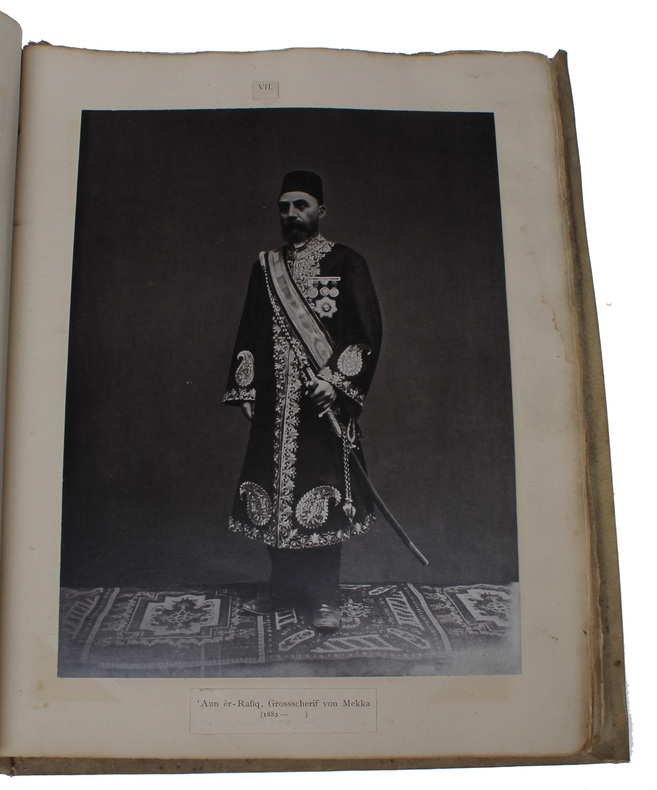
188859963Haag, Nijhoff, 1888-1889. Text-volumes in lex-8vo, two volumes, identically bound in near contemporary burgundy half cloth with the original printed front wrappers preserved an pasted on to front boards. the original printed paper spine labels have also been preserved an pasted on to spines. Wear to capitals, corners, and hinges. Blindstamped library imprint to top of front boards (Colonial Office Library). Bound with both half-titles. The half-title of vol. 1 mounted, as is the title-page of vol. 2. Stamps to title-pages (Arab Boreau Cairo and Colonial office Library). Otherwise a clean and fine copy with no noteworthy flaws. XXIII, (1), 228, (2) pp. + 3 genealogical tables and 2 folded maps + XVIII, 397, (1) pp. The atlas volume consists of the printed table of contents and all 65 photographs and lithographs inserted into a 19th century full vellum photograph album with sturdy leaves. The album itself has some wear, but is sturdy, robust and crarming. It artistically shows the craftmanship of the stiching by displaying parts of the sewing cords on leather onlays on the spine. Leather ties. In all, there are 75 illustrations, consisting in four chromolithographic plates, 6 tones lithographic plates (one double-page and folded) and 65 original photographs of varying sizes. Some are full-page, some are mounted four to a page, and some that have originally been four (and in one case three) to a page have here been individually mounted on a leaf each. Although taken out and mounted in to the present album, all numberings (I to XL) have been preserved, as have the titles of the pictures. Generally in very good condition, although one lithograph has a closed tear.
Stockholm, Wankijfs Änkia, 1702. 4to. Bound in a lovely recent full morocco binding with four raised bands, gilt decorations to spine, and gilt borders to boards. The original front free end-paper with the six previous owner's names (dating back to the first owner, the contemporary 18th century A.M. Stiernsparre) preserved, with a marginal restoration. Neat marginal restorations to following four leaves (including the frontispiece) as well (no loss). The folded map og Nova Svecia re-enforced at folding. Overall a very nice, clean, and fresh copy. Title-page printed in red and black and with a large woodcut vignette. Large woodcut vignette to errata-leaf as well. Woodcut vignettes, initials and illustrations in the text. (16),190 pp., (1f - errata) pp. + Engraved frontispiece + 6 engraved plates, four of them being maps (""Totus Americae Descriptio""" " ""Novae Sveciae Tabula"" (Pensylvani) by Vischer" Novae Sveciae Carta, anno 1654 and 1655, by Lindström (folded) " ""Virginiae N. Angliae N. Hollandiae""). Apart from the engraved plates and maps, there are two woodcut maps in the text (Terre de Iesso (Tartarie Partie de Asie with Iapon and California) and ""Christinae Skantz och Staden Cristinae amns belaring af Hollánderne 1655""), both full-page and numbered as ""Tab III."" and ""TAB. VIII"" respectively. A very nice and fully complete copy. NB. f. Z(1) misbound, before Y(1).
Haag, Nijhoff, 1888-1889. Text-volumes in lex-8vo, two volumes, identically bound in near contemporary burgundy half cloth with the original printed front wrappers preserved an pasted on to front boards. the original printed paper spine labels have also been preserved an pasted on to spines. Wear to capitals, corners, and hinges. Blindstamped library imprint to top of front boards (Colonial Office Library). Bound with both half-titles. The half-title of vol. 1 mounted, as is the title-page of vol. 2. Stamps to title-pages (Arab Boreau Cairo and Colonial office Library). Otherwise a clean and fine copy with no noteworthy flaws. XXIII, (1), 228, (2) pp. + 3 genealogical tables and 2 folded maps + XVIII, 397, (1) pp. The atlas volume consists of the printed table of contents and all 65 photographs and lithographs inserted into a 19th century full vellum photograph album with sturdy leaves. The album itself has some wear, but is sturdy, robust and crarming. It artistically shows the craftmanship of the stiching by displaying parts of the sewing cords on leather onlays on the spine. Leather ties. In all, there are 75 illustrations, consisting in four chromolithographic plates, 6 tones lithographic plates (one double-page and folded) and 65 original photographs of varying sizes. Some are full-page, some are mounted four to a page, and some that have originally been four (and in one case three) to a page have here been individually mounted on a leaf each. Although taken out and mounted in to the present album, all numberings (I to XL) have been preserved, as have the titles of the pictures. Generally in very good condition, although one lithograph has a closed tear.