4 079 résultats
1902002846London: Longmans Green and Company 1902. An historical account of the reconquest of the Soudan. Second edition revised first one volume edition. The text had been revised considerably and a new chapter added describing the ultimate destruction of the Khalifa and the end of the war. Scarce. 8vo pp xiv 381pp. Original red cloth gilt titles and pictorial gilt riverboat decoration to both spine and front board. With frontispiece maps and plans. All 14 color maps present - most are fold-out maps. Spotting and shelf wear to cover and spine . Only library markings are a Navy library sticker U.S.S. Leviathan inside front cover and an embossed Navy seal on the title page. Otherwise a tight clean book. Revised Edition. Decorative Cloth. Very Good/No Jacket Issued. 8vo - over 7¾" - 9¾" tall. Ex-Library. Longmans, Green and Company hardcover
1816404London: John Murray 1816. New Edition. Full Leather. VG. performed in the years 1795 1796 and 1797 with an account of a subsequent missions to that country in 1805. .to which is added an account of the life of Mr. Park. With an appendix containing geographical ill. of Africa by Major Rennell. 2 vol: 455 pp ill. folding map as frontis and a second one in text at p 364; 373 pp ill folding map in text at p 117. The handsome full leather binding. Boards appear to be contemporary with gilt deco and staming front and back. Spines appear to be 100 years later but expertly done to match the boards. Marbled end papers. Gilt inner dentelles. All edges marbled. John Murray unknown
182879713London: Murray 1828. Gebunden Hldr. Murray unknown
1762301756Tobias Lobeck G. Eichler Johann Michael Wagner Augspurg 1762. Hardcover Leder Die Jahresangabe ist ungefähr. Farbig Querformat kein Falz in der Mitte der Karten 15x11cm. Planispheirum und Weltkarten sind keine enthalten. Zustand: keine Beschädigungen keine Eintragungen. Rücken Ecken Kanten gut. Sauber Fleckenfrei. Tobias Lobeck, G. Eichler, Johann Michael Wagner, Augspurg, hardcover
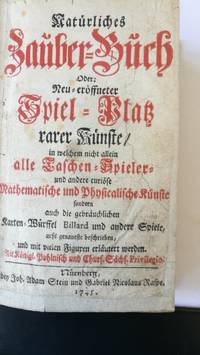
174585092Nuerenberg: Stein 1745. Gebunden. Stein unknown
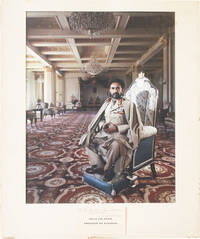
47326N.d. ca 1970s. Original large-format color print in presentation mat with title card affixed to mat below image. View size 49cm x 38cm ca 19" x 15"; overall dimensions 60cm x 51cm. Title card inscribed in black ink: "For Bob MacNeal a fellow photographer with best wishes / Arnold Newman" undated. Mat lightly soiled with a few small chips and abrasions to extremities; image clean and unfaded Near Fine. ca<br /> <br /> NOTE: the mat appears permanently fixed to the photograph as presented by the photographer; we have not attempted to examine the print outside the mat. Impressive large-format portrait by Newman here inscribed to one "Bob MacNeal" identified as a "fellow photographer" though we can find no photographers of the period who used this spelling. Possibly a misspelling of Bob MacNeil still active the prominent Canadian fashion photographer; possibly a misspelling of Bob McNeill d.2007 the prominent African-American documentary photographer; or possibly the correct spelling of an acquaintance of no notable prominence at all. Undated but ca. early 1970s a superlative image of the Ethiopian Emperor boldly inscribed and signed by Newman below image. unknown
1767207Cambridge England: J. Archdeacon 1767. First. Full Leather. Fair. containing dissertations .together with an account of Ancient Egypt in its most early state and of the Shepherd Kings.324 pp. errata page. 5 engraved folding maps 1 engraved folding plate. Text and maps are clean. Rear board detached. End papers are original. Scarce items that deserves a rebinding. J. Archdeacon unknown
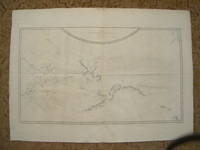
178438202London: G. Nicoll and T. Cadell 1784. Map. Near Fine. Plate 36 from the atlas volume of Cook James; A Voyage to the Pacific Ocean: Undertaken by the Command of His Majesty for Making Discoveries in the Northern Hemisphere published by G. Nicoll and T. Cadell; London 1784. Writing engraved by T. Harmer. Wagner; Cartography of the Northwest Coast of America 696. Map printed border to border measures 15.25 x 26.5 inches plate impression 16.75 x 27.25 inches sheet 21.5 x 30 inches. An exceptionally nice uncolored copy. Request a higher resolution photograph if required. <br/> <br/> G. Nicoll and T. Cadell unknown
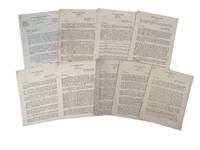
1946234091946. ColonialismReligion Archive of letters by Dr. John A. Reuling recording his 1946 missionary work in Africa across mid-century Portuguese Belgian British and South African colonial systems where evangelism was a tool of westernization and colonialism alongside education public health and agricultural training. Written during Reuling's first year as Africa Secretary for the American Board the letters track his movements through Elende Bailundo Currie Institute Chikore Mt. Silinda Mange Adams College Johannesburg McCord Hospital Groutville and other mission and colonial settings. Reuling criticizes mine compounds overcrowded townships migrant labor white settler indifference and extractive demand for "gold manganese copper diamonds etc." while also presenting mission schools and hospitals as tools for reshaping African society through Western medicine wage labor preparation and Christian discipline. Reuling calls for African church autonomy and African leadership yet his language remains paternal and administrative indicative of mid-century missionary attitudes towards development in Africa.<br /> <br /> John A. Reuling African Mission Letters. Angola Belgian Congo Southern Rhodesia Portuguese East Africa South Africa and Boston 1946. Archive of 10 typed letters 43 pages total including nine multi-page circular letters from Dr. John A. Reuling and one typed American Board Foreign Department letter to Rev. Henry A. Jessop. The letters are dated April 28 through December 17 1946 and include Reuling's sequential mission letters numbered 1 2 4 5 6 8 9 10 and 11 each circulated to "Dear Friends." The content covers colonial and mission administration in African schools hospitals mine labor township poverty public health and Christian churches.<br /> <br /> 1 Reuling John A. Letter #1. Elende Mission Station Cuma Angola Portuguese West Africa April 28 1946. Five-page typed circular letter tracing Reuling's route through London Lisbon Liberia Brazzaville Luanda Lobito Bay and inland Angola including his statement that correspondence between Galangue and Chilesso could require "over 400 miles of foot travel."<br /> <br /> 2 Reuling John A. Letter #2. Currie Institute Dondi Bela Vista Angola Portuguese West Africa June 10 1946. Seven-page typed circular letter describing Angola mission stations African pastoral ordination plantation and fishing labor and the economic damage caused when Western trade displaced earlier Ovimbundu caravan networks while "giving them nothing in return."<br /> <br /> 3 Reuling John A. Letter #4. Missao do Bailundo Teixeira de Silva Angola West Africa June 21 1946. Four-page typed circular letter on African schooling in Angola including overcrowded classes pupils walking 70 to 150 miles Currie Institute Means School for Girls Liceu fees and Reuling's statement that "the 20th century has caught up with the Ovimbundu."<br /> <br /> 4 Reuling John A. Letter #5. Chikore Mission Station Southern Rhodesia August 8 1946. Three-page typed circular letter assessing the Leopoldville Conference where mission and African delegates addressed urbanization industrial development mission-government relations education medicine African economic status and the claim that "Africa and Africans are subject to the same restlessness" affecting the postwar world.<br /> <br /> 5 Reuling John A. Letter #6. Mt. Silinda Institute Southern Rhodesia August 20 1946. Three-page typed circular letter on Mt. Silinda's industrial training teacher training hospital farm mahogany forest Association of Churches and African church responsibility for "full financial responsibility for its own work."<br /> <br /> 6 Reuling John A. Letter #8. Mange Mission Station Alto Maxixe Inhambane Portuguese East Africa September 6 1946. Four-page typed circular letter linking mission work in Mozambique to African church self-support South African General Mission cooperation coastal travel and mine recruitment that carried men from Mange to Johannesburg by ship and rail.<br /> <br /> 7 Reuling John A. Letter #9. Johannesburg Union of South Africa September 21 1946. Seven-page typed circular letter analyzing Johannesburg mining Orlando township mine compounds African teachers Bridgman Memorial Maternity Hospital and the colonial economy driven by American demand for "gold manganese copper diamonds etc."<br /> <br /> 8 Reuling John A. Letter #10. Adams M.S. Natal South Africa October 7 1946. Four-page typed circular letter on Adams Mission Station African nationalism Communist organizing McCord Hospital drought relief soil-cement housing and African leaders watching events in "Egypt Indonesia India."<br /> <br /> 9 Reuling John A. Letter #11. Groutville Mission Station Natal South Africa October 21 1946. Four-page typed circular letter on Adams College Inanda Seminary McCord Hospital South Coast churches Groutville Church Mr. Robbins Cuma and Chief Albert Luthuli.<br /> <br /> 10 Reuling John A. Typed letter to Rev. Henry A. Jessop. Boston Massachusetts December 17 1946. One-page typed American Board Foreign Department letter in which Reuling explains that he did not reach Umsunduze notes that he was preparing "to have my appendix out" and names American Board personnel including the Booths Sticks Bergsmans Kaetzels Rubensteins and his own children.<br /> <br /> The archive records missionary reform at the end of World War II through the lens of mid-century colonial development. Reuling's letters are especially strong coverage of African education and public health including operational details rarely present in formal mission reports such as pupils sleeping in adobe thatched houses pupils walking 25 to 30 miles to school a mission doctor being absent on furlough malaria treatment limited by quinine shortages and African nurses at McCord Hospital serving as "a positive demonstration" of African competence. They also preserve Reuling's paternal assumptions about African population including his his belief that mission intervention could guide African development and his insistence that Christian institutions could keep postwar unrest from turning violent. Original typed letters many stapled at upper left with fold lines scattered stains occasional edge wear. Overall good to very good condition. unknown
2828England: Whittington Press 1988. First Ltd 80 Copies. Full Leather. As New/Orig slipcase as New. Richard Kennedy. With a compantary by ET Leeds edited and with an introduction by JM Wilson with a memoir of ET Leeds by DB Harden and illustrated with line drawings by Richard Kennedy. Book is 140 pp. There is a separate slipcae with Kennedy's illustrations. Both like new. Inserted in front of book is notice from Whittington Press asking if one would like to be on their mailing list. Book illustrations and slipcase all as new. Whittington Press unknown
190272362Huerth 1902. kart. unknown
169379592Salisburgi: Joannis Paptistae Mayr 1693. Joannis Paptistae Mayr unknown
1921AFRICA001341Seeley Service & Co London. 1921. First edition. Octavo. 479 pages. Many maps and illustrations. Original pictorial black cloth stamped in green. This work is a continuation of the author's groundbreaking ahem 1896 work The Great Rift Valley. The Gregory Rift in the Great Rift Valley was named in his honour.On the front free endpaper is the 1945 ownership inscription of a certain H.K. Hotham with his Queen Street Melbourne address where it turns out he was a seller of eucalyptus oil. Edges and endpapers faintly spotted. Near fine in the scarce dustwrapper which is complete slightly nicked and with long closed tears. Seeley, Service & Co, London. hardcover
25732ROME. 1729. SECOND EDITION THREE PARTS IN ONE VOLUME. LARGE QUARTO HALF VELLUM OVER CARD. WITH 116 COPPER ENGRAVINGS BY PIETRO SANTI BARTOLLI. BOUND WITH THE THREE PARTS OF TEXT AT THE FRONT FOLLOWED BY THE PLATES SEPARATED BY DIVISIONS. SEPULCHRAL LAMPS RECOVERED FROM THE CATACOMBS OF ROME. SLIGHT WEAR TO BOARD EDGES BUT A VERY GOOD COPY. ROME. 1729 hardcover
18454740London: British Museum 1845. First Edition. Soft cover. VG. Volume the fifteenth. Parts 1 & II. Part 1: CX pp 1-184 3 folding maps in rear with lovely catalogue of Malby's Globes and list of publisher's other titles. Schomburgk's journal Haynes on the south and east coasts of Arabia and Grey on south-eastern seaboard of south Australia. Part II: pp 185-386. Additional title page table of contents bound in rear along with 7 maps 2 colored. Cooley on the Nyassi sic or the Great Lake of Southern Africa with a journey from Angola to Mozambique. Text uncut both volumes. VG in orig. printed wrappers. Notice pasted on front of Part II that an index to the first 10 volumes s now available. Obviously intended to be bound by the purchase. British Museum unknown
43120CAMBRIDGE UNIVERSITY PRESS FOR THE HAKLUYT SOCIETY 1968-74. FIVE VOLUMES COMPLETE PLUS A PORTFOLIO OF 58 CHARTS AND MAPS. A VERY GOOD SET ORIGINAL BLUE CLOTH WITH COMPLETE PROTECTED DUSTWRAPPERS. THE PORTFOLIO IN BLUE CLOTH HAS SOME STAINS. WITH 58 CHARTS/MAPS AS CALLED FOR. THE FIRST TWO VOLUMES ARE REPRINTS THE REST FIRST EDITIONS. FOUR VOLUMES IN FIVE WITH VOLUME 3 IN TWO PARTS. VOLUME 4 IS THE LIFE OF COOK. A VERY NICE SET. CAMBRIDGE UNIVERSITY PRESS FOR THE HAKLUYT SOCIETY, 1968-74 hardcover
188957805Washington: James C. Dunn later: American Colonization Society 1889. An incomplete and disparate run and with a major gap 1851-1870 88 issues in all volumes 16-18 in a bound volume but without a front cover the rest in wrappers; a few wrappers missing a few defective a number loose but present; edge tears chips and curls. Condition ranges from fair to very good. Included are volumes 14 1838 nos. 1-10 12; volume XV 1839 no.1-3 5-6 8-9 11 14-18; volume 16 1840 nos. 1 4-16 18 21 23-24; volume 17 1841 nos. 1-8; volume 18 1842 nos. 3-4 9-10 15-18 20 22-24; volume 26 1850 nos. 10-11big gap; volume 47 1871 nos. 1 11; volume 50 1874 nos. 1-4 8-9; volume 51 1875 no. 2; volume 53 1876 nos. 2-4; volume 54 1878 nos. 2-4; volume 57 1881 nos. 6-8; volume 59 1883 nos. 3-4; volume 64 1888 no. 4; volume 65 1889 nos. 2-4. Much on Liberia abolition slavery the Amistad case African colonization African languages etc. The African Repository and Colonial Journal title simplified in 1850 to African Repository was the official publication of the American Colonization Society which supported the migration of free American Blacks to Africa specifically to its colony of Liberia. It began publication in 1825 and ceased in 1892 and is a primary source for the early history of Liberia. James C. Dunn [later: American Colonization Society] unknown
1890007811New York: Charles Scribner's Sons 1890. xiv ii 5471 ; xvi 540 pages. all edges gilt marbled endpapers 3 map pockets. with Two Steel Engravings One Hundred and Fifty Illustrations and Maps. In Two Volumes. First edition. In 1886 Stanley led the Emin Pasha Relief Expedition to rescue Emin Pasha the governor of Equatoria in the southern Sudan. King Leopold II of Belgium demanded that Stanley take the longer route via the Congo river hoping to acquire more territory and perhaps even Equatoria. After immense hardships and great loss of life Stanley met Emin in 1888 discovered the Ruwenzori Range and Lake Edward and emerged from the interior with Emin and his surviving followers at the end of 1890. Clean tight set. Light shelfwear. First American Edition. Three-Quarter Leather. Near Fine/No Jacket - Issued. 8vo - over 7¾" - 9¾" tall. Charles Scribner's Sons Hardcover
167544519Vesaliae: Andreaw ab Hoogenhuysen 1675. Gebunden. Andreaw ab Hoogenhuysen unknown
167579623Vesaliae: Andreaw ab Hoogenhuysen 1675. Gebunden. Andreaw ab Hoogenhuysen unknown
188550241Amsterdam K.N.A.G. 1885. 8vo. In recent paper wrappers with brown title label pasted on the front wrappers. As extracted from "Koninklijk Nederlands Aardrijkskundig Genootschap". Vol. II. Very fine and clean. Pp. 213-228. <br/><br/><em>First printing of the first report on the The Berlin Conference of 1884-85 also known as the Congo Conference or West Africa Conference. It sought to regulate European colonisation and trade in Africa during the New Imperialism period. The General Act of the Berlin Conference can be seen as the formalization of the Scramble for Africa and is by far the most severe infringement ever on African sovereignty. The conference ushered in a period of heightened colonial activity by European powers while simultaneously eliminating most existing forms of African autonomy and self-governance."For at a time when an estimated 80% of Africa remained under traditional and local control the purpose of the Berlin Conference had been for the Great Powers to establish rules amongst themselves for the colonization of Africa and the exploitation of Africa's resources. Including the division of territory the drawing of maps and the establishment of Congo -- as a personal possession of the Belgian King. Not surprisingly no Africans had been invited to the Conference." Calmettes Berlin 1885: The Division of Africa. "Owing to the upsetting of Bismarck's carefully laid balance of power in European politics caused by Leopold's gamble and subsequent European race for colonies Germany felt compelled to act and started launching expeditions of its own which frightened both British and French statesmen. Hoping to quickly soothe this brewing conflict King Leopold II was able to convince France and Germany that common trade in Africa was in the best interests of all three countries. Under support from the British and the initiative of PortugalOtto von Bismarck German Chancellor called on representatives of Austria-Hungary Belgium Denmark France the United Kingdom Italy the Netherlands Portugal Spain Sweden-Norway union until 1905 the Ottoman Empire and the United States to take part in the Berlin Conference to work out policy." Ngoyo Federation of the Free States of Africa.The boarders drawn in Africa during the Berlin Conference had devastating consequences for Africa:" "The Berlin Conference was Africa's undoing in more ways than one. The colonial powers superimposed their domains on the African Continent. By the time Africa regained its independence after the late 1950s the realm had acquired a legacy of political fragmentation that could neither be eliminated nor made to operate satisfactorily. The African politico-geographical map is thus a permanent liability that resulted from the three months of ignorant greedy acquisitiveness during a period when Europe's search for minerals and markets had become insatiable." Ibid. See The Mountains of the Moon Mapping African Exploration Princeton University. </em> unknown
28247LONDON FOR THE AUTHOR 1736. THE SECOND AND BETTER EDITION WITH ADDITIONS. PRINTED FOR THE AUTHOR AND FOR JOSEPH AMES AND PETER THOMSON AND SOLD AT THE GOLDEN BALL IN PATERNOSTER ROW. QUARTO MODERN SCARLET FULL-LEATHER RE-BINDING GILT TITLES AND DECORATIONS RAISED BANDS NEW ENDPAPERS. FRONTISPIECE OF THE AUTHOR LAID DOWN AS IS THE TITLE PAGE. PLUS 25 PLATES OTHER ILLUS. IN THE TEXT. INCLUDES A COLLECTION OF PAPERS RECORDS REFERRED TO IN THE FOREGOING HISTORY . pp. viii 204 124. AN EXCELLENT COPY CLEAN AND TIGHT IN AN ATTRACTIVE QUALITY BINDING. LONDON, FOR THE AUTHOR, 1736 hardcover
173479645criticum: chronologicum 1734. chronologicum unknown
17342036Venetiis: S. Coleti 1734. Gebunden. S. Coleti unknown
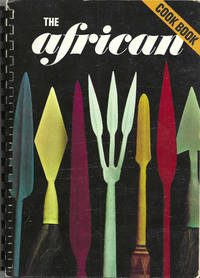
19649415New York: Harvest House 1964. Small quarto in comb binding 25.5 x 18 cm. 64 pages. Illustrated. Index. FIRST EDITION. A cookbook of regional African recipes by Bea Sandler restaurant consultant and food magazine editor. An expanded edition was released in 1970 by World Publishing Co. with the contracted title African Cookbook and re-issued again in 1993. The introduction to the 1993 edition notes that “The first publication of this book was . the first volume on African cooking to appear in this country or anywhere outside of Africa.†The second half of that statement was incorrect but it was indeed the first published in the U.S. The cookbook originated with Sandler’s role in planning the menu for The Tree Houses Restaurant at the African Pavilion of the 1964-65 New York World’s Fair. Sandler writes in the preface that after being given this task “to our amazement we could not find an African cook book published in America†though they were able to turn up a couple of volumes published in Africa after which “we embarked on a long and complex testing program. We invited people who had been in Africa to participate in the testings and to advise us on the final selection of menu items.†Each chapter of the book “is designed to give you a complete luncheon or dinner as you would get it at the African Pavilion.†For instance one chapter provides a complete “Couscous Menu†consisting of Groundnut Soup Couscous Mauritania a salad and Mango-Banana Sundae. Other recipes in the book include “Tree House†Chutney Curry of Beef Kenya Chicken Moamba Foo-Foo and Nigerian Pancakes as well as six recipes for alcoholic cocktails including Paw-Paw Paradise and Tanganika Tonic. The lower portion of each page prints a description of one of the countries featured at the pavilion. Sandler went on to travel extensively around Africa compiling recipes for her 1970 edition of this cookbook. This original World's Fair publication is very uncommon. One small pencil annotation to margin otherwise internally clean and sound. Photographically illustrated covers are lightly rubbed and with some bumping to corners otherwise fine. Not in Tipton-Martin's The Jemima Code. Harvest House unknown