17 864 résultats
Very Good French Original wrappers. 4to. (27 x 19 cm). In French. 235 p. A fine copy. First and only edition of this protocol text of the 1878 Treaty of San Stefano (Peace treaty of San-Stefano) signed between the Russian and Ottoman empires at the conclusion of the Russo-Turkish War of 1877-1878. It was signed at San Stefano, then a village west of Constantinople (present-day Istanbul), on 3 March [O.S. 19 February] 1878 by Count Nicholas Pavlovich Ignatiev and Aleksandr Nelidov on behalf of the Russian Empire and by Foreign Minister Saffet Pasha and Ambassador to Germany Sadullah Bey on behalf of the Ottoman Empire. Starting with the documents "Bases d'Armistice, signees an Andrinople le 19/31 Janvier 1878, entre la Russia et la Turquie" [i.e. Armistice bases, signed in Adrianople on January 19/31, 1878, between Russia and Turkey] and "Preliminaires de Paix conclus a San-Stefano, le 19 Fevrier / 3 MArs 1878" [i.e. Preliminaries of Peace concluded at San-Stefano, February 19 / March 3, 1878], with the treaty protocol text containing 50 articles in its entirety, provided for the establishment of an autonomous Principality of Bulgaria following almost 500 years of Ottoman rule in the Bulgarian lands. Bulgarians celebrate the day the treaty was signed, 3 March [O.S. 19 February] 1878, as Liberation Day. OCLC: 320195160, 962446088.
8vo., First Edition, with a sepia-toned frontispiece in photogravure (original tissue guard present), 16 plates, 15 maps (several coloured and folding) and a folding map at end, some minimal age-soiling; handsomely bound in handsomely bound in burgundy full morocco, back gilt with five raised bands, second and fourth compartments lettered and ruled in gilt, all other compartments tooled and ruled in gilt, uncut, original gilt from upper board and backstrip mounted at front on new and separate leaves, a most attractive copy ideal as a gift or for presentation. With 16pp publisher's catalogue bound in at end. A lovely copy of this senior eye-witness account. EXTREMELY SCARCE.
8vo., First Edition, with portrait frontispiece, 14 plates on 11 and 3 folding maps (2 coloured), some barely discernible offsetting from fold-ins to free endpapers; red cloth, gilt back, red top, fore-edge lightly spotted else a near fine copy copy in unclipped dustwrapper, the latter lightly browned at backstrip. A classic of its time, recalling Maclean's Buchan-like experiences before and during WWII. Includes coverage of the Moscow State Trials, operating with LRDG in the Western Desert, kidnapping a general and being dropped in occupied Europe as Churchill's personal envoy to Tito. THE ORIGINAL EDITIONS IS SCARCE IN THIS CONDITION. Enser, p.481.
1948Paris Musées Musée Carnavalet, Paris, 1996.
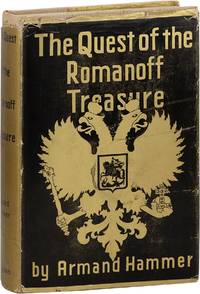
193683612New York: The Paisley Press Inc. Succeeding William Farquhar Payson 1936. Stated Third Edition. Octavo. 21.5cm. Publisher's heavy grain pale grey cloth titled and decorated in gilt to spine and front board. Dustjacket. xi; 241pp. Some wear and discoloration to extremities very light it's a very solidly produced book so wear and tear is represented by darkening of the cloth at the edges and some softening of the spine ends rather than anything more drastic; internally clean ownership to front pastedown author's signature to front flyleaf; in a handsome example of the gold and black dustjacket with some chipping and shallow loss to the spine ends scuffing and rubbing to the gilt paper coating and some marginal creasing and soiling. A very good solid copy. Illustrated throughout with full page plates. <br /> <br /> For a man named by his father after the logo of the American Socialist Labor Party after slipping out of Odessa in the 1870's Armand Hammer's journey to become one of the world's most influential businessmen and "Lenin's Favorite Capitalist" must have been a dramatic one. <br /> His father Julius had spent much of the early 20th century consolidating his role at Allied Drug and Chemical which was essentially at times a smuggling front shipping embargoed goods to Russia during the US trade sanctions. After Julius was sentenced to 3 years in Sing Sing allegedly for a botched abortion that resulted in the death of a Russian woman from subsequent pneumonia although modern research suggests that Armand a medical student might have been the one who performed the abortion and Julius took responsibility as the qualified senior medical professional present Armand took over Allied Drug and Chemical and raised it to new heights of corporate success. <br /> During Prohibition Allied's largest seller was a essentially alcoholic ginger ale sold as a medicinal tonic to great profit. <br /> <br /> Acting under the instructions of his imprisoned father Armand began taking numerous business trips to the Soviet Union. A young J. Edgar Hoover at that point basically an analyst at the Justice Department very strongly believed that the equally youthful Hammer was a COMINTERN courier and essentially placed him under surveillance for the rest of his life. <br /> Hammer's trips to Russia were ostensibly to recoup bad debts but this quickly developed into a number of lucrative business deals not least of which was selling cheap wheat to starving famine hit areas of Russia. Hammer developed a close co-operative no pun intended relationship with Lenin which resulted in a number of very high status business contracts and deals ranging from medical import contracts to 25 year's worth of asbestos mining in the Urals; one of Hammer's greatest coups was arranging payment for various services in furs caviar jewellery and antiquities seized by the Party from its long tail of enemies making him essentially a conduit for looted and otherwise dubious art jewels and antiques. <br /> At the height of Lenin's New Economic Policy Armand Hammer was the sole trade liason between the enormity of Soviet Russia and 38 major US corporations seeking to build trade deals through him. His grasp of the downrange necessities of dealing with the Soviets; graft bribery corruption and palm greasing was legendary and by the 1970's when his methods were starting to be inspected more closely there was no doubt that Hammer's understanding of legitimate business was secondary to his instinctive abilities in the fields of corporate and beaurocratic bribery and manipulation. <br /> This book is one personal perspective on the empire of treasure that Hammer accumulated; there are others and the entangled ephemeral traces of looted artworks forged and unfinished Fabergé eggs specially manufactured jeweller's tools designed to copy Fabergé's style exactly and a wealth of other foggy rumors and suspicions ranging from Armand the KGB stooge to Armand the James Bond Villain bent on Soviet domination through capitalism will continue to follow in his wake whether he be considered a legitimate businessman or a highly successful 20th century robber baron of legendary proportions. The Paisley Press Inc. Succeeding William Farquhar Payson unknown
1962011149New York: St Martins 1962. 889pp/frontis. Important study of the development of the Red Army from the revolution to the eve of World War II. Light wear to dj. Text clean. 1st Edition. Cloth. Very Good/Very Good. 8vo - over 7¾" - 9¾" tall. St Martins Hardcover
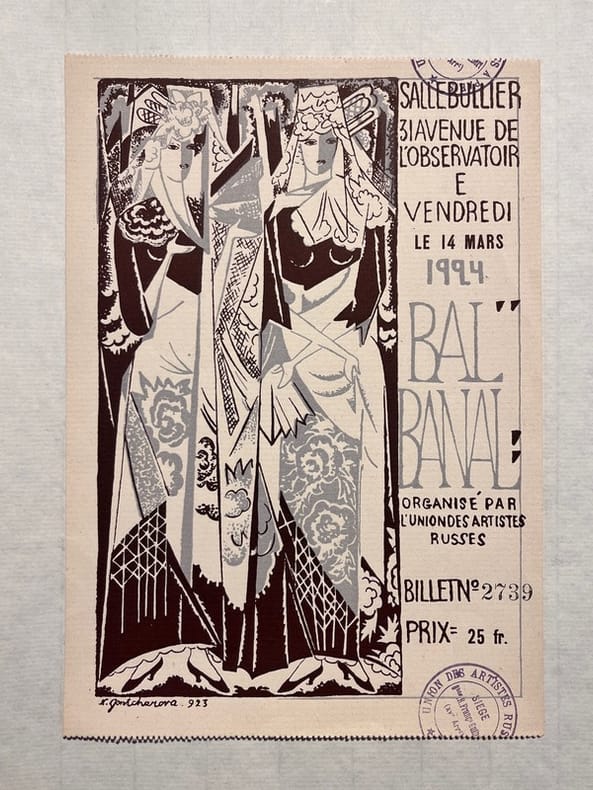
192456871924. Feuillet de 22,5x15,8 cm. imprimé en deux tons sur papier vergé.
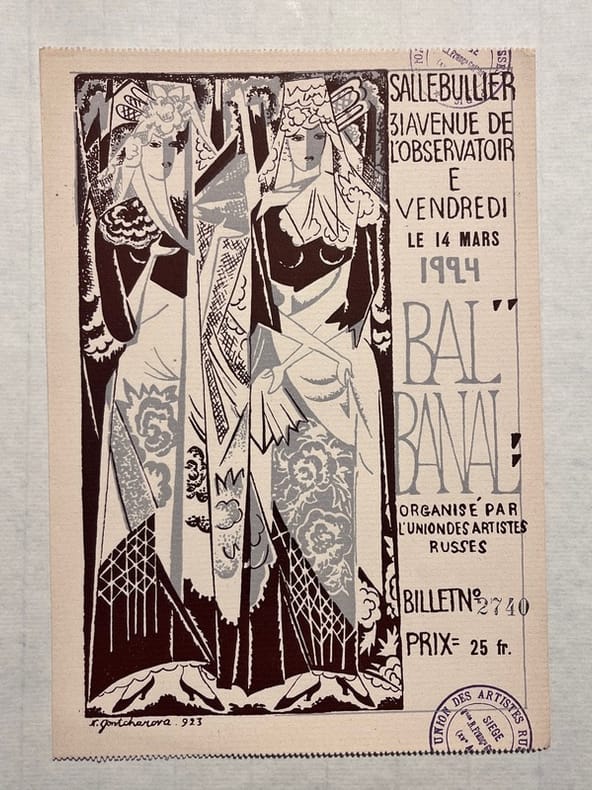
1924207971924. Feuillet de 22,5x15,8 cm. imprimé en deux tons sur papier vergé.
203730Paris, Desenne, 1796 5 vol. in-8, [4]-viij-391 pp., viij-556 pp., viij-372 pp., [4]-400 pp. et [4]-299 pp., avec 5 (sur 6) tableaux dépliants, demi-basane havane, dos lisses ornés de guirlandes et fleurons dorés, tranches mouchetées de rouge (reliure de l'époque). Plusieurs charnières fendues, coiffes rognées.
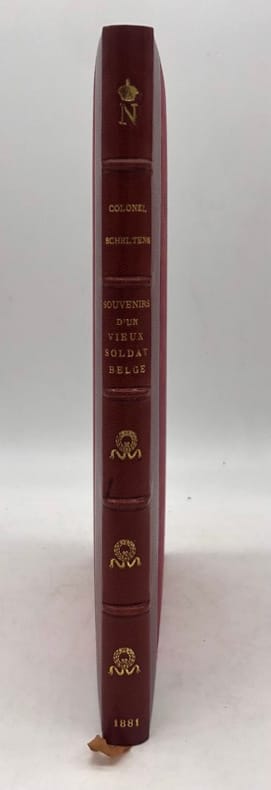
212820Bruxelles, van Assche, 1880 in-8, 135 pp., portrait frontispice en photographie, demi-chagrin rouge, dos à nerfs orné, premier plat de couv. cons. (reliure postérieure). Dos un peu passé. Couverture remontée avec des manques. Qqs annotations au crayon.
1729LBW-6236Leide, Pierre Vander Aa, [1729]. En deux feuilles pouvant être jointes pour former une carte de 432 x 295 mm.
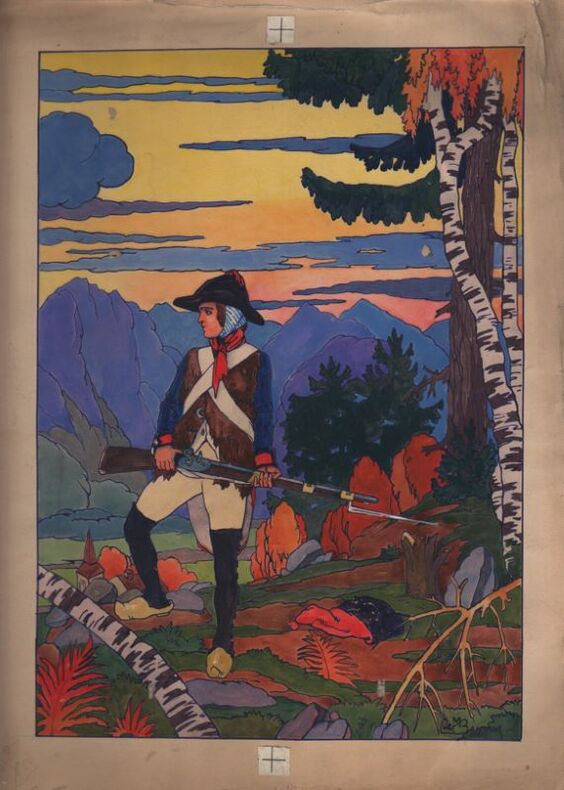
1920236621920 Gouache sur papier fort signée en bas à droite, (1920), 35.9 x 25.5 cm ( format à vue), 42.2 x 31.4 cm (format de la feuille).
1764LBW-406[1764]. 212 x 168 mm.
185529642Paris Librairie Militaire J. Dumaine 1855 2 volumes In-8 un portrait - XIV - 400 + 423 pp , nombreux cachets de la bibliothèque du 37 ème régiment de chasseurs d'Afrique, intérieure frais, , dos frottés et usagés avec manques en coiffe et coins émoussés, papier de couvrure correct, intérieur frais exempt de rousseurs . Tulard, 140
In-8° (208x131mm), pp. (1), XXVIII, 361, bella legatura coeva p. pelle marmorizzata con bordura floreale dorata (in parte stinta) bordante i piatti. Dorso con titolo in oro su tassello verde, filetti e fregi ornamentali e floreali in oro. Unghie decorate, tagli e sguardie marmorizzate, segnacolo. Al contropiatto, ex-libris di Eugenio di Savoia Carignano con croce di Savoia coronata. Il personaggio di Casa Savoia in questione è il Principe Eugenio, Conte di Villafranca, figlio del Principe Giuseppe di Savoia, nato a Parigi nel 1816, spentosi a Torino nel 1888. Luogotenente generale del Regno, dapprima fidanzato con Maria Carolina Augusta d'Asburgo, sposò morganaticamente nel 1863 la torinese Felicita Crosio. Una litografia all'antiporta con la festa delle lampade presso i Calmucchi e 11 tavv. in fine di specimen di scrittura e linguistica calmucca. Esemplare assai bello. Sporadiche fioriture. Prima traduzione francese, ridotta rispetto all'originale, di "Nomadische Streifereien unter den Kalmüken in den Jahren 1802 und 1803" (Riga, Ghartmenn, 1804-05), uno dei primissimi resoconti esistenti sulle tradizioni del popolo calmucco e sulle loro credenze religiose, di stampo buddhista-lamaista. I Calmucchi sono una popolazione nomade di ceppo mongolo occidentale e di religione, come si è detto, buddhista-lamaista, stanziata in gruppi distaccati nelle regioni del Volga, presso Astrachan, in Mongolia e nell'Ovest della Cina. Anche la loro lingua è assai simile a quella mongolica, da cui si differenzia soprattutto a livello fonetico; la presente opera è anche una delle prime rigorose ricognizioni glottologiche della lingua calmucca. La traduzione include ex novo l'"Essai sur la fuite des Kalmucs des bord du Volga", basato su un resoconto lasciato da de Weseloff, già prigioniero dei Calmucchi, nonché su lavori di Pallas e di Rytschkov (le fonti da cui la memoria è attinta sono dichiarate nelle note alla p. 259). Bergmann (1772-1856), scrittore e viaggiatore tedesco, soggiornò per un intero anno fra i Calmucchi, seguendo fedelmente le loro tradizioni, apprendendo la loro lingua e studiando, primo tra gli europei, lo sviluppo delle loro arti e delle loro scienze, assai notevole ed in seguito oggetto dell'ammirazione anche di esploratori come Sven Hedin. Boucher de La Richarderie, V, 433-436. Aschoff, 192. Chadenat, 5323. Quérard, I, 285.
1718LBW-4898[Amsterdam, 1718]. 204 x 620 mm.
19398Saint-Pétersbourg [Yverdon], s.n., 1769. In-12, 286 pp., basane marbrée havane, dos long orné de caissons dorés, tranches marbrées (petits manques et épidermures à la reliure, petites rousseurs, inscription au titre).
46400265, Paris, Amyot, (1854); in-4, bradel papier gaufré violet, filets dorés, couv. jaune illustrée. (Laurenchet). 196 pp., texte sur 2 colonnes. Vignette sur bois en tête. Rarissime édition populaire de ce livre fameux, publié pour la première fois chez le même Amyot en 1843, 4 volumes. Bien complet de sa couverture. Très bien établi.
1725PHO-2134Paris & Rouen, J.B.C Bauche, Ferrand, Machuel, 1725. 1 Volume in-4° (5) (25x19cm), 9ff.-648pp.-6ff., veau époque, dos à nerfs orné avec pièce de titre, tranches rouges, illustré d’un portrait gravé de l’auteur gravé par Scotin en frontispice, 1 carte dépliante, 12 planches gravées (dont 1 dépliante), frottements, manque au dos en pied et aux coupes, coiffes usées, coins usés, rousseurs, planches brunies, petit travail de ver, en marge, sans atteinte sur une trentaine de feuillets, tâche au titre, manque la pièce de tomaison.
147498Paris, Flammarion, s.d. (1895) petit in-4, XLVI-319 pp., nbses ill., cartonnage rouge, dos et plats ornés, tranches dorées (rel. de l'éditeur). Infimes usures.
Litografia, antica ed originale, stampata a colori, tratta dal ricercato e raro giornale umoristico settimanale LA RANA, fondato a Bologna nel novembre 1865 da Leonida Gioannetti e da Augusto Grossi. Fu un giornale di grande successo per le sue satiriche caricature a colori di cui alcune in qudruplo foglio che fu uno dei successi editoriali. I politici, lo Stato Ecclesiastico e la politica europea furono i prediletti ispiratori. Il periodico affrontò una grave crisi nel 1873, quando Grossi decise di abbandonare la redazione per fondare Il Papagallo. La Rana sospese le pubblicazioni nel 1911, per cessarle definitivamente nel 1912. Il principe di Coburgo, in sella al suo ronzino è intenzionato ad abbattere la porta misteriosa che nel caso ci riuscisse andrebbe diritto nella boccaccia del gigantesco orsacchiotto russo
144676Paris, Capelle, 1845 in-8, [2]-VIII-492 pp., demi-chagrin vert, dos à nerfs orné de caissons à froid, tranches mouchetées (reliure de l'époque). Rousseurs, coins usés. Ex-libris Seghers.
1st edition.original modernist covers,12mo, 141 pages ; 20 cm. In Yiddish. Text partially vocalized. David Hofstein (1889-1952) was a Russian-born Jewish poet who, after the Russian Revolution of 1917, which he welcomed...wrote only in Yiddish. He was coeditor of the Moscow Yiddish monthly Shtrom, the last organ of free Jewish expression in the Soviet Union. The poems in which he acclaimed the communist regime established him as one of the Kiev triumvirate of Yiddish poets, along with Leib Kvitko and Peretz Markish. Hofstein's elegies for Jewish communities devastated by the White movement pogroms appeared in 1922, with illustrations by Marc Chagall. Both had worked together as teachers at shelter for Jewish boys in suburban Malakhovka, which housed and employed boys orphaned by Ukrainian pogroms. Hofstein protested the banning of Hebrew and the persecution of Hebrew writers, arousing the suspicion of the authorities . In 1939, Hofstein became member of the Communist Party. Hofstein hailed the establishment of the State of Israel in 1948; however, in the same year, when Joseph Stalin withdrew his support for Israel, Hofstein was arrested, together with Kvitko, Markish and other members of the Jewish Anti-Fascist Committee, first transported to Moscow and then to Siberia. He was executed on the Night of the Murdered Poets (August 1213, 1952) , together with twelve other Yiddish writers and artists. After the death of Stalin, they were posthumously rehabilitated, and Hofstein's selected works reappeared in a Russian translation in 1958 (Wikipedia) . SUBJECT(S) : Yiddish poetry. Poems. OCLC: 19306078. OCLC lists 7 copies worldwide (Hebrew U, NLI, YIVO, Stanford, LOC, Harvard, HUC) , none west or south of Cincinnati. Cover toned with some edgewear, with a little loss to publishing info at lower inside margin, Good Condition overall. (Yid-42-3A)
19821026EBMünchen., C.H. Beck Verlag., 1982. 30 x 27,5 cm. 1118 S. OLeinen mit illustrierten OUmschlägen., 1026E 2 Bände. Erste deutsche Auflage. Umschlagrücken jeweils stark lichtrandig, Umschlagkanten mit Bereibungen, stellenweise etwas knittrig, Umschlagvorderseite von Band 1 am oberen Rand mit Fehlstelle und Rückseite mit kleiner beschabten Stelle, Umschlagrückseite von Band 2 mit 2 kleinen hin
229169Paris, Fournier, Ferra, 1812 8 vol. in-8, cartonnage papier marbré à la Bradel (rel. de l'époque). Sans l'atlas.