1 366 résultats
Fine English Contemporary cloth. Large roy. 8vo. (25 x 17 cm). In Ottoman script. [15], 704 p., 1 b/w plate. First Edition. Türkistan [Türkili] bilik, No. 2. Özege 2603. Bugünkü Türkistan ve yakin mazisi. Publishing of this book took 11 years between 1929-1940 in Cairo. The book includes history of Turkestan from 16th century to 1940's, especially national struggles in the period of Russia and Soviets, and 400 years of history of Turkic peoples in Eurasia and Central Asia (Turkestan).
New English Original bdg. HC. Roy. 8vo. (24 x 17 cm). Papers in English and Turkish. 4 volumes set: ([2], [xxx], 750, [25] p.; [2], [xxxii], 733, [27] p.; [2], [xxxiii], 1102, [24] p.; [2], [xxxv], 1038, [29] p.), color and b/w ills. VIII. International Turcology Congress. Book of papers.= VIII. Milletlerarasi Türkoloji Kongresi. Bildiri kitabi. 30 September - 04 October 2013, Istanbul. 4 volumes set.
Fine Turkish Original 1/4 leather bdg. 4to. (30 x 22 cm). In Turkish. 678 p., many color and b/w ills. and photos. Atlas Tartarica: Tatarlar ve Avrasya halklarinin tarihi. Tataristan Cumhuriyeti: Dünü ve bugünü. Translated into Turkish by Ilyas Kemaloglu. This huge and comprehensive historical atlas, in the historiography and field of Tatar Republic and the Tatar people, is the first publication to cover the history and geography of the region so widely and in its entirety. The work deals with the ethnic origins of Tatars, their states, rulers, economics, culture and religion, and the situation of Tatar people in Russia. The book also contains important information explaining the historical development of the Eurasian cultures, when and where the Turkic / Turkish states, Turkic / Turkish khanates and Turkic / Turkish tribes migrated to different historical periods, and what weapons they used to survive in these migrations as it's richly illustrated.
New Turkish Paperback. Folio. (34 x 25 cm). In Kirghiz and Turkish. 3 volumes set. (1053 p.). Manas destani: Sagimbay Orozbak Uulu varyanti.= Manas: Soghimboi Urozbek ughli varianti buiicha. 3 volumes set.
Fine Fine English Original bdg. Dust wrapper. 4to. (30 x 23 cm). In English and Turkish. 244 p., color plts. The catalogue of the coins of Turkic Qaghanate.= Köktürk Kaganligi sikkeleri katalogu. TURKOLOGY Numismatics Coins Central Asia Göktürks Turkic / Turkish history Economy Archaeology.
New New English Original bdg. Dust wrapper. Large roy. 8vo. (23 x 18 cm). In English. 293, [4] p., color and b/w ills. Architects of Baku. Late XIX - early XX centuries. Baku is built in a single architectural - planinng gasp during 25 years, from 1880-1914. All historic blocks, main motorways of the city have been formed around the ancient city of Icherisheher. A number of architects, including Gasin Bey Hajibababeyov, Gafar Izmialov, Ziverbey Ahmadbeyov, E. I. Skibinsky, Fon der Nonne, P. Stern, I. Edel, A. Eichler and other have created architectural palette owing to local customers and oil-tycoons, such as H. J. Taghiev, Musa Naghiev, Shamsi Asadullaev (he was called the king of oil and kerosene) Isa bey Hadjinski, Teymur Bey Ashurbeyov and many others.
Mm 300x365 Catalogo della mostra di Amburgo e di Stoccarda del 1993. Volume rilegato in tela nera con titolo impresso al piatto ed etichetta applicata al dorso, custodia sempre in tela, 392 pagine profusamente illustrate a colori. Testo in lingua inglese - english text. Copia in condizioni di nuovo - brand new. Spedizione in 24 ore dalla conferma dell'ordine.
New Turkish Original bdg. HC. 4to. (28 x 20 cm). In Turkish. 704 p., ills. Gobustan'in gizemi: Kipçaklar'a giden yol. Gobustan: History and culture.; Etymology of Gobustan.; Geography.; Turkic / Turkish peoples.; Kipchaks.; Turkish language in the region.; Religion. Book has 733 numerous visual material including photographs, maps, illustrations, drawings... A very heavy and oversize volume.
1936AUB-3638Grenoble, Didier & Richard 1936. Bel exemplaire broché, couverture ornée d'éd., fort in-4 no 559/1500 sur Rives B.F.K., XXIX +195 pages + planches.
Very Good Turkish, Ottoman (1500-1928) Original newspaper. Folio. (49 x 33 cm). In Ottoman script (Old Turkish with Arabic letters) and imprint details in bilingual in Russian and Turkish. 4 p. An early issue of this extremely rare newspaper published in Tbilisi by Mehemmedaga Sahtahtli between 1903 and 1905 as 392 issues in total, published for all Turks and Islamic groups in Russia, which had a significant position in the modernization history of Azerbaijani and Russian Turks and the political and social changes at the end of the 19th and the early 20th centuries for Islamic minorities in Russia. The articles were included in this issue as follows: Tiflis-Musahabe by Mehemmed Bey Kasimbekov, pp. 1-2 (about the Girls' Schools in the Caucasus.; Türkistan'a Seyahat by Tacir Arif, pp. 2-3 [Voyage into Turkestan], Öz Muhbirlerimizden-Uralsk'dan-Men Garra' Gurra'-Tercüman ve Muharriri, pp. 3 [an article criticizing "Sark-i Rus"' publishing policy]; Kirim, Öz Muhbirlerimizden-Kirim'dan-Akmescid'de Darü'l-Muallimîn, pp. 3-4 [about the school for theachers, which was opened in Akmescit (Simferopol) in 1870 and provides education in Russian, the number of students and the education program and the inadequacy of the Muslim education of the same school]; Öz Muhbirlerimizden-Bakû'dan, pp. 4 [about the Muslims of Baku losing their influence from the commercial life of the city]; etc. The first Turkish newspapers titled "Ziya", "Ziya-yi Kafkasiye" and "Keshkul" published in Tbilisi in the 19th century were closed by the Russian authorities. The newspaper "Sark-i Rus", published in 1891, long after the closure of Keskul, became the first Turkish newspaper published in the Caucasus at the beginning of the 20th century. Mehemmedaga Sahtahtli, or Mammad agha Shahtakhtinski (1846-1931), was an Azerbaijani linguist and public figure. In 1902, Shahtakhtinski returned to Caucasus and settled in Tiflis. Here in March 1903, he founded the Azeri-language newspaper Sharg-i Rus ("The Russian Orient") dedicated to the academic enlightenment of the Muslims of the Caucasus. His articles propagated the necessity of Europeanisation, which he saw as the only possible way to a stable and developed future. He sharply criticised Islamic fanaticism, which in his opinion was a major obstacle in the development of Azeri culture and was incompatible with the idea of progress. He also dismissed Pan-Turkism, a popular theory among Turkic-speaking scholars and political activists of the time, and propagated the use of folk Azeri as a literary language, as opposed to the common practice of using Ottoman Turkish. He was among the peacemakers during the bloody Armenian-Tatar massacres of 1905-1907. In 1907, he was elected to the State Duma of the Russian Empire (second convocation). After dissolution of the duma, he worked for Petersburg-based newspaper "Russia", then edited by Pyotr Stolypin. Between 1908 and 1918, Shahtakhtinski lived in various parts of the Middle East, including Anatolia, Iraq and Persia, meanwhile writing articles for "Turkestan Times" (Russian: Turkestanskie Vedomosti). During this time abroad, he worked at the Russian embassy to the Ottoman Empire as translator between 1909 and 1912. In 1919, he returned to then-independent Azerbaijan to give lectures at the newly established Azerbaijan State University. Shahtakhtinski was among the numerous scholars who had followed Mirza Fatali Akhundov in proposing an alphabet reform for Azeri, suggesting to reform the existing Perso-Arabic script. The unsuitability of the Arabic alphabet to Turkic languages in general was in his opinion a major obstacle to the spread of literacy among Azeris. Between 1879 and 1903, Shahtakhtinski designed several model alphabets for Azeri, some of them Roman-based, however none of them was implemented in practice. He attended Congress of the Peoples of the East, acting as an interpreter for Turkish, French, German, Persian and Arabic in 1920. In 1923, Shahtakhtinski as member of a special four-mem
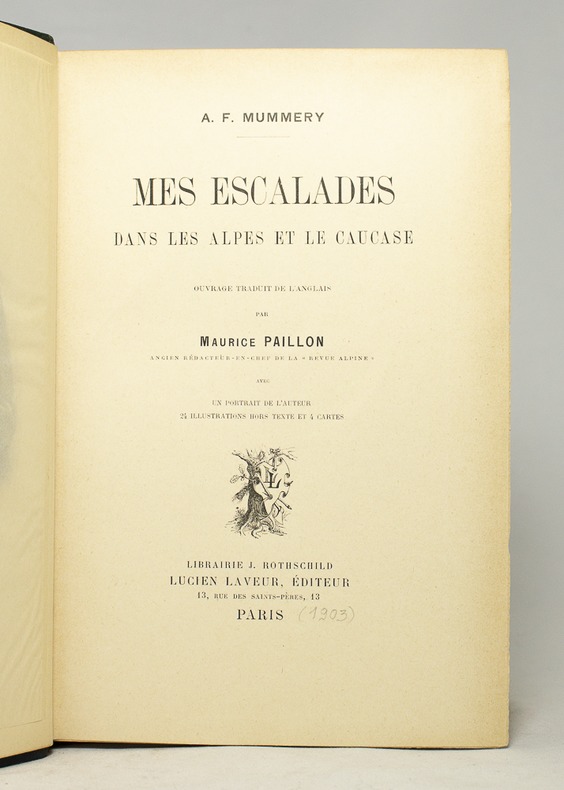
8vo., Second Edition, with portrait frontispiece in photogravure (original tissue guard present), title in red and black, plates in photogravure and illustrations in the text, neat contemporary inscription on title, free endpapers lightly browned; original oatmeal buckram, backstrip with leather labels (chipped at edges) framed and lettered in gilt, gilt top, uncut, corners lightly bruised else a very good, bright, clean copy. Mummery's classic account was first published in 1895. In this, arguably the best, edition the frontispiece of Aiguille Verte is replaced by the author's portrait. Neate *555.
190316667Paris, Lucien Laveur, éditeur, 1903. In-8 de XL-327-[7] pages, demi-maroquin bleu. Dos passé, griffure sur le premier plat.
23534P., Plon, Nourrit, 1889, in 4° relié pleine percaline rouge décorée de l'éditeur, tranches dorées, XII-458pp. ; rousseurs aux premières et dernières pages ; plat inférieur fané, ors du dos passés.
Very Good Turkish Original posters. Double elephant folio. (100 x 70 cm). Descriptive texts in Turkish. 9 plates set, b/w photographic plates and runic scripts. Plates show Kül Tigin and Bilge Kagan's scripts and photographic plates of their west, east, north and south frontlines; and plates and scripts of Tonyuquq's stone with their all maps comprising area of inscriptions (Orkhon Valley, region on the western Orkhon River in Mongolia, near Ögii Lake. More specifically, they stand about fifty miles north of the Erdene Zuu Monastery, and approximately twenty-five miles northwest of the Ordu-Baliq). In addition last plate shows photographic plates of researches and archaeological area of period excavations. Not Yenisey inscriptions on plates. Orhon Inscriptions, and the Khöshöö Tsaidam monuments are two memorial installations erected by the Göktürks written in Old Turkic alphabet in the early 8th century in the Orkhon Valley in Mongolia. They were erected in honor of two Turkic princes, Kul Tigin and his brother Bilge Khagan. The inscriptions, in both Chinese and Old Turkic, relate the legendary origins of the Turks, the golden age of their history, their subjugation by the Chinese, and their liberation by Ilterish Qaghan. According to one source, the inscriptions contain "rhythmic and parallelistic passages" that resemble that of epics. The inscriptions were discovered by Nikolay Yadrintsev's expedition in 1889, published by Vasily Radlov. The original text was written in the Old Turkic alphabet and was deciphered by the Danish philologist Vilhelm Thomsen in 1893. Thomsen first published the translation in French in 1899. He then published another interpretation in Danish in 1922 with a more complete translation. They were erected by the Göktürks in the early 8th century. They commemorate the brothers Bilge Khagan (683-734) and Kul-Tegin (684-731), one a politician and the other a military commander. Both were descendants of Ilterish Qaghan of the Second Turkic Khaganate, which was a prominent Turkic nomadic society during the Tang dynasty. The Göktürks have left artifacts and installations all over their domain, from China to Iran. But only in Mongolia have any memorials to kings and other aristocrats been found. The ones in Khöshöö Tsaidam consist of tablets with inscriptions in Chinese and Old Turkic characters. Both monuments are stone slabs originally erected on carved stone turtles within walled enclosures. Bilge Khagan's stone shows a carved ibex (the emblem of Göktürk Kagans) and a twisted dragon. In both enclosings, evidence of altars and carved depictions of human couples were found, possibly depicting the respective honorary and his spouse. The Old Turkic inscriptions on these monuments were written by Yollug Tigin who was nephew of Bilge Khagan. These inscriptions together with the Tonyukuk inscription, are the oldest extant attestation of that language. The first portion of the Turkic translations seems to be Bilge Khagan discussing the commemoration of the tablet, as well as mentioning the extent of the empire. One passage reads, "To the East I have made campaigns as far as the Shantung plain, and almost reached the sea; to the South I have made campaigns as far as Tokuz-Ersin and almost reached Tibet; to the West I have made campaigns beyond Yenchii-Iigiiz (Pearl River) as far as Timir-Kapig (The Iron Gate); to the North I have made campaigns as far as the land of the Yer-Bayirku's. To all these lands have I led (the Turks). The forest of Mount Otiikin has no [foreign] overlord; the forest of Mount Otiikin is the place where the kingdom is held together." Continuing on, the inscriptions discuss the conquests of the Bilge Khagan and the struggles that he and his people face with the Chinese. The inscriptions even describe the Turks being enslaved by the Chinese. However, the inscriptions also highlight Bilge Khagan's accomplishment of uniting his people. As one passage reads...
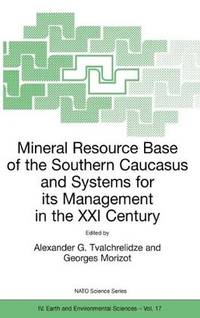
2003x-1402011237Kluwer Academic Pub 2003. Hardcover. New. 1st edition. 204 pages. 9.25x6.50x0.75 inches. Kluwer Academic Pub hardcover
Fine English Paperback. 4to. (30 x 21 cm). In English and Turkish. 303, [1] p., color ills. I, Mehmed Siyah Kalem, master of humans and demons.= Ben Mehmed Siyah Kalem, insanlar ve cinlerin ustasi.
Very Good German Original decorative cloth bdg. Cr. 8vo. (19 x 13 cm). In German. 1 portrait of Wereschtscagin, [4], 184, [10] p., ills. Owner's name on imprint page, marbled edges. A very good copy. The Battle of Geok Tepe in 1881 was the main event in the 1880/81 Russian campaign to conquer the Teke Turkomans. Its effect was to give the Russian Empire control over most of what is now Turkmenistan, thereby nearly completing the Russian conquest of Central Asia. The battle is also called Denghil-Tepe or Dangil Teppe. Sources are inconsistent, but Denghil-Tepe seems to have been the name of the fort and also the name of a small hill or tumulus in the northwest corner of the fort. Geok Tepe ('Blue Hill') seems to refer to the general area, the modern town, a nearby village, and a mountain to the south. Skrine says that the fort enclosed 2.6 square kilometers (1 sq mi) or more, with mud walls 5.5 m (18 ft) thick and 3 m (10 ft) high on the inside and a 1.2 m (4 ft) dry ditch on the outside, although other dimensions are given. The area was part of the Akhal Oasis where streams coming down from the Kopet Dagh support irrigation agriculture. After Russian forces were defeated in 1879 Russia began to plan for a new campaign. The basic problem was moving up supplies since Akhal was an oasis surrounded by several hundred kilometers of semi-desert. In March 1880 Mikhail Skobelev was put in charge of the Trans-Caspian region. He adopted Lazarev's original plan of a slow and massive advance. Instead of Khoja Kale, he chose a base at Bami on the north side of the Kopet Dagh. At some point, he decided to take Geok Tepe by siege rather than a storm. He arrived at Chikislyar in May, advanced up the Atrek and Sumbar rivers, and by June 11 he occupied Bami. The build-up was slow, partly due to the shortage of camels. In July he made a reconnaissance in force to examine Geok Tepe. By the first half of December, he had enough men and supplies and moved out to occupy a fort he renamed "Samur" a few kilometers west of Geok Tepe. On 27 December Aleksey Kuropatkin arrived with five companies, having made a remarkable march across the desert from Khiva. By the end of the month, Skobelev had 4020 infantry, 750 cavalry as well as artillery, rockets, several machine guns, and heliographs for communications. About 40000 Tekkes were thought to be in the area. On January 1, 1881, he occupied Yanghi-Kala south of the fort to control the water supply and the following day chose the southeast corner as the point of attack and on the following day moved the main camp to Yanghi-Kala. On 4-8 January, the first parallel was built about 600 m (700 yds) from the fort and a second began. To protect this a detachment was sent to capture a small redoubt to the north and General Petrushevich was killed after rushing through the gate. The Tekkes made sorties on the 9th, 11th, and 16th. These were largely successful but cost many Turkoman lives. The camp was twice moved north to make it easier to deal with sorties. The Russians only had enough men to hold a siege line in the southeast corner and the Tekkes were usually allowed to move in and out on the north side of the fort. On January 18 a mine was started on the southeast side and two days later artillery made a breach in the south wall which was quickly repaired. On 23 January the mine was completed and loaded with 1,200 kg (2,600 lb) of powder.
Very Good Turkish, Ottoman (1500-1928) Original lithograph map partly colored in brown tones. 82x56 cm. (Map print size: 50x46 cm). This map including four different map blocks on the paper. Three small ones include completely Asia, Baycal Lake, and North Russia. The big one includes a very detailed view of Japan, the Sea of Japan, Korea Strait, Korean Peninsula, Korean Bay, Yellow Sea, Shangai, Mongolia, Manchuria, and East Russian lands. No info about the cartographer. "The Cartographer Plotting School was opened to train the cartographers, especially when they were needed on military issues in the Ottoman State. Since there are differences between land maps and sea maps (in terms of measurements), the institution of surveyors emerged. When surveyors were needed also in the Navy, students at the Naval School were trained on this issue, and the gap for surveyors was covered in this way." (SCHOOL OF MAP DRAWING IN THE OTTOMAN STATE, Derya Geçili). Minor splits on foldings. Map in good condition generally.
Fine English Original cloth bdg. Large roy. 8vo. (25 x 17,5 cm). In English. 579 p., 54 numerous b/w plates and musical scores. Ethnic origins and history of the Chuvash.; Chuvash folksongs collections.; Hungarian studies of Chuvash folk music.; Dialects and melody types of Chuvash folk-music.; Musical features of Chuvash folksongs: Note-sets, forms, melodic lines, metre, rythym, syllable-number.; Experimentation by instrumental measurement.; Songs relating to the life and customs of the Chuvash people.; The Chuvash language, The origins of Chuvash, its development, dialects and literary usage, The phonetic system and the method of transcription followed in this volume.; Stylistic and poetic features of the songs.; How the songs were collected, systematized and edited.; Explanations of symbols.; Order of tunes.; Chuvash folksongs (1-350); English translation of the song-texts. Notes.; Hungarian translation of the song-text.; Indexes.; Bibliography. MUSIC Ethno-musicology Turkology Chuvash peoples Central Asia Folk culture Ballad.
New New English Original bdg. Dust wrapper. 4to. (30 x 22 cm). Edition in English. 343 p., b/w and color ills. Two coasts one sea III: Sections from Turkish-Russian common history. Translated by Natalia Kizilkaya. Two geographies both on Asia and Europe on the coasts of the Black Sea basin, Turkey and Russia. These two countries that are among the most important and strongest figures of the world area have strengthened their relations with rooted cultural, economic and social sharing besides the same lands in the past centuries. They shared the same fate and history of nearly 500 years in Eurasia that has housed several civilizations. Starting from Kiev Russia and Seljuk era, the history of these two geographies have reflected each other on the journey of each turning into strong empires such as Moscow Russia and the Ottoman Beylik and state structures respectively. Russia and Turkey weaved their similar fate of their joint past sometimes with war and sometimes with peace, alliance, aid and friendship... They underwent 12 great wars in depth but showed extraordinary solidarity as if to inspire the proverb "a neighbor is in need of another"; just like the in the war of Independence. The book "Two coasts and One Sea" gives the opportunity to analyze developments in culture, literature, arts and economy in the wide spectrum of history besides acting a unique historian that brings a perspective to our lives shaped in the same geographies. In other words, it accompanies the journey of Turkish-Russian relations from the Ottoman era to the Republic. This is third and the last volume.
Fine Tatar Original illustrated bdg. HC. Cr. 8vo. (20 x 14 cm). In Crimean Tatar and Crimean Turkish (Cyrillic script). 383, [1] p., b/w ills. Kirimtatar halk masallari. [= Krimsko-Tatarski narodni kazki]. Illustrated by Varfolomeev A. An extremely rare book on Crimean-Tatar fairy tales.
Very Good French Paperback. Roy. 8vo. (24 x 17 cm). In French. [vii], [1], 176 p. Documents Anatoliens sur les langues et les traditions du Caucase. IV: Recits Lazes en dialecte d'Arhavi (parler de Senköy). Anatolian documents on the languages and traditions of the Caucasus. IV: Recits Lazes in Arhavi dialect (about Senköy). Georges Edmond Raoul Dumézil was a French philologist, linguist, and religious studies scholar who specialized in comparative linguistics and mythology. He was a professor at Istanbul University, École pratique des hautes études and the Collège de France, and a member of the Académie Française. Dumézil is well known for his formulation of the trifunctional hypothesis on Proto-Indo-European mythology and society. His research has had a major influence on the fields of comparative mythology and Indo-European studies. And he's one of the pioneers who collected Laz fairy and folk tales.
Very Good Georgian Original dark green cloth bdg. Large demy 8vo. (22,5 x 15,5 cm). In Georgian, Turkish, Russian, English. 1000 p., b/w plates of original Ottoman documents. Ottoman documentary sources 16th - 18th - centuries: The Turkish text, with Georgian translation, introduction, terminological vocabulary, facsimiles and indexes prepared for publication by Nodar Shengeelia, Book I.= Smaletis dok'ument'uri ts'q'aroebi me -16 - me -18 sauk'uneebshi: Turkuli t'eksi, Kartuli targmanit, shesavali, t'erminologiuri leksik'a, paksimilebi da indeksebi, momzadebuli gamosakve'neblad Nodar Shengelias mier, Ts'igni I.= Osmanskie dokumental'ie istochniki XVI - XVIII vv. 1000 copies were printed.
New New English Original bdg. Dust wrapper. In publisher's special slip-case. Roy. 8vo. (23 x 16 cm). In Turkish. Color and b/w ills., maps and tables. 4 volumes set: ([xx], 686 p.; [xx], 504 p.; [xi], 872 p.; [xxxiv], 302 p.). A very heavy set. Avrasya'da Yeniden Çizilen Sinirlar, Insa Edilen Kimlikler Projesi. 4 volumes set: Vol. I: Bagimsizliklarinin Yirminci yilinda Orta Asya Cumhuriyetleri. Türk dilli halklar - Türkiye ile iliskiler. Vol. II: Bagimsizliklarinin Yirminci yilinda Azerbaycan, Gürcistan ve Ukrayna. Türk dilli halklar - Türkiye ile iliskiler. Vol. III: Sovyetler Birligi'nin dagilmasindan Yirmi yil sonra Rusya Federasyonu. Türk dilli halklar - Türkiye ile iliskiler. Vol. IV: Sovyet sonrasi dönemde Türk dilli halklar, dil sorunu, yeniden biçimlenen kimlikler. [Ataturk Turkish Turkey Türkei Turquie Turchia Turquía Kalkun Turkish Türkisch Turc Turque Turco Tyrkisk of the Turkish language Linguistics Linguistic study Studies Work SSCB USSR The Russian Federation Central Asia Asian culture Foreign affairs Diplomacy Diplomats Diplomat International relations Azerbaijan Georgia Georgian Azerbaijani Ukraine Ukrainian History Social Historical Politics Politica Political Policy Caucasia Kaukasus Caucase Turcology Turcologie Turkic Turkica Turcica Turk Turks Crimea Crimean Kirim].
In 8, pp. VIII + 412. T. tl. coeva. Rara edizione delle avventure di viaggio di questa donna, moglie di un ingegnere minerario francese che a lungo viaggio' nelle steppe Russe, Caucasiche e della Crimea. Raro.