Poland, Jeffrey,Biblio.com

4 198 résultats
75499-nnew. unknown
196843041London: The White Eagle Press Limited 1968. First edition. Original paper wrappers Small 8vo 88 pages. 21 cm. In English.<br> On the condition of Jews in Poland both historical and contemporary. Includes discussion of the Holocaust defense of Poland from charges of anti-Semitism and resistance organizations.<br> “On the eve of the Second World War Poland was home to over three million Jews making it the second-largest community in the world. Warsaw the capital had a population of over 300000 Jews more than 30% of the population of the city—and a larger Jewish community than in most European countries. Around 85% of Polish Jewry was annihilated during the Holocaust. After the war many survivors refused to return to or remain in Poland which was marked by civil war and anti-Semitic violence. Since the end of Communism the small Jewish community in Poland has been able to reassert its identity and begin the process of rebuilding. Most of the country's Jews live in Warsaw but smaller communities also exist in Kraków Wroclaw Lodz Katowice Szczecin Gdansk and several other cities.†World Jewish Congress<br> SUBJECTS: Jews -- Poland. OCLC: 10213086<br> Ex-library with usual markings but otherwise excellent. Very Good Condition. YIZ-23-77-CCX-’el. London: The White Eagle Press Limited unknown
1856L010632Crosby Nichols and Company 1856. First Edition. Hardcover. Good/No Jacket. 12mo - over 6¾" - 7¾" tall. Good in cloth ext sunning/rubbing; sl int soiling/browning. vi2 2604p Notable illustrated biography of the Polish king 1624-96 famous for his many battles against the Turks; 'compiled and translated from the French by Trauermantel' title page. See translator's preface for the var ious biographical sources including Chodzko Drohojowska et al. Wear chi efly to head of spine; spine sunned slight bumping to corners few leaves slightly foxed; few signatures starting else a very serviceable copy of a rare American imprint.2 color plates / engr vign. Crosby, Nichols and Company hardcover
194446237London: MaxLove Publishing Co. Ltd. 1944. 8vo. 91 1 pp. Numerous photo illusts. Beige cloth red lettering w/ d.j. cover art photo of crying woman minor dustsoiling scuffing shelfwear NF/VG copy. First edition of this scarce and harrowing account of the brutal treatment of Poles by the Nazi occupiers during World War II. The author details her experiences in Polish homes how Polish women are being plucked off the street never to return the constant hangings women fighting in the Polish Underground and more. MaxLove Publishing Co., Ltd., hardcover
186227140Columbus Ohio: Ohio State Journal Printing Co. 1862. 85 3 pp. Disbound with original printed wrappers spine wrappers shorn. A small rubberstamp on blank verso of title page. Very Good. <br/><br/> The book delivers just what the title says. <br/>Sabin 56879. III Dornbusch 1055. Ohio State Journal Printing Co. unknown books
2014N5124<p>Warsaw: Museum of History of Polish Jews . 2014. Original Decorative Wrappers. Very Good. Folio. 429pp. Richly illustrated. A VERY GOOD AND CLEAN COPY. <br /><br /></p> Museum of History of Polish Jews .
186227140Columbus Ohio: Ohio State Journal Printing Co. 1862. 85 3 pp. Disbound with original printed wrappers spine wrappers shorn. A small rubberstamp on blank verso of title page. Very Good. <br /> <br /> The book delivers just what the title says. <br /> Sabin 56879. III Dornbusch 1055. Ohio State Journal Printing Co. unknown
1993330185Author Published 1993. 1st edition. Hardcover. Fine cloth copy in a near-fine very slightly edge-dulled dust wrapper now mylar-sleeved. Remains particularly well-preserved overall; tight bright clean and strong. Physical description: 415 p.: ill.; 23 cm. Notes: Includes bibliographical references p. 393-402 and index. Subjects: Vernon Ship. Great Britain. Royal Navy History. Vernon training-ship. Naval education Great Britain.Submarine mines History.Minesweepers History.Torpedoes HistoryTorpedo-boats Great Britain History. Genre: Bibliography. Illustrated. Author Published hardcover
1994416873Oxford : Clarendon Press 1994. First Edition. Hardcover. Fine cloth copy in a good if somewhat edge-torn and dust-dulled dust-wrapper now mylar-sleeved. Remains particularly well-preserved; tight bright clean and strong. Physical description; viii 384 p. ; 22 cm. Notes; Includes bibliographical references and index. Subjects; Materialism. Knowledge Theory of. Science Philosophy. Oxford : Clarendon Press hardcover
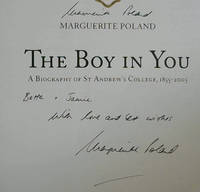
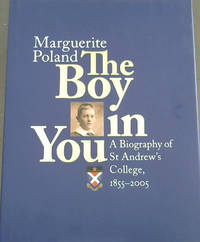
2008b2vdSt Andrew's College 2008. First Edition. Hardcover. As New/Very Good. 0x0x0. Heavy extra postage required unless posted within South Africa. Tall. The jacket is a little shelf rubbed and edge worn. It is protected in cellophane. The boards are a little shelf rubbed. They are strong and sturdy. Internally clean. Tightly bound. r12/06/2025. ak. Our orders are shipped using tracked courier delivery services. St Andrew's College hardcover
2008bzvdFernwood Press Simon's Town / St Andrew's College 2008. First Edition. Hardcover. Near Fine/Good. 0x0x0. Heavy extra postage required unless posted within South Africa. Slight waviness from damp. All pages are acceptable. 496 pages complete. A smart proud copy of this history of the legendary Grahamstown school. The matte dustjacket is healthy. It has some light shelving wear and scuffing. It is comfortable and secure. The Andrean blue boards are very healthy and hale. The gilt decoration and titling are bright. The contents are most agreeable and sure. They are fresh clean clear confident generous benevolent affectionate. Tightly bound. fk r13/11/2023 JHK. Our orders are shipped using tracked courier delivery services. Fernwood Press, Simon's Town / St Andrew's College hardcover
2008cbbcFernwood Press 2008. First Edition. Very Good/Very Good. The dust jacket as well as the boards are in an excellent condition and appear as new. Internally clean and tightly bound. This tall book is complete with 496 pages. B.K. Our orders are shipped using tracked courier delivery services. Fernwood Press hardcover
1989Q-0898622328The Guilford Press 1989-04-21. Paperback. New. In shrink wrap. Looks like an interesting title! The Guilford Press paperback
1999Q-1570033447University of South Carolina Press 1999-10-01. hardcover. New. In shrink wrap. Looks like an interesting title! University of South Carolina Press hardcover
In-4 p., brossura, ca. 90 pp. cad. fascicolo, con illustrazioni in bianco e nero Di questa rivista trimestrale di architettura offriamo una raccolta di 6 annate complete: 1975 - 1976 - 1977 - 1978 - 1979 - 1980 (manca il n. 4). Molto ben conservate.
1st edition. Original Color Illustrated Boards, 8v0, 155 pages, 23 cm. In Yiddish. Title translates as, My Destroyed Home: A Jewish Village in Poland Between Both World Wars. Title in Spanish on rear cover and on verso of title page: Main joreve haim: Un hogar en ruinas: historia de un pueblito judio de Polonia, entre las dos guerras mundiales. Remembrance of life in the Polish Jewish village of Mie? Dzyrzec Podlaski. SUBJECT (S) : Jews -- Poland -- History. Mie? Dzyrzec Podlaski (Poland) . OCLC lists 22 copies. Paper brown, but no chipping, touch of edgewear to front board, binding solid, about Very Good- Condition. (YID-26-30)
Original paper wrappers. 8vo. 77 pages. 25 cm. In English. Originally published in the Journal of Central European Affairs and reprinted for private circulation in both German and English editions. Written while Europe was still reeling from WWII. Begins with the sentence Perhaps a more fitting title for this study would be Central Europe without Jews. Bernard Weinryb (19001982) was an "economic and social historian. Born in Turobin, Poland, Weinryb studied in Breslau at the Jewish Theological Seminary and at the university, was librarian at the seminary in 193133, and worked on the editorial staff of the Encyclopaedia Judaica in Berlin and Zurich (193334) . In 1934 he emigrated to Palestine, where he lectured at the School of Social Work and School of Economics until 1939, when he moved to the US, where he taught and did research at a number of scholarly and governmental institutions. (EJ) SUBJECTS: Holocaust - European Jewry. OCLC lists 2 copies worldwide (NLI and HUC) . Pages are browning. Small chip to bottom right of cover wrapper. Overall in Good+ Condition. (HOLO2-131-16)
1st edition. Original paper wrappers, 8vo, 19 pages. Interesting period analysis, in under 20 pages, of the new German Mythology which is being taught to Germanys children. The author includes no fewer than 8 references to Antisemitic references to the Jews or Jewish conspiracy against Germany, as well as the other standard Nazi tropes. "Germany is now making a legend - the legend of the Third Empire. She is giving it saints and heroes and martyrs. Unlike other legends, this legend is new and burning and contemporary. It fans national pride (suffering from a sense of defeat) with ardent fires, and ... It tends to encourage dislike of other nations. The new Germany, based on racial nationalism, is building a story of the great Renaissance of national life since the collapse of 1918; and it is building it on the foundations of exaltation of German blood and depreciation of what is non-German. Being thorough, as well as passionate, the Germans are making the story they have built not only a matter of song and poem, but also a matter of text-books and educational method. The result is school history-books like that which is analysed in the following pages" (from the Foreword) . Friends of Europe publications, no. 11. SUBJECT(S) : History -- Study and teaching (Elementary) -- Germany. National socialism -- Study and teaching. Questions and answers. -- Juvenile literature. Nationalsozialistische Deutsche Arbeiter-Partei. Spine repaired, quality glossy paper has held up well and is solid. Good Condition thus. (Holo2-139-18) xx
8vo; 154 pages; Inscribed by the author. Researched personal memoir/history of this Polish-Ukranian- Jewish community wiped out in the Holocaust. Jacket has some stains, Very good condition in Very good- jacket. (HOLO2-98-24) xx
18441157341Leipzig, O. Wigand, 1844. Zus. etwa 1500 S. Lwdbde d. Zeit (Leihbibl.-Expl., stark braunfl.).
200869018ABKöln., Verlag der Buchhandlung Walther König., 2008. 27 x 21,5 cm. 207 S. Illustrierter, glanzkaschierter OKarton., 69018A Erste Auflage. Sehr gutes Exemplar.
1973469011 vol. in-4 reliure pleine toile, dessin manuscrit au plat sup., La Pologne. Revue Mensuelle, Agence polonaise Interpress, 7, 8, 9, 10, 11, 12 de 1973 et 1, 2, 3, 4, et 5 de 1974
8vo; 1st edition. Original illustrated red boards, 8vo, 342 pages. In Yiddish. Title translates as, "The destruction of Vilna." Kaczerginski (19081954) was a Yiddish writer and cultural activist. Born in Vilna to a poor family and educated at that citys Talmud Torah, Shmerke (Pol., Szmerke) Kaczerginski lost both his parents during World War I. As a youth, he was involved with outlawed Communist groups and was arrested several times, serving a lengthy prison term. In the 1930s, two of his revolutionary poems became popular in Poland. He wrote short stories with a radical bent and was a correspondent and reporter for literary publications, including the semilegal leftist press in Poland and the New York Communist daily Morgn-frayhayt. Kaczerginski played a key role in shaping the writers and artists group Yung-Vilne; he organized its evening events and was the de facto publisher of its three miscellanies between 1934 and 1936. During the period of Soviet control over Lithuania in 19401941, he was even more active in the field of Yiddish culture, but at the same time experienced his first disappointments with the attitude of the Soviet regime toward Jewish culture. During the first period of Nazi occupation, Kaczerginski wandered through villages and towns posing as a deaf mute; after many difficulties, he ended up in the Vilna ghetto. Kaczerginski was very involved in the ghettos cultural activities. As a leader of its youth club, he wrote its Yugnt-himen (Youth Hymn), a song that immediately became popular. In 1943, he wrote the song Shtiler, shtiler in memory of the mass murders committed at Ponar. Set to music that Aleksander Volkoviski (later known as Aleksander Tamir) had submitted to a contest organized by the ghetto, the song was first heard at an evening performance there and over the years became one of the best-known songs of the Holocaust. With Avrom Sutzkever and others, Kaczerginski became part of a group of forced laborers whom the Germans designated to sort Jewish cultural treasures at YIVO and other locations. Known as the Papir-brigade (Paper Brigade), the groups members risked their lives to hide the most significant items, smuggling them back into the ghetto or entrusting them to non-Jewish acquaintances. Kaczerginski was a member of the Fareynikte Partizaner Organizatsye (United Partisans Organization; FPO), and, since YIVOs building was located outside the ghetto walls, he took part in smuggling weapons into the ghetto. In September 1943, Kaczerginski, along with Avrom and Freydke Sutzkever and other members of the FPO, escaped from the Vilna ghetto as part of an organized group of fighters just before its liquidation. They joined a Soviet partisan unit in the Naroch Forests, where Kaczerginski fought as a partisan until liberation in July 1944. Kaczerginskis books describe the destruction of Vilna, the partisan struggle, and his own experiences during the Holocaust period: Khurbn Vilne (The Destruction of Vilna; 1947), Partizaner geyen (Partisans on the Move; 1947), and Ikh bin geven a partizan (I Was a Partisan; 1952) (YIVO, 2010). Ex-library, spine sunned, otherwise very Good Condition. (HOLO2-89-3A)
8vo; 1st edition. Original illustrated red boards, 8vo, 342 pages. In Yiddish. Title translates as, "The destruction of Vilna." Kaczerginski (19081954) was a Yiddish writer and cultural activist. Born in Vilna to a poor family and educated at that citys Talmud Torah, Shmerke (Pol., Szmerke) Kaczerginski lost both his parents during World War I. As a youth, he was involved with outlawed Communist groups and was arrested several times, serving a lengthy prison term. In the 1930s, two of his revolutionary poems became popular in Poland. He wrote short stories with a radical bent and was a correspondent and reporter for literary publications, including the semilegal leftist press in Poland and the New York Communist daily Morgn-frayhayt. Kaczerginski played a key role in shaping the writers and artists group Yung-Vilne; he organized its evening events and was the de facto publisher of its three miscellanies between 1934 and 1936. During the period of Soviet control over Lithuania in 19401941, he was even more active in the field of Yiddish culture, but at the same time experienced his first disappointments with the attitude of the Soviet regime toward Jewish culture. During the first period of Nazi occupation, Kaczerginski wandered through villages and towns posing as a deaf mute; after many difficulties, he ended up in the Vilna ghetto. Kaczerginski was very involved in the ghettos cultural activities. As a leader of its youth club, he wrote its Yugnt-himen (Youth Hymn), a song that immediately became popular. In 1943, he wrote the song Shtiler, shtiler in memory of the mass murders committed at Ponar. Set to music that Aleksander Volkoviski (later known as Aleksander Tamir) had submitted to a contest organized by the ghetto, the song was first heard at an evening performance there and over the years became one of the best-known songs of the Holocaust. With Avrom Sutzkever and others, Kaczerginski became part of a group of forced laborers whom the Germans designated to sort Jewish cultural treasures at YIVO and other locations. Known as the Papir-brigade (Paper Brigade), the groups members risked their lives to hide the most significant items, smuggling them back into the ghetto or entrusting them to non-Jewish acquaintances. Kaczerginski was a member of the Fareynikte Partizaner Organizatsye (United Partisans Organization; FPO), and, since YIVOs building was located outside the ghetto walls, he took part in smuggling weapons into the ghetto. In September 1943, Kaczerginski, along with Avrom and Freydke Sutzkever and other members of the FPO, escaped from the Vilna ghetto as part of an organized group of fighters just before its liquidation. They joined a Soviet partisan unit in the Naroch Forests, where Kaczerginski fought as a partisan until liberation in July 1944. Kaczerginskis books describe the destruction of Vilna, the partisan struggle, and his own experiences during the Holocaust period: Khurbn Vilne (The Destruction of Vilna; 1947), Partizaner geyen (Partisans on the Move; 1947), and Ikh bin geven a partizan (I Was a Partisan; 1952) (YIVO, 2010). On title page verso: "Destruction of Jewish Vilna, Khurbn Vilne / Sh. Kaczerginski. New York, N.Y. : United Vilner Relief Committee, c1947." SUBJECT(S): Jews -- Lithuania -- Vilnius. World War, 1939-1945 -- Jews. -- Atrocities. -- Personal narratives, Jewish. OCLC: 19309866. Cover scratched, otherwise very Good Condition. (HOLO2-89-4)
Hardcover, 123 pages, illustrated, 26 cm. Series: Winter studies in Yiddish ; ; v. 2. Edition: 1st edition. SUBJECT (S) : Yiddish language -- Dialectology -- Congresses. Yiddish (langue) -- Dialectes -- Congres. Butler, Samuel, 1835-1902. Yiddish language; Dialects. "Published in cooperation with the Oxford Centre for Postgraduate Hebrew Studies. " "Published as a supplement to Language and communication"-Title pages verso. Includes bibliographies. Other Titles: Language and communication; Supplement. Light wear to cover binding. Very good condition. (Sef-16-8)