19 576 résultats
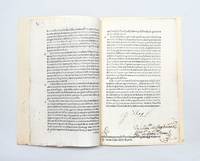
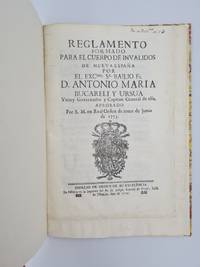
17742162<p><em><strong>Founding Royal ordinance for the Corps of Invalids of New Spain</strong></em></p><p>Antonio Maria Bucareli y Ursua 1717-1779 Viceroy of New Spain.</p><p><strong>Reglamento formado para el cuerpo de invalidos de Nueva España por el Excmo. Sr. Bailio Fr. D. Antonio Maria Bucareli y Ursua Virrey Governador y Capitan General de ella aprobado por S. M. en Real Orden de trece de Junio de 1773.</strong></p><p>Mexico City Joseph Antonio de Hogal 1774.</p><p>Folio. 2 19 1 blank pp. Collates: π A-D2 π.</p><p>With the woodcut Royal coat of arms on the title. Signature of Viceroy Bucareli in ink on the final page.</p><p>Modern stiff marbled paper covers leaves remargined in order to match the size of the volume. In linen made-to-measure case with title on front.</p><p>Very rare first and only edition of the founding document for the establishment of the Corps of Invalids in the Viceroyalty of New Spain. This Royal ordinance marks a crucial step in the military organisation of the Spanish Americas and greatly expanded the colonial military presence there.<br />The <em>Cuerpo de Invalidos</em> consisted of men not fit for field duty due to injury illness or advanced age. They were assigned to the defence and custody of the coasts and borders of the Viceroyalty of New Spain a massive area stretching from Panama to Alaska including California and Mexico. They also served as guardians of the most prolific national buildings. This military reform took place in the context of a major administrative restructuring of the Spanish Americas under King Carlos III known as the Bourbon Reforms. The Spanish Crown established a standing overseas military Including the <em>Cuerpo de Invalidos</em> with the aim of defending its colonial territories. Carlos III created the first Corps of Invalids in Spain in 1764 with the aim of providing a dignified old age to those disabled for active service. With the creation of this type of units the Crown benefited those people who were under its orders for years. Thus far from completely separating them from their functions and in addition to giving them monetary compensation they were kept working and being participants in the life of their community. They were not separated or discriminated against and they were considered capable and that they could continue to participate in society. Also having a Corps of Invalids in the colonies gave the oppressor a significantly larger presence on the streets because men who were not active soldiers were still able to wear a uniform.<br />The person to carry out the reforms and signee of the present document was Viceroy Antonio María de Bucareli y Ursúa marqués de Valleheroso y conde de Jerena who served from 1771 to 1779. The present ordinance provides the rules and regulations of the Corps in 37 points.</p><p><strong>Condition: </strong>inscription in ink in head margin of title-page. Minor repairs to leaf A2. Otherwise in very good condition.</p><p><strong>Reference: </strong>Beristáin Mexico no.516; Medina Mexico no. 8693; not in Palau; Sabin.</p> Joseph Antonio de Hogal
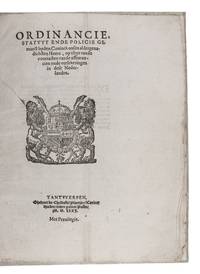
1571HCLAD73TWO2SAntwerp: Christophe Plantin 1571. Modern vellum. 4to. With armorial woodcut on the title page. Rare royal decree on marine insurance addressed to the Council of Brabant replacing the decree of 27 October 1570. In 1569 the Duke of Alfa took a radical measure by banning all marine insurance. "This "provisional" decree of 31 March 1569 was abolished by an ordinance of 27 October 1570 of Philips II. Marine insurances were again allowed. Ships could only leave the port with the permission of an officer after an inspection of their armament. This decree also charged that all policies should contain a detailed report of the goods on board. Diego Gonzalez Gante was appointed to inspect these contracts. He also had to prepare an new instruction. This decree contained as well a formulary of an marine insurance. After a petition of the merchants and Nations of Antwerp a new ordinance was promulgated three months later on 20 January 1571. This decree provided that only ten percent remained to the own risk of the insurance taker. The goods the name of the vessel and the captain had to be mentioned in the insurance policy. To prevent fraud Diego Gonzalez Gante was also appointed to control everything. An insurance policy which was not recorded by him was to be declared null and void. Not only in Antwerp but also in Bruges Amsterdam and Middelburg people under his authority had full powers to verify this" Huybrechts. This decree also prohibited life assurance.With three lines underscored otherwise a very good copy and wholly untrimmed.l USTC 401508 6 copies; Voet 1981 4 copies incl. 3 the same; WorldCat 3 the same copies; cf. M. Huybrechts ed. Marine insurance at the turn of the millennium II 2000 p. 18; V.d. Wulp 213 1570 ordinance. Christophe Plantin, hardcover
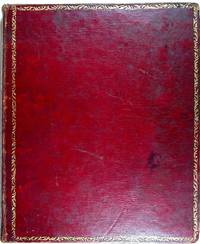
18142677Hunthill House Scotland 1814. Written in English in a small and narrow but legible italic hand with occasional corrections or additions in a different hand on wove paper watermarked Budgen & Wilmott / 1812. Four unnumbered pages of French text at front and four at back the latter dated 27 May 1814 in a different hand apparently the author’s on different paper with no visible watermark. Very good; some occasional spotting. Contemporary red straight-grained morocco gilt edges scuffed and scraped joints strained head of spine chipped.<br /> <br /> An unpublished first-hand memoir filled with searing descriptions of the horrors of war by a French army officer veteran of the terrible Peninsular War. The narrator was one of few survivors of the surrender of French forces after the Battle of Bailén in July 1808. The background to this event was Napoleon's attempt to complete the isolation of England from the continent by sending a French army into the Iberian Peninsula to occupy Portugal and Spain thereby preventing British trade with the Continent.  Napoleon later referred to the Peninsular War characterized by appalling cruelty on both sides as the ‘Spanish ulcer’; it was to be one of the primary factors in his downfall. <br /> <br /> General Pierre Dupont de l'Étang was charged with securing French control of the major cities in Spain. Dupont's 20000 men had initial success but as they penetrated deeper into Spain they faced increasing resistance. This memoir by H. de Montvaillant an 18-year-old Protestant officer from Montpellier who was serving in the second Corps d’Observation of the Gironde recounts the route and experiences of Dupont's army to its furthest point of penetration into Spain: Córdoba. There after a particularly bloody and cruel occupation the army was forced to withdraw and was soon overwhelmed. Dupont surrendered his army at Bailén. Originally promised safe passage most of the French were slaughtered immediately after their surrender. <br /> <br /> Montvaillant’s account commences with the French arrival in Bayonne in November 1807. By December 22 the French troops had arrived in the town of Vittoria 50 miles west of Pamplona and by January 9 1808 they had advanced to south of Burgos. Detailed descriptions of the monuments churches libraries art and inhabitants of various localities passed through in their zigzagging progress south through French-occupied Spain enliven this first part of Montvaillant’s narrative: he describes with evident pleasure Burgos Valladolid Guadarrama and the Escorial Madrid and Toledo where the troops spent most of May. He makes the acquaintance of many Spaniards. In Toledo a young woman explains to him the contradictions of Spanish women rendered emotionally susceptible by their extreme religious devotion but whose sometimes shocking to the French frankness contrasts with a strict sexual morality. Later he deplores the time wasted in Toledo while the Spanish insurgents were building up their strength. <br /> <br /> As the French troops proceed southward the local populations exhibit increasing hostility often hidden under excessive politeness. They encounter a Frenchwoman who has fled Bailén saying that she was not safe there because of her nationality but the soldiers assume that she exaggerates. By the end of May the French pass the Sierra Morena and enter Andalusia and the truth becomes evident. It is at this point that the narrative takes on an ominous tone. Montvaillant notes that the population had abandoned the villages taking all foodstuffs. He records that the senior officers had assumed that the army would only be harassed by small bands of “brigands†a far cry from the massive resistance that it encountered: “We learned that the insurgents each day gathered strength and that the Junta of Seville was determined to stop us in our March. The following day we got to the little town Baylen in whose plains two months afterwards our destiny was decided†p. 86. <br /> <br /> The first battle was engaged at Alcoléa just upstream from Córdoba an event Montvaillant describes in a poem in French transcribed. The next day the French arrived at Córdoba where the Spanish enemy had taken refuge. A musketry attack upon their arrival so enraged General Dupont that “he gave up the town to pillage" p. 88. Allowed to run wild the French soldiers sacked the city committing hideous crimes: “Neither tears promises or humble supplications could arrest the thirst for pillage.†p. 89. Discipline was nonexistent drunkenness and looting continued for eight days. The soldiers raped the women and ransacked homes. Montvaillant presents himself as a savior of women and the elderly on several occasions but notes that some of the Spanish whom he and fellow officers placed under protection in Córdoba were later “the first to persecute the unprotected French prisoners and even those who had been their Benefactors†p. 92. While he does not detail the contents of the soldiers’ plunder it is known that the rich churches of Córdoba were heavily looted. Notwithstanding the circumstances he manages to visit and describes in amazement the great mosque-cathedral scarcely changed in a thousand years. <br /> <br /> Nine days after the French entrance into Córdoba Montvaillant and his troops were ordered back to Alcolea to guard a bridge crossing. En route there from Cordóba he discovered and graphically describes the many mutilated corpses of the French sick and wounded who had been left along the line of march while the main body of General Dupont's troops had taken Córdoba. “It is almost incredible how people calling themselves Christians could push inhumanity to such an excess†p. 96.<br /> <br /> The army moved back to Andújar near Bailén and encamped. Montvaillant records that the general staff had by now realized that the French were outnumbered and that the opposition had organized itself. Dupont's army was isolated without hope of reinforcement or re-supply defending a garrison situated on a flat plain in the scorching sun. The narrative becomes one of revenge heat troop dispositions losses tactical mistakes errors of the general staff and increasing difficulties. Dupont's surrender came on July 20 1808 and thus begins the second part of the memoir devoted to the narrator’s experiences as a prisoner of war. <br /> <br /> The officers were segregated from the defeated army before being escorted supposedly to return to France. Most of the army was slaughtered within days. Montvaillant records details of the survivors’ months-long “death march†southwards to the coast. Having finally arrived at Jerez de la Frontera near Cádiz to await embarkation to France they waited in vain. Their captors kept them in Jerez having discovered that the ruling Junta of Seville had abrogated the surrender treaty and that the inhabitants were planning to massacre them on their approach to Cádiz. Montvaillant’s account is henceforth devoted to anecdotes of captivity and of the prisoner’s horrendous treatment at the hands of their escorts and guards. He is unclear as to exact dates but it seems that the French captives were held at Jerez until mid-December and then hastily driven aboard ships to sail for the Balearic Islands. A severe storm intervened and they were blown off course to Africa finally coming to port at Gibraltar; several days later they were blown back to Andalusia at Málaga. After more storms and much sailing having been at sea 25 days for a voyage which normally took a week they finally made the Balearics. <br /> <br /> And here the worst surprise of many bad surprises awaited them: the desert island of Cabrera. Montvaillant counts some 4000 soldiers and 400 officers who were forced to survive as best they could on this scorching hot nearly waterless uninhabited island p. 148. Details of his account square with Denis Smith’s monograph on the subject. During the next four years close to 9400 French prisoners of war were exiled to this island; possibly 40% died of disease or malnutrition. The officers as usual fared much better than their soldiers. Montvaillant was one of 216 officers who were collected from this exile after a month and taken to the capital Palma p. 150; another group was sent to Mahon in Minorca. There imprisoned in better circumstances the group waited although the news from outside was threatening as the Spanish "mobs" were calling for their "sacrifice." The officers between attempting escapes were able to conjure up some distractions. The narrator passed the time translating Spanish poems and plays and spending up to eight hours at a stretch playing chess. They also freely imbibed the good Mallorcan wine danced and partied; making do without women Bacchus presided as he delicately puts it. <br /> <br /> But nearly half these officers were massacred during a riot and assault on the prison by the inhabitants of Palma described by Montvaillant in gory detail pp. 158-162. The survivors were returned to Cabrera in March 1810 as were the officers from Mahon. They found there a diminished population of half-naked walking skeletons. During the next five months spent on Cabrera Montvaillant was nonetheless able to observe a thriving “political economy†on the island where enough food was still provided that the prisoners had the energy for theater productions and dances. Describing the gender-bending that took place as the men playing female roles in the performances instinctively took on conventionally feminine attitudes even to the point of inspiring crushes bickering and jealousy among the audience members Montvaillant comments that the theatrical chronicle of Cabrera would make quite a book â€un bel in folioâ€- p. 170.<br /> <p>In early August Montvaillant and the officers were removed from the island on an English ship — all unhesitatingly leaving their men to rot on the island where they remained for four more years. A diplomatic impasse kept the officers off the coast at Gibraltar for several weeks until they were finally put on ships for Portsmouth and Plymouth. Montvaillaint went on to Salisbury for a short time and then embarked again for Leith en route to his final destination in Scotland where he remained in comfortable exile until the accession of Louis XVIII in 1814. <br /> <br /> The text is written in an occasionally stilted English a translation from the author’s own French account by a family whom he had befriended at Hunthill House near Jedburgh Scotland where he stationed. Eight pages of notes in French by the author are inserted four pages at the beginning the bifolium is inserted using wax seals and four pages at the end. The French preface contains a romanticized account of the author’s Scottish sojourn including a temptress fairy and concludes with the author’s promise to never forget his friends in Scotland. The English text is preceded by the title-leaf and a one-page dedicatory poem introduced by a statement that these “`Recollections’ in an English Garb are presented by the sincerest of Friends to the Author†and dated Hunt Hill 1 January 1814. <br /> <br /> Following the narrative in a letter to his family dated from Jedburgh 27 May 1814 Montvaillant explains the history of the manuscript the remaining pages contain literary notes including translations into French of poems by Robert Burns and Sir Walter Scott. During his years of exile in Jedburgh Montvaillant had become deeply attached to the owners of Hunthill House and to their three daughters. Without them he claims he would not have survived the loneliness of his exile. In homage and gratitude he dedicated his memoir to them. His friends retained the original French version as a keepsake of their friend and an engrossing biographical narrative and presented him with this translation which he brought back to France planning to render it anew into French to share with his family and close friends. He emphasizes that he plans to keep the manuscript unpublished; perhaps the memories were too painful. <br /> <br /> Cf. Denis Smith The Prisoners of Cabrera: Napoleon's Forgotten Soldiers 1809-1814 New York 2001.</p> unknown
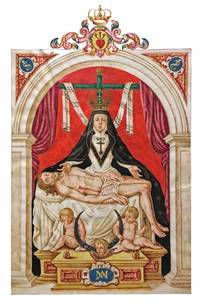
1726LL 878<p><em>"Ejecutoria de Hidalguía ganada por los Caballeros hijosdalgo de los Señores Don Nicolás Antonio de Arjona y Don Zoilo Alfonso de Arjona".</em></p><p>4to. 33 x 23 cm. Contemporary silk binding. Three manuscript pages vellum folio containing a beautifully rendered depiction of the spiritual state of Solitude with a figure of a recumbent Christ with two cherubim at his feet and angels with a Virgin Mary illuminated vellum folio with coat of arms of nobility of the Arjona Family with colored helmet two vellum pages with a genealogical tree cover five blank folios 211 folios.</p><p><strong>RICHLY ILLUMINATED SPANISH "CARTA DE HIDALGUIA</strong>. According to seventeenth century writer Bernabé Moreno de Vargas a patent of nobility hidalguía consists of a transcription of a favorable outcome of a lawsuit filed before the Chancellories of Ciudad Real Granada and Valladolid. on behalf of individuals families and often of entire lineages recognizing the plaintiff's or plaintiffs' noble status.</p><p>After January 20 1703 the competencies for determining noble status would fall exclusively on the Chancellories of Valladolid and Granada in order to protect the impoverished Royal treasury from tax evasion. </p><p>This patent of nobility or hidalguía concerns the families of Don Nicolás Antonio de Arjona and Don Zoilo Alfonso de Arjona in 1726.</p><p><em>Artfully decorated the depiction of the family's noble coat of arms is especially worthy of mention. The document examines the two genealogical trees and stands as a good example of the heraldic literature of the time</em></p>
1893236066London: Chiswick Press 1893. No. 11 of 13 copies printed on vellum there were also 88 copies printed on paper. Title with vignette numerous woodcut illustrations and large initial capitals. 1 vols. Folio 12-3/4 x 8-7/8 in.; 32.4 x 22.5 cm. Loose as issued in publisher's decorated board portfolio with maroon velvet straps in publisher's maroon morocco-backed clamshell box with printed label on upper cover; box worn a few rust marks on upper board. No. 11 of 13 copies printed on vellum there were also 88 copies printed on paper. Title with vignette numerous woodcut illustrations and large initial capitals. 1 vols. Folio 12-3/4 x 8-7/8 in.; 32.4 x 22.5 cm. One of 13 Copies on Vellum. This work consists of two important ordinances issued by the Spanish monarchy on November 20 1542 and June 4 1543. Under the active influence of Bartolomeo de las Casas "friend of the Indians" the new laws had the special design of ensuring better treatment of the Indians limiting the distribution of their lands and above all protecting them against enslavement by the conquering Spaniards. <br/><br/>"Las Leyes Nuevas" are reprinted here in this fine facsimile from the copy on vellum in the British Museum and are followed by an English translation. Much of the book is taken up by the historical Introduction by Henry Stevens who denounces the Spanish mistreatment of the Indians. Ironically the Spanish crown was later forced to rescind the new laws by colonists who were outraged at having to give up their right to a quota of enslaved Indian laborers.<br/><br/>A magnificent and impressive production by the Chiswick Press one of only 13 printed on vellum. Chiswick Press unknown books
39080Single quarto manuscript document signed by Queen Isabella of Spain dated 20 November 1501. With "La Reyna" at the top and signed "Yo la Reyna." The letter is for a credit to Isabella's chamberlain Sancho de Paredes for various supplies services and expenditures. Matted and framed opposite a portrait of Isabella. The entire piece measures 19 inches by 20.5 inches. Rare and desirable signed by Queen Isabella. Isabella I was Queen of Castile. She was married to Ferdinand II of Aragon. Their marriage became the basis for the political unification of Spain under their grandson Holy Roman Emperor Charles V. After a struggle to claim her right to the throne she reorganized the governmental system brought the crime rate to the lowest it had been in years and unburdened the kingdom of the enormous debt her brother had left behind. Her reforms and those she made with her husband had an influence that extended well beyond the borders of their united kingdoms. Isabella and Ferdinand are known for completing the Reconquista and for supporting and financing Christopher Columbus' 1492 voyage that led to the opening of the New World and to the establishment of Spain as the first global power which dominated Europe and much of the world for more than a century. Isabella was granted the title Servant of God by the Catholic Church in 1974. unknown
39080Single quarto manuscript document signed by Queen Isabella of Spain dated 20 November 1501. With "La Reyna" at the top and signed "Yo la Reyna." The letter is for a credit to Isabella's chamberlain Sancho de Paredes for various supplies services and expenditures. Matted and framed opposite a portrait of Isabella. The entire piece measures 19 inches by 20.5 inches. Rare and desirable signed by Queen Isabella. Isabella I was Queen of Castile. She was married to Ferdinand II of Aragon. Their marriage became the basis for the political unification of Spain under their grandson Holy Roman Emperor Charles V. After a struggle to claim her right to the throne she reorganized the governmental system brought the crime rate to the lowest it had been in years and unburdened the kingdom of the enormous debt her brother had left behind. Her reforms and those she made with her husband had an influence that extended well beyond the borders of their united kingdoms. Isabella and Ferdinand are known for completing the Reconquista and for supporting and financing Christopher Columbus' 1492 voyage that led to the opening of the New World and to the establishment of Spain as the first global power which dominated Europe and much of the world for more than a century. Isabella was granted the title Servant of God by the Catholic Church in 1974. unknown books
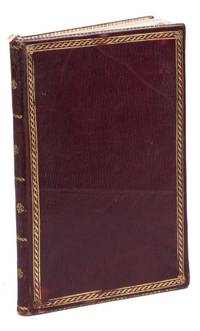
179218141Madrid 1792. 8vo. printed by the widow of Joaquín Ibarra Contemporary straight-grain red morocco gold-tooled spine gold-tooled ornamental border on the boards gilt edges. With a wood-engraved royal coat-of-arms on the title-page. 2 50 pp. Extremely rare first and only early edition of a decree of 15 January 1792 by King Charles IV of Spain. It establishes a college in Granada for educating American and Philippine youth of noble birth. The decree specifies a broad curriculum of political military ecclesiastical and legal subjects with the intent to educate the students for royal service. Besides these theoretical topics the students would also learn equitation horsemanship dancing fencing and other arts appropriate to their social status. The decree also describes admissions procedures guidelines for the curriculum and administration qualifications for the staff and rules of conduct extensively and precisely. Students for example are not allowed to use slaves or personal servants and twenty scholarship students are to be exempted from all fees one or two each from specified provinces in the Americas and the Philippines while other students have to pay fees on a sliding scale. The decree gives a glimpse of the regimen and habits but also the education in a royal school for noble young boys. A facsimile was published in 1968.In very good condition.l Palau 250290; WorldCat 1 copy; not in JCB; Sabin. hardcover
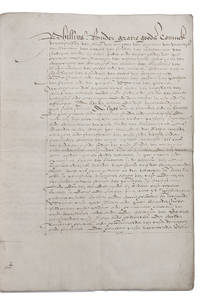
1557649ED93VJP3OThe Hague and Brussels 1557. Folio 36 x 25.5 cm. Manuscript mortgage agreement signed by King Philips representatives written in brown ink on parchment in a nearly upright cursive gothic hand with about 36 lines per page in a text block measuring about 25.5 x 18 cm. With a typescript transcription of the main text in red and an interlinear translation in Spanish in black by Prof. Dr. Edgard Verheyden. 2 blank 9 1 blank pp. Original mortgage agreement in Dutch in which King Philip II of Spain who had sovereignty over the Low Countries and held the title Count of Holland grants Jan Hanneman the rights to the tithes from his lands of Voorburg and Voorschoten. Philip had succeeded to the Spanish crown the year before on the abdication of the Holy Roman Emperor Charles V and the present elegantly written text explains that he and the Spanish Government wish to ameliorate their "very large and excessive debts" it later speaks of 300000 guilders which would be 50000 Flemish pounds resulting from years of war the building and maintenance of many fortifications and the salaries of the troops so the King wishes to mortgage or sell some of his royal domains and the rights to tithes that go with them. Efforts in 1556 had not yielded enough. Spain was later able to finance the wars with treasures from the colonies most famously transported in the annual silver fleet beginning in 1566 but here a decade earlier the King was desperate for funds.Formerly folded. In very good condition but with the sewing recent and rather loose. A primary source for Spain's financial state in 1557 and for the history of Voorburg and Voorschoten. unknown
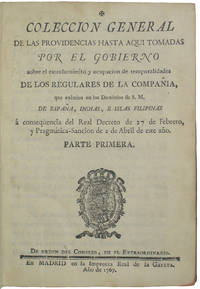
178444155Madrid: En la Imprenta Real de la Gazeta 1784. First edition. Contemporary mottled calf compartments decorated in gilt red morocco spine label titled in gilt sewn in green silk ribbon marbled endpapers. A very good copy head band worn with a small chip and a tiny split at the joint owner's bookplate and booksellers engraved plate on front pastedown contents quite bright and clean. 104 91 135 144 4 74 pp. 4to. Five volumes bound in one. Parts 1 2 3 set in condensed type; parts 4 and 5 in expanded type. <br /> <br /> Royal decrees from Charles III and instructions decisions and regulations issued by the Consejo en el Extraordinario and its president the Conde de Aranda and others--concerning the expulsion of the Jesuits. "These collections contain the documents relative to the expulsion of the Jesuits from the Spanish dominions and the confiscation of their property including the names of the colleges and houses of the order the application of the confiscated property &c. A complete series consists of five parts which are rarely found together. Our collation is of parts I. to III. only" Sabin 14304. Part 4 p. 75-127 contains the papal brief "Dominus ac Redemptor" by Clement XIV in Latin and Spanish. <br /> <br /> Earlier versions containing parts or all of the first three sections are not all that uncommon but those containing all five parts remain relatively rare. Other than this copy only two others have appeared in the auction records of ABPC and RBH since 1953 the first at the John B. Stetson sale at Parke Bernet and the second at Bonhams in a modern binding and dampstained. Palau 56516. See Sabin 14304. Medina BHA: IV 4228. En la Imprenta Real de la Gazeta unknown
1520WRCAM17720Augsburg 1520. 4pp. Small quarto. Later plain paper boards. Marginal tears and old fold marks with slight discoloration else very good. "After the death of Ferdinand II Charles V succeeded to the Kingdom of Spain. In 1517 he proceeded to Spain which he left in 1520. At his departure he was very unpopular; he made this speech when he left and said 'That he did not see the happy faces with which he had been received.' He also mentions America in the following words: 'He might have been satisfied with the Spanish Empire the Balearic Islands and Sardinia the Kingdom of Sicily Italy and a large part of Germany and Gaul AND THAT OTHER GOLD-BEARING WORLD'" - Maggs. <br> <br> EUROPEAN AMERICANA locates only two copies at The New York Public Library and the Bibliothèque Nationale. There is also a Rome edition of which a copy is located at Harvard. The present copy appears to be the only one offered for sale in this century. EUROPEAN AMERICANA 520/17. MAGGS BIBLIOTHECA AMERICANA I:33 this copy. PALAU 44419. ROTHSCHILD 3137. hardcover books
178444155Madrid: En la Imprenta Real de la Gazeta 1784. First edition. Contemporary mottled calf compartments decorated in gilt red morocco spine label titled in gilt sewn in green silk ribbon marbled endpapers. A very good copy head band worn with a small chip and a tiny split at the joint owner's bookplate and booksellers engraved plate on front pastedown contents quite bright and clean. 104 91 135 144 4 74 pp. 4to. Five volumes bound in one. Parts 1 2 3 set in condensed type; parts 4 and 5 in expanded type. Royal decrees from Charles III and instructions decisions and regulations issued by the Consejo en el Extraordinario and its president the Conde de Aranda and others--concerning the expulsion of the Jesuits. "These collections contain the documents relative to the expulsion of the Jesuits from the Spanish dominions and the confiscation of their property including the names of the colleges and houses of the order the application of the confiscated property &c. A complete series consists of five parts which are rarely found together. Our collation is of parts I. to III. only" Sabin 14304. Part 4 p. 75-127 contains the papal brief "Dominus ac Redemptor" by Clement XIV in Latin and Spanish. Earlier versions containing parts or all of the first three sections are not all that uncommon but those containing all five parts remain relatively rare. Other than this copy only two others have appeared in the auction records of ABPC and RBH since 1953 the first at the John B. Stetson sale at Parke Bernet and the second at Bonhams in a modern binding and dampstained. Palau 56516. See Sabin 14304. Medina BHA: IV 4228. En la Imprenta Real de la Gazeta unknown books
177133007-592Madrid September 12 1771. With 2 full-page coat of arms painted in beautiful colors and heightened in gold 2nd with Royal stamp below crown in upper part 4 calligraphic headers in red familiy names Gutierrez Huerta and Arze colored and partly placed above 4 smaller coat of arms in colors 8 large historical initials painted in colors and gold. 17-18 lines double ruled in red. Interleaved to protect the watercolors with 6 red silk guards. 36 pp. containing mostly signature on the pages. Folio 320 x 215 mm. Original morocco with gold decoration marbled endpapers. Written in a calligraphical hand in ink on vellum. Madrid September 12 1771. A fine example of a calligraphic manuscript of this Royal confirmation of arms and noblility of the noble lineage of the two noble families Gutierrez de Arze and Gutierrez de la Huerta and their descendants. The grant is based upon loyal services given by the ancestors of the Gutierrez to the Royal French king around 882 and up to King Charles III of Spain. In 1771 it became desirable to write down the purity of the houses after Don Juan Gutierrez married Dona Angela Huarte. The document has two paper seals and is signed at the end by collaborators of the King and counter-signed by Don Ramon Zazo y Ortega the official herald and genealogist for the Spanish crown. GRAPHIC ARTS:CALLIGRAPHY ; SPAIN ; GENEALOGY ; Madrid, hardcover
15076Queen of Castile 1474-1504 and a Catholic Monarch who ruled jointly with her husband Ferdinand II of Aragon. 1 page Document Signed "Yo La Reina" at the top of the page and dated December 1501. The Spanish Inquisition was originally intended in large part to ensure the Catholic orthodoxy of those who converted from Judaism and Islam. This regulation of the faith of the newly converted was intensified after the royal decrees issued in 1492 and 1501 mandated that Jews and Muslims convert to Catholicism or face exile from Spain. <br/><br/>While the Spanish Inquisition had begun in 1478 it was in full force by the time of this document's creation. With the goal of cleansing all non Catholic sentiment from the Spanish nation King Ferdinand and Queen Isabella issued the Edict of Alhambra that required the force exile of all non-Catholics from Spain. The additional decree issued in October of 1501 further mandated the public destruction of non-Christian texts.<br/><br/>This Document Signed is dated only two months later in the months when the Spanish began to enact trials questioning and enforcement of the banishment of non-Catholics. It marks an important moment in history. Mounting tape marks on verso. Document has minor age related toning and fold lines not affecting text. Some writing also wraps onto the verso fold. Measures approximately 8x11". In very good condition. unknown books
1893236066London: Chiswick Press 1893. No. 11 of 13 copies printed on vellum there were also 88 copies printed on paper. Title with vignette numerous woodcut illustrations and large initial capitals. 1 vols. Folio 12-3/4 x 8-7/8 in.; 32.4 x 22.5 cm. Loose as issued in publisher's decorated board portfolio with maroon velvet straps in publisher's maroon morocco-backed clamshell box with printed label on upper cover; box worn a few rust marks on upper board. No. 11 of 13 copies printed on vellum there were also 88 copies printed on paper. Title with vignette numerous woodcut illustrations and large initial capitals. 1 vols. Folio 12-3/4 x 8-7/8 in.; 32.4 x 22.5 cm. This work consists of two important ordinances issued by the Spanish monarchy on November 20 1542 and June 4 1543. Under the active influence of Bartolomeo de las Casas "friend of the Indians" the new laws had the special design of ensuring better treatment of the Indians limiting the distribution of their lands and above all protecting them against enslavement by the conquering Spaniards. <br /> <br /> "Las Leyes Nuevas" are reprinted here in this fine facsimile from the copy on vellum in the British Museum and are followed by an English translation. Much of the book is taken up by the historical Introduction by Henry Stevens who denounces the Spanish mistreatment of the Indians. Ironically the Spanish crown was later forced to rescind the new laws by colonists who were outraged at having to give up their right to a quota of enslaved Indian laborers.<br /> <br /> A magnificent and impressive production by the Chiswick Press one of only 13 printed on vellum. Chiswick Press unknown
16106653Madrid 1610. Hardcover Tapa dura. 300x210mm. 11¾x8¼". Manuscrito. Dado en Madrid a 2 de noviembre de 1610. En folio 300 x 210mm. 12 folios en pergamino en cuadernillo cosido. Escritura humanística pausada no librada o redonda de privilegios sobre caja de escritura marcada en tinta roja y pautada. Numerales romanos al uso de la cancillería. Invocación destacada en fol. 1r. con letra capital ornamentada. Algunas mayúsculas destacas de módulo superior al resto que marcan el inicio de los distintos traslados documentales que incluye el privilegio. Suscripciones de notario en todos los folios. Marcas de cancelación de folio superior en algunos folios. Algunas adicciones interlineales que corrigen el texto principal de mano posterior a la del texto principal. Suscripciones y anotaciones al final del documento en letra humanística corriente o cursiva. Último folio pautado pero sin texto. Dentro de carpeta. Documento de excepcional interés histórico y literario otorgado por el rey Felipe III a Ana Quijada de Salazar nieta de Alonso Quijada el auténtico nombre del hidalgo don Quijote personaje principal en la novela Don Quijote de la Mancha. Ana Quijada de Salazar 1577-1614 de Esquivas era hija de Juan Quijada de Salazar el cual casó en Illescas con Leonor de Salcedo. Su abuela fue Ana Suárez Medina hija de Gonzalo Medina Godoy alcalde de los hijodalgo que fue procesado por la inquisición pero finalmente liberado por ser a su vez nieto de Diego Muñiz de Godoy caballero de Santiago y por lo tanto cristiano viejo. Su bisabuela sería María de Salazar 1537 hermana de Diego de Salazar el que sería a su vez bisabuelo de la esposa de Miguel de Cervantes. Ambas poseen un tío abuelo común fray Alonso Quijada de la orden de San Agustín modelo del personaje de Quijote. Es en casa de este Alonso Quijada en donde se hospeda Cervantes durante sus estancias en Esquivias. Estudio diplomático y contenido textual: Carta de privilegio real otorgada por Felipe III con traslado de carta de venta de juro y carta de pago emitida a petición de la interesada Ana Quijada de Salazar dada en Madrid el 2 de noviembre de 1610. En fol. 1r. doble invocación explicita gráfica y textual: En el nombre de la Sanctísima Trinidad y de la eterna unidad padre hijo y espíritu sancto Notificación: Quiero que sepan por esta mi carta de privilegio o por su traslado signado de escribano público Intitulación completa: Como yo Don Phelippe por la gracia de dios rey de Castilla . Expositio: Vi una mi carta de venta firmada de mi mano y una carta de pago en ella firmada de don Juan Yváñez de Segovia caballero de la orden de Calatrava y mi tesorero general que son del tenor siguiente. A continuación traslado de la carta de venta y de la carta de pago: Traslado de la carta de venta del rey Felipe III de un juro de al quitar de 187.500 maravedíes a 22.000 el millar por 425.000 maravedíes a favor de Ana Quijada de Salazar dada en Aranda el 28 de agosto de 1610. Intitulación completa: - Directio: A vos el presidente y los del mi consejo de hacienda y contaduría mayor de ella bien sabéis que para ayuda a los grandes gastos que entonces se le ofrecieron al rey mi señor que sancta gloria aya y a mí para la defensa de los reynos contra los turcos y los moros y otros infieles enemigos se han gastado las rentas reales. y teniendo que proveer de mucha suma de dineros para la sustentación de estos reinos y no habiendo ayado manera alguna mejor se acuerda situar en algunas rentas y patrimonios de ellas maravedíes de juro alquitar para aquellas personas a quien se vendieren - Dispositio: Por ende otorgo y conozco que vendo a doña Ana Quisada de Salaçar hija de don Juan Quisada de Salaçar y doña Leonor de Salcedo su mujer vecina del lugar de Esquivias para ellas sic y para sus herederos ciento y ochenta y siete mil quinientos maravedíes en cada un año por quatro ciento y veinte y cinco mil maravedíes que por ello pagó en dineros contados a don Juan Yváñez de Segovia para ayudar a cumplir y pagar lo susodicho Con facultad de poderse quitar para que los tenga situados en ciertas rentas de las alcabalas de la ciudad de Toledo - A continuación cláusulas preceptivas penales y corroborativas pertinentes. - Data y validación: Dada en Aranda a veynte y ocho días del mes de agosto de mil seiscientos y diez años yo el Rey yo Alonso Núñez de Valdivia y Mendoza secretario del Rey nuestro señor la fiz escribir por su mandado. - A continuación en fol. 5v. traslado de la carta de pago de Juan Ibáñez de Segovia tesorero del rey a Ana Quijada de 187.500 maravedíes de juro alquilar a razón de 22.000 maravedíes el millar a disfrutar desde el 17 de junio de 1610 en adelante dada en Madrid a 9 de septiembre de 1610. - A continuación copia de la diligencia de emisión de la carta de privilegio de la venta del juro dada en Madrid a 11 de noviembre de 1610. - A continuación copia de carta de confirmación del rey Felipe III de la carta de venta y carta de pago anteriores a petición de Ana Quijada. - Finalmente data del privilegio real: Dada en la villa de Madrid a dos días del mes de noviembre año del nacimiento de nuestro salvador Jesucristo de mil y seisçientos y diez años. - Validación del privilegio real: numerosas suscripciones del canciller notario contador de rentas escribano etc. El expediente original que se quedó en la Contaduría Mayor de Hacienda se encuentra en el Archivo General de Simancas en el Fondo de Instituciones del Antiguo Régimen sección Contaduría Mayor de Hacienda Contaduría de Mercedes Juros del Reinado de Felipe III con el título: Juro a favor de Ana Quijada Salazar signatura: ES.47161.AGS/2.13.2.3//CME 520 12. Existen además otros tres expedientes sobre juros de esta misma persona uno de ellos de fecha anterior con las signaturas CME 517 74; CME 523 37 y CME 374 53. Ninguno se encuentran digitalizados en PARES Sobre Cervantes en Esquivias Catalina de Palacios y su relación con la familia de Ana Quijada: sacado de http://www.esquivias.es/la-ciudad/informacion-turismo/62-cervantes-esquivias-y-el-quijote. El primer hecho que demuestra la presencia de Cervantes en Esquivias se produce en septiembre de 1584 cuando Cervantes viaja a Esquivias para entrevistarse con Juana Gaitán viuda de su amigo el poeta Pedro Laínez e intentar publicar su obra póstuma: el Cancionero. Cervantes recibe un poder de manos de Juana Gaitán a través de un documento firmado el 22 de septiembre de 1584 ante el escribano de Esquivias Agustín del Castillo. Su cometido es entregar dicho poder así como el Cancionero a Ortega Rosa procurador de causas en los Reales Consejos de Madrid. Así debido a este viaje a Esquivias Cervantes conoce a la que sería su esposa Catalina de Palacios. El noviazgo fue corto ya que contrajeron matrimonio el 12 de diciembre de 1584 en la Iglesia Parroquial de Esquivias bendijo la unión el cura Juan de Palacios tío materno de Catalina y cabe destacar que Miguel alcanzaba ya la edad de 37 años cuando Catalina tenía tan sólo 19. El matrimonio duró 32 años hasta que el 22 de abril de 1616 el Príncipe de los Ingenios encontró la muerte. Vivieron juntos en Valladolid y Madrid volviendo a vivir en Esquivias en determinadas ocasiones donde acudían para visitar a la familia asistir a bautizos donde ejercían como padrinos a la inauguración de la ermita de San Roque en 1602 en 1610 pasaron una temporada en la villa y el último viaje que realizó Cervantes fue precisamente a Esquivias unos meses antes de morir así queda reflejado en el prólogo de su obra póstuma Los Trabajos de Persiles y Segismunda donde dice: ".viniendo otros dos amigos y yo del famoso lugar de Esquivias." Sobre Catalina de Salazar datos sacados de la misma página web: Nació en 1565 en la cuna de una de las familias hidalgas de más rancio abolengo de Esquivias los Salazar. Fueron sus padres: Catalina de Palacios y Fernando de Salazar y Vozmediano. Era la mayor de cuatro hermanos: Nicolás y Gonzalo que murieron siendo niños; Francisco que fue cura de Esquivias y heredero de la familia; y Fernando que terminó siendo fraile franciscano en el convento de San Juan de los Reyes de Toledo con el nombre de fray Antonio de Salazar. Su abuela materna María de Salazar sería hija de Diego García de Salazar. Una hermana de dicho Diego también llamada María de Salazar sería la bisabuela de Ana Quijada de Salazar. En esta última María de Salazar se produce el entronque de las familias Salazar y Quijada. A la boda de Catalina y Miguel de Cervantes no acudieron ni la madre de Catalina ni los padres de Cervantes hecho que también se debe a la reciente viudez de la suegra de Cervantes y a la enfermedad de su padre Rodrigo de Cervantes que murió unos meses después del enlace. Finalmente las familias tuvieron una buena relación como queda patente al contemplar que al hacer testamento Rodrigo de Cervantes nombra como albaceas a su mujer Leonor de Cortinas y a su consuegra Catalina de Palacios. Después de casarse el matrimonio formado por Miguel de Cervantes y Catalina de Palacios se alojó en la casa de fray Alonso Quijada de Salazar pariente lejano de Catalina concretamente era sobrino del bisabuelo de Catalina es decir tío abuelo de Ana Quijada Salazar hermano de su abuelo Gabriel Quijada. En realidad este Alonso Quijada es pariente más cercano de nuestra Ana Quijada que de la propia Catalina como se deduce de sus propios apellidos aunque ambas son sobrinas del mismo en el que Cervantes se basó para escribir el personaje de Don Quijote quedando demostrada su existencia en diversos documentos en los que se puede ver su firma autógrafa. El 9 de agosto de 1586 firma en Toledo dos documentos junto a su suegra. Uno de ellos es una carta de poder de Catalina de Palacios a su yerno Miguel de Cervantes según la cual le otorga toda potestad sobre sus bienes nombrándole administrador absoluto de toda su hacienda y dejándola en sus manos. Por él podría cobrar convenir y vender el documento revela que en el hogar de Esquivias reinaba la concordia y las buenas relaciones que tenía con su suegra cuando demostró tanta confianza en él. El otro documento notable es la carta dotal de Miguel de Cervantes a su esposa en la cual se reseñan los bienes inmuebles que recibe de su suegra y que tenían un valor de algo más de 400 ducados. Miguel se instala con su esposa de momento pero pronto iniciará un permanente peregrinaje que será una constante a lo largo de su vida. A los tres años de casarse debido a su oficio de recaudador de impuestos debe trasladarse a Sevilla pero hace continuos viajes a Esquivias. Permanece en Esquivias hasta el 24 de abril de 1587 cuando se dirige a Toledo siguiendo a la procesión de Santa Leocadia y después se marcha a Sevilla donde obtiene el cargo de comisario real de abastos para la Armada Invencible. Inicia así un constante peregrinaje por Andalucía como recaudador pero también realiza constantes viajes a Esquivias para visitar a la familia y acudir a actos sociales y a Madrid para publicar sus obras. A mediados de junio de 1594 cuando termina su trabajo como comisario Cervantes abandona Sevilla y de paso hacia Madrid vuelve a Esquivias donde permanece dos meses ya que en agosto se instala en Madrid con su esposa. Pero a finales de año recibe comisión para cobrar rentas reales en Granada se dirige a Esquivias con su esposa y comienza la comisión. En febrero de 1599 se traslada de nuevo a Esquivias y en agosto de 1600 se dirige a Toledo junto a Catalina para asistir al ingreso de su cuñado Fernando de Palacios como novicio en San Juan de los Reyes. Toma el nombre de fray Antonio de Salazar cuando se hace franciscano. El 19 de agosto hace testamento antes de ingresar en el monasterio el documento demuestra la cordial relación entre fray Antonio su hermana y Cervantes. A mediados de 1604 Miguel cumple el objetivo de reunir a toda su familia sus hermanas su sobrina y su mujer con la que se instala en Valladolid pero a principios de 1606 con su esposa vuelve a establecerse en Esquivias y realiza viajes a Toledo sin embargo a mediados de año otra vez tras la corte se trasladan a Madrid. En la primavera de 1611 viajan a Esquivias donde permanecen hasta el 31 de enero de 1612 cuando vuelven a Madrid acompañados por su sobrina Constanza. A principios de abril de 1616 Miguel de Cervantes realizó su último viaje a Esquivias donde se quedará pocos días para regresar a Madrid ya enfermo de hidropesía y morirá el 22 de abril. En 1617 su esposa Catalina gestiona con Juan de Villarroel la impresión de Los Trabajos de Persiles y Segismunda su obra póstuma. Catalina morirá el 30 de octubre de 1616 en Madrid y será enterrada junto a su esposo tal y como expresó en su testamento: ".deseo me entierren en el Convento de las Trinitarias junto a mi esposo al que tanto amé en vida." hardcover
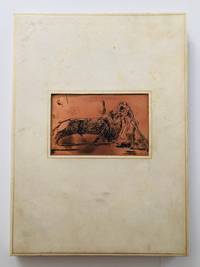
19237040ABMünchen, Verlagsanstalt D.& R.Bischoff, 1923. 33,5 : 24,5 cm. 2 Blatt, 21 signierten Original-Radierungen von Willi Geiger. Original-Ganzpergament-Mappe mit in den Vorderdeckel eingelegter Original-Kupferplatte, Deckelfileten und Rückentitel in Gold, Kassette, sign. Enders.
192317688ABMunich, Verlagsanstalt D.& R.Bischoff, 1923. 33,5 : 24,5 cm. 2 hojas, 21 grabados originales firmados por Willii Geiger. Carpeta original der pergamino, placa original grabada montada en la portada, lomo con titulo en oro, filettes, estuche original, firmado Enders.
192315073ABMunich, Verlagsanstalt D.& R.Bischoff, 1923. 33,5 : 24,5 cm. 2 leaves, 21 signed original etchings by Willi Geiger. Original-vellum portfolio, original engraving plate mounted on front cover, gilt title on spine, filettes, slipcase, signed Enders.
192315073AB1923. Munich Verlagsanstalt D.& R.Bischoff 1923. 335 : 245 cm. 2 leaves 21 signed original etchings by Willi Geiger. Original-vellum portfolio original engraving plate mounted on front cover gilt title on spine filettes slipcase signed Enders. One of only 21 copies of the deluxe edition A printed on Shidzuka Japan. - All copies of this edition are very rare each copy is unique because of the mounted original engraving plate in this copy it is plate no. 5. All etching singed by Geiger. Very striking images which deteced that the artist was very engaged with bull fight. The 'Stierkampf' bull fight is one of the most impressive series of the artist. - A mint copy only front board with a few minor stains. - See Thieme/B. XIII 346 1912. hardcover
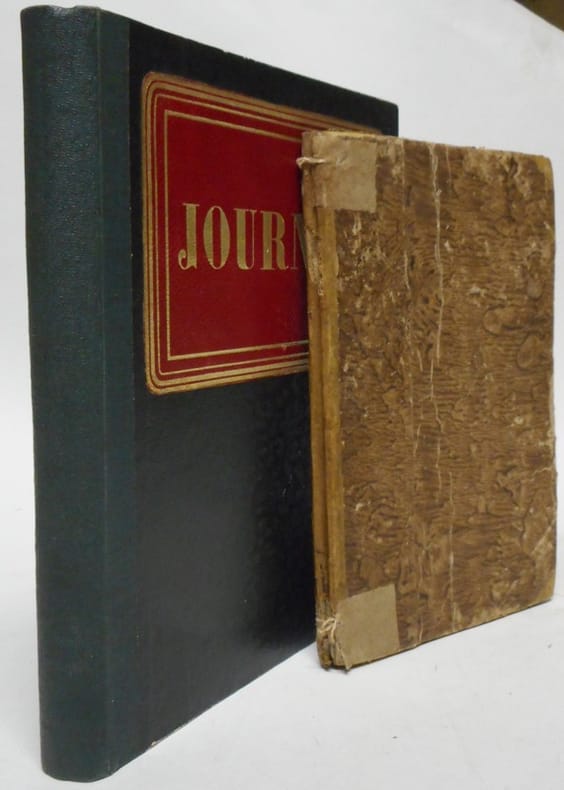
222702S.l., s.d. (1807-1812) petit in-8, [2] ff. n. ch. (initium : Journal commencé le 2 mars 1807. 1807, 1808, 1809, 1810, 1811 ; un f. vierge), 80 pp., couvertes d'une écriture fine, très lisible (environ 25 lignes par page), quelques biffures et corrections, certains paragraphes entièrement rayés, [7] ff. n. ch. d'un autre jet, contenant des ajouts pour 1812, ainsi qu'une table, demi-vélin rigide à coins, dos muet (reliure de l'époque). Restaurations aux coiffes, coupes abîmées.
174942696Valladolid, , 1749. Manuscrit in-4 (30,5 x 21 cm) à 20 lignes par page de 430 ff., maroquin fauve, dos à nerfs richement orné à petit fer dont deux pièces mosaïquées de maroquin vert, sur les plats inscriptions en lettres capitales, large encadrement doré à petit fer, écoinçons et ornement central doré sur médaillon ovale de maroquin vert mosaïqué, tranches peintes d'un décor de fleurs, dorées et ciselées, fermoirs ciselés en laiton (reliure de l’époque).
Obra adoptada por texto por el Consejo de Instruccion Publica para los establecimiento de 2a ensenanza, dessiné et lithographié par E. Massinger, 1 vol. petit in-folio reliure moderne demi-percaline bordeaux, Madrid, 1852, Imprenta de A. Vicente (texte), Lita. [ litografia ]de Bachiller (cartes), 1 f. (page de titre), 104 ff. avec une alternance de page de texte et de cartes rehaussées en couleurs, et 1 grande carte dépliante de l'Espagne en couleurs. Les cartes sont datées de 1849 à 1852 (1853 pour la grande carte dépliante). Très rare atlas espagnol destiné à l'enseignement secondaire, décrivant les 49 provinces et îles espagnoles, ainsi que les possessions espagnoles en Afrique, aux Philippines, aux Carolines et aux Mariannes, à Cuba et Porto Rico. Bel exemplaire (minimes frott. sur reliure et petite déchirure sans atteinte à la gravure sur la grande carte dépliante), très rare ainsi parfaitement complet et en bel état. L'unique exemplaire répertorié sur Worldcat, celui de la Henry Charles Lea Library (University of Pennsylvania) qui provient de la propre bibliothèque du célèbre historien américain et grand spécialiste de l'histoire espagnole, ne semble pas contenir la grande carte dépliante en couleur de l'Espagne, bien présente dans notre exemplaire. Rare atlas describing the 49 Spanish provinces and islands, and the Spanish possessions in Africa, the Philippines, the Carolines and the Marianas, Cuba and Puerto Rico. Fine copy (minor rubbings on binding, a small tear without damage to the engraving on the large folding map). The only copy listed in WorldCat, one of the Henry Charles Lea Library (University of Pennsylvania), from the library's of the famous American historian and leading scholar in Spanish history, did not appear to contain the large Spain folding map in color, that can be found in our copy. Not in Phillips / 52 cartas geograficas (con los limites coloreados) que contienen por orden alfabetico las 49 provincias de Espana, islas de Cuba y Puerto-Rico, posesiones espanolas en Africa, é islas espanolas Filipinas, Carolins y Marianas, una grandes mapa en color : "Carta general de Espana con todas sus posesiones de Ultramar é islas adyacentes en 1853" (full original colors), y 52 hojas de testo esplicativo. Muy raras. La única copia que aparece en WorldCat, la de las colección de Henry Charles Lea (University of Pennsylvania), que proviene de la la propia biblioteca del famoso historiador estadounidense y especialista de la historia española, no contiene el gran mapa de colores de Espana (presente en nuestra copia). Français
1625154780Madrid. a ultimo de Octubre de mil y seiscientos y venticinco años "last day of October" 1625. Signed royal ordinance for the registration of seamen Important printed state paper signed by the king - "Yo El Rey" - Philip IV 1605-1665 setting out instructions for a large scale registration of sailors in the Spanish royal navy addressing the always pressing issue of impressment. Also signed by one of the king's leading military advisers. Philip is probably best remembered as "a peerless patron"; at Buen Retiro his pleasure palace on the outskirts of Madrid "he was surrounded by a brilliant circle of poets and playwrights - including Lope de Vega Calderón de la Barca Antonio Hurtado de Mendoza Francisco de Quevedo y Luis Quiñones de Benavente" the central hall el Salón de Reinos decorated by his court painters headed by Velásquez. Diccionario Biográfico electrónico. He was somewhat less apt in his policy decisions failing in his efforts at domestic and military reform too reliant on the junta system implemented under his favourite and chief minister Gaspar de Guzmán conde de Olivares. Philip was notably more forward thinking and successful in his handling of the navy to which he applied a "sensible pragmatic approach" Goodman p. 32. Throughout his reign there was no "weakening of the importance attached to naval forces" ibid. p. 156 and the Junta de Armadas was the only such committee to survive the eventual fall of Olivares untouched. The present ordinance created regional administrative officials responsible for the initiation of a registry of mariners and the issue certificates to pilots masters gunners carpenters and other naval tradesmen who for their part were ordered to provide detailed personal information. This data was to be recorded in a ledger a copy of which should be sent to the War Council and regularly updated. Failure to comply could result in a severe fine and two years of exile. The directives were to be implemented "generalmente en estos Reynos in all the territories of the Spanish Empire" thus including Spanish possessions in America and Asia. The creation of this matricula - "a register of all seafaring folk designed to provide central control over their movements and availability for armada service" - is one of the distinctive features of early seventeenth-century Spanish naval organization "Nothing like them would appear anywhere else in Europe until Colbert's famous classes maritimes of the 1660s. Madrid's compulsion would arouse resistance on the coast" ibid. pp. 192-3. The countersignatory Bartolomé Aguilar y Anaya c.1563-c.1630 was an influential military administrator under both Philip IV and his father. He entered the service of Ãlvaro de Bazán marquis of Santa Cruz at the age of 17 taking an active part in his patron's conquest of Portugal his campaigns in the Azores and in the preparation of the Great Armada of 1588. On the death of Santa Cruz his rise continued under the protection of the secretary of war Andrés de Prada who appointed him first officer of the sea section of the war secretariat "primer oficial en la sección de Mar de la SecretarÃa de Guerra" in 1594 DB-e. In 1600 he was granted the formal title of royal secretary and in 1606 himself became secretary of war; during the second decade of the 17th century he was secretary of the board of galleys directing the supply of ammunition for the expedition to Brazil in 1625 at which time he had assumed one of the prized seats on the council of war and in the 1630s he was a member of the highly influential Junta de Armadas. Folio pp. 3 on a single bifolium. Printed order with the king's signature countersigned by his secretary of war Bartolomé Aguilar y Anaya manuscript docketing on the first page. Modern marbled paper wrappers. Light toning some marginal fox spots but overall very good. David Goodman Spanish Naval Power 1589-1665. Reconstruction and Defeat. 1997. unknown
1600WRCAM34111Madrid 1600. 4pp. Folio. Later plain wrappers. Minute dust soiling. Very good. In a half morocco and cloth box. Four contracts between the sundry kings of Spain and certain conquistadors. "The agreements are with Rodrigo de Bastidas of Santo Domingo for the colonization of the Province and Port of Santa Marta in 1524 with Don Gonzalo Ximinez de Quesada in 1569 for the discovery of the New Kingdom of Granada with Captain Don Diego Fernandez de Cerpa in 1568 for the discovery and colonisation of the province of La Guayana Caura and New Andaluzia and with Panfilo de Narvaez in 1526 for the discovery of Florida" - BIBLIOTHECA AMERICANA. The terms of the agreements generally discuss rights granted by the Crown to the relevant explorer and stipulate what the explorer is required to provide the Crown in return. Gold and other precious metals top the lists. When originally catalogued by Maggs the official signature at the end of the last agreement was attributed to Baltasar Lopez de Castro; but on the original cataloguing present with the text a later hand has suggested Antonio Fernandez de Castro. <br> <br> Good evidence of the terms under which the conquistadors operated in the New World including Florida. Extremely rare. Not on OCLC nor in Palau or Servies. MAGGS BIBLIOTHECA AMERICANA I:109 this copy. MAGGS BIBLIOTHECA AMERICANA VI:177 this copy. hardcover books