34 274 résultats
Complet en 3 tomes & 1 atlas; [vi] 566 + 520 + lxiv,204 pp., Atlas: 2pp. + 9 grandes cartes dépliantes, les 3 tomes de texte sont en brochure originale, l'atlas (35cm.) est cartonnée avec dos en percament, peu de rousseurs, bel ensemble, peu commun
172924869La Haye The Hague Netherlands: Isaac Van Der Kloot 1729. Published in French; The first large history of medicine; The aged textblock is tight and overall well preserved; Some occasional foxing browned pages and the remnant of a bookworm track along the bottom margin of the first 20 pages not affecting the text; Hand-marbled endpapers moderately faded; Bound in very edge worn and scuffed full calf; Worn at the spine extremities board corners; Five raised bands gilt spine title; 820 pages plus index."In this first modern history of medicine we find embodied the new methodology of science with its emphasis on first-hand observation and experience." - From Daniel LeClerc's: "Histoire de la Medecine" by Genevieve Miller Ph.D.; Dr. Miller's four page essay in English is laid in; Garrison & Morton 6379. Nouvelle Edition. Full Leather. Very Good. Illus. by Frontispiece Plus 8 Plates and One Folded Table. 4to - Over 9 " -12" Tall. Hardcover. Isaac Van Der Kloot Hardcover
2020x-036744013XTaylor & Francis 2020. Hardcover. New. 21 new edition. 340 pages. 9.21x6.14x0.87 inches. Taylor & Francis hardcover
2019x-1857439732Taylor & Francis 2019. Hardcover. New. 20 edition. 329 pages. 9.50x6.25x1.00 inches. Taylor & Francis hardcover
2022x-1032249692Routledge 2022. Hardcover. New. 23 edition. 334 pages. 9.18x6.12x0.81 inches. Routledge hardcover
very good copy bound in full blind stamped Italian vellum.Frontispiece illustration. Title in red and black. [23], 624 pages, 235 copper engraved illustrations of Roman coins. "Bonne edition." - Brunet IV, page 151; Lipsius, page 293. An important reference for Roman coinage from Pompeji and Heraclium. First published by Plantin in 1579 (without the illustrations), the work was later edited by Francesco Mezzabarba of Milan in 1683. Adolph Occo was a physician, philosopher and archeologist who established helped Roman numismatics as a field. This work was "one of the landmarks in the evolution of numismatics into a science." - Dumbarton Oaks. Titel in Rot und Schwarz. Mit gest. Frontispiz, gest. Porträt, gest. Titelvignette und 235 gest. Münzabb. mit Kaiserporträts. 15 Bll., 624 SS. Folio. Kalbldr. d. Zt. über 7 Bünden mit goldgepr. Supralibros auf Vorderdeckel. Von Francesco Mezzobarba Birago und Filippo d Argelati neu herausgegebene und überarbeitete Ausgabe der Geschichte der kaiserlich-römischen Porträtmünzen des Pharmazeuten und Numismatikers Adolf Occo (1524 1606).
Edinburgh, 1893. Letter Book Archive of draft documents made by the law firm Campbell, Martin & Boswell, for private estates and business agreements, neatly preserved in a custom binding, featuring little known details relating to the Dalquharran Castle and Kennedy estate, Scottish investments and links to Australia, and a fascinating connection to the renowned poet Robert Burns by way of a lease made with his descendent for a mansion estate which he, too, had personally visited. 8vo. Approximately 170 documents, most in manuscript and some in typescript, 1166 pages combined, with a scant few integral blanks, plus unpaginated manuscript index listed alphabetically by document type. Very large volume measuring 23 x 35 x 9 cm (WxHxD) and weighing 10 pounds. Quarter calf over brown cloth boards labelled in gilt to spine, original marbled endpapers. Bookbinder's label to front pastedown (Caldwell Brothers of Edinburgh). Very good condition, an excellent depository volume of legal and historical interest. The firm Campbell, Martin & Boswell, consisted of three solicitors, each with the title and privileges of "Writers to the Signet", John Douglas Boswell, W.S.; Patrick William Campbell, W.S.; and Francis John Martin, W.S., the latter of whom became a Fellow of the Royal Society of Edinburgh in 1892. Their office was at 1 North Charlotte Street in Edinburgh, which was the same address as the Royal Bank of Scotland, and situated very near to Charlotte Square. Scots law and legal proceedings of the late nineteenth century, much of which differ today, are well illustrated in this archive of original working documents executed by accomplished patrician lawyers representing some discriminating and aristocratic clients. Many of the documents deal with property conveyance and estate matters, and represent traditions no longer observed, including the obsolete " Trust Disposition and Settlement" procedure for claiming an inheritance. Other documents include assignations, land conveyances, bond and disposition in security, deeds of assumption and discharges, estate inventories, a search for deeds with the Register of Sasines, leases, loan proposals for purchasing commercial space in Edinburgh, records of monetary investments in Highland Railway (HR), Jamaican plantations, property to let in Scotland, Australian banks, and so forth. So exclusive and intertwined were the upper class and wealthy, perhaps not large in number, but surely powerful in society, some interesting genealogical and business connections can be made from examining these papers. Many clients are also relations to the solicitors who often acted as trustees. In one case, we find a multi-generational connection between the Campbell and Burns families, beginning with the Jamaica sugar plantation owner Patrick Douglas and Scotland's celebrated national poet Robert Burns (1759-1796). In addition, these documents shed light on the leasing history of the Dalquharran Castle in South Ayrshire, which included hunting rights for at least one resident, as well as the Kennedy family's monetary investments in Australia. Interesting to note, one of the lawyers from this firm, Mr. Campbell, is related through marriage to the castle's then most recent owner, Mr. Francis Thomas Romilly Kennedy (died in 1892). Some items of special interest: • A twenty page lease agreement was issued to a Glasgow coalmaster named Robert Burns (1844-1896), who was the great-great-grandson and namesake of the famous poet and lyricist Robert Burns (1759-1796) - who had visited the very same Mansion House of Garrallan in his day, being a friend of its proprietor at the time, Dr. Patrick Douglas. A fascinating and detailed document, the lessors were concerned with mining royalties, minerals specifically deemed as belonging to the Marquis of Bute, and minerals raised at the mansion house. [Garrallan was owned by the Campbell family until 1676. The Douglas family followed but it became extinct in the male line. Dr. Patrick Douglas, who died 1819, also owned property in Jamaica and in 1786 he offered Robert Burns a position as a bookkeeper in Port Antonio, but the poet declined. Burns was a visitor at Garrallan. Jane Douglas married Hamilton Boswell and this family retained it until 1914 when it was sold to the Stevenson family of Changue, who still own the property.] • Another fascinating document is headed "Notes on Titles of Charlotte Square," now a World Heritage Site situated in Edinburgh. In this we find reference to feudal tenancy and particulars of construction. Excerpts from the document: "Charter by the Magistrates & Town Council of Edinburgh in favour of Alexander Stevens dated 1st June 1803... no buildings are to be erected... on the foresaid back ground... that the area of the square within the line of the street ways was to become a common property for the accommodation pleasure health or other convenience of the several feuars round said square... For the lot of ground in Charlotte Square X the sum of £6. 18/4 3/12 and further paying the sum of £14. 18/4 3/12 upon the entry of each heir and singular successor or disponee to said Lot Houses or Tenements built thereon... For the foresaid piece of ground on Young Street the sum... Disposition of Sir George Hope to Margaret Kyle of Binghill dated 2nd April 1818. Disposition & assignation of the said Rev'd Dr. James Kyle in favour of Alexander Russell dated 8th January 1868. Disposition Settlement by the said George Bruce [Factor and Law Agent, W.S.] dated 10th July 1891 & recorded in the Books of Council Session 27th July 1892." • At least 8-10 documents pertain to Francis Thomas Romilly Kennedy (1842-1892) and the Dalquharran Castle which he inherited in 1879 and immediately expanded. The castle, which was built for his grandfather and featured a round bastion tower with a drawing room, piano nobile, and a library above, and an exquisite top-lit spiral central staircase, was extended from 1880-81 by Francis Thomas Romilly Kennedy, to accommodate his wife and bedrooms for their nine children. The work was completed at great expense, leaving the Kennedy family almost bankrupt. The family is known to have left Dalquharran for alternative lodgings, and by 1890 they had leased the castle and its lands as a hunting and fishing estate, as seen in this volume. Examples of the papers found herein include: An Agreement of Lease of the Dalquharran Castle as a furnished residence, "excepting the Strong Room retained by the proprietor", to James Paterson of Milton Lockhart, and includes surrounding lands with permission for shooting small game in accordance with the Ground Game Act of 1880. On 24 July 1893, the Scottish Union & National Insurance Company confirming notice of an "assignation" which transfers the estate of Francis Thomas Romilly Kennedy, to his second son "John Campbell Kennedy of the Royal Navy." A two page document which itemizes and places monetary value on the "Additional Inventory of the Personal Estate... of the late Mr. Kennedy", including the surrender value of a life insurance of sorts, from which are deducted debts and funeral expenses. A list of debentures, borrowed from institutions in Australia, Canada, and Oregon, also documents relating to his investments with the British and Australasian Trust and Loan Company. Matters concerning his executrix and widow Eliza Barbara Colina (née Campbell) Kennedy. • An agreement permitting a John Ernest Orr to manufacture and sell a certain steam trap which was patented in 1892 by a millwright named John Mackie. As members of the elite society of Scottish solicitors, the Writers to the Signet, and thus holding special signing authorities and privileges, the firm of three attracted some notable clients, some of which were long-standing clients from generations past. A cursory gander through the volume finds these examples: • William Jardine Herries Maxwell (1852-1933), a Liberal Unionist politician in Scotland. Maxwell was elected at the 1892 general election as the Member of Parliament (MP) for Dumfriesshire in 1895, but lost it very narrowly when his Liberal Party opponent had a majority of only 13 votes. He regained his seat in 1900, but stood down at the 1906 general election. • William Caven Lockhart-Mure of Livingston in the Stewartry of Kirkcudbright, Lieutenant in the 4th Bombay Cavalry (Poona Horse), Indian Army, who later rose to the rank of Major, and died in died in 1913. [With a lease herein the lieutenant agreed to a term of five years, letting and maintaining the Livingstone House, gamekeeper's house, garden and orchard in Kirkcudbright. It was owned by Colonel John Stewart (died 1726), a Scottish professional soldier who served in the Scottish Army and, after the Union with England, in the British Army, who also held a seat in the House of Commons of Great Britain from 1708 to 1715, and who had inherited the property from his father. • James Oswald (1779-1853), an influential merchant and Member of Parliament (MP) for Glasgow from 1832 to 1837 , who inherited the estate of his cousin Richard Alexander Oswald (1771-1841), a Scottish Liberal Party politician who sat in the House of Commons from 1832 to 1835. [Again a family connection, his son, also named Richard, married Lady Mary Kennedy.] • Alexander Oswald (1811-1868), a Conservative Party politician and Member of Parliament (MP) for Ayrshire from 1843 to 1852, as well as his father Richard Alexander Oswald, a Glasgow merchant. • Robert Haldane Scott, a Scottish attorney in Jamaica who filed returns for slaves by plantation owners in Trelawny, and his daughter Eliza Scott who married Reverend Edward Holland of New South Wales and died intestate June 1890. [A detailed document assigns a woman named Margaret Jane Wakeford, resident of Falmouth, Jamaica, as Power of Attorney for the estate of the late Eliza Scott.] • William Hume, technical chemist and innovative instrument maker, who was very active in the 1880s and 1890s designing and manufacturing magic lanterns, glass lantern slides, oxy-hydrogen lime-light apparatuses, a cantilever enlarging apparatus, a half-plate camera, rapid rectilinear lenses, and other photographic equipment, from his shop at 1 Lothian Street in Edinburgh. [A loan proposal herein indicates that he also purchased the property of 31 Lothian Street.] • Annabella Alexandrina Campbell Boswell (1826-1914), gentlewoman, born at Yarrows, Bathurst Plains, New South Wales, having a maternal lineage linked to the Campbells. She was a prolific diarist, horsewoman, skilled watercolourist and pianist. In 1849 Annabella met Patrick Charles Douglas Boswell, a free settler from Ayrshire, Scotland, accountant for the Bank of New South Wales (later becoming manager), who was related to James Boswell the biographer, and presumably also Mr. Boswell of this firm. Together Annabella and Patrick returned to Scotland in 1865, where Patrick had inherited the family estate in Ayrshire. • The only actual "will" recorded here is that of Bengal Army Major General Robert Farquhar Webster's widow, Janetta Annan Webster (née Dewar), which bequeaths the estate to her son, and permits the trustee to invest funds and heritable securities into in stocks of Great Britain, any British Colony or Dependency, until such time as he reaches the age of maturity. [Her husband was educated at the Edinburgh Academy before joining the British Army in India in 1843. He retired in 1878 as a Major General in the Bengal Staff Corps.] • Major Archibald Hume of Auchendolly and Spitalside, born 27 Dec 1843, and recognized by the Society of Antiquaries of Scotland for having presented the museum with a bronze enamelled harness ornament of British Celtic origin. • William Fullarton of Fullarton (1754-1808), a Scottish soldier in the Bengal Staff Corps who participated in the Second Anglo-Mysore War, a statesman, agriculturalist, author, and son of a wealthy Ayrshire gentleman for whom he was named - William Fullarton of Fullarton. • Reverend Samuel Smith, attached to the church and parish of Borgue in the Stewartry of Kirkcudbright. • Lieutenant General Sir Thomas Maitland (176-1824), a British soldier who served in St. Domingue, and colonial Governor of British Ceylon. Historical Scottish minutiae through and through, with over 170 documents to explore, the opportunity of finding little-known information or unravelling early questions of lineage and heritable rights is indeed great! Dalquharran Castle: In the spring of 1819 Thomas Francis Kennedy (1788-1879) of Dalquharran Castle and Dunure, Ayr, (Whig aristocrat and commissioner of woods, forests, land revenues, works and buildings), succeeded his estranged father to the encumbered Ayrshire estates. The principal properties were the Dalquharran Castle near Dailly, and the coastal estate of Dunure, situated between Dalquharran and Ayr. He died at Dalquharran in 1879 and was succeeded by his only child, Francis Thomas Romilly Kennedy (1842-1892). At great expense Francis Thomas Romilly Kennedy made expansions to the mansion, leaving the Kennedy family almost bankrupt. Recent studies suggest that external construction work was finally finished in the summer of 1890, relating this to a note made by Kennedy on documents bearing this date, and existing records regarding the exterior paving and roofing work being completed. The family is known to have left Dalquharran for alternative lodgings, and by 1890 they had leased the castle and its lands as a hunting and fishing estate. The castle had several tenants over the next 45 years, whilst staying in the hands of the Kennedy family. Eventually, the castle and the estate were put up for auction. It was bought by a Timber Merchant from Troon, who set about stripping the timber from the estate and who leased the castle to the Scottish Youth Hostel Association. Dalquharran remained a youth hostel until the Second World War, when the Langside School for the Deaf, evacuated from Glasgow, moved in. During the war, the Castle and lands were sold to one John Stewart, a produce merchant from Girvan, who later moved into Dalquharran with his family, and farmed the estate. The Stewart family co-habited the house with friends, but still the house proved too large and expensive to maintain, and was abandoned. The castle was inhabited as recently as 1967, but was unroofed to allow the then owners to avoid payment of high tax rates. It is now a ruin, with only the masonry shell remaining intact. The Society of Writers to Her Majesty’s Signet is a private society of Scottish solicitors, dating back to 1594 and part of the College of Justice. Writers to the Signet originally had special privileges in relation to the drawing up of documents which required to be signeted, but these have since disappeared and the Society is now an independent, non-regulatory association of solicitors. The Society maintains the Category A listed Signet Library, part of the Parliament House complex in Edinburgh, and members of the Society are entitled to the postnominal letters, WS. Wills/Testaments and Inheritance (Scotland): Heritable property, also known as immoveable or 'heritage' property and real estate, included land and buildings. Up to 1868 real estate was automatically inherited by the eldest son (the law of primogeniture) or daughter if there was no son unless there had been a specific disposition or bequest. The law of primogeniture applied to heritage until 1964. This meant that an eldest son might not appear named in the will. Likewise, a wife, who would automatically get the widow's part, may not be mentioned. The right to inherit was established by Retours of Services of Heirs or by a Trust Disposition and Settlement ('deed of settlement'). The actual register of the transfer or other change in ownership was recorded in Sasines. Manuscript
8vo. 159 pages, plus 1 page notice by the Treasury at rear, bound in contemporary cottage style panelled calf, five raised bands, gilt tooling and titled to spine. With a nineteenth century armorial bookplate to front pastedown. Some wear to boards with minor loss to foot of spine, otherwise in very good condition, internally bright and crisp, a pleasing early work. [Palgrave]: "With a view to the recoinage of 1696, he was requested to undertake an investigation into the state of the currency, the results of which were published with the title A Report Containing an Essay for the Amendment of the Silver Coins ... In this important work, while he repudiated any measure which would have the character of debasing the currency, he suggested, as a necessary measure for placing it upon a satisfactory basis, that all denominations of the silver coin should be raised 25 per cent. Lowndes had carefully examined the records of the mint and other documents, and he ably defended his position with historical arguments based upon these materials. He also maintained that the price of silver had risen to 6s. 5d. an oz., and that if the measure he proposed were adopted, persons who melted down the coin would have "less profit by fourteen pence half-penny in the crown". Further arguments he used in support of his scheme were that it would encourage the bringing of bullion to the mint to be coined, and would make the coinage "more in tale, more commensurate to the general need thereof". To meet the objection that people would lose 20 per cent on contracts already made, he maintained the scarcity of silver. He computed the amount of "weighty money" hoarded up at £1,600,000. The most famous of the replies to Lowndes' Essay was written by John Locke, and was entitled Further Considerations Concerning the Raising the Value of Money, wherein Mr. Lowndes' arguments for it in his late report concerning "An Essay," etc., are particularly examined. While the opposition accepted the views urged by Lowndes, Montagu and the government adopted those of Locke, and the recoinage on the old standard was carried on Dec. 10, 1698 [sic: actually 1695], in the House of Commons, by 225 to 114."
Extensive and complete product catalog of the German pharmaceutical and medical supply firm Mich.G.Birk GmbH & Co. [predecessor to today's BIRK Rundkartonagen GmbH & Co. KG], a highly reputable global firm established in Germany by wainwright [wagon maker] Michael Birk in 1879, designed for the private use of a single client. 8vo. 580 pages of text [double-leaf pagination tallies 290], xxxi (index), plus 20 pages colour chromolithographed frontispiece illustrations of sample labels ads - some of which are fold-outs, plus 9 pages of actual label samples mounted to the leafs. Text is complete in four languages - German, English, French, and Spanish, with the foremost leaf of proprietorship adding also Portuguese. Publisher's original illustrated binding, brown cloth titled in gilt and black lettering to front and spine, "Mich.Birk. Tuttlingen Deutschland. Katalog No.4." Occasional finger markings in the margins of five leaves only, specifically from the person who manually mounted the adhesive labels, otherwise in Near Fine condition, seldom seen complete, and in such pristine never-used condition, an exceedingly scarce volume in this state. Volumes such as this would have been issued to a specific client, for their own reference only. The following simple agreement is printed in five languages to the first leaf: "This list is to remain the property of the firm of Mich. Birk of Tuttlingen and only Mr._______ has been entrusted with the sole use of it. Reprints prohibited, will be prosecuted by law." The present volume was not assigned to anyone and remains as new, in original condition. Interestingly, the "Terms of Business" which prefaces the first section of product, is written in such a way that reveals the very personalized service offered by the owner of the firm, in spite of being an international success by this time. A pleasing repository of 1920s marketing of products from around the globe offered by the respected long-standing and leading packaging firm of Michael Birk - from a brief period when they also offered medical and surgical instruments, equipment and even laboratory furniture. It was in 1920 that Michael Birk expanded his export trade overseas and established offices in Mexico and South America, at the same time offering global distribution of products and instruments for the medical technology industry, from renowned manufacturers located in Tuttlingen, Germany. He also introduced significantly advanced offerings to his clients, such as grease-proof cardboard ointment containers, embossed colour labels according to individual customer requirements. [After the Second World War, global economics caused the firm to return its focus entirely to the development and production of packaging.] The present volume is a fine survivor of this pinnacle period in the firm's history, and an exceedingly scarce find in its pristine condition.
Visitors book for guests of the Hythe Golf Club, founded in 1894, with 78 manuscript signatures penned on 10 leafs. 8vo. Full calf binding, with impressed heraldic seal to front, raised lettering "CCW The Links Hythe" also to front, five raised bands to spine, untrimmed leafs. Volume measures approximately 21 x 26,5 x 2,5 cm. Wear to boards, front bowed slightly, otherwise in very good condition, containing some notable signatures. Members of the British monarchy's household are featured in the volume, with signatures made on 8 August 1823, including Albert, Duke of York, (later King George VI). His new bride, Elizabeth, Duchess of York (later the Queen Mother) evidently accompanied him, he signing on her behalf. Also with them, and signing in the original, was lady-in-waiting Katharine Meade, as well as the Duke's advisor Sir Louis Greig. Sir Clement Anderson Montague-Barlow, 1st Baronet, who at the time was Minister of Labour and a member of the Privy Council, also signed on the same day, as well as six others. Having just been married in April, during the summer of 1923 Albert and Elizabeth, future King and Queen of the United Kingdom, were travelling a fair bit. They first settled into White Lodge, in Richmond Park. They were spotted at the Richmond Show, and shortly after that at the Hendon Air Show. They visited Holyrood House in Edinburgh in July. Their social life was beginning on a grand scale. At the end of the season, they went to stay at Molecomb and attended the races at Goodwood. The present volume reveals a little-known and rather private event at the Hythe Links Golf Course on 8 August 1923. Among other elite visitors whose signatures are present in the volume, we find: - Antarctic explorer Herbert G. Ponting - Sir William Letts a pioneer of the British motor industry and founder member of the Automobile Association - City of London Alderman Sir Maurice Jenks, and family - Sir Samuel George Shead Esq. who was appointed one of the two Sheriffs of London in 1915 - Sir Herbert Benjamin Cohen 2nd Baronet Cohen of Highfield - Colonel J.V. Delahaye, first president of the WOSB. Manuscript
2006Atlantic-9781857433791Routledge 2006. 8. Hardcover. New. Routledge hardcover
Amsterdam, Chez Zacharie Chatelain , 1732 - Complet en 7 volumes In-8 - Reliure plein veau de l'époque (frottée)- Dos à nerfs, à caissons fleuronnés - Pièce de titre & de tomaison havane - Titre & tomaison dorés - Roulette sur les coupes - Toutes tranches rouges - Trous de vers au T. VI, sans incidence sur le texte - Correct intérieurement T. I - Frontispice, Page de titre bi-colore rouge & noire avec vignette - Epitre dédicatoire armorié à Son excellence Mylor Comte de Chesterfield & Préface de l'Editeur, Portrait de Pufendorff & son éloge, Table Générale, LXXXIV-492 pages, Cartes dépliantes H.T. de l'Europe, de l'Espagne, de la Grande-Bretagne & de la France. T. II - Frontispice, Page de titre bi-colore rouge & noire avec vignette - Sommaire (20)-456 pages, Carte dépliante H.T. de l'Italie, T. III - Frontispice, Page de titre bi-colore rouge & noire avec vignette - Sommaire (14)-508 pages, Carte dépliante H.T. de l'Allemagne - Tableaux dépliants de la diete Générale de l'Empire, Généalogie de la Branche Ernestine de Saxe T. IV - Frontispice, Page de titre bi-colore rouge & noire avec vignette - Sommaire (32)-500 pages +1 Avertissement, Cartes dépliantes H.T. de la Scandinavie, Danemark, de Suède, etc., de la Turquie Européenne. T. V - Frontispice, Page de titre bi-colore rouge & noire avec vignette - Sommaire XXXVI-404 pages.. T. VI - Frontispice, Page de titre bi-colore rouge & noire avec vignette - Sommaire XXII-453 pages. T. VII - Frontispice, Page de titre bi-colore rouge & noire avec vignette - Sommaire XXIV-400 pages + Table Générale des Matières contenue dans les 7 Volumes - Envoi rapide et soigné - Photographies sur demande
- 1854 (S.d), In-8 (17,5x26,5cm), 540pp., relié. - Edition originale, illustrée de 21 planches sur acier Rouargue et Kernot (Saint Pertersbourg, moscou...), dont 8 rehaussées de couleurs manuellement (scènes animées avec costumes). Reliure de l'éditeur en demi chagrin brun. Dos à faux nerfs orné de caissons à multiples filets. Série d'encadrements à froid sur les plats. Tranches dores. Gardes blanches moirées. Les serpentes présentes sont passablement brunies. Ensemble frais avec quelques rousseurs éparses. Léger accroc en tête. Traces de frottement. Bon exemplaire. Fameuse relation de voyage du journaliste Charles de Saint-Julien (1802-1869), de Saint-Petersbourg au Caucase en passant par la Finlande, Moscou et Nijni-Novgorod (la Volga, la Crimée, Kazan...), suivi d'un périple de Saint-Petersbourg au Kamtchatka, par la Sibérie. [ENGLISH DESCRIPTION ON DEMAND]
- Belin-Leprieur & Morizot, Paris 1854, 17,5x27cm, relié. - Edition originale. Reliure en pleine basane noire, dos à quatre nerfs orné de caissons et de filets à froid, petites traces de frottements sur les mors, un léger accroc sur le premier plat, tête dorée sur tranches, gardes moirées. Le Caucase, Saint-Pétersbourg, la Finlande, route de Nijni-Novgorod, le Kamtchatka... Illustrations de Rouargue, Outwaith et Kernot. Rousseurs éparses. Rare. [ENGLISH DESCRIPTION ON DEMAND]
2008__185743479XRoutledge 2008. Hardcover. New. 1st edition. 930 pages. 11.22x8.54x1.61 inches. Routledge hardcover
1826biblio141<p><em>Robert Jennings. London. 1826. First edition Large Paper. Engraved title. Dedication to the Countess of Pembroke 60 tissue guarded engraved plates with accompanying text as indexed vignette. Half calf marbled boards. Spine in six compartments with raised bands gilt lettering and motifs. Top edge gilt others untrimmed. Marbled endpapers. Light variable foxing. Spotting to engraved title page. A handsome copy with historic provenance.</em></p><p><strong><em>Lieutenant-Colonel Robert Batty</em></strong><em> 1789-1848 army officer and artist Batty compiled books illustrated with plates etched by himself. He served in the Peninsular War in the Duke of Wellington's 1815 Campaign at Waterloo where he was injured in the thigh. "Following Wellington's victory Batty entered Paris with the 3rd battalion on 7 July having en route been at the storming of the fortress of Péronne on 26 June. Three days later he became a lieutenant and captain in the first guards. He served in the army of occupation in France." He was elected FRS in 1822. "Batty acted as Lieutenant-General Sir William Clinton's aide-de-camp with the 1826–7 expedition to Portugal in support of the young Portuguese queen against Spanish-backed rebels." ODNB.</em></p><p><strong><em>Provenance</em></strong><em>: Bookplate of Gerald and Carola Lenanton Bride Hall to fep.</em></p><p><em><strong>Sir Gerald Roy Fay Lenanton </strong>1896-1952. Bride Hall became the Special Operations Eexecutive secret weapons research 'Station VI' during WW2</em></p><p><em><strong>Oman Carola Mary Anima</strong> 1897-1978 Historian and novelist. Daughter of the military historian Sir Charles William Chadwick Oman 1860–1946. She married Gerald Lenanton in 1922.</em></p> Robert Jennings hardcover
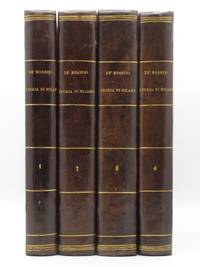
18201231I018Milano Milan: Tipografia Manini e Rivolta 1820. 1st Edition . Hardback. Printed pages: 4to xi 1 blank 428 2; 534 2; 594 2; 528. Very Good. 9 x 11.25 inches 23 x 28.5 cm. Complete four volume set. Quarter leather bindings with marbled boards. Gilt ruled compartments to spines. Good solid bindings with no cracking to joints. A little light foxing to half title pages. A few occasional light marks to text but overall in very clean condition throughout. Volume I has a small hole to rear free endpaper and old bookseller's label to rear pastedown endpaper. Volume II pages 275-278 and adjoining plate are loose but still attached. Volume III lacking one plate at p367. All the portrait plates and two of the in-text illustrations have the subject's name handwritten below in purple ink. Illustrations are as follows: Volume I: 6 plates incl. one fold-out and 9 illustrations within the text. Volume II: 12 plates 13 illustrations within the text plus large fold-out map of the Duchy of Milan with slight creasing to margin. Volume III: 4 plates of 5 and 12 illustrations within the text. Volume IV: fold-out plan of Milan plus one illustration within the text. Italian language. A comprehensive history of Milan from its foundation up to the year 1535. Overall condition is Very Good. Please Note: This is a very heavy item and international postage will be more than the standard rate - a postage supplement will be requested after the order has been placed. Please contact us for an accurate postage cost for your location. Size: 9 x 11.25 inches 23 x 28.5 cm. Tipografia Manini e Rivolta hardcover
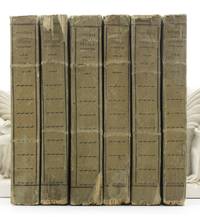
18091231I079Torino Turin: Gaetano Balbino Librai Michelangelo Morano Librai Domenico Pane e Comp. Stampatori 1809. 1st Edition . Paperback. Printed pages: 8vo. xlii 286 8; 298 8; 362 10; 306 8; 336 8; 291 1 3 Errata. Very Good. 5.5 x 8.5 inches 14 x 21 cm. Complete six volume set. Original publisher's wraps. Page edges untrimmed. Some wear to spines but all volumes are very securely bound and with all covers firmly attached. Very clean text throughout. Italian language. The history of Western Italy up to the time of Napoleon to whom this work is dedicated. An excellent unrestored example. . Overall condition is Very Good. Size: 5.5 x 8.5 inches 14 x 21 cm. Gaetano Balbino Librai, Michelangelo Morano Librai, Domenico Pane e Comp. Stampatori paperback
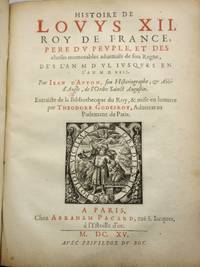
16151223E004Paris: Abraham Pacard 1615. 1st Edition . Hardback. Printed pages: 4to. 8 447 1 blank 16; 8 388 19 1 blank. Good Plus. 7.5 x 9 inches 18.5 x 23 cm. Mid 20th century blue cloth binding. Ex Columbia University Library with bookplate to front pastedown endpaper and pocket to rear pastedown endpaper. Paper repairs to inner margin of title page and final index page. Chipping to edges of first eight leaves with paper repairs to edges of title page and lower corner of following four leaves. 6cm x 3cm stain to title page continues to a lessening degree until p16. Pages are rather brittle with slight loss to upper corner of leaves Qii and Qiii. A couple of small marks text is otherwise clean throughout. A few pages have underlining in contemporary ink. Complete in two volumes bound as one. Title page in red and black with engraved printer's device L. Gaultier Incidit. Several woodcut head & tail-pieces and initials. The annals and chronicles of the reign of Louis XII 1498-1515 by the histriographer Jean d'Auton and his adviser Claude de Seyssel. Contains two monographs on the same subject. French language. A scarce complete example. Overall condition is Good Plus. Size: 7.5 x 9 inches 18.5 x 23 cm. Abraham Pacard hardcover
16701231I007Venetia Venice: Presso Combi & La Nou 1670. Hardback. Printed pages: large 8vo 12 631 1 blank. Very Good. 6.5 x 8.75 inches 16 x 22.5 cm. Contemporary English style binding in full black morocco leather. Spine ornately decorated in gilt with six raised bands red morocco title label. Boards panelled in gilt with corner fleurons double gilt fillet border. Gilt decorated board edges and turn-ins. Gilt gauffered page edges. Marbled endpapers. Wear to ends of spine and corners of boards. A few marks to boards. Slight cracking to joints but very solidly bound. Leading blank has been removed. Vignette of Minerva to title page. Several woodcut initials headpieces and tailpieces within the text. Fully collated and complete. Three pages misnumbered: 232 as 223; 486 as 476; 487 as 477. Light water stain affects some of the leaves from p545 to end of volume text is otherwise very clean throughout. Italian language. Early edition of Sansovino's history of Italian noble families in a very attractive 17th century binding. Overall condition is Very Good. Size: 6.5 x 8.75 inches 16 x 22.5 cm. Presso Combi, & La Nou hardcover
18201175E002London: Rodwell & Martin 1820. 1st Edition . Hardback. Printed pages: Large 8vo. 8 197 1. With engraved title page and 60 leaves of plates. . Very Good. 7.25 x 10.5 inches 18.5 x 27 cm. Full calf leather binding by Colnaghi & Co. London rebacked with original spine laid over. Spine has five raised bands and richly decorated compartments. Ornate gilt panelled boards gilt ruled board edges and turn-ins. All page edges gilt later marbled endpapers. Some light foxing to plates some browning and offsetting to pages facing plates. A few occasional marks but overall a very clean example. Overall condition is Very Good. Size: 7.25 x 10.5 inches 18.5 x 27 cm. Rodwell & Martin hardcover
2015__1857437748Routledge 2015. Hardcover. New. 17 edition. 883 pages. 11.00x8.50x2.00 inches. Routledge hardcover
2004SONG1857432657Routledge 2004-09-30. 13. hardcover. Used: Good. 8.46x1.67x11.18. Buy with confidence. Excellent Customer Service & Return policy. Routledge hardcover
178553456ABLeipzig,l, Dyk, 1785-1786. Ca. 17,5 x 11 cm. 334 Seiten, 348 S., (2) Seiten; 364 S., (4) Seiten. Halblederbände der Zeit mit zwei farbigen Rückenschildern und reicher Rückengoldprägung. 3 Bände.