Committee on the Alaska Earthquake of the Division of Earth Sciences National Research CouncilBiblio.com
1 282 résultats
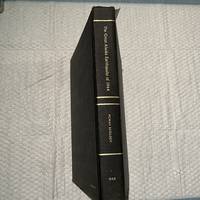
1970016271Washington D.C.: National Academy of Sciences 1970. First Edition First Impression. . Cloth Bound Boards. Near Fine. 1970 First Edition first impression. Size large quarto a heavy book 510 pages. Black textured cloth covered boards with gilt titles to the front cover and spine. Front paste-down and end-paper printed with a Map of Alaska and also the bordering part of Canada pinpointing the site of the Epicenter of the Earthquake on the map. Condition very good-near fine slight rub to corners and spine ends else fine contents very clean throughout. From the Library of Nicholas Ambraseys. Nicholas Neocles Ambraseys FICE FREng 1929-2012 was a Greek engineering seismologist. He was emeritus professor of Engineering Seismology and Senior Research Fellow at Imperial College London. For many years Ambraseys was considered as the leading figure and absolute authority in earthquake engineering and seismology in Europe. Size: 4to - over 9¾" - 12" tall <br/> <br/> National Academy of Sciences hardcover
Pages 1-66. Printed on glossy stock. Numerous black and white photos. Features: Nice Prescott Pianos ad inside front cover; My Secret (poem); Alaska; The passing of Spain; Officers of Company K (poem); Jack and Pirie; Sleighing (poem); Cupid - Song (poem); Unlukikus Loses His self-poise; The Cocheco (poem); Channing Folsom; The Country Depot (poem); Some Old Tales and Traditions of the White Mountains; Harriet Beecher Stowe (poem); Java and the colonial system of the Dutch; New Hampshire Necrology. Peripheral chipping. Contents in quality condition. A worthy vintage copy. Magazine
19011113734Washington, Government Printing Office, 1901. 4to. 98 S., 5 farb. Karten (2 mehrf. gefaltet), 8 Taf. (Dept. of the Interior/U. S. Geological Survey). OBr. m. überklebtem Rücken (Umschl. begriffen u. oben beschädigt, St. verso Titel u. mehrf. verso Karten).
32 pages. Features: Josef Puehringer creates art in crystal; The Flight of the Crystal Swallows; After the Hung - Eternal Masterpieces Number 38; David Kennerly - leading photojournalist focuses on collecting the pioneers of his profession; On to Alaska - member Alaska cruise; Decorating with your Collections; Boxes - great illustrated article; San Francisco abounds with fine collections; Unmarked. Above-average but not excessive wear. Magazine
Book shows light wear only to oversize covers: two marks at spine on front cover, a little bit of corner wear, back upper corner is turned out slightly, covers show scuffing. Binding is solid and square, text/interior is clean and free of marking of any kind. 80 pages with usually four captioned b&w photos per oversize page, with chapter introductions, usually one page. Chapters include: Voyage of the North Star, Arrival of the Colonists, Drawing for the Land, Permanent program of construction, Colonial life, Farming, Personalities and personnel, Transient camp life. Signed by the author on the title page. Rare. In 1935, the Federal Emergency Relief Administration created an experimental farming community known as the Matanuska Valley Colony as part of the New Deal resettlement plan.[1] Situated in the Matanuska Valley, about 45 miles northeast of Anchorage, Alaska, the colony was settled by 203 families from Minnesota, Wisconsin and Michigan. The Matanuska Colony was part of Franklin D. Roosevelt's New Deal plan to help move the United States out of the Great Depression. It was one of many rural rehabilitation colonies to be established by the Federal Emergency Relief Administration (FERA). Others included Cherry Lake Farms in Florida, Dyess Colony in Arkansas, and the Pine Mountain Valley Rural Community in Georgia. In 1935, Americans in rural areas of northern states were among the worst sufferers of the Great Depression. In order to alleviate some of the pressures upon these areas, the FERA commissioned applicants from the northern states of Minnesota, Wisconsin, and Michigan to colonize a tract of land in the Territory of Alaska. The administration chose these three northern states because of their climate and belief that representatives would be well suited to survive harsh elements of subarctic winters. The hope was that the colony candidates would be good farmers with the necessary skills and hardiness required for self-sufficiency in the harsh Alaskan environment. Each family was to receive a 40-acre plot to turn into farmland. From conception to realization, the project progressed rapidly. A survey was made of the Matanuska Valley in June 1934 to ascertain its agricultural viability. Some of the information that would have proven to be useful in planning the colony was not even available until after colonization had begun. Nonetheless, the following January, FERA and Department of the Interior agreed to undertake the project. A few weeks later, 80,000 acres of land was set aside for the project and, by April, the first construction workers and colonists left for the valley. According to historian Orlando W. Miller, a total of 241,332 acres were initially set aside for the colony, with an additional 7,780 acres added later on to provide more continuity between the farms. After all, it was supposed to be a colony with startup assistance from the government. In effect, they wanted to keep the farms together in a single area as opposed to being spread out across the vast region reserved by President Roosevelt?s Executive Order 6957 of 4 February 1935. Colonists began to arrive to their new home in early May 1935. There was very little ready for them as far as housing and supplies. Colonists were forced to stay on the train until transient workers could complete their temporary tent housing. Plots of land were given out through a draw, with the majority of the plots still forested. The colonists quickly got to work clearing their land in order to comply with the government contracts they signed. The Alaska Rural Rehabilitation Corporation (ARRC) was the governing body of the colony. The ARRC regulated the commissary, what was planted, as well as the activities of the colonists. It was also in charge of removing colonists who did not continue to meet expectations. Colonists who were in poor health, broke major rules, or were bad farmers could be asked to leave. There were many major issues within this administration. Rules and regulations as well as administrators were constantly changing. Within a month of their arrival, the colonists were extremely unhappy with their conditions. Currently, the town of Palmer, Alaska, which descended from the Matanuska Valley colonists, is home to many of the children of the settlers. Some of the original structures from the colony, including a church and barn, have been moved to the Alaska State Fairgrounds. Other remnants of the colony include the lush crops of the valley. Although the colony was not a booming success, it did become stable enough to provide dairy and farming. It did not significantly increase the population of the area, but it did develop the Matanuska Valley as the primary agriculturally productive region within Alaska. During the latter part of the twentieth century, the Matanuska Valley saw continued success with dairies and farming for local consumption. However, a number of factors limited their commercial success. With the decline of air and refrigerated freight costs, milk and other dairy products from the Pacific Northwest could be obtained for less than locally produced products. In addition, as the population of Anchorage grew to make it the largest city in Alaska, residents began to look towards the Matanuska Valley to build homes. Farm land became more expensive and taxes increased. As a result, many farmers sold their land to developers. (from Wikipedia)
120p., illus. SOFTCOVER. Paperback Very good condition
1915BB10-1031Washington, DC, Gov. Print. Off, 1915. original Broschur, gr.-8?,125 S., X Taf. : Ill., graph. Darst., Kt. / 125 p. : ill., plates, 2 folded maps (in pocket) Bibliothekstempel / bibliotheekstempel / cachet de biblioth?que / librarystamp
1900260ALpz., Baedeker, 1900. Kl. 8°. LXII, 268 S. Mit 10 Karten und 7 Plänen. OLn. mit Deckel- und RVg. Übersichtskarte mit kleinen Randausrissen. 2. Aufl.
51474915like new. unknown
This listing consists of pages 1-6 and 13-18 of this issue which measures 23.5"x17". Contents include: Lindbergh kidnapping news; Federal by-election results; Optimistic B.C. mining stats; Nome Alaska razed by fire; Editorial page; Ada Mackenzie medalist in Canadian golf; Business page; Cartoon page; two pages of classified ads; David Spencer Limited ads; Assorted additional vintage ads. Average wear. Above-average soiling, especially to back page. A great heirloom from earlier days in Victoria, B.C. Newspaper
This listing consists of pages 1-4 and 11-14 of this issue which measures 23.5"x17". Contents include: Kidnapping of John S. Labatt; many international stories; Saanich will hold 65th annual fair in September; Cameron Lake photo; Photo of Father Bernard R. Hubbard mountain climbing in Alaska; Editorial page; Large ad for Standard Furniture Co.; Razing of main classroom structure of Corrig College in Victoria; Vacation page; photo of Dr. William Beebe and his steel diving ball; Assorted additional vintage ads. Average wear and soiling. A great heirloom from earlier days in Victoria, B.C. Newspaper
201093579National Park Service 2010. Plastic spiral. Used - Very Good. National Park Service U.S. Department of the Interior 2010. vii 404 pages. 18 maps most folding; illustrated most color. 11 x 8.5" plastic spiral. Clean VG. National Park Service unknown
Features: The fashion industry has you under heel; The RCMP - Why the mounties have red faces - their image has been slipping; Onward to Alaska - up the Alaska Highway to the Yukon; The Road to Murder - Part 3 of 3 of the story of the murders of Gerry MacDonald and Ken Vallee on a road near Almonte; Stop killing Canada - letters from Canadians about their environment; Maggie Grant; Doug Wright's Family. Clean and unmarked with average wear. Please note that page 19 is missing - it appears to have been a story about a New York Met baseball player. Nice colour International pickup ad on back cover. Book
1998500283678P/B 1998 230 pages 12 7x19 5x2 1cm. 1998. Broché. 230 pages.
1915GC10-241Washington, DC, Gov. Print. Off, 1915. original Broschur, gr.-8? 80 S., VII Taf. : Ill., graph. Darst., Kt../ 80 p. illus., plates (part fold.) 2 fold. maps (in pocket). / Bibliothekstempel / bibliotheekstempel / cachet de biblioth?que / librarystamp
50 pages. Many reproductions of black and white photos. Printed upon glossy stock. Features: Great colour cover photo of scene inside trading post; Delta Marsh Revisited - waterfowl research station on the shores of Lake Manitoba; Eskimo Sleds - photo-illustrated article; Trading at Padlei, N.W.T. - ; Northern Portraits - photos taken along the Alaska Highway; Conflict on Puget Sound - friction between the Company men at Nisqually and the incoming American settlers, a century ago; First Short-Wave in the Arctic (part II); Filming the Northland - the making of the NFB film 'Indian Canoeman'; Klondike Memories - adventures of young Englishmen who struck it rich in the Klondike; There Go Flukes! - giant sperm whale fights for its life against killer ship ("Nahmint") and killer whales - photo-illustrated article; La Perouse on Hudson Bay - hitherto unpublished eye-witness account of the French capture of Prince of Wales's Fort and York Factory in 1782; Nice colour ad for Hudson's Bay shirts for men and women on back cover. Clean and unmarked with moderate wear. A sound vintage copy. Book
50 pages. Many reproductions of black and white photos. Printed upon glossy stock. Features: Founding Fort Edmonton; Policing the Far North - photo-illustrated article; One-page photo portrait of Sir George Simpson - the only known photo of him; "Nigger Dan" (Daniel Williams) - troublemaker at Fort St. John; Chevrons in the Sky - waterfowl article with photos; Arctic Airfield Survey - Craig Harbour, where the most northerly airport in the British Empire was surveyed in 1922; Summer at Temagami - photos with text; English River Hermit - An Indian named Mandayoh (stranger) lived 30 miles from the Trans-Canada Air Lines' field at Pagwa River; Through the Fjiords of British Columbia - photo-illustrated article with photo of the Union Steamship liner 'Cardena'; Northern Salvage - Claud K. Jones located sunken Canol machinery at the bottom of Great Slave Lake - fascinating photo-illustrated article describes how huge tracked vehicles were hauled up through the ice; Running the Alaska Boundary - great article with photo of Thomas Riggs and Jack Craig proudly displaying the flags of their countries and universities after setting the final point of the Alaska-Yukon boundary on the shore of the Arctic Ocean. Photos of Eskimo tobacco substitute Atamaoya being harvested and smoked. Unmarked with average wear. A sound vintage copy. Book
50 pages. Many reproductions of black and white photos. Printed upon glossy stock. Features: Winnipeg and the HBC; The North Magnetic Pole; Early Western Paintings; New Light on Hearne; Royal Road to the Yukon - the Alaska Highway; Early Days in Winnipeg; Grassy Narrows - photo study; Consul Taylor of Winnipeg - part 2 of an article on James W. Taylor, U.S. Consul at Winnipeg from 1870 to 1893; Iron in Labrador - illustrated article; Expeditions to the Arctic - Part 2 of 3 listing the various expeditions to the Canadian Arctic, this part covering the years 1800-1860; Nice colour ad for Hudson's Bay Point blankets on back cover. Clean and unmarked with moderate wear. A sound vintage copy. Book
(42)p. + Frontis and one illustration. Age stained. Book label of The Norman Remington Co., Baltimore on rear paste down. 16mo. 17 cm. Original yellow stiff paper boards, soiled. Front board decorated with illustration by Hogarth, Jr. (Rockwell Kent). First copyright 1921 by Vanity Fair. A famous parody of the works of Robert W. Service. POETRY BOX1
196413901DBProvidence/ Rhode Island., Brown University Pres., 1964. 26 x 18 cm. 331 S./ 78 Blatt Abbildungen. OLeinen mit illustriertem OUmschlag., 13901D Erste Auflage. Umschlagkanten stärker berieben und stellenweise leseknittrig, insgesamt etwas angestaubt. Sonst gutes Exemplar.
197553892ABAnchorage, Ken Wray's Print Shop for The Alasca Historical Society., 1975. 4°. 8 n.n. Bl., 264 S. und 77 Tafeln. Originalbroschur. Second Edition.
197553892ABSecond Edition. Anchorage, Ken Wray's Print Shop for The Alasca Historical Society. 1975. 4°. 8 n.n. Bl., 264 S. und 77 Tafeln. Originalbroschur.
395 pages. Index. Black and white photographic plates. Fold-out map. Usual library markings. Heavily worn. A worthy reading copy. Wickersham 1479. Book
1020553022.Ghardcover. Good. Access codes and supplements are not guaranteed with used items. May be an ex-library book. hardcover
1022657267.Gpaperback. Good. Access codes and supplements are not guaranteed with used items. May be an ex-library book. paperback