28 522 résultats
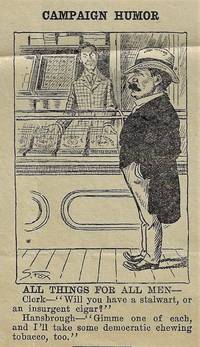
20845Broadside 21 x 11 inches printed in four columns with two cartoon illustrations. Horizontal folding creases archival tape repair to one long tear on the back all else very good. If you'd like a peek into the intricacies of North Dakota Republican Party politics leading up to the 1908 election look no further. In brief the conservative wing of the Republican Party known as the "Stalwarts" supported local political boss and Republican National Committeeman Alexander McKenzie whose "McKenzie Machine" had dominated politics in the state for more than a decade. A faction of progressive "insurgents" wanted McKenzie ousted from power. This Pro-McKenzie broadside reports on the recent activities of both factions and provides a table showing the affiliation Stalwart Insurgent or Undecided of delegates elected to attend the upcoming State Republican Convention by county. Despite the seeming domination of Stalwarts McKenzie was forced to retire later in 1908 and by 1910 the insurgents had secured control of all important state offices and both houses of the North Dakota legislature. unknown books
20845Broadside 21 x 11 inches printed in four columns with two cartoon illustrations. Horizontal folding creases archival tape repair to one long tear on the back all else very good. If you'd like a peek into the intricacies of North Dakota Republican Party politics leading up to the 1908 election look no further. In brief the conservative wing of the Republican Party known as the "Stalwarts" supported local political boss and Republican National Committeeman Alexander McKenzie whose "McKenzie Machine" had dominated politics in the state for more than a decade. A faction of progressive "insurgents" wanted McKenzie ousted from power. This Pro-McKenzie broadside reports on the recent activities of both factions and provides a table showing the affiliation Stalwart Insurgent or Undecided of delegates elected to attend the upcoming State Republican Convention by county. Despite the seeming domination of Stalwarts McKenzie was forced to retire later in 1908 and by 1910 the insurgents had secured control of all important state offices and both houses of the North Dakota legislature. unknown
2007109938Gallimard/Fondation Dina Vierny-Musée Maillol, 2007, in-4°, 223 pp, très nombreuses photos en noir, index des photos, broché, couv. illustrée à rabats, bon état
1977BOOKS062234ICanaan NH: Phoenix Publishing 1977. HC. fine blue cloth spines hardcover in very good slipcase. B&W illustrations. ISBN 091401644X WEBSTER'S HISTORY OF HUDSON NEW HAMPSHIRE 1673 - 1913 Facsimile of the original edition published in 1913 648pp; and ISBN 0914016458 TOWN IN TRANSITION: HUDSON NEW HAMPSHIRE 1913-1977 233pp. Phoenix Publishing unknown
1975170307-MG3Webster Groves MO: The City of Webster Groves Missouri 1975. very good hardcover with dust jacket. . First Edition. Hardcover. Very Good/Very Good. The City of Webster Groves, Missouri Hardcover
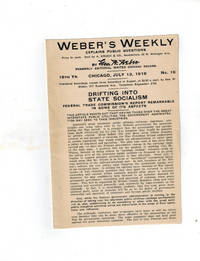
1918004054Chicago: Weber George W. 1918. Number 16 16th year of Weber's publications. One PageFolded to make a 4 page pamphlet. Faint fold Else Fine. Scarce bit of early Chicago ephemera. . First Edition. One PageFolded. Near Fine/No Jacket As Issued. Weber, George W. Paperback books
22p. Illustrated with photographs. 8vo. Original printed wraps. Scarce. SCIENCE BOX 3
16p. + Two full page photographs. 8vo. Original printed wraps, slightly worn. Quite scarce. SCIENCE BOX 3
199018048The Kingswood Press. Very Good with no dust jacket. 1990. First Edition. Softcover. VERY RARE Complete set of four 4 card covered volumes showing light shelf wear minor edge and corner wear. Clean bright and tight. Volume One covers Public Places; Volume Two covers Depots Mills & Shops Homes - North Section; Volume Three covers Homes - Center and South Sections Getting Around Weare Mystery Section; Volume Four covers East Weare. All contributor's signatures in Volume One. ; Signed by All Authors . The Kingswood Press paperback
198933358Weare Town Historical Society. Very Good with No dust jacket as issued. 1989. First Edition. Softcover. A clean saddle stapled booklet showing light shelf and edge/corner wear some soiling/discolorage and rubbing to card covers. Read descriptions carefully. Avoid GLASSFROGBOOKS ERGODOBOOKS MORE BOOKS IRISH BOOKSELLERS PRO QUO/BAYSIDE BOOKS BOOKSPLEASE RIA CHRISTIE DISCOVER BOOKS BOOKS2ANYWHERE BOOKS EXPRESS CHIRON MEDIA! These "Booksellers" have no books of their own. they buy honest booksellers' books upcharge you and have no idea what the book is really like. Support your local and small bookstore owners! ; Signed by Author . Weare Town Historical Society paperback
200274368Washington DC: United States Department of Defense Defense Threat Reduction Agency 2002. This publication supersedes DTRA-AR-40H 1 July 1999. Spiral bound. Very good. xii 214 4 pages. Illustrations. References. Master Index. Distribution was limited when issued but no limitation of use is believed now to exist. A weapon of mass destruction WMD is a nuclear radiological chemical biological or other weapon that can kill and bring significant harm to a large number of humans or cause great damage to human-made structures e.g. buildings natural structures e.g. mountains or the biosphere. The scope and usage of the term has evolved and been disputed often signifying more politically than technically. Originally coined in reference to aerial bombing with chemical explosives it has come to refer to large-scale weaponry of other technologies such as chemical biological radiological or nuclear. In the Nuclear Age William Safire says Bernard Baruch used that exact phrase in 1946 at the United Nations . The phrase found its way into the very first resolution the United Nations General assembly adopted in January 1946 in London which used the wording "the elimination from national armaments of atomic weapons and of all other weapons adaptable to mass destruction." An exact use of this term was given in a lecture "Atomic Energy as an Atomic Problem" by J. Robert Oppenheimer. The Defense Threat Reduction Agency DTRA is an agency within the United States Department of Defense and is the official Combat Support Agency for countering weapons of mass destruction chemical biological radiological nuclear and high explosives. DTRA's main functions are threat reduction threat control combat support and technology development. DTRA was officially established on October 1 1998 by consolidating several DoD organizations including the Defense Special Weapons Agency successor to the Defense Nuclear Agency and the On-Site Inspection Agency as a result of the 1997 Defense Reform Initiative. The Defense Technology Security Administration and the Nunn-Lugar Cooperative Threat Reduction program office in the Office of the Secretary of Defense were also incorporated into the new agency. United States, Department of Defense, Defense Threat Reduction Agency unknown
200274652Washington DC: United States Department of Defense Defense Threat Reduction Agency 2002. This publication supersedes DTRA-AR-40H 1 July 1999. CD. Very good. CD Supersedes DTRA AR-40H 1 July 1999. Distribution was limited when issued but no limitation of use is believed now to exist. A weapon of mass destruction WMD is a nuclear radiological chemical biological or other weapon that can kill and bring significant harm to a large number of humans or cause great damage to human-made structures e.g. buildings natural structures e.g. mountains or the biosphere. The scope and usage of the term has evolved and been disputed often signifying more politically than technically. Originally coined in reference to aerial bombing with chemical explosives it has come to refer to large-scale weaponry of other technologies such as chemical biological radiological or nuclear. William Safire says Bernard Baruch used that exact phrase in 1946 at the United Nations . The phrase found its way into the very first resolution the United Nations General assembly adopted in January 1946 in London which used the wording "the elimination from national armaments of atomic weapons and of all other weapons adaptable to mass destruction." An exact use of this term was given in a lecture "Atomic Energy as an Atomic Problem" by J. Robert Oppenheimer. The Defense Threat Reduction Agency DTRA is an agency within the United States Department of Defense and is the official Combat Support Agency for countering weapons of mass destruction chemical biological radiological nuclear and high explosives. DTRA's main functions are threat reduction threat control combat support and technology development. DTRA was officially established on October 1 1998 by consolidating several DoD organizations including the Defense Special Weapons Agency successor to the Defense Nuclear Agency and the On-Site Inspection Agency as a result of the 1997 Defense Reform Initiative. The Defense Technology Security Administration and the Nunn-Lugar Cooperative Threat Reduction program office in the Office of the Secretary of Defense were also incorporated into the new agency. United States, Department of Defense, Defense Threat Reduction Agency unknown
16p. 7" 3/4 x 5" 1/4. Original printed wraps, creased in middle. Two very small ink stains on spine and front cover. Rear cover has reproductions of advertisements clipped from Sunday Newspapers showing how extensively White Mice are advertised for. Nice copy. PA PAMPH 20_15 BX4
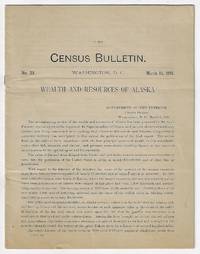
189119970Washington D.C.: Department of the Interior 1891. First Edition. Softcover. Very good. 15 pp 7.75 x 10 inches; stapled self-wrappers. Old creases from folding light handling wear; very good. Issued in advance of the full 1890 census report on the Alaska territory "in view of the extraordinary interest now being manifested in everything that relates to this remote and comparatively unknown country" this bulletin provides details on the "four principal sources of wealth" in Alaska: fur fish minerals and timber. The author a Russian-born soldier historian and newspaper editor was director of the 1890 Census for Alaska. Here after discussing the resources prominent in different parts of the territory he bemoans the fact that the land is being stripped of its bounty by outsiders with little care or compensation for the native population and other local residents: "The spectacle of so vast a tract of country being thus drained continually for twenty-three years without receiving anything to speak of in return can not probably be equaled in any other part of the United States and perhaps of the world." The solution he says is increased immigration and settlement by those who wish to develop Alaska's industrial potential but this "would appear to be still in the distant future." Wickersham 8626. Department of the Interior paperback books
189119970Washington D.C.: Department of the Interior 1891. First Edition. Softcover. Very good. 15 pp 7.75 x 10 inches; stapled self-wrappers. Old creases from folding light handling wear; very good. Issued in advance of the full 1890 census report on the Alaska territory "in view of the extraordinary interest now being manifested in everything that relates to this remote and comparatively unknown country" this bulletin provides details on the "four principal sources of wealth" in Alaska: fur fish minerals and timber. The author a Russian-born soldier historian and newspaper editor was director of the 1890 Census for Alaska. Here after discussing the resources prominent in different parts of the territory he bemoans the fact that the land is being stripped of its bounty by outsiders with little care or compensation for the native population and other local residents: "The spectacle of so vast a tract of country being thus drained continually for twenty-three years without receiving anything to speak of in return can not probably be equaled in any other part of the United States and perhaps of the world." The solution he says is increased immigration and settlement by those who wish to develop Alaska's industrial potential but this "would appear to be still in the distant future." Wickersham 8626. Department of the Interior unknown
1927VA 2677New York- London: G.P. Putnam's Sons 1927. Book. Fine. Hardcover. First Edition. blue gilt decorated cloth covers and spine blue illustrated end papers illustrated port. frontis. illustrated throughout with b & w illustrations from photographs stated first edition a clean bright copy Size: 8 Vo. G.P. Putnam's Sons, Hardcover
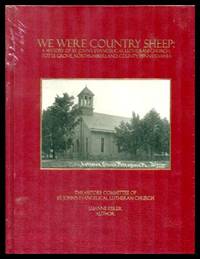
2010228383Potts Grove Pennsylvania: The History Committee of St. John's Evangelical Lutheran Church 2010. Book. Near Fine. Hardcover. First Edition. 4to. Red boards decorated in gilt on the front panel and spine; headband; black and white photograph of the church on the front cover. Still in the publisher's original shrink wrap; the publication date is only a guess. Lightly rubbed on the corners; no interior markings. Subtitled: A History of St. John's Evangelical Lutheran Church Potts Grove Northumberland County Pennsylvania. The History Committee of St. John's Evangelical Lutheran Church Hardcover
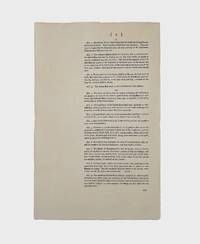
1787376957Philadelphia: John Dunlap & David Claypoole 1787. 7 1 leaves; the first two leaves in facsimile. Two contemporary manuscript corrections on fol. 3 to Art. VI Sect. 11 striking fifteen words and adding "and Representatives"; and changing the second Art. VI to VII. Folio. Unbound old folds with minor repaired tears restoration to the final leaf. Provenance: James Wilson docketed in his hand "Report of the Committee of five"; to his son Bird Wilson; to his niece Emily Hollingsworth; to her cousin Effingham B. Morris inscribed below Wilson's docketing "Above endorsement is in the handwriting of the Hon. James Wilson-so his granddaughter Miss Emily Hollingsworth tells me-Sept. 1 1886. Effingham B. Morris."; Unnamed consignor Sotheby Parke Bernet Washington D.C. December 5 1970 lot 96; • Property of a Gentleman Sotheby Parke Bernet New York April 29 1980 lot 124; Gilder Lehrman Collection deaccessioned 2026. 7 1 leaves; the first two leaves in facsimile. Two contemporary manuscript corrections on fol. 3 to Art. VI Sect. 11 striking fifteen words and adding "and Representatives"; and changing the second Art. VI to VII. Folio. • THE FIRST PRINTED DRAFT OF THE CONSTITUTION <br /> <br /> • FROM THE PAPERS OF JAMES WILSON AMONG THE PRINCIPAL ARCHITECTS OF THE CONSTITUTION AND A MEMBER OF THE COMMITTEE OF DETAIL THAT ISSUED IT<br /> <br /> • ONE OF ONLY SEVENTEEN EXTANT EXAMPLES AND THE ONLY KNOWN IN PRIVATE HANDS<br /> <br /> • PRINTED BY JOHN DUNLAP THE PRINTER OF THE DECLARATION OF INDEPENDENCE STRICTLY FOR USE BY DELEGATES AT THE CONSTITUTIONAL CONVENTION OF 1787<br /> <br /> <br /> Two hundred and fifty years ago America declared its independence from Great Britain. The Declaration of Independence however did more than simply codify a legal or diplomatic status. In Thomas Jefferson's famous Preamble the Declaration asserted in no uncertain terms that the power of government is derived from the people that the justification for government is the protection of life liberty and the pursuit of happiness and that it is the "Right of the People to alter or to abolish it and to institute new Government laying its foundation on such principles and organizing its powers in such form as to them shall seem most likely to effect their Safety and Happiness." While the Revolution began in 1776 it would culminate in 1787 with the drafting of the Constitution the document that truly established the form of government promised by the Declaration and whose own preamble harkened back to the same democratic idea that government begins with the consent of the governed: We the People.<br /> <br /> Soon after the Declaration had been passed in 1776 John Dickinson and other members of the second Continental Congress drafted the Articles of Confederation the first attempt at a government for the new nation. Passed in 1777 the Articles created a single legislative body with equal representation from each state but without a judicial or executive branch and with a weak central government which did not have the ability to tax regulate foreign or interstate commerce or otherwise compel individual states to enforce laws. The "league of friendship" or "perpetual union" it created ensured above all the independence and sovereignty of each state an understandable priority given its passage in the midst of the war to gain independence from a tyrannical king.<br /> <br /> But with the end of the war the decentralized government created by the Articles lacked the ability to pay down its war debts to effectively negotiate international treaties or trade agreements or even ensure the stability or safety of each individual state from powers foreign or domestic. In short it could not hold the fast growing nation together.<br /> <br /> Led by James Madison and Alexander Hamilton by 1786 a Federalist movement had begun calling for a convention to revise the Articles. Meeting at the Pennsylvania State House in Philadelphia in May 1787 with George Washington as the convention's president it did not take long for the delegates to agree that a revision of the Articles would not be sufficient to address its problems and that a new form of government needed to be established. On May 29 Madison and Edmund Randolph presented their plan for the creation of a national government with three branches and a bicameral legislature. Known as the Virginia Plan it outlined in fifteen draft resolutions the basic principles of a new government. Debates revisions and counterproposals ensued and by July 24 the delegates "voted unanimously to submit 'the proceedings of the Convention for the establishment of a national government' to a committee 'for the purpose of reporting a Constitution.'" Documentary History of the Ratification of the Constitution.<br /> <br /> The committee it created named the Committee of Detail consisted of five members: John Rutledge of South Carolina chairman Edmund Randolph of Virginia James Wilson of Pennsylvania Oliver Ellsworth of Connecticut and Nathaniel Gorham of Massachusetts. Two days later the resolutions and various plans were turned over to the Committee of Detail "to arrange and systemize the materials which that honorable body have collected" as the July 28 Pennsylvania Herald reported. With the oppressive Philadelphia summer heat in full force the Convention then adjourned until August 6 leaving the five-member committee the monumental task to actually draft the Constitution.<br /> <br /> The Committee of Detail sometimes referred to as the Committee of Five - like the Committee of Five which drafted the Declaration - represented a geographical cross section of the Convention with members from the south the mid-Atlantic and the northeast. There are no records of their meetings between July 26 and August 6 so the story of how the Constitution was actually drafted relies on a manuscript outline by Randolph with annotations by Rutledge manuscript notes and a manuscript draft by Wilson again with annotations by Rutledge and the final draft as printed and submitted to the convention on August 6. The end result - the first printed draft of the Constitution - laid down for the first time at a granular level the framework for the form of republican government that has survived to this day.<br /> <br /> "The Committee of Detail went considerably beyond the previous resolutions of the Convention in writing the first draft of the Constitution. The Committee incorporated provisions from the Articles of Confederation from some of the state constitutions and from plans submitted to but not accepted by the Convention . Edmund Randolph John Rutledge and James Wilson wrote and annotated successive drafts and then the Committee had the final draft set in type. After correcting the proof the draft was printed in final form the first printed document submitted to the Convention" Documentary History of the Ratification of the Constitution.<br /> <br /> The Committee of Detail draft proposed much of the language in its earliest form that would eventually become codified in the final Constitution including the supremacy clause the full faith and credit clause and the necessary and proper clause. It would also propose for the first time the idea of an electoral college a feature not found in any of the plans presented to the Convention to that point. And of course the preamble to the draft would begin with the first iteration of the famous opening words "We the People." <br /> <br /> Importantly what followed those words would change over the ensuing weeks. In the Committee of Detail draft the opening words continue: ". of the States of New Hampshire Massachusetts Rhode Island and Providence Plantations Connecticut New York New Jersey Pennsylvania Delaware Maryland Virginia North Carolina South Carolina and Georgia do ordain declare and establish the following Constitution for the government of ourselves and our posterity." This would change in the next printed draft by the Committee of Style issued on September 12 to: "We the People of the United States." emphasis added. This notable change served two ends one practical and the other symbolic. Rhode Island had refused to send delegates to the Convention so naming them among the States was perhaps an overreach by the Committee of Detail which needed to be corrected. The change however metaphorically united the individual states toward a common goal of a stronger federal government.<br /> <br /> "The committee of detail had done a remarkable job one that blended faithfulness to orders skill at borrowing and the exercise of discretion in equal amounts with several dashes of inventiveness and one of disobedience thrown in to prove that the members had minds of their own . Many familiar words of the Constitution appeared for the first time in the report of August 6. Major officers and organs of government were designated as the President Speaker Congress Senate House of Representatives and Supreme Court; engaging phrases such as 'We the People' 'state of the Union' 'privileges and immunities' and 'necessary and proper' twinkled here and there in the gloom . The committee had drawn on many sources - the resolutions of the Convention the rules of Congress the crude plans of Paterson and Pinckney the constitutions of the states especially those of Massachusetts and New York and above all the Articles of Confederation as well as various proposals to bolster the Articles - for the phrasing of their draft and the familiarity of its language must have given these reform-minded men a paradoxically comfortable sense of continuity with the past . They had provided for the internal organization of both houses of Congress worked out the exact procedures of the qualified veto defined the jurisdiction of the courts adjusted certain relations among the states and armed the President with powers of guidance of the legislature appointment of his own aides administration command ceremony and mercy. In some instances the committee had decided to make up the Convention's mind: it placed the power to impeach in the House and to convict in the Supreme Court provided that new states be admitted 'on the same terms with the old' on a two-thirds vote in both houses of Congress fixed the ratio of representation in the House at one member for every forty thousand 'inhabitants' and covered the constitutions as well as the laws of the states in the supremacy clause" Rossiter.<br /> <br /> By August 4 the Committee had completed its task. One of very few contemporary accounts of the Convention noted on that day "Their report in the hands of Dunlop sic the printer to strike off copies for the members" McHenry quoted in Farrand. The choice of John Dunlap the printer of the Declaration of Independence as the printer to the Convention was no accident. Rapport writes that more important than Dunlap's experience was his discretion: "The Convention members were pledged to strict secrecy - a pledge by and large maintained. With the printing of the Report of the Committee of Detail they were having to risk that secrecy." <br /> <br /> In partnership with David Claypoole Dunlap on August 6 printed approximately 60 copies of the Committee of Detail's draft strictly for the use of the members of the Convention in their debates. Given the importance of the document before printing the run Dunlap produced at least one proof of the document given to Edmund Randolph to correct any errors in typesetting. Not all typesetting errors were caught however most notably the misnumbering of Article VII as a second Article VI and all subsequent numbering.<br /> <br /> After receiving the Committee of Detail draft the delegates at the Convention over the ensuing weeks would debate the language and proposals within the Committee of Detail draft. Ideas like giving the federal government veto power over state laws or the establishment of Council of Revision of Executive and Judiciary representatives to veto legislation would be removed among other changes. On September 8 1787 another five-member committee would be appointed and tasked with revising and re-organizing the Committee of Detail draft. Comprised of Gouverneur Morris Pennsylvania Alexander Hamilton New York James Madison Virginia Rufus King Massachusetts and William Samuel Johnson Connecticut the Committee of Style over the course of four days would reduce the twenty-three articles of the Committee of Detail draft to seven reorganize it by branch sharpen its language and draft changes reflecting the debates. On September 12 a second printed draft would be published by Dunlap and Claypoole on behalf of the Committee of Style and reported to the Convention. It was voted on by the delegates inscribed on parchment by Jacob Shallus and signed by 39 of 55 delegates on September 17. That same day using much of the same setting of type from the Committee of Style printing Dunlap and Claypoole printed the first official edition of the Constitution.<br /> <br /> "In the two and a half centuries since the first printing press reached the hemisphere there had been nothing comparable" Rapport. <br /> <br /> Provenance<br /> <br /> Born in Scotland in 1742 James Wilson studied at the Universities of Glasgow and Edinburgh under prominent thinkers of the Scottish enlightenment including Francis Hutcheson David Hume and Adam Smith. He emigrated to Pennsylvania in 1765 in the midst of the Stamp Act disturbances and would serve as a legal apprentice to Founding Father John Dickinson. He became the head of a Committee of Correspondence at Carlisle Pennsylvania in 1774 and was a delegate to both the First and Second Continental Congresses becoming a Signer of the Declaration of Independence in 1776. After serving as a delegate from Pennsylvania to the Constitutional Convention and a member of the Committee of Detail he would go on to serve as the first Associate Justice of the Supreme Court. He would be the only person to sign both the Declaration and the Constitution and to serve as a Supreme Court Justice. <br /> <br /> "As much as any man of his day Wilson was involved in the great events out of which this nation was born. In the pre-Revolutionary agitation against Great Britain in the affairs of the Continental Congress in the development of a system of national finances in the framing of the Constitution of the United States in the early decisions of the Supreme Court he played leading roles. He made important and original contributions to American jurisprudence to political thought and to economic theory . James Wilson stood in the front rank of 'founding fathers' and has a legitimate claim to be considered one of the principal architects of our Nation" Smith.<br /> <br /> It is his role in drafting the Constitution however that would be his greatest accomplishment. "Sitting with his colleagues in this first session of the Federal Convention Wilson was certainly aware of the challenge that faced the delegates. If some members were beguiled by the idea that the inept Articles could be reshaped into an effective 'frame of government.' Wilson had no such illusion and indeed no such wish. For ten years he had been fighting in Congress and out for a strong and energetic national government with power to carry out its resolves. The opportunity was now at hand and if it was lost it would hardly come again" Smith.<br /> <br /> Wilson would be credited for the creation of a single executive and the electoral college for proposing the three-fifths compromise and for authoring the enduring first words of the preamble to the Constitution. "Wilson more than any other delegate consistently advocated placing as much power as was feasible with the people themselves-giving them as direct control as was possible over operation of the federal government's machinery.Wilson alone who wielded formidable intellect on behalf of democracy throughout the Convention is a major part of the reason why the Constitution ended up as democratic a document as it did" Pederson.<br /> <br /> James Wilson died penniless in 1798. His papers passed to his son Bird Wilson 1777-1851 a professor of divinity at the General Theological Seminary in New York who used them to publish The Works of James Wilson in 1804. Upon his death in 1851 the Wilson papers were inherited by Bird Wilson's niece Emily Hollingsworth 1815-1895 James Wilson's granddaughter i.e. the daughter of Mary Wilson 1772-1832 James Wilson's only child to marry. In 1876 and 1877 with "the help of Dr. Caspar Morris Hollingsworth selected 'a number of Manuscripts of my Grandfather James Wilson respecting various subjects'" Toler Addendum for donation to the Historical Society of Pennsylvania. These are described by Toler and Ewald and included Wilson's original manuscript draft of the Committee of Detail report.<br /> <br /> After Hollingsworth's death in 1895 additional Wilson papers passed to the Historical Society of Pennsylvania via one of her executors a distant relative Israel W. Morris. Other Wilson papers however were scattered descending to her second and third executors Thomas Montgomery and Effingham B. Morris also relatives. Toler writes: "It seems that Wilson's papers those not given to the Historical Society in 1876 and '77 were split among Emily's executors as part of her estate's 'residue.' Each executor preserved the papers in his own way Israel Morris donating his to the Historical Society and Montgomery keeping his in the family. It is unknown whether Eppingham i.e. Effingham a.k.a. Epphingham Morris acquired and disposed of any papers." The existence of the present Committee of Detail printing with the inscription on verso by Effingham B. Morris 1836-1937 would confirm that he did indeed have further Wilson papers in his possession. It is unknown whether the first two pages missing here were missing prior to Morris's possession lost among the Wilson papers inherited by others or if they were separated prior to their inheritance by Emily Hollingsworth or Bird Wilson.<br /> <br /> A collection of Morris family papers belonging to the estate of Effingham B. Morris would be sold at auction by Samuel T. Freeman & Co. on February 19-20 1948 but there is no evidence that the present item was within that group. However the printing would appear at auction twenty-two years later offered by Sotheby Parke Bernet in Washington D.C. December 5 1970 lot 96 and resurface again at Sotheby's New York April 29 1980 lot 124 both times belonging to unnamed consignors. The document has been in the Gilder Lehrman Collection since 1991 until deaccessioned in 2026.<br /> <br /> Census of Known Copies<br /> <br /> Besides the present example belonging to James Wilson twelve other copies of the Committee of Detail printing survive in no particular order: <br /> 1 Edmund Randolph Historical Society of Pennsylvania proof copy<br /> 2 George Washington National Archives<br /> 3 David Brearley National Archives<br /> 4 James Madison Library of Congress<br /> 5 Charles Pinckney Library of Congress<br /> 6 Alexander Hamilton annotated by Hugh Williamson Library of Congress<br /> 7 William Samuel Johnson Library of Congress<br /> 8 Unknown delegate Library of Congress<br /> 9 Unknown delegate Library of Congress<br /> 10 John Dickinson Library Company of Philadelphia<br /> 11 Elbridge Gerry Massachusetts Historical Society<br /> 12 Abraham Baldwin Morgan Library<br /> 13 Pierce Butler without annotations University of Indiana Lilly Library<br /> 14 George Mason Huntington Library lacking the first two leaves<br /> 15 Unknown delegate Huntington Library with the bookplate of Henry F. De Puy lacking leaves five and six<br /> 16 Pierce Butler his second copy this one annotated Gilder Lehrman Collection<br /> 17 James Wilson the present copy deaccessioned by the Gilder Lehrman Collection in 2026<br /> <br /> By way of comparison fifteen examples are known of the Committee of Style printing and thirteen known of the final official version all printed by Dunlap & Claypoole.<br /> <br /> Only three of the seventeen extant copies of the Committee of Detail printing have appeared at auction: the present example as described above; the Pierce Butler annotated copy now located in the Gilder Lehrman Collection number 16 in the above census sold Sotheby Parke Bernet April 15 1969 and offered again at Sotheby's New York in the Harry J. Sonnenborn collection June 5 1980; and the example from an unknown delegate at the Huntington Library number 15 in the above census sold in the first part of the Henry F. De Puy sale in 1920. <br /> <br /> We know of no examples of the Committee of Detail printing in private hands making the present example belonging to James Wilson perhaps the last to appear on the market.<br /> <br /> Works Consulted<br /> <br /> Richard B. Bernstein. Are We to Be a Nation The Making of the Constitution. Cambridge 1987.<br /> <br /> Max Farrand. The Records of the Federal Convention of 1787. New Haven 1937.<br /> <br /> James H. Hutson ed. Supplement to Max Farrand's The Records of the Federal Convention of 1787. New Haven 1987.<br /> <br /> Merrill Jensen ed. The Documentary History of the Ratification of the Constitution. Volume I: Constitutional Documents and Records 1776-1787. Madison 1976.<br /> <br /> Nicholas Pederson. "The Lost Founder: James Wilson in American Memory" Yale Journal of Law & the Humanities 22:2 2010 pp. 257-337.<br /> <br /> Leonard Rapport. "Printing the Constitution: The Convention and Newspaper Imprints August-November 1787" Prologue: The Journal of the National Archives 2:2 Fall 1970 pp. 69-90.<br /> <br /> Charles Rossiter. 1787: The Grand Convention. New York 1987.<br /> <br /> Charles Page Smith. James Wilson Founding Father 1742-1798. Chapel Hill 1956.<br /> <br /> Lorianne Updike Toler and William Ewald. "Early Drafts of the U.S. Constitution." The Pennsylvania Magazine of History and Biography vol. 135 no. 3 2011 pp. 227-38.<br /> <br /> Lorianne Updike Toler. "Addendum." The Pennsylvania Magazine of History and Biography vol. 135 no. 3 2011 pp. 367-74. Evans 20815; ESTC W13935; Ford. Bibliography of the Constitution 8; Ford Pamphlets on the Constitution of the United States 20. The Documentary History of the Ratification of the Constitution. Vol. 1 pp. 260-269 John Dunlap & David Claypoole unknown
197693912Washington: GPO 1976. 14p. illus. 8x10 inches wraps. 1970 census reports #2. GPO unknown books
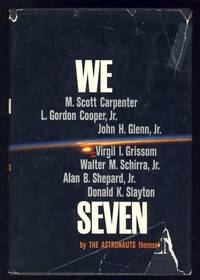
1962011611New York: Simon and Schuster 1962. First Edition . Hardcover. Very Good/Very Good. First Printing" stated. Full black cloth with white lettering. Illustrated endpapers. 352 pages. Photos. Index. Previous owner's name. Dust jacket has a chips and tears. Contents clean and tight. <br/> <br/> Simon and Schuster hardcover
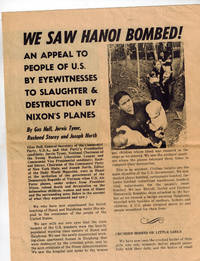
1972005615New York: Communist Party USA 1972. RARE. Four panel brochure paper evenly browned else Very Good condition 8.5 x 11 inches folded size. Cover photo of women carrying children inner photo across fold of children's bodies in a row. The biggest ever bombing campaign by US B-52 aircraft took place over Christmas 1972 when the US dropped at least 20000 tonnes of explosives on North Vietnam mostly Hanoi. More than 1000 Vietnamese died. First Edition. Newsprint. Very Good. Communist Party USA Paperback books
1972005615New York: Communist Party USA 1972. Brochure. Very Good. Newsprint. First Edition. RARE. Four panel brochure paper evenly browned else Very Good condition 8.5 x 11 inches folded size. Cover photo of women carrying children inner photo across fold of children's bodies in a row. The biggest ever bombing campaign by US B-52 aircraft took place over Christmas 1972 when the US dropped at least 20000 tonnes of explosives on North Vietnam mostly Hanoi. More than 1000 Vietnamese died. Communist Party USA unknown
1994053383Philadelphia PA: Gloucester Memorial and Historical Society/The First African Presbyterian Church 1994. Book. As New. Hardcover. 1st Edition. 8vo - over 7¾" - 9¾" tall. Blue cloth-effect boards lettered in gold foil. As issued. x89 pp. illus. Very scarce. Gloucester Memorial and Historical Society/The First African Presbyterian Church Hardcover
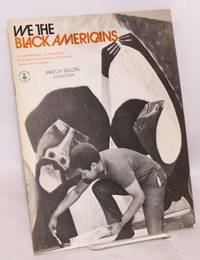
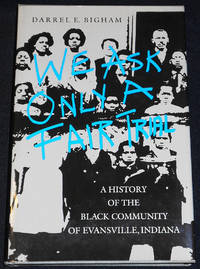
1987007936Bloomington & Indianapolis: Indiana University Press 1987. Hardcover. Fine/near fine. xiii 3 286 p.: tables maps illustrations; 24 cm. Grey cloth with black spine title. Illustrated dust jacket. Part of the publisher's Blacks in the Diaspora series and Midwestern History and Cultural series. The author presents the history of the Black community of Evansville Indiana from 1812 to 1945. Book is in Fine Condition: clean and tight. Dust jacket is in Near Fine- Condition: back is rubbed; otherwise clean and bright. Indiana University Press hardcover
1993AM-29Naperville IL.: Joyce E. Wehrli 1993. Classic text presents a biographical novel of the author's mother Gertrude Hitenbrand Wehrli 1897-1974 her life and the famous Pre-Emption House Hotel 1834-1946 intertwined for more than 40 years in small town Naperville Illinois. The hotel was a "vision of the future" for Captain Joe Naper who founded Naperville in 1831. It served as a town meeting place for many years and had many proprietors and famous visitors. 166 pgs. Profusely illustrated. Includes bibliography references and notes. Inscribed dated and signed by the author on the opposing first title page. Signed by Author. First Edition. Pictorial Hard Cover. Fine. 4to - over 9¾" - 12" tall. Privately Printed. Joyce E. Wehrli Hardcover