(California)Biblio.com
8 986 résultats
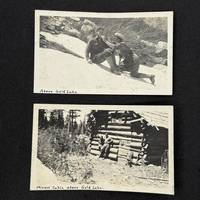
1916314050N.p. California and Nevada 1916. With 29 mounted photographs most neatly captioned in ink on 18 leaves 922 snapshots and 6 4 x 6 inches one printed photo postcard and a folding "Map of the Feather River Highway" on onion skin paper laid in. 8 pp. typescript titled Vacation 1916 rectos only. 1 vols. Oblong 8vo. Brown cloth with string ties. Binding worn; first leaf of typescript torn along gutter no loss old repairs on verso of map. Very good. Black cloth clamshell box. With 29 mounted photographs most neatly captioned in ink on 18 leaves 922 snapshots and 6 4 x 6 inches one printed photo postcard and a folding "Map of the Feather River Highway" on onion skin paper laid in. 8 pp. typescript titled Vacation 1916 rectos only. 1 vols. Oblong 8vo. Nice photograph album and narrative account of an early automobile camping and trout fishing trip in and around Big Meadow and Lake Almanor. The party of three "Russell Homer and I" possibly "Super Shot Margie" who appears in several of the photographs left on the Benicia ferry on 22 July and spent the next two weeks around Gold Lake Long Lake Reno and Lake Tahoe talking to oldtime prospectors camping dancing fishing and visiting the sights. With photographs of trout fishing their camps swimming and boating an old miner's cabin and a few scenes in the snow. A nice record of a trip through an area that retains its appeal for vacationers a century later.<br /> <br /> AN ATTRACTIVE CALIFORNIA ALBUM. unknown
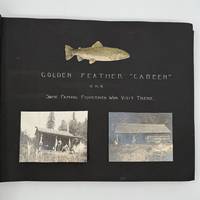
1928314049California 1928. 131 mounted black and white photographs and more than 75 items of typescript and printed ephemera inserted. 1 vols. Oblong folio. Black card wrappers string tied. A few photographs or items of ephemera perished generally very good. Black cloth clamshell box with printed lbel. 131 mounted black and white photographs and more than 75 items of typescript and printed ephemera inserted. 1 vols. Oblong folio. Nicely illustrated photograph album and scrapbook of the convivial businessman J.W. Fricke of San Francisco who fished for rainbow trout from his cabin on the Feather River in the California Sierras. The album includes Fricke's fishing licenre is a calligraphic page for the "Golden Feather Cabeen and Some Famous Fishermen Who Visit There" naming on successive pages Frank F. Weber C.W. Callender J.H. Vogt Edwin D. Weary whose typed verses in praise of the Feather River are included and E.R. Billet who also typed some verses sometimes with notes in white ink. Photographs are often dated and captioned chiefly 1919-1923 and show views of stream interiors of the cabin the friends bathing scenes and the fishing. There are also a few photos recording a trip to the Père Raquette river in Michigan and a newspaper account of fishing the Rogue River in Oregon; and some printed verses in praise of Fricke's hospitality dated 1928.<br /> <br /> A PLEASING GLIMPSE OF WESTERN ANGLING IN THE 1920s. unknown
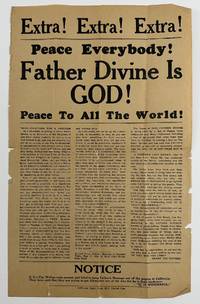
19345724Los Angeles: California Eagle 1934. Good. Broadside 14.5 x 9 inches. Moderate toning old folds very minor loss at two crossfolds a few short splits along fold lines some small marginal chipping. A highly ephemeral broadside touting the message of Father Divine and denouncing a recent fraud by "a Set of People from Hollywood" who attempted to use Father Divine's name to purchase the Hotel Dunbar. Father Major Jealous Divine 1882-1965 known earlier in his life as George Baker was the most prominent Black religious cult leader of the 1930s believed to be a divine messenger the messiah or God himself by tens of thousands of African Americans and middle-class whites during the Great Depression. In November 1931 Divine and seventy-eight of his followers were arrested for disturbing the peace at the Reverend's property in Sayville New York on the south shore of Long Island. Father Divine was tried and found guilty in June 1932. The judge -- who interestingly died of a heart attack just days later speaking to Divine's followers of heavenly retribution -- called him a fraud and a "menace to society" handing down the maximum sentence of a year in prison. He actually spent only a few weeks in jail before his lawyers secured his release on appeal. When freed Father Divine moved to Harlem where his "Peace Mission" of social and economic betterment acquired international acclaim. <br /> <br /> One unintended consequence of Father Divine's success is encapsulated in the present broadside. The first portion of the work quotes from an address by Father Divine delivered in New York on May 17 1934. In this message Father Divine discusses housing as an extension of evangelical work the world of commercialism as a good provided it is "magnified and made honorable" and then lambasts "the racketeers the speculators and grafters and the money-changers for they made merchandise of the Spirit of God's Presence." These various aspects dovetail into the issue at hand. Apparently a group of nefarious individuals in Los Angeles were attempting to "close a deal on the Hotel Dunbar" in the name of Father Divine. Not so says the broadside for this "set of people in 51st Street Los Angeles Calif. Santa Cruz included are endeavoring to use Father Divine's name to make believe." The broadside was printed on the press of the California Eagle an African-American newspaper published in Los Angeles between its founding in 1879 and its last issue in 1964.<br /> <br /> This is the only Father Divine item we've encountered that was published in California and as far we know the only copy of this ephemeral broadside in existence. California Eagle unknown
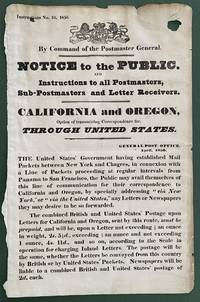
1850List2416Great Britain 1850. Broadside measuring 9 ⅞ x 15 ⅜ inches. Some chipping and wear to edge ink number written in corner two small section of loss due to improper mounting very good overall. Coat of arms of the United Kingdom above printed text. Very Good. A scarce broadside relating to British postal rates across the Panama Route through the Chagres River which supplied mail to California and Oregon beginning in 1848 before eventually being replaced by the Overland route in 1860. The service was characterized by long delay times as steamships on either side of the isthmus were often not coordinated causing major delays in the delivery. Several different steamship companies operated privately some carrying express mail. The letters were transported by canoe or pack animal across the isthmus. Postmaster General Cave Johnson began establishing post offices in California in 1848. Johnson also oversaw the transition to the prepaid delivery system. The broadside here of which we find no other records does state that postage must be prepaid and that the route can be accessed by writing “via New York†on the letters. A scarce postal history item relating to the expansion of mail services to California. We find no other records of this institutionally or in the trade. unknown
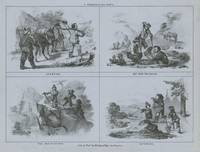
1850List1315Britton and Rey 1850. Single sheet measuring 8 ¼ x 10 ¾ inches on blue wove paper. Small chip to corner not affecting image some older tape repairs verso at margins else fine very good plus overall and quite attractive. Very Good. A series of four illustrations telling the story of a mining party that heads out with a pack mule only to fail to find gold and lose their mule before returning to a new prospect with their clothes in shambles. This is entry 209 in Baird’s California’s Pictorial Letter Sheets in which he sets the publication date as being prior to 1855. The series possibly illustrates scenes from a song. A particularly fine example on the classic blue wove paper of the period. unknown
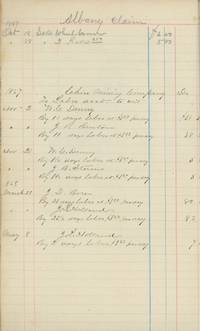
1868List2828Eureka South CA 1868. 7 ½ x 12 inch ledger book 33pp with many more blank. Front cover near detached and back cover detached missing spine some staining of inside pages. Many inside pages torn out. Overall good to very good. An accounting ledger with some annual meeting notes of the American Exchequer Gold Mining Company based in Eureka South California dating between 1866 and 1868. Eureka South was a small remote mining community with a population of about 400 people during the peak of its diggings’ productivity – now called Graniteville it had a population of twelve as of 2022. <br /> <br /> According to a copy of the company’s notice of location for its mine in Eureka South recorded in this ledger in November 1866 the company was founded on August 24th of that year following the discovery of a quartz ledge. A history of Nevada County describes 1866 as the year of the “revival of the quartz excitement of 1851†in Eureka South.1 Before this as the surface diggings began to dry up people had begun to abandon the town; with the quartz excitement the population swelled from twenty to 400 in a few months.<br /> <br /> However it does not seem as if the “American Exchequer Ledge†as they named the quartz vein in the location notice proved very productive. The minutes of the company’s 1866 annual meeting state:<br /> <br /> “matters of interest to the company were discussed ‘twas thought best to do but little more this winter than run the tunnel in some 50 to 100 feet further if we do not strike the ledge in the tunnel with this amount of labor added to it that we try and be prepared with money from assessments to put in a contemplated long tunnel down in the Hill in search of the Ledge.†November 27 1866<br /> <br /> Otherwise the ledger lists specific locations or other companies and associated expenses including “Albany claim†and the “Chico Mining Company†from whom American Exchequer bought the Chico mine; and wages and purchases such as hiring a horse for locating claims and “Whiskey for the boys†costing $4. Of interest to historians of mining and Northern California.<br /> <br /> 1 Harry Laurenz Wells History of Nevada County California Thompson & West: 1880 62–63. unknown
1935List2835California Texas Illinois and others 1935. 369 pieces: fourteen empty envelopes 108 pieces of unsorted ephemera and 247 letters. Of the letters twenty-one are undated; three date from 1851–1909; nineteen from 1910–11; thirty-five from 1912; thirteen from 1913–17; forty-two from 1921; thirteen from 1922–24; sixty-eight from 1934; and thirty-three from 1935. Overall very good to near fine. The Beaumans were a family from southern Texas who relocated to East St. Louis Illinois some time before 1908 and some of whom would later live in California. Captain Loui Beauman 1868–1921 was a military engineer Mason and member of the Society of American Military Engineers. He and his wife Kittie Woodruff 1867–1959 had three children survive to adulthood: Carrie Beauman 1893–1982 Second Lieutenant Loui Beauman 1894–1918—a Marine killed at 23 in a seaplane accident—and Julia Frances “Gally†Beauman 1908–1974. <br /> <br /> Offered here is a large correspondence archive belonging to the Beaumans; mainly addressed to Gally 119 letters the younger Loui seventy letters and Kitty fifty-two letters; and written by a wide variety of friends and family including Kitty fifty-one letters Carrie eighteen letters Katharyn Owen of San Antonio sixteen letters and Gally’s future husband Edwin J. Regan of Weaverville California twenty-three letters. Regan 1906–1996 was at the time running for District Attorney of Trinity County and would go on to hold that position before resigning in 1948 in favor of a State Senatorship followed by a judgeship on the Third Appellate Court of Appeal.<br /> <br /> Most of the early letters in the group are addressed to the younger Loui Beauman and their concerns include his friends’ jobs constructing railroads hiding their controversial “ragging†dancing from chaperones and which fraternity Beauman should join at the University of California. The fraternity issue is particularly contentious within the family; the elder Beauman tells his son that “I will not be pleased to hear that you have joined any of the fraternities†September 20 1912. The younger Beauman settled on Zeta Psi.<br /> <br /> After the passing of both father and son most of the letters are addressed to Kitty and Gally Beauman. Edwin Regan writes to Gally about his campaign for District Attorney which made him “worried and discouraged and down on the world†August 3 1934; Regan felt that “ability means nothing to the voters the sole issue is whether or not I am a ‘city guy’ or not†July 30 1934. Another common topic is the family’s concern for Carrie Beauman whose marriage to Arthur Levefre Jr. was becoming increasingly abusive. The couple lived in Houston far from the remaining family who were now in Berkeley and Weaverville.<br /> <br /> Though the family very rarely commented on politics—even including the Great Depression which was in full swing during the writing of nearly half of these letters—there is one event that enthused Carrie Beauman too much for her not to mention. This was the suppression by the KKK of alleged brewing race riots in Houston:<br /> <br /> “We came near a bad race riot last week. All the militia residents Light Guards ex-soldiers were called out. There were over 5000 armed white men on the main streets negro sections. Arthur slept with his clothes on 4 loaded guns. We all piled in one room. Believe me the Ku Klux Klan is doing efficient work. That’s twice in the last 10 days that they’ve ‘operated on’ the beasts. I’m tickled to death to know that there are a few fearless just honorable men left to meet sic out justice to these criminals. By the time this happens half a dozen times some of this crime wave will subside. If the paid officers of the law wont meet the emergency – then it’s time for the upright citizens to take a hand. I am tickled to death over this!†May 1 1921<br /> <br /> Overall an intimate look at the lives and affairs of an ordinary American family in the early twentieth century. unknown
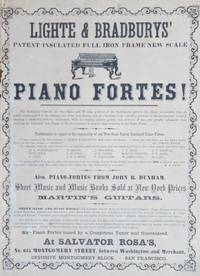
1864List2420San Francisco 1864. Broadside measuring 12 x 8.5. Some wear and archival tape repair to margin fine contrast excellent condition overall. Very Good. An interesting broadside advertising the Lighte and Bradbuiry piano as well as Martin Guitars printed for the Salvator Rosa music store at 615 Montgomery Street in San Francisco. Lighte and Bradbury was in its third iteration in the period from 1858-1864 when this broadside was printed having been started by the German immigrant Ferdinand C. Leuchte in 1847 who did business with a range of partners after anglicizing his name to Lighte. Among the testimonials listed on the broadside is praise from Lowell Mason the composer and music director. Salvator Rosa’s store was around from at least 1852 when a fire in the city destroyed the building on Clay St. making this location at 615 Montgomery Street at least the second for the firm. The firm published sheet music including “Fireman’s March†and “Garibaldi’s Hymn.†Martin Guitars had been based in Nazareth Pennsylvania since 1838 and were a relatively small company at this point before the growth of popularity of guitars and the shift to steel strings that happened in the early twentieth century. We find no other nineteenth century examples of broadside advertisements for Martin in trade records. unknown
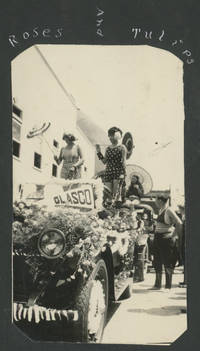
1920List1317Southern California 1920. Limp leatherette album oblong 4to measuring 10 x 7 inches with seventy photographs most measuring 4 x 2 ½ inches. Wear to binding photographs with excellent contrast very good to near fine overall. Near Fine. An energetic album of photographs belonging to one Eddie Jones a fun-loving banjo player from Santa Ana mostly composed of photographs of musicians performing at small parties and functions during the prohibition era. Jones was apparently quite active on the local scene and the album is mostly made up of candid photographs of musicians all captioned some humorously. Many of the photographs show small bands playing guitars many of them playing with slides likely due to the popularity of Hawaiian music at the time. Also included are many photographs of parades in and around Los Angeles as well as photographs of the 1925 Santa Barbara Earthquake showing damaged buildings. Two photographs feature a glass of rye others show agricultural scenes. Newspaper clippings in the back center on the Santa Ana and it’s possible that Jones - who was the common name mentioned in these clippings - was also a farmer from the Santa Ana area when he wasn’t playing music. One photograph shows San Diego a couple show a bullfight in Tijuana. Overall an evocative and well preserved piece of California Prohibition-era history. unknown
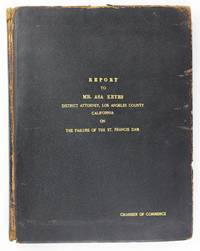
19285609Los Angeles 1928. Good plus. 423 leaves plus forty-six photographs. Folio. Contemporary black leatherette cover gilt. Spine ends chipped and worn leather coming away from boards extremities worn. Small pen notation to title page contemporary ink stamps in text. Light wear. Report compiled by District Attorney Asa Keyes following the tragic and catastrophic failure of the St. Francis Dam. The St. Francis Dam was a concrete gravity dam located in the San Francisquito Canyon in northern Los Angeles County built between 1924 and 1926. Just before midnight on March 17 1928 the dam failed killing at least 431 people in the subsequent flood. It is considered one of the worst American civil engineering disasters of the 20th century and the third-greatest loss of life in California history. In the immediate aftermath of the disaster officials at all levels began enquiries into the causes. This typescript report produced within a month of the collapse and flood was ordered by Keyes as part of his investigations. The text is accompanied by six charts and thirty-six photographic views with captions. Though there were many theories about the cause of the collapse experts concluded that the failure was due to defective foundation materials "which while reasonably hard when dry became soft and yielding when saturated with water." The dam's failure ended the career of William Mulholland the general manager and chief engineer of the Bureau of Water Works and Supply which is now the Los Angeles Department of Water and Power. When asked by Keyes if he would build the dam on the same spot again Mulholland replied "No I must be frank and say that now I would not." Formerly the property of the Los Angeles Chamber of Commerce this piece was acquired by author Tom Zimmerman along with other source material for his book on the city Paradise Promoted: The Booster Campaign That Created Los Angeles 1870-1930 2008. No copies noted in OCLC. unknown
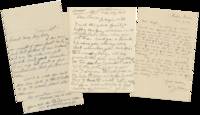
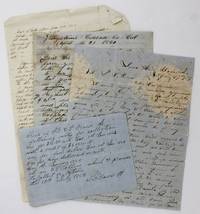
18604301Eldorado & Iowa Hill 1860. Good. Four manuscript documents including three letters totaling six pages. Old folds moderate toning minor edge wear a few tears a small hole in one letter. A neat group of four manuscript letters and documents all related to the mining activities of L.D. Davis of Georgia over a four-year period during the latter years of the California Gold Rush. Davis appears to be a lawyer living somewhere back east and may have been an investor in California mines or managing the financials for some mining concern from afar. The documents include an 1856 promissory note regarding "noted for collection" a long undated letter likely from California to Davis detailing amounts of gold taken from an unspecified mine and the mine's ownership situation and two letters overtly datelined from California -- the first from Iowa Hill in 1859 and the second from Georgetown in El Dorado County in 1860. Each document presents a unique set of concerns for Davis. Notable details of the three letters are as follows:<br /> <br /> 1 Autograph Letter Signed from A.J. Huff to Mr. L.D. Davis. Iowa Hill Ca. April 17 1859 2pp. The text reads in part "I have been very very sick for the last three weeks but am at this time improving.the disease is caused by the exposure of this last winter having worked continually in the rain and snow preparing my claim for the season. Times are very hard in this country now everyone has to work hard and is in big luck if he makes a decent living. A great many are making money very fast but in comparison not one in ten to the number than used several years back to make money or in other words the chances are about one in ten when they were one in fifty two and three in this country. If a man can get a good claim he can make more clear money out of it than he could then owing to the fact that everything is cheaper and experience has taught the People of California a great deal in respect to saving the gold and expediting the work. I think I have a very good claim which will last for a long time three or four years. It has been very expensive opening it but that is pretty well all over with now."<br /> <br /> 2 Autograph Letter Signed from J.D. Arranaut to L.D. Davis. Georgetown Eldorado County Ca. April 28 1860 2pp. Here a colleague of Davis's in California seems to be struggling and writes thanking Davis for a loan. The text reads in part with spelling normalized: "I was glad to hear from you and to.learn that you would comply with my request by letting my wife have $25 worth of corn for her use and please find enclosed a bank draft. I take it as a great favor as I am far from home. Let me know how my wife is getting along and if she stands in need of anything."<br /> <br /> 3 Autograph Letter Signed from J.H. Worley to L.D. Davis Esq. N.p. n.d. 1p. The letter concerns percentage ownership in an unspecified mine and opens with a four-line listing of the "amt. of gold taken from mine 513.51.1 while under my control." The author then writes in part: "The rent and expenses were take out of the above account and after the gold was sold one half after paying expenses. I know you are too well positioned in law to know that I dare not have settled with any other person unless I had been so instructed according to law. When Mr. Findley returned from Burke County he stated to me that one half the mine was for Mr Adams and myself and the other was for himself and his friends but did not say who they were. unknown
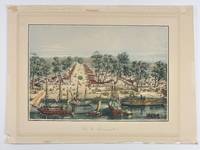
19104369N.d. but Paris: Le Breton 1910. Very good. Hand-colored lithograph. Image area: 9.75 x 14.25 inches overall sheet size: 14 x 19.5 inches. Mounted to later board. Small bump to lower left edge some chipping to bottom edge paper remnants along top edge and some marginal discoloration from previous matting. A striking waterfront view of Gold Rush-era Sacramento depicting an energetic and developing township recently flooded with emigrants from around the United States and the world. The image shows the Old Sacramento Waterfront from the Sacramento River towards the city down J Street. The busy commercial waterfront district is populated with dozens of people moving about the town as well as numerous houses identified businesses City Hotel Eagle Theatre Eldorado Exchange Fremont House General Jackson's Hotel J.B. Starr & Company and others tents one identified as Hot Cake and Coffee and wagons. The bank of the shore also shows stacks of building materials and cargo. Several vessels are pictured on the river including sailing ships a sidewheel steamship and rowboats. Interestingly one of the larger sailing ships sports the flag of a Chilean sailing ship.<br /> <br /> The view was produced just before the railroads came to Sacramento later in the 1850s. It was prepared by the French painter draughtsman and lithographer Louis Le Breton 1818-1866. Before largely committing to lithography in 1849 Le Breton concentrated much of his painting on nautical scenes as he spent much of his early career as a shipboard surgeon. The dating of the present lithograph is difficult as examples were produced for several decades in the 19th century and into the first two decades of the 20th century without distinction between the various editions. Interestingly Le Breton is also credited on a larger print of the present view titled Ville de Sacramento and dated 1851 which is held by the Bancroft Library. With regard to the present example we could locate no institutional copies. A stunning display piece of the capital city of California at an early time of explosive growth and development. Le Breton unknown
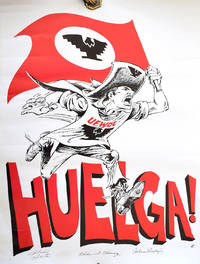
3327<p>White stock printed in red and black. Minor creasing and wear; very faint stain to lower corner mostly visible on verso. Very Good.</p><p>The quintessential poster from the United Farm Workers' Delano Grape Strike SIGNED by UFW cofounder Dolores Huerta; Helen Fabela Chávez UFW activist and wife of Cesar Chávez; and Arturo S. Rodríguez who succeeded Cesar Chávez as UFW president. This copy has a UFW union label bug and is a presumed later printing.</p><p>Andrew "Andy" Zermeño was the first artist hired by the UFW and his first task was the job of redesigning its logo. <em>Huelga!</em> "Strike!" in Spanish was his first poster for the organization and features the cartoon character Don Sotaco. "Even though Don Sotaco is dressed in tattered pants with a hole in his shoe the honorific title of 'Don' esteemed; sir and portrayal of the striker in motion with forceful facial expressions generate a sense of agency as well as urgency. 'I was trying to show the spirit of the workers.who were attacking the status quo' Zermeño recalled. 'And that they were eager to get in there to do something for themselves.' Running with the unfurled UFW flag proclaiming the strike Don Sotaco -- and by extension the UFW -- elicits action from farmworkers and their supporters. Based on its effectiveness with local farmworkers the UFW distributed the poster as part of its strategy to reach a national audience and it continues to be produced today" <em>Printing the Revolution: The Rise and Impact of Chicano Graphics 1965 to Now</em> p. 75.</p> United Farm Workers
189356869Salem OR: Buren & Hamilton 1893-1904. 4to. 90 mylar sleeve leaves unnumbered. containing 403 invoices shipping & waybills TLS ALS TL copy letters and more many of which appear on steel-engraved letterhead many printed on colour-tinted paper often shipping and weight bills still retaining original stamps a few mailing envelopes a number of check receipts many w/ manuscript and stamped autographs others w/ corrections and/or annotations in ink or pencil; also included are actual samples of velvet fabrics wallpapers and textured colour sample papers printing sample for perforated business card. All preserved in recent 3-ring cloth binder stamping on front cover. An exceptional archive of original letters invoices waybills business cards and receipts all documenting the thriving business of Buren & Hamilton at the end of the Gilded Age and beginning of the Progressive Era in Salem Oregon in the aftermath of the 1893 economic crash. Drawing from suppliers in California just a few years before the San Francisco Earthquake & Fire the company also sourced from Seattle WA New York and Chicago. Portland was the manufacturing and industrial hub of Oregon as can be seen in these invoices and receipts: such companies as The Columbia Chair Company Dealers who sold chairs office chairs and rockers from 309-311 Front St. shipped rocking chairs and office chairs to Salem in 1903; Henry Jenning & Sons located at 172-174 First St. shipped a load of leather oak chairs in 1903; J.G. Mack & Co. located at 86 & 88 Third St. in Portland supplied velvet rugs oil cloths and lamp shades in 1903; while the A. Merle Co. and McCord & Work located on Water St. supplied brass and iron bed frames the same year. Buren & Hamilton also sourced mattresses and sacks of recycled denim cotton “Shoddy†from Peters & Roberts Furniture Co. for mattresses; and purchased often from the Portland Mattress & Upholstery Co. at 18-20 Front St. which supplied wool-combed coverings mattresses mattress tops from 1900-1904 -- their factory would be gutted by fire in 1907. Many of the items were shipped down the Willamette River on the Oregon City Transportation Co. ships with a note from 1904 indicating the company had completed a sale of odd sized mattresses to them; numerous Southern Pacific Oregon Division freight bills; as well as a shipment on the SS Oregonian via the American-Hawaiian Steamship Co. of five crates of chair seats from Marshall Field & Co.In addition it appears that Oregonians in and around Salem purchased heavily from the store luxury goods such as beveled mirrors framed artwork sleek wallpapers velvet fabrics tapestries oriental rugs and more. Many of the invoices letters waybills and documents record many items supplied by the storied W.P. Fuller & Co. of San Francisco & Sacramento CA as well as their subsidiary in Portland OR. They were main suppliers of beveled and mirrored glass on the Pacific Coast which often had to be imported from England into the U.S. and several of the orders in 1899-1901 note that the company was having issues supplying such pieces to Buren & Hamilton due to labor difficulties finally sourcing mirrors from Pilkington Bros. English Picture Glass. They occasionally canceled orders and the Fuller Co. writes in 1901 over a canceled order of “deadening felt.†The W.P. Fuller Co. explain that “your reasons for wishing to cancel your order are not considered sufficient to justify us in doing so . . . †and that they were aware that “some of our competitors are circulating unjust and untrue reports concerning us all the time.†Included amongst these letters are samples of cotton backing for carpets and even three original samples of wallpaper. There are also present a number of letters and invoices from the firm of Tozer & Son which took over the W.P. Fuller Wallpaper division about 1901 with letters present making that announcement. Of additional interest are the many invoices letters and waybills back and forth with the storied Schussler Bros. on 119-121 Geary St. Star King Building in San Francisco detailing many of the popular framed and matted photographs and images for Salem shoppers. These encompassed the “Lone Indian†which were often reproductions of the iconic End of the Trail sculpture by James Earle Fraser; Athletes Dutch Windmills Shakespeare prints of assorted types and sizes Lone Arab a Chinese print a boxing series of matted “Deal of a Fellow†Madonna Artotypes -- typically reproductions of Raphael’s Madonna and Taber art photos. Many of the letters bill heads and invoices sport steel engraved architectural vignettes documenting buildings which would be destroyed in the 1906 San Francisco Earthquake & Fire as well as many of the business records for those companies. One of the freight bills bears the photographic letterhead of the Chicago & North-Western Railway Co. dated 1904. Another significant supplier was the D.N. & E. Walter & Co. of San Francisco which supplied linoleum flooring fabrics and more for Buren & Hamilton from 1899-1904 and even includes in one of the letters a piece of the red velvet fabric they no longer carried.Buren & Hamilton was originally founded in the late 1880’s by A.T. Yeaton as a furniture/undertaker business later sold to A.B. Buren and finally sold to Max O. Buren and Clarence Hamilton who operated at three locations along Commercial St. including Greenbaum’s Building at 298 Commercial the building at 136 Commercial 340 Court St. now Sid’s Furniture. Clarence bought out Max Buren’s shares in 1916 becoming the C.S. Hamilton Furniture Co. and operating until it was sold to Rubenstein’s in the 1960’s. See: Norma Hamilton Cochran Historic Businesses -- Hamilton Furniture Salem History Matters March 17 2017; New Stationery Department of Schussler Brothers San Francisco The American Stationer Vol. LIV 1903 pp. 4-5; John Caldbick Panic of 1893 and its Aftermath HistoryLink Essay 20874 Oct. 1 2019. Buren & Hamilton, hardcover
229637of California miners by William Wax Studios Redding California. All on the original photographer's printed mount. Each approximately 7 3/4" x 4 3/4". 1. Two men a woman and three young children standing in front of a miner's cabin. 2. Group of eight miners and two Chinese men standing in front of a miner's cabin. 3. Group of 15 miners and a dog dressed in their Sunday's best clothes standing and seated in front of a cabin. 4. Group of 18 men and 1 child standing and seated in front of the general store. 5. Group of 23 men mostly dressed in boots and work clothes standing and seated in front of a shed. A few smoking pipes one holding an ax. 6. Group of 22 men dressed in work clothes boots with lantern on their hats outside of the mine. Provenance: from the estate of Charles H. Segerstrom. No Binding. Very Good/No Jacket. hardcover
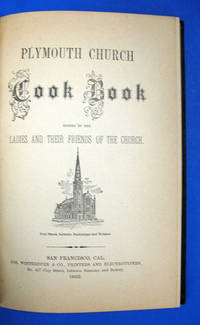
188240336San Francisco Cal: Jos. Winterburn & Co. Printers and Electrotypers 1882. 1st edition Axford p. 323; Brown 31; Cook p. 23; Glozer 276. Not in Wheaton & Kelly. Original publisher's brown cloth binding with gilt stamped title lettering to front board. Sewing machine advert to paste-downs. Square & tight. Pencil pos at top of ffep. A pleasing VG copy. 4 141 1 pp. Text interleaved with 17 unpaginated blanks. Adverts pp. 123 - 141. T.p. cut of Plymouth Church on Post Street between Buchanan and Webster. 8vo. 8-1/2" x 5-5/8" <br/><br/> Jos. Winterburn & Co., Printers and Electrotypers hardcover books
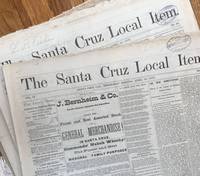
18801141Santa Cruz: H. Coffin 1880. Very good. 8 issues 8pp. each plus two broadsheet supplements. Folio newsprint. Contemporary sales agency ink stamps. Light wear and chipping at top edges; a few nicks and minor wear to other edges. Light toning and dust soiling to regular newspaper issues; broadsheets moderately toned and slightly brittle. An excellent group of eight issues plus two broadsheet supplements of this rare California newspaper. The Local Item was one of two newspapers along with the Courier published in Santa Cruz in the late 1870s; the two papers merged in 1880. The present group contains five issues and two broadsheet supplements from April and May 1879 which contain much news and debate over the ratification of the new California state constitution which was eventually approved by popular vote on May 7 1879. Among the many issues debated are the apportionment of local and state power the judicial and educational articles powers of taxation and clauses prohibiting Chinese residents from the vote and many types of employment. The two supplemental broadsheets print opinions on the new Constitution from various California and eastern newspapers as well as excerpts from speeches of California politicians Thomas Laine and Creed Haymond. On the whole the view put forward and reprinted by the newspaper take a fairly negative view of the new Constitution. The final three issues present here from the end of 1879 and the beginning of 1880 contain a mix of local state and national news developments in San Francisco markets and stories of human and more fantastical interest such as an account of Colorado ranch life updates on Yellow Fever epidemics reports of a sea monster and a lengthy exposé on a woman who had posed as a man for a quarter-century. A rare periodical and a good document of an important political moment in California state history. OCLC locates only a run at Berkeley and a group of early issues at AAS. H. Coffin unknown books
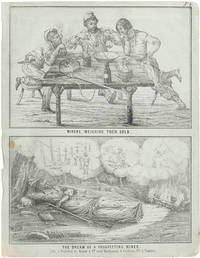
1850WRCAM48416San Francisco: Lith. & published by Quirot & Co. 1850. Pictorial letter sheet 10 3/4 x 8 1/4 inches on blue paper. With the blank conjugate leaf attached. Some edge wear including small tears as well as light wrinkling. A few old ink smudges on the conjugate leaf. Very good. An evocative and relatively scarce California pictorial letter sheet giving two views of life in the gold diggings. The upper illustration shows three miners seated around a table made of wooden planks supported by tree branches. The miner in the center is weighing gold on a scale over a pan. The miners who flank him are both armed one with a knife and the other with a pistol. Another pistol as well as a rifle lays on the table. The table also holds bottles plates a pair of horseshoes and a large loaf of bread which from its well-developed crumb structure appears to be a loaf of sourdough. The lower illustration shows the same miner who was weighing his gold laid out asleep under a tree near a fire. Beside him are guns a powder horn a knife and a satchel and a large bag filled with gold rests under his right elbow. The three dream bubbles above him show scenes of a miner prospecting and a ship being loaded with heavy bags. A nice California pictorial letter sheet showing the reality and the dreams of life in the mines. BAIRD CALIFORNIA'S PICTORIAL LETTER SHEETS 170. CLIFFORD LETTER SHEET COLLECTION 190. PETERS CALIFORNIA ON STONE p.76 & plate 33 the Britton & Rey version. Lith. & published by Quirot & Co. unknown books
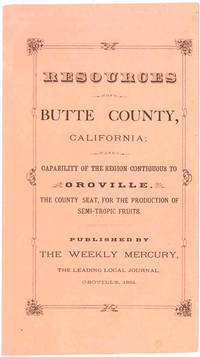
1882WRCAM48082Oroville Ca.: The Weekly Mercury 1882. 264pp. advertisements on wrappers. Tall octavo. Original printed salmon-colored wrappers. Small stain in lower edge of front wrapper small chip in lower fore-edge of same. Else fine. A rare early promotional for Butte County emphasizing its potential as a fruit growing region. The text is an address by Jesse Wood superintendent of schools to the Butte County Teachers' Institute. He focuses on the agricultural potential of the county its plentiful natural irrigation and the variety of fruits that could be grown and emphasizes the pleasant quality of life in the region. The attractive advertisements which demonstrate the typesetting abilities of THE WEEKLY MERCURY are for Oroville businesses. Not in the catalogue of the Norris collection which was so strong in California local history nor in Cowan who lists only a later work by Wood on the same subject. OCLC locates two copies under differing title entries at the Bancroft Library and California State Library. Rare. ROCQ 1367. OCLC 58938608 21703493. COWAN p.692 ref. The Weekly Mercury unknown books
1960List503Humboldt and Eureka Counties 1960. Oblong quarto cream colored cloth boards 10 ¼ x 13 ¼ inches. Contains 160 photographs measuring from 2 x 3 to 2 x 5 inches. Most photos identified with captions. As engaging a photographic document of mid-century forestry as one is likely to find following the Rodgers Brothers trucking company in their logging trips through Humboldt and Eureka counties. With images of accidents company trucks and machines the cutting and processing of giant redwoods drivers posed in front of their trucks and more. The deadpan captions "THIS ONE GOT HIT BY A TRAIN" "THESE ARE PRIVATE ROAD TRUCKS AT BIG LAGOON" "THIS ONE WENT THROUGH THE BRIDGE" etc. add to the visual appeal. Redwood logging in Humboldt Count reached its apex around this time which preceded the establishment and expansion of Redwood National Park. Overall in near fine condition quite well preserved with minimal wear. Housed in a custom cloth slipcase. unknown books
229637of California miners by William Wax Studios Redding California. All on the original photographer's printed mount. Each approximately 7 3/4" x 4 3/4". 1. Two men a woman and three young children standing in front of a miner's cabin. 2. Group of eight miners and two Chinese men standing in front of a miner's cabin. 3. Group of 15 miners and a dog dressed in their Sunday's best clothes standing and seated in front of a cabin. 4. Group of 18 men and 1 child standing and seated in front of the general store. 5. Group of 23 men mostly dressed in boots and work clothes standing and seated in front of a shed. A few smoking pipes one holding an ax. 6. Group of 22 men dressed in work clothes boots with lantern on their hats outside of the mine. Provenance: from the estate of Charles H. Segerstrom. No Binding. Very Good/No Jacket. hardcover books
230511981. Biker Subculture Southern California biker community photo archive capturing everyday life social gatherings and riding culture among members of a regional motorcycle club identified in several images by jackets reading "Wheelers MC So. Cal." 1981. The photographs record the developing American biker subculture in the post-Vietnam era. Motorcycle clubs in California developed distinctive organizational structures and insignia systems beginning in the postwar decades and continuing into the late twentieth century. These images preserve informal vernacular documentation of club members riding repairing motorcycles socializing and gathering at private homes garages and roadside locations illustrating the social environment surrounding motorcycle club culture in Southern California during the early 1980s.<br /> <br /> Archive of 52 color photographs depicting members of a Southern California motorcycle club primarily wearing denim or leather vests with club patches identifying "Wheelers MC So. Cal." The images show riders operating custom chopper motorcycles group gatherings in residential yards mechanical work on motorcycles inside garages and roadside stops at service stations. Several photographs show multiple riders on extended chopper frames with high handlebars while others depict motorcycles transported in pickup trucks or parked in front yards during informal club gatherings. Additional images document members drinking beer adjusting club patches riding in groups or posing with motorcycles. Clothing includes sleeveless denim vests with sewn patches bandanas sunglasses and boots typical of late twentieth century American biker attire. One image shows a man holding an infant while wearing club insignia indicating the presence of family life alongside club activity. The photographs appear to have been taken during several gatherings and rides across suburban Southern California neighborhoods and nearby rural roads.<br /> <br /> Motorcycle clubs became highly visible elements of American subculture after the mid twentieth century particularly in California where custom motorcycle design and club networks flourished alongside postwar highway culture. Clubs often developed distinctive insignia territorial identities and mechanical aesthetics centered on modified Harley Davidson motorcycles and extended chopper frames. The present archive provides a candid visual record of everyday club activity rather than staged publicity imagery showing members interacting in domestic spaces neighborhood streets and roadside environments typical of working class Southern California communities. Fifty two color photographs with rounded corners. Individual images approximately snapshot size. Verso of several photographs stamped "JUL 1981." Minor edge wear light surface scuffing and occasional color fading consistent with consumer color prints of the period; overall very good condition. The archive offers a concentrated visual record of Southern California motorcycle club culture during the early 1980s chopper era. unknown
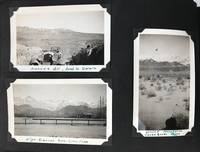
19321252Various locations in California 1932. Very good. 219 photographs on fifty leaves most 3 x 5 inches; plus six real photo postcards. Oblong octavo. Original black cloth string-tied. Light wear to covers. Images crisp and clear. Many images with typed captions. A wonderful photo album documenting road trips taken in the Eastern Sierra and western Nevada in the area in and around Owens Valley. The photographer and his friends explored numerous mines and mining towns in the region braving the desert in their car. The album winds from Owen's Lake to the National Soda Products Company and the Estelle Mine to the tiny town of Keeler where they celebrated Easter. They continue on to the mining camps of Panamint City and Ballarat both now ghost towns. There are photographs of the town of Lone Pine the Cerro Gordo Mine Darwin and in Nevada the towns of Lida and Goldfield. They take an extended trek through Big Pine California staying in Glacier Lodge Canyon and spend time in Onion Valley. There is also a lengthy series of photographs taken out at Lone Pine California documenting the Universal Pictures film "Oh Promise Me" with images of the actors and sets and crew. An altogether fascinating album documenting the region of the Eastern Sierra and Owens Valley. unknown books
195053076Oakland CA & Hollywood CA: Lee’s Speed Shop; Hot Rod Magazine; Louis Hochman 3303 Cahuenga Blvd. Photographer 1950-1955. Oblong 4to. 24 leaves w/ 24 silver gelatin photos sized 7 x 10 in. up to 8 x 10 in. 4 w/ photographer’s stamps on versos 6 w/ red grease pencil markings & a couple with whiteout preparing camera-ready copy a few w/ annotations on versos still VG photos preserved in archival mylar sleeves. Recent limp black cloth post-binder gilt lettering stamped on front cover an excellent exemplar. This historic photo album records the construction and racing of Lee Chapel’s “Tornado Special†in 1952 at the Bonneville Salt Flats. Lee’s Speed Shop was one of the original members of the Dry Lakes Racers Bonneville 200 MPH Club who held their first meeting in September 1953 at the Bonneville Nationals. The “Tornado Special†was a Class C Streamliner which driven by John “Sonny†Rogers achieved a two-way average speed of 224.144 mph at Bonneville in 1952 featuring an unsprung front end torsion bars at the rear with a novel trunnion arrangement for pivoting the engine fitted with a 295 cubic in. Mercury engine equipped with a Lee’s Speed Shop “Tornado†overhead valve conversion. The front end was built from a 36 Ford and had split radius rods mounted to a tubular frame and the rear end was a reworked 1932 Ford Model A. The Tornado Special crashed in 1953 and the body was left at Bonneville while many of the parts were salvaged. Chapel 1905-1966 opened his first speed shop while sharing space with a junkyard in 1928 at 3263 San Fernando Road in LA which he later moved to 4557 Alhambra Ave. from 1933 to 1937. In 1937 he closed the shop to tour the country racing open wheel midget cars until he reopened his Lee’s Speed Shop at 1143 East 14th St. in Oakland CA. He served during World War II as a TEC4 until discharge in 1945 whereupon he resumed his Speed Shop in Oakland. Lee’s Speed Shop was a pioneer in the southern California Hot Rod scene who along with George Wight blazed the used hot rod parts trail. See: Hot Rod of the Month Man Made Tornado Hot Rod Magazine Sept. 1953 pp. 34-38; Daniel Strohl Lost Speed Shops: Bell Chapel Orr Hemmings Daily Nov. 23 2009; David Lucsko Junkyards Gearheads and Rust: Salvaging the Automotive Past p. 37; Lee Chapel Origin of a Speed Shop In: Hot Rod Magazine June 1928 p. 13; Kinne & Warner Bonneville 200 MPH Club History -- Links in a Chain 2010. Lee’s Speed Shop; Hot Rod Magazine; Louis Hochman, 3303 Cahuenga Blvd. (Photographer), hardcover
1930ZB262777Modern Language Association of Southern California 1930. volumes 15-16 18 22-24 26-29 36-40 42 1930-1957; partly bound ex library good; price is for the lot. - If you are reading this this item is actually physically in our stock and ready for shipment once ordered. We are not bookjackers. Buyer is responsible for any additional duties taxes or fees required by recipient's country. Photos available upon request. Modern Language Association of Southern California unknown