JÉSUITESLivre Rare Book
8 987 résultats
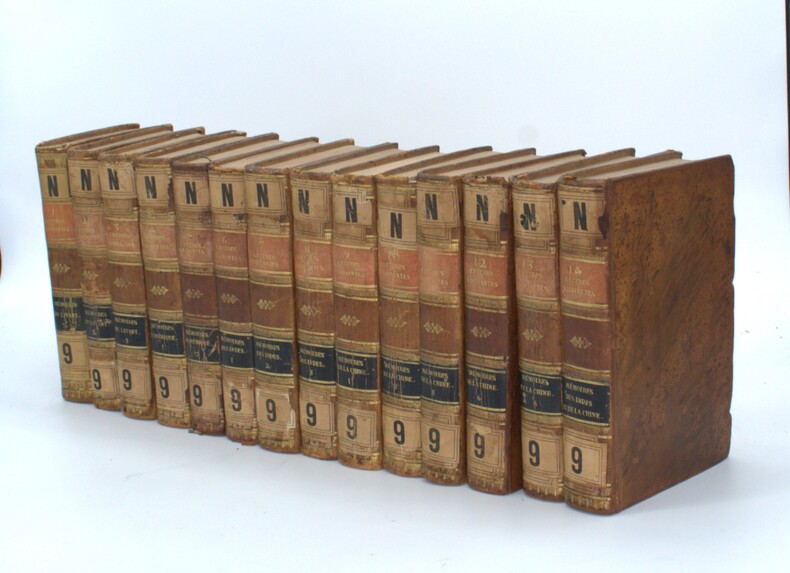
1819PHO-2161Lyon, Vernarel ; Cabin & Cie, 1819. 14 volumes in-8.1 ff., table des 51 gravures, XVI, 507 ; 516; 492; XXIV, 536; 524; XVI, 488; 548; 504; XXIV, 540; 539; 572; 563; 574; XLVIII, 583 pp. Illustré de 48 , dont nombreuses cartes. Basane fauve marbrée de l'époque, dos lisses ornés avec pièce de titre rouge et tomaison vertes, tranches mouchetées, cachets, étiquettes aux dos, frottements, déchirures sans manques à 1 cartes et 1 gravure.
88 pages. Features: Fantastic fold-out two-panel colour cover photo of the four Richardsons of Regina who are world curling champions; Brief article on how Nanaimo Realty paid its realtors to lose weight - and sales increased!; Nice one-page black and white Volkswagen photo ad entitled "Who backs up the Volkswagen?"; Nice one-page colour photo ad for Florida orange juice shows smiling girl wearing white ear muffs; What Winter Does to Canada - and vice versa; What to wear to a Fashion Opening - photo-illustrated article; Duel in the Kitchen (fiction); The Return of the Winter Carnivals; The Simple Joys of Camping in a Snowdrift; Hockey Isn't As Rough as it Used to Be - Part 1 of Jack Adams' "My 43 Years in Hockey" - photo-illustrated article (with large photo of Howie Meeker pounding a limp Canadien); The Second Splendid Discovery of Spices; How to Gain Entree to the Social Pages; Canada's world champions of Curling - Ernie Richardson and the Richardsons of Regina; Population Explosion on the Ski Slopes; Skier's Dream - two-page colour-photo-illustrated brief article with two maps describe how Franz Wilhelmsen and the Garibaldi Olympic Committee seek to have the massive potential of Whistler Mountain developed for the Winter Olympics of 1968; Best and Worst Movies of 1960; Escape to the Sun - Robert Thomas Allen's road trip from California to Florida; Seagrams ad features colour painting of winter carnival by Henry Simpkins; Large colour ad for Apollo Beach waterfront real estate development near Tampa; Canadian Club colour-photo one-page ad features Walter Gonnason falling into an ice crevasse on Mount Victoria Glacier in Alberta; Why color TV isn't here yet - and when it may be; Colour-photo Coke ad on back cover features skating couple; and more. Discrete six-inch clear archival tape repair to bottom left corner of front cover, otherwise unmmarked with average wear. A quality copy of this great vintage issue. Magazine
6195From the press in Palmer, May 1, 1817. In-12 de 144p. pleine basane marron (épidermures, manque coiffe inf., 1er mors fendu sur 3 cm. ). Papier fragile et bruni, quelques manque dans les marges (p. 70 et 101 avec absence de texte, remplacé par un "fac-simile").
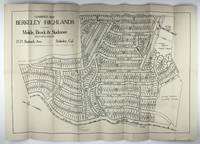
19132082Berkeley: Meikle Brock & Skidmore 1913. Very good. Folding map approximately 18 x 26 inches. A couple of short separations at fold points. Contemporary manuscript docketing on blank verso. Light tanning. An early 20th-century cadastral map that shows block and lot numbers property dimensions railroads partial land ownership and more in a new subdivision north of Berkeley here called Berkeley Highlands and now known as Kensington. The depicted area is bounded generally by Arlington Road Highland Avenue Purdue Avenue Beloit Avenue and Yale Avenue oriented with north to left. Land development companies had bought most of the Kensington area by 1911 when it was first surveyed. The area was named "Kensington" in 1911 by Robert Brousefield a surveyor who had lived in the London borough of South Kensington at one time. The Berkeley Highlands with most streets named for colleges and universities was subdivided slightly later than Berkeley Park and Kensington Park. The map was produced for Meikle Brock & Skidmore the agents who developed this land in the East Bay Hills and then sold the lots. <br /> <br /> The map is also notable for its notation in the lower right corner of the “Private Estate of George Shima." Shima was a Japanese immigrant who became the first Japanese American millionaire His assets were valued $ 18 million in 1920. At one point he produced about 85% of the state's potato crop which earned him the nickname "The Potato King." His business success did not bring him respite from racism however. In 1912 he moved to his new home in this Berkeley neighborhood where he lived in regal fashion employing a retinue of servants and also purchased the adjoining lot and converted it into a garden adorned with rare shrubs and flowers imported from Europe and Asia. Despite being the subject of hundreds such newspaper headlines as "Yellow Peril in College Town" Shima became active in the community donating $500 to the local YMCA and gradually won over his neighbors. Still the opposition he encountered led him that same year to become the first president of the Japanese Association of America and to unsuccessfully fight the passing of the California Alien Land Law of 1913 which was written to prevent Asians from owning land. Scarce we locate copies at Berkeley and Yale. Meikle, Brock & Skidmore unknown
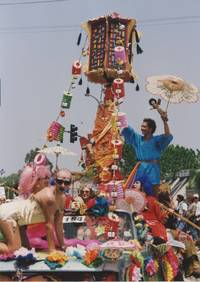
1985List3116Los Angeles California 1985. 131 photos measuring 3 ½ x 5 inches with fourteen pieces of ephemera in a photo album. Near Fine. A photo album documenting West Hollywood’s 1985 Pride parade. Eighty-seven photos are of the parade and forty-four are of the photographer’s trip to Ventura with presumably her girlfriend. Marchers include feminist lawyer Gloria Allred The Gay Men’s Chorus of Los Angeles Gay Vietnamese of Southern California actress and HIV/AIDS advocate Judith Light and drag queen mayoral candidate Kitty Cole. There is also one shot of protestors with signs such as “Repent Arrogant Sinners God’s Judgment and Hell are Comingâ€. The Times estimated about 8000 marchers and 50000 to 150000 “well-mannered spectatorsâ€.1<br /> <br /> The album also contains a small collection of ephemera including an admission ticket to the parade flyers for the “Girls Club†dating service and Papi’s Escandalo club a condom from The AIDS Project of Greater Los Angeles and various other events publications and so on.<br /> <br /> 1895 was the twenty-fifth anniversary of Pride in the LA area. The first LA Pride was held on Hollywood Boulevard in 1970 and commemorated the previous year’s Stonewall riot in New York City. The parade moved to West Hollywood now a notable LGBTQ neighborhood in 1979.2<br /> <br /> 1 Daryl Kelley “Thousands Turn Out for Festive Gay Pride Parade†Los Angeles Times Metro June 24 1985 1–2.<br /> 2 Shelby Grad “From gay bashing to AIDS to same-sex marriage L.A. pride parade reflects hopes dreams and despairs†Los Angeles Times June 9 2019 https://www.latimes.com/local/lanow/la-me-ln-pride-parade-los-angeles-history-20190608-story.html. unknown
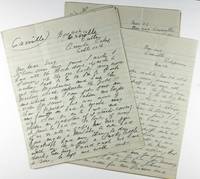
19002050Oroville Ca 1900. Very good. Three letters 13pp. total on seven lined sheets. Previously folded. Minor wear and toning. An engaging group of three letters from a mining engineer named Jack in Oroville California to his partner and perhaps brother Eric that discuss the development of their investments in an area that saw a rapid growth in dredge mining around the turn of the 20th century. Our correspondent was working out a new mechanical process for gold mining on a promising site. However his partner and addressee had given power of attorney to an investor named Wyckoff who is described as "a snoty little devil" who "knows no more about a mine or my affairs than a jack rabbit" but was starving the operation of cash while delivering a steady stream of insults. At one point Wyckoff "Left me without cash for ten days when we had nothing but potatoes to feed in the camp." The dastardly money man is also suspected of trying to steal the proprietary process which had already yielded fruit in Mexico. If that weren't bad enough the author was in poor health -- passing blood suffering from continuous headaches and feeling faint. And yet as with any mining venture a fortune was just around the corner: "I will make you money in the mine and prove the process so we can get bigger mines. Everybody is gold-crazy over here." Good content concerning a region of California that saw significant commercial mining development during the late-19th and early 20th centuries. unknown
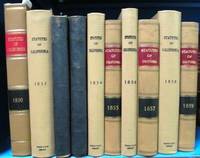
1859298771859. The bindings are generally tight with some inner hinges reinforced. Binding styles and paginations vary: some legal buckram others sheep; some with morocco spine labels others issued without spine labels. Several volumes include folding tables. The majority have the usual institutional marks which are rarely obtrusive. Occasional text spotting and light wear but generally clean and Very Good.<br/><br/> The stated printing locations are San Jose and San Francisco for the first two Sessions but these were actually printed in New York. The third and fourth Sessions were printed in San Francisco the others in Sacramento. <br/> These volumes present the earliest legal history of the State of California. The First Session includes not only the Statutes enacted but the Treaty of Peace with Mexico and documents supplementary thereto the 1849 California Constitution the U.S. Constitution with amendments and other foundation enactments. Joint Resolutions Index Table of Contents for each Session are printed along with the Laws. The 1852 and 1853 volumes are evidently rare. The Statutes deal with all the significant events of that interesting ten-year period: the settlement of the State the development of infrastructure and unfolding of commercial life the multiple social and political institutions the Gold Rush immigration the political strife that engulfed the Nation and all other aspects of early Statehood. <br/>FIRST EDITIONS. Greenwood 167 note. Cowan California 610. Wagner California Imprints 147 149 150. unknown books
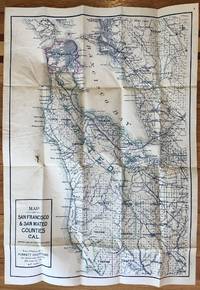
19081268San Francisco: Punnett Brothers 1908. About very good. Folding map 28.5 x 20.25 inches. Three short separations along folds; one small area of loss not in map area. Faint foxing at left edge; light tanning. A rare 1908 map of San Francisco San Mateo and the surrounding Bay Area by late 19th- and early 20th-century California cartographers Punnett Brothers. The upper portion of the map depicts the Bay with San Francisco and San Mateo County outlined in pink and pale green respectively. The lower half of the map consists of the southern half of San Mateo County and the area below the bay much of which makes up today's Silicon Valley. Most of this section of the map as well as the areas east of Berkeley Oakland and San Lorenzo are platted. The map is also marked with significant geographical features as well as roads and railways and shows the locations of the many ranchos still extant in the region during this period. An interesting and attractive land map for the Bay Area and the surrounding region during the early 1900s. We locate only one copy at Berkeley. Punnett Brothers unknown books
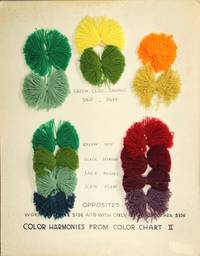
195047835Los Angeles: Helen of California 1950. 4to 42 leaves mostly printed on rectos only on various color paper each with a fashion design by "Helen" and each with accompanying text; full-page "fabric story" incorporporating a printed tree on which are applied various cool woolen samples in the shape of hearts and a bow-tie 1 thumnail-size sample missing; one mounted illustration within a hand-applied frame and another cut-out possibly not original mimicking one of the designs; comb-bound in original green suede textured wrappers printed in red and accompanied by 3 sample cards of "color harmonies" with 12 14 and 18 mounted color samples of woolen yarn; all in all very good. Wonderful fashion catalogue filled with designs by "Helen of California" and based on the 14th century designs of Marco Polo. The designer details how her Fall 1950 Marco Polo fashions emphasize the Basic Dress Plus with her designs accentuating a slim straight silhouette while highlighting ajn Oriental line inthe shoulder a mandarin collar pagoda peplum Hindu sari and other elements borrowed from descriptions of costume made by Marco Polo. These include fashions in wool such as the Aladdin a worsted wool spiked with silk jacquard taffeta dress; the Siamese Dancer dress of worsted wool crepe with long and pointed sleeves a stiletto slim skirt and turned-back shoulder flanges; the Saracen a long side-swept silhouette one-piece with a velvet hat and many others. Gudgell worked as a fashion and costume designer in L.A. in the 1930s moved to Minneapolis during World War II and then returned to the L.A. area. Her "Helen of California" label was popular until the end of the 1950s. The color wool yarn sample cards and harmony chart offer an excellent example of the color palate balance intended. Helen of California unknown
195047835Los Angeles: Helen of California 1950. 4to 42 leaves mostly printed on rectos only on various color paper each with a fashion design by "Helen" and each with accompanying text; full-page "fabric story" incorporporating a printed tree on which are applied various cool woolen samples in the shape of hearts and a bow-tie 1 thumnail-size sample missing; one mounted illustration within a hand-applied frame and another cut-out possibly not original mimicking one of the designs; comb-bound in original green suede textured wrappers printed in red and accompanied by 3 sample cards of "color harmonies" with 12 14 and 18 mounted color samples of woolen yarn; all in all very good. Wonderful fashion catalogue filled with designs by "Helen of California" and based on the 14th century designs of Marco Polo. The designer details how her Fall 1950 Marco Polo fashions emphasize the Basic Dress Plus with her designs accentuating a slim straight silhouette while highlighting ajn Oriental line inthe shoulder a mandarin collar pagoda peplum Hindu sari and other elements borrowed from descriptions of costume made by Marco Polo. These include fashions in wool such as the Aladdin a worsted wool spiked with silk jacquard taffeta dress; the Siamese Dancer dress of worsted wool crepe with long and pointed sleeves a stiletto slim skirt and turned-back shoulder flanges; the Saracen a long side-swept silhouette one-piece with a velvet hat and many others. Gudgell worked as a fashion and costume designer in L.A. in the 1930s moved to Minneapolis during World War II and then returned to the L.A. area. Her "Helen of California" label was popular until the endof the 1950s. The color wool yarn sample cards and harmony chart offer an excellent example of the color palate balance intended. <br/><br/> Helen of California unknown books
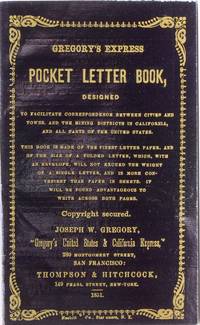
1851320912San Francisco: Joseph W. Gregory 1851. 20 blank leaves. 24mo. Original dark purple wrappers printed in gilt. Minor ink stains on inner wrappers otherwise a near fine copy with the original unused plain paper envelope. 20 blank leaves. 24mo. A lovely example of an unused Gold Rush letter book intended to advertise Joseph Gregory's California and New York Express Line by means of a convenient way for gold seekers in California to communicate with friends and family back home. According to the wrapper "this book is made of the finest letter paper and of the size of a folded letter which with an envelope will not exceed the weight of a single letter and is more convenient than paper in sheets Joseph W. Gregory unknown
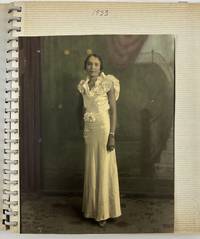
19554414Various locations 1955. Very good. 9 leaves illustrated with twenty-nine photographs various sizes between 3 x 2 inches and 9.5 x 7.5 inches with a manuscript index at front identifying the subjects. Later blue-green limp vinyl album with self adhesive pages. Minor wear and soiling. Photographs in generally nice condition. An interesting family photograph album assembled by a later-20th-century descendant of an African-American family with ties to Howard University Alcorn College and the West Coast. The photographs are mostly studio portraits of various kinds sepia-toned black-and-white hand-tinted featuring distinguished African-American men women and children. The photographs are arranged in number order and keyed to a handwritten list at the front of the album identifying each subject and occasionally including brief additional information about some of them. Most of the photographs also have a date written near them on each album page. The photographs seem to center on two woman probably sisters named Olga Williams Roby and Alma Williams Greene; the album includes two photos of Olga and multiple images of Alma and there are photographs inscribed to each of the women here. Olga apparently lived on the West Coast as the earlier of her two photographs is noted in California and the later in Seattle in 1940. One of Alma's photographs features her while at Alcorn College. There are also multiple images of Dr. Clifton Nelson one at Howard University. Four of the photographs are noted as emanating from the various subjects' time at Alcorn College now Alcorn State University in Mississippi. This combined with a final page of photographs featuring family friends one of which pictures a house in Greenwood Mississippi indicates the larger family probably emanated from Mississippi. The fact that several of the subjects attended college combined with Olga's life on the West Coast indicates at least part of this family participated in the Great Migration. unknown
194564014San Francisco CA: Carl Frederick Hobby 1211 Jackson Street ca. 1945. One large oil painting on canvas sized 11 x 14 in. preserved as original stretched canvas within the frame as presented to the artist’s niece and with the original green & gilt frame sized 14.5 x 17.5 in. now professionally cleaned and w/ artist’s pencil numbering on verso of frame and apparently executed about the same time as his “Produce Stand†painting. Signed in lower corner this painting was presented by the artist following the War to his niece and held in the family until 2025. This original oil painting depicts a young Chinese-American child drinking from a bottle of orange soda in traditional Chinese hat and high-collared cloak with rain falling around the subject as well as brick wall and cityscape faintly in the background. Chinese-American children were frequent subjects along with their families for the artist as he often featured them with parents marketing or in their everyday lives on the teeming streets of San Francisco. This close large portrait represents an unusual format for the artist as he tended to paint and draw group scenes.Hobby 1886-1964 was the son of an Iowa City IA ophthalmologist and moved with the family as a teenager to San Diego CA about 1900 where he began working at 14 as a sketch artist and later published a book in San Diego in 1919 with his artwork. He studied art at the Cumming School of Art in Des Moines the Art Students League in New York and became portrait and landscape painter in San Diego until 1923. After a divorce from Plooma Crowther he settled in San Francisco in Chinatown where he became an instructor at the Art Center while also painting and sketching the densely populated area publishing “The Street of Dragon Lanterns Chinatown of San Francisco†in 1936 while contracting with the Madison & Burke Agency through World War II. Exhibits of his paintings and pen & ink sketches were displayed at the Oakland Art Gallery in 1928 and the Society for Sanity in Art in 1945. See: Maud McB. Maywood Palm City The Chula Vista Star July 9 1937 p. 6; Sketches of San Diego 1919. Carl Frederick Hobby, 1211 Jackson Street, unknown
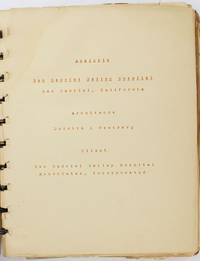
19535310San Gabriel Ca: Quintin & Westberg Architects 1953. Very good. 18pp. printed rectos only plus seventeen full-page mounted photographs. Quarto. Contemporary cardboard covers with clear outer wrappers spiral bound. Minor wear a couple of text leaves a few photographs and the rear cover detached but present. A seemingly-unique report on the proposed small-scale San Gabriel Valley Hospital prepared by Robert Quintin of the architectural firm of Quintin & Westberg in midcentury California. The text includes an introduction interviews with the architects and the hospital and a conclusion beginning with a historical background on the architectural needs of the group of medical doctors building the hospital and also including construction specifics "acoustical necessities" and more from the architects' perspective. The second section comes from an interview conducted with the hospital's representative David A. Lawrence who discusses management of the facility the quality and workability of the facility suggests numerous changes to the hospital based on his experience there and more. The text is illustrated with numerous photographs showing architectural plans exterior views and several interior views of various hospital locations such as the lobby major surgery minor surgery a typical patient room a corridor the delivery room nursery kitchen boiler room and so forth. There are also a few hand-drawn diagrams within the text. The architectural firm of Quintin & Westberg was based in Alhambra and lasted between 1941 and 1953 at which time the principals Scott Quintin and Edwin Westberg went their own ways. The present report is signed in type on the last page by Scott Quintin's son Robert who was in his twenties at the time and working as a draftsman for his father's firm. No copies in OCLC and likely prepared in very few copies for those involved with building the hospital. Quintin & Westberg, Architects unknown
1954List3210Greenville Illinois 1954. Two stapled packets of mimeographed typed pages eighty-seven and twenty-eight pages with one signed. Excellent to Near Fine. An autobiography and genealogy written by Ulysses S. DeMoulin 1871–1955 founder of DeMoulin Bros. a uniform manufacturing company which now mainly supplies marching band attire. The genealogy incorrectly traces the family’s history back to French Revolutionary figure Camille Desmoulins though it appears accurate otherwise. It includes a description of early Sebastopol Highland Illinois with a simple map. In the autobiography which is told in a large number of short anecdotes DeMoulin discusses his childhood and early life in Jamestown and Sebastopol and goes into detail about the early years of his company beginning with the formation of the Modern Woodmen of America fraternal organization for which the company supplied uniforms and items used in ‘rituals’. DeMoulin used the profits from this enterprise to invest in a number of others including a mine near Gold Hill Colorado and oil drilling land in Illinois. However the most interesting portions of the autobiography concern DeMoulin’s role in the development of agriculture in California’s Imperial Valley.<br /> <br /> DeMoulin first travels to southern California in 1903 happening to meet several engineers involved with the Imperial Irrigation System who take him to see the new town of Brawley:<br /> <br /> “Here by lantern light we sat around on the ground in the evening discussing many kinds of farm lands and if soft hard or sandy. We slept in ‘remadas’ made by setting posts to protrude about twelve feet above the ground which were then braced and divided into small box-like stalls. The remada was then covered with tree branches and a huge heavy taupalin sic curtain hung over the sides and front at night to keep out the dust of which you might find two or three inches at your door in the morning. A pitcher of water and a bowl were your only means of bathing. There were no streets in Brawley at this time only trails as the town had not yet been surveyed having only been founded in October 1902. People were living in tents while waiting for completion of hotel accommodations and other living quarters under construction.â€<br /> <br /> DeMoulin begins buying land in the Brawley area to rent to farmers and traveling to the area regularly. He describes the building of the Laguna Dam spending a week at the workers’ camp “at which time I slept in the workmen’s crudely-built bunks and ate with them at the long rough pine tablesâ€; and befriends author Harold Bell Wright. He also witnesses several conflicts with the IWW:<br /> <br /> “In 1908 there moved into Brawley about 200 International Workmen of the World or more familiarly known as ‘I.W.W.’s’ I won’t Work and in command was a Captain Stanley. However as most unwelcome guests they proceeded to join a strike in the cantaloupe sheds and inserting razor blades into apples the strikers threw them at workers. ‘Goons’ also tried to interfere with the trucking operations from the fields to the packing sheds. I recall of one driver telling a goon that if he even attempted to place a foot in his truck he would shoot him. And defying the driver the goon was instantly killed. Naturally this would cause a riot and they sent to El Centro for a tank such as it was in those days - a cannon and several machine guns. But soon after the Mayor had issued orders to shoot anyone getting out of hand an agreement was easily reached.â€<br /> <br /> University of Washington’s IWW History Project documents two IWW actions in Brawley between 1905 and 1920 neither of which match DeMoulin’s description; nor does the event appear in newspapers. However “Captain†William Stanley was in the area serving as the secretary of the I.W.W.’s chapter in the Imperial Valley. In 1911 Stanley was killed in an early battle of the Mexican Revolution assisting Mexican Liberal Party fighters in occupying Mexicali. DeMoulin claims to have traveled with several others to watch the fighting that would end the occupation:<br /> <br /> “It was suddenly discovered one morning that Captain Stanley and his I.W.W.’s had disappeared during the night and word had gotten around they had settled in Mexicalo sic a Mexican border town and were so strong in number they overpowered the police pillaged the shops and stores defying the Mexican Government by taking over complete possession of Mexicalo. However after putting up with this condition for several months the Mexican Government sent in about 500 Infantrymen with orders to get rid of them immediately under any condition. . Stanley’s men had made a large opening in the river bank to a depth of about five feet which led through to the bank facing south. From this vantage point his men could fire their muskets when the Mexicans advanced towards them and soon took to their heels when Stanley’s men began firing. . Several of us had driven down to sic Brawley to witness the fighting and bullets had been spattered everywhere. Many of the people never thinking of danger stood out in the open so as not to miss what was going on but I was glad to stay in the back of the adobes at least where one was protected from stray bullets. And having heard rumors of their retreating possibly the next day which was Sunday we drove down again but all was quiet and we met with no resistance. Many of the men were swimming and others were entertaining their wives and families in one way or another. We didn’t stay too long on that trip as one never knew what might happen. But it wasn’t long before they disappeared from Mexicalo entirely for which everyone was most grateful and happy.â€<br /> <br /> DeMoulin is none too fond of Mexican workers either describing how the 1928 construction of a primitive border wall “didn’t stop the wetbacks . from swimming across†and complaining that “regardless of having no sense nor education many were hired and the employers would hide them in groves because if they were arrested it would cost $160.00 including court and attorney fees to have each one returned to Mexico.†DeMoulin’s other targets for racial abuse include “a couple of crooked ‘Jewish Kikes’†who were “certainly professionals when it came to putting the money in their pockets†and several Black men who he claims steal from him.<br /> <br /> DeMoulin credits himself with bringing grapefruit production to the Imperial Valley and describes a scam by the area’s real estate agents to unload inferior farmland onto unsuspecting investors. He recounts his company making leather “‘Red Men’s’ costumes†for a “Chief Gray Eagle†in Oklahoma whose “squaws wouldn’t work for him any more.â€<br /> <br /> Of interest to historians of the Imperial Valley’s development and especially of labor relations in the agriculture industry. unknown
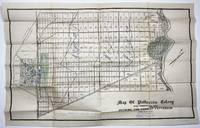
19092201N.p. perhaps Minneapolis 1909. Very good. Lithographed plat map 19.75 x 30 inches. Folded. Minor wear numerous plots rubber-stamped "Sold" and with additional shading of some portions in blue or green pencil and with prices for different groups of lots boldly penciled in ranging from $150 to $200. Stamp of a Minnesota real estate agent at bottom right. An unrecorded real estate plat map of the central valley town of Patterson along the San Joaquin River with the downtown area shown. This particular copy of the map is well used and contains vital information on the development of the town through sold lots and manuscript additions of pricing information for sections of the town. Below the title is the ink stamp of N.J. Blomgren Gen'l Northwestern Agent Patterson Colony Lands Minneapolis Minn. Evidently the aim was to get Minnesotans to trade the frigid winters of the Land of Lakes for the scorching summers of the San Joaquin Valley. "J.E.S. 12/5/1909" is printed in lower right corner. <br /> <br /> The history of Patterson begins with the Ranch Del Pueblo Mexican Land Grant Land to Mariano and Pedro Hernandez in 1844 by Governor M. Micheltorena. In 1866 John D. Patterson bought 13340 acres for $5.400 from J. O. Eldredge who bought the grant from S.G. Reed and R. S. Wade who had the patent encompassing the land grant signed by President Abraham Lincoln. John D. Patterson purchased additional land and upon his death in 1902 a total of 18462 acres were willed to Thomas W. Patterson and William W. Patterson his estate executors and other heirs. The land was sold to the Patterson Ranch Company on May 16 1908 for the sum of $540000 cash gold coin. <br /> <br /> Thomas W. Patterson subdivided the land into ranches of various sizes and plotted the design of the town of Patterson. Determined to make Patterson different from most he modeled his town after the Cities of Washington D.C. and Paris France using a series of circles and radiating streets. Major streets were planted with palms eucalyptus and sycamore trees. The Patterson Colony map was filed with the Stanislaus County Recorders office on December 13 1909. Sales of the ranch properties and city lots commenced. Patterson was the third city in Stanislaus County to incorporate in December 1919. No copies of this map are recorded by OCLC. unknown
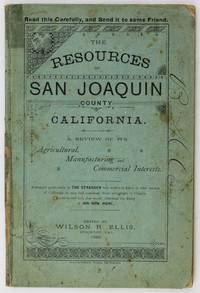
18862850San Francisco: Bacon & Company 1886. Good plus. 64pp. plus two folding plates. Original printed wrappers. Spine and wrapper corners chipped; relatively sympathetic tape repairs to spine. Contemporary ownership inscription on front wrapper. Plates separating at folds. Even tanning scattered foxing. Scarce 1886 promotional pamphlet for San Joaquin County and its county seat of Stockton "Addressed particularly to the stranger who wishes to know in what portion of California he may find combined those advantages in climate location and soil that would determine the fixing of his new home." The pamphlets contains two maps one double-page color map of the county by soil type chromolithographed by Britton and Rey the other a folding map of rail routes and connections of the Sierra Nevada & San Joaquin Railroad. The verso of this plate depicts the county exhibit at the 1886 California State Fair. The text itself is quite extensive with a focus soil and agriculture; numerous local advertisements throughout. OCLC locates seven copies; only one in auction records for the last fifty years. Bacon & Company unknown
190159528San Francisco CA: Printed by the Stanley-Taylor Co. 1901. Oblong 4to. 11 x 7.25 in. 103 leaves unnumbered. including 95 leaves of photo illustrations. Publisher’s half-morocco over burgundy-coloured cloth beveled boards gilt lettering stamped on front cover decorated Italianate endpapers minor wear rubbing rubbing to corners slight bumping to corners still VG copy presented to A. Greeninger Director General of the Rose Carnival Committee. First edition of this uncommon souvenir album documenting the 1901 visit of President McKinley to the Carnival of Roses sponsored by the Santa Clara County Rose Society. This festival was only the second after the original in 1896 and was intended to compete with the Pasadena Rose Pageant at the time. President McKinley visited California only months before his assassination at the Pan-American Exposition in Buffalo New York. He was the first U.S. President to visit the state after acquisition following the Mexican-American War and brief independence. The photos show McKinley his cabinet the Ladies Auxiliary organizers floats and scenes of California as the 20th Century opened. The introduction highlights the specially bound souvenir which was presented to President McKinley. Worldcat locates 5 copies Bancroft Santa Clara City & County Lib. San Jose Pub. San Jose State. Printed by the Stanley-Taylor Co., hardcover
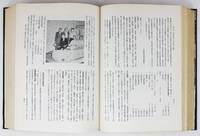
19604561Los Angeles: Japanese Chamber of Commerce of Southern California 1960. Very good. 134756167xi2pp. plus eleven pages of photographic plates. Quarto. Original limp green cloth gilt spine titles. Minor rubbing and dust-soiling to boards small bump to top edge spine titles a bit worn and faded. Internally clean. A massive and detailed historical account of the Japanese American experience in Southern California issued by the region's Japanese Chamber of Commerce. The work is printed in both Japanese and English with chapters on Japanese immigration local Japanese associations various industries engaged in by Japanese immigrants in California the experiences of both Issei and Nisei histories of religion sports the internment period post-internment period and more between 1885 and 1960. The Japanese section includes numerous photographs featuring prominent Japanese-American businesspeople organizations scenes of agricultural labor and more interspersed throughout the text. The eleven photographic plates preceding the Japanese section picture Japanese areas of southern California scenes of industry and business various notices relating anti-Japanese sentiment in the area group shots of Japanese-American businesses and associations prominent Japanese-American business figures and more. A significant and dense history of the Japanese-American experience in Southern California somewhat well represented institutionally but rare in commerce. Japanese Chamber of Commerce of Southern California unknown
1930156261N.p.: N.p. 1930. Archive of eight vintage photographs documenting the harvesting processing packaging and shipping of oranges by Sunkist Growers of Orland California circa 1930s. Mimeo snipes on the versos of each and seven with PIX Incorporated and Westport Library stamps on the versos.<br /> <br /> One of the largest marketing cooperatives in the US Sunkist Growers was formed in 1893 a time when citrus acreage had increased in California by over tenfold. Today the company remains one of California's largest landowners and is the largest fresh produce shipper in the US representing more than 6000 members.<br /> <br /> 10 x 8 inches. Very Good plus to Near Fine overall. N.p. unknown
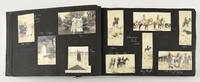
19252671Various locations including Texas and California 1925. Very good. 35 leaves illustrated with 272 original vernacular photographs of various sizes plus a handful of ephemeral items all mounted. Oblong folio. Contemporary black cloth photograph album gilt titles on front cover string tied. Minor soiling staining and rubbing to boards minor edge wear. An artfully-composed annotated vernacular photograph album documenting the life of a female compiler and her family in Texas and California over about a decade after World War I. The album opens with a few dozen scenes on the Los Rados and Cheyenne pastures of the Q Ranch and in the relevant residences in Channing Texas. The Q Ranch scenes feature cowboys on horseback horse-drawn carriages scenes of cattle rustling and more. The album compiler was most likely a woman living for some time at the Q Ranch; she notes on more than one occasion when people are leaving the ranch for more western locations. For instance in May 1919 the compiler notes when "Em and Norine left for 'Sunny California.'" They include a handful of "Scenes enroute Texas - California" which show mainly scenes in New Mexico. Another series shows pictures memorializing several people "Leaving Channing and us for Husband and Pocatella Idaho." Several photographs from 1921 depict the compiler's experiences at the Union Laundry in Breckenridge Texas; this section also includes several pictures of the Breckenridge Natatorium.<br /> <br /> There are also other western scenes showing a ranch in Harney County Oregon located "miles and miles from no-where." These Oregon pictures depict both men and women working the fields of a farm and ranch in a remote location. The scenes in California record the compiler's time visiting family in San Pedro Inglewood Hermosa Beach and other places in California. Towards the end of the album the compiler notes that she is "Home Again Here at Last Never more to Roam Home Sweet Home" when she arrives in California. Other locations documented here include Juarez Mexico apparently a vacation scenes along the Santa Fe Route in Colorado to California and others.<br /> <br /> Several subjects are identified by name in the present album such as John Quarrles Jr. Jeannie Thomas Louisa Collins Grandmother Millering Katie Braithwaite Rosa Euola and Gladys Dawson and numerous others sometimes only noted by their first names. These names should provide ample opportunity to connect the subjects of the present album to a larger context within the community of North Texas ranching families based in California. unknown
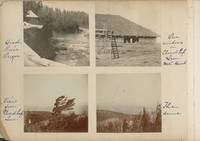
1890List2871Oregon Washington and California 1890. One forty-two page photo album with 9 ½ x 7 inch pages; 109 total photographs with eighteen 4 x 7 inch and larger and ninety-one 3 ½ x 3 ½ inch. Larger photographs captioned on negative and likely purchased while smaller ones are original. Album pages with chipping at corners and some repair with tape; photographs with some wear and very good to excellent contrast; overall very good to excellent. A photo album from two trips taken by an unknown tourist one around the Pacific Northwest and the other in central and southern California with written captions describing location and subject matter. The California trip starts in San Francisco and includes shots of Monterey “Mexicans at Los Angeles†and many of the Santa Barbara Mission and San Diego. <br /> <br /> The Pacific Northwest photos show scenery around Mts. Hood and Rainier including from the recently-built Cloud Cap Hotel; the Columbia River Paradise Valley American Lake and others. There are also shots of the Hotel Groe built in 1893 and Kernahan home in Pierce County Washington – James Kernahan was one of the earliest Euro-Americans to homestead in the region arriving in the area in the late 1880s. The Kernahan family is mentioned in an account told by John Muir’s photographer of summiting Mt. Rainier with John Muir in 1888.1 Further towards Rainier there are shots of the Longmire buildings built in about 1884.<br /> <br /> Four interesting shots from Puyallup also in Pierce County are worth mentioning. Two show hops fields one a line of tents identified as belonging to the “Indians†and one of an “Old Indian woman†standing barefoot on train tracks. Before 1892 growing hops drove the economy of Pullyup; Indigenous people would travel from the US and Canada to Pullyup to work the harvest.2 These photographs likely postdate the hops crash.<br /> <br /> Of interest to historians of the Pacific Northwest and California and especially of Pierce County Washington.<br /> <br /> 1 “John Muir’s Ascent of Mt. Rainier As Recorded by his Photographer A. C. Warner†The Mountaineer 50 no. 1 1956: 38–45.<br /> 2 Hans Zeiger “Indigenous Hop Pickers in Western Washington†HistoryLink October 3 2021 https://www.historylink.org/file/21295. unknown
01-1097Sacramento Calif. 1893-1946. 12 volumes. Blue cloth. Several are presentation copies. From the library of Gardiner Johnson late Speaker Pro Tem of the California Assembly 1940s President of the S.F. Bar Association and of the Commonwealth Club 1950s. Sacramento, Calif., 1893-1946. hardcover
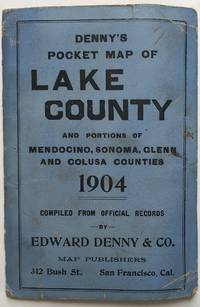
1904725San Francisco: Edward Denny & Co 1904. Very good. Folding map 26.5 x 17 inches. Original printed wrappers. Some wear and creasing to wrappers. Light dust soiling and scattered faint foxing. A rare pocket map of Lake County California published by Edward Denny in 1904. The map is printed in blue ink and is divided into townships with Guenoc and Gallayomi Ranchos identified near the foot of the map area and major roads through the county delineated. Clear Lake the county's namesake is prominently depicted at center and numerous springs are located and named in its vicinity. The present edition of this map is the first with revised editions published in 1907 and 1910. All are quite rare but the 1904 edition is particularly so with only one copy located by OCLC at the Bancroft Library. Edward Denny & Co unknown books
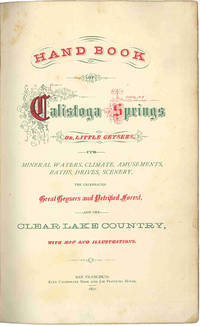
1871WRCAM45708San Francisco: Alta California Book and Job Printing House 1871. 304pp. plus folding map and six of seven lithographic plates. Lacks the folding view of "Calistoga Springs in 1871." Titlepage printed in red and green. Original limp purple cloth stamped in gilt and blind white cloth backstrip. Cloth sunned rear cover repaired with tape at upper edge. Two small chips in titlepage else quite clean internally. Very good. A scarce illustrated pamphlet promoting the lovely Napa Valley community of Calistoga and its healing springs. "Justly called the Saratoga of the Pacific Calistoga has been a renowned resort for over a hundred years. This guide proudly describes the numerous advantages and beauties of the northern section of the Napa Valley. Originally settled by Sam Brannan Calistoga provides the visitor with natural mud baths geysers mineral baths the grape cure and the famous 'air and sun' cure to this day" - Howell. The map shows routes to Calistoga Springs from various places throughout California. The attractive plates like the map lithographed by Britton & Rey show various views of Calistoga including the railroad depot Mount St. Helena vineyards the swimming baths and Wapoo Indians. <br> <br> We can locate only two copies of this attractive work offered for sale in the past thirty-five years one copy at auction in 1991 and the copy offered by Warren Howell in his Catalogue 50. Two copies were offered by the Holmes Book Company as part of the Norris Collection in 1948 one with the folding view of "Calistoga Springs in 1871" priced $5 and one without priced $3. The present copy lacks the folding view. A scarce promotional with early and attractive views of this Napa Valley landmark. ROCQ 5876. COWAN p.102. HOWELL 50:345. NORRIS CATALOGUE 501 3666. Alta California Book and Job Printing House hardcover books