8 987 résultats
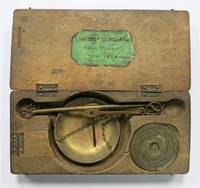
42777New York: E. Fabreguettes Fils & Morra n. d. Circa 1850. Wooden case with a hinged lid and hook clasps seller's label to inside of lid. Interior has carved compartments for the brass scale and weights including a small compartment for grain weights with a hinged lid. Light general wear to case and weights brass balances a bit tarnished. Only contains the three grain weights so perhaps others missing VG overall. Suspension gold scale made of brass with troy and grain weights. Troy weights nested ranging from 1/16 to 4 oz; grain weights include 2 6 and 10. Case: 1-11/16" x 6-11/16" x 3-1/8". Scale when hanging: ~8-1/4" x 7-1/8" brass balances 2-1/2" in diameter. <br/><br/>In 1850 the New York firm of E. Fabreguettes Fils & Morra importers of French fancy goods attempted to capitalize on the California Gold Rush by adding gold scales to their wares. Notices in several of the city's papers in late October and early November of that year including the Monday November 4th edition of The Evening Post advertised the following: "GOLD SCALES. The subscribers offer for sale the best and most approved pattern of French Standard Gold Scales adjusted exactly to the United States Mint Standard of every size and weight. These scales are so made that they take but very little compass when packed and are much more neatly and conveniently finished than either the English German or American article. As we have all that are made of this pattern parties having orders for shipment to California are solicited to examine them before purchasing elsewhere. Also for sale a variety of French fancy goods accordeons sic &c. E. Fabreguettes Fils & Morra 73 William Street up stairs." E. Fabreguettes Fils & Morra was located at 61 Maiden Lane until at least 1847 moving to their William Street address in 1848 or 1849. No later advertisements for these scales appear to have been issued in New York newspapers leading us to conjecture that the firm's venture into the gold mining market was perhaps not particularly successful. It is of course impossible to say with any certainty if this particular scale was originally used during the Gold Rush though this one here offered was purchased in California giving rise to possibility it may very well have been. In either case a nice artifact from the California Gold Rush era. E. Fabreguettes Fils & Morra unknown books
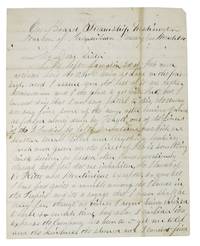
1851476391851. Now housed in an archival mylar sleeve. Age-toning especially along fold-line. Penmanship clear & easily read. Bifolium i.e. 4 pages of lined paper 23 lines per page ~ 10 words per line ~ 900 words. 9-3/4" x 7-5/8" <br/><br/>While no year is written on the ALs itself we posit 1851 as the Maritime Heritage website shows the only visit to San Francisco by the Washington was July 21 1851 arriving from Baltimore per a newspaper entry in the Daily Alta. That said per a online perpetual calender March 14th came on a Tuesday in 1852 not 1851. We lean towards 1851 as the actual year this letter was written. And this historic letter is replete with interesting content written by a man bound for the promised land of California. Chamberlin is from Boston writing a newsy letter his sister posted from the Harbor of Pernambuco Brazil March 14 where the ship in taking on supplies including coal. He describes the voyage thus far the expense of the company that sent him and the trip ahead around the Horn expecting to arrive in California in about 30 days. He describes conditions aboard the ship the places he has visited the people he has met in Brazil his own experiences with the heat and fever and more. Letters from this era are apprearing ever more infrequently on the market. unknown books
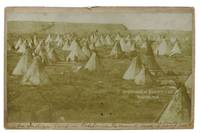
47248n. p. n. d. Ca late 1860s / early 1870s. Now housed in an archival mylar sleeve. Mount soiled with some edge wear. Yellowing to image. About Very Good. Rectangular creme-colored mount square corners no imprint. 4-1/2" x 7" <br/><br/> unknown books
1921802Colusa Ca. 1921. About very good. 8pp. Pictorial self wrappers stapled. Light wear and creasing; a few short closed tears at wrapper edges. Contemporary ownership inscription on front wrap. Even tanning. A scarce promotional for the Young Oil Company and its development of an apparently lucrative oil strike at Bear Creek in Colusa County during 1921. The pamphlet prints a story first published in the local Colusa Sun newspaper which documents history of oil production at the site chronicles the purchase of the lease by Young Oil in 1915 and relates positive comments from several contemporary geologists' reports that convinced the company to significantly increase its investment and work on the property including the imminent arrival of an industrial drilling rig from Texas. The remainder of the text publishes a letter from a Sacramento oil man William Babcock which describes the operation as "The best oil venture that I know of -- in fact it looks so good to me that while I have for all intents and purposes retired from active participation in the development of the oil business I shall in this case make an exception." The final leaf prints an enjoinder from the company to "Buy all the Young Oil Company stock you can afford" and gives the organizational information of the firm. Illustrated with five halftone images of the site; not in OCLC. unknown books
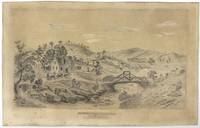
18501475Medway Ma. 1850. Very good. Pencil sketch on heavy paper with faint tempera highlights. Image measuring 7.5 x 11.5 inches on a sheet 8.25 x 13 inches. Light dust soiling and faint foxing. Evenly tanned. A skilled contemporary pencil sketch after a classic California Gold Rush pictorial letter sheet by San Francisco lithographers Britton & Ray depicting Jamestown and Woods Creek. The original letter sheet published in 1853 utilized a work by English artist and civil engineer George Henry Goddard who settled in Sacramento the previous year. It shows the town and stream from the south with all in a relatively tranquil mode as a horse-drawn carriage approaches a bridge on the road in the foreground. Jamestown "The Gateway to the Mother Lode" was founded in 1848 and gold was discovered there relatively quickly thereafter and the town continued to enjoy long periods of prosperity until the end of the 19th century due to its rail connections and quartz mining.<br /><br />The present folk art iteration of the letter sheet is signed "H. Baker" in the lower right corner and it seems likely that it was accomplished by a family member of another well-known California lithographer George Holbrook Baker. Baker came to California during the Gold Rush from Medway Massachusetts settling in Sacramento around the same time as Goddard and his work was also used by Britton & Rey and others in their productions. He certainly would have known his fellow artist and neighbor in Sacramento and probably sent copies of pictorial letter sheets home to Massachusetts where the present sketch turned up in a sale of some of Baker's other art and drawings in order to keep them apprised of his work and well-being. Overall this copy is a decent imitation by its recipient and well demonstrates the popularity use and extended life of the letter sheet genre in this case as it relates to California and the Gold Rush. books
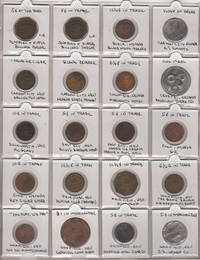
1900009672<b>Western Trade Token Collection with Additional Exonumia.</b><br /><br />Collection of forty-eight western tokens plus other exonumia composed mostly of merchant "good for" tokens several Pony Express commemorative 'so-called-dollars' a tool-check and a 'dog house' license. These were issued at various locales mostly in Nevada with a couple from California. The tokens were identified by Palazzo John Schilling or Holabird Auctions. Palazzo's old and badly worn cardboard mounts have been replaced with new Lighthouse coin 'flips' and the original information has been transferred. Mixed condition; some near mint and others well-worn as is common with many tokens. One of the images at the link displays a list of all the tokens which will also be provided in hard copy.<br /><br />Trade tokens were a form of unofficial 'minor coinage' made from base metals such as brass copper nickel or aluminum and usually cast as circular disks but occasionally as octagons triangles or in scalloped shapes. They seldom if ever had a value of more than a dollar. Trade tokens sometimes referred to as "Good Fors" because they were usually stamped "Good for" followed by a product service or monetary value first appeared in the United States during the late 1700s and it's been suggested that George Washington used a trade token to attend Bill Rickett's Philadelphia Circus in 1793. <br /><br />Often like some of the tokens in this lot they were issued to be exchanged for a specific product or service such as a loaf of bread game of pool meal hotel room or brothel visit. In the western states company stores and independent businesses made frequent use of tokens in mining towns and camps where coinage was often scarce. As an added incentive for businesses they could only be redeemed at the place of issue and with little if any law enforcement they were a safe substitute for gold and silver. Also if the tokens were never redeemed business owners pocketed a little extra profit.<br /><br />The towns and cities represented in this collection include Aztec Blair Carson City Crystal Duckwater East Ely Elko Fairview Goldfield Los Angeles McGill Mound Hill Reno Tonopah Tuscarora and Winnemucca. Today some of these places are ghost towns. <br /><br />The lot includes tokens distributed by the American Borax Company general stores drug stores tobacco stores billiard parlors hotels and saloon/brothels. <br /><br />The most interesting tokens in this lot are<br /><p>Two different tokens from Goldfield Nevada's most famous saloon The Northern. </p><p>One of these tokens was originally bimetallic with an aluminum ring around a copper or brass disc. The disc is missing on this token just as it is on almost all the others that have survived. </p><p>Tex Rickard and his silent partners Wyatt and Virgil Earp opened The Northern in 1905 and Wyatt briefly managed the establishment during its first year of operation. In time Rickard became a very successful fight promoter; he promoted the championship fight between James J. Jeffries and Jack Johnson. He later used his fortune to build the third iteration of Madison Square Garden--which lasted from 1925 to 1968. During his Garden's second year of operation Rickard formed a professional hockey team to play there Tex's Rangers known today as the New York Rangers.</p><p>A 12½ cent token for the Red Top Bar one of Goldfield's notorious brothels.</p><p>Two 5-cent tokens from the Jeffries & Kipper Billiard Parlor and Gentlemen's Café in Los Angeles which the two men opened in partnership in 1907. Kipper was a frustrated boxer who eventually became the manager of the Los Angeles Coliseum. Jeffries was the legendary Heavy Weight Champion James J. Jeffries who was lured back into the ring for a $1 million payday in today's dollars six years and an additional 110 pounds after he retired as the "Great White Hope" to fight the then-current champion Jack Johnson.</p><p>For additional information about trade tokens see Rulau's <i>Standard Catalog of United States Trade Tokens 1700 to 1900</i> Ascarza's "Mine Tales: Trade tokens were used widely but are rare today" in the 9 Dec 2013 issue of the <i>Arizona Daily Star</i> and "John Bill Ricketts and the Ricketts Circus" at Circuses and Sideshows online.<br /><br /> A fascinating physical record of commerce in the boomtowns of the American West. Recent auction results found at Worthpoint suggest the total value of this lot to be just under $1600.</p>
1900009672Collection of forty-eight western tokens plus other exonumia composed mostly of merchant "good for" tokens several Pony Express commemorative 'so-called-dollars' a tool-check and a 'dog house' license. These were issued at various locales mostly in Nevada with a couple from California. The tokens were identified by Palazzo John Schilling or Holabird Auctions. Palazzo's old and badly worn cardboard mounts have been replaced with new Lighthouse coin 'flips' and the original information has been transferred. Mixed condition; some near mint and others well-worn as is common with many tokens. One of the images at the link displays a list of all the tokens which will also be provided in hard copy.<br /><br />Trade tokens were a form of unofficial 'minor coinage' made from base metals such as brass copper nickel or aluminum and usually cast as circular disks but occasionally as octagons triangles or in scalloped shapes. They seldom if ever had a value of more than a dollar. Trade tokens sometimes referred to as "Good Fors" because they were usually stamped "Good for" followed by a product service or monetary value first appeared in the United States during the late 1700s and it's been suggested that George Washington used a trade token to attend Bill Rickett's Philadelphia Circus in 1793. <br /><br />Often like some of the tokens in this lot they were issued to be exchanged for a specific product or service such as a loaf of bread game of pool meal hotel room or brothel visit. In the western states company stores and independent businesses made frequent use of tokens in mining towns and camps where coinage was often scarce. As an added incentive for businesses they could only be redeemed at the place of issue and with little if any law enforcement they were a safe substitute for gold and silver. Also if the tokens were never redeemed business owners pocketed a little extra profit.<br /><br />The towns and cities represented in this collection include Aztec Blair Carson City Crystal Duckwater East Ely Elko Fairview Goldfield Los Angeles McGill Mound Hill Reno Tonopah Tuscarora and Winnemucca. Today some of these places are ghost towns. <br /><br />The lot includes tokens distributed by the American Borax Company general stores drug stores tobacco stores billiard parlors hotels and saloon/brothels. <br /><br />Four of the most interesting tokens in this lot are<br /><p><p style="margin-left:5%; margin-right:10%;">Two different tokens from Goldfield Nevada's most famous saloon The Northern. One of these tokens was originally bimetallic with an aluminum ring around a copper or brass disc. The disc is missing on this token just as it is on almost all the others that have survived. Tex Rickard and his silent partners Wyatt and Virgil Earp opened The Northern in 1905 and Wyatt briefly managed the establishment during its first year of operation. In time Rickard became a very successful fight promoter; he promoted the championship fight between James J. Jeffries and Jack Johnson. He later used his fortune to build the third iteration of Madison Square Garden--which lasted from 1925 to 1968. During his Garden's second year of operation Rickard formed a professional hockey team to play there Tex's Rangers known today as the New York Rangers.<br /></p><p><p style="margin-left:5%; margin-right:10%;">A 12½ cent token for the Red Top Bar one of Goldfield's notorious brothels.<br /></p><p><p style="margin-left:5%; margin-right:10%;">Two 5-cent tokens from the Jeffries & Kipper Billiard Parlor and Gentlemen's Café in Los Angeles which the two men opened in partnership in 1907. Kipper was a frustrated boxer who eventually became the manager of the Los Angeles Coliseum. Jeffries was the legendary Heavy Weight Champion James J. Jeffries who was lured back into the ring for a $1 million payday in today's dollars six years and an additional 110 pounds after he retired as the "Great White Hope" to fight the then-current champion Jack Johnson. </p><p>For additional information about trade tokens see Rulau's <i>Standard Catalog of United States Trade Tokens 1700 to 1900</i> Ascarza's "Mine Tales: Trade tokens were used widely but are rare today" in the 9 Dec 2013 issue of the <i>Arizona Daily Star</i> and "John Bill Ricketts and the Ricketts Circus" at Circuses and Sideshows online.<br /><br /> A fascinating physical record of commerce in the boomtowns of the American West. Recent auction results found at Worthpoint suggest the total value of this lot to be just under $1600.</p> books
1929303902Sacramento CA n.p. 1929. 1929. Tall thin 8vo. Original black limp leatherette stamped in gilt rubbing. Very good. 78 pages. Assembly Concurrent Resolution No. 20. Adopted in Assembly March 22 1929. Signed by six officials including: Chief Clerk of the Assembly Arthur A. Ohnimus; Secretary of the Senate J.A. Beek; Private Secretary of the Governor Chas. A. Whitmore; Speaker of the Assembly Edgar C. Levey; President of the Senate . . . and Secretary of State Frank C. Jordan. Signed and inscribed on the front free endpaper: "Compliments Cherster M. Kline California Legislature 1929 77th Dstr." The copy belonged to Charles E. Brouse who was a member of the 15 member Riverside Board of Freeholders with his gilt stamped name on the front cover. See Rocq 6494 citing what appears to be a later printing with 81 pages. Hardcover. Very Good/No Jacket. [Sacramento, CA, n.p., 1929]. hardcover books
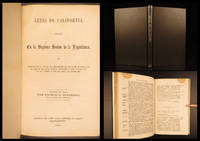
185650248<p>This 1856 Sacramento printing presents California legislative acts translated into Spanish by Thomas R. Eldredge issued for Spanish-speaking residents following statehood and the Treaty of Guadalupe Hidalgo. Printed by J. Allen state printer the volume records laws addressing inheritance public order county administration and regional governance including measures related to San Diego Los Angeles Marin and Sonoma counties. Near Fine condition; modern leather binding remains tight and secure with crisp gilt spine lettering pages clean with only mild age toning and minimal wear. 8vo single volume. Collation: 158 pp. Edition: 1856 First edition. 50248. PHOTOS AVAILABLE UPON REQUEST.</p> J. Allen hardcover
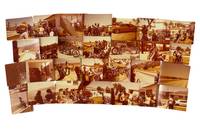
1970218411970. Latino History Photography Popular Culture Unidentified photographer Southern California motorcycle culture photographs circa 1970s document Chicano and white working class leisure mobility and community formation within West Coast biker subculture. The images record a multiracial group of riders engaged in mechanical work travel and social gathering across Los Angeles and desert regions providing direct visual evidence of how motorcycle culture intersected with broader forms of expression in Southern California including customization road travel and neighborhood based social networks. The archive supports research into Chicano cultural life subcultural identity and the material culture of motorcycles and automobiles in the late twentieth century.<br /> <br /> Los Angeles and Salton Sea region California circa 1970s. Archive of 35 original color snapshot photographs each measuring approximately 4.5 x 3.5 inches with occasional manuscript notations including one identifying "Salton Sea." The photographs depict a group of riders traveling in caravans repairing motorcycles and gathering in residential and roadside settings. Multiple customized motorcycles are visible including chopper style bikes with extended forks sissy bars and modified fuel tanks alongside standard production models such as Honda CB series motorcycles. Additional vehicles include pickup trucks vans and a lowrider style Chevrolet automobile with wire spoke wheels and modified body features indicating overlap with Southern California car culture. Figures appear in repeated groupings including men in bandanas sunglasses and sleeveless shirts and women in casual attire with scenes set against suburban homes motels and desert landscapes. One photograph includes a child posed before a motorcycle indicating the presence of family within the group.<br /> <br /> The archive situates motorcycle culture within the broader social landscape of Southern California during the 1970s when Chicano identity automotive customization and working class leisure converged in both urban neighborhoods and regional travel routes. The presence of both customized motorcycles and lowrider vehicles demonstrates the exchange of aesthetic and technical practices across related subcultures while the repeated depiction of group travel and shared spaces reflects the importance of collective identity within biker communities. These photographs document everyday practices rather than staged events preserving a vernacular record of social life mobility and cultural expression in the region. Minor creasing and light surface wear with slight color fading in some images; overall very good condition. A cohesive photographic archive of Chicano and multiracial motorcycle culture in Southern California during the late twentieth century. unknown
0918A956527Very Good. London: Simms and M'Intyre 1852. "Across the Rocky Mountains from New York to California: With a visit to the celebrated Mormon colony at the Great Salt Lake. Bound with the sequel: A Stroll Through The Diggings of California 1852 "The Bookcase" titling to spine Gilt on black other compartments with gloral gilt decor. stamped between five raised bands. Gilt borders to both front and rear covers. Edges gilt/ red. Corners rounded and scuffed. Edgewear. Front hinge starting slightly ext. only. Scattered scuffs but a handsome book overall. Pages only moderately toned without foxing. Bookcase Vols 1 and 4 bound as one. Scarce. hardcover
-1887, 4 volumi, 17 cm, ril. in mezza pelle, tit. in oro al dorso che è diviso da 4 nervi, p. lxvii, 293; 447; 418; 451, una tavola ripiegata f.t
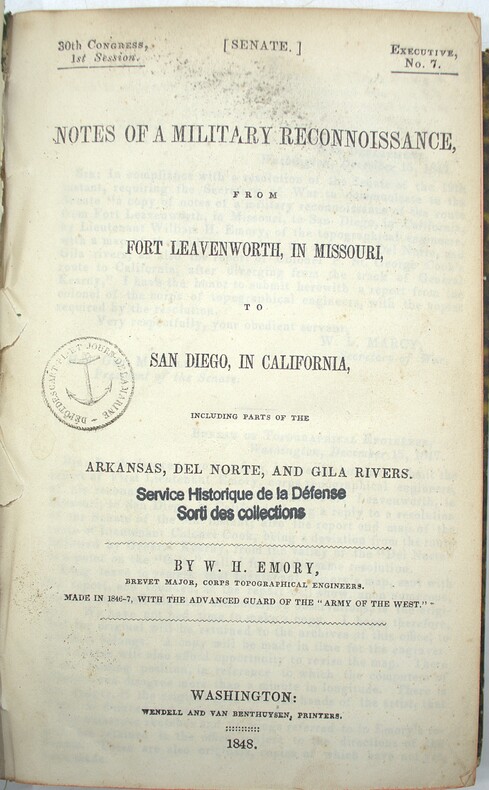
1848PHO-2174Washington, Wendell and Van Benthuysen, Printers, 1848. Octavo. xvi, 416 pages. Contemporary half calf, smooth spine gilt with author and title, red edges, stamp on title. Hinge cracked, small loose and label on spine. Large folding map detached and showing browning along the folds. First edition, Senate issue. 30th Congress, 1st Session, Senate, Executive No. 7. Illustrated with 43 plates, including three battle plans of the Mexican–American War (among them the Battle of Pueblo de Los Angeles), early views of California settlements (including San Diego), ethnographic portraits, and botanical plates, and accompanied by the large folding engraved map (33 × 75 inches, environ 84x190cm) The report documenting the military reconnaissance conducted in 1846–1847 during the Mexican–American War by Lieutenant-Colonel William H. Emory of the Corps of Topographical Engineers. The text is divided into two distinct parts : a narrative of the journey itself, combining geographical, logistical, and military observations, followed by extensive appendices presenting the scientific results of the expedition, including meteorological and astronomical observations, geological notes, and natural history data. A primary source for the history of the American Southwest. The plates provide early visual documentation of California, Native American populations, scientific observations, and contemporary military operations. The large folding engraved map, entitled Military Reconnoissance of Arkansas, Rio del Norte, and Rio Gila (dated 1847), is the cartographic centerpiece of the work. Compiled from original field observations, it provides the first comprehensive official mapping of the regions traversed by the expedition, integrating military routes, topography, settlements, barometric profiles, and tables of distances and elevations. The present example corresponds to the second and finalized state. Demi veau époque, dos lisse avec auteur et titre, tranches rouges, cachet au titre, charnière fendues, carte détachée et présentant des brunissures aux plis. Rapport officiel du Sénat sur la reconnaissance de 1846–1847, associant le récit de l’expédition et des annexes scientifiques. Illustré de planches et accompagné de la grande carte dépliante gravée, second état, document cartographique majeur de la guerre américano-mexicaine. Ch.3E
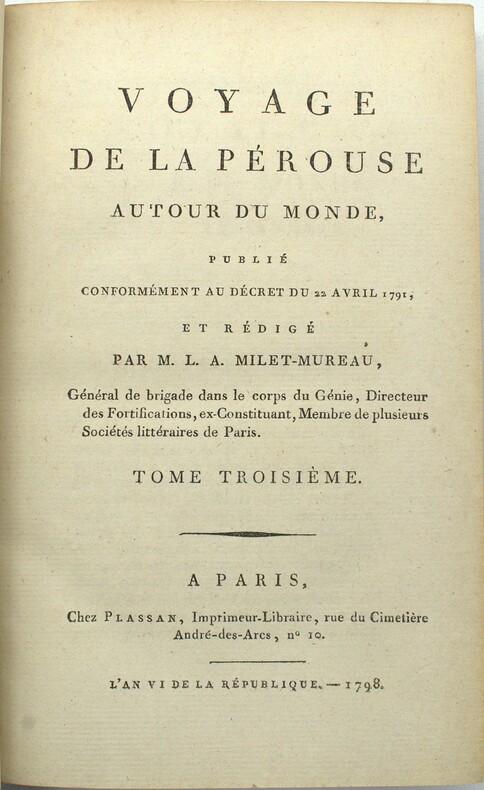
1798PHO-1899Paris, Plassan, 1798, 4 volumes in-8, relié demi chagrin (19eme), dos à nerfs avec titre, manque de papier en coin en fin du tome 1, mouillure claire en début et fin du tome 4, dos insolé. Bon exemplaire
76913An album containing 24 silver prints measuring 6 x 4 inches many showing the popular Smith's automotive businesses in downtown San Diego. The automotive service and parts company was founded and operated by Howard B. Smith known to many San Diegans at the time as "Service Smith". A native of Connecticut he trained as an engineer at U.C. Berkeley working his way through college in a repair shop and as a taxi driver. He moved to Michigan to work with the Chalmers Motor Company before relocating to San Diego in 1914 where he became an agent for cheap automobiles. In 1916 he opened the Smith automotive businesses and in 1918 the Owl Taxi with five Ford cabs.<br /> <br /> It would appear from the age of the automobiles in the photographs that the images date from the early 1920s. In 1921 Clemens W. Stose purchased Smith's Savoy Garage Smith's Motor Supply and Smith's Repair Shop. Laid into the album is a handwritten letter on Owl Taxi letterhead postmarked 1922. The album also contains early images of advertisements for tires and batteries along with a few other automotive-related businesses in the area. <br /> <br /> The album and photographs are in very good condition. The photographs are held in place with photo corners. The oblong black cloth album is bound with a string tie. unknown
70639Very good. An album containing 24 silver prints measuring 6 x 4 inches many showing the popular Smith's automotive businesses in downtown San Diego California. The automotive service and parts company was founded and operated by Howard B. Smith known to many San Diegans at the time as "Service Smith". A native of Connecticut he trained as an engineer at U.C. Berkeley working his way through college in a repair shop and as a taxi driver. He moved to Michigan to work with the Chalmers Motor Company before relocating to San Diego in 1914 where he became an agent for cheap automobiles. In 1916 he opened the Smith automotive businesses and in 1918 the Owl Taxi with five Ford cabs. It would appear from the age of the automobiles in the photographs that the images date from the early 1920s. In 1921 Clemens W. Stose purchased Smith's Savoy Garage Smith's Motor Supply and Smith's Repair Shop. Laid into the album is a handwritten letter on Owl Taxi letterhead postmarked 1922. The album also contains early images of advertisements for tires and batteries along with a few other automotive-related businesses in the area. The album and photographs are in very good condition. The photographs are held in place with photo corners. The oblong black cloth album is bound with a string tie. unknown books
2000410762000. UCLA Law Review. Los Angeles School of Law University of California Los Angeles. Vols. 1 to 39 42 to 46 47 part 1 51 part 1 1953-2004 Together 77 books. Sixteen 16 linear feet of shelf space. Ex-private law firm library tan buckram very good. Special $695. unknown
2000410762000. UCLA Law Review. Los Angeles School of Law University of California Los Angeles. Vols. 1 to 39 42 to 46 47 part 1 51 part 1 1953-2004 Together 77 books. Ex-private law firm library tan buckram very good. Special $695. unknown books
2004410752004. Southern California Law Review. Los Angeles: USC Law Center. Vols. 1 to 76 1927-2004 Together 106 books. Twenty 20 linear feet of shelf space. Ex-private law firm library vols. Tan buckram very good. Special $695. Established in 1927 the Southern California Law Review is an independent and autonomous entity. Each year the Law Review publishes one volume which is produced in six separate issues. Each issue normally contains several articles written by outside contributors and several notes written by students from the University of Southern California Gould School of Law. The Law Review strives to publish articles on a wide range of topics and to serve all segments of the legal community. In addition the Law Review frequently hosts a forum in order to explore timely or controversial areas of law. unknown
2004410752004. Southern California Law Review. Los Angeles: USC Law Center. Vols. 1 to 76 1927-2004 Together 106 books. Twenty 2 linear feet of shelf space. Ex-private law firm library vols. Tan buckram very good. Special $695. Established in 1927 the Southern California Law Review is an independent and autonomous entity. Each year the Law Review publishes one volume which is produced in six separate issues. Each issue normally contains several articles written by outside contributors and several notes written by students from the University of Southern California Gould School of Law. The Law Review strives to publish articles on a wide range of topics and to serve all segments of the legal community. In addition the Law Review frequently hosts a forum in order to explore timely or controversial areas of law. unknown books
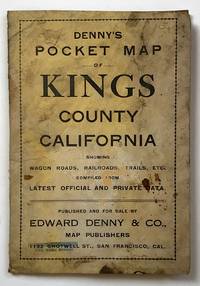
19121272San Francisco: Edward Denny & Co 1912. About very good. Folding map 25.25 x 23.75 inches. Original printed wrappers. Some soiling and light wear to wraps. A couple very minor separations and losses along map folds. Light tanning. A scarce pocket map of Kings County California south of Fresno published by Edward Denny & Co. in San Francisco. Printed in blue ink the map shows the county divided into plat townships and delineates railroads wagon roads canals streams and oil pipelines with a legend at left. Tulare Lake is prominently depicted at center interestingly with the original larger lake lines also marked. The contraction of the lake was due to the diversion of the streams and rivers that fed it for agricultural purposes. Prior to this development Tulare was the largest freshwater lake west of the Mississippi River. Denny produced similar maps for a number of California counties during the early 20th century most now quite scarce. We locate only three copies at the Huntington Berkeley and UC Davis. Edward Denny & Co unknown books
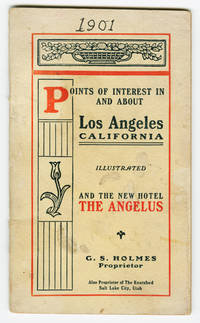
1901WRCAM55758Los Angeles: G.S. Holmes 1901. 56pp. including double-page map. Profusely illustrated. 16mo. Original printed pictorial wrappers printed in red and black. "1901" added in ink to upper margin of front wrapper. Light wear and soiling to wrappers. Very faint tidelines to outside margin of several leaves occasional wear and fingerprints. Very good. Scarce and well-illustrated pamphlet "furnishing information in demand by those visiting Southern California." The pamphlet begins with a map of Southern California entitled "California South of Tehachapi" which stretches from Santa Barbara to just below Orange County and from the coast to Barstow in the Mojave Desert. The photographs and illustrations feature many uncommon views of Los Angeles and its surroundings including views of downtown city hall the public library and the court house. There are also scenes of walnut processing a grape harvest at a winery the Rose Parade in Pasadena Riverside and Catalina Island. <br> <br> This pamphlet was prepared for G.S. Holmes proprietor of the Angelus Hotel which opened in 1901 as the tallest hotel in Los Angeles. Holmes also owned the Knutsford Hotel in Salt Lake City. The pamphlet concludes with sections on the Angelus and the Knutsford along with a brief overview of Salt Lake City. <br> <br> OCLC locates three copies of this 1901 edition the earliest listed UCLA Southern Methodist University Wisconsin Historical Society. OCLC 16862678. G.S. Holmes unknown books
1907WRCAM45052San Francisco: San Carlos Park Syndicate 1907. 49pp. mostly photographs including a double- page aerial view plus a folding panoramic photograph and a large folding map loosely laid in. Quarto. Original printed wrappers string- tied. Wrappers a bit soiled and with some light edgewear. Early ownership signature on front free endpaper. Quite clean internally. Very good overall. A scarce promotional for the community of San Carlos Park the present-day town of San Carlos in San Mateo County California. The text touts the virtues of what was then a pastoral area and the photographs by noted San Francisco photographer Willard Worden are lovely green-tinted images of parks glades orchards and homes. The panoramic photograph shows the lush hilly area and the large folding map shows lots offered for sale by the San Carlos Park Syndicate which produced this elaborate promotional work. The ability to live in a pleasant suburb and commute to San Francisco without crossing the Bay is highlighted yet one wonders what non- Spanish speaking prospective owners would have thought when they came to San Carlos and discovered that one of the main streets "Alameda de las Pulgas" translates to "Avenue of the Fleas." OCLC locates only two copies at the California State Library and the University of California at Berkeley. Rocq adds a copy at the California Historical Society. ROCQ 13337. OCLC 19767174. San Carlos Park Syndicate unknown books
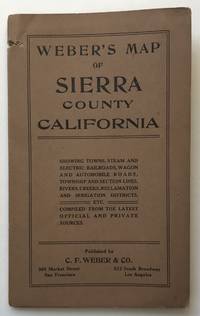
1914715San Francisco; Los Angeles: C.F. Weber & Co 1914. Still very good. Folding map 20 x 26.5 inches. Original printed wrappers. Small perforation at upper margin of wraps also slightly affecting upper map border. A few slight separations at fold points. Light tanning. A scarce and attractive folding map of Sierra County California "Showing towns steam and electric railroads wagon and automobile roads township and section lines rivers creeks reclamation and irrigation districts etc." The map clearly marks out township plats. County lines are delineated in pink with the map centered on Sierra County but also it also depicts the northern part of Nevada County the southern part of Plumas County and the eastern tip of Yuba County. OCLC locates three copies at the Huntington the California Historical Society and UC Berkeley. C.F. Weber & Co unknown books
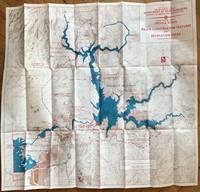
1965487Sacramento 1965. Very good. Large folding map 28 x 32 inches. Very minor wear at a few folds. With original mailing envelope somewhat worn and foxed. A surprisingly scarce map of the construction of Oroville dam and surrounding area in California. The dam is of recent fame for nearly failing in February 2017 when the spillways were on the verge of collapse leading to the evacuation of 188000 people. At the time of its construction in the 1960s it was one of the largest and most controversial water projects undertaken in the state. The map depicts the overall construction plan for the area including the dam itself anticipated reservoir areas tunnels and bridges highway relocations and many other features. The topographical detail of the map is extremely fine. There were issues of the map from 1964 one copy listed in OCLC 1966 three copies located and this 1965 issue with "Revised July 1965" printed in the lower right corner with just one copy located at the University of California Riverside. This copy is accompanied by the original mailing envelope not addressed or stamped indicating that the map was sold as a souvenir by the "Vista House" a view point overlooking the construction site. unknown books