PERRIER, Rémy ; CÉPÈDE, Casimir ; MILLOT.Livre Rare Book

56 429 résultats
2505Paris, Sans bon à graver, sans date (circa 1918-1923). Dimensions : 105,5 x 149,5 cm.
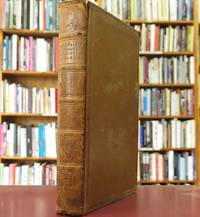
4527Lausanne, Heubaca, 1784. In 8, IV pp.-pp.III à XV-(1)-355 pp., portrait (frontispice) avec un tableau dépliant.
4922Aquarelle gouachée signée en bas à droite et située , 190 x 230 mm.
Acquaforte e puntasecca misure: mm 201 x 332 Pittore e incisore italiano. Nacque in una agiata famiglia e i suoi studi inizialmente non si diressero verso la carriera artistica ma divenne ingegnere nel 1871. Tuttavia egli non si dedicò a tale professione ma preferì frequentare lo studio di Giovanni Battista Lelli (Bergamo 1827 - Milano 1898) per ricevere i primi insegnamenti di pittura per poi diventare allievo di Eleuterio Pagliano (Casale Monferrato 1826 – Milano 1903) noto ritrattista e autore di soggetti storici apprezzati all'epoca e infine studiare nudo alla scuola serale dell'Accademia di Brera. Nel 1880 apri uno studio in via Agnello e si dedicò soprattutto al ritratto e al paesaggio, quest'ultimo indagato minuziosamente grazie ai numerosi viaggi in località marine e montane fatti per indagare il vero e trasferire nelle sue opere le sensazioni provate. Nelle sue opere incisorie prevalgono i soggetti di genere e i paesaggi montani e marini che spesso vengono accostate alle esperienze degli scapigliati, in particolare alle opere di Luigi Conconi (Milano 1852 - Milano 1917) per l'attenzione agli effetti di luce. In questa stampa viene rappresentato il paesaggio marino dell'isola di Capri. Il mare increspato fa da protagonista. Lo specchio di mare è animato da diverse imbarcazioni. In primo piano ne vediamo due a remi, sulla prima due donne si proteggono dai raggi del sole mediante dei graziosi ombrellini mentre sulla seconda due uomini procedono remando. In secondo piano a sinistra barche a vele si piegano seguendo il vento, mentre al centro, maestoso e intensificato da contrasti chiaroscurali, si muove un piroscafo a vapore. La Mezzetti segnala due incisioni rispettivamente con i titoli: Sulla banchina di Capri e Marina. Si tratta in realtà di due stati molto diversi della medesima lastra. Nel I stato la parte centrale della composizione è occupata da un molo che scompare nel II stato. Ci sono poi molti altri cambiamenti per esempio nella superficie in ombra del mare, nel profilo della scogliera a destra. Gli esemplari noti nel II stato presentano comunque molti interventi che rendono gli esemplari diversi fra loro e testimoniano il continuo ripensamento dell'autore sulla lastra. Impressione eccellente su carta bianca morbida. Ottimo stato di conservazione eccetto un cedimento lungo la battuta in basso a destra. Ampi margini oltre la battuta del rame. In basso a destra oltre l'inciso firma dell'autore "U. Dell'Orto" a penna. Atri due esemplari sono conservati presso Milano (MI), Civiche Raccolte Grafiche e Fotografiche. Civica Raccolta delle Stampe Achille Bertarelli . Bibliografia. Mezzetti 295; L. Vitali, p.32, n 21; F.Monteforte, Umberto Dell'Orto e il realismo lombardo del secondo Ottocento, n 119-120.
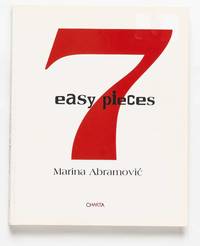
20075766CHARTA 2007. First Edition First Printing. Paperback. Near fine. SIGNED COPY - Charta 2007. Softcover 240 pages documenting Abramovic's landmark 2005 Guggenheim Museum commission. Over seven consecutive nights November 9-15 2005 she re-performed iconic ephemeral works from performance art's formative 1965-1975 era--six by pioneers and one of her own--each for seven hours in the museum's rotunda dedicating the series to Susan Sontag. Marina Abramovic born November 30 1946 in Belgrade then part of Yugoslavia now Serbia is a Serbian conceptual and performance artist widely regarded as the 'grandmother of performance art. 7 Easy Pieces features vivid photos 274 color 75 b&w Abramović's reflections an interview with curator Nancy Spector and essays by Erika Fischer-Lichte and Sandra Umathum on re-performance's ethics and legacy. SIGNED by Marina Abramovic on the title page. BOOK CONDITION: Near Fine; a solid tight clean copy with light rubbing to covers slight lean and light reading crease to spine. SIGNED. CHARTA paperback
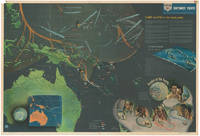
1944NL-02476<p><strong>Large-format 1944 U.S. Navy "NavWar" training map of the Southwest Pacific illustrating Japan's expansion and the Allied counteroffensive toward victory.</strong></p><p>This is a scarce very large-format 1944 map of the southwestern Pacific Ocean region prepared by the U.S. Navy's Educational Service Section.</p><p>Measuring more than three feet tall and nearly five feet wide and boasting stunning visuals this map captures the drama of the ongoing Pacific War. It was intended for training naval personnel on the history of the conflict to that point and the geography of the region.</p><p>Orange arrows depict the Japanese advances of late 1941 and early 1942 including the Pearl Harbor attack and the invasion of the Philippines and Dutch East Indies. Blue arrows reflect the Allied primarily American counter-attacks through April 1944 landings at Hollandia on New Guinea set against striking three-dimensional depictions of the region's topography. Text at top-right gives a brief history of the islands of the southwest Pacific while an inset section on the Solomon Islands provides an overview of the Solomon Islands Campaign with an oblique bird's-eye view of the islands. At bottom-right is an anthropological overview of the Peoples of the Pacific sounding dated to modern ears with its discussion of 'racial types' and purported physiognomic characteristics; surely very few American sailors would have known much about this part of the world prior to the start of the war. At bottom-left is an inset demonstrating distances by air between various islands in the region including the Allied staging grounds of Australia and New Zealand.</p><p><strong>Context is Everything</strong></p><p>The Southwest Pacific theater of the Second World War was one of the major areas of conflict including some of the major land battles of the Pacific War such as Guadalcanal and the Philippines and critical naval engagements such as the Battle of Leyte Gulf the largest naval battle of the war and perhaps in all history. The Allies were led by the United States and British forces primarily Australia and New Zealand battling the Empire of Japan. The theater encompassed a vast region including the Philippines New Guinea the Solomon Islands and parts of the Dutch East Indies. Following Japan's rapid expansion across Southeast Asia and the Pacific in late 1941 and early 1942 the Allies sought to halt and reverse Japanese advances through a series of grueling campaigns fought in dense jungles tropical islands and vast stretches of ocean. General Douglas MacArthur commanding the Allied Southwest Pacific Area spearheaded the effort to recapture territory and ultimately return to the Philippines following his famous pledge "I shall return."</p><p>The fighting in this theater was characterized by amphibious assaults jungle warfare and intense air and naval battles often carried out under extreme climatic conditions more Japanese troops died from starvation and disease than in battle. The "island-hopping" strategy – bypassing heavily fortified Japanese positions to seize strategically important islands – proved decisive in advancing Allied forces toward Japan. The Southwest Pacific campaign not only crippled Japan's defensive perimeter but also demonstrated the growing coordination between Allied forces. By the time Japan surrendered in August 1945 the Allied victories in this theater had effectively dismantled Japan's hold on its southern empire and paved the way for the postwar reorganization of the Pacific region.</p><p><strong>Census</strong></p><p>This map was produced by the U.S. Navy's Bureau of Naval Personnel printed by the Government Printing Office and distributed by the Navy's Educational Service Section in 1944. It is one of six 'NavWar Maps' all of which are quite scarce now and generally in poor condition due to being folded for many years. The present map is independently cataloged among the holdings of roughly fifteen institutions in the OCLC and appears occasionally on the market. Some institutions also hold all six maps in the series and catalog them together OCLC 53073135. For reasons that are unclear some examples of NavWar Maps are printed as double-sided while others are only printed on one side.</p><p>Condition Description</p><p>Good. Wear along fold lines. Toning at the top corners from earlier adhesive. Loss in the upper-left corner. Handwriting in the top margin.</p> Educational Service Section / U.S. Navy
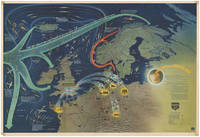
1944NL-02478<p><strong>Large-format 1944 U.S. Navy "NavWar" training map of the North Sea celebrating Allied victory over the German U-boat threat.</strong></p><p>This is a scarce very large-format 1944 map of the North Sea prepared by the U.S. Navy's Educational Service Section.</p><p>The stunning visuals executed in offset lithography are reminiscent of propaganda materials intended for public consumption but these were in fact prepared to train and educate Naval personnel on the conflict. The map traces the history of naval warfare in the North Atlantic and North Sea up to that point and celebrates Allied successes with the tide clearly having turned in their favor.</p><p>Perhaps the most striking feature of the map is the large arrow occupied by Allied shipping convoys titled 'Our Navy Breaks the U-Boat Scourge on the Allies' Supply Lines with Destroyers Destroyer Escorts and Escort Carriers.' Similar blue bands emanate from southern England towards the Continent with the label 'The R.A.F. And The A.A.F. Control The Industrial Heart Of Europe From England the World's Most Powerful Air Base.' Throughout German ships are depicted as sinking and burning while German industrial areas and key occupied strongholds are bombed relentlessly from the air. A timeline and legend at right provide further background information on the conflict and the map.</p><p><strong>Context is Everything</strong></p><p>During the Second World War the North Sea was a critical arena of naval operations serving as a strategic chokepoint for controlling maritime routes and access to the Atlantic. As in the First World War the Royal Navy maintained a constant patrol presence to enforce blockades against Germany restricting access to vital raw materials and trade. The North Sea's shallow waters and unpredictable weather made it a difficult environment for large-scale fleet engagements but it was heavily mined – one of the most extensively mined seas in history. Mines submarines and fast attack craft rather than battleships defined its warfare creating a deadly environment for both military and merchant shipping.</p><p>German naval operations in the North Sea centered on disrupting British trade and supply lines while protecting their own coastal traffic. The Kriegsmarine used U-boats E-boats <em>Schnellboote</em> 'fast boats' and aircraft to harass Allied convoys while the British developed extensive anti-submarine and radar networks to counter them. Air power especially from bases in eastern England and occupied Norway increasingly shaped the conflict turning the North Sea into an air-sea battlefield. Germany's limited fleet of battleships had by this point been sunk as with the <em>Bismarck</em> seen ablaze at left heavily damaged or forced to stay in port to prevent their loss as with the <em>Tirpitz</em> sunk later in 1944 and <em>Prinz Eugen</em> both stationed in Norway. The Allies' control of the North Sea by 1944 proved essential for the success of the D-Day invasion allowing the safe buildup of forces in Britain and denying Germany the ability to strike effectively from the sea. By war's end the North Sea had become a heavily fortified and scarred maritime zone symbolizing the constant struggle for maritime supremacy that underpinned the wider European conflict.</p><p><strong>Census</strong></p><p>This map was produced by the U.S. Navy's Bureau of Naval Personnel printed by the Government Printing Office and distributed by the Navy's Educational Service Section in 1944. It is one of six 'NavWar Maps' all of which are quite scarce now and generally in poor condition due to being folded for many years. The present map is independently cataloged among the holdings of perhaps fifteen institutions in the OCLC and appears occasionally on the market. Some institutions also hold all six maps in the series and catalog them together OCLC 53073135. For reasons that are unclear some examples of NavWar Maps are printed as double-sided while others are only printed on one side.</p><p>Condition Description</p><p>Very good. Fold creases as issued originally faint discoloration at corners from old tape reinforcing pinholes minor shelfwear slight scuffing couple minor tears</p> Educational Service Section / U.S. Navy
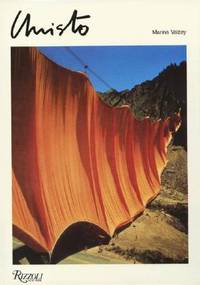
199085664New York: Rizzoli International Publications Inc 1990. First U. S. Edition Presumed First printing. Hardcover. Very good/Good. Cristo. Format is approximately 8.5 inches by 12 inches. 128 pages. Profusely illustrated some in color. DJ has some wear and soiling. Text by Marina Vaizey. Includes Biography Bibliography Museum Collections Illustrations and List of Illustrations. Inscribed by Christo on the title page to Tom. Inscription reads For Tom Christo N. Y. 1991. This was inscribed to Dr. Thomas E. Lovejoy renowned as "The Godfather of Biodiversity". Acquired at auction of part of the Lovejoy family collection. Thomas Eugene Lovejoy III August 22 1941 - December 25 2021 was an American ecologist who was President of the Amazon Biodiversity Center a Senior Fellow at the United Nations Foundation and a university professor in the Environmental Science and Policy department at George Mason University. Lovejoy was the World Bank's chief biodiversity advisor and the lead specialist for environment for Latin America and the Caribbean as well as senior advisor to the president of the United Nations Foundation. In 2008 he also was the first Biodiversity Chair of the H. John Heinz III Center for Science Economics and the Environment to 2013. Previously he served as president of the Heinz Center since May 2002. Lovejoy introduced the term biological diversity to the scientific community in 1980. He was a past chair of the Scientific Technical Advisory Panel STAP for the Global Environment Facility GEF the multibillion-dollar funding mechanism for developing countries in support of their obligations under international environmental conventions. Marina Alandra Vaizey Baroness Vaizey CBE née Stansky; born 16 January 1938 is an art critic and author based in the UK. Vaizey is an Anglo-American broadcaster exhibition curator and journalist. She was educated at Radcliffe College and Girton College Cambridge. She was formerly Art Critic for the Financial Times and Sunday Times and editor of the Art Quarterly and Review. She has written several books on art. She now lectures including at the National Gallery and British Museum. She was a founding Trustee of the Geffrye Museum and has also been a trustee of the Imperial War Museum and the South Bank. She has also been a judge for the Turner Prize. Christo Vladimirov Javacheff was born on June 13 1935 in Gabrovo Bulgaria. Christo received private art instruction at a young age and the support of his parents who invited visiting artists to their house. While Bulgaria was under repressive totalitarian rule and Western art was suppressed Christo pursued realistic painting through the mid-1950s. He was admitted into the Sofia Academy of Fine Arts in 1953 but found the school dull and stifling. Instead he found inspiration in Skira art books and visiting Russian professors who were older than him and once active in Russian modernism and the Soviet avant-garde. In 1956 he used an academy connection to receive permission to visit family in Prague Amid fears of further Russian suppression in Hungary Christo decided to flee to Vienna as a railcar stowaway. In Vienna he stayed with a family friend who had not expected him studied at the Vienna Fine Arts Academy and surrendered his passport to seek political asylum as a stateless person. There he supported himself with commissions. At the behest of a friend relocated from Sofia he saved up to visit Geneva in late 1957. In violation of his visa he continued to pursue commissions whose works he would sign with his family name reserving his given name for more serious work and was transformed after visiting the Kunstmuseum Basel and Kunsthaus Zürich. In January 1958 he first began to wrap things as would become his trademark starting with a paint can. His collection of wrapped household items would be known as his Inventory. In February 1958 Christo left for Paris having received a visa with the assistance of a Sofia academy connection. In 1973 after 17 stateless years Christo became a United States citizen. L'Arc de Triomphe Wrapped a planned work by Christo and Jeanne-Claude went ahead posthumously in Paris in September 2021. Rizzoli International Publications, Inc hardcover
4to [27 x 21 cm]; xvii, [x], 103 [i]; pp, 40 engraved plates, some folding, including frontis & plate of Cuff's aquatic microscope, some of the plates are by Ehret, renowned botanical artist. contemporary full calf, gilt decorated spine, gilt title lettering on leather spine label, joints cracked and worn but holding, edgewear, small armorial bookplate on endpaper, light foxing, interior is clean and very good, no tears. A picture of this book Freeman 1131: 'plate 38 absent in many, plate 39 in most copies'. Both are present here, plate 39 being the microscope plate, being the earliest depiction of Cuff's aquatic microscope (see Clay & Court, History of the Microscope, p66-68). 'In 1754 he became a fellow of the Royal Society, and in the following year established his reputation as one of the most acute observers of his time by the publication of An Essay Towards a Natural History of the Corallines. . . . imperfectly comprehended by Linnaeus, he established the animal nature of this group of organisms'. Linnaeus described him as a 'bright star of natural history', and 'the main support of natural history in England'. Nissen 590. British Museum Cat. 523. Knight, Natural Science Books in English: 'Ellis's handsome volume on corals and zoophytes'. Knight, Zoological Illustration p. 103: 'the classic work was done by John Ellis in his Essay towards a natural history of the Corallines, of 1755. . . he persuaded Ehret, the great botanical artist, to accompany him, there to draw from nature. . . The book duly contains delicate engravings from these drawings'.
18632111902160201223Not Available 1863. Soft Cover. Fine. Volume: 1 Not Available paperback
2010TA240108070Z81Plaza y Janes 2010-08-03. paperback. Very Good. 6x0x9. Paperback--excellent condition Plaza y Janes paperback
First and only English edition, 12mo (170 x 115 mm), [2], x, 264pp., with half-title, 3 folding engraved plates, a clean copy with minimal browning, new endpapers, later full calf, retaining the original morocco label to spine. Luca Antonio Porzio (1639-1724), chief professor of medicine and anatomy in the Royal University of Naples. The English translation of Porzio's De Militis in castris sanitate tuenda, first published in Vienna in 1685 in Latin. It was published as a direct result of Porzio's presence in Venice in 1683 when the forces of the Ottoman Empire were laying siege to Vienna. The health of sailors is a short section, but on page 236 the author recommends keeping root vegetables in sand and fruit as juice "I am very certain, that the juices of fruits, as Oranges, Lemons, and Apples, might be boil'd to the consistence of a thick syrup or Rob, and preserved in proper vessels for any given times, so that a spoonful or more of it might occasionally be taken, dissolved in water, with very good effect, as a preservative against the bad consequences of such an animal diet as I have above taken notice of." Rare; ESTC locates 3 copies in the UK (BL; Durham; Wellcome) and 3 further copies in North America (Society of Cincinnati; National Library of Medicine; University of Illinois).
182810217London: Hunt And Clarke 1828. First Edition. Hardcover. Very good. First edition of Recollections of a Service of Three Years during the War-of-Extermination in the Republics of Venezuela and Colombia printed in London in 1828. Octavo two volumes xv 251pp 4pp ads; vii 277pp 2pp ads. Half title in Volume I. Original boards cloth spine labels affixed to each volume but soiled and worn. Uncut edges. Toning to leaf ends uniform toning to leaves free of foxing or noteworthy soiling. Previous ownership label on front endpaper of each volume. Housed in custom cloth chemise title in gilt on spine. Sabin 14618 Volume I printed by James Whiting and Volume II by C.H. Reynell. A scarce text with only 6 known copies appearing in OCLC. The War of Extermination known as Guerra a Muerte was a decree by Simon Bolivar authorizing acts of sabotage and murder against Spanish citizens in South America. This work includes conversations with El Libertador Simon Bolivar shortly before his death in 1830. Also includes descriptions of travel in Venezuela Colombia and parts of the Caribbean. Some sources have attributed this text to Francois Raymond Joseph de Pons. Hunt And Clarke hardcover
1967138581Paris: Concordia Compagnia Cinematografica 1967. Four vintage borderless reference photographs from the set of the 1967 film. Studio rubber stamp on the verso. One of the photos features Marina Vlady sharing a cigarette with Roger Montsoret. Based on a 1966 article on casual prostitution in France by Catherine Viminet. <br /> <br /> One of three feature films Godard released in 1967 and like both "Week End" and "La chinoise" one that showcases Godard's increasing focus on deconstructing filmic narrative and structure and vocalization of leftist political ideas. <br /> <br /> Godard has stated that his overall desire with the film was "to include everything: sports politics even groceries" to make "an attempt at description of a phenomenon known. as a complex."<br /> <br /> 5 x 7 inches. Fine condition. <br /> <br /> Criterion Collection 482. Rosenbaum 1000. Vogel Film as a Subversive Art. Concordia Compagnia Cinematografica unknown
120825R.B. Bate London. 1847. 8vo. 228pp. A good copy bound in full leather. Lacking the gilt title on the spine. Spine worn at edges with top of spine chipped and hinge split. The book is inscribed by the author to Captain Washington. It also has the bookplate of Francis Abbott. Admiral Sir Charles Shadwell 1814-1886 was a Royal Navy officer who went on to be Commander-in Chief China Station. This book given by Shadwell to Captain Washington in 1861 while Shadwell was commanding the HMS Aboukir. Bookplate from the library of Francis Abbott Private Observatory Hobart Town. Abbott 1799-1883 a convict who arrived in Hobart in 1845 and went on to be one of the leading astonomers in Australia collected a large philosophical and scientific library. Many of his scientific instruments were bought by the Melbourne observatory. . R.B. Bate, London. 1847 hardcover
Sin lugar ni año (hacia 1635), 29,5 x 20,5 cm., 5 folios, el último con una leve restauración que afecta a dos letras. (La expedición formada por una armada de 22 galeras y 5 galeones con 4.000 hombres a bordo partió de Savona el 11 de Septiembre de 1635. La resistencia francesa fue breve, pues la primera isla se rindió el 14 y la segunda el 15).
8vo., Second Edition, with several tables in the text, 5 folding engraved diagrams and 4 folding tables; contemporary half calf, gilt back, marbled boards, sprinkled edges, a remarkably crisp, fresh, clean copy. With an engraved armorial bookplate. A handsome and highly desirable copy of a classic work in contemporary binding. Son of Rear-Admiral Sir Charles Douglas, Sir Howard Douglas (1776-1861) enjoyed a distinguished military career and developed a well-earned reputation for enquiry and innovation. By 1811 he had perfected and patented 'Douglas's reflecting circle'; in 1816 he published an important study of military bridges and in 1819 a treatise on Carnot's system of fortification. He then turned his attention to naval matters and produced the first edition of his famous volume on naval gunnery in 1820. It is a comprehensive study covering theoretical, practical and tactical aspects and its impact was significant. Its success, both at home and in translation, led eventually to the establsihment of 'H.M.S. Excellent' as a gunnery training school.
1940List3520United States and Japan 1940. Photo album measuring 10 ½ x 13 inches containing approximately 350 photos. With four copies of Jane Whitaker’s discharge and immunization papers and the Navy’s Marching to Victory songbook 13th printing Naval Reserve Midshipmen’s School 1943. Album with covers detached and wear to pages; fair. Contents excellent. Overall very good. A photo album belonging to siblings Jane 1924–d. and James 1921–1997 Whitaker of Florida. Both siblings were in the US Navy; the copy of Jane’s discharge paper indicates that she enlisted in 1943 and was honorably discharged in 1946. The siblings are descendants of founding Florida figures William Wyatt and Mary Wyatt Whitaker.<br /> <br /> The album mainly covers their time in Hawai’i and Japan. Alongside eighteen photographs of a large military parade one labeled “V-J Day Honolulu†with floats including the Filipino Federation of America’s celebration of General MacArthur and a bilingual float reading “AGGRESSORS GONE FOREVER†and fifteen likely souvenir photos of the Pearl Harbor attack there are approximately 120 candid photographs of the sailors’ lives. These include spending time with family and children sitting on a tank on the beach barbecuing at a park fishing and doing laundry outside. Some of these were taken in Hawai’i and others in Japan; a number show a sign for Nimitz Recreation Field which is likely at the US Fleet Activities in Sasebo Nagasaki. Thirty show men not in uniform but also likely sailors mainly during similar recreational activities. Others include photos of military installations and from inside barracks—bunk beds the kitchenette and dining area. Individuals in the photos are occasionally identified verso by first name.<br /> <br /> The album is uncommon for the candid nature of the personnel photos. Of interest to historians of life in the US Navy in Hawai’i and Japan during WWII. unknown
1860D130301860s. Hardcover. Very Good. Cloth morocco backstrip; folio 400x260mm; approx. pp. 100 full of manuscript entries by a single hand with permanent instructions and headings in ink and crew member names and station designations in pencil; numerous additional blanks at rear. Nonetheless a trove of information. Lined paper listing the 614 men aboard assigning each a number gun and location Fore Castle Port Main Top Mizzen Top etc.; listing division and stations; and recording details of every situation that might occur on the ship see examples below. The ship is unnamed but it appears to be a ship of the Line or a Frigate which had 3 masts as well as some minimal amount of steam power. There were 6 African-American members of the crew all of whom were Union Sailors during the Civil War Edward Turner Joseph Davis and Thomas Mills from Maryland; Henry Andres from the West Indies; Joseph Gordan from New York; Samuel R. Whittaker from Buenos Aires. Three of these men served on the USS Minnesota which may help identify the ship. Also includes the ship's Fire Bill crew member stations of Making Sail from Single Anchor Mooring and Unmooring and much more. A rich volume worthy of further study. Cloth torn; front hinge cracked; first few signatures loose. Alittle faint waterstaining and soiling but generally nice and clean. <br/><br/> hardcover
1975138646N.p.: N.p. 1975. Vintage borderless double weight photograph circa 1975 featuring mystery writer John Le Carre in conversation with an unknown figure to the right of the photograph. Partially stricken attribution rubber stamp to the verso with pencil manuscript annotations indicating the copyright belonging to photographer Marina Cicogna. <br /> <br /> One of the best-known espionage novel writers John Le Carre spent his early career as a secret agent for MI6 until the success for his third novel the 1963 "The Spy Who Came in from the Cold" allowed him to leave the intelligence services and become a full-time author specializing in espionage fiction. His work including the 1965 novel "Tinker Tailor Soldier Spy" has been adapted to television radio and film many times including the well-received recent adaptation of that work the 2011 film directed by Tomas Alfredson. <br /> <br /> Photographer Marina Cicogna granddaughter of Count Giuseppe Volpi one of the weathiest men in Italy grew up rubbing shoulders with many famous American actresses and actors. She took photographs of her friends becoming a respected photographer in her own right and later went on to produce films for many well-known Italian filmmakers including Pier Paolo Pasolini Luchino Visconti Sergio Leone Ello Petri and more. <br /> <br /> 7.75 x 11.75 inches. Near Fine. N.p. unknown
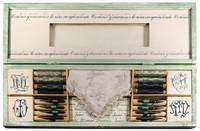
201635742Buenes Aires: Marina Soria 2016. Fine. Unique. An engaging and personal work by world renowned calligrapher and book artist Marina Soria. It is a light blue wooden box with a glass window that opens to reveal calligraphic text and monograms done in watercolor and gouache on Strathmore paper. It is decorated with compartments containing old sewing threads and nibs. There is also a found object - a delicately embroidered white handkerchief. The artists writes: "The monograms are made from the initials of my daughters and my husband´s names. My daughters: MFJ: Mora Fernández Jurado / CFJ: Catalina Fernández Jurado / MFJ: Marina Fernández Jurado. GFJ: Gustavo Fernández Jurado. My monogram is at the back of the box: MS The text is a quote my granny used to say to me when I was a child. The original text is in Spanish "Cosiendo y descosiendo la niña va aprendiendo" Translation: "stitching and unstitching the little girl keeps on learning." In fine condition. Measures 32.5 x 12 x 3 cm. <br /> <br /> Born in Buenos Aires Argentina Marina Soria is a seasoned artist and educator with degrees in Fine Arts and Graphic Design. Not content to just immerse herself in learning calligraphy at international conferences and through courses with renown calligraphers she studied Eastern principles of Beauty in sumi-e Japanese painting. She distilled and blended these principles with her rich experience and background in the fine arts typography and graphic arts employing unique approaches and techniques. She has also dabbled in the textile arts creating a metaphor for weaving; letters as stitches and text as if it were a textile. Her works vibrating with a love for nature and exploding with life and color can be found in calligraphy collections in museums universities and libraries in the U.S. Europe and South America. Marina has received numerous national and international awards and has been featured widely in calligraphic arts publications. A prolific artist experimental calligrapher book artist and educator her goal is to mingle diverse disciplines to challenge the limits of conceptual art and technique. ARTISTSB/070522. Marina Soria unknown
1976300569New York: American Geographical Society 1976. unbound. Tanguy de Remur. Laminated Map. Full-color offset lithograph. 40 3/4 x 26 3/4 inches. Some scuffs and abrasions but otherwise in good condition.<br/><br/> Iconic map of the impressive terrain below the ocean surface showing fracture zones trenches rift valleys and undersea mountain ranges including the immense Mid-Oceanic Ridge. Geological features above and below the ocean are labeled with heights and depths indicated. The work was produced from thousands of sonar images. Bathymetry is the study of underwater depth of ocean floors or lake floors equivalent to hypsometry or topography. This edition with Editions Pierre Charron produced with the American Geographical Society.<br><br>Marie Tharp 1920-2006 was a prominent American oceanographic cartographer and geologist whose work was incredibly important to modern earth science and to the advancement of women in the field. The discovery of the Mid-Atlantic Ridge and our modern understanding of plate tectonics and continental drift has been attributed to Tharp - although at the time she was often uncredited for her work. Bruce Charles Heezen 1924 %u2013 1977 was an American geologist. Under Tharp's influence he gave up the idea of an expanding earth for a form of continental drift. Tharp was Heezen's assistant while he was a graduate student. When she showed Heezen that her plotting of the North Atlantic revealed a rift valley Heezen dismissed it as "girl talk". She persisted and they eventually discovered that not only was there a North Atlantic rift valley but a mountain range with a central valley that spanned the earth. Rumsey 7048.000.<br/><br/> American Geographical Society unknown books
1860D130301860s. Hardcover. Very Good. Cloth morocco backstrip; folio 400x260mm; approx. pp. 100 full of manuscript entries by a single hand with permanent instructions and headings in ink and crew member names and station designations in pencil; numerous additional blanks at rear. Nonetheless a trove of information. Lined paper listing the 614 men aboard assigning each a number gun and location Fore Castle Port Main Top Mizzen Top etc.; listing division and stations; and recording details of every situation that might occur on the ship see examples below. The ship is unnamed but it appears to be a ship of the Line or a Frigate which had 3 masts as well as some minimal amount of steam power. There were 6 African-American members of the crew all of whom were Union Sailors during the Civil War Edward Turner Joseph Davis and Thomas Mills from Maryland; Henry Andres from the West Indies; Joseph Gordan from New York; Samuel R. Whittaker from Buenos Aires. Three of these men served on the USS Minnesota which may help identify the ship. Also includes the ship's Fire Bill crew member stations of Making Sail from Single Anchor Mooring and Unmooring and much more. A rich volume worthy of further study. Cloth torn; front hinge cracked; first few signatures loose. Alittle faint waterstaining and soiling but generally nice and clean. <br/><br/> hardcover books
200803578Paris, Librairie Schwarz, vers 1920 - 1930 ; grand in-4, 240-225-230-242-198 pp., cartonnage de l'éditeur(certains coins sont un peu écrassé sinon état parfait) (demi chagrin d'éditeur). Les 5 volumes. Chaque tome est divisé en 2 parties, le récit des amiraux et des notes et documents authentiques. Important ouvrage comportant de nombreuses illustrations dans le texte et 173 planches H.T. en oir et en couleurs , la plupart de CHARLES FOUQUERAY. MAGNIFIQUE ICONOGRAPHIE.Tome 1- AMIRAL RATYE ; les prodromes de la guerre l'aventure du Goeben et du Breslau (du 2 aout au 10 aout 1914) les opérations maritimes dans l'océan, la mer du nord et les océans lointains - tome 2 - AMIRAL RATYÉ la stratégie navale britannique, le plan de guerre britannique - AMIRAL SALAUN les opérations en méditérranée sous le commandement du vice-amiral Boué de Lapeyrère (12 aout - 14 octobre 1915) - AMIRAL DUMESNIL l'expédition des dardanelles (aout 1914 - janvier 1916) - tome 3 - AMIRAL RATYE dans les mers septentrionales (aout-décembre 1914) AMIRAL MERVEILLEUX DU VIGNAUX les opérations navales dans l'atlanqique et la manche (1er janvier 1915 - 11 novembre 1918) - tome 4 - AMIRAL MERVEILLEUX DU VIGNAUX dans les mers septentrionales ( a partir de 1915) - AMIRAL DOCTEUR la guerre sur les théatres d'opération extérieurs (1914 -11918) - AMIRAL LACAZE intervention de l'italie - AMIRAL FORCHOT la guerre navale dans l'adriatique (23 mai 1915) - tome 5 - AMIRAL GRASSET la bataille du Jutland - AMIRAL FATOU les opérations en méditérranée sous le commandement de l'amiral Dardige du Furnet (octobre 1915- décembre 1916) - AMIRAL VARNEY les opération en méditérranée sous le commandent de l'amiral Gauchet (décembre 1916- novembre 1918) - AMIRAL JEHENNE les canonniers marins sur le front des armées - AMIRAL RONARC'H les fusiliers marins au front des flandres (1914-1915).
224330Abbeville, 25 prairial an III (13 juin 1795) grand in-folio, texte dans un bel encadrement de vignette allégorique en-tête et d'emblèmes maritimes, Qqs déchirures restaurées dans les marges.