Yefim & Komissarov, Dmitriy GordonBiblio.com
2 041 résultats
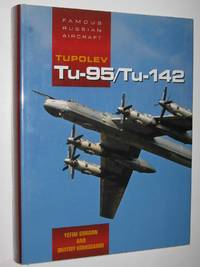
200918100009Midland UK 2009. First Edition. Hardcover. Fine/Fine. Hardcover. 416 pages. PUBLISHING DETAILS: Midland UK 2009. First Edition. CONDITION: The book itself is in fine condition and comes in fine dust jacket. More specifically: Boards have no wear rubbing or soiling. Dust jacket is in excellent condtion. Dust jacket is unclipped. Dust jacket is protected in clear plastic sleeve. Pages are clean and unmarked and in excellent condition. ABOUT THIS BOOK: Much has been said and written about the Tu-95 known as the Bear which to some is the personification of the tell-tale Soviet threat. In recent months the Tu-95 has been the source of great anxiety for the US with operational exercises coming close to American borders causing much consternation and raising eyebrows in the political world. This informative new history explores the final chapter of the Tu-95 which has not been covered by other volumes. Containing a lot of hitherto untold facts and shedding new light on the Tu-95's development history and service career it is certain to be extremely popular. Also included in this title are details of crucial target information and rare materials obtained in the course of many obscure missions. In recent times the type has again assumed a significant position in Russia's strategic bomber arm DA and the fleet is being upgraded to take new models of cruise missiles. Beautifully illustrated throughout with numerous photos from the latest exercises as well as vivid pictures of nose art and unit insignia this is one not to be missed by aviation enthusiasts particularly those with an interest in contemporary Russian aviation. Quantity Available: 1. Category: Aviation; ISBN/EAN: 9781857803105. Inventory No: 18100009. 9781857803105 Midland hardcover
74142Paris: N.P. ca. 928. Beautiful French woven tapestry 50 1/2 x 19 inches depicting the Spirit of St. Louis flight from NY to Paris and with oval woven vignettes of aviation pioneer giants Charles Lindberg Richard Evelyn Byrd Jr. Chamberlain Ruth Elder Francois Coli and Charles Nungesser. The reverse stamped "Made in France." Overall good condition having a few small cuts on edge wear on the edge and right corner some face wear but not affecting the image three corners have minor fabric loss Francois Coli was a French pilot and navigator best known as the one-eyed flying partner of Charles Nungesser in their doomed attempt to fly the Atlantic Ocean on the aircraft known as L'Oiseau Blanc. Richard Evelyn Byrd Jr. was an American naval officer who was a pioneering American aviator polar explorer and organizer of polar logistics. Ruth Elder was known as the "Miss America of Aviation." Clarence Duncan Chamberlin was the second man to pilot a fixed-wing aircraft across the Atlantic. N.P. unknown
151975243V.p.: N.p. 1915-1948. Paul Karnow was a designer for the US Naval Aircraft Modification Unit in Johnsville PA during the war and following years in the 1940s having Confidential Status. As a child he developed a passion for aircraft and became a respected and noted designer and builder of model airplanes. Actually even though he designed a missile for the U. S. Government he is best remembered for his mastery of model airplane designs. These binders provide an insight from his birth and growth in this field via photos original and photocopy drawings and blueprints new articles and letters plus three aeronautics lapel pinsThe archive consists of five very meticulously ordered binders. They start from his birth and go through to late 40s. They are all 9 1/2 x 12 inches and all material therein is sleeved. When needed an item is annotated by Karnow who had such good penmanship he won a "Penmanship Award" in high school; included herein in extremely clear lettering. Four of the binders are black faux morocco and the fifth is blue. All the binders have spine labels under mylar. All in very good condition.The first binder is labeled- P. Karnow Album 1915-1937. It opens with a photocopy of his Russian birth certificate and right after that is the original substituted Certificate of Birth issued by the State of Pennsylvania as the Russian one was of no use stating he was born on 12/06/1915 and listing his father's name as John Turofsky. And behind that is a photocopy of the decree issued in 1945 allowing him to officially change his name from Paul Turofsky to Paul Karnow the Cold War was in full effect and he worked at times for the government so this was an understandable undertaking. But they must have passed themselves of as Karnows for decades for in each graduating class list he is called Paul Karnow not Turofsky. It is followed by a few original photographs of the family in Russia. The next photograph is one of the whole family surrounding a infant sibling's coffin. Paul Karnow appears to be about ten years old. They must have been in the U. S. by then as the banner on the casket reads "Our Dear Baby" it is an open casket and one can see the deceased infant. Then follows many dozens of original photographs dealing with his homes friends and schools. Madison Elementary School in Philadelphia then to Lawrence Massachusetts then to Penn Treat Junior High School back in Philly and finally graduation from Northeast High School includes a copy of his diploma. The second half of the album is concerned with his personal life; kayaking visiting Russian Orthodox churches sailing partying and most of all aviation. There is one photo entitled "Photos taken from Col. Clarence Chamberlin's Curtiss Condor biplane flying from Boulevard Airport" so it would seem he already had his pilot's license. It ends with photographs of a friend's wedding and later his both in 1937. The extreme details exhibited are rather astounding. E.g.; He has the names of all his graduating classmates at all his schools and one with a overlay on which the people are numbered and on top the numbers are given names. The next four volumes are predominantly about his occupation and avocation; flight. The next binder has a simple title and is composed almost entirely of designs for model planes: Drawings by Payl Karnow Published in Philadelphia Evening Bulletin Saturday Aviation page 1932 TO 1935. In manuscript in the first leaf we can read- Age 16 yrs Mach 26 1932. Printed on rectos only. the first 69 leaves are construction designs and the remaining approx 60 leaves bear newspaper stories about Karno's model aircraft racing. He won a good many times. At the end of this section are photocopies of his manuscript thoughts on flight in general and model airplanes in particular. One of the final photocopies is a page from a notebook he kept and below it he has typed "Reproduced from Notebook on Aeronautics written by Paul Karnow at age 12." A rather precocious and obsessive individual. Writing in the third person connotes to this cataloger that he had plans for a publication of all this material. There is another volume that duplicates all of this one except the articles are actually clipped from the newspapers rather than photocopied.In the blue volume we have a complete history of all the model and occasionally actual planes that he designed. There are over thirty 8 x 10 original photographs and numerous blueprints. Each plane has a tab separating it from the other; XLRA 1941; XLRA Twin 1942; Zebra June 1944; Duckling 1944 etc. There are some tabs with no contents.The final binder concerns his work with the U. S. Naval Aircraft Modification Unit at Johnsville Pennsylvania. He he was likely a civilian employee although with Confidential status. Here he work with others on the proposed Growler-Jet guided missile. From the 5th page; -"The Growler-Jet packs a terrific wallop. The extreme power available. particularly in short bursts is second only to atomic power. It however. exhibits none of the radio-activity which makes atomic application so difficult . Exhaust gases are said to be highly ionized but radio interference is not expected. It is known officially as the CA-1 Ascender." Aside from the text it also contains four original photographs and two hand-drawn designs. The whole binder is entitled "CONFIDENTIAL Date 12-17-46 Report No. 8 CAN-! "Ascender" Preliminary Analysis." One suspects that Karnow's participation in this project was to build a model of the missile and indeed there is a photograph of a model of it. The project was eventually abandoned by the Navy.The obsessive nature of these binders is rather astounding and a bit disturbing but it does provide a very intimate look into the life of an immigrant. From his childhood in the poorer parts of Philadelphia through his younger years and into his time with the U.S. Navy we are given everything neatly arranged and annotated. An impressive gathering.abaa-ny-2022 N.p. unknown
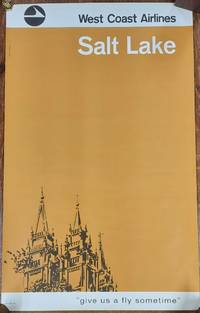
1965681861965. Poster. Oversized airlines travel poster designed by Franc Wilson measuring 40 inches tall by 25 inches wide. Printed in brownish-orange black and white. The image is of the gothic steeples of the Salt Lake City Temple of the Church of Jesus Christ of Latter-day Saints. Curled from having been rolled a couple 1 cm closed tears to edges else very good or better. A bold image. unknown
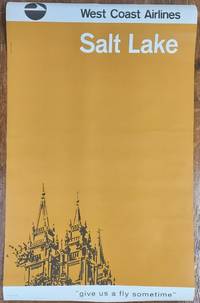
1965681851965. Poster. Oversized airlines travel poster designed by Franc Wilson measuring 40 inches tall by 25 inches wide. Printed in brownish-orange black and white. The image is of the gothic steeples of the Salt Lake City Temple of the Church of Jesus Christ of Latter-day Saints. Curled from having been rolled else near fine. A bold image. unknown
191020396Paris: Librairie Aeronautique. Fine. 1910. First Edition. Hardcover. Text is in French. Includes two folding plates. ; 12mo 7" - 7½" tall; 84plates pages . Librairie Aeronautique hardcover
1925010383Washington DC: Government Printing Office 1925. Vols 1 - 3 1350pp. Rare Original copy of the Morrow Board Hearings to study the best means to use aircraft in the national defense. Includes testimony from BG Billy Mitchell and others. Vol 1 spine taped. Very rare set. Text clean. 1st Edition. Trade Paperback. Very Good/No Jacket - Wraps. 8vo - over 7¾" - 9¾" tall. Government Printing Office Paperback
19475Paterson NJ: Wright Aeronautical Corporation. Near Fine. N.D. Softcover. There are 3 items included here. First is the Wright publication "Your airplane is ready sir" which is a b/w catalog of Wright airplanes all of which use the 200 HP Whirlwind engine. This has 47 pages and says "Bulletin 17 2nd edition" at the bottom of the first page. Next is a 15 page bulletin on the Whirlwind "J" series engines labeled Bulletin no. 11. It has a vertical crease presumably from when it was mailed. Last are two printed pages from the Wright corporation. One states "This letter is in reply to your request for information reletive to Wright "Whirlwind" engines. The second page is entitled "Supplementary Information Bulletin." ; 11" . Wright Aeronautical Corporation paperback
2091502135500495Not Available N.A. Soft Cover. Fine. The book is in fine condition. Not Available paperback
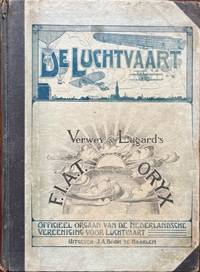
191059028Haarlem: Gedrukt bij J.A. Boom 1910. 4to. Twenty-six issues in one vol. iv 460 pp. With 100’s of photo illustrations text illustrations digrams charts maps. Quarter-black cloth over publisher’s illustrated boards blue & black lettering illustration on front cover minor scuffing wear dustsoiling wear to corners slight fraying head & foot of spine and light uniform interior toning ex-lib markings on title endpapers still VG- copy w/ perforated stamp at foot of title w/ withdrawn stamp and ownership stamp of Bill Rhode b. 1915 Aeronautical Collection was the owner of a large clipping service for aviation and flying subjects and worked for the legendary Gates’ Flying Circus was a stunt parachute jumper B-17 tail gunner during World War II and later acrobatics instructor. First edition of all 26 issues of the second volume in this pioneering Dutch aviation magazine. These exceedingly scarce early illustrated magazines provide an essential visual and textual documentary record of aviation within the first decade of the Wright Brothers first powered flight. Articles encompass early balloon trips barrage military balloons lighter-than-air airships descriptions and illustrations of the latest Wright airplanes Maxim’s new plane Etrich’s monoplane and many early aviators air races crashes and more. Issued biweekly from 1909-1913 this magazine was the official publication of the Dutch Aviation Association & 1910-1913 for Dutch East Indies Association for Aviation. [Gedrukt bij J.A. Boom, hardcover
194762513Derby: Rolls-Royce Ltd. 1947-1952. Three vols. Oblong 4to. 20 unpaginated. printed in orange & black; 32 unpaginated. printed in green & black; 3rd. is 4to. 14 2 pp. Numerous photo illustrations & diagrams tipped-in colour plate for vol. 2. Dark burgundy textured softcovers w/ yapp edges embossed on front cover in white & black w/ company logo sewn w/ silk braid as issued; 2nd vol. with tan textured softcovers w/ yapp edges embossed & raised gilt purple & beige lettering w/ company logo punch-sewn w/ silk braid as issued slight shelfwear; 3rd. vol. w/ colour-illustrated self-printed softcovers NF set. First edition of the 2nd volume 2nd edition of 1st & 3rd of these excellent post-World War II promotional catalogue for Rolls Royce aviation engines which are quite scarce. The first begins by describing the making of engines for Bristol Fighters in World War I producing Schneider Trophy engines in 1929-1931 and later development of the Merlin Engine which was vital for the Spitfire during World War II. Illustrations are included for the engines as well as the Hawker Fury Fairey Battle Hawker Hurricane Supermarine Spitfire De Havilland Hornet Avro Lancaster Bomber and of particular interest the Lancastrian VH742 -- the first jet airliner. It also details the early development of jet engines for the Gloster Meteor the Trent engine for jet fighter aircraft and the Derwent V for the first jet airliner. The second catalogue details the jet age engines by Rolls-Royce including the Nene the Tay Derwent V the Avon which powered Canberras and the prototype Avro Vulcan the Supermarine Swift and the Meteor IV jet fighter which first flew in 1945 and became an operational production aircraft in 1947 and was a successful combat fighter. Worldcat locates 1 copy of 1st catalogue Ingenium; 2 copies of the 2nd Ingenium Library & NYPL; 1 copy of the 3rd Ingenium. Rolls-Royce Ltd., paperback
195761454Burbank CA: California Division of Lockheed Aircraft Corporation; Resort Airlines Inc. 1957. Thick 4to. 11 x 11.5 x 2.5 in. 310 pp sections separately paginated some removed some updated. With 100’s of illustrations diagrams charts tables thumb-tabs at fore-edges of section dividers. Green publisher’s cloth 7-ring binder gilt lettering stamped on front cover & spine rounded corners some agewear rubbing minor soiling still VG- exemplar. First edition thus of this exceedingly scarce flight manual for the popular L-1049H Super Constellation from Lockheed affectionately referred to as the “Super Connie†or “Super H†and “Husky†was the competitor airliner to the popular DC-6 and popular with Quantas Airlines Northwest Orient Flying Tiger Lines and as in the case for this manual Resort Airlines Inc. The L-1049H entered service in Nov. 1956 and mated a C-121C fuselage with a L-1049G providing a convertible passenger/freight aircraft whose cargo hold had a volume of 565 cubic feet and could carry up to 120 people with seats luggage lockers and bathroom facilities. The Super Constellations were popular aricraft and favorted by many Latin American airlines continuing in service until 1966 when the Boeing 707 and Douglas DC-8 basically rendered them obsolete. A total of 56 were built in various configurations and as with most flight manuals these were ever-changing with sections added revised and/or removed by the airline as specifications changed. In this case Resort Airlines Inc. which operated out of Oakland CA from 1949-1961 has added several sections with mimeographed updates to the Lockheed installments including Emergency Procedures Landing Instructions Runway Analysis and Spare Parts Kit. Of particular interest are the Runway Analysis for such airports as Atsugi Agana Guam Honolulu Int. Hawaii McChord AFB Manila P.I. Oakland Int. California Wake Island and others. No copies in Worldcat. California Division of Lockheed Aircraft Corporation; Resort Airlines, Inc.], hardcover
194061912Burbank CA: Lockheed Aircraft Corporation 1940-1941. 4to. 9 x 11.5 in. 4 xiv 3 192 pp. With diagrams tables photos suite of 45 cyanotype blueprints added Jan. 1941. Brown linen post-binder lettering & Lockheed logo front cover in dark brown dark brown lettering minor foxing to title some edgewear minor shelfwear still VG copy numbered on ownership page. First edition of this exceedingly rare Lockheed Aircraft Corp. service manual for the Lockheed Lodestar 18 which was a substantial enhancement from the earlier Lockheed 14 Super Electra featuring sections on the fuselage wings wing flaps landing gear stabilizers instruments and more. The Lodestar was developed to compete with the popular Douglas DC-3 but even with its’ greater capabilities in cruising speed range and altitude performance allowing it to easily cross the Rocky Mountains it was not until the Lodestar 18 was enhanced with 5 additional feet and 18 seats which made it profitable. It first entered service with Mid-Continent Airlines and Continental in the United States along with one for United Airlines and several overseas customers. In 1942 most of the domestic models were seized for the war effort and were converted into the very popular and C-46 and later C-60 Lodestars which proved indispensable during World War II. Worldcat locates 1 copy w/o the cyanotype blueprints Ingenium Library & Archives ONT Canada. Lockheed Aircraft Corporation, unknown
194263318Dayton OH: The Material Center Experimental Engineering Section Wright Field Aug. 1942; Sept. 4 1942. Two vols. 4to. 40; 11 1 pp. mimeograph typescript. First with photo illustrations both with text illustrations diagrams. 1st w/ blue-tinted printed softcovers Rising Sun motif on front cover blue lettering minor age toning to fore-edges minor bumping to couple corners edgewear still VG copy former ownership markings of O.G. Hoffman front cover; 2nd w/ self-printed mimeograph softcovers uniform light toning red restricted stamps pencil marking faint remnants of staple marks at gutter margin still VG copy. First editions of this very rare original Restricted Wartime reports on the flight and combat capabilities of the famed and innovative Japanese aircraft less just 9 months after the attack on Pearl Harbor and one month after the US was able to secure a Mitsubishi A6M2 Type Zero which had crashed during the Aleutians campaign in Alaska in July 1942. The longer 1st report focuses on the Mitsubishi Aichi Kawanishi and Nakajima bombers fighters reconnaissance aircraft torpedo bombers dive bombers flying boats and float planes. The second exceedingly scarce original report focuses entirely on the famed Zero. Although the Chinese had secured two Zero’s as early as late November 1941 those rebuilt aircraft would not reach Wright Airfield until late 1943. Worldcat locates 1 copy of 1st Defense Bibliothek NL; No copies of 2nd are located An expanded No. 85 Report issued at the end of 1942 in 25 leaves is located at USAF Academy Smithsonian Emory Museum of Flight WA Australian Defence Force Academy Lib. The Material Center, Experimental Engineering Section, Wright Field, paperback
76640Various places; various dates. Generally fine condition. unknown
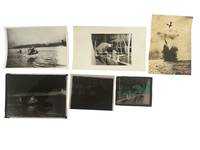
1912225241912. Unknown photographer Wright hydroaeroplane and early biplane models photo archive circa 1912 to 1913 documents early American seaplane experimentation during the period when the Wright Company adapted its pusher aircraft technology for water takeoff alighting and military use. The photographs capture a hydroaeroplane on or near water a dramatic water-impact or alighting scene and a hangar interior where men work over the open framework of a Wright-type machine providing visual evidence of experimental aircraft handling float design rigging and workshop adjustment. Wright State University's Wright Brothers Collection identifies a 1913 photograph of Orville Wright standing in the Miami River between the pontoons of a Wright Model CH Flyer confirming the Great Miami River as a documented site for Wright Model CH hydroaeroplane testing in this period.<br /> <br /> Six pieces total comprising three silver gelatin prints each approximately 7 x 5 inches and three contemporaneous negatives including two large-format film negatives and one smaller glass or film negative likely made in the Dayton Ohio area and a Wright Company hangar. The largest print shows a pusher-type biplane with forward elevator and floats partly submerged near a piling giving the aircraft an unmistakable hydroaeroplane profile. A second sepia-toned print captures a tall column of spray in open water as a small aircraft passes overhead or just beyond the splash likely recording a hard alighting water-impact or test-run sequence. A third print shows an interior hangar scene with two mechanics or engineers in caps and a man in a straw boater leaning over the exposed structure of a Wright machine; visible details include struts bracing wires control runs open framework and fittings along the central bay. The three negatives correspond to the water-impact and hangar views preserving additional technical detail of the rigging geometry float or skid attachments and pusher layout.<br /> <br /> The visual evidence aligns closely with Orville Wright's 1913 Model C-H hydroaeroplane work on the Miami River south of Dayton though attribution to a specific flight or photographer should remain cautious without inscriptions or provenance beyond the images themselves. Contemporary and local Wright histories describe the Model C-H as a hydroaeroplane tested by Orville on the Miami River in 1913 and one Dayton aviation history account states that in May 1913 he resumed testing the Model C-H at a secluded Miami River site and made 100 flights carrying up to 800 pounds of payload. The photographs matter because they show the Wright enterprise after Wilbur Wright's death in 1912 when Orville continued technical experimentation even as competitors especially Glenn Curtiss pressed forward in flying-boat development. Light edge creases and small corner bumps to the prints one print with faint silvering and toning negatives with light emulsion scuffing and edge tape remnants but strong density and detail very good overall. Focused early aviation archive preserving both river testing and workshop evidence from the moment Wright biplane design was being adapted to hydroaeroplane use on the eve of World War I. unknown
192713487Marshall MO: Nicholas-Beazley Airplane Co. Near Fine. 1927. First Edition. Softcover. A light stain to the topof the first couple of pages. Colorful cover and lots of pictures of parts planes instrument panels etc. ; 16mo 6" - 7" tall; 96 pages . Nicholas-Beazley Airplane Co. paperback
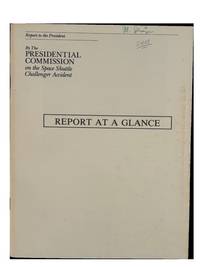
1986224261986. Space and Aviation Presidential Commission on the Space Shuttle Challenger Accident. Report to the President: Report at a Glance. Washington D.C.: U.S. Government Printing Office 1986. First edition. Volume I totaling approximately 30 pages which includes the main findings. This abbreviated summary of the Report to the President by the Presidential Commission on the Space Shuttle Challenger Accident offers a concise and accessible overview of the findings surrounding the catastrophic failure of STS-51-L which disintegrated 73 seconds after liftoff on January 28 1986 killing all seven crew members aboard. <br /> <br /> Commonly known as the Rogers Commission Report this document distills the conclusions of a body convened by President Ronald Reagan and chaired by former Secretary of State William P. Rogers with members including astronauts Neil Armstrong and Sally Ride. This "Report at a Glance" was issued for broader circulation and comprehension a key part of the Commission's goal "to document our findings and make recommendations for your consideration." The pamphlet opens with a solemn "In Memoriam" page bearing the official crew portrait of the Challenger astronauts including Commander Francis R. Dick Scobee Pilot Michael J. Smith Mission Specialists Ellison S. Onizuka Judith Resnik and Ronald E. McNair and Payload Specialists Christa McAuliffe and Gregory B. Jarvis. Beneath the image appears a poignant quote from Reagan's televised address: "The future is not free: the story of all human progress is one of a struggle against all odds. It was built by men and women like our seven star voyagers who answered a call beyond duty." A letter from Rogers to President Reagan dated June 6 1986 reaffirms the national pain and resolve: "The nation's task now is to move ahead to return to safe space flight. There could be no more fitting tribute to the Challenger crew than to do so."<br /> <br /> The core of the report identifies a systemic failure in NASA's risk assessment and engineering culture. The immediate cause of the explosion detailed in Chapter IV was "a combustion gas leak through the right Solid Rocket Motor at field joint" attributed to O-ring failure exacerbated by the unusually cold temperatures on launch day. The report states bluntly: "The consensus of the Commission. is that the loss of the Space Shuttle Challenger was caused by a failure in the joint between the two lower segments of the right Solid Rocket Motor." A diagram on the facing page maps acronyms and component systems central to understanding the shuttle's propulsion including ET External Tank LOX Liquid Oxygen and SSME Space Shuttle Main Engine. Findings were unflinching: "Launch site activities. were not considered as direct causes of the accident" yet "weaknesses in NASA's decision-making structure" were. This offering Volume I contains the report which summarizes the main findings and appendices A-D while Volumes II and III contain the rest of the appendices and Volumes IV and V contain hearings of the Presidential Commission. Light foxing to cover small owner's name written on upper right. Interior pages clean and well-preserved. Overall very good condition. unknown
192511234Boston: Houghton and Mifflin. Fine with no dust jacket. 1925. Limited/Numbered Edition; First Printing. Hardcover. Bound in cloth with a vellum spine there is some foxing of the spine & the title page. Numbered copie one of 525 signed by all the aviators & Lowell Thomas. ; tall 8vo 9" - 10" tall . Houghton and Mifflin hardcover
191814931New Brunswick NJ: Wright-Martin Aircraft Corporation. Very Good. 1918. First Edition. Hardcover. Book appears to be "fine" with clean contents & tight hinges remains of an old sticker upper right on the front cover. However some of the six plates have been misfolded and have some splitting at the folds as a result. ; Small 8vo 7½" - 8" tall; 216plates pages . Wright-Martin Aircraft Corporation hardcover
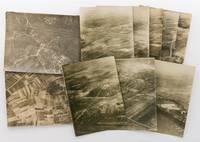
118696Very Good. All are gelatin silver prints on thick stock; eight are oblique photographs 207 × 154 mm; two are vertical views approximately 165 × 220 mm; the larger ones are slightly creased at the corners one of them a little more so; the others are in excellent condition. All images are captioned in the negative. All eight oblique views carry the same date 25 June 1918 preceded by 'A3 AEO 62°' ranges from 110 to 121. Place names on them are Hamel Hamel Wood Somme Accroche Wood Tailloux Wood and Vaire Wood. The vertical images are dated 3 May and 27 June 1918 and carry a larger set of alpha-numeric references commencing 'A3 AE A 715' and '35 AE B 929' respectively. All ten prints have the signature 'Capt Sexton' in indelible pencil on the verso. Digitised service records indicate the signature is that of Eric James Sexton of the Adelaide suburb of Hindmarsh; he enlisted on 14 August 1914 shortly before his 21st birthday and was appointed to the 10th Battalion with the rank of lieutenant. He was wounded at the landing at Gallipoli promoted to captain the following day and later invalided back to Australia disembarking on 6 August 1915. By January 1916 he was declared fit again for active service and re-embarked in April for England where he performed various training roles. On 14 February 1917 he transferred to the Australian Machine Gun Training Depot with the rank of major. He embarked for Australia on 12 March 1918 arriving in Melbourne on 22 May 1918. Accordingly Sexton did not serve in France and was a major not a captain by the time these photographs were produced. We cannot explain the anomalies but will let the photographs speak for themselves. Significantly they show the area where the important Battle of Hamel was fought on 4 July 1918. <p>'Hamel was a big battle in miniature involving the experimentation of tanks and small ammunition drops as part of a broader all-arms offensive. While a coordinated offensive was not a new approach to warfare Hamel represented the culmination of three years of learning and innovation on the Western Front testing an all-inclusive approach to mobile warfare. The flawless execution of the operation resulted in Hamel becoming a model for future operations on the Western Front. In his account of the event Monash famously wrote that "the perfected modern battle plan is like nothing so much as a score for an orchestral composition where the various arms and units are the instruments and the tasks they perform are their respective musical phrases' Ellen Cresswell: 'The Experiment - Innovations at the Battle of Hamel' Australian War Memorial website. 10 items. unknown
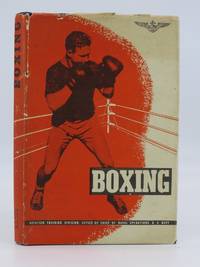
194319367Annapolis Maryland: United States Naval Institute. Very Good in Good dust jacket. 1943. First Edition. Hardcover. Navy cover is rubbed at corners and caps but clean bright and in very good condition. Boards and spine are straight. Binding is tight. Toning to illustrated end sheets and paste downs. Pages are very lightly toned but clean and very good. Scarce dust jacket is toned and soiled with light tattering along top edge but in in good condition. DJ protected by a brand new clear acid-free mylar cover. We add mylar covers to all books with DJs to preserve the DJs and add luster to magnify their beauty. If pictured shown without the mylar cover for an accurate representation of dust jacket. ; The Naval Aviation Physical Training Manuals; 286 pages . United States Naval Institute hardcover
195963195St. Paul MN & Burbank CA: Lockheed Aircraft Corporation Northwest Orient Airlines 1959-1969. Thick 4to. Approx. 500 pp sections w/ varying paginations. printed mimeographed typescript some printed on colour-tinted papers. With charts diagrams tables references throughout. Black vinyl 3-ring binder gilt lettering & embossed label on spine minor scuffing edgwear closed tear to front joint some thumbing toning and agewear throughout still a VG- exemplar. First edition thus of this complete version of the Lockheed L-188 Electra airliner flight manual as of 1969 when the large turboprop airliner began being phased out by most American air carriers. The L-188 Electra survived 3 crashes immediately after introduction including a NW Orient Airlines version and the FAA discovered that the Electras had suffered from Propellor whirl-mode vibration matching the flutter frequency of the wing in less than one minute but the wings and fasteners were modified to correct the issue. This flight manual examines and outlines Emergency Procedures Cruise Power operating procedures Engine Failures Instrument Memory Communications Oil Systems Fuel Systems revisions from 1959-1969 with supplemental updates inserted at various points within the Manual. No copies in Worldcat 1 similar 1958 edition without the post-Crash procedure changes at Embry-Riddle Aeronautical Univ. Daytona FL. Lockheed Aircraft Corporation, Northwest Orient Airlines, unknown
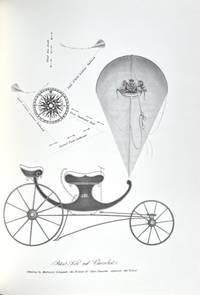
196959614San Francisco: Edward L. Sterne 1969. 4to. 2 51 1 pp. Illustrated title w/ vignette 3 plates. Quarter-brown cloth over brown boards printed label on front cover minor shelfwear slight rubbing still NF copy from the library of Otto C. Winzen 1917-1979 pioneering German-American aeronautical engineer was interned during World War II and later significantly advanced material and construction of high-altitude balloons after World War II. First facsimile edition 1 of 95 copies printed of this curious treatise detailing how Pocock achieved nearly 20 miles per hour while driving his Charvolant a kite-hauling carriage from Bristol to Marlborough in 1827. Pocock was an aviation pioneer who conducted experiments on the use of kites how to lift draw and move items by using kites and finally capped it with his huge kites drawing the Charvolant. One of Pocock’s giant kites still exists in the Museum of Bristol a BBC team recreated and flew the kite successfully in 2009 and in 2009 Takeshi Sugimoto of Kanagawa University determined that as long as the carriage was not exposed to the wind and kites were aloft they did produce sufficient lift to offer steady driving speeds for the carriage. See: Takeshi Sugimoto Mechanics of Classical Kite Buggying or How Mr. Pocock Gained 9 m/s by his Charvolant Sevent Asia-Pacific Conference on Wind Engineering Taipei Taiwan 2009. Edward L. Sterne, hardcover
195063948New York: Longmans Green and Co. 1950. 8vo. 6 276 pp. Photo frontisp. Art Deco text illustrations. Orange publisher’s black illustration & lettering colour-illustrated endpapers of B-17 bombers slight shelfwear w/ d.j. vivid wraparound cover art minor shelfwear couple very minor closed tears 1 w/ tape repair still a NF/G copy inscribed by the author on verso of the frontispiece dated March 24 1950. First edition stated of this famed memoir by a Hollywood stunt pilot who carried out the hair-raising crashes in Wings Air Squadron Sky High Hell’s Angels and Dawn Patrol. Grace 1898-1965 also served in both World Wars finishing as a bomber pilot in B-17s with the 486th Bombardment Group. Later published in the UK as “Crash Pilot†1956. Longmans, Green and Co., unknown